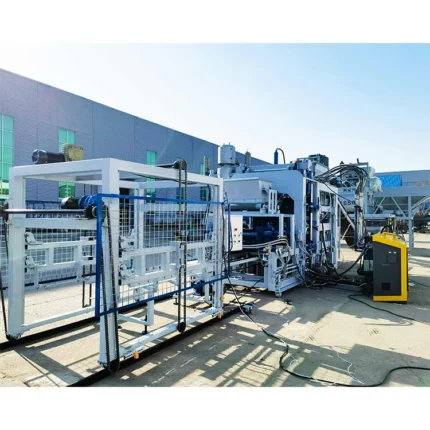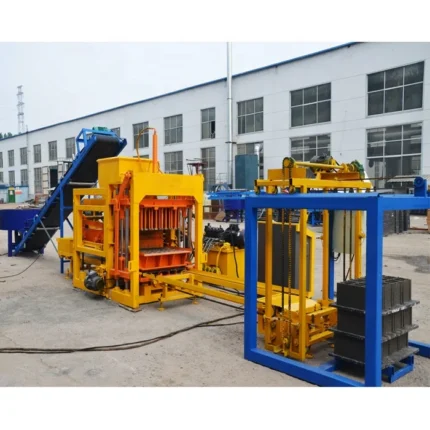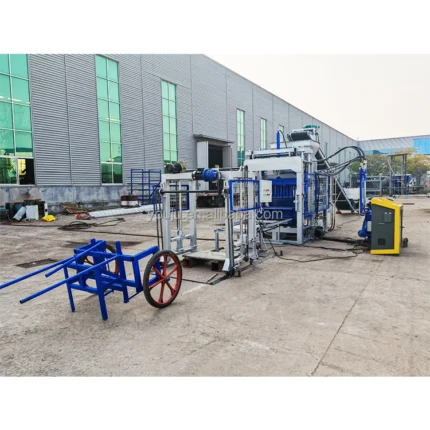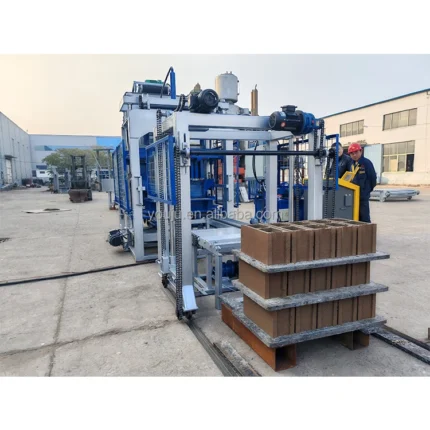


Description
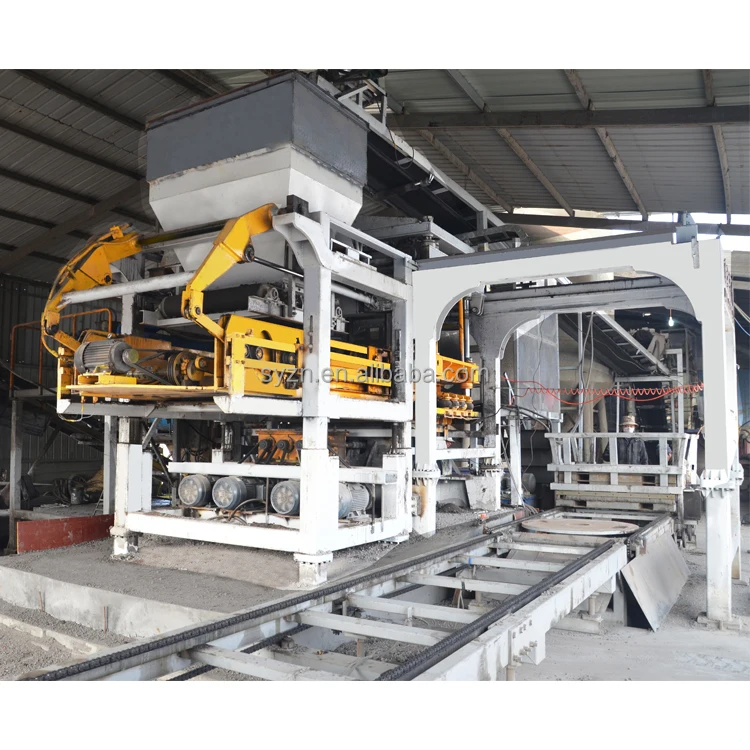
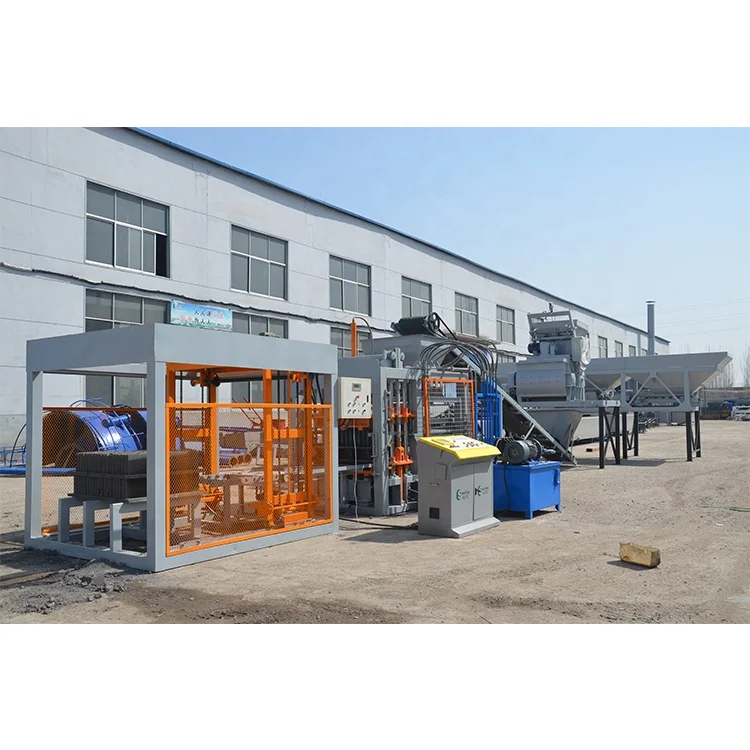
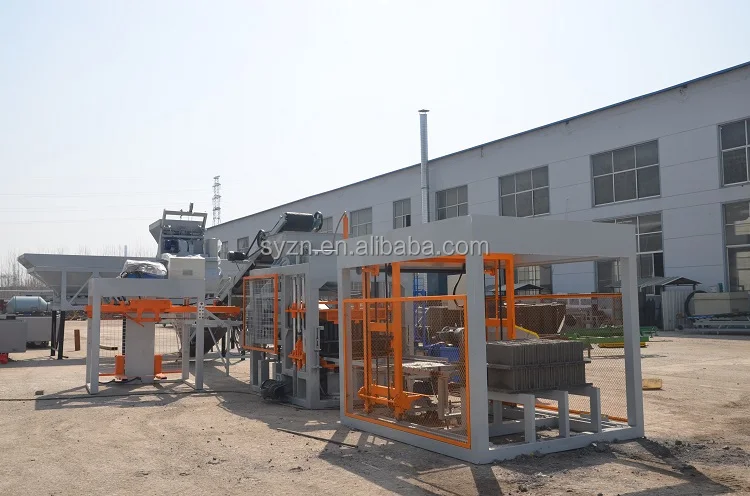
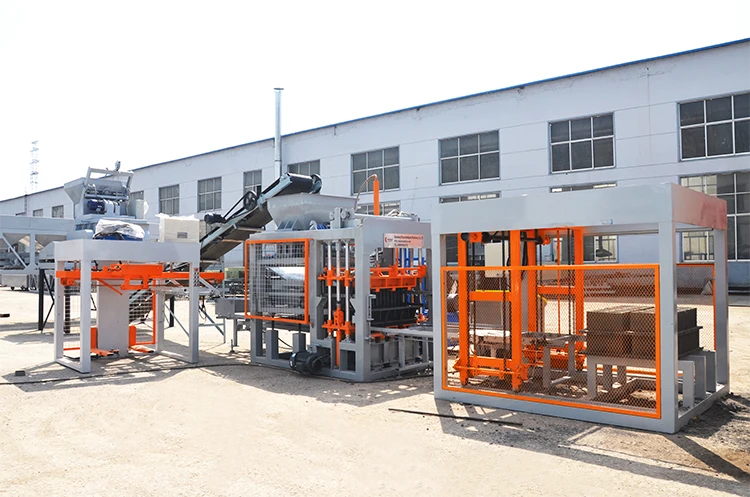
System Integration Before Commissioning — every automation station on the QT5-15 line is timed to the press cycle so pallets, stacking and cubing never force the machine to idle.
Technical Specifications
| Parameter | Value |
|---|---|
| Model | QT5-15 |
| Product Type | Fully Automatic Concrete Block Making Machine |
| Overall Dimensions (L×W×H) | 7400 × 1950 × 2800 mm |
| Rated Pressure | 21 MPa |
| Main Vibration Form | Platform Vibration |
| Vibration Frequency | 2800 – 4500 r/min |
| Pallet Size | 1100 × 550 mm |
| Molding Cycle | 15 – 25 s (basis not stated in source — confirm block format, material and thickness) |
| Overall Power | 26.5 kW |
| Demolding Method | Hydraulic |
| Output Capacity (Hollow Brick) | 1800 pcs/h based on 400 × 200 × 200 mm, 5 pcs/mold, 16 – 20 s cycle |
| Output Capacity (Hollow Block) | 1300 pcs/h based on 400 × 150 × 200 mm, 6 pcs/mold, 15 – 20 s cycle |
| Output Capacity (S Paver) | 3700 pcs/h based on 225 × 112.5 × 60 mm, 16 pcs/mold, 15 – 17 s cycle |
| Automation Level | Fully Automatic |
| Control System | PLC (verify against manufacturer catalog) |
| Applied Products | Concrete blocks, hollow/solid blocks, pavers, interlocking blocks, curbstone, colored pavers |
| Raw Materials | Crushed stone, sand, cement, dust, fly ash, gravel, slag |
Application Suitability
| Application | Material or Output |
|---|---|
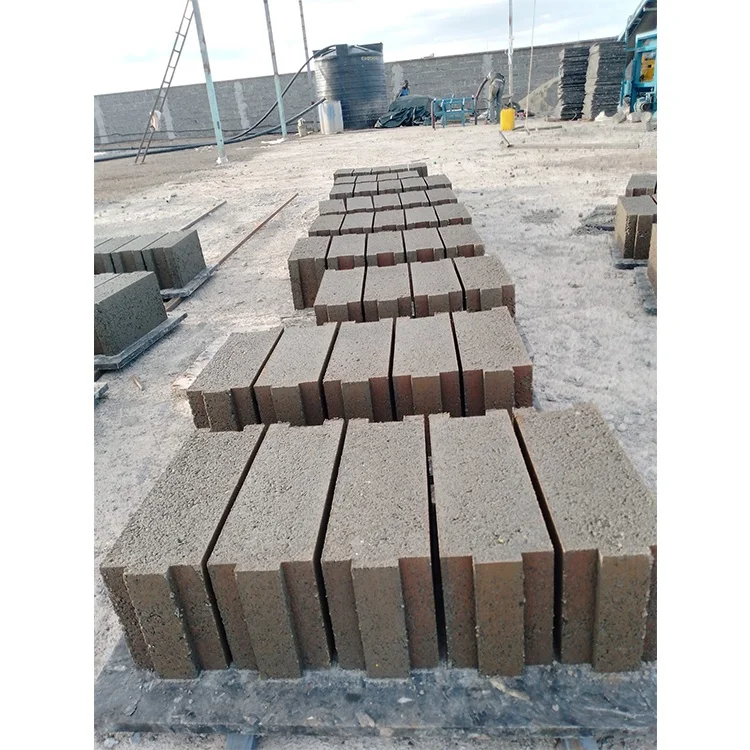
| Hollow block production for residential wall systems | Crushed stone, sand and cement with fly ash admixture |
| Solid paver manufacturing for driveway and walkway projects | Gravel, sand and cement blends with pigment for colored variants |
| Interlocking block runs for retaining wall and slope stabilization | Coarse aggregate, sand and cement at higher compaction pressure |
| Curbstone extrusion for municipal road and kerb lines | Dense aggregate mix with extended vibration dwell time |
| On-site block production for housing development contractors | Locally sourced river sand, stone dust and cement |
What "Automatic" Really Means When the PLC Meets Your Mix
Automation only holds its value when the control system is matched to the material it actually processes.
I spent four days on a project in Southeast Asia where a fully automatic block line could not hold strength targets because the local river sand carried a clay content the vibration profile was never set up for. The PLC kept cycling perfectly, but every pallet of hollow blocks that came off the press was underweight and brittle. The machine was automatic; the configuration was not. An automatic concrete block making machine PLC controlled from the catalogue means very little if the vibration frequency, hydraulic pressure and cycle timing are never revalidated against the aggregate sitting in your yard [NEED_CITE: impact of fine aggregate clay content on concrete block compressive strength].
PLC Logic That Tracks the Full Line, Not Just the Press
A PLC that only governs the press cycle leaves the most failure-prone steps — pallet feeding, wet block stacking, curing rack loading — in the hands of operators who will inevitably fall behind. The QT5-15 control architecture is designed to coordinate the automatic concrete block making machine PLC controlled logic across pallet feeding, press timing and stacking so that a delay at any station pauses the whole line rather than letting unprocessed pallets pile up.
Batch-to-Batch Consistency Across Shift Changes
The real test of any block plant automation shows up at the shift boundary. When one operator hands the line to the next, manually adjusted parameters drift. The PLC stores the recipe for each block format — vibration duration, pressure hold time, feed depth — and applies them identically whether it is the morning crew or the night crew running the mold. That consistency is what keeps block strength within tolerance across an entire production day [NEED_CITE: concrete product consistency standards across production batches].
Reading the Specification Sheet Against Your Actual Product
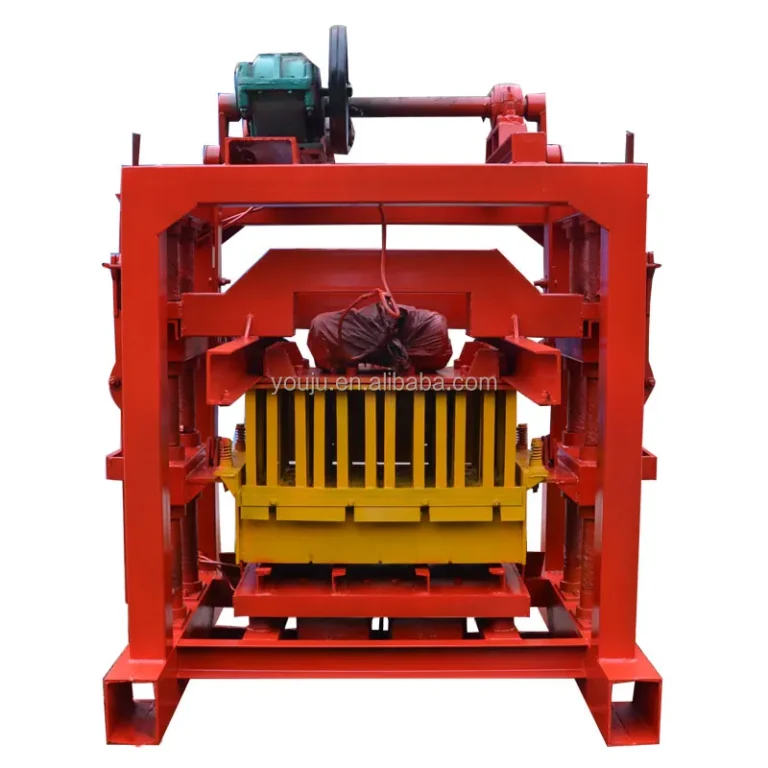
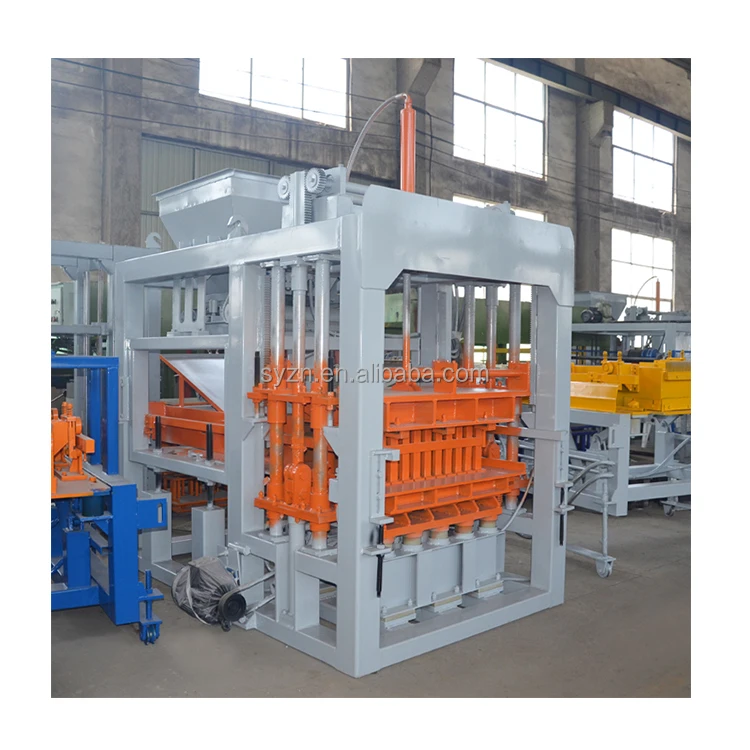
Rated pressure and vibration frequency tell you what the press can deliver, but only in relation to the block you intend to sell. The QT5-15 operates at 21 MPa hydraulic pressure with a platform vibration frequency adjustable between 2800 and 4500 r/min. For hollow blocks in the 400 × 200 × 200 mm range, this combination provides adequate compaction for standard walling applications using conventional crushed stone and cement mixes. When you move to denser formats like curbstone or thick interlocking pavers, the vibration frequency needs to sit higher in that range and the pressure hold time must extend — settings the PLC stores per mold profile. The 1100 × 550 mm pallet size defines the maximum mold footprint, which in turn determines how many cavities fit per cycle. Before you compare output figures, confirm which pallet and mold combination your target format actually requires, because a pallet mismatch means either wasted press area or a mold that does not fit.
When the Wrong Pallet Size Derails the Whole Line
The pallet is the single component that travels through every station — press, stacking, curing, and back again. If the 1100 × 550 mm pallet does not match the curing rack spacing already installed in your yard, or the forklift tine width your crew is used to handling, the automatic stacking system will feed pallets to a curing area that cannot receive them. The bottleneck then shifts from the press to the yard, and the automation you paid for sits idle while workers manually re-stack [NEED_CITE: pallet handling integration in concrete block plant layout].
Why This Configuration Exists for This Buyer
The QT5-15 is specified as a system — press, mold, pallet and handling — rather than assembled from separate quotations. Machine configuration starts from your local aggregate sample and target block format, not a catalog default, so the vibration and pressure settings are validated before dispatch. Custom mold design is available to buyer drawings, which matters when your market sells a format that does not appear in standard catalogs. The automation level is selectable: a buyer can begin with semi-automatic pallet handling and add automatic stacking and cubing as production volume justifies the investment. Factory testing covers the full cycle with your specified mold installed, and documentation includes voltage, frequency and PLC display language confirmation in writing before the machine ships.
Documentation & Verification
- Line layout drawing with capacity calculation stated per block format and cycle time assumption
- PLC display language and electrical voltage confirmation signed off before production
- Mold drawing and format list supplied with quotation, including custom profile options
- Factory test record run on the specified mold and pallet combination before dispatch
- Hydraulic and electrical schematic for on-site maintenance reference
- Operation and maintenance manual with wear parts list and replacement intervals
Installation, Commissioning & Support
- Foundation plan matched to the 7400 × 1950 × 2800 mm footprint and dynamic vibration load
- Electrical supply confirmation for 26.5 kW total draw at your local voltage and frequency
- PLC display language set to your operator preference before the control panel is energized
- First-run commissioning with vibration and pressure calibration against your site aggregate
- Operator training covering mold change procedure, PLC recipe selection and daily maintenance checkpoints
- Wear parts and hydraulic seal list with part numbers for reorder without machine downtime
What We Need to Quote This Machine Correctly
Before we configure a QT5-15, share the block format your market buys most, the daily volume you need from that format, and a sample description of your local aggregate — source, grading and any known clay or silt content. Confirm your site voltage, frequency and the language your operators will need on the PLC display. If you already have curing racks or forklifts on site, send the pallet dimensions those systems expect.
Frequently Asked Questions
Q: How is the QT5-15 output capacity verified and what block format does each figure assume?
A: Every output figure we publish states the exact block dimensions, mold cavity count and cycle time it is based on. For example, 1800 pieces per hour is calculated on a 400 × 200 × 200 mm hollow brick with five cavities and a 16 to 20 second cycle. If your target format differs, we recalculate capacity against that specific mold and publish the revised figure in the quotation.
Q: How do I confirm voltage, frequency and PLC display language before shipment?
A: We request your site electrical specification — voltage, phase and frequency — along with the operator language for the PLC interface during the inquiry stage. These values are written into the production order and confirmed on the electrical schematic before the machine is wired. Any deviation after wiring is built requires rework, so early confirmation prevents commissioning delays.
Q: What is the upgrade path from semi-automatic to fully automatic stacking?
A: The QT5-15 platform supports a staged automation approach. A buyer can start with manual pallet handling and semi-automatic press operation, then add automatic pallet feeding, stacking and cubing modules as production volume grows. The PLC architecture accommodates these additions without a full control system replacement, keeping the upgrade path within the existing machine footprint.
Q: How is the machine configured to match my local aggregate rather than a catalog default?
A: Configuration begins with your aggregate sample data — grading, density, and fines content. Vibration frequency within the 2800 to 4500 r/min range and hydraulic pressure hold time are then set to achieve the compaction your specific mix requires. The factory test runs the configured mold with parameters based on that material profile before dispatch.