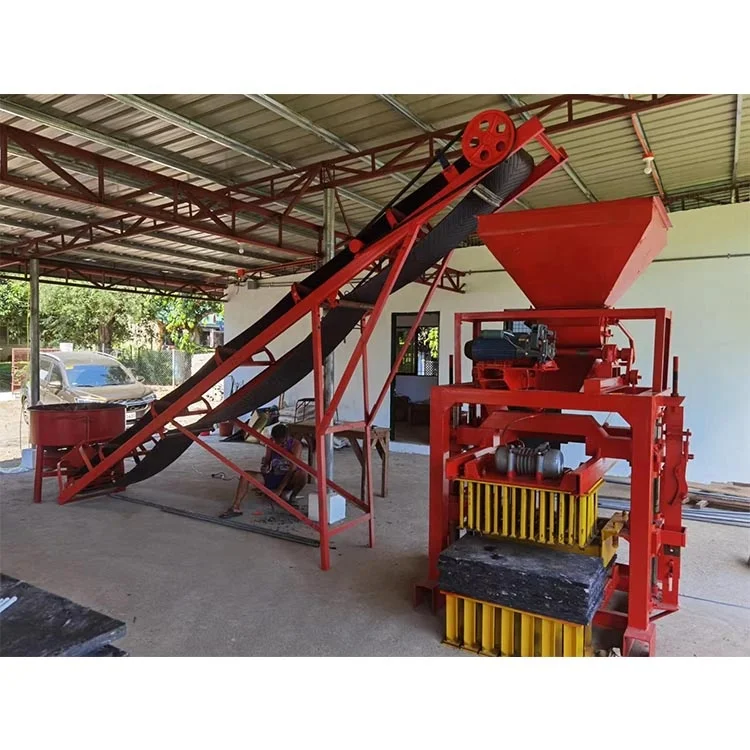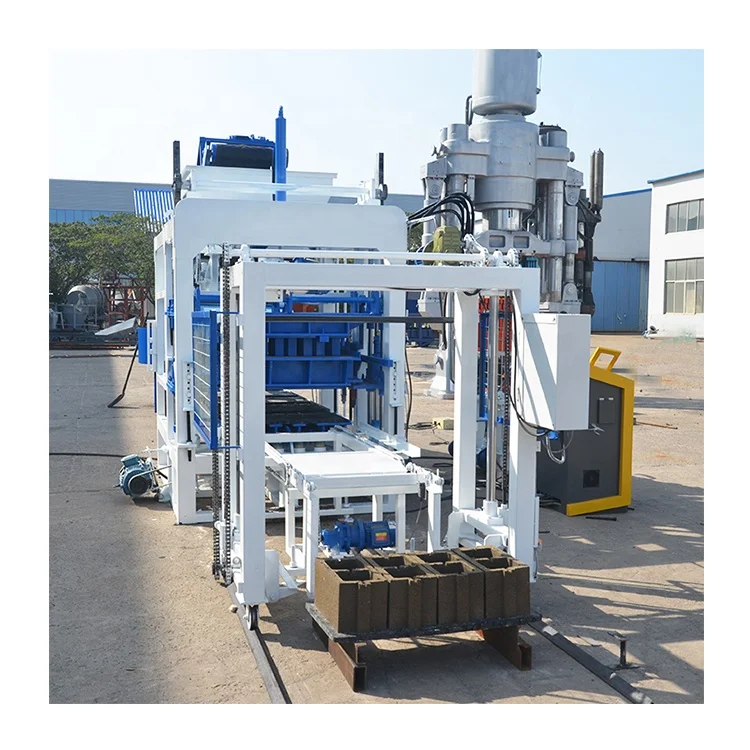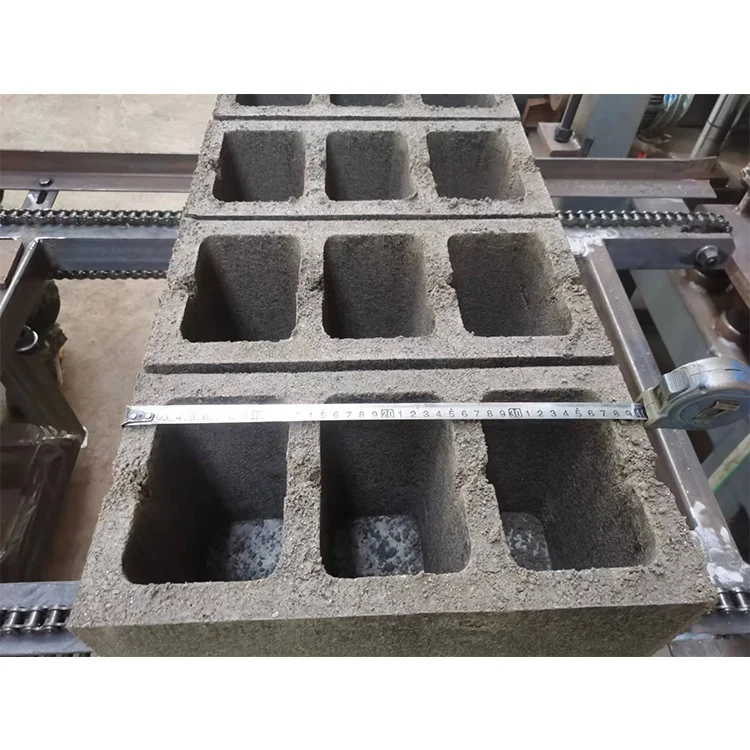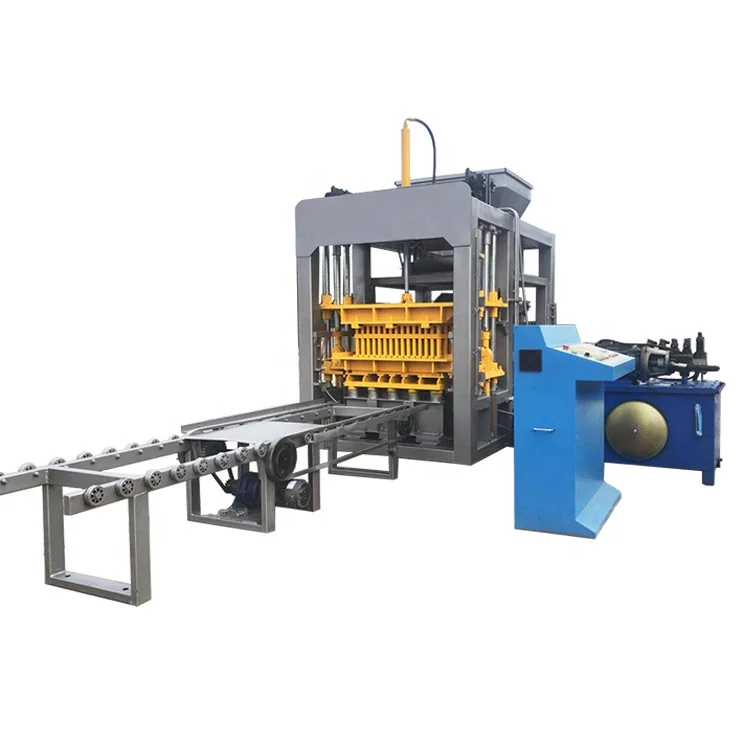


Description
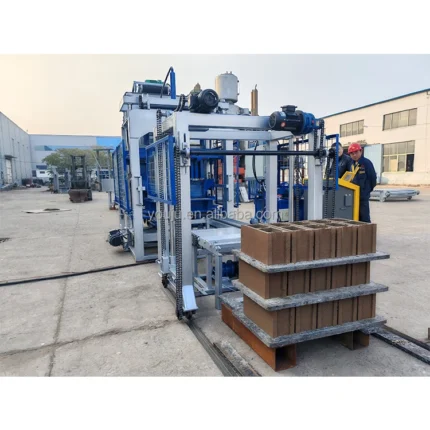
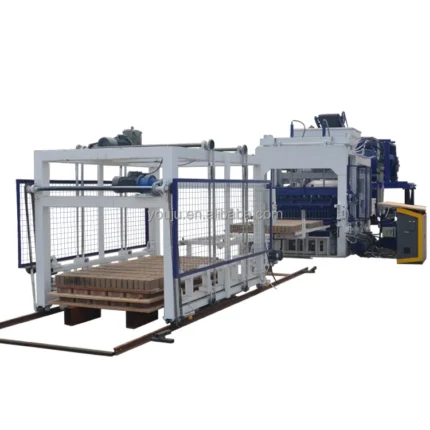
Intelligent Control Integration — The QT5-15 automatic block making machine PLC controlled system is configured around the buyer’s automation level, from semi-auto to full stacking, with control language and voltage locked before production.
Technical Specifications
| Parameter | Value |
|---|---|
| Model | QT5-15 |
| Product Type | Fully Automatic Hydraulic Block Making Machine |
| Overall Dimensions (L×W×H) | 7400×1950×2800 mm |
| Rated Power | 26.5 kW |
| Hydraulic Pressure | 21 MPa |
| Vibration Form | Platform Vibration |
| Vibration Frequency | 2800~4500 r/min |
| Pallet Size | 1100×550 mm |
| Moulding Cycle | 15-25 s |
| Demolding Method | Hydraulic |
| Control System | PLC (language configurable) |
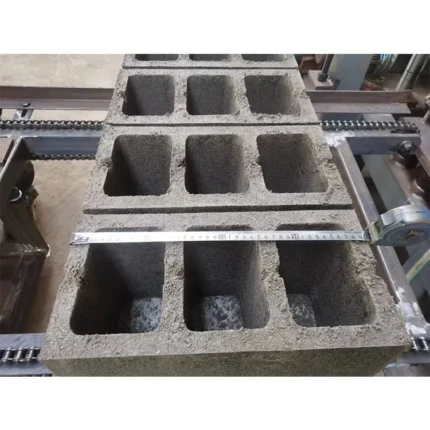
| Output Capacity (Hollow brick 400×200×200mm) | 1800 pcs/h (basis: 5 pcs/mold, 16-20s cycle) |
| Output Capacity (Hollow block 400×150×200mm) | 1300 pcs/h (basis: 6 pcs/mold, 15-20s cycle) |
| Output Capacity (S paver 225×112.5×60mm) | 3700 pcs/h (basis: 16 pcs/mold, 15-17s cycle) |
| Applied Products | Concrete blocks, hollow/solid blocks, pavers, interlocking blocks, curbstone, colored pavers |
| Raw Materials | Crushed stone, sand, cement, dust, fly ash, gravel, slag |
| Automation Level | Configurable from semi-automatic to fully automatic stacking and cubing |
| Voltage & Frequency | Configurable to target market requirements |
Application Suitability
| Application | Material or Output |
|---|---|
| High-volume hollow block plants | Fly ash, cement, and crushed stone aggregates for structural walling units |
| Paving and interlocking brick production | Sand and gravel mixes for exterior hardscape and driveway formats |
| On-site contractor block production | Local aggregate and cement for housing project masonry |
| Solid block and kerbstone manufacturing | Coarse aggregate blends for load-bearing and infrastructure elements |
What "1800 Blocks per Hour" Actually Means When the PLC Boots Up
An automatic block making machine PLC controlled interface is only as useful as the language on the screen and the voltage in the cabinet.
I have walked into plants where the operator spent half the shift guessing what the alarm code meant because the HMI was stuck in a language they could not read. The cycle time on paper looks one way, but the actual daily throughput depends entirely on how the automation handles pallet feeding, block stacking, and the seconds lost between moulding cycles. When the control logic does not match the operator’s reality, the machine sits idle [NEED_CITE: common HMI language barriers in exported machinery].
Control Logic That Matches the Operator, Not the Catalogue
The intelligent side of this line starts with the PLC interface configured to the operator’s native language before the cabinet leaves the factory. Every input on the screen — cycle start, alarm acknowledgment, mould change sequence — must be instantly readable under workshop conditions. An automatic block making machine PLC controlled setup removes the guesswork from batch timing, ensuring that the vibration duration and hydraulic pressure hold steady from the first pallet to the last.
Automation Level as a Deliberate Choice, Not an Afterthought
A plant can begin with semi-automatic pallet handling and add full stacking and cubing later without replacing the press. The PLC architecture supports this upgrade path, meaning the control system scales with the buyer’s investment timeline. What automation removes from the operator — the repetitive timing of pallet insertion, the physical effort of stacking — it adds back in batch-to-batch consistency and predictable labour allocation [NEED_CITE: automation upgrade paths in stationary block lines].
Vibration, Pressure, and the Density They Actually Produce
Platform vibration at 2800–4500 r/min works in tandem with 21 MPa hydraulic pressure to compact the mix into the mould cavity. The frequency range allows tuning to the specific aggregate size in the buyer’s local supply; coarser stone needs a different vibration profile than fine fly ash blends. Hydraulic demolding ensures the block releases cleanly at the end of the 15–25 second moulding cycle, preserving edge definition and reducing surface cracking that leads to downstream breakage.
Pallet Dimensions, Forklift Reach, and the Curing Yard
The 1100×550 mm pallet size is selected to align with standard forklift tine spacing and the curing rack dimensions already on site. A mismatch here means blocks are handled twice or the forklift cannot reach the top rack tier, slowing the entire line. The pallet material must also withstand the vibration force without warping, which would introduce uneven block thickness across the production run.
When the Wrong Configuration Choice Surfaces Six Months Later
A control system set to the wrong voltage frequency will run, but the vibration motors degrade faster and the hydraulic pump cycles outside its rated curve. I have seen plants burn through replacement contactors because the supply frequency was never confirmed before the cabinet was wired [NEED_CITE: electrical frequency mismatch consequences in industrial motors]. The cost is not in the part itself but in the unplanned downtime while the correct component ships internationally.
Why Procurement Here Differs From a Standard Catalogue Order
Block machinery is the single focus, so the QT5-15 is specified as a matched system — press, mould, pallet, and handling equipment all sized to the same daily output target. Configuration is set against the buyer’s actual mix design and target block format rather than a default setting. The automation level is selectable, allowing a buyer to start semi-automatic and upgrade without replacing the press. Mould design covers the formats the buyer’s market actually sells, including custom drawings. Installation support includes operator training on the specific PLC interface delivered.
Documentation & Verification
- Capacity calculation document stating block format, mould count, and cycle time per throughput figure
- Voltage, frequency, and PLC display language confirmed in writing before production
- Hydraulic and electrical schematic provided for local maintenance team review
- Factory test record on buyer’s target block format before dispatch
- Wear parts and mould list included with first shipment
Installation, Commissioning & Support
- Foundation plan provided matching the 7400×1950 mm footprint and vibration load of the QT5-15
- Dedicated power circuit sized for the 26.5 kW rated power draw and starting surge
- PLC interface language verified during on-site commissioning before operator handover
- Hydraulic system pressure set to 21 MPa and tested against the buyer’s first production mould
- Mould change procedure trained on-site with the specific format set delivered
- Vibration frequency tuned between 2800–4500 r/min to match the buyer’s local aggregate gradation
What to Prepare Before Requesting a Quotation
Share the specific block formats your market demands, the daily output target per format, and the raw materials available locally including aggregate gradation. Confirm your site’s voltage and frequency supply, the preferred PLC display language, and whether you need the line to include automatic stacking and cubing or will start semi-automatic. Existing forklift and curing rack dimensions help size the pallet and handling equipment correctly.
Frequently Asked Questions
Q: How is the output capacity verified and what block format does each figure assume?
A: Every throughput number for the QT5-15 is tied to a specific block format, mould cavity count, and moulding cycle range. For example, 1800 pieces per hour assumes a 400×200×200mm hollow brick with 5 cavities per mould and a 16–20 second cycle. A formal capacity calculation document is provided before order confirmation.
Q: Can the automation level be upgraded later from semi-automatic to full stacking?
A: Yes. The PLC architecture on the QT5-15 supports adding automatic pallet feeding, stacking, and cubing at a later stage without replacing the press. The upgrade path is defined during initial configuration so the control system is prepared for future expansion.
Q: What PLC language options are available for the control interface?
A: The PLC display language is configurable to the operator’s requirement and is confirmed in writing before the cabinet is assembled. This ensures the HMI is readable from day one, eliminating the language mismatch issues that delay commissioning on many exported lines.
Q: How are vibration force and hydraulic pressure matched to my local aggregate?
A: The 2800–4500 r/min vibration frequency and 21 MPa hydraulic pressure are tuned during commissioning to the buyer’s specific mix design and aggregate size. This matching ensures consistent block density and surface finish rather than relying on a single factory-default setting.
Q: What batch consistency features does the PLC system provide?
A: The PLC monitors and controls cycle timing, vibration duration, and hydraulic pressure for each moulding cycle, maintaining consistent parameters across production runs. This reduces block-to-block variation in strength and dimension that commonly occurs with manual operation [NEED_CITE: PLC-controlled consistency advantages in concrete block production].