
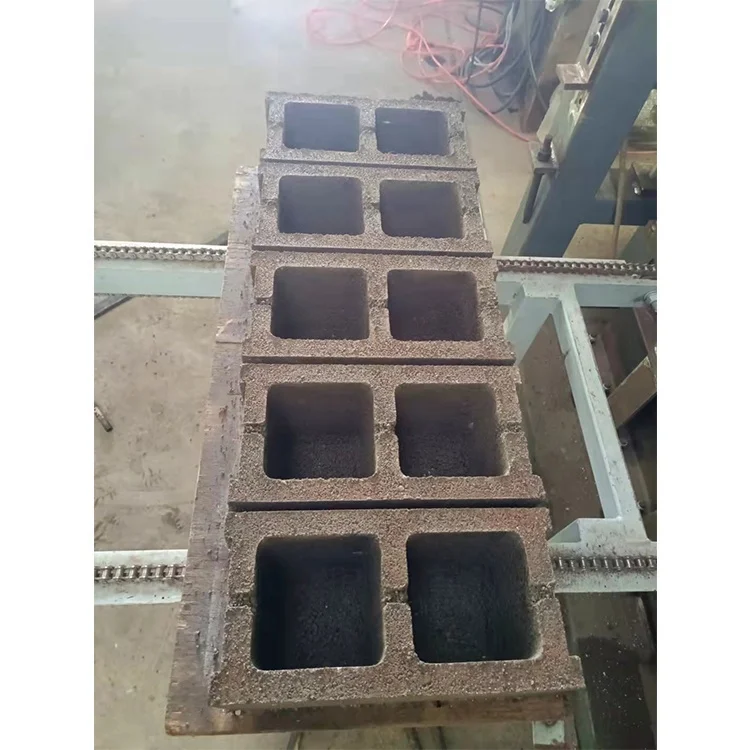

Description
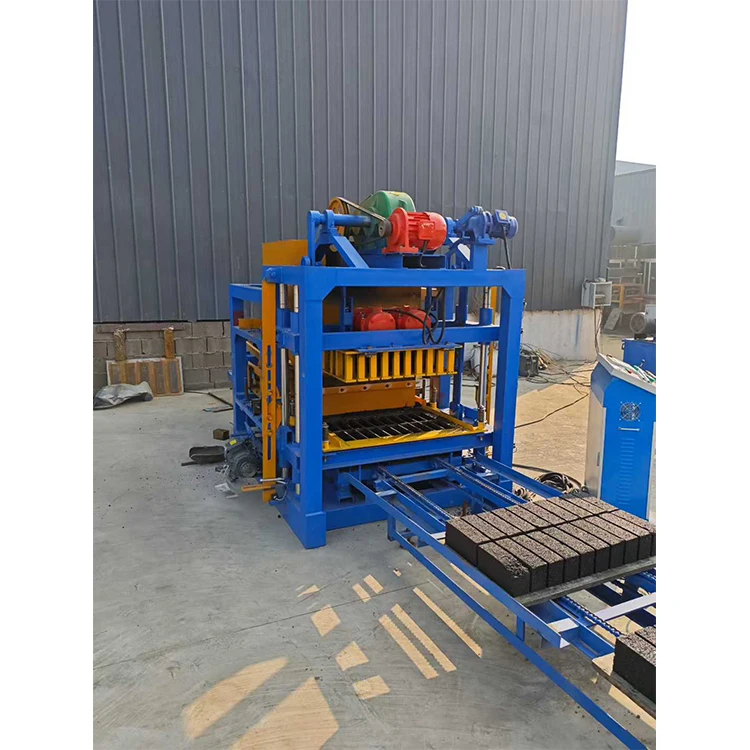
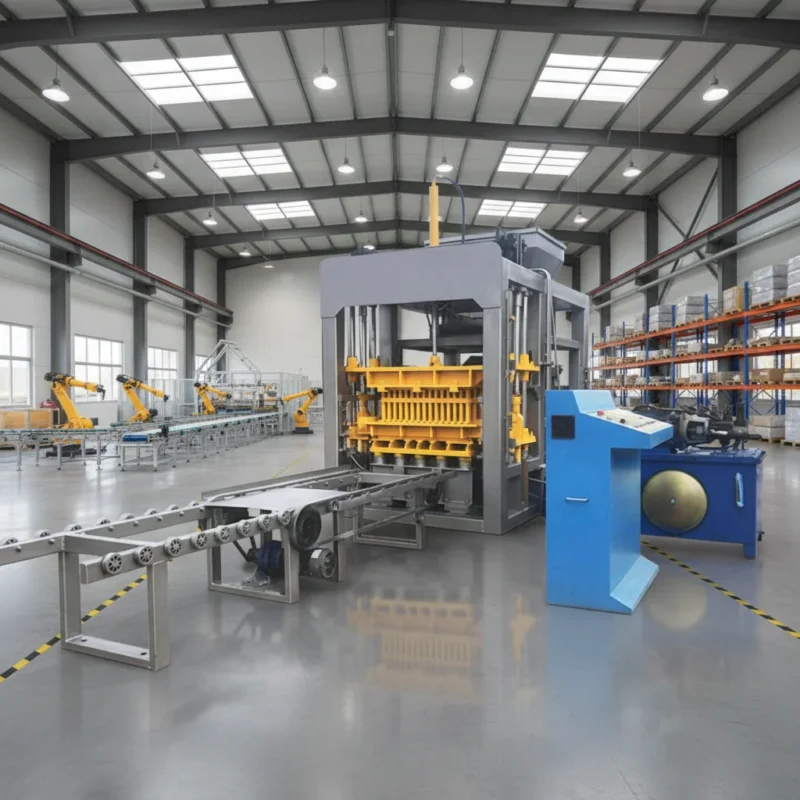
System-Matched Configuration — The QT5-15 automatic block machine PLC controlled system is specified against your actual mix design, local aggregate, and target block format rather than a catalogue default.
Technical Specifications
| Parameter | Value |
|---|---|
| Model | QT5-15 |
| Product Type | Automatic Concrete Block Making Machine |
| Overall Dimensions (L×W×H) | 7400 × 1950 × 2800 mm |
| Vibration Frequency | 0–60 Hz |
| Vibration Form | Platform Vibration |
| Vibration Force | 80 kN |
| Moulding Mode | Automatic loading, vibration moulding |
| Pallet Size | 1100 × 550 mm |
| Moulding Cycle | 15–20 s (general); 20–25 s (paver / interlocking) |
| Overall Power | 32 kW |
| Total Mass | 5000 kg |
| Demolding Method | Hydraulic |
| Recommended Factory Area | 1000 m² |
| Control System | PLC with touch screen interface |
| Output Capacity | 900–1200 pcs/h (400×200×200 mm hollow block, 5 pcs/mould); 5760–7680 pcs/h (240×115×53 mm solid brick, 32 pcs/mould); 3600–4500 pcs/h (200×100×60 mm paver, 25 pcs/mould, 20–25 s cycle) |
| Hydraulic System | Independent integrated hydraulic station |
| Block Compressive Strength | >15 MPa |
| Automation Level | Automatic (PLC-controlled pallet feeding, material feeding, vibrating, demoulding) |
| Voltage & Frequency | Configurable — confirm with buyer |
| PLC Language Options | Configurable — confirm with buyer |
| Warranty | 1 year (excluding spare parts) |
Application Suitability
| Application | Material or Output |
|---|---|
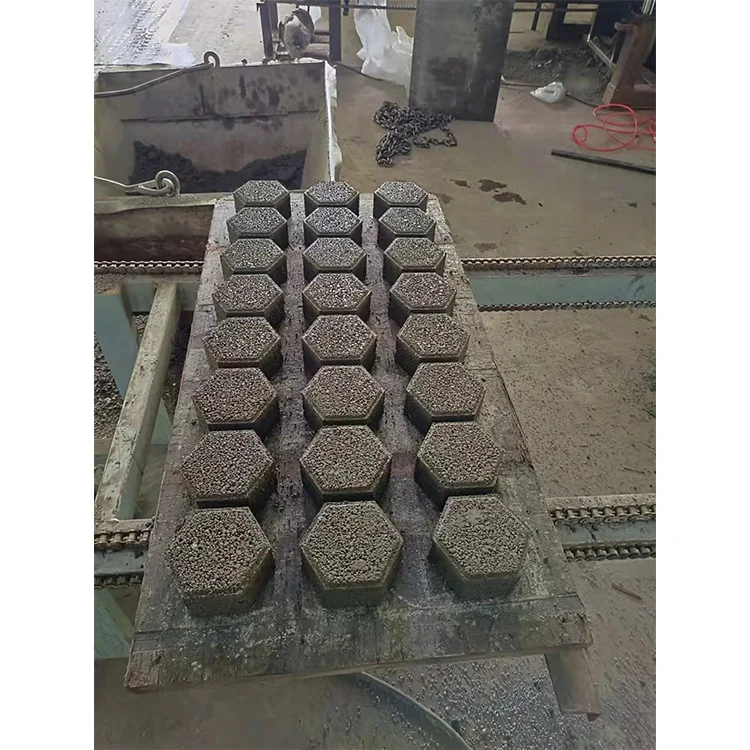
| Hollow block production | Fly ash (up to 70%), slag, sand, crushed stone, cement |
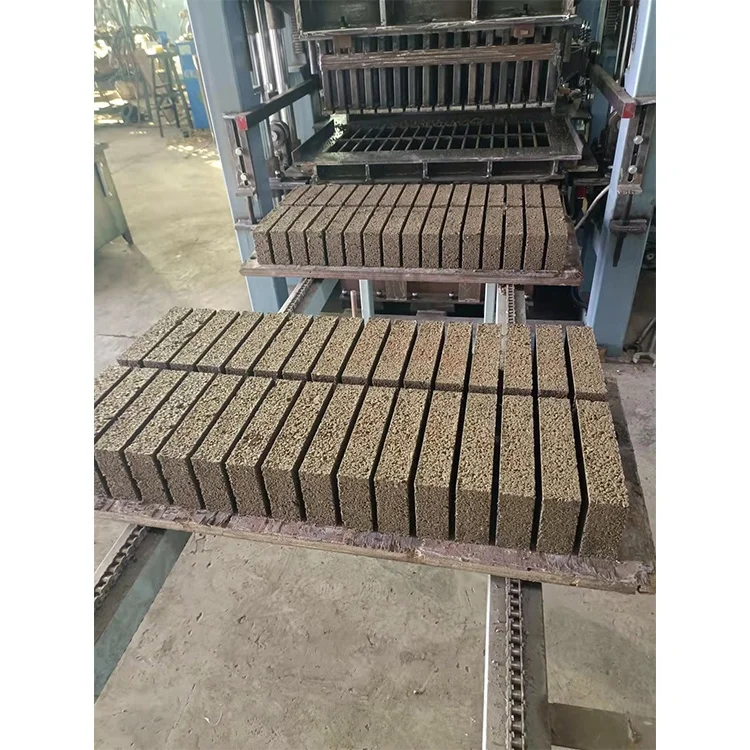
| Solid brick manufacturing | Gangue, industrial residue, cement blend |
| Rectangular paver forming | Crushed stone and cement mix, 200×100×60 mm format |
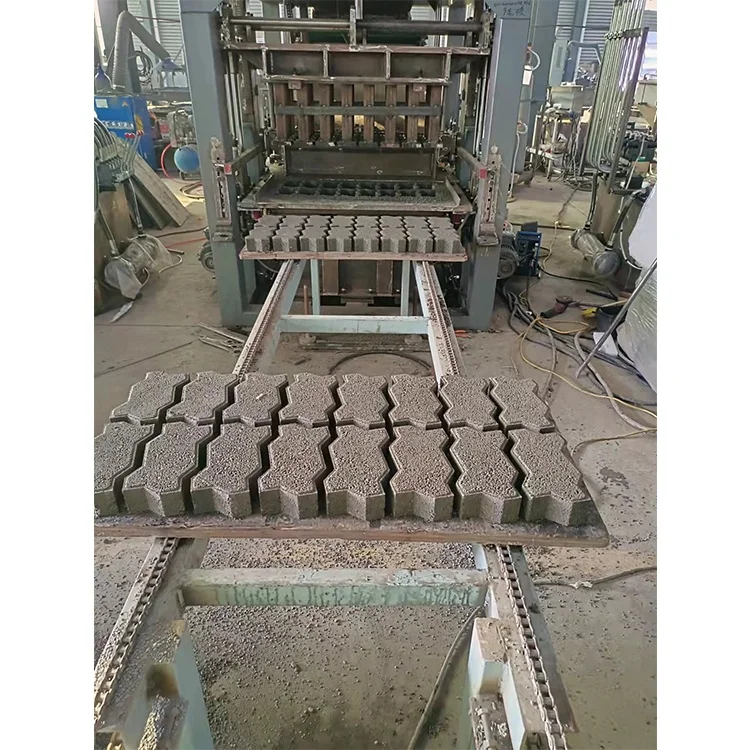
| Interlocking / zigzag brick | Local aggregate with cement, 225×112.5×60 mm format |
| On-site contractor production | Locally sourced sand and stone, variable formats via mould change |
What "Cycles per Hour" Conceals About Your Daily Output
Capacity only matters when tied to a specific block format and cycle time.
Many quotations quote a single cycles-per-hour figure without stating which block size that number assumes. I once saw a buyer in West Africa receive an automatic block machine PLC controlled setup expecting the brochure headline number, only to find that running interlocking bricks pushed the cycle from 15 seconds to 25 seconds, cutting hourly output by a third. The press was not at fault — the capacity calculation simply had not been matched to the format the buyer actually sold. [NEED_CITE: block format impact on cycle time and daily throughput]
When you compare machines, always ask for a capacity table that states output per format, per mould cavity count, and per realistic cycle time including pallet transfer. Without that, you are comparing a headline against a guess.
How PLC Control Removes Operator Guesswork
On a semi-automatic line, the operator decides when to feed material, when to start vibration, and when to demould — and those decisions drift over a long shift. The QT5-15 automatic block machine PLC controlled system locks each step into a timed sequence stored on the touch screen. Once the parameters for a given block format are set and saved, every cycle repeats identically whether it is the first pallet of the morning or the five-hundredth.
Fault Diagnosis Without Waiting for an Overseas Call
The PLC monitors sensor feedback across the pallet feeder, material hopper, vibration motors, and hydraulic station. When a value falls outside its stored range, the touch screen displays the fault location and a diagnostic code. This means your operator can identify a stuck proximity sensor or a hydraulic pressure drop before it causes a full line stop. [NEED_CITE: PLC fault diagnosis standards in concrete block machinery]
Reading the Specs That Actually Shape Your Output
Vibration force and hydraulic pressure work as a pair. The QT5-15 delivers 80 kN of platform vibration at a frequency adjustable from 0 to 60 Hz, while the independent hydraulic station applies compaction pressure from above. If your local aggregate is coarse crushed stone, you need higher vibration amplitude and longer dwell to consolidate the mix fully. If your material is fine fly ash, excessive vibration causes segregation. The PLC stores separate recipes so you can switch between mix designs without manual recalibration.
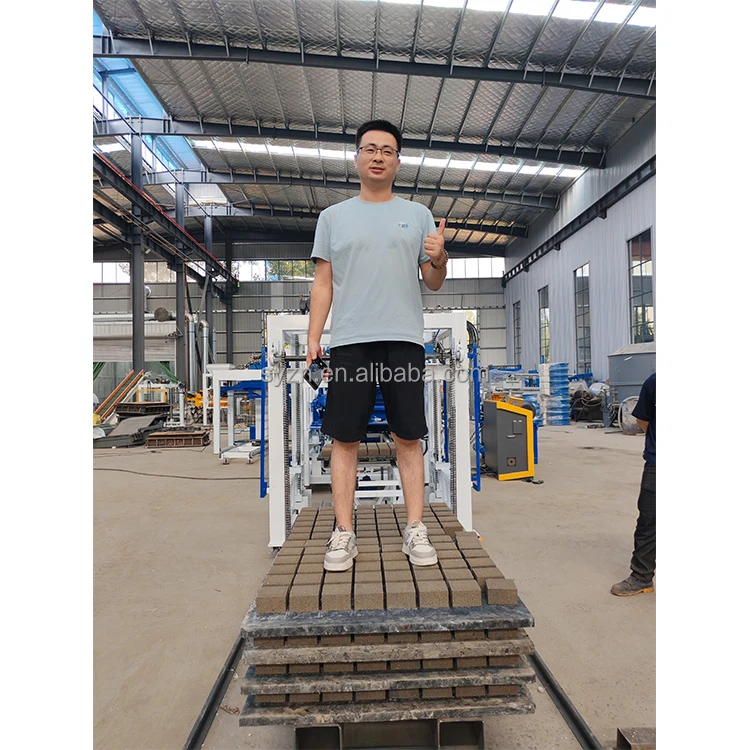
The 1100 × 550 mm pallet size determines how many blocks fit per cycle — five 400×200×200 mm hollow blocks or thirty-two 240×115×53 mm solid bricks. That pallet dimension must also match your curing rack spacing and the forklift tine width already in your yard. A mismatch here means you either re-rack your entire curing area or handle pallets by hand.
The Hidden Cost of Overlooking Automation Boundaries
A common mistake is buying an automatic press and then discovering that pallet return, stacking, and curing rack handling were not part of the quotation. The QT5-15 automates pallet feeding, material dosing, vibration, and hydraulic demoulding — but downstream stacking is batch-style, meaning products come off together for manual or separate mechanical stacking. If your labour plan assumed a fully automatic line from mixer to cube, you will need to budget for an add-on stacker or assign crew members to that station. [NEED_CITE: automation level definitions in block production lines]
Skipping voltage confirmation before production is another trap. The 32 kW total power draw requires a stable three-phase supply at the correct frequency, and the PLC display language must match your operator team. I have seen machines sit uncommissioned for weeks because the control screen arrived in a language the local electrician could not read.
Why Source This Machine Through a Single-Focus Block Line Supplier
Block machinery is the only product line, so the press, mould, pallet, and handling equipment are specified as one matched system. The QT5-15 configuration starts with your raw material sample and target block format, not a catalogue default. Mould design covers every format your market sells, including custom drawings when standard cavity layouts do not fit. The automation level is selectable — you can begin with the PLC-controlled core and add automatic stacking later. Installation includes on-site commissioning and operator training so your team is running format changes independently before the technician leaves.
Documentation & Verification
- Line layout and capacity calculation stating output per block format for the QT5-15
- Machine specification sheet covering vibration force, hydraulic pressure, and pallet size
- Mould drawing and format list including custom cavity designs to your drawings
- Hydraulic and electrical schematic for the independent integrated station
- Voltage, frequency, and PLC display language confirmation before production
- Factory test record running your specified block format and mix design
Installation, Commissioning & Support
- Foundation must support 5000 kg total mass across the 7400 × 1950 mm footprint with level tolerance for platform vibration accuracy.
- Dedicated three-phase circuit rated for 32 kW overall power with voltage and frequency confirmed before electrical panel build.
- Machine ships as a single assembly; on-site placement requires overhead clearance above 2800 mm height.
- First-run commissioning includes PLC parameter input for your block format, vibration frequency tuning, and hydraulic pressure calibration.
- Operator training covers touch screen recipe storage, mould change procedure, and fault code response.
- Wear parts list provided with mould cavity spares and hydraulic seal kits identified by part number.
Before You Request a Quote
Tell us which block formats your market actually buys — hollow, solid, paver, or interlocking — and the daily volume you need per format. Share your local aggregate type and any existing mix design, along with your site voltage and frequency. If you already have curing racks and forklifts on site, send the pallet dimensions they accept so the 1100 × 550 mm pallet can be verified or adjusted.
Frequently Asked Questions
Q: How is realistic daily output calculated per block format on the QT5-15?
A: Daily output is calculated from the moulding cycle time for each specific format. For example, a 400×200×200 mm hollow block runs at 15–20 seconds per cycle with five cavities, giving 900–1200 pieces per hour. Interlocking bricks use a 20–25 second cycle with sixteen cavities. We provide a capacity table listing every format you plan to produce, not a single headline number.
Q: What automation level is included, and what is the upgrade path?
A: The QT5-15 automates pallet feeding, material dosing, vibration pressing, and hydraulic demoulding under PLC control. Products exit together for batch stacking. If you later add an automatic stacker and cubing system, the PLC architecture supports integration without replacing the main controller, letting you move from semi-automatic downstream handling to a fully automatic line.
Q: How does the PLC control system handle fault diagnosis?
A: The touch screen monitors sensors across the pallet feeder, hopper, vibration motors, and hydraulic station. When a reading drifts outside its stored range, the screen displays the fault location and diagnostic code. Display language is confirmed with you before production so your operators can read alerts in their working language.
Q: How long does a mould change take on this machine?
A: The QT5-15 uses a quick mould replacement system. Exact changeover time depends on the format pair being switched and operator familiarity. We recommend confirming the procedure during commissioning so your team can complete the swap and resume production within a single shift without external tools beyond standard wrenches.
Q: How are voltage, frequency, and electrical components confirmed before shipment?
A: We request your site voltage, frequency, and preferred PLC display language in writing before production begins. The electrical panel is built to those specifications, and the factory test record verifies motor rotation, sensor response, and PLC communication at the confirmed voltage before the machine is cleared for packing.