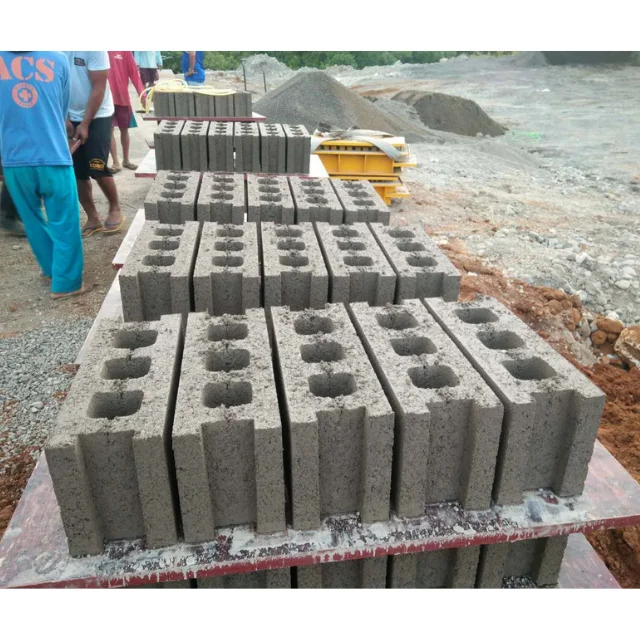


Description
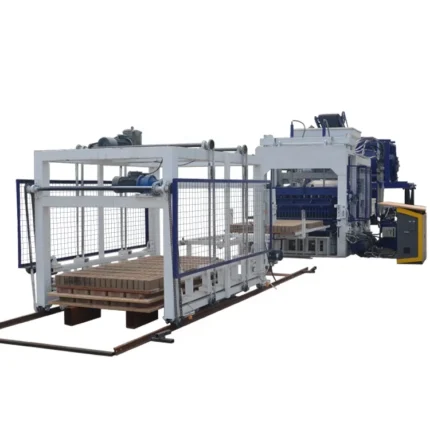
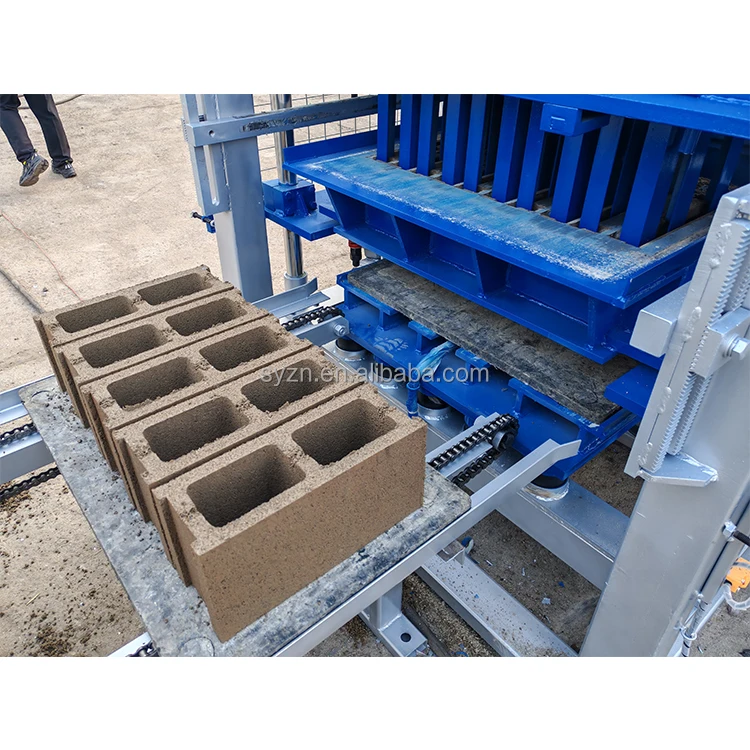
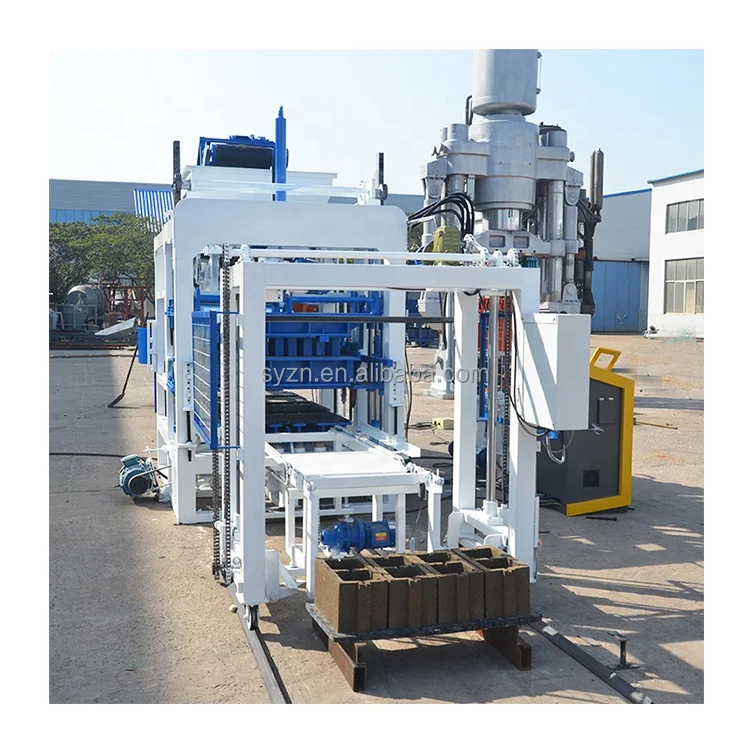
Intelligent Control Integration — The automatic QT5-15 block machine PLC controlled system synchronizes pallet feeding, material loading, vibration, and demoulding through a single programmable logic controller, eliminating the timing mismatches that cause inconsistent block density in manually coordinated lines.
Technical Specifications
| Parameter | Value |
|---|---|
| Model | QT5-15 |
| Product Type | Hydraulic Block Making Machine |
| Overall Dimensions | 7400 × 1950 × 2800 mm |
| Total Mass | 5000 kg |
| Vibration Form | Platform Vibration |
| Vibration Frequency | 0–60 Hz |
| Vibration Force | 80 kN |
| Hydraulic System | Independent integrated hydraulic station |
| Demolding Method | Hydraulic |
| Pallet Size | 1100 × 550 mm |
| Molding Cycle | 15–20 s (basis not stated in source — confirm block format / material / thickness) |
| Control System | PLC with touch screen interface |
| Overall Power | 32 kW |
| Automation Level | Automatic (pallet feeding, material feeding, vibrating, demoulding) |
| Mould Change | Simple replacement for multi-format production |
| Compressive Strength of Blocks | >15 MPa |
| Output Capacity | 900–1200 pcs/h (based on 400×200×200 mm hollow block, 5 pcs/mould) |
| Output Capacity | 1080–1440 pcs/h (based on 400×150×200 mm hollow block, 6 pcs/mould) |
| Output Capacity | 5760–7680 pcs/h (based on 240×115×53 mm solid brick, 32 pcs/mould) |
| Output Capacity | 3600–4500 pcs/h (based on 200×100×60 mm rectangular brick, 25 pcs/mould) |
| Output Capacity | 2304–2880 pcs/h (based on 225×112.5×60 mm zigzag brick, 16 pcs/mould) |
| Raw Materials | Fly ash (up to 70%), slag, gangue, sand, crushed stone, cement, water |
| Factory Area Required | 1000 m² |
| Standards | CE declared |
Application Suitability
| Application | Material or Output |
|---|---|
| Hollow block production | Crushed stone, sand, and cement mixes for load-bearing and partition walls |
| Solid brick production | Fly ash, slag, and gangue blends for structural masonry |
| Paving brick production | Dense aggregate mixes for pedestrian and light-traffic surfaces |
| Interlocking brick production | Cement-stabilized sand for dry-stack wall systems |
| Environmental protection brick | Industrial residue mixes with fly ash content up to 70% |
What the Cycle Time Promise Actually Depends On
The automatic QT5-15 block machine PLC controlled configuration ties every station to a single logic sequence, so cycle time stays consistent across a full shift rather than drifting as operators fatigue.
A quoted 15–20 second cycle only holds when the block format, mix design, and pallet condition all match the test baseline.
In the field, I have watched lines lose significant output per hour simply because the moisture content of local sand shifted between morning and afternoon, lengthening the vibration phase the PLC allowed before demoulding. The controller can compensate, but only if the approach switches and pressure sensors are calibrated to your actual aggregate, not a laboratory sample. Buyers who skip this step often discover their real daily tally falls well below the brochure figure. [NEED_CITE: aggregate moisture variability effects on concrete block cycle time]
How the PLC Removes Operator Guesswork
On a semi-automatic line, the operator decides when to feed, when to vibrate, and when to release the mould — three human judgments that vary from person to person and hour to hour. The automatic QT5-15 block machine PLC controlled architecture replaces those judgments with timed sequences monitored by approach switches at each station, so pallet feeding, material distribution, vibration duration, and hydraulic demoulding follow the same pattern every cycle.
The touch screen interface lets the supervisor adjust parameters without opening the electrical cabinet, which matters when a new block format requires different vibration amplitude and dwell time. This is the core of what intelligent control adds: repeatability that manual operation simply cannot sustain over a ten-hour shift.
Where Remote Fault Diagnosis Cuts Downtime
When a sensor fails or a hydraulic valve sticks on a remote site, the difference between a quick fix and a week-long shutdown often comes down to whether the control system can communicate the fault clearly. The PLC in this automatic QT5-15 block machine PLC controlled setup stores fault logs with timestamp and station ID, so a technician reviewing the error history can identify whether the issue originated at the pallet feeder, the mixer gate, or the press itself.
For buyers operating far from the nearest service engineer, that diagnostic detail means a phone call can replace a site visit in many cases. [NEED_CITE: PLC remote diagnostics adoption in construction equipment] The independent hydraulic station, physically separated from the vibration table, also keeps oil contamination from dust and fines — a frequent cause of valve failure in block plants — away from the most sensitive components.
Reading the Specs That Matter for Consistent Block Quality
Vibration force and hydraulic pressure work together to determine the final density of every block that leaves the press. The 80 kN vibration force applied through the platform is what compacts the mix into the mould cavity, while the hydraulic demoulding system must release the formed block without disturbing its edges. If the hydraulic pressure is too aggressive relative to the vibration energy delivered, blocks crack on release; if too gentle, they remain under-compacted and fail strength tests. The 0–60 Hz frequency range gives the operator enough bandwidth to tune the vibration profile for everything from lightweight fly ash mixes to dense crushed-stone pavers.
Pallet size is another specification that reaches beyond the machine itself. The 1100 × 550 mm pallet must match the curing racks and forklift tines already in your yard; ordering a non-standard size means replacing your entire handling infrastructure. The 32 kW total power draw determines the transformer and dedicated circuit requirements at the site, and confirming voltage and frequency before production begins avoids costly rewiring after the machine arrives. [NEED_CITE: voltage and frequency standards by export market]
The Hidden Cost of Skipping Control Language Confirmation
A PLC display in a language the local operator cannot read turns an intelligent machine into a guessing game. When a fault code appears and the operator cannot interpret it, the default response is to restart the machine, which can mask recurring sensor issues until they escalate into hydraulic or mechanical failure. I have seen plants run for weeks with a misaligned approach switch simply because the warning message on the touch screen was not understood. Confirming the control language and ensuring the operator manual matches the installed software version prevents this entirely avoidable source of unplanned downtime. [NEED_CITE: operator interface language requirements in industrial machinery safety standards]
Why Buyers Choose This Line for Intelligent Block Production
Block machinery is the single focus here, so the press, mould, pallet, and handling equipment are specified as one matched system rather than assembled from unrelated suppliers. The configuration is set against your actual mix design and local aggregate, not a catalogue default — the same approach I insist on after learning the hard way that factory settings rarely survive contact with real-world raw materials.
Mould design covers the formats your market actually buys, with custom drawings available when standard options do not match local demand. The automation level is selectable, so a buyer can start with the core press and add automatic stacking or cubing later without replacing the PLC. Factory testing runs your specific block format before dispatch, and the installation team stays through operator training so the crew is confident before the first production shift.
Documentation & Verification
- Capacity calculation sheet stating block format assumed for each output tier of the QT5-15
- PLC program parameter list with touch screen menu structure and language confirmation
- Hydraulic and electrical schematic showing component brands and circuit protection ratings
- Factory test record demonstrating cycle time and compressive strength on your mix design
- Mould drawing and format list covering every block type included in your order
- Operation and maintenance manual with approach switch calibration procedures
Installation, Commissioning & Support
- Foundation pad sized to 7400 × 1950 mm footprint with anchor bolt template supplied before machine arrival
- Dedicated 32 kW circuit with voltage and frequency confirmed to match PLC and hydraulic motor ratings
- Independent hydraulic station positioned to allow full service access without dismantling the vibration platform
- PLC touch screen commissioned on-site with parameter sets loaded for each ordered block format
- Operator training covers mould change procedure, approach switch adjustment, and fault log interpretation
- Wear parts list and hydraulic seal kit included for the first scheduled maintenance interval
Before You Request a Quotation
To size the control system and automation level correctly, we need your target block formats, the daily output you plan to sustain, and the raw materials available locally — especially the sand or aggregate source and its typical moisture range. Confirm your site voltage, frequency, and the PLC display language your operators require. If you have existing pallets, curing racks, or forklifts in place, share the dimensions so the pallet handling configuration aligns with what you already own.
Frequently Asked Questions
Q: How do I verify the output capacity for my specific block format?
A: Request a capacity calculation sheet that states the exact block dimensions, mould cavity count, and mix design used to derive each output figure. The QT5-15 cycle time varies by format and material density, so a single headline number is not meaningful without that context. We provide format-by-format projections before order confirmation.
Q: What does the automation level actually remove from the operator’s tasks?
A: The automatic configuration handles pallet feeding, material distribution, vibration timing, and hydraulic demoulding through the PLC sequence. The operator supervises via the touch screen, intervenes for mould changes, and manages raw material supply. Manual pallet handling and timing decisions are eliminated, which is where most consistency losses occur on semi-automatic lines.
Q: Can the PLC control language be set to match my local operators?
A: Yes, the touch screen interface language is confirmed during the order process and programmed before dispatch. We also match the operation manual and fault code reference to the same language. This step is built into the voltage and control confirmation stage so there are no surprises at commissioning.
Q: Is there an upgrade path from semi-automatic to full automatic operation?
A: The PLC architecture supports adding automatic stacking, cubing, and curing rack handling as separate modules. The core press and control platform remain the same, so upgrading does not require replacing the QT5-15 itself. The upgrade timing and integration scope are planned around your production growth and available floor space.
Q: How long does a mould change take on this machine?
A: The mould replacement system is designed for quick swap between formats, but the actual time depends on operator familiarity and whether the new mould is pre-staged beside the press. During training, the installation team times your crew on each format change so you know the realistic turnaround for your shift planning.