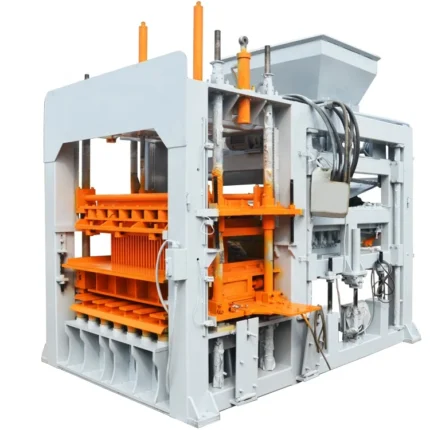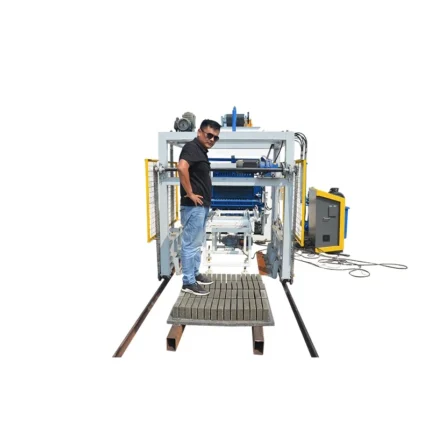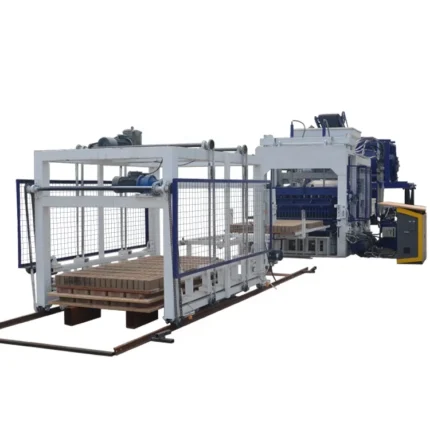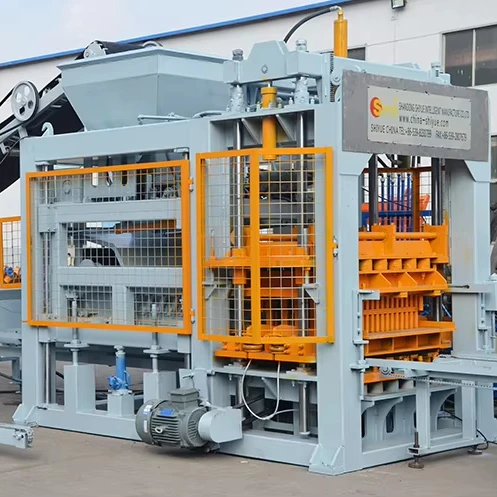
Description
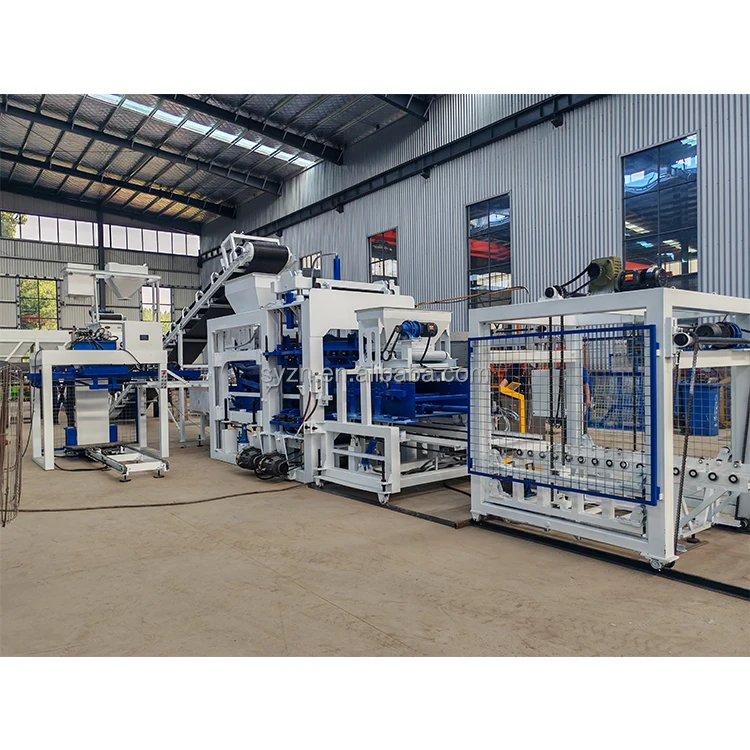
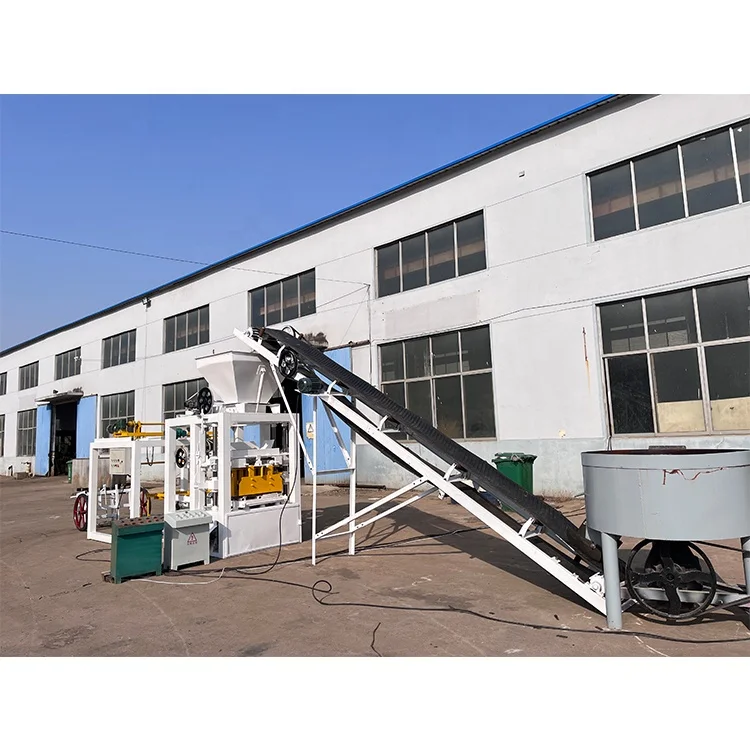
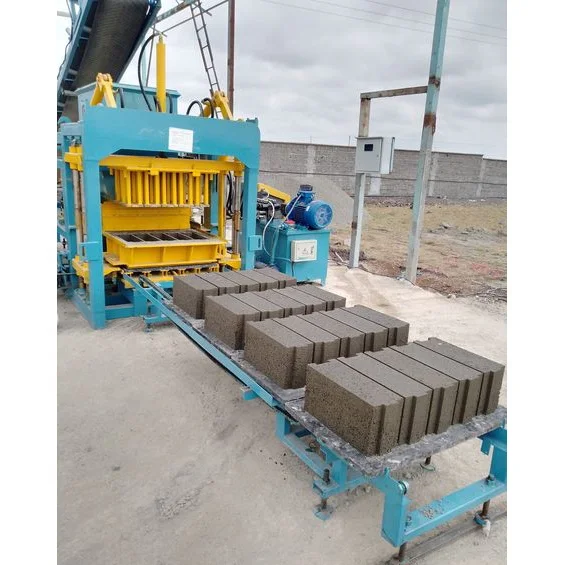
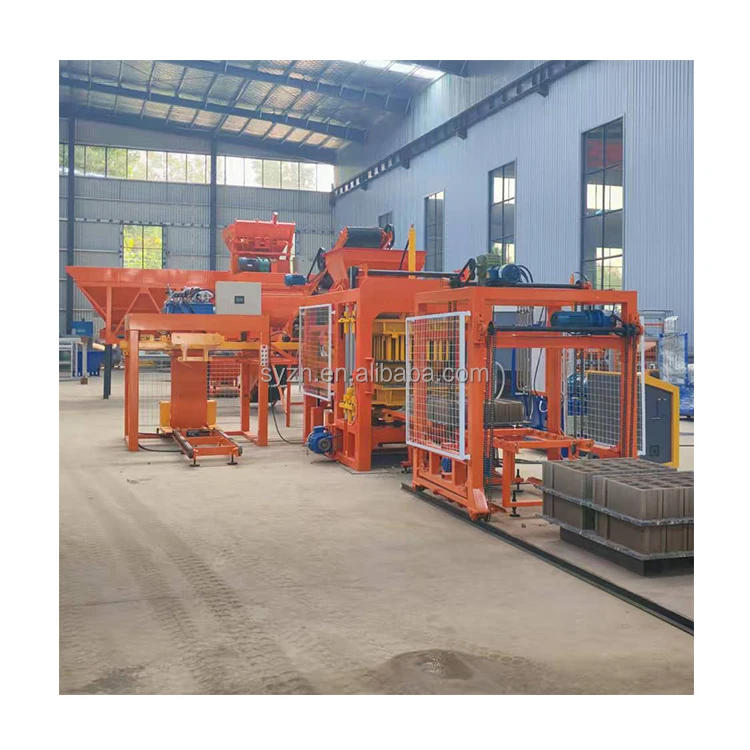
PLC-Controlled Block Press — Vibration force, hydraulic pressure, and automation logic configured as a single matched system against your actual mix design and target format, not assembled from separate catalogue defaults.
Technical Specifications
| Parameter | Value |
|---|---|
| Model | QT6-15 |
| Product Type | Automatic Concrete Block Making Machine |
| Overall Dimensions (L×W×H) | 8200 × 1700 × 2950 mm |
| Overall Power | 37 kW |
| Total Mass | 7 T |
| Vibration Form | Platform Vibration |
| Vibration Frequency | 0–60 Hz |
| Vibration Force | 45 kN |
| Hydraulic Demolding | Independent integrated hydraulic station |
| Pallet Size | 880 × 850 mm |
| Molding Cycle | 15–20 s (hollow block), 20–25 s (paving brick) |
| Control System | PLC with touch screen HMI |
| Fault Diagnosis | Built-in system |
| Safety Logic | Interlock control via PLC safe logic circuit |
| Block Compressive Strength | >15 MPa |
| Factory Area Requirement | 1200 m² |
| Hollow Block 400×200×200 mm | 6 pcs/mould, 1080–1440 pcs/h (basis: 15–20 s cycle) |
| Hollow Block 400×150×200 mm | 8 pcs/mould, 1440–1920 pcs/h (basis: 15–20 s cycle) |
| Solid Brick 240×115×53 mm | 32 pcs/mould, 5760–7680 pcs/h (basis: 15–20 s cycle) |
| Rectangular Brick 200×100×60 mm | 21 pcs/mould, 2160–2880 pcs/h (basis: 20–25 s cycle) |
| Zigzag Brick 225×112.5×60 mm | 15 pcs/mould, 2160–2880 pcs/h (basis: 20–25 s cycle) |
| Voltage & Frequency | (basis to be confirmed per buyer market) |
| PLC Display Language | (basis to be confirmed) |
Application Suitability
| Application | Material or Output |
|---|---|
| Hollow block production for load-bearing and partition walls | Crushed stone, sand, cement, waste ash, slag |
| Solid brick production for masonry and infill | Conventional aggregates and cementitious binders |
| Rectangular paving brick for walkways and yards | Aggregate-cement mixes with fine grading |
| Zigzag interlocking brick for driveways and heavy-traffic paving | High-density aggregate-cement blends |
| Multi-cellular block for insulated wall systems | Lightweight aggregates, fly ash, and cement |
Why the Voltage Question Should Come Before the Price on an Automatic Block Making Machine PLC Controlled
Commissioning delays most often trace back to unconfirmed electrical and control specifications, not the press itself.
Buyers negotiate lead time and price down to the last detail, then discover on arrival that the local supply frequency does not match the motor rating, or the PLC touch screen displays text in a language the operators cannot read. The automatic block making machine PLC controlled sits in the container for weeks while transformers are sourced or HMI firmware is rewritten. One project I supported in West Africa lost an entire dry season because the control panel was built for 50 Hz while the site ran on a 60 Hz generator set. The cost was not the machine; it was the idle crew and the missed delivery window [NEED_CITE: voltage and frequency standards by export market].
How PLC Logic Removes Operator Guesswork from Every Cycle
The QT6-15 runs its entire forming sequence through a programmable logic controller with a touch screen HMI. Each step — feed, vibrate, press, demold, advance pallet — is timed and interlocked so an operator cannot trigger an out-of-sequence action that would damage the mould or the green block. The built-in fault diagnosis system flags the exact sensor or solenoid that deviated, cutting troubleshooting from hours to minutes. For a plant owner moving off manual pallet handling, this is the point where consistency stops depending on who is running the shift.
Where Automation Stops and Where It Scales
This automatic block making machine PLC controlled handles the press cycle, raw material feeding logic, and pallet advance without manual intervention. What it does not include by default is the downstream stacking and cubing — those are separate stations that bolt onto the same control architecture. A buyer can commission the QT6-15 in semi-automatic mode, with workers pulling pallets off the line by hand, and later add automatic stacking and rack handling without replacing the PLC. The upgrade path is a wiring and programming change, not a new machine [NEED_CITE: modular automation scaling in block production lines].
Matching Vibration Force and Hydraulic Pressure to Your Mix
Block compressive strength above 15 MPa does not come from the press alone; it comes from matching the 45 kN vibration force and hydraulic pressure to the specific mix design and local aggregate. Platform vibration at adjustable frequencies between 0 and 60 Hz consolidates the mix from the bottom up, while the independent hydraulic station applies top pressure in a controlled profile. If the local stone has high clay content, the vibration frequency needs to stay lower to avoid liquefying the mix; if the aggregate is clean and angular, higher frequency produces denser blocks. This is why a factory default setting rarely matches what a buyer’s own material demands.
The Hidden Cost of Choosing the Wrong Pallet and Automation Pair
A pallet size that does not match the curing area forces double-handling: blocks come off the line on 880 × 850 mm pallets, but the forklift and rack spacing were laid out for a different dimension. Workers spend half the shift moving pallets instead of stacking output. Similarly, quoting a press without including pallet feeding and stacking means the machine cycles faster than the manual crew can clear the line, creating a bottleneck that looks like a capacity problem but is actually a handling problem. These conflicts show up only after the machine is bolted down [NEED_CITE: pallet handling mismatches in block plant layouts].
Why Sourcing This Automatic Block Making Machine PLC Controlled from a Single System Supplier Matters
Block machinery is the only product line, so the press, mould, pallet, and handling equipment are specified as one matched set rather than pulled from separate catalogues. Configuration is built around the buyer’s actual mix design, local aggregate, and target block format — not a generic default. Mould design covers the formats the buyer’s market actually sells, including custom drawings when standard sizes do not apply. Automation level is selectable at order, so a buyer can start with the QT6-15 base configuration and add stacking and cubing later. Installation includes on-site commissioning and operator training, with wear parts and mould availability confirmed before shipment.
Documentation & Verification
- Line layout and capacity calculation stating the block format assumed for each output figure
- Machine specification sheet with voltage, frequency, and PLC language confirmed per order
- Mould drawing and format list for every block type included in the quotation
- Hydraulic and electrical schematic for maintenance reference after commissioning
- Factory test record on the buyer’s specified block format before dispatch
- Operation and maintenance manual in the confirmed PLC display language
Installation, Commissioning & Support
- Foundation must support 7 T static mass plus dynamic vibration load across the 8200 × 1700 mm footprint
- Dedicated 37 kW electrical circuit with voltage and frequency confirmed before panel build
- Machine ships dismantled for container loading; on-site reassembly covers hydraulic, electrical, and pallet feed connections
- First production run includes cycle time verification on the buyer’s target block format
- Operator training covers PLC fault diagnosis, mould change procedure, and daily maintenance points
- Wear parts list specifies hydraulic seals, vibration components, and mould wear items for first replacement
What to Prepare Before Requesting a Quotation
To size the automatic block making machine PLC controlled correctly, share the block formats your market demands, the daily output target per format, and the local aggregate and cement you plan to use. Confirm the site voltage, frequency, and preferred PLC display language so the control panel is built right the first time. If you have an existing curing area, forklift, or upstream mixer, provide those dimensions so the pallet handling and line layout match what is already on the ground.
Frequently Asked Questions
Q: How is the QT6-15 capacity verified per block format, and what cycle time does each output figure assume?
A: Every capacity figure states the block format, pieces per mould, and cycle time range it assumes. Hollow blocks at 400×200×200 mm run at 15–20 seconds per cycle, while paving bricks require 20–25 seconds. The quotation includes a capacity calculation sheet so you can match daily planning to the format you actually produce.
Q: What PLC display languages are available, and how is the language confirmed before shipment?
A: The touch screen HMI supports multiple languages confirmed at order stage. The buyer specifies the preferred language during electrical confirmation, and the factory programs the HMI before the panel leaves the assembly floor, avoiding on-site firmware rewrites that delay commissioning.
Q: How does the automation level scale from the base QT6-15 configuration?
A: The base machine handles the press cycle, material feeding, and pallet advance under PLC control. Automatic stacking, curing rack handling, and cubing can be added later as separate stations wired into the same PLC architecture, so the upgrade is a wiring and programming extension rather than a machine replacement.
Q: What voltage and frequency configurations are supported for export markets?
A: The electrical system is built to match the buyer’s confirmed site supply. Voltage and frequency are locked in during the electrical confirmation stage before panel assembly, ensuring the motors, hydraulic pump, and PLC all match local grid or generator specifications on arrival.
Q: How is vibration force matched to local aggregate for consistent block strength?
A: The platform vibration frequency is adjustable between 0 and 60 Hz, and the hydraulic top pressure is set against the buyer’s mix design. During commissioning, test cycles on the local aggregate confirm the frequency and pressure settings needed to achieve block compressive strength above 15 MPa consistently.