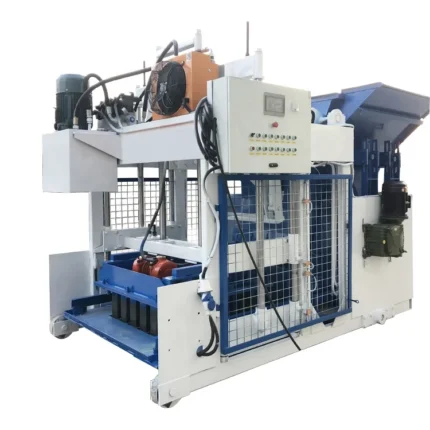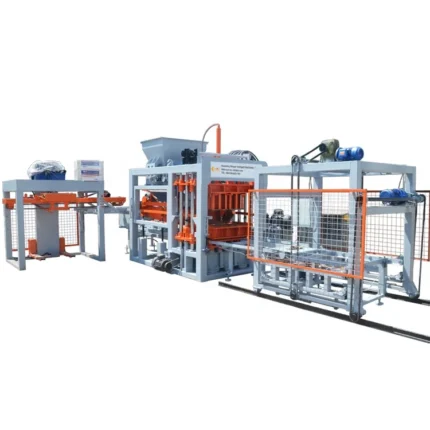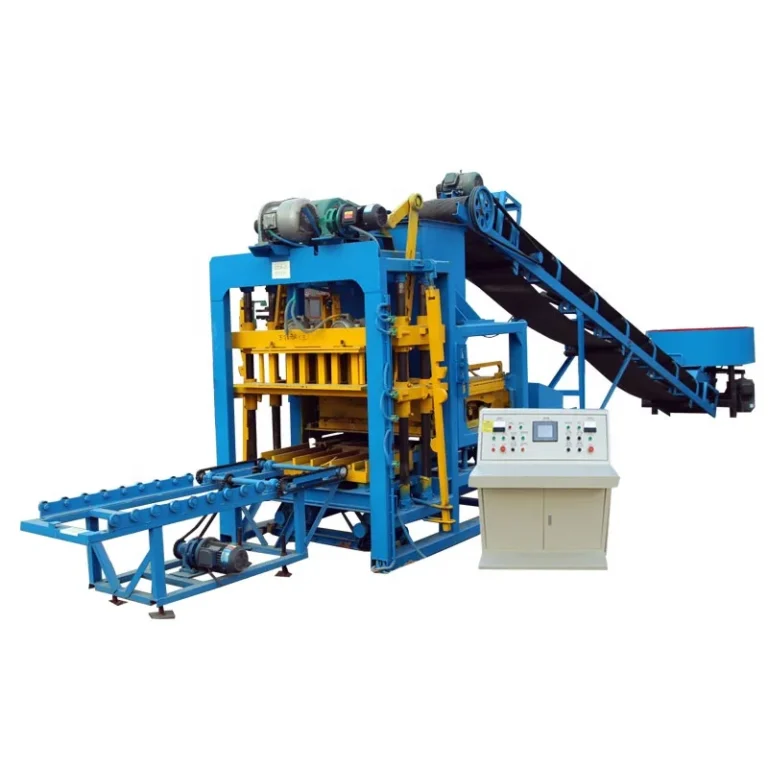


Description
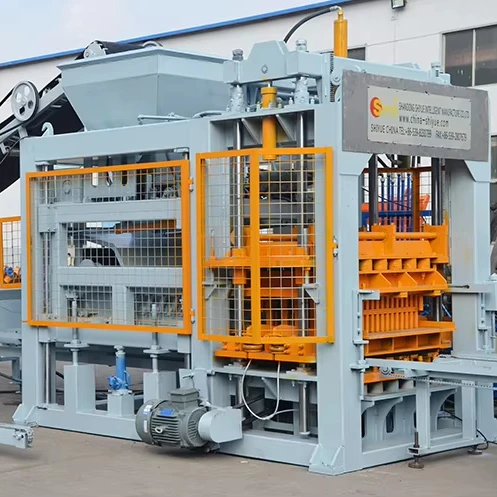
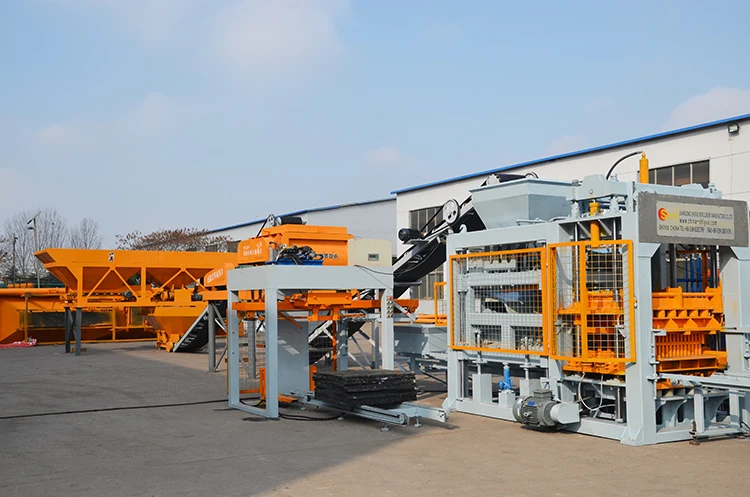
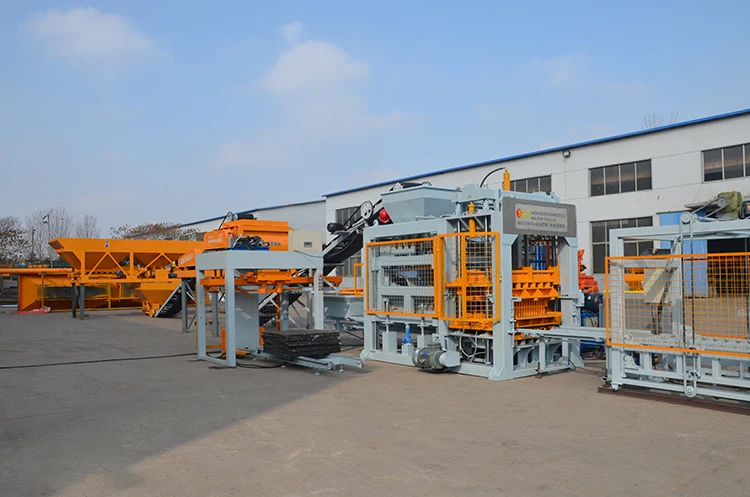
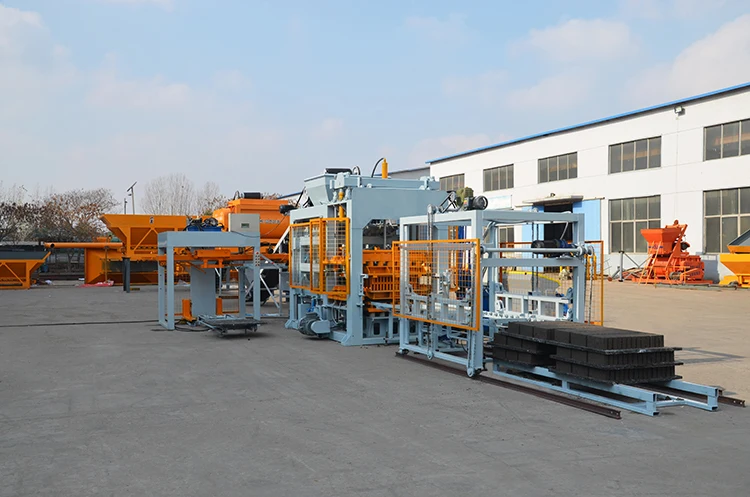
Matched Control Systems — The QT8-15 PLC, hydraulic station, and automatic stacker are configured as one integrated sequence, preventing the press from outpacing downstream handling during continuous production runs.
Technical Specifications
| Parameter | Value |
|---|---|
| Model | QT8-15 |
| Product Type | Automatic Concrete Block Making Machine |
| Overall Dimensions (L×W×H) | 8300 x 1860 x 3000 mm |
| Rated Hydraulic Pressure | 21 MPa |
| Vibration Form | Platform Vibration |
| Vibration Frequency | 2800-4500 RPM |
| Pallet Size | 950 x 900 mm |
| Molding Cycle | 15-25s (basis not stated in source — confirm block format and material) |
| Overall Power | 46 kW |
| Control System | PLC with Touch Screen HMI |
| Automation Level | High (manual/automatic mode transition) |
| Block Comprehensive Strength | Up to 15 MPa |
| Stacking Method | Automatic stacker (two pallets per cycle, 3-6 layers) |
| Standard Supporting Equipment | JS750 mixer, 8m belt conveyor, automatic stacker |
Application Suitability
| Application | Material or Output |
|---|---|
| Hollow block production | Crushed stone, sand, cement, and water mix designs |
| Solid block manufacturing | Dense aggregate blends for load-bearing masonry units |
| Paving block and kerbstone runs | Fine aggregate surface layers with standard concrete backing |
| Plant upgrades from semi-automatic lines | Facilities replacing manual pallet handling with PLC-controlled cycling |
| Format-flexible production plants | Operations requiring interchangeable moulds for multiple block profiles |
Why the Control Language Question Must Precede the Order
A PLC touch screen displaying the wrong language stops commissioning before the first block is pressed.
I once supported a QT8-15 installation where the HMI defaulted to Chinese characters. The local operators in West Africa could not navigate the menu, and we lost two full days sourcing a translator before parameter tuning could begin. The automatic QT8-15 block making machine PLC controlled interface is powerful, but only if the people standing in front of it can read what it says [NEED_CITE: on-site HMI language requirements for exported machinery]. Voltage mismatches cause similar delays — a 380V/50Hz machine arriving at a 440V/60Hz site will not start, and rewiring the control cabinet on a dusty block yard is not a commissioning plan. Confirming display language and electrical supply during the quotation stage removes the most common first-week failures entirely.
Removing Operator Dependency from the Press Cycle
The primary value of automation in block production is repeatability. On a manual or semi-automatic press, feeding time, vibration duration, and hydraulic dwell vary with the operator’s attention and fatigue. The automatic QT8-15 block making machine PLC controlled sequence locks these parameters per mould profile, so the hundredth block of a shift receives the same pressing sequence as the first. This consistency matters most when block strength testing is tied to project acceptance criteria.
What the Automatic Stacker Actually Changes Downstream
Without an automatic stacker, every pallet leaving the press must be pulled, carried, and stacked by hand. At the QT8-15 cycle rate, that means continuous manual lifting across a full shift. The integrated stacker handles two pallets simultaneously, building layers three to six high depending on block height. This does more than reduce headcount — it sets a predictable output rhythm that the curing yard and forklift schedule can be planned around [NEED_CITE: pallet handling bottlenecks in block production lines]. The press is no longer waiting for a worker to clear the discharge side.
Reading the Specs That Determine Block Quality
Platform vibration frequency between 2800 and 4500 RPM works together with the 21 MPa rated hydraulic pressure to compact the concrete mix. Higher vibration frequency consolidates fine aggregate into a denser matrix, while hydraulic pressure holds the mould walls rigid during consolidation — together they produce blocks reaching up to 15 MPa comprehensive strength. The 950 x 900 mm pallet size is not arbitrary; it must match the curing rack spacing and the forklift tine width already in use at the plant. If the buyer’s existing racks are built for 850 mm pallets, every pallet produced will need re-stacking before curing, negating the automatic stacker’s benefit. The 46 kW overall power draw dictates the transformer capacity and dedicated circuit requirements at the installation site. Mould change speed determines whether format flexibility is real or theoretical — if a swap takes most of a shift, a plant producing three block formats per week will spend more time changing moulds than pressing blocks.
The Cost of Skipping Configuration Verification
Buyers who confirm price before confirming site conditions absorb the hidden costs later. A machine wired for the wrong voltage requires an on-site transformer or a complete cabinet rewire before the PLC can power on. An HMI in an unreadable language forces the plant to hire a bilingual supervisor for every shift. A pallet size mismatched to the curing yard means double-handling every block the machine produces [NEED_CITE: common configuration mismatches in exported block machinery]. These are not warranty issues — the machine is built to specification. The specification was simply never confirmed against the site.
Why Source This Machine Through Shiyue
Block machinery is the single focus, meaning the QT8-15 press, moulds, pallets, and stacker are specified as one matched system rather than sourced from separate vendors and assembled on site. Machine configuration is set against the buyer’s actual mix design and local aggregate, not a catalogue default that assumes materials unavailable at the destination. Mould design covers the formats the buyer’s market actually sells, with custom drawings available when standard profiles do not match local building codes. The automation level is selectable, allowing a buyer to begin with the JS750 mixer and belt conveyor line and add batching and cubing stations later. Installation support includes operator training on the PLC interface, ensuring the crew can navigate parameter menus independently after the technician leaves.
Documentation & Verification
- Line layout and capacity calculation stating the block format assumed for the 15-25s cycle time
- PLC program parameter sheet listing stored mould profiles and adjustable timing ranges
- Hydraulic and electrical schematic matching the confirmed voltage and frequency
- Factory test record on the buyer’s specified block format before dispatch
- Pallet specification confirming dimensions, material, and load rating
- Mould drawing and format list with changeover procedure documentation
Installation, Commissioning & Support
- Foundation pad sized to the 8300 x 1860 mm footprint with vibration isolation provisions
- Dedicated 46 kW circuit with voltage and frequency confirmed before cabinet assembly
- PLC touch screen language and all parameter menus verified prior to crating
- Hydraulic station isolated from press vibration during installation to maintain seal integrity
- Operator training covering manual/automatic mode transition and mould profile recall
- Wear parts list with hydraulic seal and vibration motor replacement intervals documented
Preparing a Technical Inquiry
Provide the target block format and daily output requirement so the capacity calculation reflects your actual product rather than a generic figure. Specify the local voltage, frequency, and preferred HMI display language to ensure the control cabinet is built for your site. Confirm pallet dimensions against your existing curing racks and forklift equipment so the automatic stacker output integrates without re-handling.
Frequently Asked Questions
Q: How is the 15-25s molding cycle verified, and which block format does it assume?
A: The cycle range depends on block height, wall thickness, and mix consistency. We provide a capacity calculation sheet that states the exact block format used for the cycle time quote, so your daily output projection matches the product you will actually run rather than a best-case catalogue number.
Q: What PLC brand is installed, and can the display language be confirmed before shipment?
A: The PLC brand and touch screen language are confirmed during the quotation stage and documented in the electrical schematic. We verify the HMI displays your requested language during the factory test, eliminating commissioning delays caused by unreadable menus on site.
Q: How does the automatic stacker synchronize with the press cycle, and what happens if stacking is slower?
A: The stacker is timed to the press discharge cycle and handles two pallets per pickup across three to six layers. If block height produces a layer count that slows stacking below the press cycle, the PLC adjusts the press wait state to prevent pallet backlog at the discharge point.
Q: Can the QT8-15 line be upgraded to full batching and cubing later?
A: The base line ships with a JS750 mixer, belt conveyor, and automatic stacker. Additional stations — automatic batching, curing rack handling, and cubing — can be added as the plant scales, provided the original line layout reserved floor space and utility connections for expansion.
Q: What is the procedure for ordering additional moulds beyond the one included?
A: Additional moulds are designed against the buyer’s block drawings or selected from our format library. Lead time depends on profile complexity and is quoted per mould. Each new mould includes a parameter profile loaded into the PLC so operators recall settings without manual re-tuning.