Description
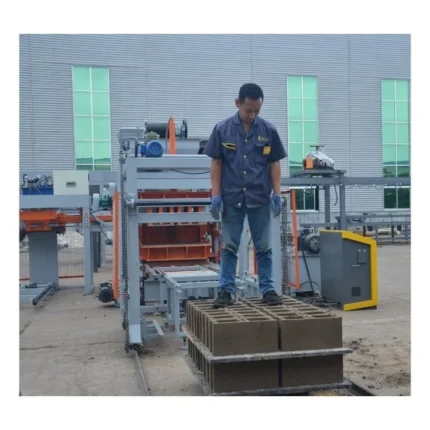
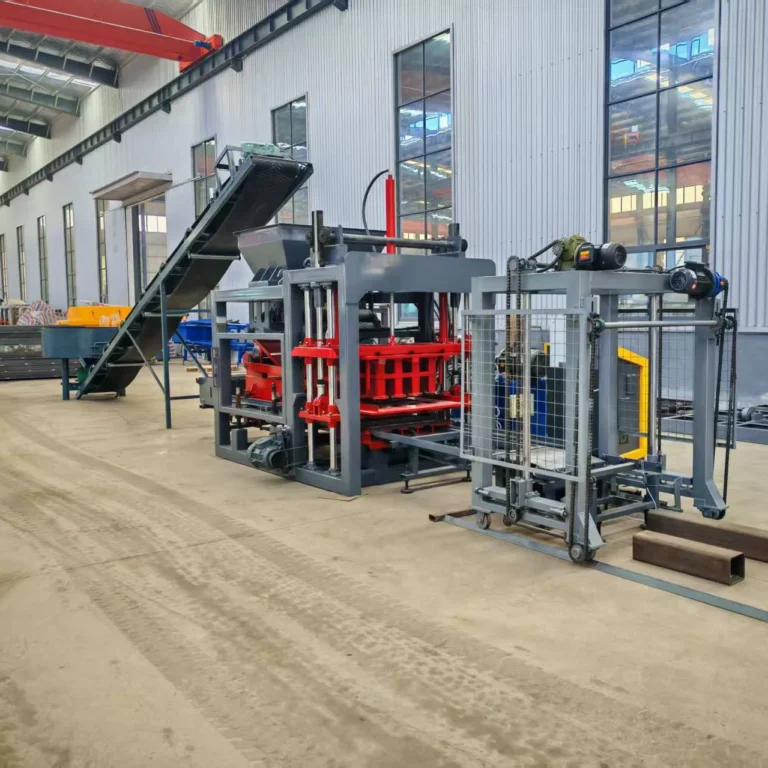
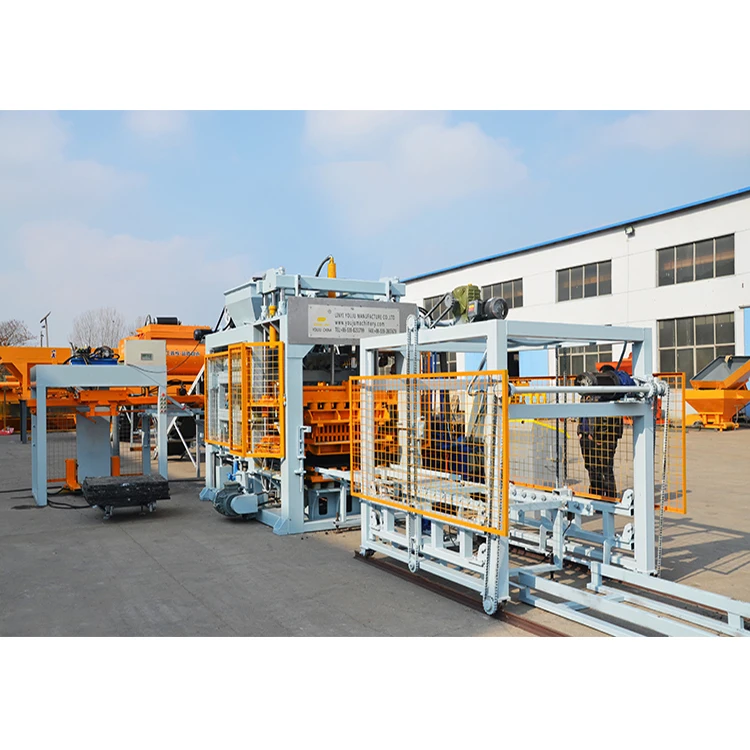
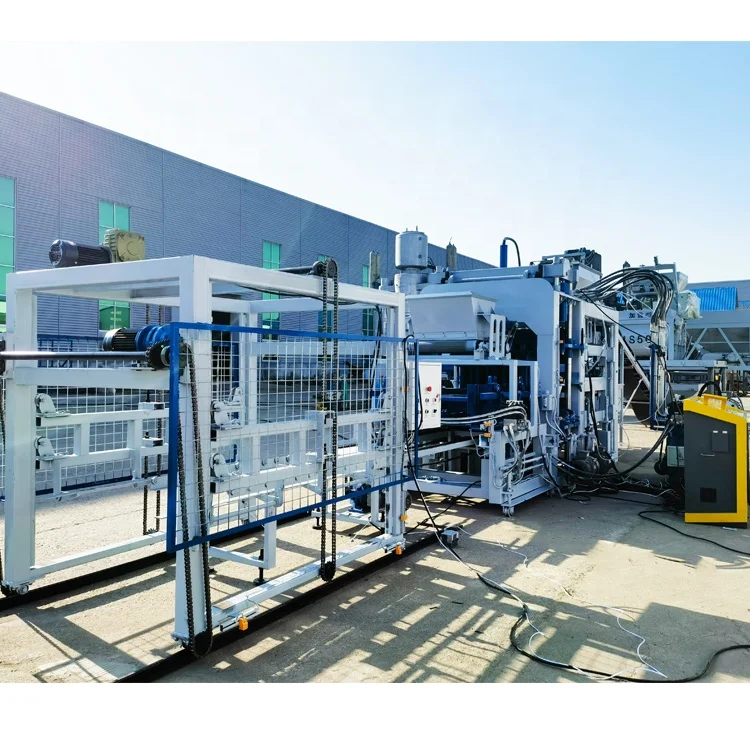
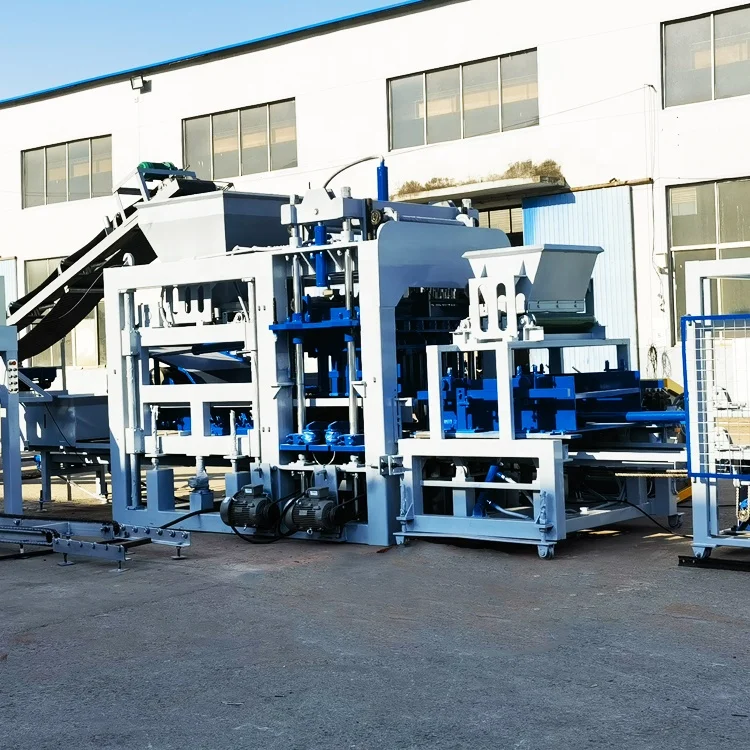
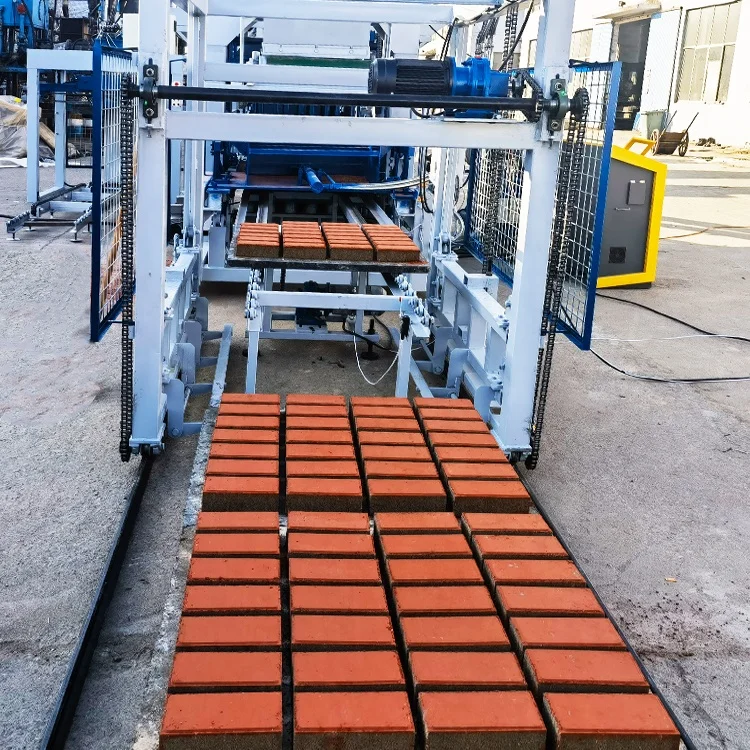
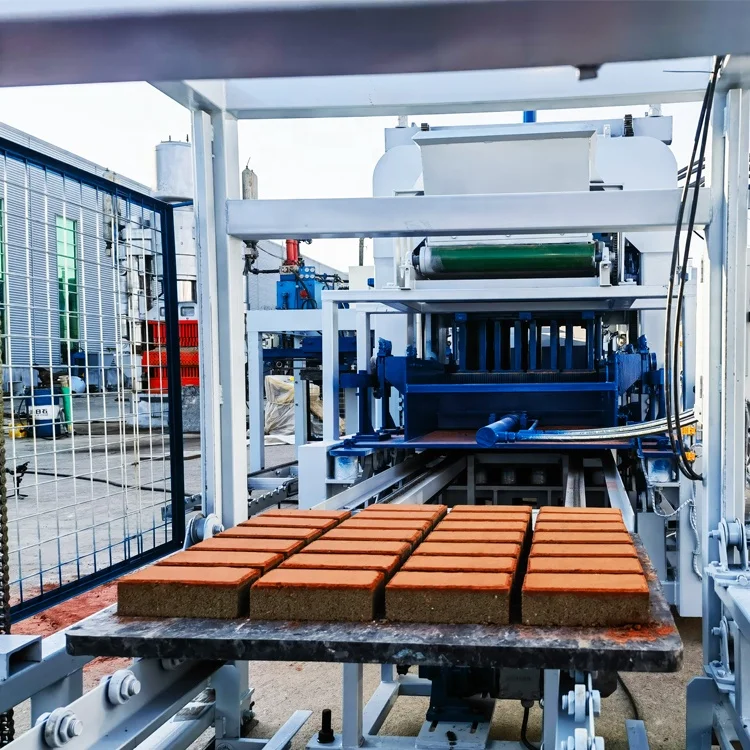
Intelligent Control Architecture — The QT8-15 PLC control unit synchronizes pallet feeding, material batching and press cycles into one governed sequence, removing the timing gaps that cause idle press time on manually coordinated lines.
Technical Specifications
| Parameter | Value |
|---|---|
| Model | QT8-15 |
| Product Type | Fully Automatic Hydraulic Concrete Block Making Machine |
| Overall Dimensions (L×W×H) | 8300×1860×3000mm |
| Molding Cycle | 15–20s |
| Vibration Force (Exciting Power) | 55kN |
| Rated Power | 37.2kW |
| Mixer Model | JS750 |
| Pallet Size | 1020×900mm |
| Total Weight | 8T |
| Control System | PLC control unit |
| Hydraulic Station | Included |
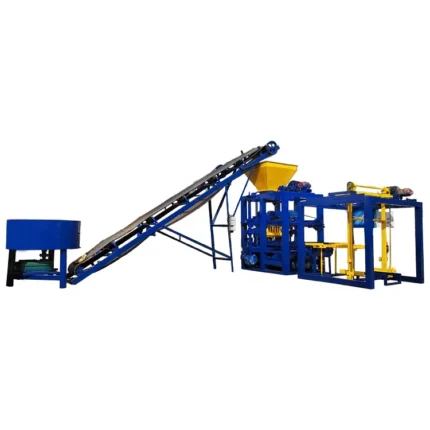
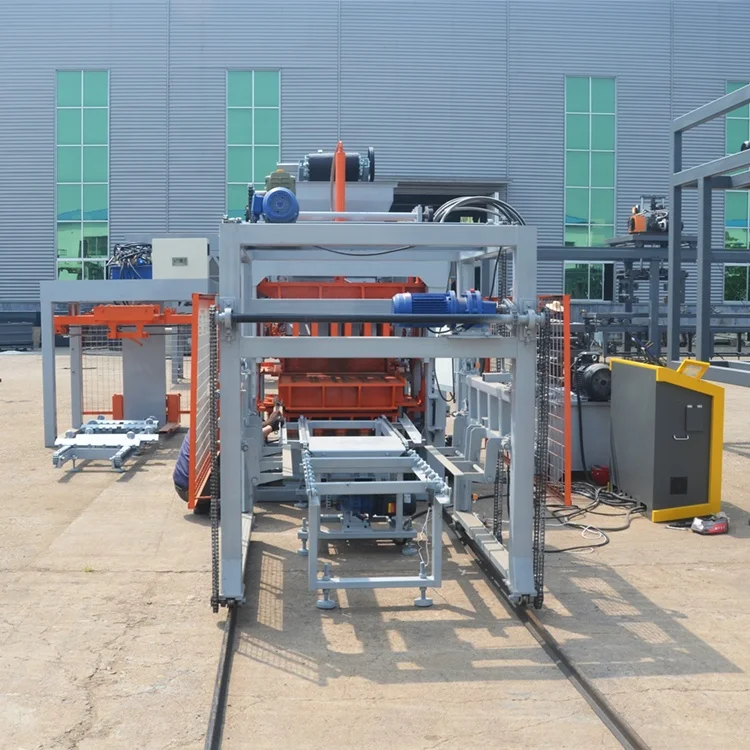
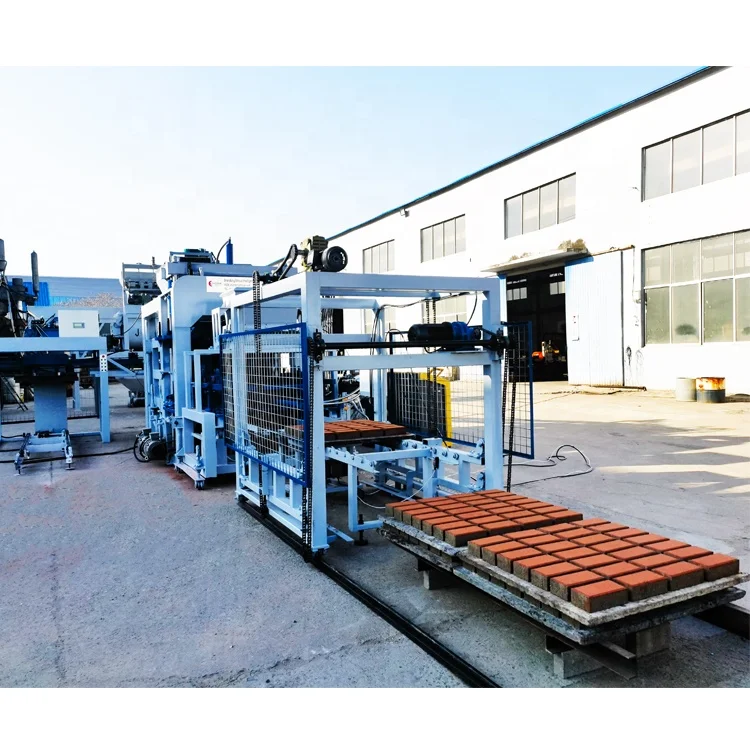
| Automation Level | Fully automatic (pallet feeder, block conveyor, block sweeper included) |
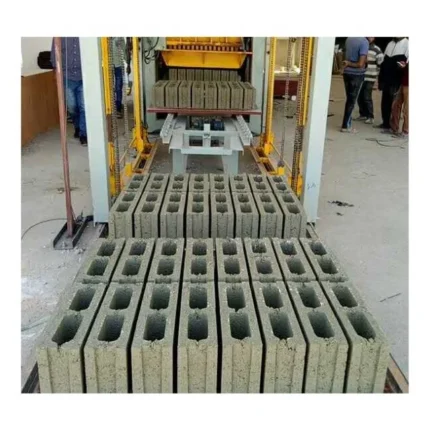
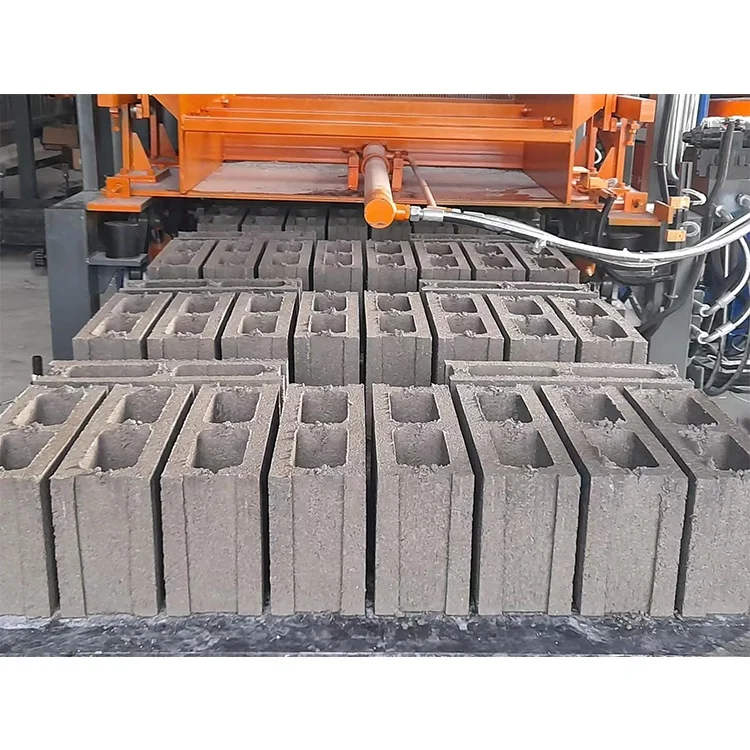
| Applied Products | Paver, solid block, hollow block, curbstone (mould change required) |
| Raw Materials | Crushed stones, sand, cement, dust, fly ash |
| Output Capacity | 1920 pcs/hour (basis not stated in source — confirm block format and thickness) |
Application Suitability
| Application | Material or Output |
|---|---|
| Hollow block production for load-bearing walls | Crushed stone, sand, cement, fly ash blends |
| Interlocking paver manufacturing for municipal paving | High-density concrete mix with fine aggregate |
| Solid block output for partition and infill walls | Standard cement and dust mixture |
| Kerbstone pressing for road and curb construction | Coarse aggregate with reinforced mould tooling |
What the PLC Actually Controls Beyond the Press Stroke
Automation only matters when every station in the line answers to the same brain.
I have watched fully automatic lines sit idle because the pallet feeder ran on its own timer while the press waited. The cycle counter kept ticking, but real output never matched the brochure. When a buyer evaluates a PLC controlled QT8-15 automatic block making machine, the question is not whether it has a screen — it is whether the PLC governs material feed, pallet indexing and block conveying as one timed sequence rather than three independent loops [NEED_CITE: PLC integration standards for concrete block lines].
Synchronization Across Every Station
The PLC control unit on this machine manages the press cycle, pallet feeder advance and material feed gate in a single program loop. When the press completes a vibration and hydraulic compression sequence, the PLC triggers the block conveyor to receive the finished pallet and simultaneously indexes the next empty pallet into position. This eliminates the dead seconds between cycles where a manually operated pallet feeder would lag behind the press rhythm. The result is a PLC controlled QT8-15 automatic block making machine that holds its molding cycle within the 15–20 second window consistently across a full shift.
Removing the Operator from the Timing Loop
On semi-automatic lines, the operator watches the press and decides when to feed the next pallet. Fatigue, distraction and shift changes all introduce timing variation that shows up as density differences between blocks pressed at the start versus the end of a run. With the PLC governing every station, the sequence repeats identically whether it is hour one or hour ten [NEED_CITE: operator fatigue impact on concrete block consistency]. Batch-to-batch consistency improves because the variable that changes most — human reaction time — is taken out of the loop entirely.
Reading the Specs That Shape Daily Output
The 55kN vibration force works together with the hydraulic station to compact the mix into the mould cavity. Vibration alone settles the aggregate; hydraulic pressure applied simultaneously locks that settled structure into a dense, uniform block. If the vibration force is high but hydraulic pressure is low, blocks leave the mould with good surface finish but low internal strength. The reverse produces strong but rough-faced blocks. The QT8-15 pairs both forces through the PLC so they engage in a programmed sequence matched to the mould format.
The 1020×900mm pallet size determines how many blocks fit per cycle and how the pallets stack in the curing area. A pallet dimension that does not match the buyer’s existing curing racks or forklift forks creates a secondary handling problem the press itself cannot solve. Buyers should verify pallet compatibility with their curing infrastructure before confirming the order.
The JS750 mixer feeds the press at a rate calculated to keep the material hopper charged without overflow. If the mixer output falls behind the press cycle, the PLC pauses the press to prevent underfilled moulds — a protection that preserves block weight consistency but reduces hourly throughput. Matching mixer capacity to press demand is part of the line configuration conversation, not a catalogue afterthought.
The Cost of Ignoring Station-to-Station Timing
When the pallet feeder, press and conveyor operate on separate controls, the fastest station sets the theoretical cycle while the slowest station sets the real one. Buyers who focus only on press cycle time often discover their daily output falls short because pallet handling and block conveying were never included in the original quotation [NEED_CITE: block line throughput gaps from unmatched station speeds]. The hidden cost is not a single broken part — it is the cumulative lost production across every shift where the press waited on a manual pallet handoff.
Why This Configuration Approach Works
Block machinery is our single focus, so the QT8-15 press, mould, pallet and handling equipment are specified as one matched system rather than assembled from separate suppliers. The automation level is selectable, meaning a buyer can start with the included pallet feeder and conveyor and add automatic stacking or cubing later as production volume grows. Machine configuration is set against the buyer’s actual mix design and local aggregate, not a catalogue default that assumes materials the buyer cannot source. Mould design covers the formats the buyer’s market actually sells, with custom drawings available for non-standard block profiles. Installation and commissioning include operator training so the PLC parameters are understood on-site, not just set at the factory.
Documentation & Verification
- Line layout and capacity calculation stating the exact block format assumed for the quoted cycle time
- Voltage, frequency and PLC display language confirmation documented before production begins
- Hydraulic and electrical schematic for on-site PLC and hydraulic station servicing
- Mould drawing and format list confirming which block profiles the quoted moulds cover
- Factory test record on the buyer’s specified block format before dispatch
Installation, Commissioning & Support
- Foundation plan matched to the 8300×1860mm footprint and 8T operating weight
- Dedicated power circuit sized for the 37.2kW rated load including mixer and hydraulic station
- Machine shipped in dismantled modules for container loading and reassembled on-site
- PLC parameter setting and molding cycle calibration during first-day commissioning
- Operator training covering mould change procedure across paver, hollow block and curbstone formats
- Wear parts and hydraulic seal list provided with double-quantity spare recommendations
What We Need to Size Your Line
To configure the QT8-15 around your actual production requirements, share the primary block format and dimensions you intend to press, your target daily output and the number of operating shifts. Confirm your site voltage, frequency and preferred PLC display language so the control system arrives ready for commissioning. If you already have curing racks, forklifts or an existing mixer in place, include those specifications so the pallet size and line layout are matched to what is already on your floor.
Frequently Asked Questions
Q: How is the 1920 pcs/hour output verified, and which block format does that figure assume?
A: That figure is referenced from the source data but the block format, thickness and mix density it assumes were not stated. Before quotation, we calculate capacity specifically for your target block dimensions and confirm the realistic cycle time including pallet indexing and conveyor transfer. This ensures the output number you plan around matches the format you will actually produce.
Q: What automation functions does the PLC control cover on the QT8-15?
A: The PLC governs press cycle timing, material feed gate operation, pallet feeder indexing and block conveyor activation as one synchronized program. It also monitors hydraulic station pressure and vibration sequence. Automatic stacking and cubing are available as upgrade modules that integrate into the same PLC architecture when production volume justifies the investment.
Q: How are voltage, frequency and PLC display language confirmed before shipment?
A: These parameters are documented in writing during the configuration stage, before production begins. The buyer confirms local supply voltage and frequency, and the PLC display language is set to match the operator team. This prevents commissioning delays caused by mismatched electrical supply or an interface the on-site crew cannot read.
Q: What is the mould-change procedure for switching between block formats?
A: The QT8-15 supports paver, solid block, hollow block and curbstone formats through mould exchange on the same press platform. The procedure involves releasing the mould clamping system, lifting the current mould with overhead handling equipment and securing the replacement mould. Exact changeover time depends on mould size and whether quick-release fittings are specified in the configuration.
Q: Which supporting stations are included to prevent press idle time?
A: The standard line includes an automatic pallet feeder, block conveyor and block sweeper, all governed by the PLC. The pallet feeder indexes empty pallets into the press at a rate matched to the molding cycle, while the conveyor removes finished pallets without waiting for manual handling. This keeps the press cycling at its programmed rhythm rather than pausing between strokes.