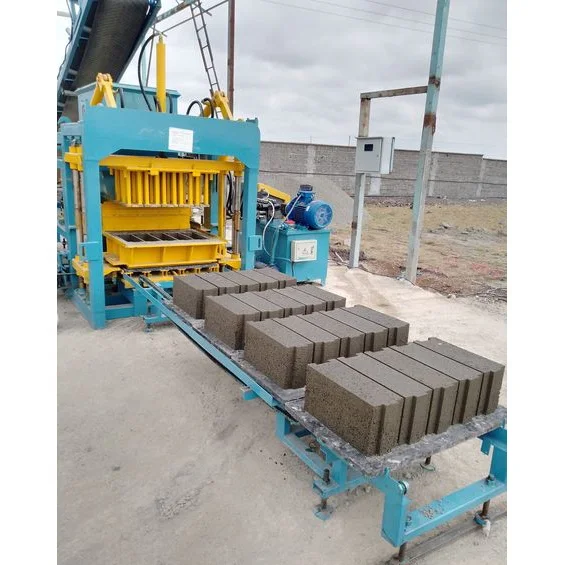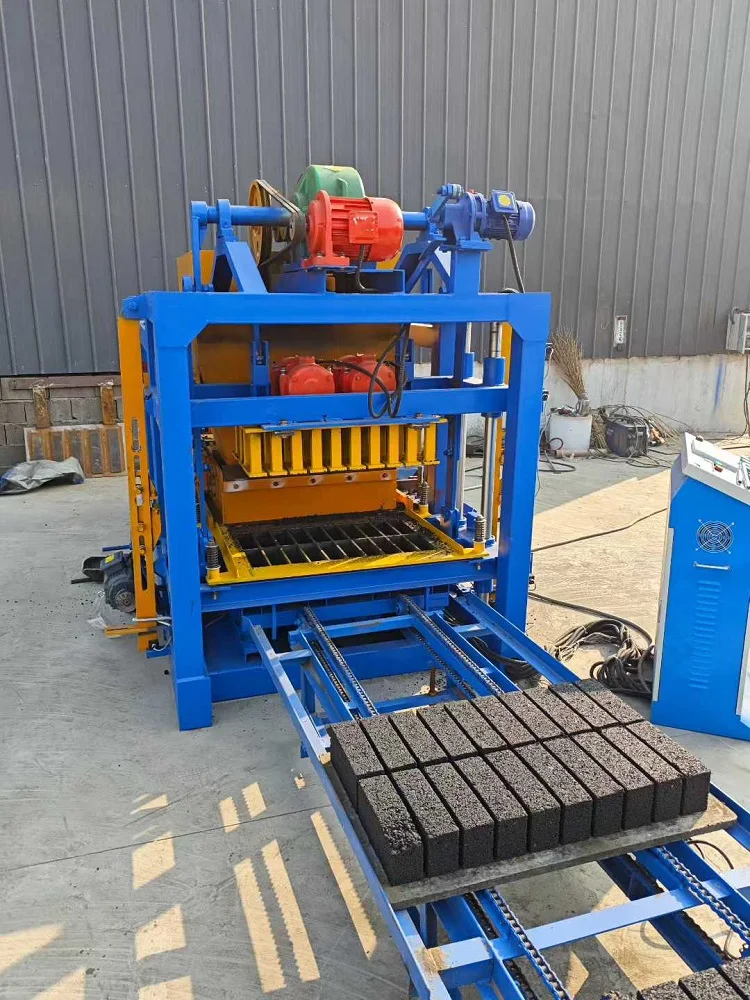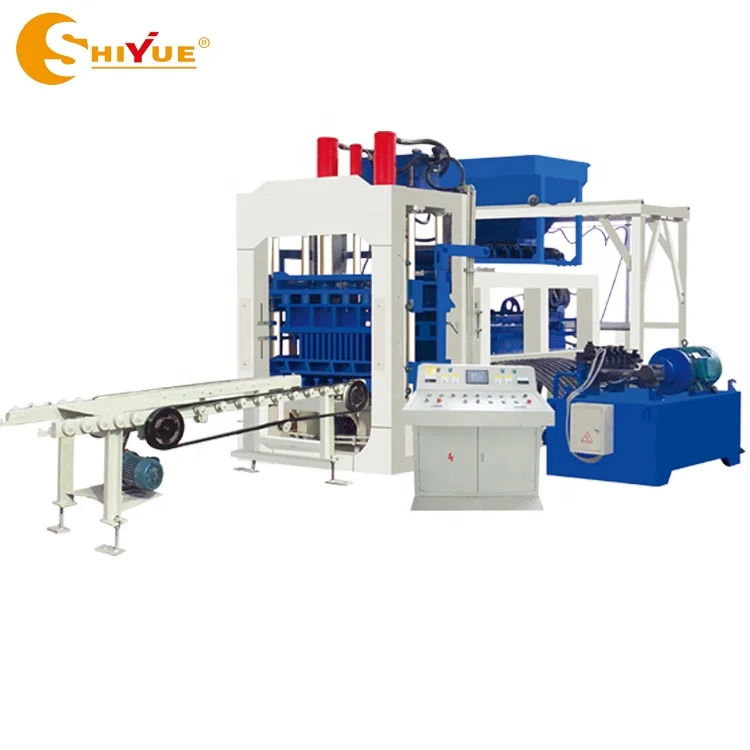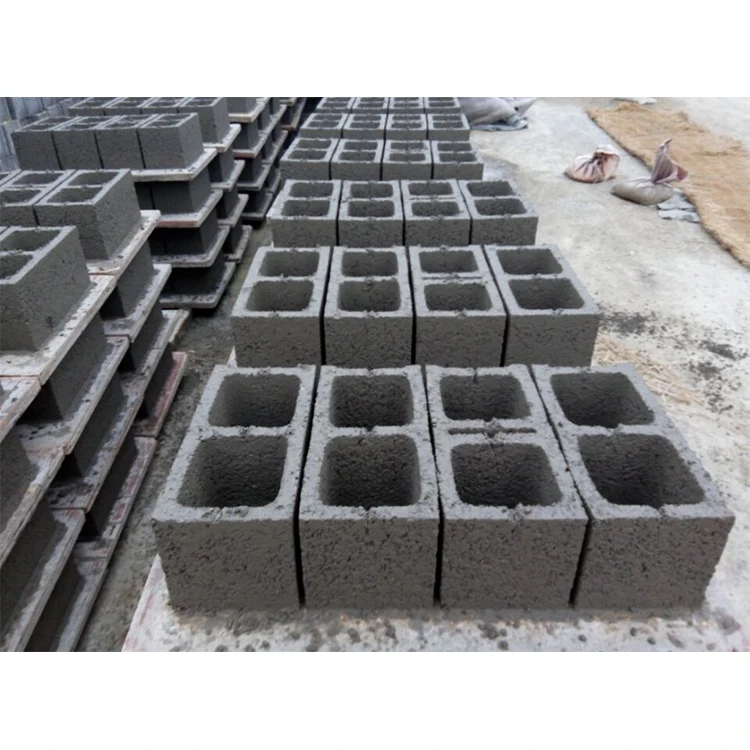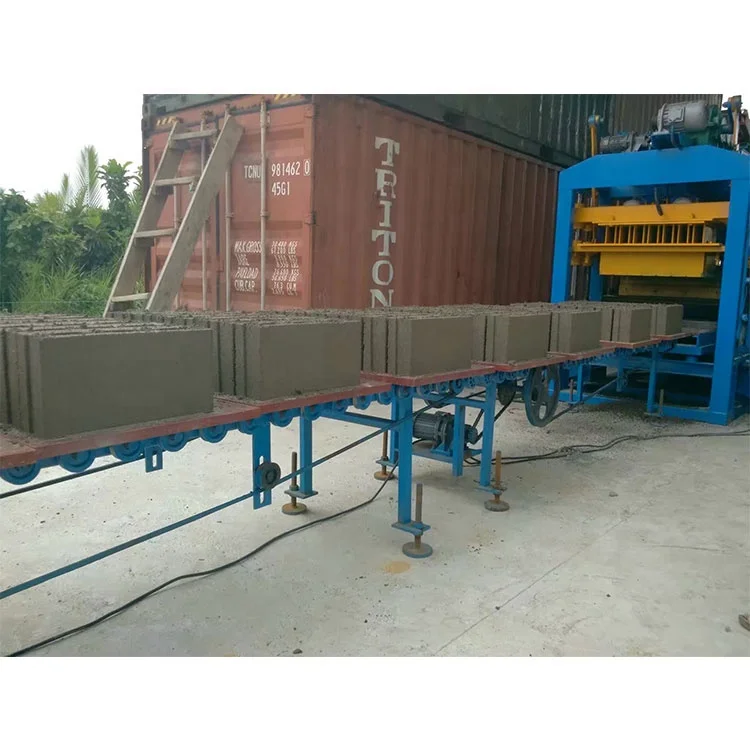
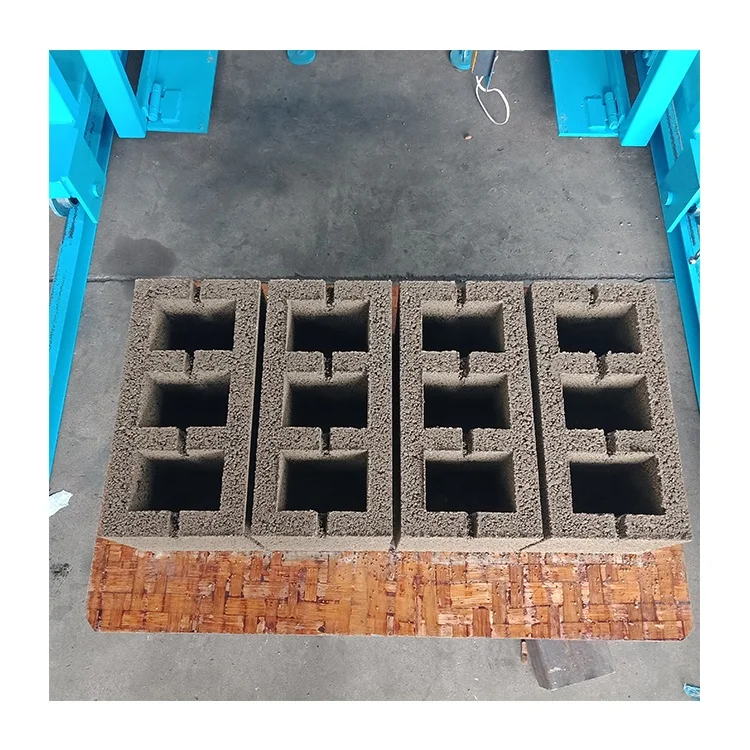
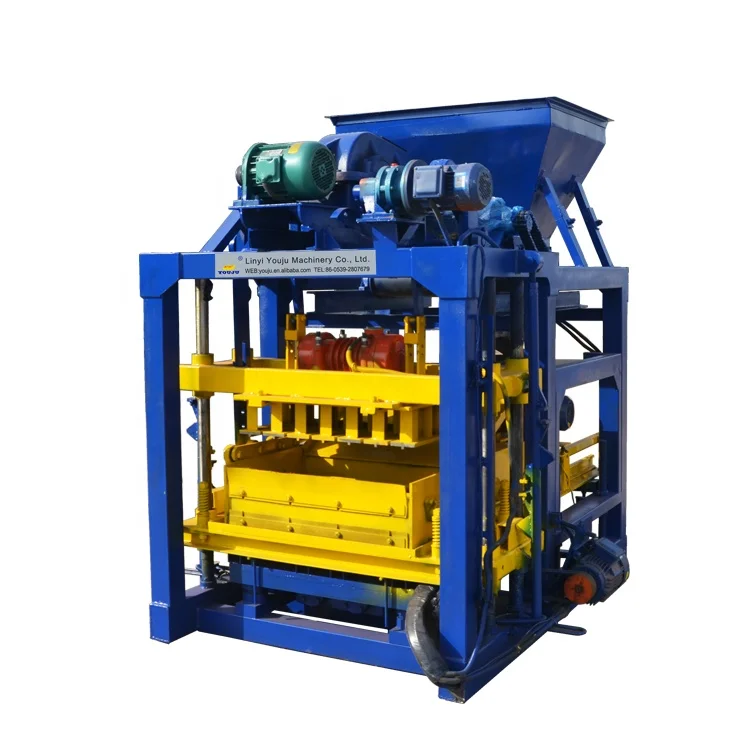
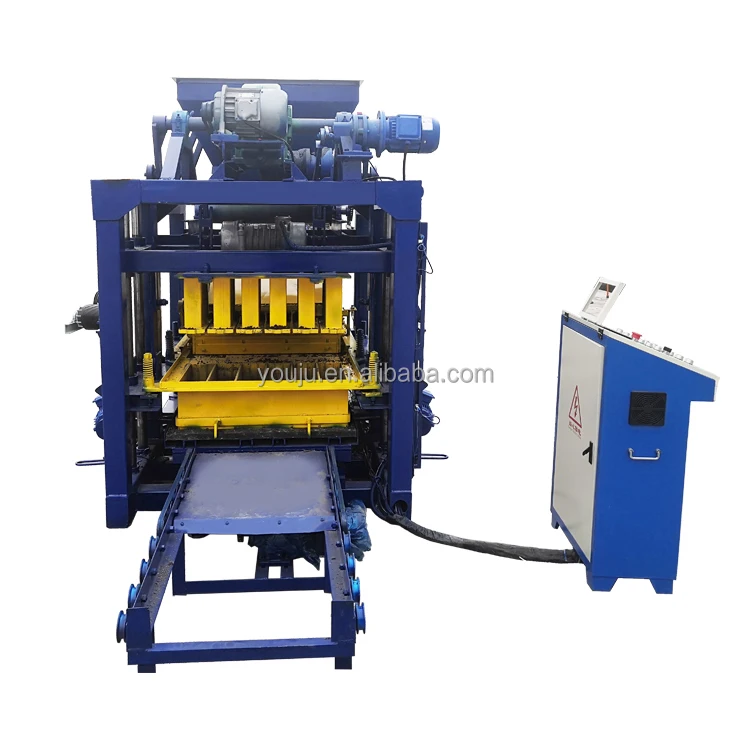
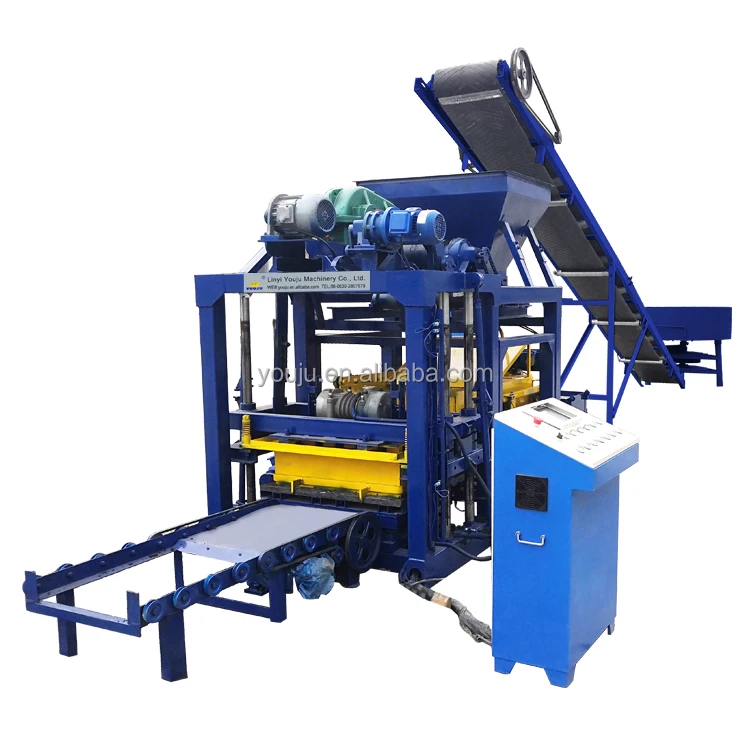
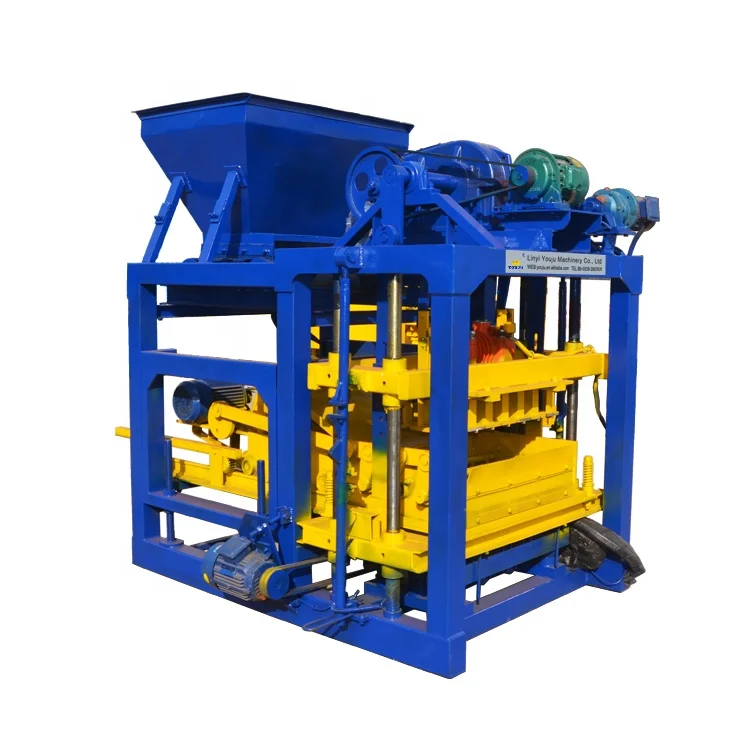
Description
Control Language Confirmed at Order — every QTJ4-25 ships only after the buyer signs off on the exact PLC display language and remote diagnostics access, preventing unreadable alarms from halting production on the first shift.
Technical Specifications
| Parameter | Value |
|---|---|
| Model | QTJ4-25 |
| Product Type | Automatic Concrete Block Making Machine |
| Overall Dimensions (L×W×H) | 3000×1800×2680 mm |
| Total Mass | 3.5 T |
| Overall Power | 16.58 kW |
| Vibration Force | 60 kN |
| Main Vibration Form | Platform Vibration |
| Vibration Frequency | 2800–4500 r/min |
| Pallet Size | 850×480 mm |
| Molding Cycle | 25 s |
| Demolding Method | Mechanical |
| Guide Column | Four, overlong guide, chrome-plated surface |
| Output (Hollow Block) | 580 pcs/h based on 400×200×200 mm, 4 pcs/mould |
| Output (Solid Brick) | 1400 pcs/h based on 240×115×90 mm, 9 pcs/mould |
| Output (Standard Brick) | 3300 pcs/h based on 240×115×53 mm, 21 pcs/mould |
| Automation Level | Semi-automatic base, PLC upgrade path available |
| Factory Area Required | 300 m² |
| Warranty | 1 year for the whole machine (excluding spare parts) |
Application Suitability
| Application | Material or Output |
|---|---|
| Hollow block production | Crushed stone, sand, cement, fly ash aggregate mix |
| Solid brick manufacturing | Gravel, dust, cement blend |
| Paving block and interlocking brick | Slag, sand, colored pigment with cement binder |
| Kerbstone and curb units | Coarse aggregate with cement, high-vibration compaction |
| Small-to-medium block plant start-up | Locally sourced aggregate including fly ash and slag |
Why the PLC Language Setting Matters Before the Machine Ships
An unreadable alarm on the control screen turns a minor fault into a full-shift shutdown.
Commissioning an automatic concrete block making machine PLC controlled system in a region where the operator cannot read the display language means every fault code requires a phone call, a translation, and hours of idle line time. I have watched a fully operational block press sit silent for two shifts because the HMI defaulted to Chinese characters and the English firmware had not been loaded before crating [NEED_CITE: PLC language localization standards for industrial exports]. The delay is not mechanical — the machine is physically ready — but the operator cannot clear the alarm safely without understanding the message.
From Mechanical Base to Full Automation
The QTJ4-25 enters service with mechanical demolding, giving plant owners a reliable baseline. Its frame, vibration box, and guide columns are built to accept PLC-controlled pallet feeding, automatic stacking, and cubing modules later without replacing the press. When market demand grows, adding an automatic concrete block making machine PLC controlled logic layer to the existing frame shortens the transition from manual handling to continuous production.
Batch-to-Batch Consistency Through Control Logic
Once PLC modules are integrated, the system regulates vibration duration, hydraulic pressure timing, and feed volume for every cycle [NEED_CITE: PLC role in concrete block density control]. This removes operator judgment from the compaction loop, keeping block density and dimensional tolerance uniform across morning and night shifts. Consistency that depends on one experienced operator breaks down during holidays or staff turnover; consistency built into the control logic does not.
Reading the Numbers That Actually Matter
The 60 kN vibration force, delivered through dual super motors and an upper mould vibration motor, works in combination with mechanical pressure to compact the aggregate mix. Higher vibration frequency — available across a 2800–4500 r/min range — allows the operator to match the setting to the aggregate particle size; finer fly ash blends typically respond to higher frequency, while coarse crushed stone needs lower frequency with longer dwell. The 850×480 mm pallet must fit the buyer’s existing curing racks and forklift tines; specifying pallet size against the curing area layout avoids a mismatch that forces the plant to rebuild its curing zone. The 25-second molding cycle applies across formats, so the output difference between hollow block and standard brick comes entirely from cavity count per mould, not from a change in press speed.
What Happens When Configuration Is Skipped
Ordering a block machine on catalogue output figures alone, without confirming the local aggregate, voltage supply, or control language, leaves gaps that surface only after arrival [NEED_CITE: common commissioning failures in exported block machinery]. A machine wired for a voltage that the site transformer cannot supply requires a rewinding delay. An HMI in the wrong language stalls the first day of production. A pallet size that does not match the curing rack forces manual restacking, cancelling the throughput the buyer thought was purchased.
Why This Configuration Approach Fits
Block machinery is the single focus here, so the QTJ4-25 press, mould, pallet, and handling equipment are specified as one matched system rather than assembled from separate suppliers. The configuration is set against the buyer’s actual mix design and target block format, not a catalogue default. Mould drawings are supplied for the formats the buyer’s market sells, with custom design available to buyer drawings. The automation level is selectable — a buyer can start with mechanical demolding and add PLC-controlled modules when throughput demand grows. Installation support includes operator training so the first production run is supervised, not experimental.
Documentation & Verification
- Line layout with capacity calculation stating exact block format assumed
- Machine specification sheet with vibration and pallet data
- Mould drawing and format list for every included mould
- Voltage, frequency, and PLC language confirmation form signed before production
- Factory test record on the buyer’s block format before dispatch
- Hydraulic and electrical schematic with control language noted
Installation, Commissioning & Support
- 3000×1800×2680 mm footprint requires level concrete pad with anchor bolts per layout drawing
- 16.58 kW total load needs dedicated circuit matching confirmed voltage and frequency
- Machine ships as single-unit frame; guide columns and vibration box reassembled on site
- First-run molding cycle set to 25 s with operator adjusting vibration frequency to local aggregate
- Operator training covers PLC alarm clearing, mould change, and pallet alignment
- Wear parts list provided with recommended reorder quantities for hydraulic seals and vibration motor brushes
What We Need From Your Next Message
To size the QTJ4-25 correctly for your plant, share the block formats your market demands, the daily output target per format, and the local aggregate sources available to you. Confirm your site voltage and frequency, the language you need on the PLC display, and whether your curing area can accommodate the 850×480 mm pallet. If you already run upstream mixers or downstream stacking equipment, tell us the models so we can verify line integration.
Frequently Asked Questions
Q: How do I verify the real daily output for my block format?
A: Request the capacity calculation document that states the exact block format, mould cavity count, and aggregate mix assumed for each figure. The QTJ4-25 output figures here are tied to specific formats — 580 pcs/h for 400×200×200 mm hollow block, for instance. If your target format differs, a revised calculation is needed before the order is confirmed.
Q: Can I add PLC control to the QTJ4-25 after running it mechanically?
A: Yes. The frame and vibration platform are designed to accept PLC-controlled pallet feeding, stacking, and cubing modules without replacing the press. The upgrade path is planned at order stage so mounting points and wiring conduits are included in the initial build, making the transition faster when you are ready.
Q: What PLC display language options can I specify?
A: The control language is confirmed before production begins — not after the machine arrives. English, Spanish, Arabic, French, and other languages are available depending on the PLC supplier. State your preferred language during inquiry so the firmware is loaded and tested during the factory run.
Q: How should I choose between mechanical and PLC-controlled automation?
A: Start with mechanical demolding if your plant is new and demand is still building. Add automatic pallet feeding and stacking when your daily volume makes manual handling the bottleneck. The QTJ4-25 supports both levels on the same frame, so the decision can be deferred until market demand is clear.