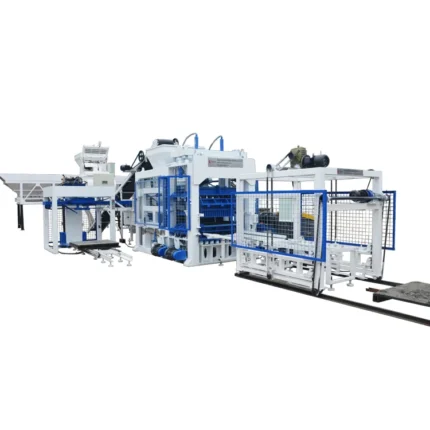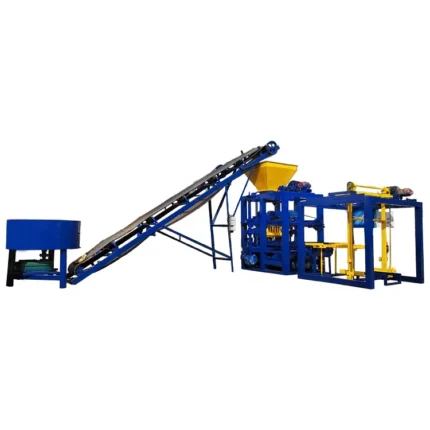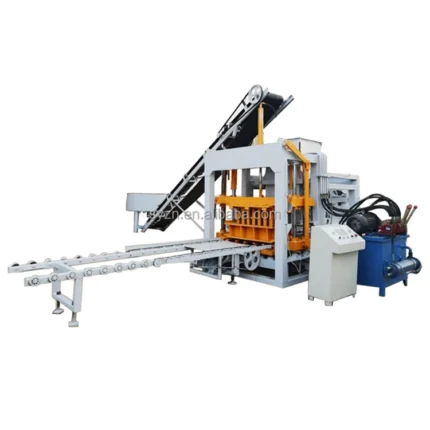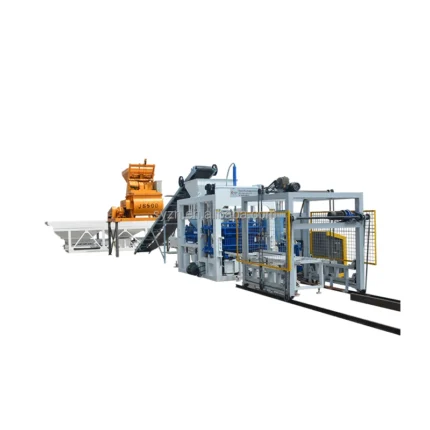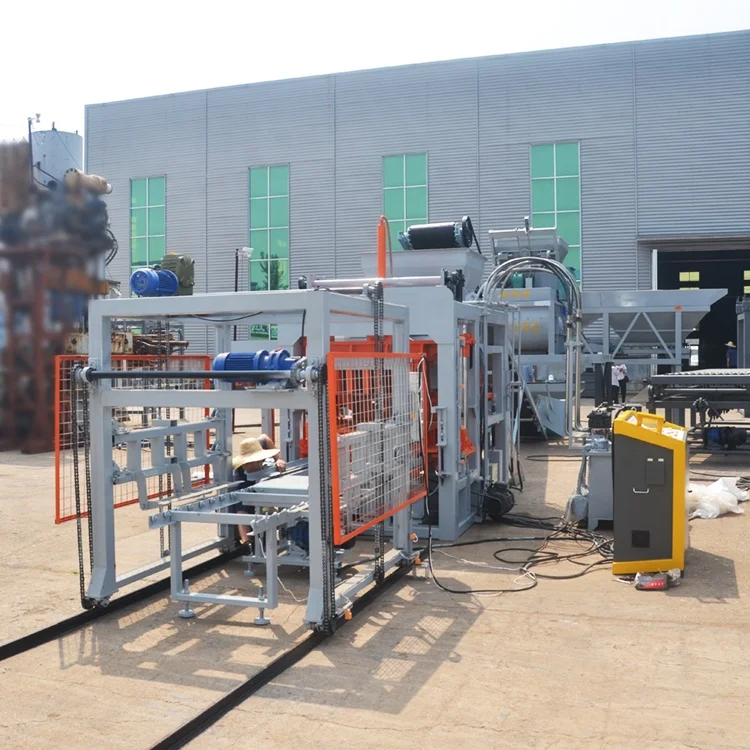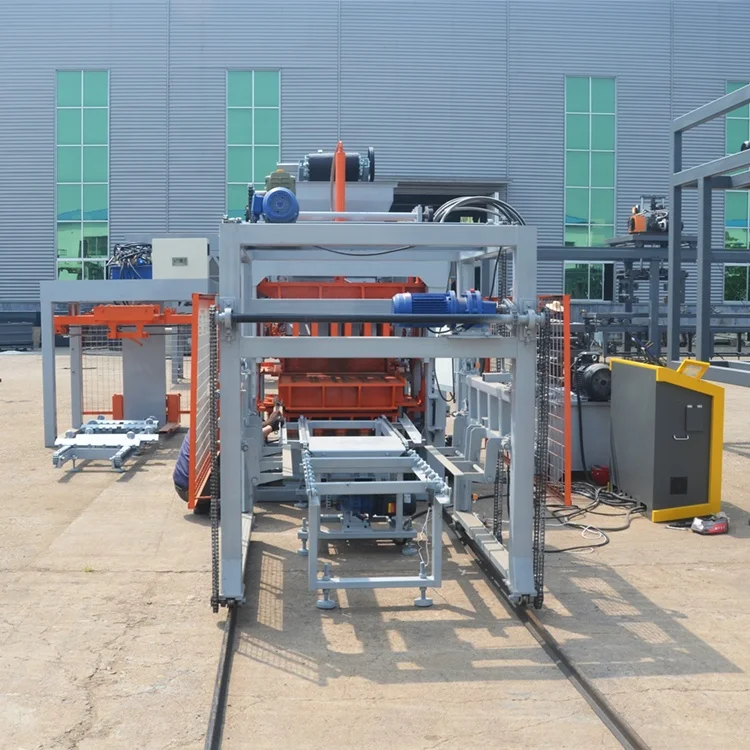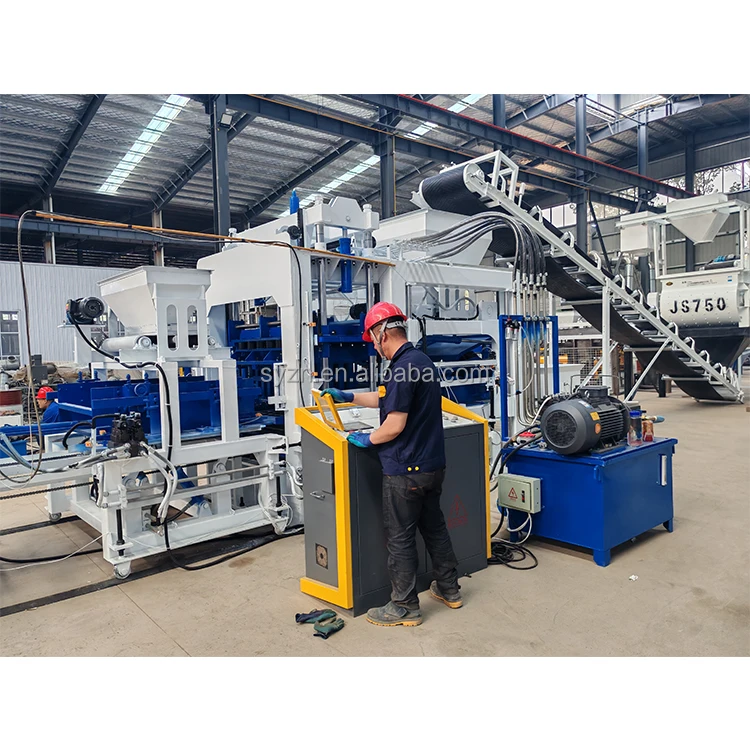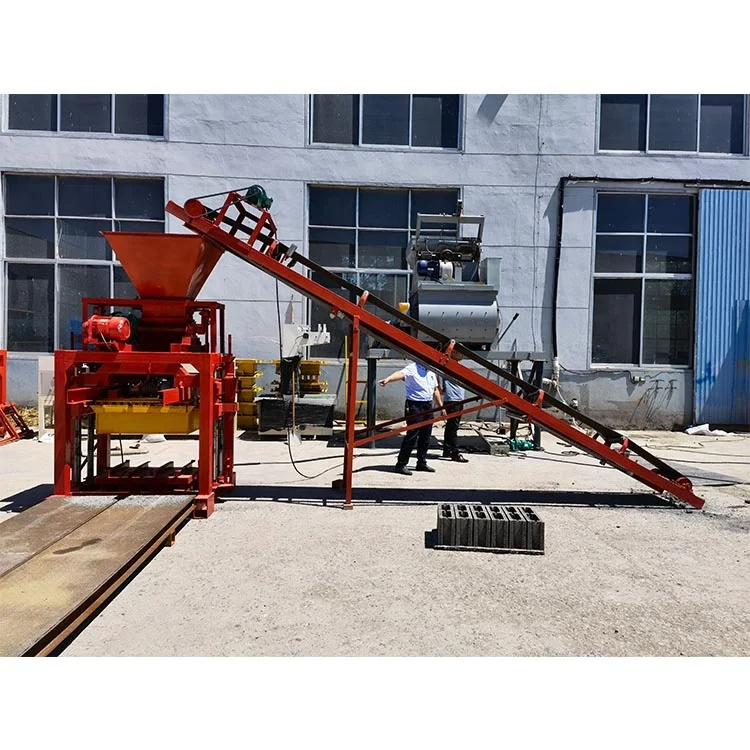
Description
System Logic Matched to Site Voltage — The QTJ4-25 control panel is configured to your grid standard and operator language before the crate leaves the factory, preventing the first-day stall that plagues so many export installations.
Technical Specifications
| Parameter | Value |
|---|---|
| Model | QTJ4-25 |
| Product Type | Automatic Concrete Block Making Machine |
| Overall Dimensions (L×W×H) | 6400 × 1500 × 2700 mm |
| Molding Cycle | 25 s (basis not stated in source — confirm block format and material) |
| Vibration Frequency | 2800–5100 r/min |
| Exciting Force | 60 kN |
| Total Installed Power | 17.9 kW |
| Mixer Model | JQ350 |
| Pallet Size | 850 × 550 × 20 mm |
| Net Weight | 2500 kg |
| Automation Level | Semi-automatic |
| Control System | Hydraulic station control, PLC configurable |
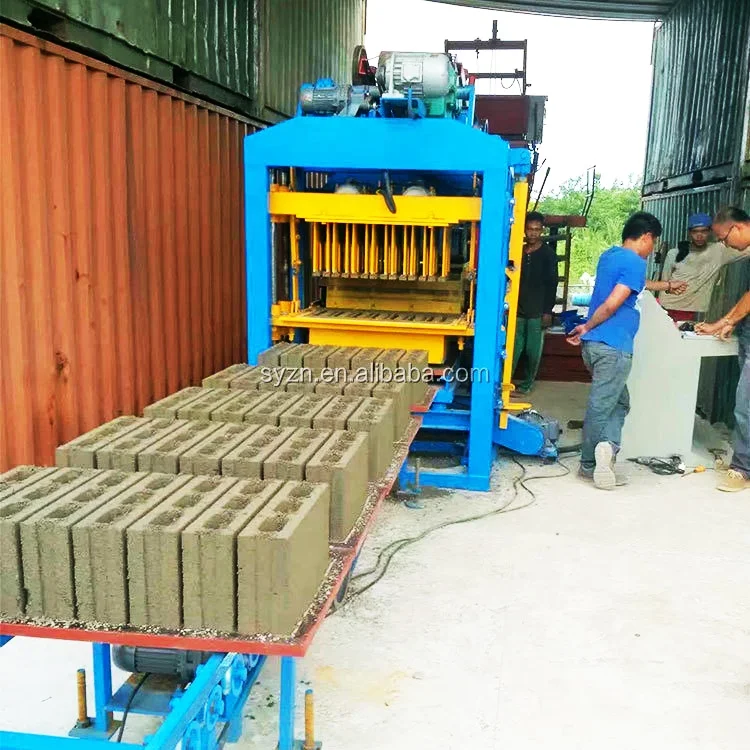
| Applied Products | Concrete hollow blocks (8 in, 6 in), solid bricks, paving blocks, curbstones |
| Raw Materials | Crushed stone, sand, cement, fly ash, stone dust |
| Output — Hollow Block 390×190×190 mm | 4 pcs/mould, 480 pcs/h, 3800 pcs/8 hr |
| Output — Hollow Block 400×150×200 mm | 5 pcs/mould, 600 pcs/h, 4800 pcs/8 hr |
| Output — Solid Brick 240×115×53 mm | 18 pcs/mould, 2100 pcs/h, 17000 pcs/8 hr |
| Certification | CE (verify for specific shipment market) |
Application Suitability
| Application | Material or Output |
|---|---|
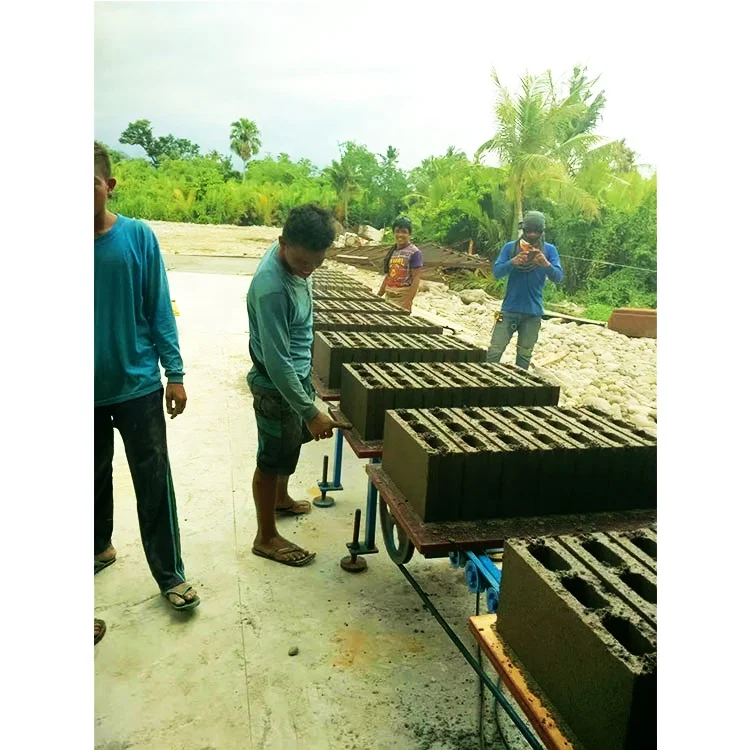
| Hollow block production for masonry walls | Crushed stone, sand, and cement mix; 8-inch and 6-inch formats |
| Solid brick manufacturing | Cement and fine aggregate blend for load-bearing units |
| Paving block and kerbstone production | High-density mix with colour oxide option via mould change |
| On-site block making for housing projects | Local aggregate and fly ash blended on the contractor’s site |
| Small to medium plant start-up | Semi-automatic line with manual pallet handling |
Why the PLC Language Question Matters More Than the Price Tag
A control interface your operator cannot read is not automation — it is a liability sitting on the factory floor.
I have watched a brand-new interlocking brick machine sit idle for two full days in Zambia because the PLC display shipped in Chinese. The local crew could not acknowledge a single alarm, let alone adjust a cycle parameter. That experience is not unique — language mismatch remains one of the most common commissioning delays across export projects [NEED_CITE: common PLC language issues in machinery exports to Africa and South Asia]. With the QTJ4-25, the PLC display language is confirmed during the order stage so that every menu, alarm label, and set-point screen arrives in a language the floor team already reads.
Programmable Logic Meets Hydraulic Muscle
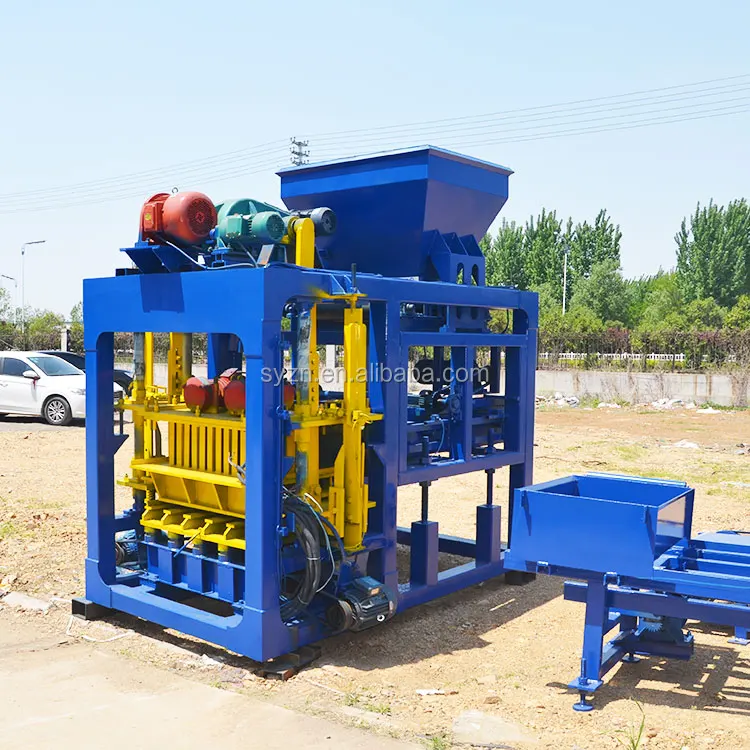
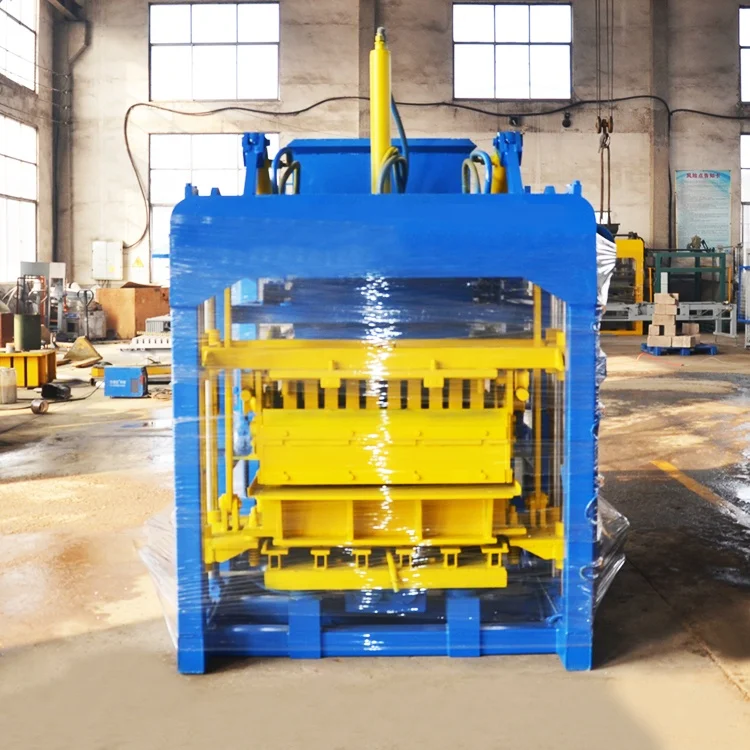
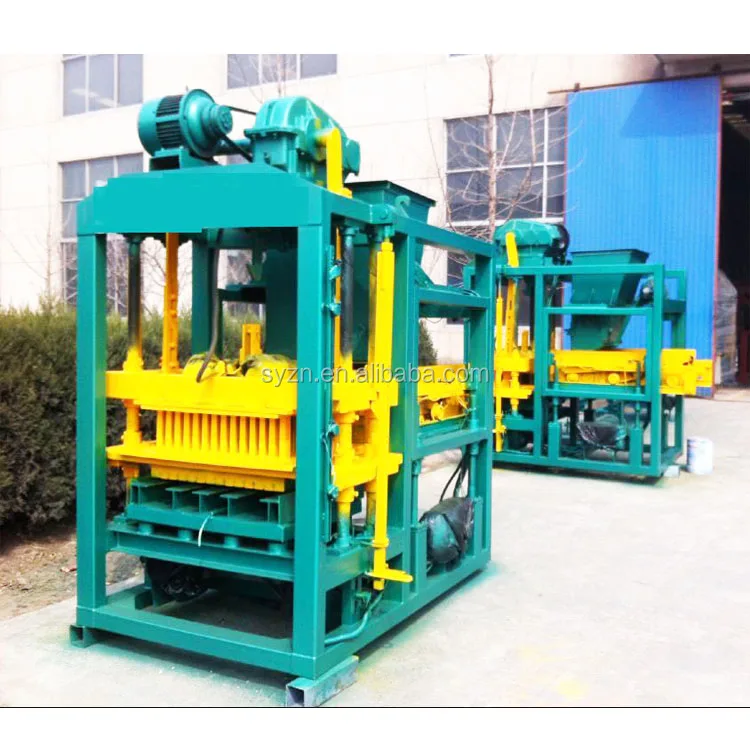
The QTJ4-25 pairs a hydraulic station with a PLC-driven control sequence that governs mould descent, vibration timing, and pressure dwell in one coordinated routine. This means the vibration frequency band of 2800–5100 r/min is not left to operator guesswork — the automatic concrete block making machine initiates and terminates each vibration burst at a repeatable point in the cycle. Consistency like this is what separates a block that passes a drop test on Monday from one that crumbles on Friday.
Semi-Automatic Today, Scalable Tomorrow
Starting with semi-automatic operation keeps capital outlay manageable while preserving a clear migration path. The pallet size of 850 × 550 × 20 mm is already the standard dimension used by upstream pallet feeders and downstream stacking frames, so when you add automation stations later the interface geometry does not change. Buyers who plan a phased expansion find that the PLC controlled block machine accepts additional I/O modules without a full control cabinet replacement [NEED_CITE: PLC expansion modules in semi-automatic block lines].
Reading the Numbers Behind the Cycle Time
The stated 25-second moulding cycle and the 60 kN exciting force together define how dense each block will be at the moment of demoulding. Higher vibration force compacts the aggregate matrix more tightly, but only if the hydraulic head pressure is matched to the same mix — otherwise the top surface spalls while the core stays loose. The JQ350 pan mixer feeds a consistent batch to the hopper, and its mixing action influences how uniformly cement coats the aggregate before the material even reaches the mould box. Total installed power of 17.9 kW reflects the combined draw of the vibration motor, hydraulic pump, and mixer, which determines the transformer capacity and cable sizing you must arrange before the machine arrives.
The Hidden Cost of Skipping Configuration Checks
When voltage and frequency are assumed rather than confirmed, the hydraulic pump motor can overheat within the first week, and the PLC power supply may fail without throwing a readable alarm. I have seen a 50 Hz motor run on a 60 Hz grid pull excess current until the winding insulation broke down — a failure that looked like a quality defect but was actually a specification mismatch [NEED_CITE: motor failure from frequency mismatch in exported machinery]. Equally, choosing a pallet material without considering the local curing climate can lead to warping in high-humidity zones, which then causes the pallet to jam in the return conveyor. These are not catastrophic events, but they erode daily output and erode operator confidence faster than any mechanical fault.
Why Buyers Specify This Line with Us
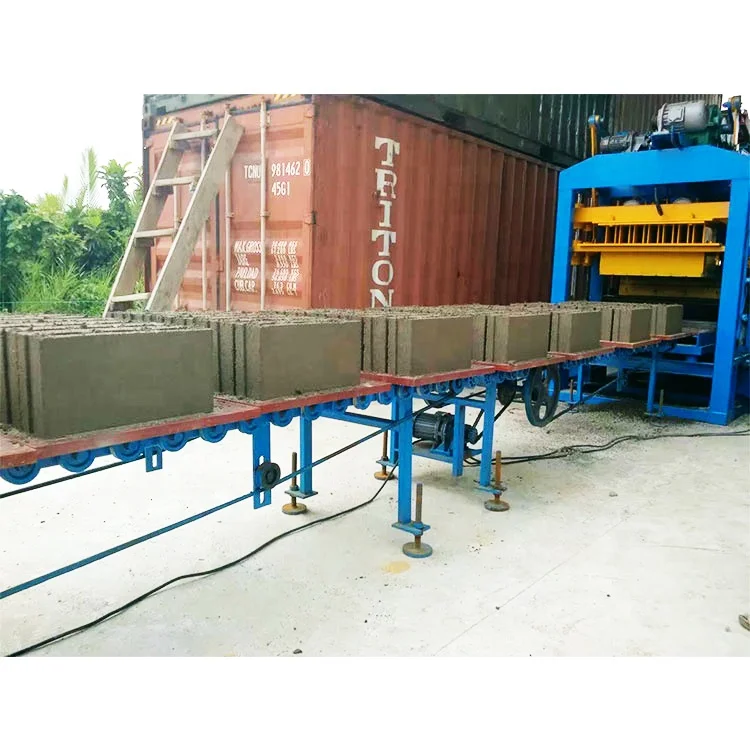
Block machinery is the single product focus of Shandong Shiyue Intelligent Machinery, so the press, mould, pallet, and handling stations are engineered as one matched system rather than assembled from separate vendors. Every configuration is set against your actual mix design, local aggregate grading, and target block format — not pulled from a catalogue default. Mould design covers the formats your market actually sells, and custom drawings are accommodated when standard formats do not match local building codes. Voltage, frequency, and control language are locked in before production begins, and a factory test record demonstrates cycle performance on the agreed format before the machine is crated.
Documentation & Verification
- Line layout drawing showing the QTJ4-25 footprint and pallet return path
- Capacity calculation sheet referencing the specific block format you will produce
- Mould drawing and format list confirming cavity count and product dimensions
- Hydraulic and electrical schematic for your maintenance team’s reference
- Voltage, frequency, and PLC language confirmation record signed before production
- Factory test record showing cycle time and block weight on your target format
Installation, Commissioning & Support
- Foundation slab must support the 2500 kg net weight plus dynamic vibration load across the 6400 mm frame length
- Dedicated circuit sized for the 17.9 kW total draw, with breaker rating matching confirmed voltage
- Machine ships partially dismantled; reassembly of the hydraulic station and mould box is done on-site with the commissioning engineer
- First-run parameter tuning covers vibration dwell, head pressure, and feed time for your specific aggregate blend
- Operator training includes PLC alarm acknowledgement, mould change procedure, and daily lubrication points
- Wear parts list and mould catalogue supplied so replacement orders can be placed before stock runs out
What to Share When You Enquire
To size the QTJ4-25 accurately, tell us the block format your market buys most, the local aggregate type you can source, and the daily output you need from an eight-hour shift. Confirm your site voltage, frequency, and the language your operators read on a screen. If you already have curing racks or forklifts, share the dimensions so pallet compatibility can be checked before the order is finalized.
Frequently Asked Questions
Q: How is the 25-second cycle time measured, and which block format does it assume?
A: The 25-second figure represents the moulding cycle from feed to demoulding, but the source data does not state which block format, material mix, or thickness it was measured against. Before quotation, we run a factory test on your exact format and record the real cycle time so your capacity plan reflects actual output rather than a generic number.
Q: What automation upgrades are available if I start with the semi-automatic configuration?
A: The 850 × 550 × 20 mm pallet size is already compatible with automatic pallet feeders and stacking frames. You can add an automatic pallet feeder first, then a stacker, and later a cubing system. The PLC architecture accepts additional I/O modules, so the control cabinet does not need full replacement when you expand.
Q: How does the control system handle different mix designs and local aggregate variations?
A: Vibration frequency, dwell time, and hydraulic pressure are all adjustable through the PLC interface. When your aggregate grading or cement ratio changes, the operator can save a new recipe profile. This keeps block density consistent across different raw material batches without requiring mechanical adjustments to the vibration motor.
Q: What is the procedure for confirming voltage, frequency, and PLC language before dispatch?
A: During the order confirmation stage, you provide your local grid specification and preferred operator language. We document these in a signed configuration record, program the PLC accordingly, and verify the settings during the factory test. The test record is shared with you before the machine is packed for shipment.
Q: How are hydraulic wear parts and replacement moulds sourced after installation?
A: A wear parts list and mould catalogue ship with every QTJ4-25. Replacement seals, hoses, and mould inserts are manufactured in the same facility, so lead times are not dependent on third-party suppliers. You can place reorders against the part numbers on the list, and we confirm compatibility with your machine serial number before dispatch.