

Description
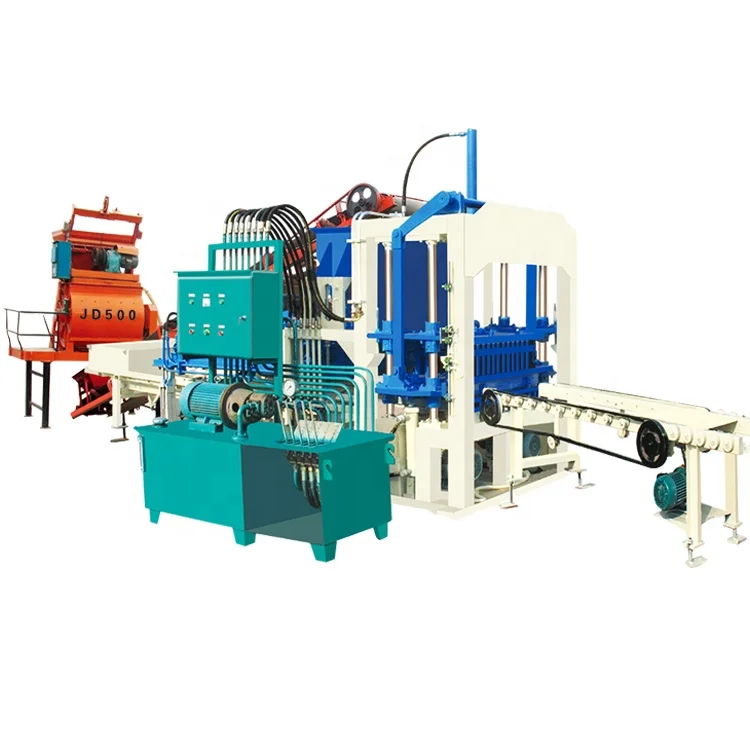
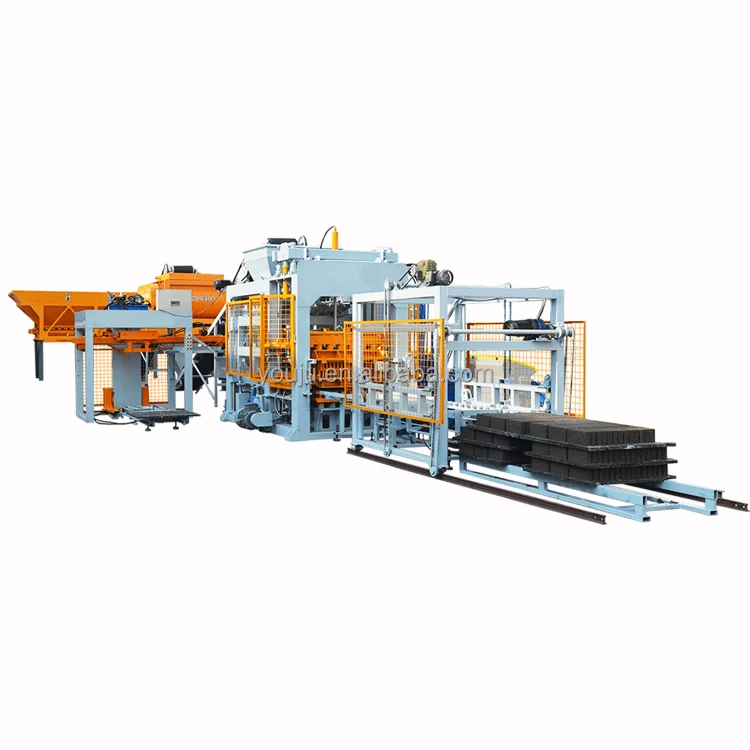
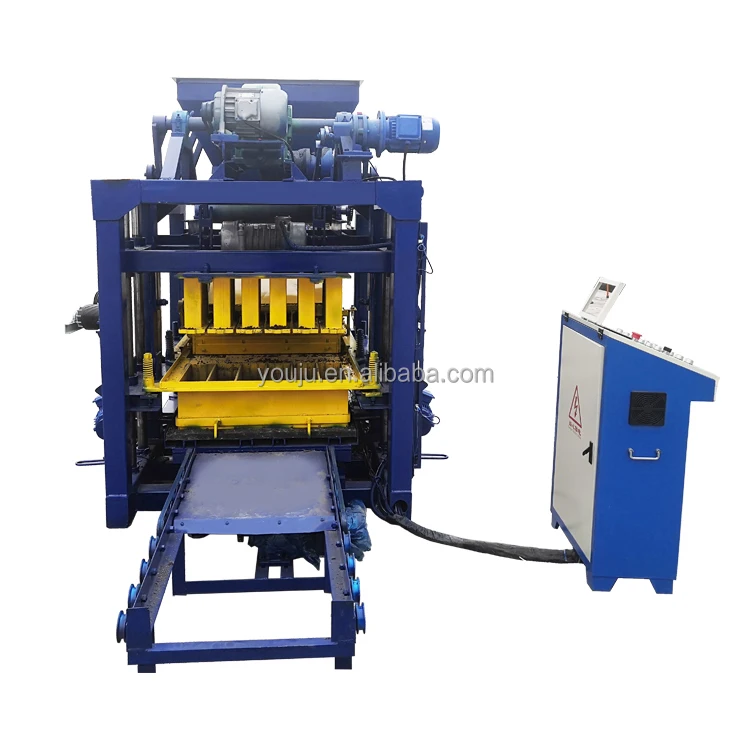
Integrated System Design — The QTJ4-25 block making machine and its supporting pallet, mould and handling elements are specified as a matched set against the buyer’s actual mix design and target block format.
Technical Specifications
| Parameter | Value |
|---|---|
| Model | QTJ4-25 |
| Product Type | Semi-Automatic Concrete Block Making Machine |
| Overall Dimensions (L×W×H) | 3000 × 1800 × 2680 mm |
| Total Power | 16.58 kW |
| Vibration Form | Platform Vibration |
| Vibration Force | 60 kN |
| Vibration Frequency | 2800–4500 r/min |
| Pallet Size | 850 × 480 mm |
| Molding Cycle | 25 s |
| Demolding Method | Mechanical |
| Total Mass | 3.5 T |
| Factory Area Required | 300 m² |
| Guide Column | Four-column extended guide, chrome-plated surface |
| Frame Material | National standard manganese steel |
| Output Capacity (basis: 400×200×200 mm hollow block, 4 pcs/mould) | approx. 580 pcs/h, 4640 pcs per 8-hour shift |
| Output Capacity (basis: 240×115×90 mm block, 9 pcs/mould) | 11200 pcs per 8-hour shift |
| Output Capacity (basis: 240×115×53 mm block, 21 pcs/mould) | 26400 pcs per 8-hour shift |
| Automation Level | Semi-automatic (mechanical demolding, manual pallet handling) |
| Mould Change System | Exchangeable moulds (change time basis to be confirmed) |
| Control System | Basis to be confirmed with supplier (PLC or manual panel) |
| Voltage & Frequency | Basis to be confirmed with supplier |
Application Suitability
| Application | Material or Output |
|---|---|
| Hollow block production for wall construction | Crushed stone, sand, cement, fly ash |
| Solid block production for load-bearing walls | Gravel, slag, cement blends |
| Paving block and colored paver production | Fine aggregates with pigment additives |
| Interlocking brick production for landscaping | Sand, cement, crushed stone dust |
| Kerbstone production for road and pavement edges | Coarse aggregate and cement mixes |
What the Cycle Time Figure Actually Means on the Shop Floor
An automatic QTJ4-25 block making machine PLC controlled setup is only as predictable as the assumptions behind its quoted cycle time.
A 25-second molding cycle holds only when the mix, pallet and operator rhythm are already matched to the machine.
I once saw a buyer take delivery of a semi-automatic press rated at a specific daily tonnage, only to find the real output lagged because the local aggregate was far more absorbent than the test sample. The vibration frequency had to be retuned, the water content adjusted, and the cycle stretched. Capacity on paper and capacity on the floor diverged. That gap is what makes the voltage, control language and aggregate conversation the most important one you have before signing the order [NEED_CITE: aggregate variability and its effect on vibration compaction parameters].
Where the QTJ4-25 Sits on the Automation Spectrum
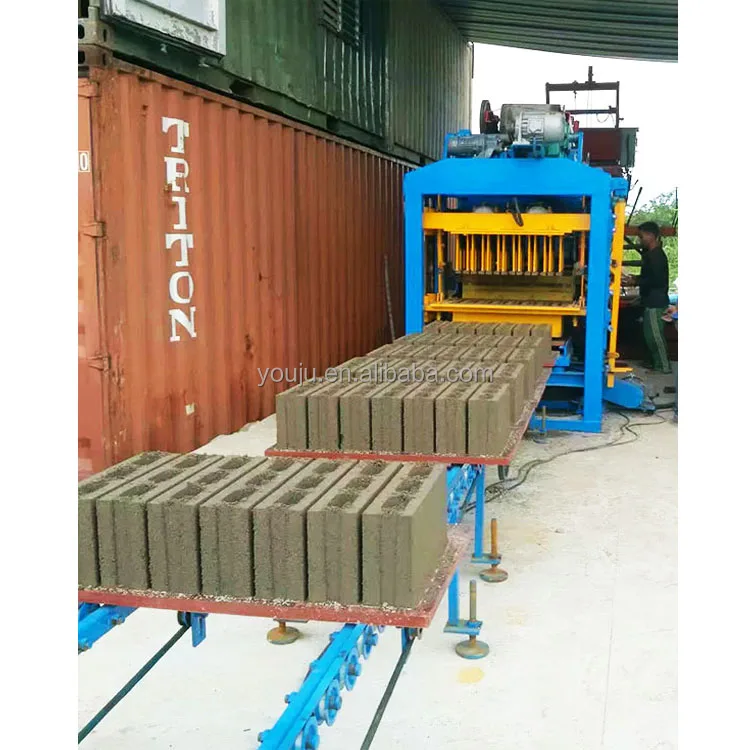
The press itself handles vibration, compaction and mechanical demolding on a repeatable 25-second cycle. Pallet feeding, however, and the movement of wet blocks to the curing area remain manual operations. For a buyer moving up from hand-moulding, this removes the most physically demanding step — forming and stripping — while keeping the line investment manageable.
What Still Needs Operator Input
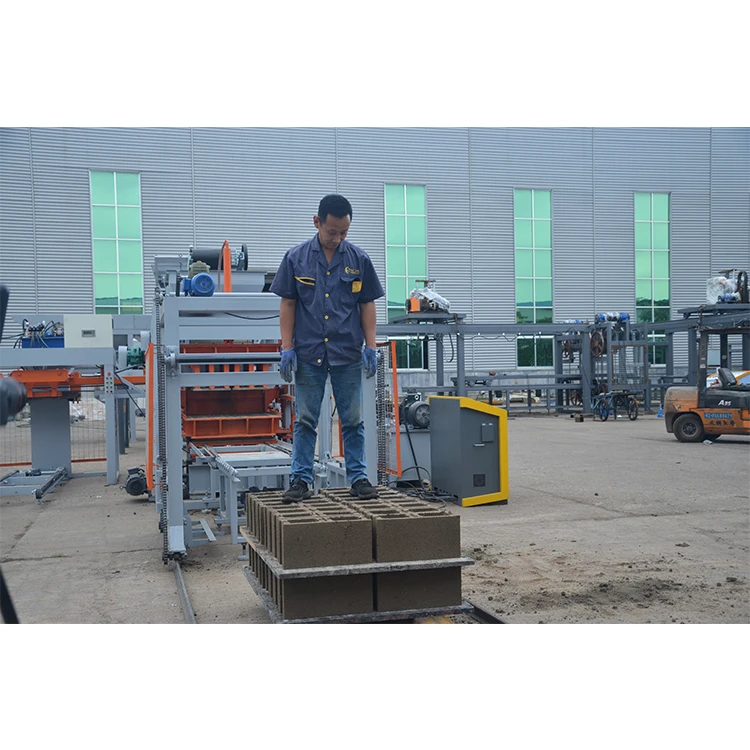
Pallets must be fed into the press station by hand and collected after demolding. Stacking on curing racks and transport to the yard are not covered by the machine. Buyers who later want to close those gaps can discuss adding pallet feeders and stackers without replacing the press unit itself, provided the original line layout leaves room for those stations [NEED_CITE: semi-automatic to automatic upgrade path in block lines].
Reading the Specs That Matter for Block Quality
The 60 kN vibration force working through the platform ensures that the concrete mix settles evenly across the mould cavity. If the force is too low for a dense aggregate blend, the block comes out under-compacted and breaks during handling. The chrome-plated four-column guide system keeps the mould aligned through thousands of cycles, which is what prevents one corner of a hollow block from being thinner than the rest. A manganese steel frame absorbs the vibration shock without fatigue cracking over the production life of the machine. The 850 × 480 mm pallet size must be checked against the curing racks and forklift tines the buyer already has on site — a mismatch here means buying new racks or cutting pallets down.
The Cost of Skipping the Configuration Conversation
When a pallet size is chosen without checking the curing rack spacing, the buyer ends up stacking blocks by hand on the floor, negating the output the press was supposed to deliver. When the control panel language is not confirmed before production, the operator cannot read fault codes on day one. These are not engineering failures — they are ordering failures [NEED_CITE: common causes of commissioning delays in exported block machinery].
Why Source This Machine Through a Single-System Approach
The machine, mould and pallet are specified together rather than assembled from separate catalogues. The configuration is set against the buyer’s local aggregate and target block format, not a default setting. Moulds are designed for the formats the buyer’s market actually sells, with custom drawings available. Automation level can be set semi-automatic now and upgraded later. Installation support includes operator training on the specific mix and block format the plant will run.
Documentation & Verification
- Line layout showing automatic and manual stations with capacity per block format
- Machine specification sheet covering vibration force, pallet size and cycle time
- Mould drawing and format list for every included mould
- Voltage, frequency and control language confirmation document before production
- Factory test record run on the buyer’s target block format
- Operation and maintenance manual with wear parts list
Installation, Commissioning & Support
- Foundation plan sized to the 3000 × 1800 mm footprint and 3.5 T operating mass
- Power connection confirmed for the 16.58 kW total load on the buyer’s local voltage
- Machine delivered as a single unit with mould mounted or packed separately per buyer request
- First-run commissioning covers vibration tuning to the buyer’s actual aggregate blend
- Operator training on mould change procedure and 25-second cycle rhythm
- Wear parts and mould list provided for planned maintenance scheduling
Before You Send the Inquiry
Share the block format you sell most, the daily volume you need, and the raw materials available locally including aggregate type and grading. Confirm your site voltage, frequency and the control panel language your operators will use. If you already have curing racks and forklifts, send the pallet dimensions they accept so the line can be matched from the start.
Frequently Asked Questions
Q: Which operations does the QTJ4-25 automate and which still require an operator?
A: The press automates vibration, compaction and mechanical demolding within the 25-second cycle. Pallet feeding into the machine, removal of loaded pallets after demolding, and stacking of wet blocks onto curing racks are manual operations. Buyers planning a future upgrade should discuss leaving space in the line layout for an automatic pallet feeder and stacker.
Q: How is output capacity calculated per block format?
A: Each output figure is tied to a specific block size, mould cavity count and the 25-second cycle. For example, the 4640 pieces per 8-hour shift figure assumes 400×200×200 mm hollow blocks at 4 pieces per mould. Different formats and cavity counts produce different daily volumes, so the quotation should state the format assumed for every capacity number.
Q: Is the QTJ4-25 equipped with PLC control, and can the display language be set?
A: The control system specification is confirmed during the ordering process. Buyers can request PLC control or a manual panel depending on their automation preference. The display language must be agreed in writing before production so operators can read settings and fault codes from the first day of commissioning.
Q: Can pallet feeding and stacking be added later without replacing the press?
A: Yes, provided the original line layout reserves floor space and connection points for a pallet feeder and an automatic stacker. This is why the initial configuration conversation should cover future automation plans even when the buyer starts with semi-automatic operation and manual pallet handling.
Q: How does the 850 × 480 mm pallet size interface with existing curing racks and forklifts?
A: The pallet dimensions must match the rack spacing and forklift tine width already on site. If the buyer’s existing racks were built for a different pallet size, new racks or modified pallets will be needed. This should be confirmed before the order is placed to avoid handling bottlenecks after delivery.