

Description
System Integration Over Spec Sheet — The QTJ4-25’s vibration and hydraulic parameters are tuned against your local aggregate, not left at factory defaults that cause density swings across shifts.
Technical Specifications
| Parameter | Value |
|---|---|
| Model | QTJ4-25 |
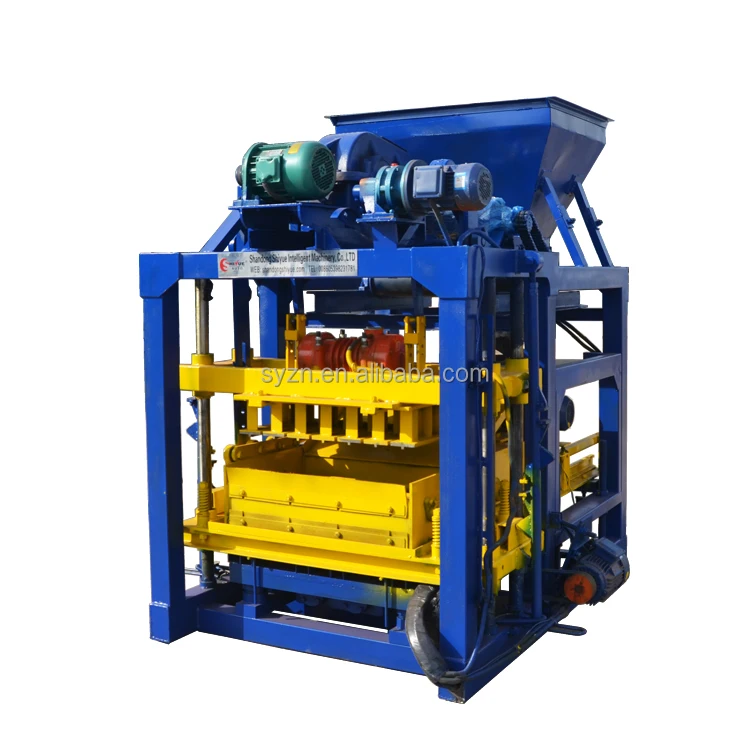
| Product Type | Automatic Concrete Block Making Machine |
| Overall Dimensions (L×W×H) | 3060 × 1730 × 2580 mm |
| Total Mass | 4 T |
| Rated Pressure | 16–21 MPa (adjustable to mix design) |
| Main Vibration Form | Platform Vibration |
| Vibration Frequency | 4200 r/min |
| Vibration Force | 45.5 kN |
| Molding Cycle | 25–30 s |
| Pallet Size | 850 × 550 mm |
| Overall Power | 14.9 kW |
| Demolding Method | Vibration |
| Factory Area | 200 m² |
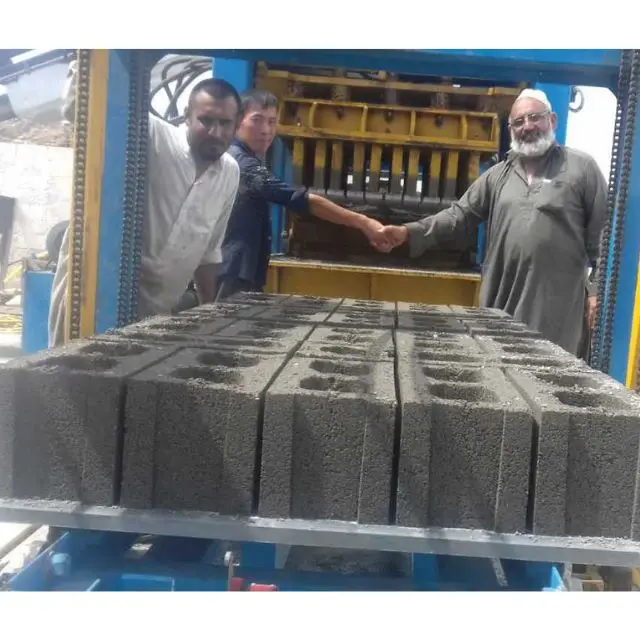
| Applied Products | Hollow blocks, solid blocks, pavers, interlocking blocks, curbstones |
| Raw Materials | Crushed stone, sand, cement, fly ash, gravel, slag |
| Control System | Available with PLC or MCC control (basis to be confirmed) |
| Voltage & Frequency | Configurable to buyer’s grid (basis to be confirmed) |
| Stacking Method | Configurable from manual to semi-automatic (basis to be confirmed) |
| CE Declaration | Available where applicable |
Application Suitability
| Application | Material or Output |
|---|---|
| Hollow block production for masonry walls | Crushed stone, sand, cement blends |
| Solid block production for load-bearing structures | Gravel and cement mixes |
| Interlocking paver runs for walkways and yards | Sand, dust, fly ash with cement binder |
| Curbstone fabrication for road edging | Slag and coarse aggregate with cement |
| Colored paver batches for landscaping | Pigmented sand and cement |
What "25-Second Cycle" Means When the Operator Speaks a Different Language
The automatic QTJ4-25 block machine PLC controlled interface must be locked to the operator’s language before the crate leaves the factory.
Early in my commissioning work, I watched a West African plant lose three full shifts because the HMI defaulted to a language the line operators could not read. The first pallet never fed, the stacker sat idle, and we had to wait for a remote patch before a single block came off the press. That kind of delay never shows up in the quoted cycle time, but it erases any output advantage the buyer thought they were purchasing [NEED_CITE: voltage and frequency standards by export market].
Removing the Operator from the Rhythm Loop
On a manual or semi-automatic press, the cycle depends on one person hitting the feed button at exactly the right moment. The automatic QTJ4-25 block machine PLC controlled sequence replaces that judgment call with a fixed timer tied to the platform vibration and hydraulic stroke. Once the molding cycle of 25–30 s is set, every pallet receives the same compaction duration regardless of how many hours are left in the shift. Batch-to-batch block strength stays within a narrow band because the timing variable is no longer human.
Where the PLC Earns Its Keep on Format Changeovers
Switching from a 400 mm hollow block to a 200 mm interlocking paver means new mould, new feed volume, new vibration profile. A PLC-controlled QTJ4-25 stores these recipes so the operator selects the format from the screen and the machine adjusts feed gate opening, vibration duration, and press stroke. What used to consume most of a shift now fits inside a planned changeover window, keeping the press earning instead of sitting open while mechanics hunt for the right wrench [NEED_CITE: PLC recipe storage for multi-format block production].
Reading the Specs That Actually Shape Your Output
The platform vibration at 45.5 kN force and 4200 r/min frequency compacts the mix from the bottom up, meaning the bottom face of every block exits denser than the top if the mould fill is uneven. This is why the feed gate must be calibrated to the specific block format before the first production run. Rated pressure of 16–21 MPa gives you a working range to match local aggregate hardness; softer fly-ash blends sit at the lower end, while crushed basalt needs the upper end to reach target density.
Pallet size of 850 × 550 mm is not arbitrary—it dictates the maximum mould cavity footprint and must match the curing rack spacing and forklift tine width already in your yard. Ordering pallets that are even 20 mm wider than the curing rack rails means buying new racks before the first block cures. The 25–30 s molding cycle assumes the hydraulic pump has recovered pressure between strokes; if the ambient temperature pushes hydraulic fluid beyond its viscosity range, the cycle stretches and daily output drops [NEED_CITE: hydraulic fluid viscosity and ambient temperature in block presses].
When the Wrong Automation Level Becomes a Hidden Tax
Buying a fully automatic stacking system for a plant that only runs six hours a day means paying for hardware that never reaches its throughput ceiling. Conversely, choosing manual pallet handling on a press rated for continuous runs forces two extra workers to keep pace, and any sick day collapses the shift. The automation level must match the actual hours and headcount you plan to deploy, not the maximum theoretical output [NEED_CITE: labour planning for semi-automatic versus automatic block lines].
Why Buyers Specify This Line Here
Single-focus block machinery engineering means the press, mould, pallet, and handling stations are quoted as one matched set rather than assembled from separate catalogues. The QTJ4-25 is configured against your actual mix design and local aggregate sieve analysis before production starts. Mould drawings are reviewed against the block formats your market actually sells, and custom profiles are built to buyer-supplied dimensions. Automation level remains selectable, so a first-plant buyer can start with semi-automatic pallet feed and add stacking later without swapping the press.
Documentation & Verification
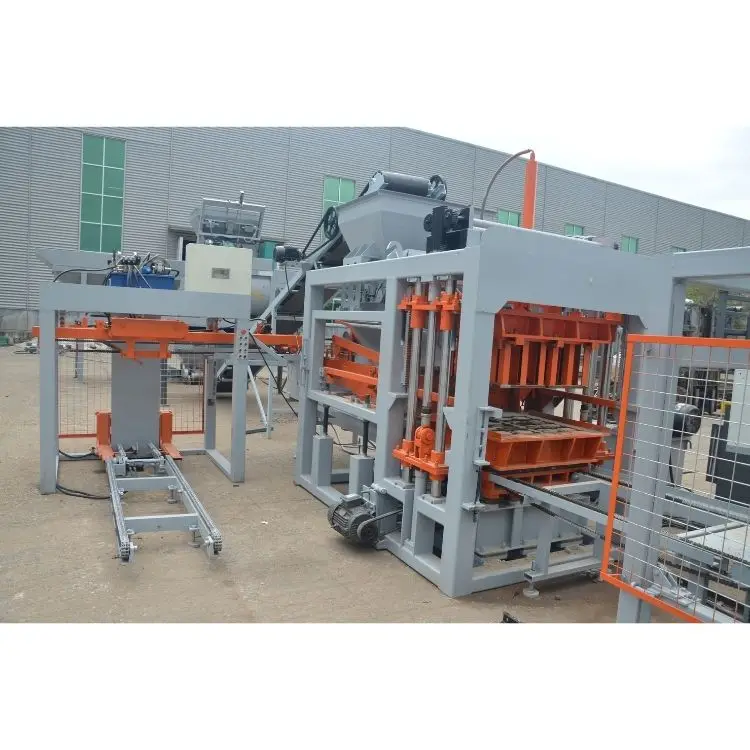
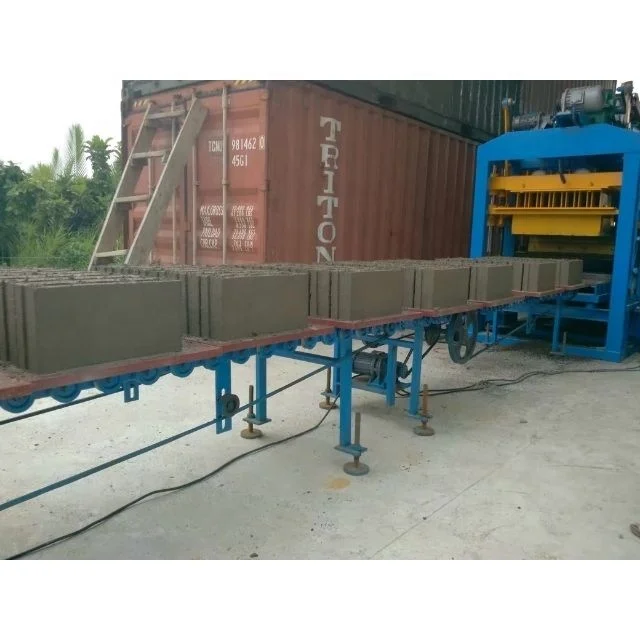
- Line layout showing QTJ4-25 footprint with pallet return path
- Capacity calculation stated per block format, not a single cycles-per-hour figure
- Mould drawing and format list matched to buyer’s product catalogue
- Pallet specification confirming dimensions against curing rack and forklift
- Voltage, frequency, and PLC display language confirmed in writing
- Factory test record with actual cycle time for buyer’s specified block format
Installation, Commissioning & Support
- 200 m² factory area requires level slab rated for 4 T static plus dynamic vibration loads
- Power feed sized for 14.9 kW plus allowance for mixer and conveyor motors
- Machine arrives in dismantled state; re-assembly sequence provided in manual
- First-run parameter setting on buyer’s raw materials, not factory test mix
- Operator training covers PLC recipe selection and mould change procedure
- Wear parts list and mould spares included in dispatch documentation
What to Send With Your Inquiry
To size the QTJ4-25 correctly, provide the block formats your market demands, the daily volume you plan to sustain, and the local aggregate sieve analysis your supplier can actually deliver. Include the available voltage and frequency at your site, the preferred PLC display language, and whether your existing curing racks and forklift can accept an 850 × 550 mm pallet. If you already run a mixer or conveyor upstream, share those specifications so the feed rate can be matched before the press leaves the test floor.
Frequently Asked Questions
Q: How is the QTJ4-25’s output capacity verified per block format, and what is the stated basis?
A: Capacity is calculated separately for each block format on the mould list, using the actual 25–30 s molding cycle and the pallet footprint. The factory test record supplied with the machine shows real pieces per shift for your specified formats, not a generic cycles-per-hour figure detached from block size.
Q: What PLC control options and display languages are available, and how are they confirmed before shipment?
A: The control system is available with PLC or MCC configurations, and the HMI language is locked in writing during the quotation stage. Before dispatch, a factory test runs the full cycle in the confirmed language, and a photograph of the screen is included in the test record package.
Q: How does the automation level on the QTJ4-25 support an upgrade path from semi-automatic to fully automatic stacking?
A: The press is designed so pallet feed and stacking hardware can be added later without replacing the main frame or hydraulic circuit. Buyers starting with manual pallet handling can install automatic feed and stacking modules as demand grows, keeping the original press in service.
Q: What voltage and frequency configurations are supported for the target market?
A: Voltage and frequency are configurable to match the buyer’s local grid. The exact values are confirmed in writing before production begins, and the motor nameplate and PLC transformer are set accordingly so commissioning can start immediately on arrival [NEED_CITE: industrial voltage standards by region].
Q: How is the pallet size and handling system matched to the buyer’s existing curing racks and forklift?
A: The 850 × 550 mm pallet size is checked against the curing rack rail spacing and the forklift tine width already on site. If a mismatch is found during the proposal stage, alternative pallet dimensions or rack adapters are quoted so no extra hardware surprises arrive with the first container.