Description
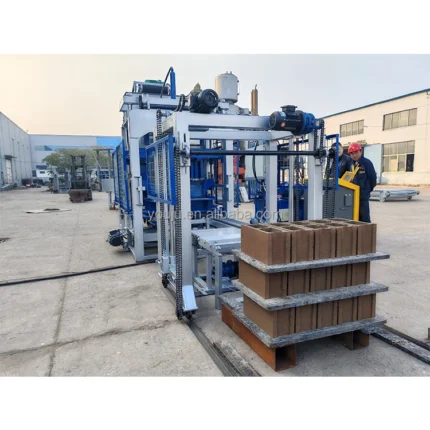
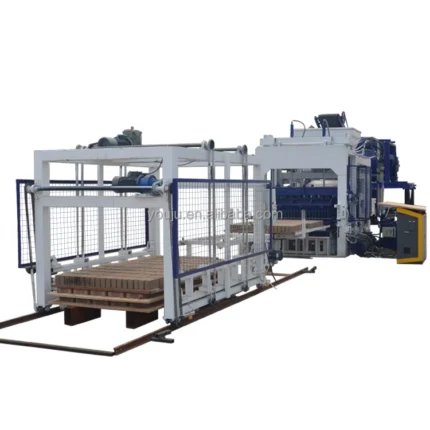
Controlled automation for the plant owner — the QTJ4-26 control architecture, optional stacking, and feeder are specified as a matched group rather than bolted on after the press arrives.
Technical Specifications
| Parameter | Value |
|---|---|
| Model | QTJ4-26 |
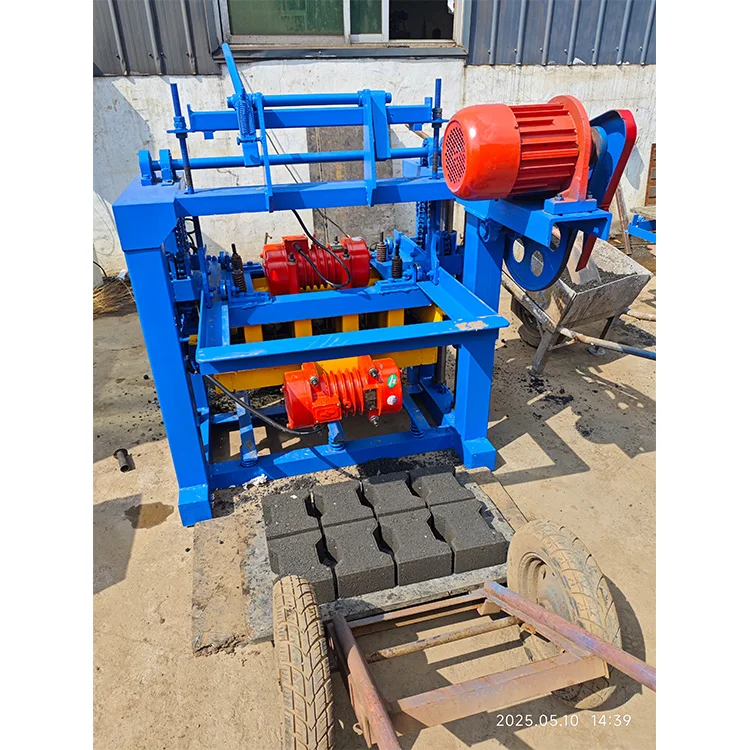
| Product Type | Semi-Automatic Concrete Block Making Machine |
| Molding Type | Platform Vibration |
| Overall Dimensions (Working State) | 3600 mm × 1700 mm × 2560 mm |
| Total Mass | 1750 kg |
| Pallet Size | 850 mm × 450 mm |
| Overall Power | 14.25 kW |
| Vibration System | Lower platform 2 × 3 kW motors + upper 1.5 kW attached device |
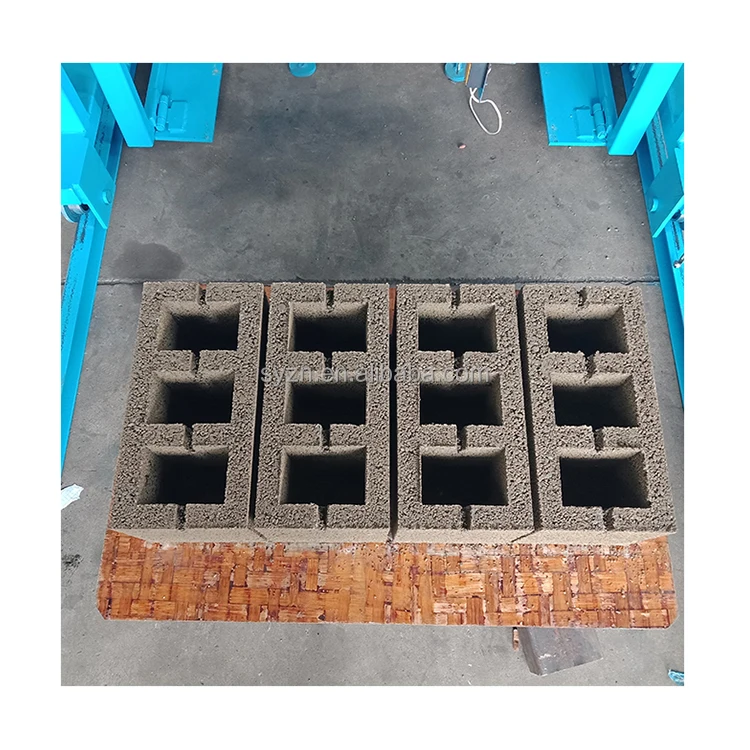
| Mould Format — Hollow Block | 390 mm × 190 mm × 190 mm, 4 pcs/mould |
| Mould Format — Solid Brick | 240 mm × 115 mm × 53 mm, 21 pcs/mould |
| Control System | Electronic controlling part (PLC or relay to be confirmed) |
| Voltage & Frequency | To be confirmed before shipment |
| Automation Level | Semi-automatic with optional auto stacker |
| Elevating System | Cone-shape motor + JZQ250 speed reducer + V-belt drive |
| Delivery Device | Cycloidal pin wheel speed reducer + chain + V-belt |
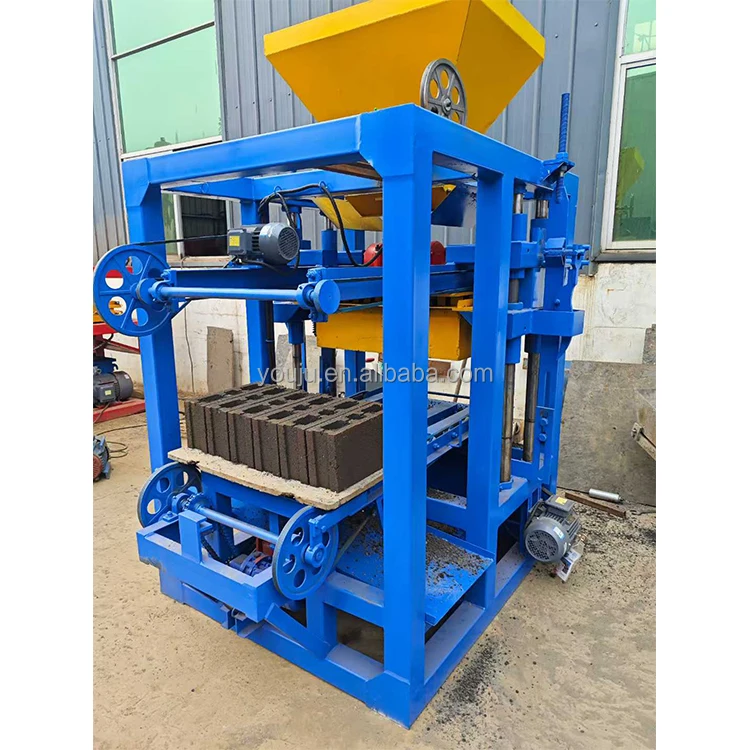
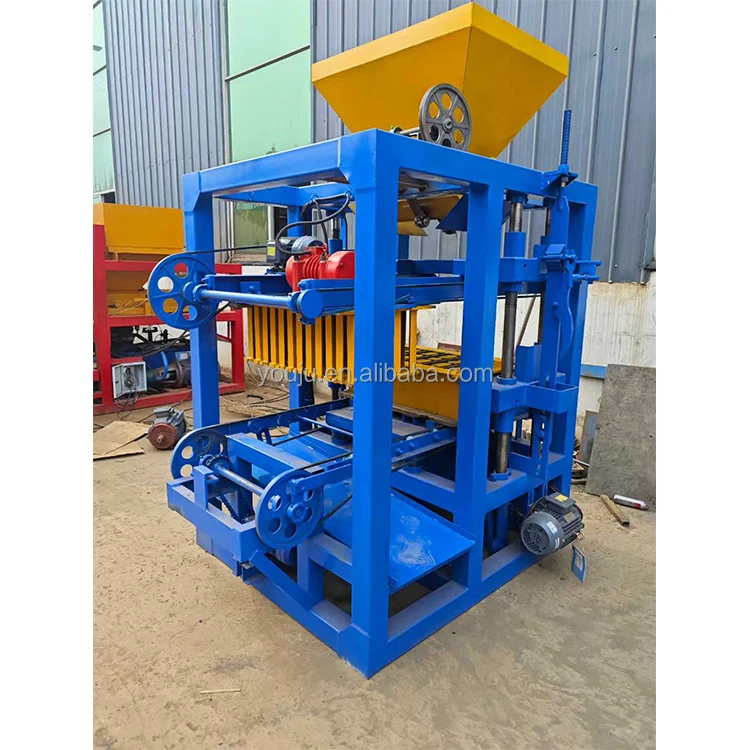
| Machine Frame | Dragon gate style, super steel, four vertical wear-resisting shafts |
| Assembly State | Stationary |
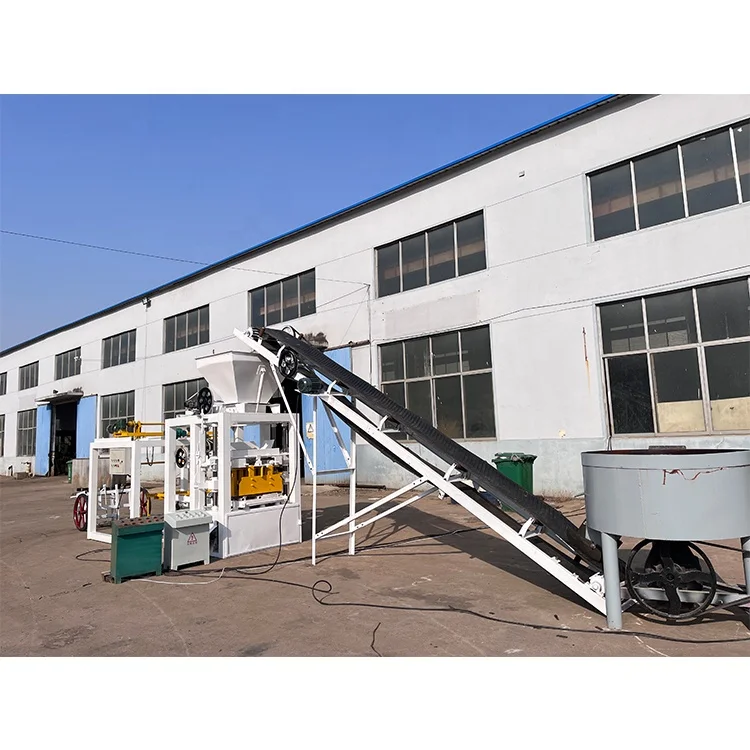
| Supporting Equipment — Basic | JQ350 pan mixer, 6 m belt conveyor, trolley |
| Supporting Equipment — Optional | Auto stacker, 3–6 layers per pallet height |
| Hydraulic Pressure | Not applicable (mechanical vibration type) |
Application Suitability
| Application | Material or Output |
|---|---|
| Hollow block production for small-scale block plants | Cement, sand, crushed stone aggregate |
| Solid brick manufacturing | Standard concrete raw materials with fine aggregate |
| On-site or workshop-level concrete product runs | Local sand and gravel with Portland cement |
| Entrepreneur first block plant setup | Semi-automatic operation with manual pallet handling option |
Why Voltage and Frequency Must Come Before the Quotation
A PLC controlled semi-automatic block machine is only as reliable as the electrical environment it lands in — lock down voltage, frequency, and control language before the machine leaves the factory floor.
I have spent years moving between project sites across the Middle East, and the pattern is always the same. A fully automatic stationary block line once arrived at a site in Saudi Arabia with PLC panels wired for 380V/50Hz while the local grid ran 440V/60Hz. The servo on the pallet feeder tripped the moment power was applied. The entire curing rack sat idle for three weeks while a transformer retrofit was arranged. That kind of delay is not a machinery failure — it is a specification failure. [NEED_CITE: voltage and frequency standards by export market]
When a buyer focuses solely on cycle times and pallet counts, the electrical conversation gets pushed to the shipping stage. By then, the control cabinet is already wired, the PLC firmware is loaded in one language, and the motor nameplates are stamped. Correcting any of those after arrival costs weeks, not hours.
How the Control Architecture Removes Operator Guesswork
The QTJ4-26 electronic controlling part governs the vibration cycle, elevating sequence, and delivery device timing from a single logic point. When configured as a PLC controlled semi-automatic block machine, the system can hold cycle parameters constant across shifts, which matters when different operators run the same mould format on different days. Batch-to-batch consistency depends less on the operator remembering the right timing and more on the controller repeating it. The automation level is selectable, so the buyer can run semi-automatic now and add stacking automation later without replacing the core press.
What the Optional Auto Stacker Changes for Your Curing Yard
Manual pallet handling after the press is where labour quietly accumulates. Each pallet must be carried or wheeled to the curing rack, stacked at the right height, and retrieved after curing. The optional auto stacker handles 3 to 6 layers per pallet height, which reduces the number of workers needed between the press and the curing area. The stacking height must match the curing rack spacing and the forklift mast clearance the buyer already has on site — specifying the stacker in isolation from the curing logistics creates a mismatch that shows up on day one. [NEED_CITE: CE machinery directive requirements for block production lines]
Reading the Vibration and Frame Specs for Real Block Density
The lower platform vibration uses two 3 kW motors while the upper vibration adds a 1.5 kW attached device. This dual-level arrangement compacts the mix from both directions, which is important when the buyer switches between the 4-cavity hollow block mould and the 21-cavity solid brick mould — each format demands a different energy distribution to achieve consistent density. The dragon gate frame with four vertical wear-resisting shafts keeps the mould aligned through thousands of cycles. If the shafts wear unevenly or the frame deflects under vibration load, the mould seating drifts and block dimensions move outside tolerance. The mechanical vibration design — with no hydraulic system — simplifies maintenance but places more importance on the platform motors and reducer condition over time. The JZQ250 speed reducer on the elevating system and the cycloidal pin wheel reducer on the delivery device are standard industrial components, meaning replacement parts are generally accessible through local industrial suppliers rather than being proprietary.
What Happens When Automation Is Specified After the Press Ships
The cost of retrofitting automation onto a block line that was quoted without it is not just the price of the stacker or feeder. The press cycle timing must be re-tuned to match the new equipment speed. Pallet feed rates that worked for manual handling now need to synchronize with an automatic feeder, and the PLC controlled semi-automatic block machine must communicate with each new station. [NEED_CITE: PLC integration challenges when retrofitting automation to existing block presses] When those stations arrive from separate suppliers, each with its own control logic, the integration falls to the buyer’s electrician on site — often in a language neither the PLC display nor the manual supports.
Why Sourcing the Line as One Matched System Matters
Block machinery is the single focus here, so the press, mould, pallet, and handling equipment are specified as one matched system. The configuration is set against the buyer’s actual mix design and local aggregate rather than a catalogue default. Mould design covers the formats the buyer’s market actually sells, with custom drawings available for non-standard sizes. The automation level is selectable from semi-automatic through to stacking and cubing, so a plant owner can start with the QTJ4-26 base line and add the auto stacker when volume justifies it. Installation support includes operator training on the specific control system shipped, and the documentation package travels with the machine.
Documentation & Verification
- Factory test record covering your confirmed block format and mix design before dispatch
- Electrical schematic showing your site voltage, frequency, and PLC display language
- Mould drawing and format list for every block type in your quotation
- Pallet specification matched to your curing rack spacing and forklift capacity
- Operation and maintenance manual in your confirmed control language
- Wear parts and mould list with replacement intervals for your production volume
Installation, Commissioning & Support
- Foundation must accommodate 3600 mm × 1700 mm footprint and 1750 kg static mass with vibration isolation
- Dedicated circuit for 14.25 kW overall power at your confirmed voltage and frequency
- Machine arrives in working-state assembly; elevating and delivery systems require on-site alignment
- First-run commissioning includes vibration tuning for your local aggregate and mould format
- Operator training covers PLC or relay control interface and mould change procedure
- Wear parts list includes platform vibration motors, V-belts, and vertical shaft bushes
What to Prepare Before Your Inquiry
Send your target block format with dimensions, the daily output you need for that specific format, and the raw materials available locally — including sand grading and aggregate size. Confirm your site voltage, frequency, and preferred control display language. Let us know your curing yard layout and forklift specifications so the pallet size and optional stacker height can be matched from the start.
Frequently Asked Questions
Q: How do I get a realistic daily output figure instead of just cycles per hour?
A: Provide the exact block format you plan to produce — dimensions and cavity count. The output calculation is then stated per that format, factoring in your specific mould cycle time, mix setting characteristics, and pallet handling method. A figure quoted without naming the block format it assumes will not reflect what your plant actually produces across a full shift.
Q: Should I start semi-automatic and add automation later?
A: The QTJ4-26 supports that path. The electronic control architecture can integrate an auto stacker after initial commissioning without replacing the press. The decision depends on your current labour cost, curing yard capacity, and whether your volume justifies stacking automation now. Starting semi-automatic keeps initial investment lower while preserving the upgrade option.
Q: Which electrical details must I confirm before the machine ships?
A: Voltage, frequency, and PLC display language are the three items that cannot be changed easily after arrival. The control cabinet wiring, motor nameplates, and firmware are all set during production. Confirming these against your site supply before the machine leaves the factory avoids weeks of delay at commissioning.
Q: Is the auto stacker included, and does it match my curing setup?
A: The auto stacker is optional and specified separately. Its stacking height of 3 to 6 layers must align with your curing rack spacing and forklift mast clearance. Include your curing yard dimensions and forklift model in your inquiry so the stacker configuration is matched to your existing logistics, not chosen in isolation.
Q: What documentation comes with the machine for maintenance planning?
A: The package includes an operation manual in your confirmed language, electrical and mechanical schematics, a wear parts list with replacement guidance, and the factory test record for your block format. These documents support your maintenance team from day one rather than requiring a service visit to establish basic upkeep schedules.