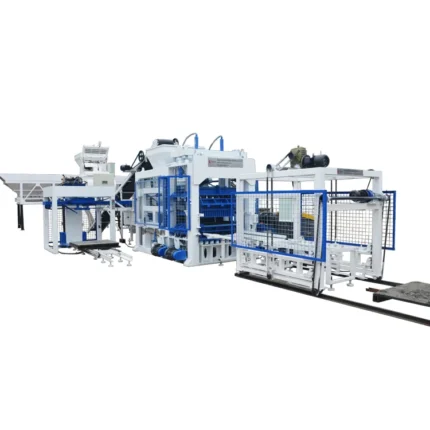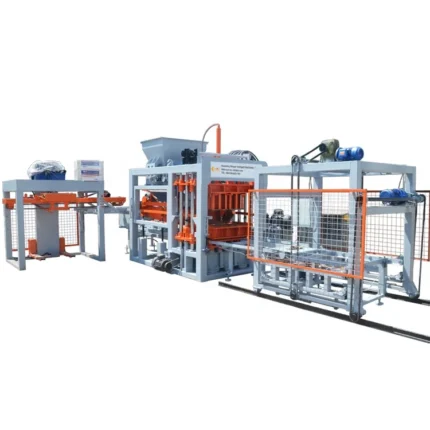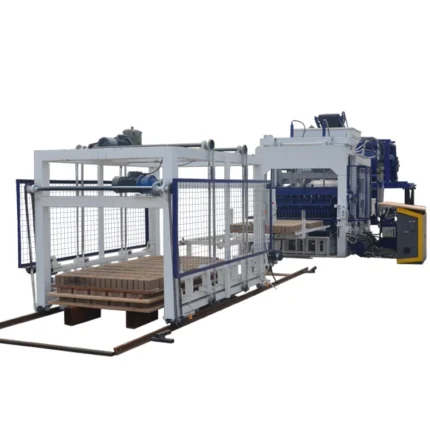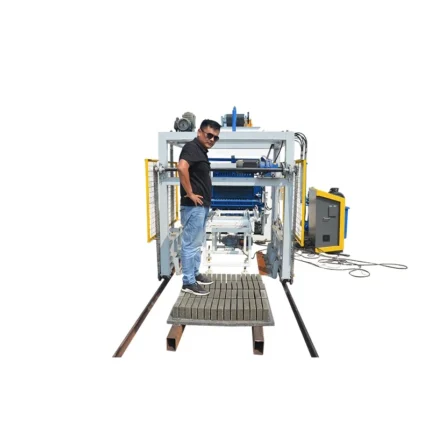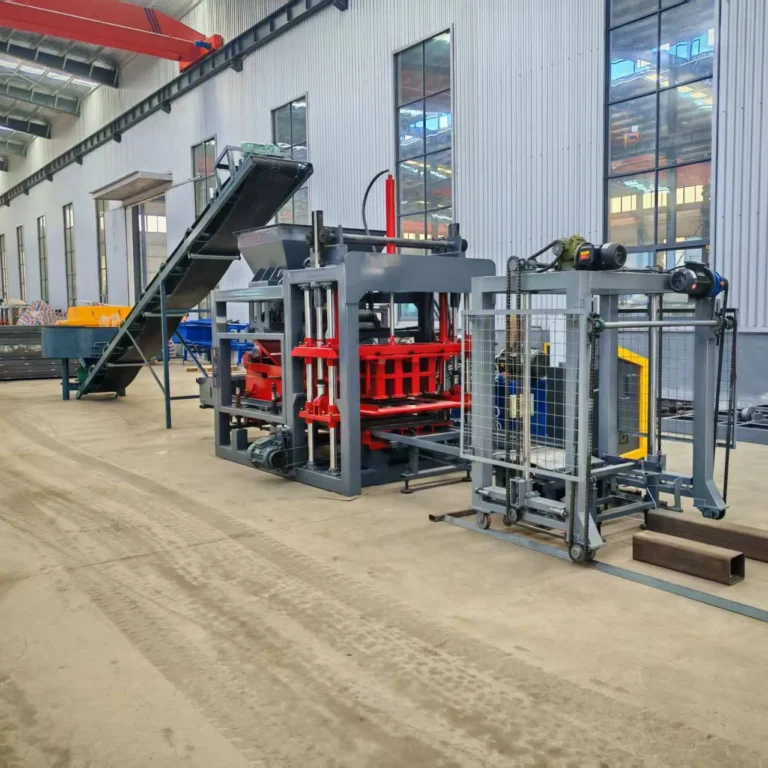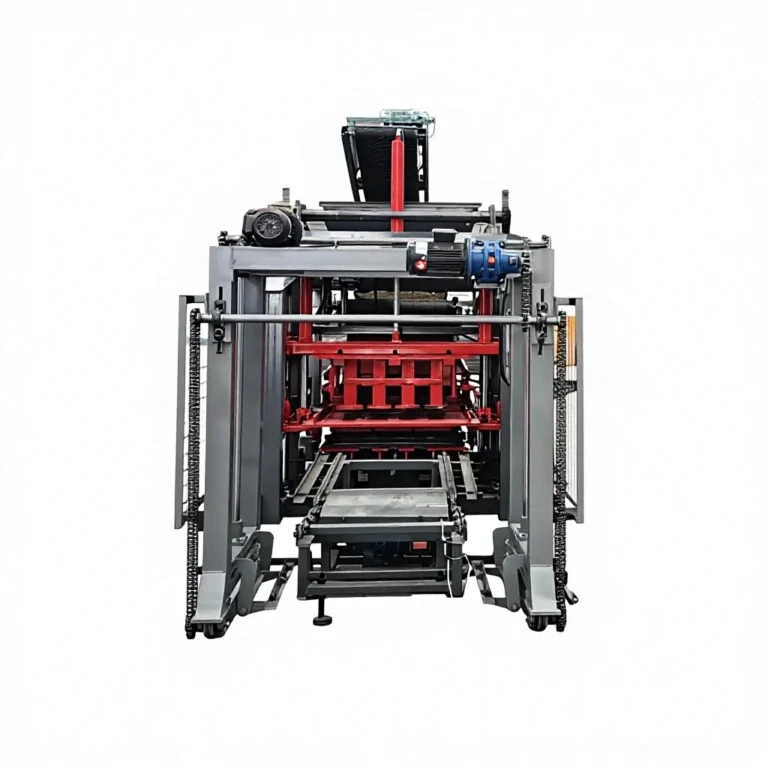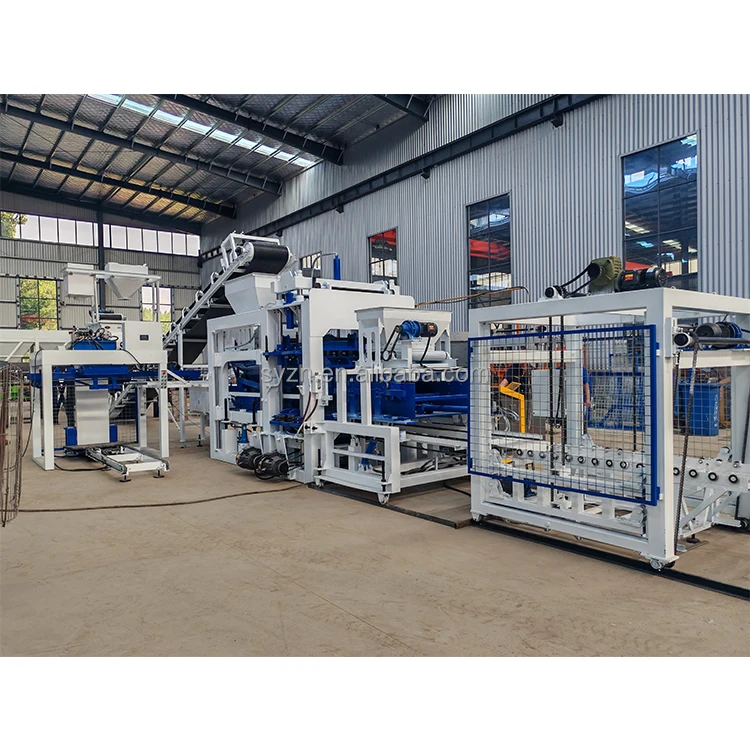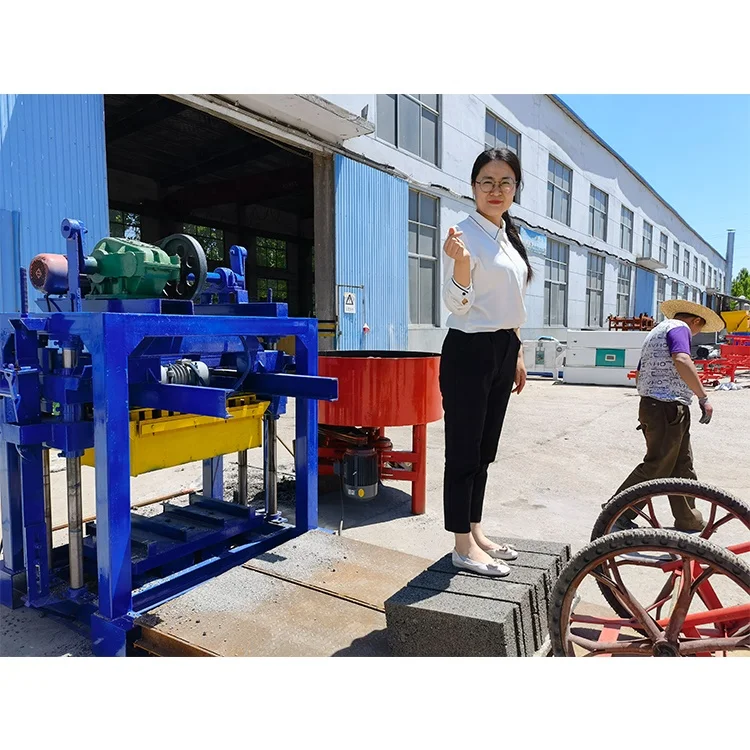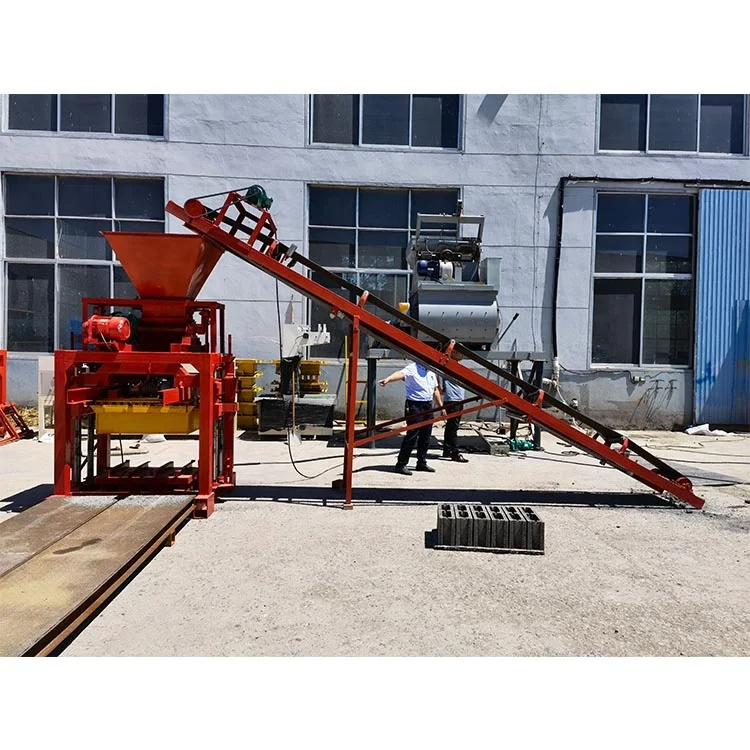
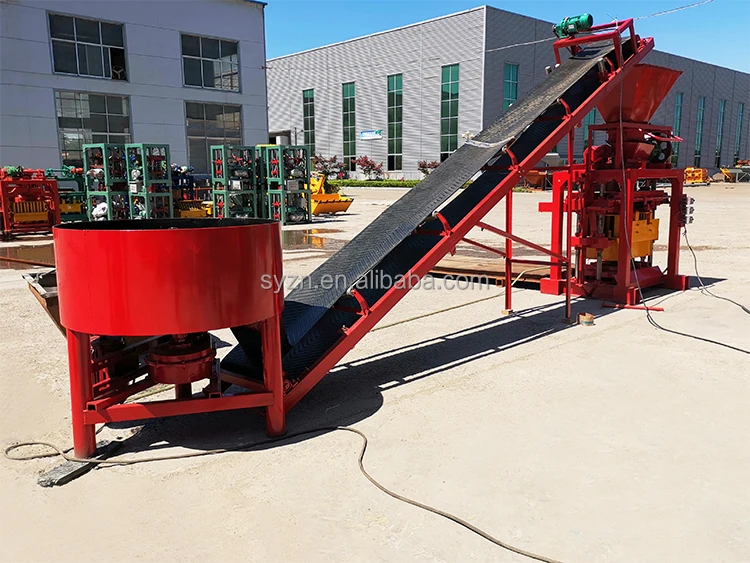
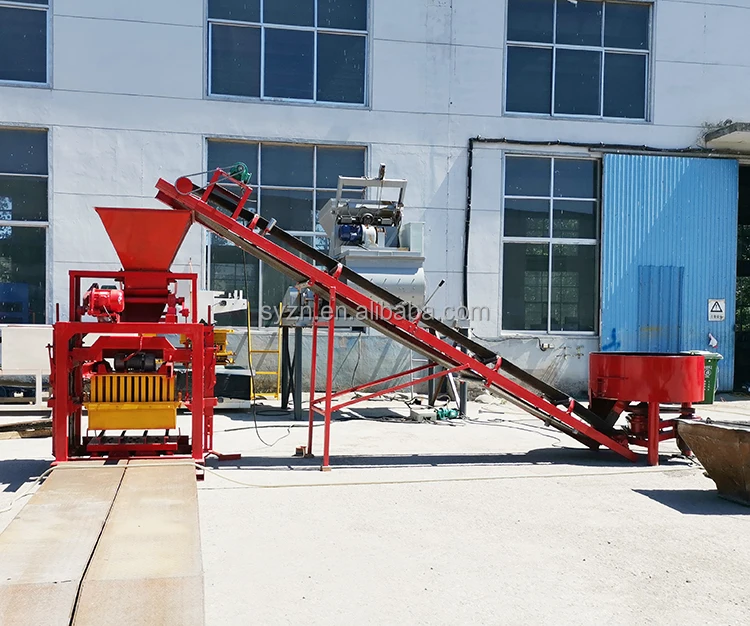
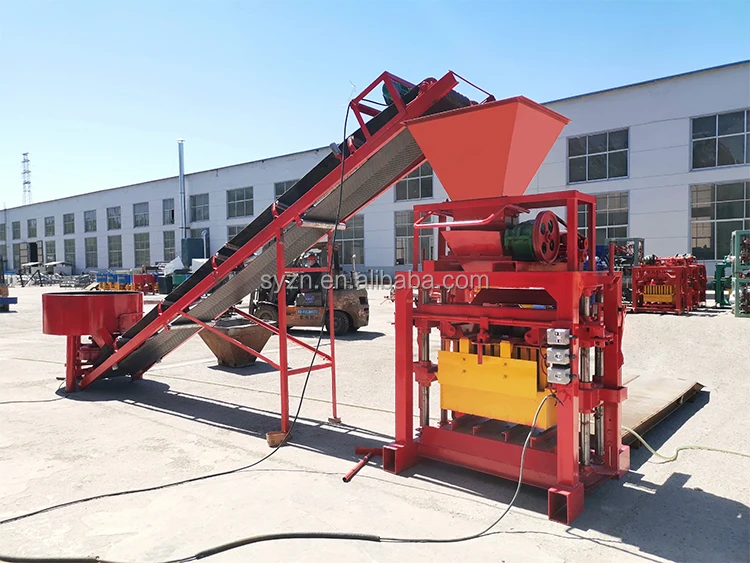
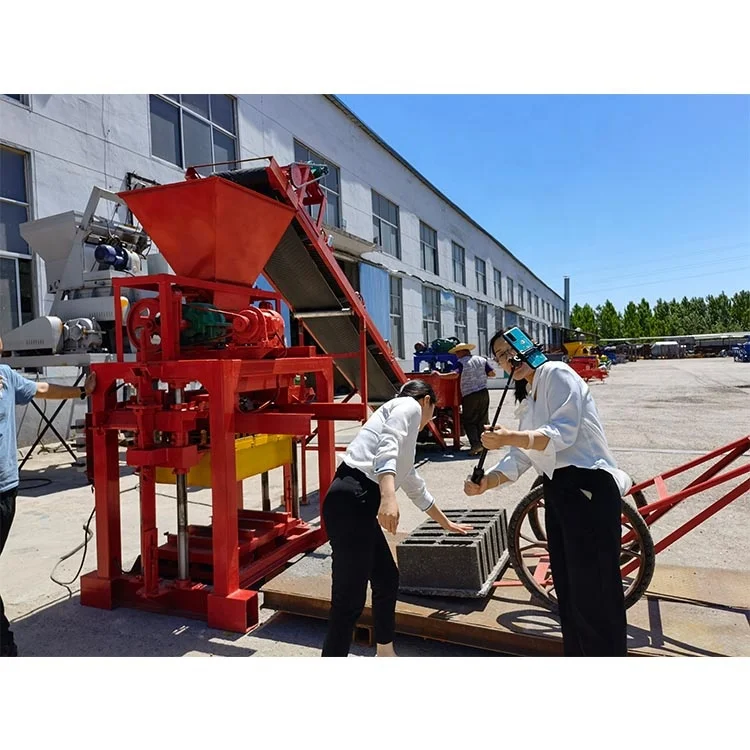
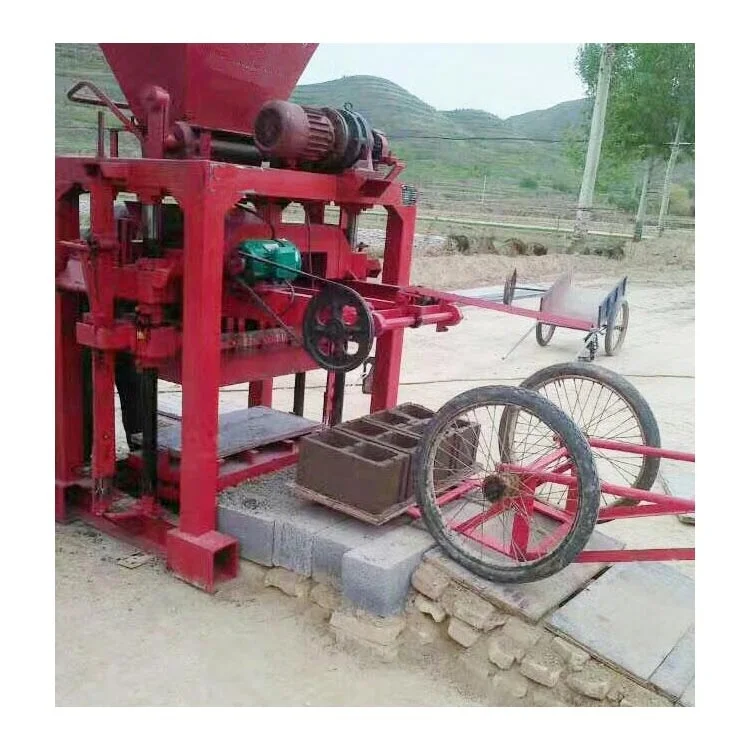
Description
Matched System Configuration — the QTJ4-35 is specified as a complete pressing, mould, pallet, and control package tied to your actual block format, not assembled from catalogue defaults.
Technical Specifications
| Parameter | Value |
|---|---|
| Model | QTJ4-35 |
| Product Type | Semi-Automatic Hydraulic Block Making Machine |
| Overall Dimensions (L×W×H) | 1350×1460×1800 mm |
| Molding Cycle | 35 s |
| Vibration Frequency | 2800 r/min |
| Exciting Power (Vibration Force) | 30 KN |
| Total Power | 11.15 kW |
| Mixer Model | JQ350 |
| Pallet Size | 850×450×20 mm |
| Total Weight | 1500 KG |
| Applied Products | Concrete hollow blocks (8 inch, 6 inch), solid bricks |
| Raw Materials | Crushed stones, sand, cement, dust, fly ash |
| Output Capacity (400×200×200 mm hollow block) | 4 pcs/mould, 408 pcs/hr, 3264 pcs/8hr |
| Output Capacity (400×150×200 mm hollow block) | 5 pcs/mould, 510 pcs/hr, 4080 pcs/8hr |
| Output Capacity (240×115×53 mm solid brick) | 18 pcs/mould, 2100 pcs/hr, 17000 pcs/8hr |
| Automation Level | Semi-automatic |
| Hydraulic System | Equipped (high pressure, stable operation) |
| Vibration Type | Bed mould vertical vibration + upper mould compression vibration |
| Voltage & Frequency | Basis not stated in source — confirm before production |
| Control System (PLC) | Basis not stated in source — confirm before production |
| Language Options | Basis not stated in source — confirm before production |
Application Suitability
| Application | Material or Output |
|---|---|
| Small to medium block plant | Hollow blocks and solid bricks from crushed stone, sand, cement, fly ash |
| On-site construction block production | 8 inch and 6 inch hollow blocks using locally sourced aggregates |
| First block plant for entrepreneurs | Concrete blocks and solid bricks at lower initial investment |
| Format expansion for existing plants | Pavers or solid bricks added alongside hollow block production |
Why the PLC Language Question Comes Before the Quotation
An unread control panel stops a line faster than any mechanical fault.
I once stood in a block yard in Ghana watching an operator stare at a QTJ4-35 control screen displaying every parameter in Chinese. The machine was mechanically sound, the moulds were right, the pallets were stacked, but commissioning was dead in the water because nobody had confirmed the PLC display language before the machine left the factory. That delay cost the buyer days of production while we arranged a remote firmware update across time zones. When you are investing in a PLC controlled semi-automatic block machine, the control interface language, the voltage, and the frequency must be locked down before steel is cut [NEED_CITE: voltage and frequency standards by export market]. The automatic QTJ4-35 block making machine ships with a control system that should match the people who will actually run it every day.
What the Control Layer Actually Removes from the Operator
A semi-automatic line still depends heavily on operator timing for pallet feeding and block removal, but the PLC handles the pressing sequence itself. Cycle timing, vibration duration, and hydraulic pressure application are governed by the controller rather than left to manual judgement, which means the 35-second molding cycle stays consistent whether it is the first shift of the week or the last. This consistency is the core reason block strength stays within tolerance across a production run.
Batch Consistency Across a Full Production Day
The bed mould vertical vibration combined with upper mould compression vibration ensures that each block receives the same compaction energy throughout the cycle. When the PLC governs vibration frequency at 2800 r/min and the hydraulic system delivers steady pressing force, the density variation between the first pallet and the three-hundredth pallet narrows considerably. For buyers upgrading from fully manual operation, this repeatability is usually the most immediate improvement they notice in block quality [NEED_CITE: concrete block compressive strength testing standards].
Reading the Numbers That Matter
The vibration force of 30 KN working alongside hydraulic pressure determines how tightly the mix is compacted inside the mould. If your local aggregate is coarse crushed stone rather than fine sand, the vibration energy needs to be sufficient to settle the larger particles before the hydraulic press completes the compaction. The 850×450×20 mm pallet size must match your existing curing racks and forklift dimensions — a mismatch here means blocks are double-handled before they even reach the curing area. Total power of 11.15 kW including the JQ350 mixer means the electrical supply must support continuous draw without voltage sag, which directly affects vibration motor performance and block density.
The Hidden Cost of Skipping Configuration Confirmation
When voltage and frequency are assumed rather than confirmed, a machine wired for one standard arrives in a market running another, and the motors either underperform or burn out within weeks. When pallet size is chosen without checking the buyer’s curing area layout, pallets pile up on the floor because they do not fit the racks. When mould format is selected without reviewing local block dimensions that actually sell, the buyer pays for format flexibility that the market never uses [NEED_CITE: common causes of block machine commissioning delays]. These are not manufacturing defects — they are specification gaps that surface only after the machine is bolted to the floor.
Why Configuration Verification Happens Here
Block machinery as a single focus means the QTJ4-35 is specified alongside its moulds, pallets, and handling equipment as one system rather than sourced from separate suppliers. The control language, voltage, and frequency are confirmed during the quotation stage, not discovered at commissioning. Mould design covers the formats the buyer’s market actually demands, including custom drawings when standard sizes do not match local construction practice. The automation level is selectable, so a buyer starting with semi-automatic operation can add automatic pallet feeding and stacking later without replacing the press itself.
Documentation & Verification
- Line layout showing capacity calculation tied to each specific block format and mould
- Machine specification sheet confirming voltage, frequency, and PLC language before production
- Mould drawing and format list matched to your local block dimensions and market demand
- Factory test record with block samples produced using your confirmed mix design
- Packing photographs and customs documentation support for shipment clearance
Installation, Commissioning & Support
- Foundation pad leveled to support 1500 KG machine weight plus dynamic vibration loads
- Electrical supply verified for 11.15 kW total draw with dedicated circuit breaker
- PLC display language and control parameters confirmed on-site before first production run
- Vibration frequency and hydraulic pressure adjusted to match your local aggregate mix
- Mould change procedure trained with operators to minimize format switch time
- Wear parts list provided covering hydraulic seals, vibration motor components, and mould liners
What to Prepare Before Requesting a Quotation
Tell us which block formats your market actually buys and the daily output you need per format. Confirm your local voltage, frequency, and the language your operators read. Describe the raw materials you can source — crushed stone grading, sand type, cement availability, fly ash access — so the vibration force and mix design are matched before the machine ships.
Frequently Asked Questions
Q: How is the output capacity verified for each block format?
A: Each capacity figure is tied to a specific mould and block size. The 400×200×200 mm hollow block yields 4 pieces per mould at 3264 per 8-hour shift, while the 400×150×200 mm hollow block produces 5 pieces per mould at 4080 per shift. These assume the stated 35-second molding cycle running continuously with matched pallet handling.
Q: What is the automation level, and can it be upgraded later?
A: The QTJ4-35 ships as a semi-automatic machine with PLC-controlled pressing cycles and manual pallet handling. The control architecture supports adding automatic pallet feeding, stacking, and cubing systems in later phases without replacing the core press or mould set.
Q: How are voltage, frequency, and PLC language confirmed?
A: These are locked down during the quotation stage before production begins. The buyer confirms local supply voltage, grid frequency, and preferred control panel language so the electrical cabinet and PLC firmware are configured correctly at the factory, eliminating commissioning delays on arrival.
Q: Which raw materials and mix designs does this machine handle?
A: The machine processes crushed stones, sand, cement, dust, and fly ash in various proportions. The vibration force of 30 KN and hydraulic pressure are matched to your specific aggregate characteristics and target block strength during configuration, not left at a generic default setting.
Q: What documentation is supplied before shipment?
A: You receive a line layout with per-format capacity calculations, machine and mould specification sheets, hydraulic and electrical schematics, a factory test record, packing photographs, and an operation manual. Control language and voltage confirmation records are included to verify the configuration matches your site conditions.