

Description
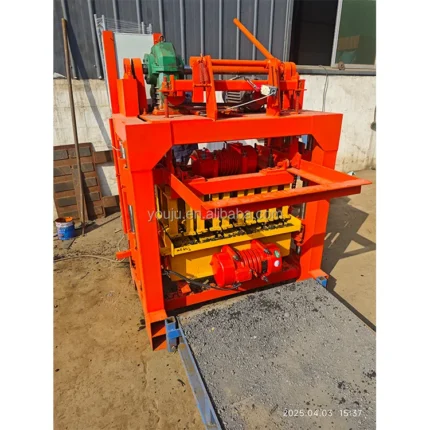
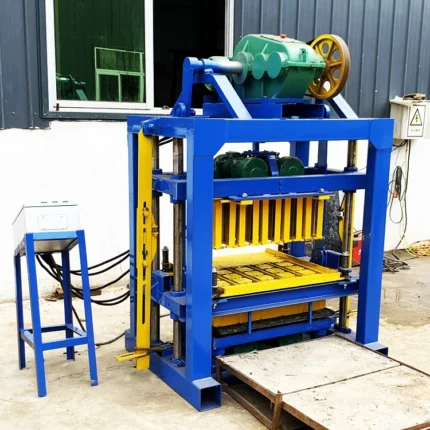
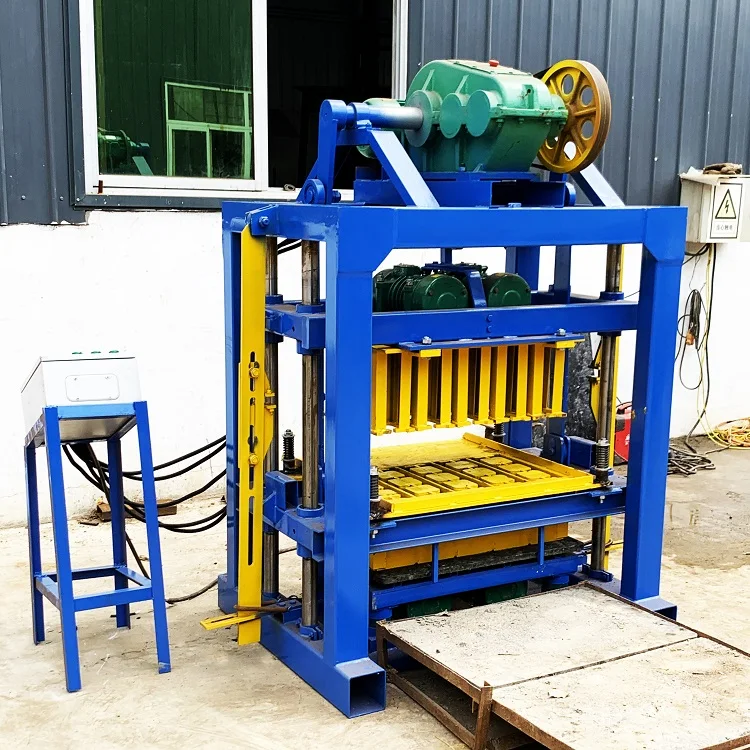
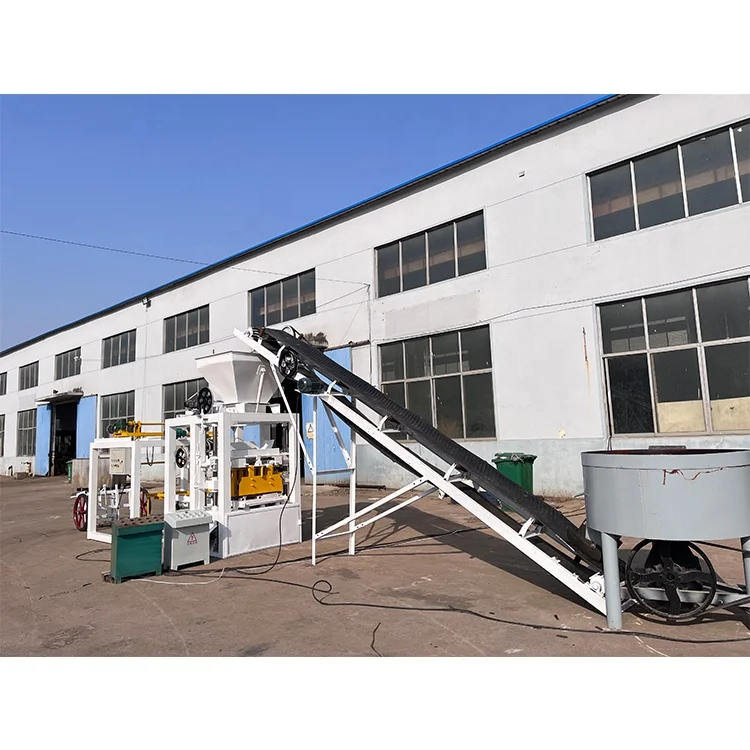
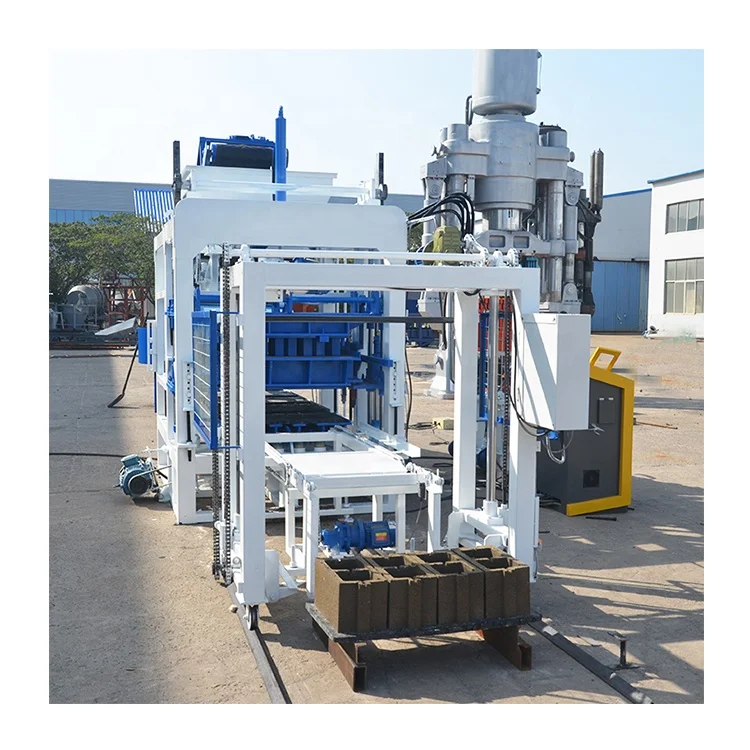
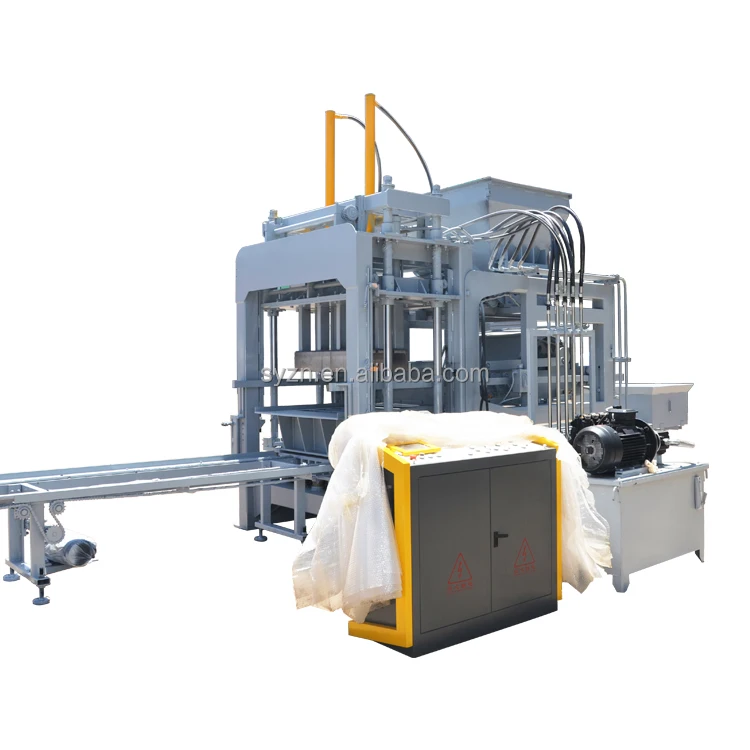
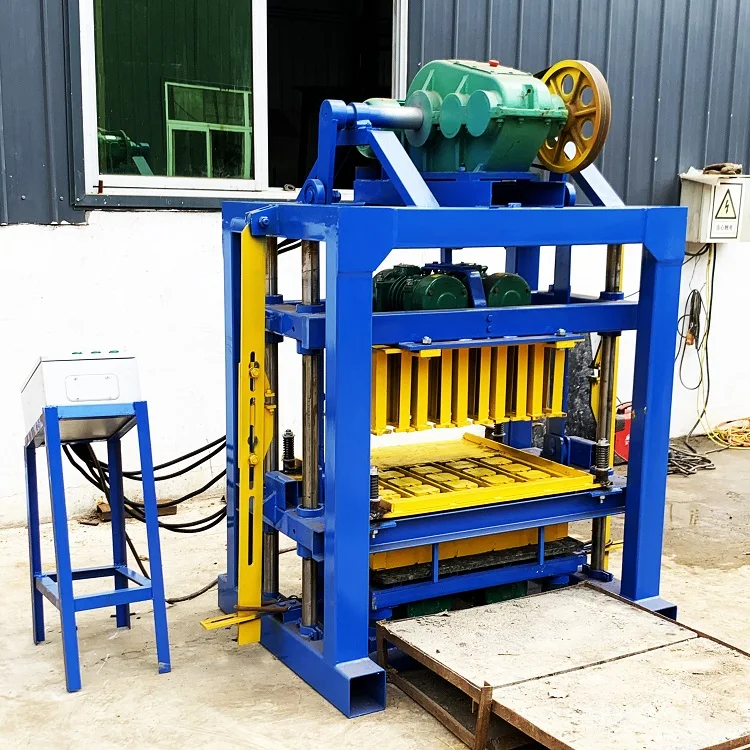
Configurable automation — the QTJ4-40 block machine can start at semi-automatic operation and add pallet feeding, stacking, or cubing modules later without replacing the press.
Technical Specifications
| Parameter | Value |
|---|---|
| Model | QTJ4-40 |
| Product Type | Stationary Block Making Machine |
| Main Vibration Form | Platform Vibration |
| Vibration Frequency | 2800 r/min |
| Pallet Size | 850×450 mm |
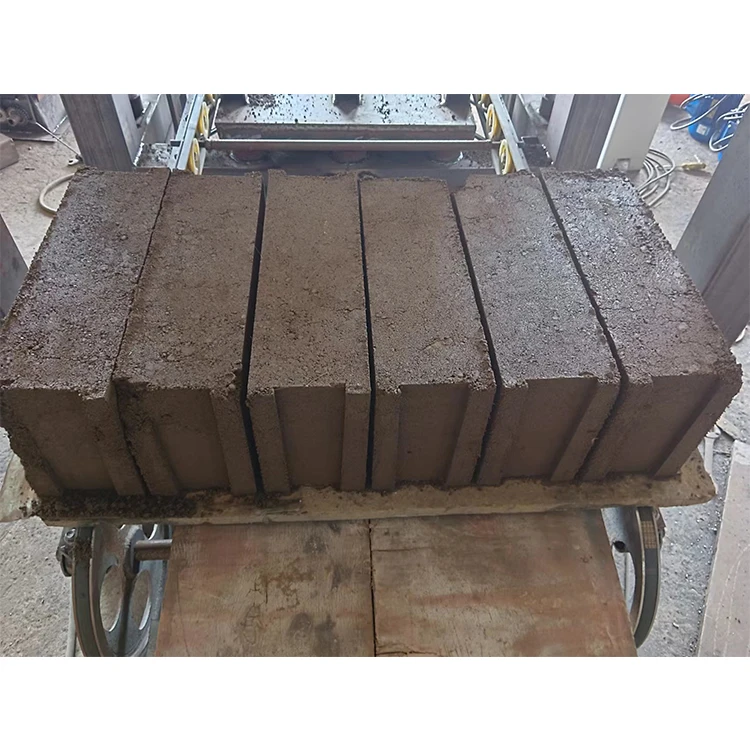
| Capacity (Hollow Block 400×200×200 mm) | 2880 pcs/8h (4 pcs/mould, basis as stated) |
| Capacity (Hollow Block 400×150×200 mm) | 4000 pcs/8h (5 pcs/mould, basis as stated) |
| Capacity (Interlocking Brick 225×112.5×60 mm) | 7200 pcs/8h (9 pcs/mould, basis as stated) |
| Raw Material Ratio | Cement 8-10%, Sand 30-40%, Stone 50-60% |
| Overall Dimensions (L×W×H) | 1350×1460×1800 mm |
| Machine Weight | 1 T |
| Automation Level | Semi-automatic (top die push-pull, automatic scraper, manual pallet handling) |
| Worker Requirement | 1-3 people |
| Mould Compatibility | Hollow block, solid block, paver, interlocking block, curbstone |
Application Suitability
| Application | Material or Output |
|---|---|
| Small to Medium Block Plants | Concrete hollow blocks and solid blocks using local aggregates |
| Construction Contractor Sites | On-site production of standard masonry units for project use |
| Paving and Landscaping Supply | Interlocking bricks and colored pavers from crushed stone and sand |
| First-Plant Entrepreneurs | Entry-level stationary production with a pathway to higher automation |
What "Semi-Automatic" Actually Means for Your Daily Run
The QTJ4-40 handles the press cycle automatically, but the operator still feeds pallets and moves cured stacks by hand.
When a plant owner reads "semi-automatic," the assumption is often that the machine runs itself. On the automatic QTJ4-40 block machine, the top die push-pull mechanism and the scraper operate without manual intervention, which removes the heaviest repetitive actions from the cycle. The pallet, however, is still placed and removed by the operator, and stacking at the curing area remains a manual station. [NEED_CITE: automation tier definitions in block making machinery] This distinction matters because it defines where your labour hours actually go during an eight-hour shift.
Removing the Heaviest Manual Steps from the Press Cycle
The platform vibration at 2800 r/min compacts the mix across the full pallet area, and the PLC controlled block making machine manages the vibration duration and top die pressure for each cycle. What the operator no longer has to do is pull the scraper across the mould box by hand or wrestle the top die into position. This consistency in compaction directly affects block-to-block density, which is where manual presses typically show the most variation across a single production day.
Where Manual Stations Create the Real Bottleneck
Even with the press cycle automated, the pallet handling and stacking stations dictate the actual rhythm of the line. If one operator is feeding empty pallets while another carries loaded pallets to the curing rack, the QTJ4-40 block machine can maintain its cycle pace. [NEED_CITE: labour allocation in semi-automatic block plants] If a single operator tries to do both, the press waits. Understanding this split is essential before deciding whether the next investment should be an automatic pallet feeder or a second worker.
Reading the Specifications Against Your Actual Block Format
The vibration frequency of 2800 r/min and the 850×450 mm pallet size are fixed parameters on this automatic QTJ4-40 block machine. What changes is the block count per cycle based on your mould layout. A 400×200×200 mm hollow block fits four per mould, while a smaller interlocking brick fits nine. The cycle time itself does not change significantly between formats, but the total pieces per shift scales directly with how many cavities the mould contains. The raw material ratio of approximately one part cement to four parts sand to five parts stone provides a starting point, though local aggregate grading will require adjustment during commissioning.
The Cost of Skipping the Voltage and Language Check
A PLC controlled block making machine that arrives with the wrong voltage specification or a control display in an unreadable language sits idle until the issue is resolved. Commissioning delays from unconfirmed electrical specifications are among the most common reasons a new block press fails to produce in its first week on site. [NEED_CITE: electrical specification mismatches in exported machinery] The QTJ4-40’s control system must be specified for your local frequency and voltage before the machine enters production, and the PLC display language should be confirmed at the same point in the order process.
Why Sourcing the Machine and the Line Together Matters
A block press does not operate in isolation. The pallet size of 850×450 mm must match the curing racks you already have or plan to build, and the forklift in your yard must be able to handle loaded pallet stacks at that dimension. Configuration set against your actual mix design and local aggregate means the vibration force and cycle parameters are tuned for the material you will actually feed, not a generic test mix. The QTJ4-40 block machine is specified as part of a matched system where mould, pallet, and handling are considered together, which prevents the situation where the press arrives but the supporting equipment does not fit. Mould design covers the formats your local market actually buys, and the automation level is selectable so you can add pallet feeding or stacking modules as your output requirement grows. Installation support includes operator training on the specific controls of your machine, and wear parts availability is confirmed before the first replacement is due.
Documentation & Verification
- Line layout showing how the 850×450 mm pallet flows from press to curing area
- Capacity calculation stating the exact block format and pieces per mould assumed
- Voltage, frequency, and PLC display language confirmation sheet signed before production
- Factory test record using your target mix ratio and block format
- Mould drawing and format list for every die included in your order
- Operation manual covering the top die push-pull and scraper sequence
Installation, Commissioning & Support
- Floor space of approximately 200 m² required including curing rack area around the 1350×1460 mm machine footprint
- Dedicated electrical circuit matching confirmed voltage and frequency for the main vibration motor
- Machine ships as a single unit at approximately 1 T, requiring forklift or crane for placement
- First-run commissioning includes vibration duration tuning for your specific aggregate and cement ratio
- Operator training covers the semi-automatic cycle sequence and manual pallet handling rhythm
- Wear parts list provided with hydraulic and vibration component replacement intervals
What to Prepare Before Requesting a Quotation
To size the QTJ4-40 correctly for your plant, share the block formats you intend to produce and the daily output you need for each. Your local voltage and frequency, along with the preferred PLC display language, should be confirmed at the inquiry stage. If you have existing curing racks or pallets, provide their dimensions so the pallet compatibility can be verified before the machine is built.
Frequently Asked Questions
Q: Can the QTJ4-40 be upgraded to full automatic operation later?
A: The semi-automatic configuration handles the press cycle but leaves pallet feeding and stacking as manual stations. Adding an automatic pallet feeder or a stacking module is possible as a later phase, provided the line layout was planned with that expansion in mind from the beginning.
Q: How does platform vibration affect block density consistency?
A: Platform vibration at 2800 r/min acts across the entire pallet surface simultaneously. This means every block on the pallet receives the same compaction energy during each cycle, which reduces the density variation between individual blocks compared to mould-only vibration systems.
Q: What information is needed to confirm the right mould for my market?
A: The block format your customers buy, the required block strength, and the local aggregate available all influence mould selection. Provide your target block dimensions and a sample of your raw material so the mould cavity layout and vibration parameters can be matched before production.
Q: Why does the pallet size matter beyond the machine itself?
A: The 850×450 mm pallet must be compatible with your curing rack spacing and the forklift you use to move stacks. If the pallet does not match the downstream handling equipment, loaded pallets will have to be re-stacked by hand before they can be moved to the curing area.
Q: What causes commissioning delays after the machine arrives?
A: The most frequent cause is an unconfirmed voltage or frequency specification that does not match the site electrical supply. A control display language that the operator cannot read also halts production until it is resolved. Both must be locked in before the machine enters the production stage.