Description
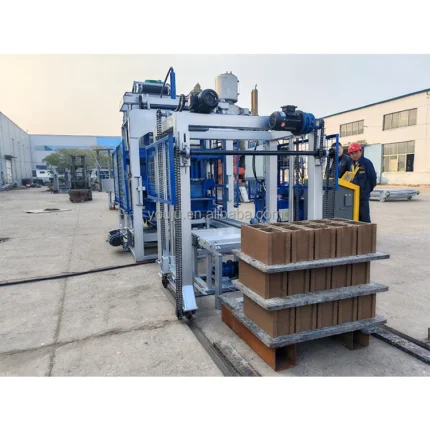
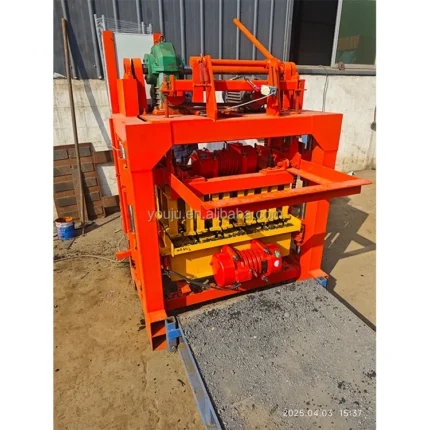
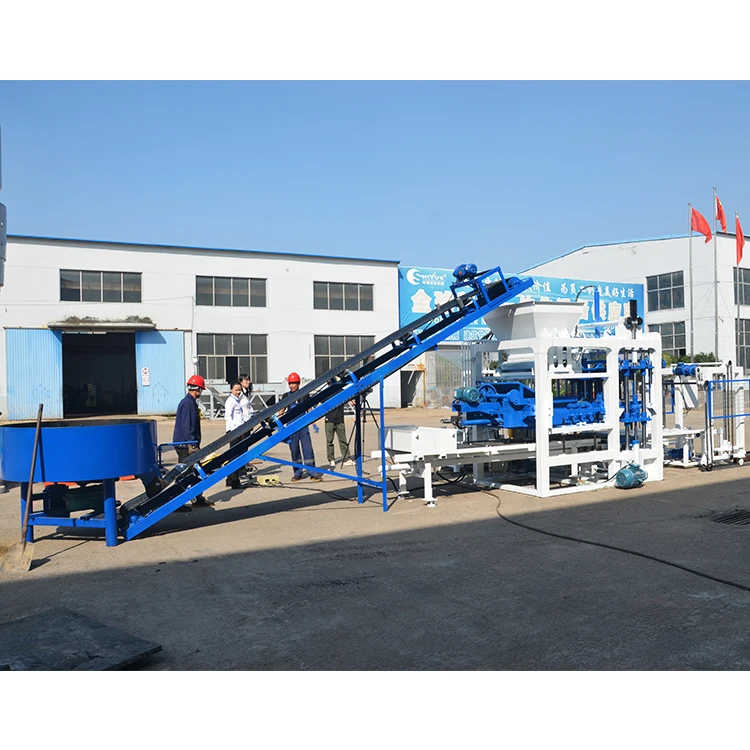
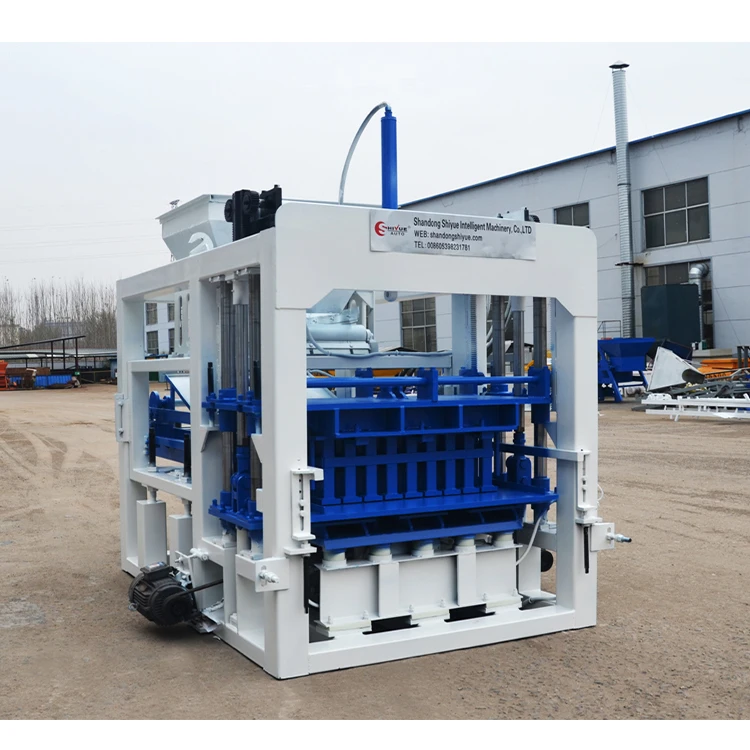
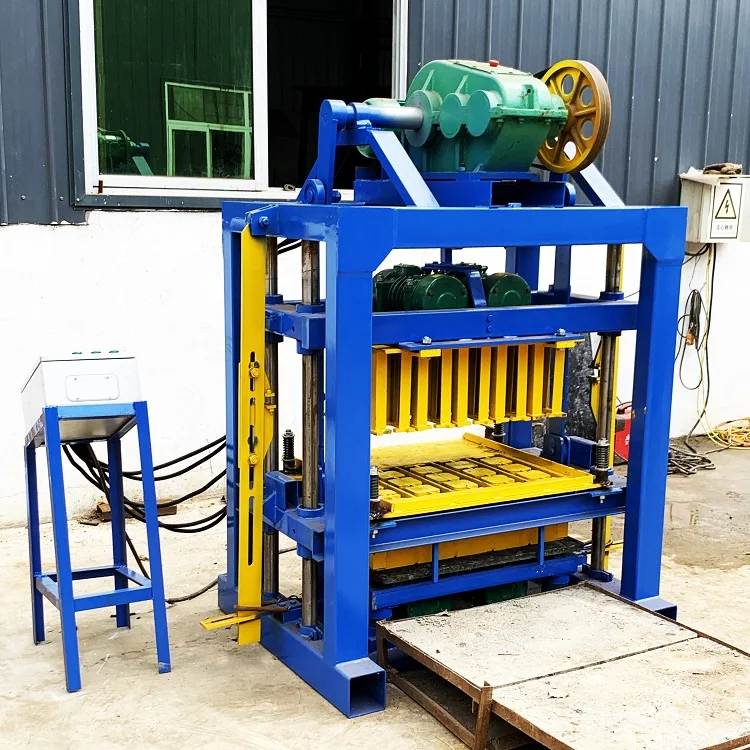
Proven Baseline for Automation — The QTJ4-40 operates as the semi-automatic starting point in the Shiyue block machinery range, offering a standardized platform vibration foundation that readily accepts PLC control modules and automatic pallet handling systems when production consistency requirements grow.
Technical Specifications
| Parameter | Value |
|---|---|
| Model | QTJ4-40 |
| Product Type | Manual Cement Block Making Machine |
| Production Capacity (400×200×200mm hollow block) | 360 pcs/h, 2880 pcs/day (based on 4 moulds per cycle) |
| Production Capacity (400×150×200mm hollow block) | 500 pcs/h, 4000 pcs/day (based on 5 moulds per cycle) |
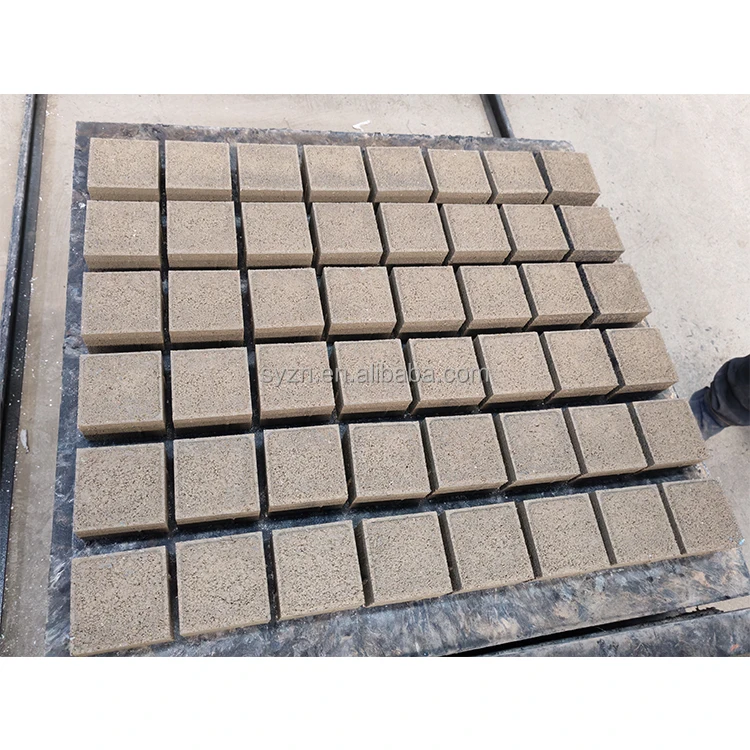
| Production Capacity (225×112.5×60mm interlocking/paver) | 900 pcs/h, 7200 pcs/day (based on 9 moulds per cycle) |
| Main Vibration Form | Platform Vibration |
| Vibration Frequency | 2800 r/min |
| Pallet Size | 850×450 mm |
| Raw Material Ratio | Cement 8%-10%, sand 30%-40%, stone 50%-60% (approx. 1:4:5) |
| Overall Dimensions (L×W×H) | 1350×1460×1800 mm |
| Machine Weight | 1T |
| Worker Requirement | 1-3 people |
| Control System | Manual / Semi-automatic (top die push and pull, automatic scraper) |
| Assembly State | Stationary |
Application Suitability
| Application | Material or Output |
|---|---|
| Small-scale hollow block production | Concrete, cement, crushed stone, sand, gravel |
| Solid block manufacturing for local construction | Fly ash, slag, dust mixed with cement binder |
| Interlocking paver production for landscaping | Colored concrete mixes with fine aggregates |
| Curbstone and kerb production | High-density concrete mixes with coarse aggregate |
| On-site construction block manufacturing | Locally sourced sand and stone with cement |
Why PLC Language Verification Should Happen Before Shipment
Confirming the control interface language during the specification phase prevents commissioning delays that cost days of idle equipment on site.
When operators cannot read the PLC display, the entire installation stalls. I experienced this directly when delivering a hydraulic block machine to a West African project where the default Chinese interface left the local crew unable to navigate basic cycle parameters, resulting in lost production time while waiting for software reconfiguration. The automatic QTJ4-40 block machine configuration process now includes explicit language confirmation alongside voltage and frequency specifications [NEED_CITE: control system localization requirements for industrial machinery exports]. This verification step ensures the operator can read fault codes, adjust cycle timing, and monitor batching sequences from the first day of production.
How Platform Vibration Establishes the Automation Foundation
The 2800 r/min platform vibration frequency provides the compaction baseline that PLC-controlled cycle timing can regulate consistently across multiple shifts and different operators. Manual operation introduces variation in cycle duration and vibration application, creating block-to-block density differences that affect curing uniformity and final compressive strength. When the QTJ4-40 receives PLC integration, the controller standardizes vibration duration, pause intervals, and pressure application sequences, removing operator judgment from the compaction equation.
What Semi-Automatic Scraper Control Removes from the Operator
The automatic scraper mechanism eliminates manual material distribution across the mould cavity, which otherwise requires constant attention to ensure uniform fill depth before compaction. This semi-automatic feature serves as the intermediate step between fully manual operation and complete PLC-controlled batching with moisture compensation and automated weighing. Plant owners running the automatic QTJ4-40 block machine in semi-automatic mode gain consistent material distribution while retaining manual control over pallet feeding and block removal, creating a phased automation pathway that matches capital investment to production volume growth [NEED_CITE: phased automation investment strategies for small-scale block plants].
Reading the Specifications Against Your Actual Production Requirements
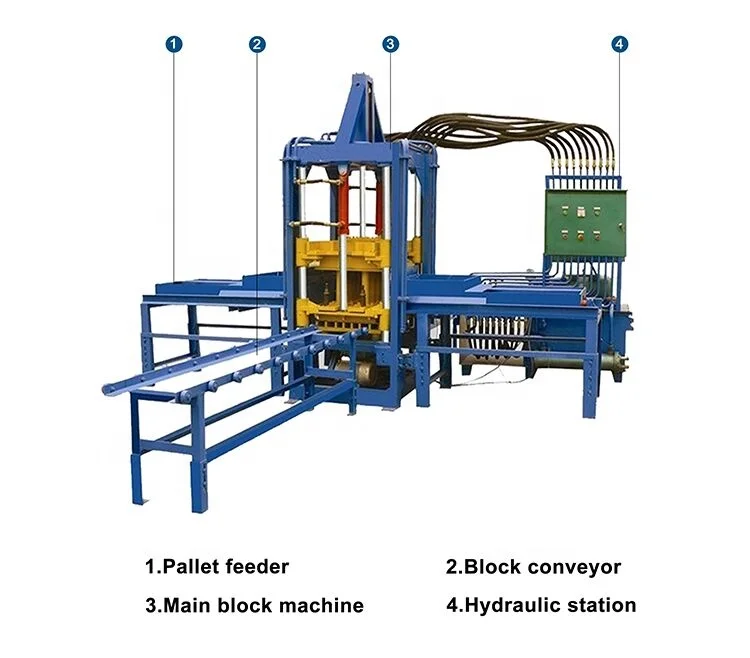
The 850×450 mm pallet dimension determines which automatic pallet feeding systems can integrate with the press when upgrading from manual pallet handling to mechanized circulation. This standardized size allows the QTJ4-40 to connect with pallet return conveyors and automatic stackers without requiring custom adapters or pallet replacement. The 1-3 worker requirement reflects semi-automatic operation; adding automatic pallet feeding and stacking modules reduces headcount by removing the manual pallet placement and block removal tasks from the production cycle.
The raw material ratio specification (cement 8%-10%, sand 30%-40%, stone 50%-60%) represents a baseline mix design that PLC-controlled batching can refine through automated weighing and moisture compensation based on real-time aggregate conditions. Platform vibration at 2800 r/min provides sufficient compaction force for standard hollow blocks and pavers, though denser interlocking formats may require extended vibration duration that the PLC can program per mould type. The 1350×1460×1800 mm footprint fits within a 200 m² factory area, leaving space for curing racks and pallet circulation systems that automation upgrades will require.
The Cost of Skipping Voltage and Frequency Confirmation
Machines configured for incorrect voltage specifications arrive on site unable to connect to local power infrastructure, requiring transformer installation or motor replacement before commissioning can begin. Control systems designed for 50Hz operation running on 60Hz power experience timing drift that affects cycle accuracy and vibration frequency regulation. These electrical mismatches compound when PLC upgrades are added later, as the control modules must match both the base machine specifications and local power standards [NEED_CITE: industrial equipment voltage and frequency compatibility requirements by region].
Why Procurement Through the Automation Specialist Matters
The QTJ4-40 configuration includes explicit automation upgrade pathways documented in the specification sheet, showing which mechanical interfaces accept automatic pallet feeders and stacking modules without requiring base machine modification. Factory test records demonstrate cycle consistency under PLC control versus manual operation, providing measurable data on what automation adds to batch-to-batch uniformity. The control language confirmation process extends beyond simple English translation to include fault code descriptions, parameter labels, and menu navigation that operators encounter during actual production.
Mould design and supply covers the specific formats your market requires, with cycle time calculations stated per block format rather than generic hourly rates that assume unspecified product dimensions. Installation support includes operator training on both semi-automatic baseline operation and PLC navigation, ensuring crews understand what the automation controls versus what remains under manual oversight. The voltage and frequency verification process captures not just main power specifications but also control circuit requirements that affect PLC module compatibility and sensor calibration.
Documentation & Verification
- Factory test record showing cycle timing consistency across multiple block formats before shipment
- Machine specification sheet with capacity calculations stated per mould configuration, not generic hourly rates
- PLC display language confirmation document listing all interface text in operator’s language
- Voltage and frequency specification sheet covering main power and control circuit requirements
- Mould drawing and format list showing cavity dimensions and compatible pallet sizes
- Automation upgrade pathway documentation listing compatible pallet feeder and stacker modules
Installation, Commissioning & Support
- Foundation requirements for 1T machine weight with vibration isolation for 2800 r/min platform operation
- Electrical connection specifications for confirmed voltage and frequency with dedicated circuit protection
- Assembly verification for stationary configuration with semi-automatic top die push-pull mechanism alignment
- PLC parameter configuration for local raw material ratios and target block format cycle timing
- Operator training on semi-automatic scraper control and manual pallet feeding procedures
- Wear parts inventory list covering vibration platform components and scraper mechanism consumables
What Information Shapes Your Configuration Proposal
Provide your target block formats with dimensions, daily output requirements, and local raw material availability including aggregate type and cement grade. Specify your site voltage and frequency, preferred PLC display language, and existing pallet handling equipment dimensions. Indicate whether you plan to start with semi-automatic operation and add automatic pallet feeding later, or require integrated stacking from initial installation.
Frequently Asked Questions
Q: How do I upgrade the QTJ4-40 from semi-automatic to full PLC control?
A: The upgrade adds a PLC module, automatic pallet feeding system, and optional stacker while retaining the base platform vibration mechanism and semi-automatic scraper. The 850×450 mm pallet size remains unchanged, allowing existing pallet inventory to circulate through the automated system. Electrical interfaces and mechanical mounting points are pre-configured during initial manufacture, so the upgrade installs as bolt-on modules rather than requiring base machine reconstruction.
Q: What does PLC-controlled batching do that manual mixing cannot?
A: Automated weighing compensates for aggregate moisture variation and cement density differences that manual volumetric measurement cannot detect, producing consistent block-to-block strength across different material deliveries. The PLC stores mix recipes per block format, automatically adjusting water addition based on moisture sensor readings from the sand and aggregate bins. This eliminates operator estimation errors that create strength variation between morning and afternoon production batches.
Q: How does automatic pallet feeding change my labour requirement?
A: The integrated pallet feeder removes manual pallet placement from the production cycle, reducing the crew from 1-3 workers to primarily monitoring and block removal tasks. When combined with automatic stacking and cubing modules, the system handles pallet circulation, block accumulation, and cured product organization without manual intervention. This allows redeployment of personnel to quality inspection, mould change preparation, or raw material management roles.
Q: Can I add automatic stacking and cubing later?
A: The QTJ4-40 platform supports stacking module addition through pre-engineered mechanical interfaces and PLC expansion capacity documented in the automation upgrade pathway. The stacker integrates with the 850×450 mm pallet return system, requiring conveyor extension rather than press modification. Control system integration adds stacking sequences to the existing PLC program, maintaining cycle timing coordination between press operation and block accumulation.
Q: What voltage and control language options are available for my market?
A: The configuration process captures your local voltage and frequency specifications for both main power and control circuits, ensuring PLC modules and sensors match your electrical infrastructure. Control language confirmation covers all operator interface text including fault codes, parameter labels, and menu navigation in your preferred language before shipment. This pre-delivery verification prevents commissioning delays from interface localization requirements discovered after machine arrival.