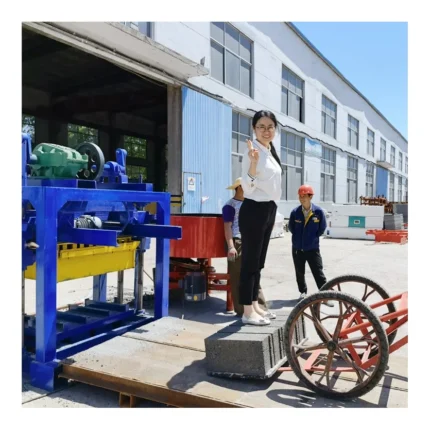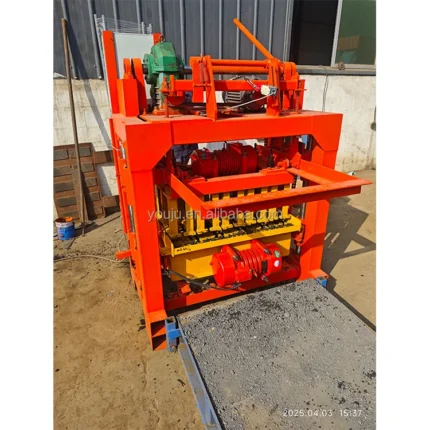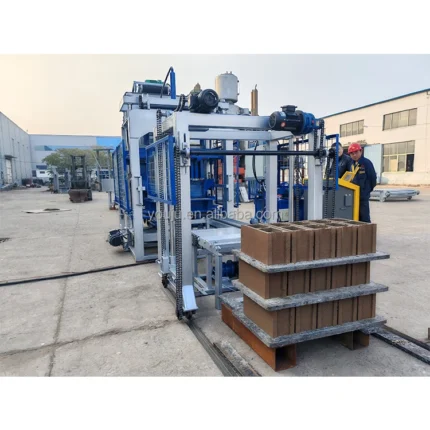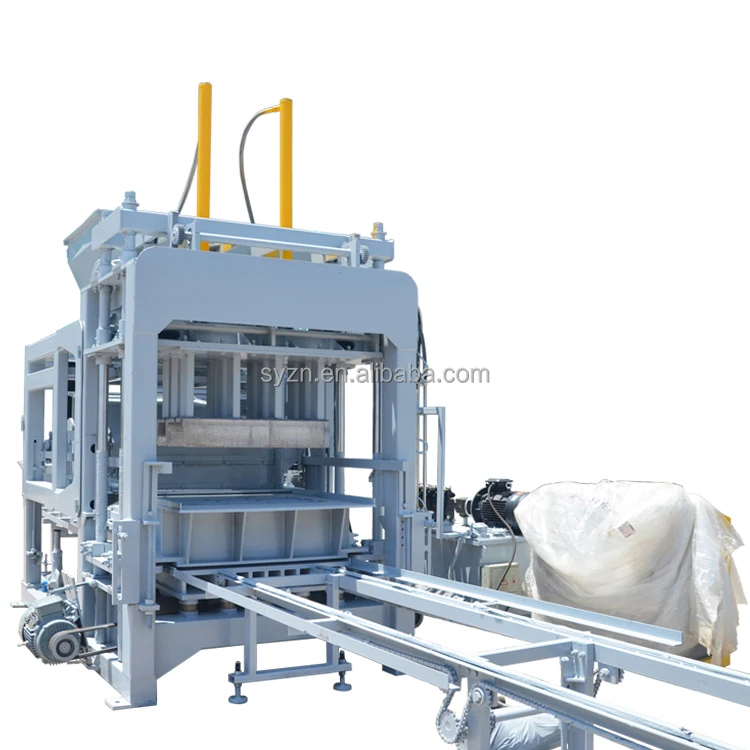


Description
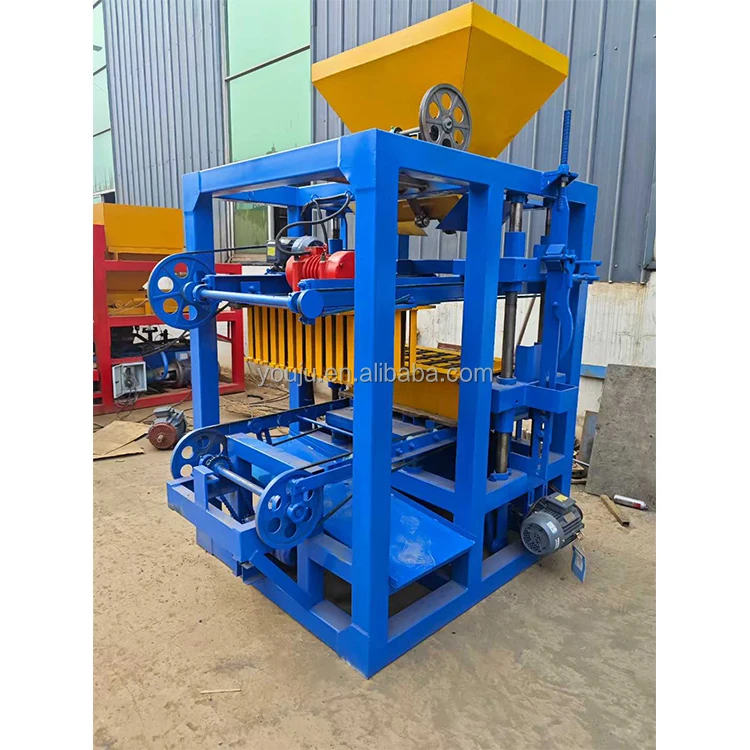
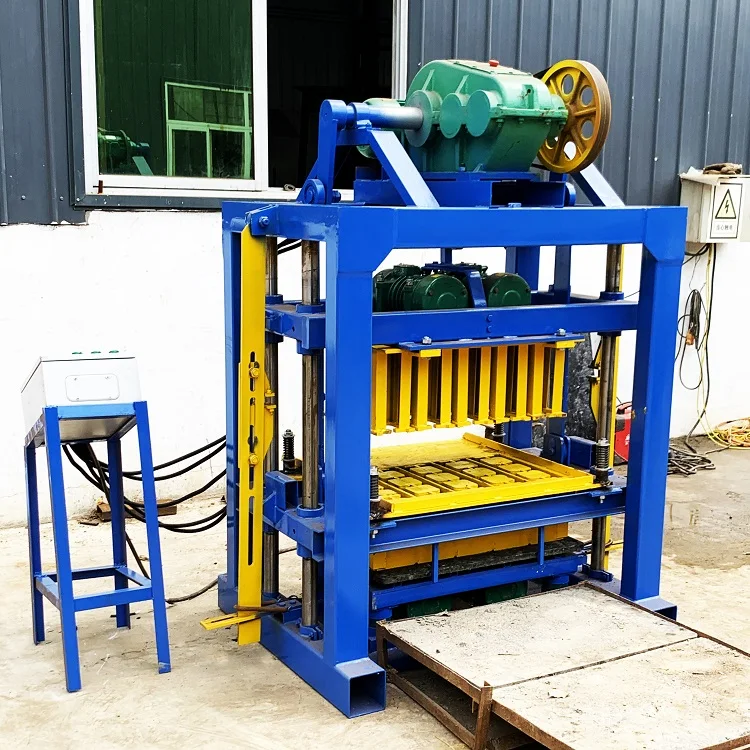
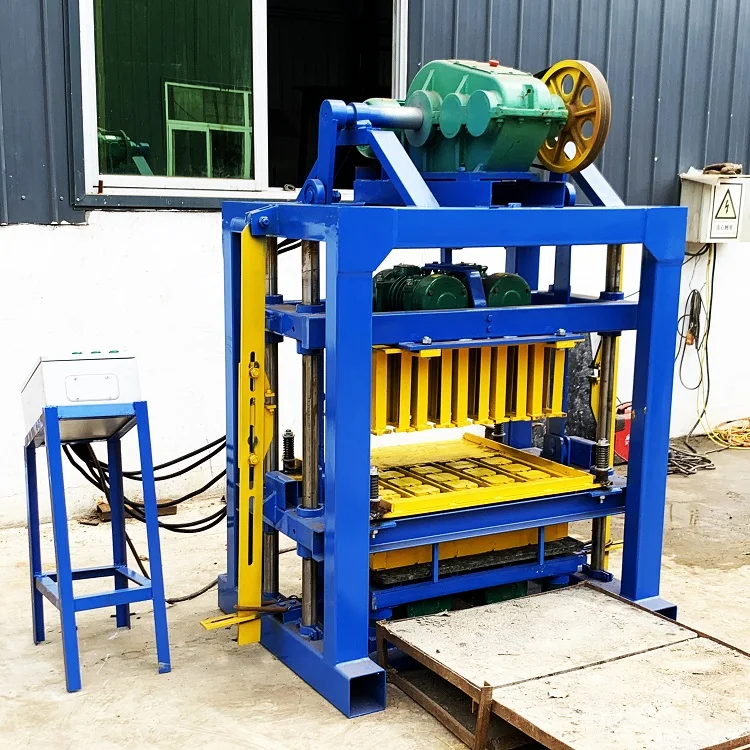
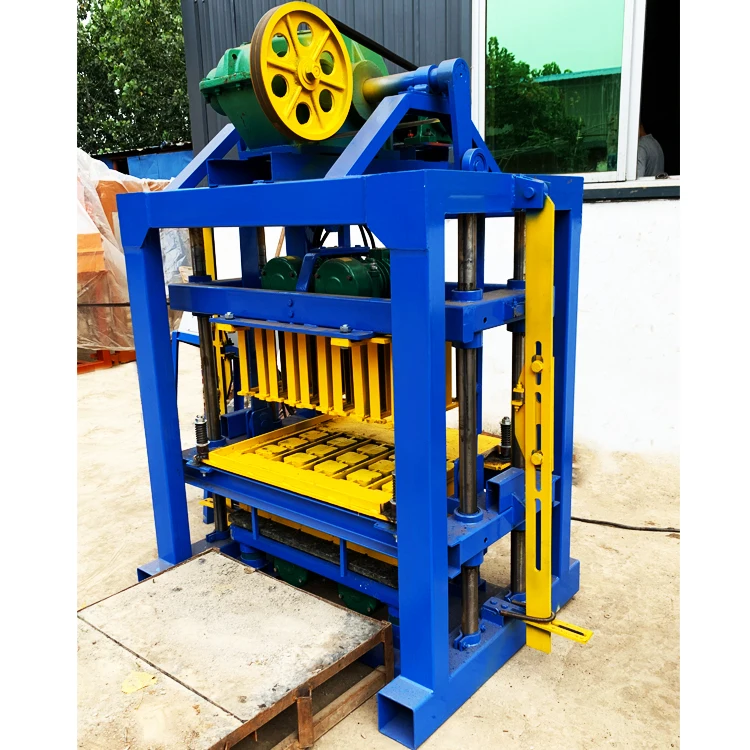
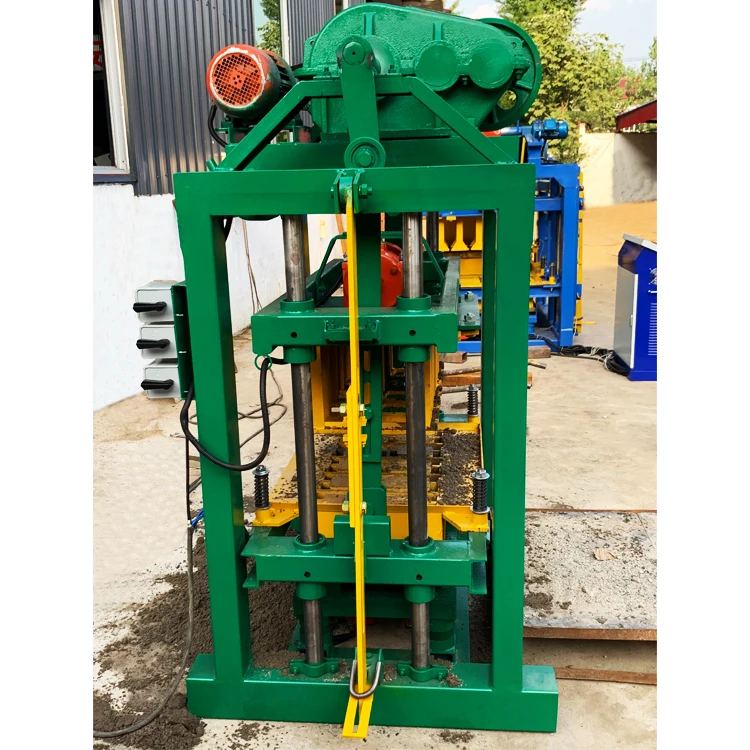
Automation-Ready Entry Point — The QTJ4-40 block press accepts PLC, pallet feed, and stacking add-ons as your output demand grows.
Technical Specifications
| Parameter | Value |
|---|---|
| Model | QTJ4-40 |
| Product Type | Stationary Block Machine |
| Overall Dimensions (L×W×H) | 1350 × 1460 × 1800 mm |
| Net Weight | 1,000 kg |
| Rated Power | 9.5 kW |
| Voltage & Frequency | 380V (frequency configurable to local grid) |
| Control System | Manual operation (PLC or MCC available as upgrade option) |
| Pallet Size | 850 × 450 × 40 mm |
| Mould Format | 400×200×200 mm (4 pcs/mould); 400×240×200 mm (3 pcs/mould) |
| Cycle Time | 40 s per mould |
| Vibration Frequency | 2800 r/min |
| Motor | Siemens brand motor |
| Automation Level | Manual (upgradeable to semi-automatic or fully automatic) |
| Workers Required | 3–5 |
| Factory Area Required | 200 m² |
| Warranty | 1 year |
Application Suitability
| Application | Material or Output |
|---|---|
| Small-scale hollow block production | Cement, sand, crushed stone aggregate |
| Solid concrete block manufacturing | Crusher dust, fly ash, gravel blends |
| Interlocking brick for housing projects | Laterite-soil or standard concrete mixes |
| On-site blocks for contractors | Locally sourced sand and cement |
| Workshop-level paver plants | Fine aggregate and cementitious binder |
What "40-Second Cycle" Really Means for Your Shift Output
A 40-second cycle only translates into daily output when block format, pallet return speed, and mix consistency are all held constant.
Many first-time buyers focus on cycle time as the headline figure, then discover that manual pallet handling, mould changes, and inconsistent feed material eat into every shift. The automatic QTJ4-40 block machine delivers one mould every 40 seconds at the press itself, but the operator must remove the loaded pallet, place a fresh one, and keep the hopper filled — tasks that stretch the effective cycle when the curing area is far from the machine or the mix sticks to the mould [NEED_CITE: common causes of cycle time drift in manual block plants]. Asking the right questions before ordering keeps your daily output honest.
How PLC Control Changes Operator Workload
When the QTJ4-40 runs in manual mode, the operator controls every pallet placement and hopper refill. Adding PLC control shifts timing decisions — vibration duration, pressure dwell, pallet advance — into repeatable programmed sequences. The automatic QTJ4-40 block machine then holds those parameters across batches, so block density stays consistent from the first pallet of the morning to the last, regardless of operator fatigue.
What Each Automation Step Removes
Moving from manual to semi-automatic operation typically replaces hand pallet feeding with a powered pallet magazine, freeing one worker from the heaviest repetitive task. A further step to fully automatic adds stacking and cubing at the discharge end, eliminating the second most labour-intensive station. The PLC controlled block machine configuration lets you budget these stages separately and deploy them as order volume justifies the investment [NEED_CITE: labour allocation in small block plants before and after automation].
Reading the Specs That Shape Daily Output
The 2800 r/min vibration frequency works with the Siemens motor to compact concrete into the mould cavity; higher frequency shortens fill time but requires matched hydraulic pressure to avoid surface cracking. Pallet size of 850 × 450 × 40 mm must align with the curing rack spacing and forklift tine width you already operate — a mismatch forces a full re-layout of the yard. Cycle time of 40 seconds is measured at the press; real throughput also depends on how fast pallets cycle back from the curing area. Mould formats of 400×200×200 mm (four blocks) and 400×240×200 mm (three blocks) mean output per mould differs by format, so capacity calculations must state which block is assumed.
The Hidden Cost of Skipping Voltage and Language Confirmation
Commissioning delays are a recurring complaint among importers who treat electrical specifications as a footnote. A PLC controlled block machine arriving with 380V/50Hz wiring in a 60Hz market will run motors faster than rated, overheating the Siemens unit inside the first month. Control panel labels in an unreadable language turn parameter adjustments into guesswork, increasing the risk of wrong vibration times or pressure settings [NEED_CITE: voltage and frequency mismatch incidents in exported industrial machinery]. Confirming voltage, frequency, and display language in writing before production locks these variables and prevents costly on-site rework.
Why Buyers Source This Machine Here
Block machinery is the sole product focus, so the press, mould, pallet, and handling equipment are specified as one matched set rather than assembled from unrelated suppliers. Configuration starts from your actual mix design and local aggregate, not a catalogue default. Mould design covers the formats your market demands, including custom drawings when standard sizes do not fit. Automation level is selectable, allowing a buyer to start with manual pallet handling and add PLC and stacking later without replacing the press. Installation support includes operator training so the team understands vibration settings and mould change procedure from day one.
Documentation & Verification
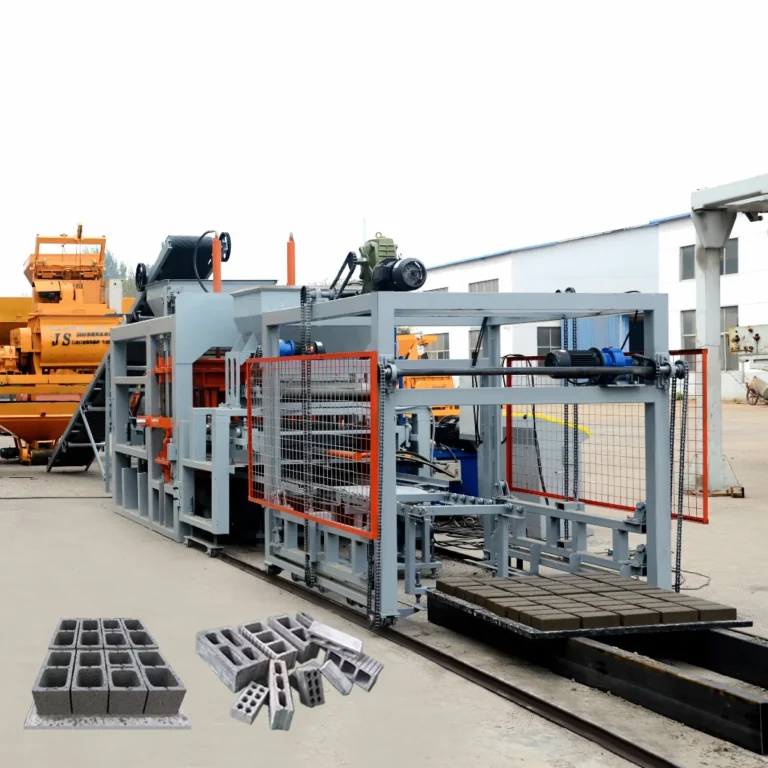
- Line layout showing pallet flow from press through curing rack and back
- Capacity calculation stating block format and mix assumptions used
- Mould drawing with cavity count and dimensional tolerances
- Voltage, frequency, and PLC display language written confirmation
- Factory test record on your specified block format before dispatch
- Wear parts and mould list with reorder part numbers
Installation, Commissioning & Support
- Foundation slab must support 1,000 kg net weight plus dynamic vibration loads
- Dedicated 9.5 kW circuit with correct voltage and frequency for the Siemens motor
- Machine arrives assembled; only hopper and pallet magazine require on-site mounting
- First-run commissioning covers vibration timing and pressure calibration for your mix
- Operator training includes mould change procedure and daily lubrication points
- Spare mould and hydraulic wear parts shipped with initial order for first replacement cycle
What to Include in Your Inquiry
Provide your target block format and the daily output you need so we can calculate cycle counts against a realistic shift length. Share your local aggregate type and a sample if possible, because mix behaviour under vibration determines whether the standard mould release will work or needs modification. Confirm your site voltage, frequency, and preferred control language up front to avoid commissioning delays once the automatic QTJ4-40 block machine arrives.
Frequently Asked Questions
Q: How do I verify realistic daily output from a 40-second cycle?
A: Request a written capacity calculation that names the block format, mould cavity count, and assumed pallet return time. A 40-second press cycle yields different totals for four-cavity hollow blocks versus three-cavity larger blocks, and manual pallet handling adds seconds per cycle that must be included in the shift plan.
Q: What does each automation upgrade step actually remove?
A: Semi-automatic adds powered pallet feeding, removing the heaviest manual task from one operator. Fully automatic adds stacking and cubing at the discharge end, taking a second worker off repetitive lifting. PLC control standardises vibration and pressure timing, reducing batch-to-batch density variation.
Q: Why must voltage, frequency, and language be confirmed before production?
A: Motors and PLC components are wound or programmed for specific electrical standards. A mismatch discovered after arrival forces rewiring or component replacement, delaying commissioning and incurring extra costs that a written pre-production confirmation prevents entirely.
Q: How should I match pallet size to my existing yard?
A: Measure your curing rack shelf spacing and forklift tine width before ordering. The 850 × 450 × 40 mm pallet must slide onto racks without overhang and be liftable by your current equipment; otherwise you face yard re-layout or new pallet purchases after delivery.
Q: What affects mould change time on this press?
A: Mould change involves unbolting the current mould, lifting it off, positioning the new one, and re-securing clamp bolts. Frequency of change, bolt condition, and operator familiarity all influence downtime, so factor a full change window into any shift that runs multiple block formats.