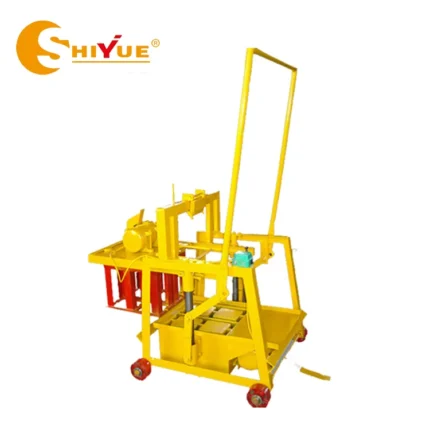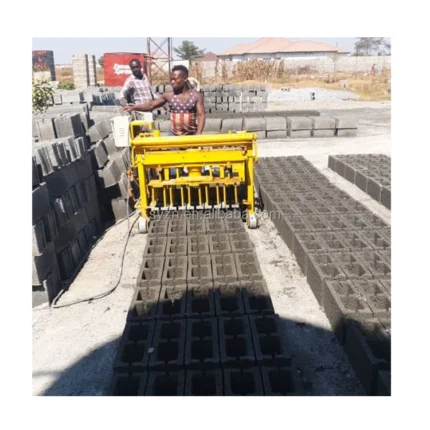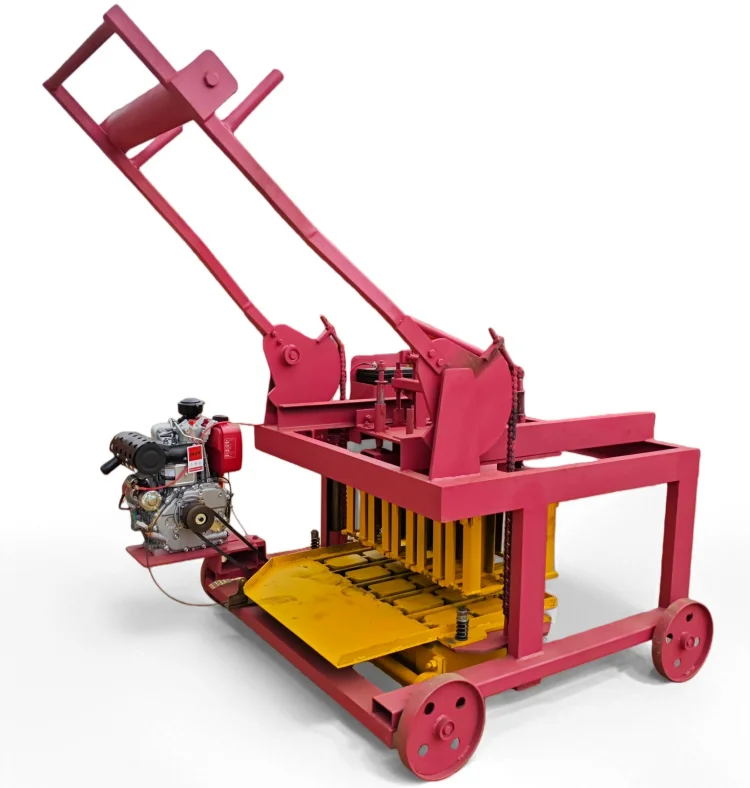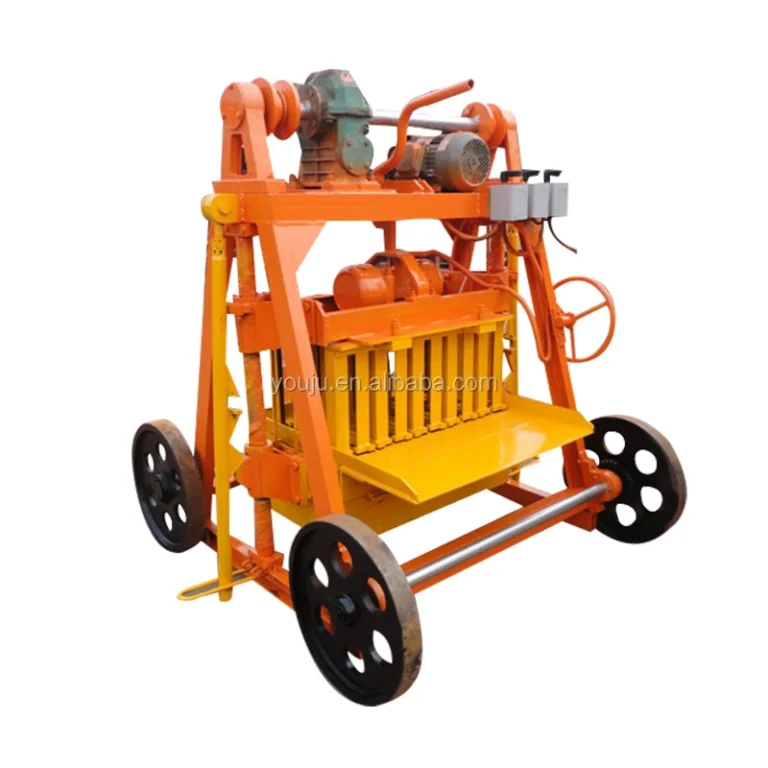



Description
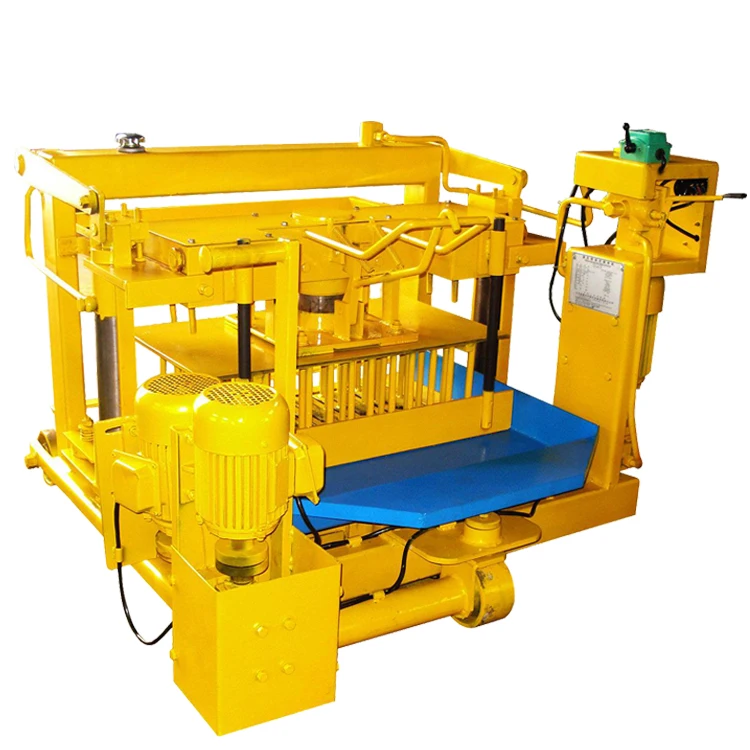
Intelligent Control Integration — PLC-ready architecture on the QMJ2-45 allows operators to transition from manual egg-laying operation to semi-automatic batching and stacking without replacing the press core.
Technical Specifications
| Parameter | Value |
|---|---|
| Model | QMJ2-45 |
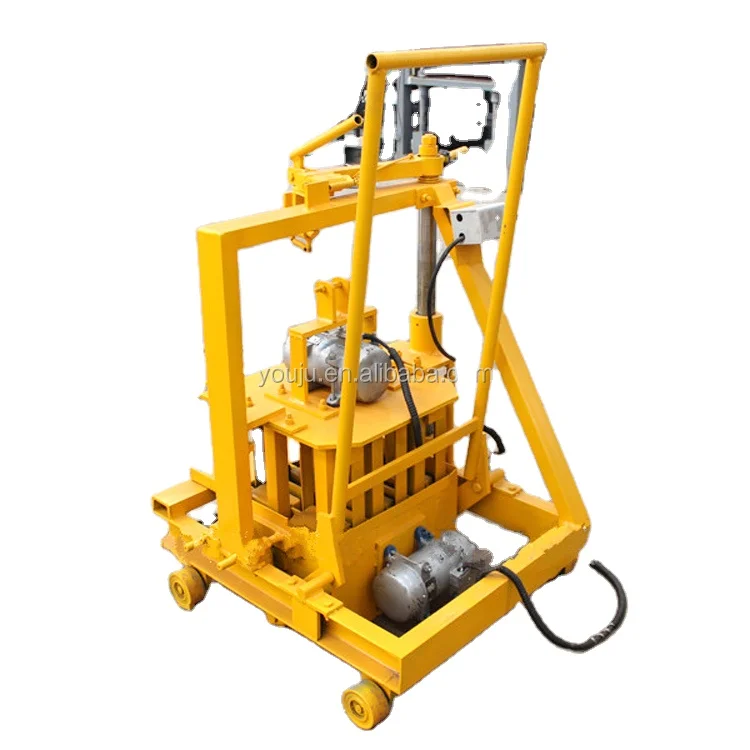
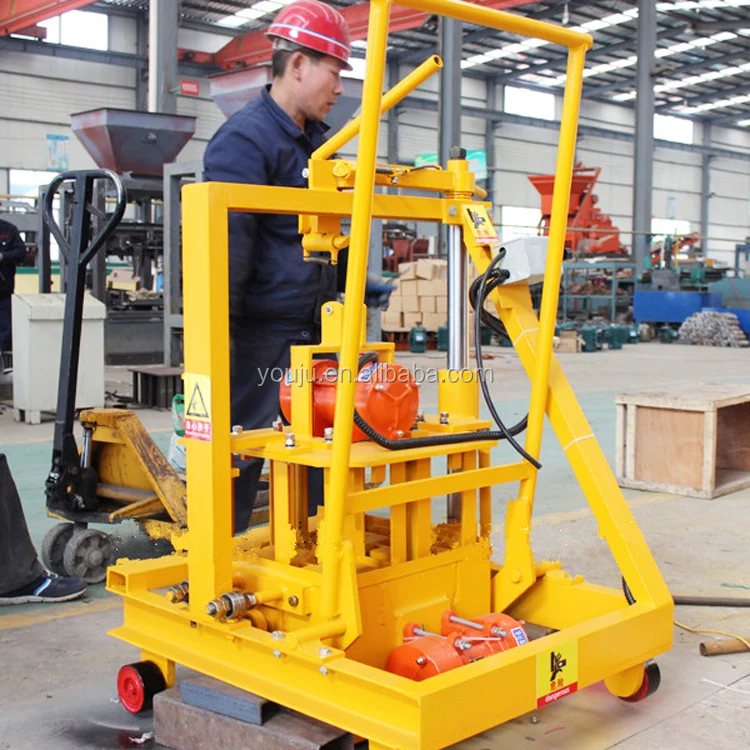
| Product Type | Mobile Concrete Block Making Machine |
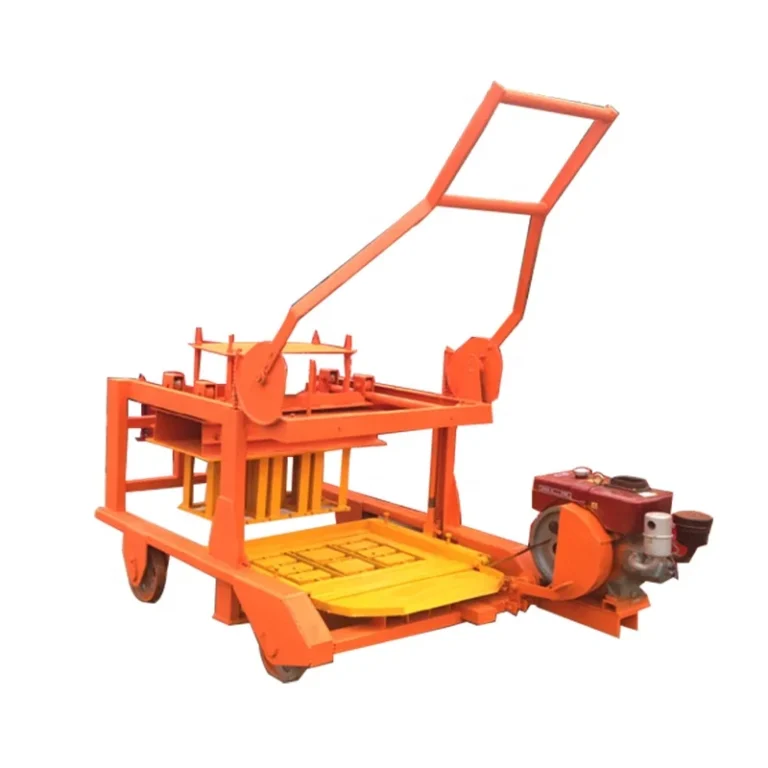
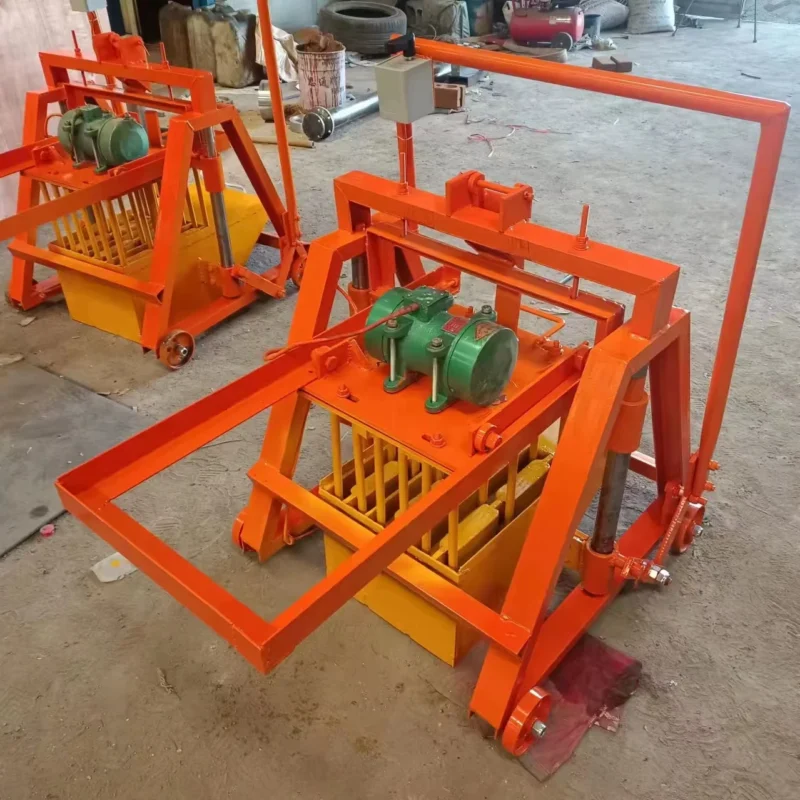
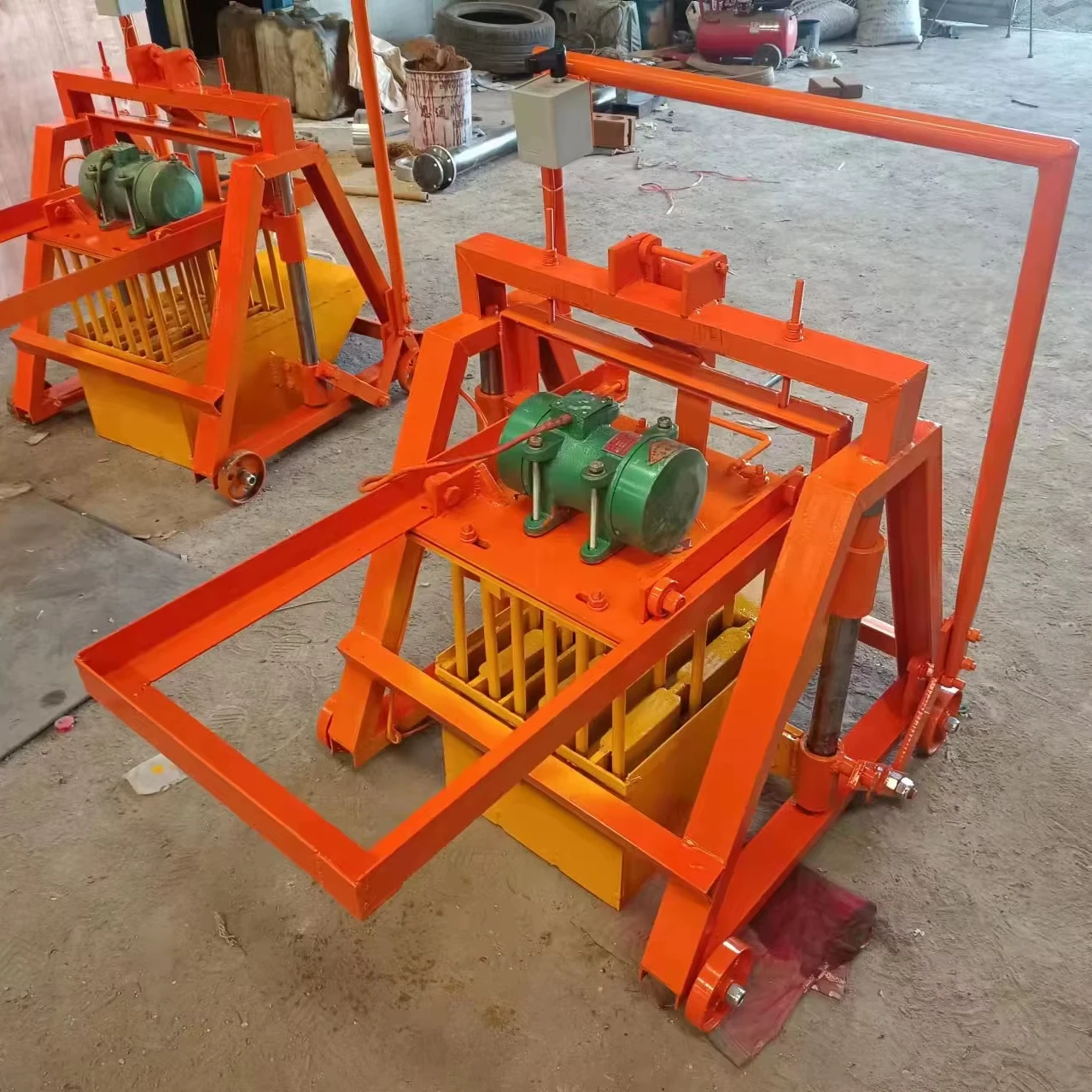
| Machine Type | Manual mobile egg-laying block machine |
| Power Source | Diesel engine (no electrical grid dependency) |
| Pallet Requirement | None (pallet-free / egg-laying design) |
| Mould Format Option 1 | 400×200×200mm hollow brick (2 pcs/mould) |
| Mould Format Option 2 | 400×150×200mm hollow brick (3 pcs/mould) |
| Mould Format Option 3 | 400×100×200mm hollow brick (4 pcs/mould) |
| Cycle Time | 25–30 seconds |
| Output Capacity | 160 pcs/h (based on 400×200×200mm hollow brick, 2 pcs/mould) |
| Output Capacity | 240 pcs/h (based on 400×150×200mm hollow brick, 3 pcs/mould) |
| Output Capacity | 320 pcs/h (based on 400×100×200mm hollow brick, 4 pcs/mould) |
| Daily Output | 1280 pcs/8hr (based on 400×200×200mm hollow brick) |
| Daily Output | 2560 pcs/8hr (based on 400×100×200mm hollow brick) |
| Automation Level | Manual, with PLC control upgrade path available |
| Labour Requirement | 1–3 workers |
| Mobility | Free movement on-site, no fixed plant required |
| Mould Change | Interchangeable moulds for different hollow brick formats |
| Control System | Manual operation (PLC controlled mobile block machine upgrade available) |
| Voltage & Frequency | Not applicable (engine-powered) |
| Standards | ISO 9001:2000, CE |
Application Suitability
| Application | Material or Output |
|---|---|
| On-site block production for construction contractors | Hollow bricks from crushed stone, river sand, and cement without a fixed plant |
| Small-scale hollow brick manufacturing | 400×200×200mm, 400×150×200mm, and 400×100×200mm formats in limited space |
| Remote or off-grid project sites | Diesel-powered operation where no electrical infrastructure exists |
| First-time block production entrepreneurs | Low-investment entry with pallet-free egg-laying operation |
Why "Blocks per Cycle" Tells Only Part of the Story
Cycle time consistency matters more than peak capacity claims when you are running a mobile unit across uneven ground.
I have watched contractors in Latin America celebrate a machine’s rated output on day one, then spend the rest of the week chasing crumbled blocks because the vibration frequency was never matched to their local river sand. The QMJ2-45 runs a 25–30 second cycle across all three hollow brick formats, but that number assumes a mix design that actually compacts under manual vibration. When the aggregate is too fine or the moisture content drifts, the same cycle produces scrap [NEED_CITE: effect of aggregate grading on block compaction in mobile egg-laying machines]. An automatic mobile block machine with PLC control can compensate by adjusting vibration duration per cycle — something a manual operator simply cannot do consistently over an eight-hour shift.
From Manual Egg-Laying to PLC-Governed Consistency
The QMJ2-45 starts as a manual mobile egg-laying unit, but its mechanical frame and mould interface are designed to accept a PLC controlled mobile block machine upgrade. This means a buyer can commission the press manually, validate block quality with local materials, and later add automatic batching, pallet feeding, and stacking stations around the same press core. The upgrade path removes the operator as the variable that determines whether every block in a run meets the same density standard.
What Automation Actually Removes from the Operator
On a manual egg-laying machine, the operator controls mix feeding, vibration duration, and forward movement — three variables that compound into inconsistency over a long shift. Adding PLC control to the QMJ2-45 platform locks vibration time and feeding volume into repeatable parameters, so batch-to-batch density variation narrows considerably [NEED_CITE: PLC control impact on concrete block density uniformity]. The automatic mobile block machine configuration also logs cycle counts and fault events, giving plant owners production data they can use to plan mould rotations and maintenance windows rather than reacting to breakdowns.
Reading the Specifications Against Your Actual Block Format
The three mould formats — 400×200×200mm at 2 pcs/mould, 400×150×200mm at 3 pcs/mould, and 400×100×200mm at 4 pcs/mould — each produce different hourly outputs because the cycle time stays constant while the piece count per stroke changes. Vibration force and manual compaction pressure must be matched to the block wall thickness; thinner 100mm walls compact faster but are more sensitive to over-vibration, which can cause surface spalling. The diesel engine eliminates voltage and frequency concerns entirely, though buyers planning a future PLC controlled mobile block machine upgrade should confirm their site’s electrical availability for the control cabinet and batching station that will join the line later.
The Hidden Cost of Skipping the Material Test
I once spent half a week on a job site in Colombia watching a contractor scrap pallet after pallet of blocks because the river sand was too fine for the standard vibration setting. The machine was not faulty — the mix simply did not respond to the default frequency. When buyers skip testing their actual aggregate before shipment, they absorb the cost of on-site re-tuning, wasted raw material, and delayed project timelines [NEED_CITE: common causes of block failure in mobile egg-laying production]. A factory test record using the buyer’s own material sample eliminates this risk before the machine leaves the workshop.
Why Source This Platform Here
Block machinery is the single focus of this operation, so the QMJ2-45 press, its moulds, and any future pallet handling or stacking additions are specified as one matched system rather than assembled from separate suppliers. Configuration is set against the buyer’s actual mix design and local aggregate, not a catalogue default. Mould design covers the three standard hollow brick dimensions listed above, with custom drawings available for market-specific formats. The automation level is selectable — a buyer can commission the manual egg-laying base now and add semi-automatic pallet feeding and stacking later without replacing the press. Installation support includes operator training on mould change procedures, vibration tuning, and the upgrade sequence to full PLC control.
Documentation & Verification
- Machine specification sheet listing all three hollow brick mould formats and cycle times
- Capacity calculation stating the block format assumed for each output figure
- Factory test record documenting cycle consistency with the buyer’s aggregate sample
- Voltage and control language confirmation for the PLC upgrade path before shipment
- Mould drawing and format list for all interchangeable hollow brick dimensions
- Operation and maintenance manual covering manual and PLC-controlled configurations
Installation, Commissioning & Support
- Diesel engine requires no dedicated electrical circuit for initial manual operation
- Machine moves freely on-site, so no fixed foundation or curing rack infrastructure is needed at entry level
- Mould change between the three hollow brick formats covered in on-site operator training
- PLC control cabinet added during automation upgrade requires confirmed voltage and frequency at site
- Wear parts list for mould liners and vibration components supplied with first shipment
- Routine maintenance schedule tied to engine hours and mould cycle count
What We Need to Configure Your Machine
To specify the QMJ2-45 for your site, share the hollow brick dimensions your market demands, the aggregate type and grading you can source locally, and whether you plan to start manual and add PLC control later or commission with batching automation from day one. If you are evaluating the automatic mobile block machine upgrade path, confirm your site’s available voltage, frequency, and preferred PLC display language so the control cabinet is built to match before dispatch.
Frequently Asked Questions
Q: How is output capacity verified per block format, and what does the cycle time assume?
A: Each capacity figure — 160, 240, or 320 pieces per hour — is calculated from a 25–30 second cycle applied to the specific mould configuration. The 160 pcs/h rate assumes the 400×200×200mm mould producing 2 blocks per stroke. Verification requires a factory test using the buyer’s aggregate to confirm the mix compacts within that cycle window without crumbling or surface defects.
Q: What automation upgrades are available from this manual mobile base?
A: The QMJ2-45 platform supports adding PLC-controlled batching, automatic pallet feeding, and stacking stations around the existing press. The upgrade converts the egg-laying unit into a stationary semi-automatic or fully automatic line. The sequence is typically batching first, then pallet handling, then stacking — each stage can be added independently as production volume justifies the investment.
Q: How does PLC control improve batch-to-batch consistency compared to manual operation?
A: PLC control locks vibration duration, feed volume, and compaction pressure into repeatable parameters that do not drift across an eight-hour shift. Manual operation relies on operator judgment for each cycle, which introduces density variation between blocks made in the morning versus late afternoon. The PLC also logs fault events and cycle counts for production tracking.
Q: What voltage, frequency, and control language options are confirmed before shipment?
A: The base QMJ2-45 is diesel-powered and requires no electrical connection. When a PLC controlled mobile block machine upgrade is specified, the control cabinet voltage, frequency, and display language are confirmed against the buyer’s site electrical supply and operator preference before the panel is built and wired.
Q: How does the upgrade path from semi-automatic to fully automatic affect labour and daily output?
A: Moving from manual egg-laying to semi-automatic pallet feeding removes one worker from the handling cycle. Full automation with stacking and cubing further reduces the crew while keeping the press cycle constant. Daily output increases because the press no longer waits on manual pallet placement or block removal between strokes.