

Kerbstone Machine Preventive Maintenance Schedule: Shiyue OEM Supplier
More grease does not mean better protection; in high-dust concrete environments, over-greasing vibratory bearings traps abrasive particles and accelerates seal failure.
A robust Kerbstone Machine Preventive Maintenance Schedule is not a static calendar but a dynamic protocol adapted to local aggregate abrasiveness, ambient temperature, and shift intensity. Effective maintenance prioritizes daily visual inspections of mold alignment and hydraulic integrity, weekly deep cleaning of filtration systems, and monthly calibration of vibration amplitude sensors to prevent unplanned downtime. [NEED_CITE: ISO 15243 bearing failure modes related to contamination]
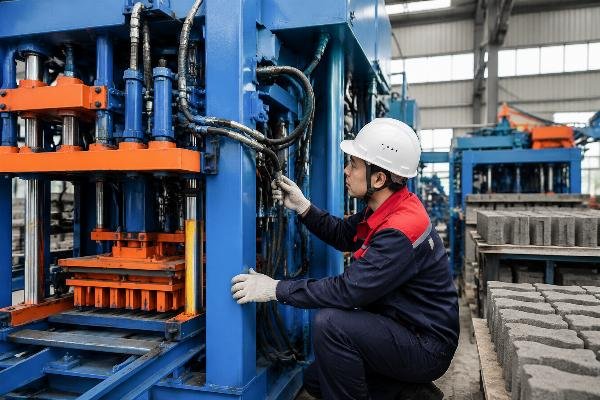
Generic manuals often fail because they assume ideal conditions. In reality, a plant in a tropical climate using recycled concrete aggregates faces vastly different stress profiles than one using natural sand in a temperate zone. Understanding these variables is the first step toward optimizing equipment longevity.
Why Do Standard Maintenance Manuals Fail in Real-World Production?
Standard schedules ignore the compounding effects of local material hardness and extreme climate variations on mechanical wear.
Most original equipment manuals provide a baseline based on laboratory testing or moderate European operating conditions. However, field data suggests that maintenance intervals must be compressed when operational variables deviate from the norm. For instance, the abrasiveness of recycled concrete aggregate is significantly higher than that of natural river sand. This increased friction accelerates wear on molding shoes and vibration molds. [NEED_CITE: Comparative wear rates of recycled vs. natural aggregates in concrete production]
In regions with ambient temperatures consistently above thirty-five degrees Celsius, hydraulic oil degrades faster due to thermal oxidation. Without auxiliary cooling systems, the viscosity breakdown occurs more rapidly, necessitating more frequent oil analysis and filtration checks. A buyer who strictly follows an annual oil change schedule in such a climate risks pump cavitation and valve sticking long before the scheduled service date.
I recall a discussion at a trade show where a procurement officer from a hot climate region expressed frustration with premature hydraulic failures. The issue was not component quality but the mismatch between the standard maintenance interval and the local thermal load. Adapting the Kerbstone Machine Preventive Maintenance Schedule to account for these environmental factors transforms maintenance from a reactive cost into a proactive strategy.

Furthermore, operator behavior plays a critical role. Machines operating on multiple shifts without standardized handover protocols exhibit accelerated wear on guide rails and limit switches. The lack of communication between shifts means minor issues, such as a loose bolt or a small leak, are ignored until they become major failures. Integrating operator accountability into the maintenance plan is as crucial as the technical checks themselves.
What Are the Critical Daily Checks for Kerbstone Machines?
Daily inspections should focus on visible signs of stress, including mold alignment, hydraulic leaks, and the integrity of vibration motor mounts.
The daily routine is the first line of defense against catastrophic failure. It does not require specialized tools but demands consistency and attention to detail. The goal is to identify anomalies before they impact production quality or machine safety.
- Visual Inspection of Hydraulic Systems: Check all hoses, fittings, and cylinders for signs of weeping or active leaks. Even a minor leak can introduce air into the system, causing spongy operation and overheating. Ensure the hydraulic oil level is within the recommended range. [NEED_CITE: Effects of aeration on hydraulic system performance]
- Mold Alignment and Clamping: Verify that the curbstone mold is properly seated and aligned. Misalignment causes uneven wear on the mold edges and produces defective products. Check the clamping mechanism for secure engagement. Loose clamps can lead to mold movement during vibration, damaging both the mold and the machine frame.
- Vibration Motor Bolts: Inspect the mounting bolts of the vibration motors. These components are subject to intense cyclic loading. Loose bolts can lead to motor detachment or frame cracking. Use a torque wrench to verify tightness if any movement is suspected.
- Lubrication Points: Apply grease to designated points according to the manufacturer’s specification. Avoid over-greasing, especially on vibratory bearings. Excess grease acts as a magnet for concrete dust, creating an abrasive paste that destroys seals. [NEED_CITE: Best practices for lubricating vibrating machinery in dusty environments]
- Safety Guards and Emergency Stops: Ensure all safety guards are in place and functional. Test the emergency stop buttons to confirm they immediately halt machine operation. Safety is non-negotiable in high-production environments.
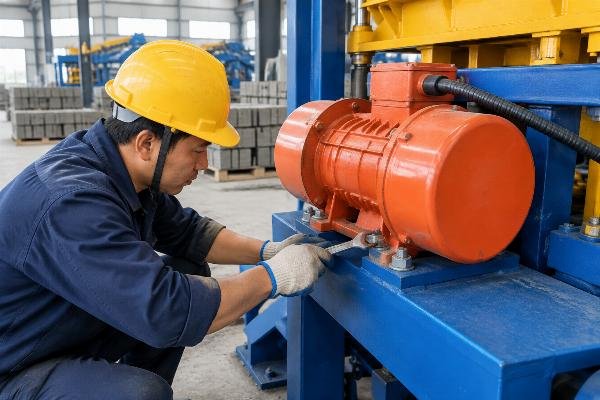
These checks should take no more than fifteen minutes but can prevent hours of downtime. Documenting these inspections creates a historical record that helps identify recurring issues. A Kerbstone Machine Preventive Maintenance Schedule that ignores daily checks is fundamentally flawed.
How Should Weekly and Monthly Maintenance Be Structured?
Weekly and monthly tasks involve deeper cleaning, filtration management, and sensor calibration to maintain systemic health.
While daily checks address immediate operational safety, weekly and monthly maintenance focuses on the internal health of the machine. These tasks require more time and potentially some basic tools but are essential for long-term reliability.
Weekly Tasks:
- Hydraulic Filter Inspection: Concrete dust is pervasive and can contaminate hydraulic oil if breathers or seals are compromised. Inspect hydraulic return filters for clogging. Replace or clean filters as needed. A clogged filter restricts flow, causing pressure drops and potential pump damage. [NEED_CITE: Impact of particulate contamination on hydraulic component life]
- Deep Cleaning of Vibration Units: Remove accumulated concrete buildup from the vibration table and mold area. Hardened concrete adds unbalanced mass to the vibration system, reducing efficiency and increasing stress on the frame. Use appropriate cleaning agents that do not damage rubber seals or painted surfaces.
- Electrical Connection Check: Inspect electrical cabinets for loose connections or signs of overheating. Dust accumulation on contactors and relays can cause arcing and failure. Clean electrical components with compressed air, ensuring the power is locked out during this process.
Monthly Tasks:
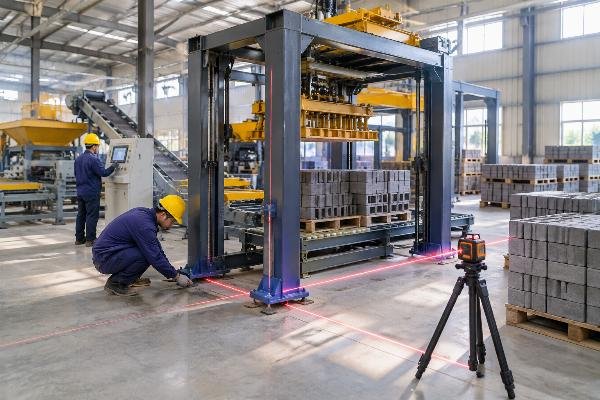
- PLC Sensor Calibration: Verify the accuracy of proximity sensors and limit switches that control the molding cycle. Misaligned sensors can cause timing errors, leading to incomplete compaction or mold collision. Adjust sensor positions as necessary to ensure precise operation.
- Wear Measurement of Molding Shoes: Measure the thickness of the molding shoes and side plates. Compare these measurements against the original specifications. Significant wear affects the dimensional accuracy of the curbstones. Plan for replacement before wear exceeds tolerance limits.
- Hydraulic Oil Analysis: Take a sample of hydraulic oil for visual inspection and, if possible, laboratory analysis. Look for discoloration, milky appearance (indicating water contamination), or metallic particles. Early detection of contamination allows for corrective action before major component failure.
Structuring these tasks into a clear checklist ensures nothing is overlooked. The Kerbstone Machine Preventive Maintenance Schedule should be visible to all operators and maintenance staff. Consistency in execution is key to realizing the benefits of preventive maintenance.
When Is It Time to Replace vs. Repair Worn Components?
The decision to replace or repair depends on dimensional tolerance loss, production quality impact, and the cost of unplanned downtime.
Determining the optimal point for component replacement is a balance between cost and performance. Waiting too long risks product quality and secondary damage, while replacing too early wastes resources. A structured approach helps make this decision objectively.
| Component | Indicator for Repair | Indicator for Replacement | Impact on Production |
|---|---|---|---|
| Molding Shoes | Minor surface wear, no dimensional change | Significant thickness loss, edge chipping | Poor surface finish, dimensional inaccuracy |
| Hydraulic Seals | Minor weeping, no pressure drop | Active leaking, pressure instability | Slow cycle times, oil contamination |
| Vibration Bearings | Slight increase in noise, normal temperature | Excessive noise, high temperature, play | Reduced compaction, frame stress |
| Guide Rails | Visible scoring, smooth movement | Deep grooves, binding movement | Misalignment, increased wear on other parts |
[NEED_CITE: Criteria for wear part replacement in concrete machinery]
For example, molding shoes with minor surface wear can often be resurfaced or rotated to extend life. However, once the thickness drops below a certain threshold, the structural integrity is compromised, and replacement is necessary to maintain product dimensions. Similarly, hydraulic seals showing minor weeping might be monitored, but active leaking requires immediate replacement to prevent system contamination and pressure loss.
I observed a case where a plant manager delayed replacing worn guide rails to save costs. The resulting misalignment caused accelerated wear on the mold clamping mechanism, leading to a much more expensive repair bill and several days of downtime. The initial savings were negligible compared to the subsequent losses. A well-defined Kerbstone Machine Preventive Maintenance Schedule includes clear criteria for these decisions, removing guesswork from the process.
Keeping spare parts for critical components like seals and sensors on hand minimizes downtime when replacement is necessary. The goal is to schedule replacements during planned maintenance windows rather than reacting to unexpected failures.
Conclusion
Preventive maintenance is an investment in uptime, not an operational expense.
Adapting your Kerbstone Machine Preventive Maintenance Schedule to local conditions and operational intensity ensures consistent output and extends equipment life. By focusing on daily inspections, systematic weekly and monthly checks, and informed replacement decisions, plant managers can minimize unplanned downtime and optimize return on investment.
Leave a Reply