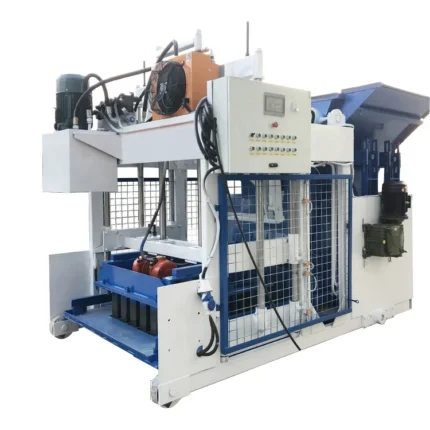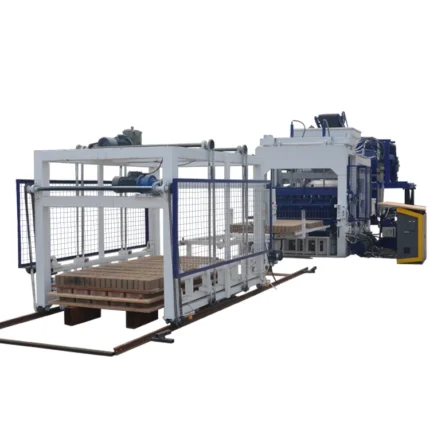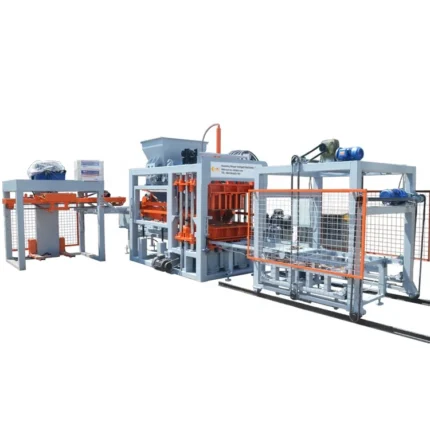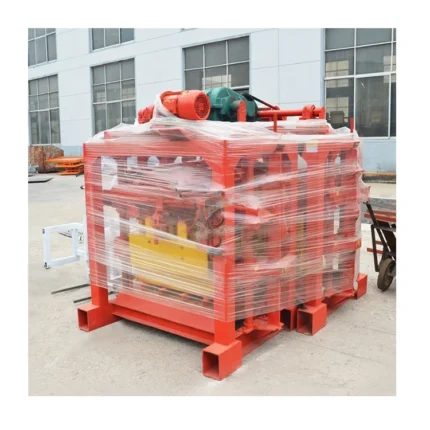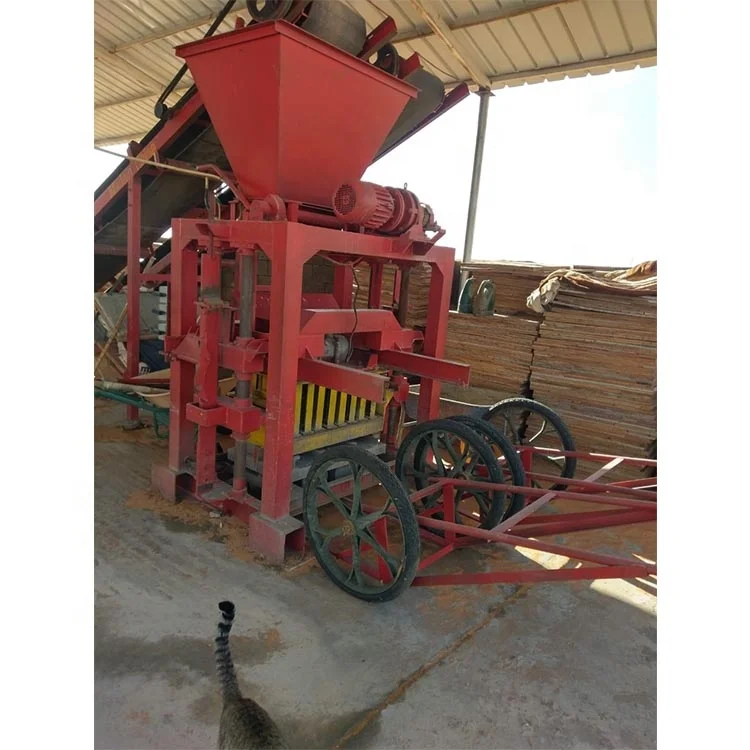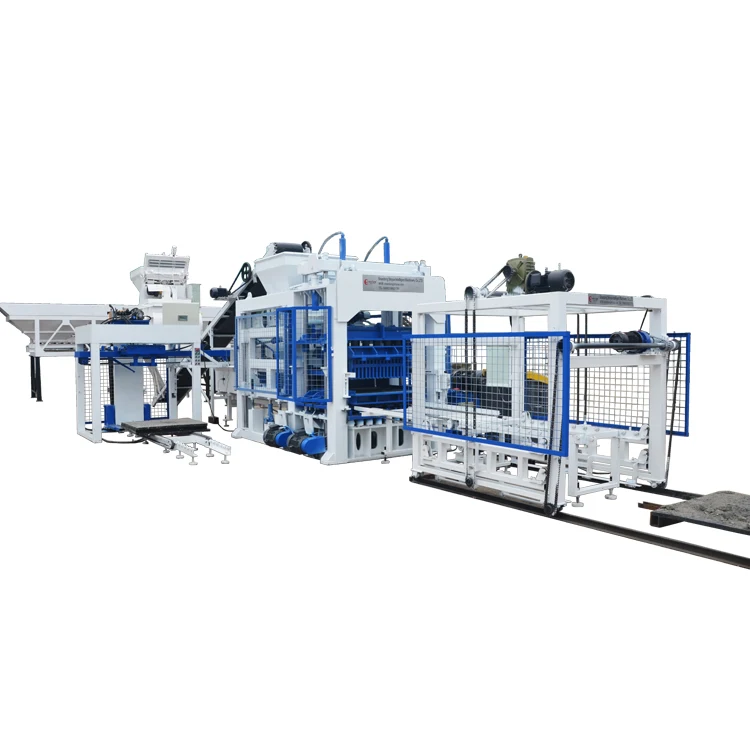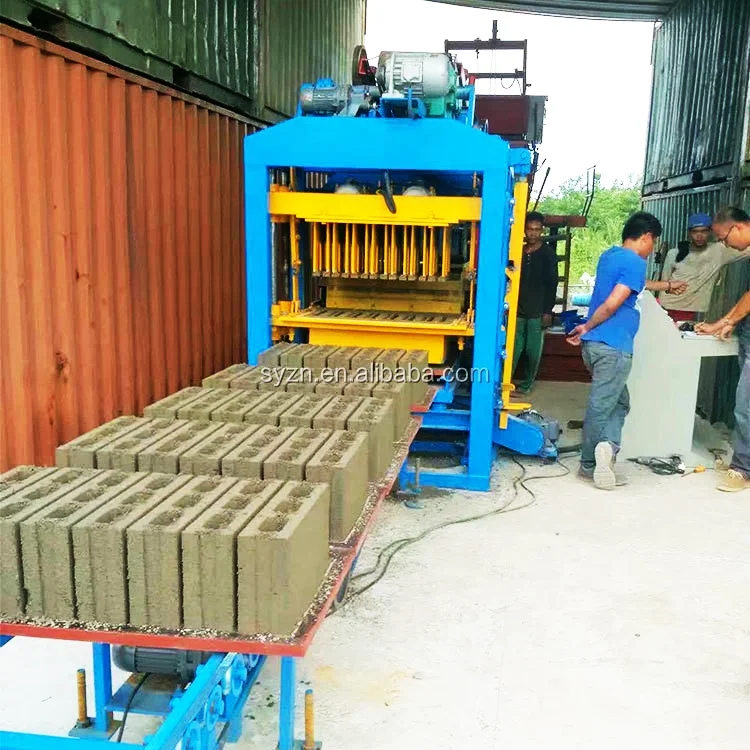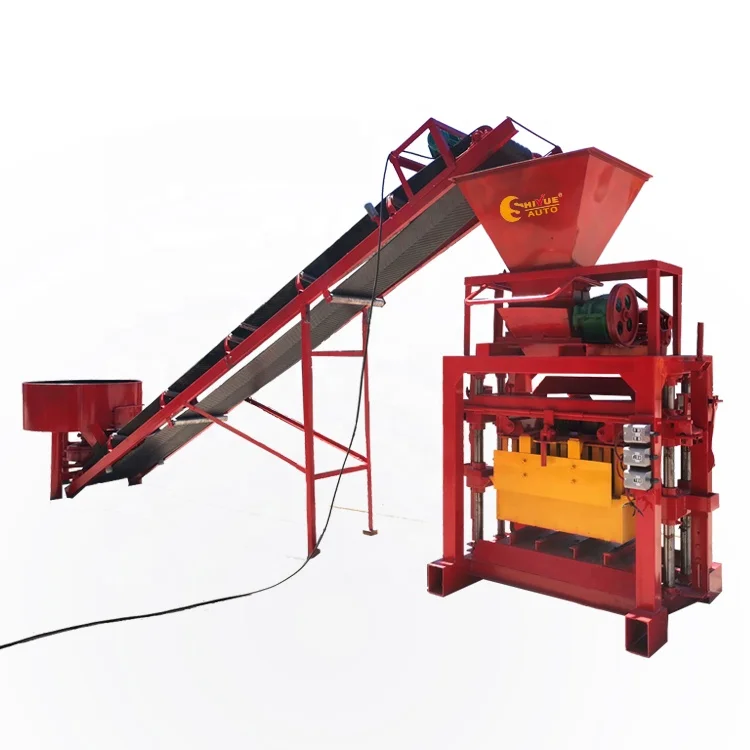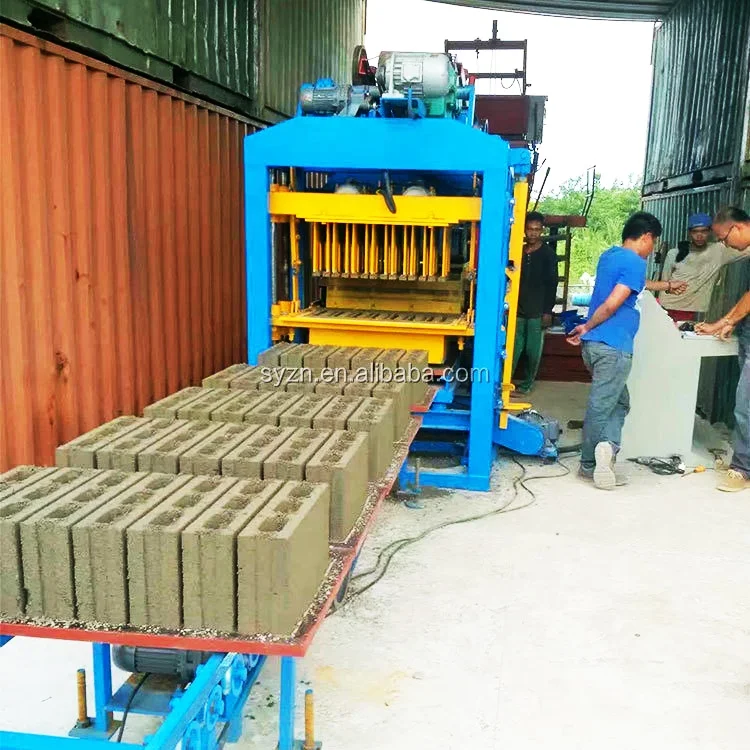
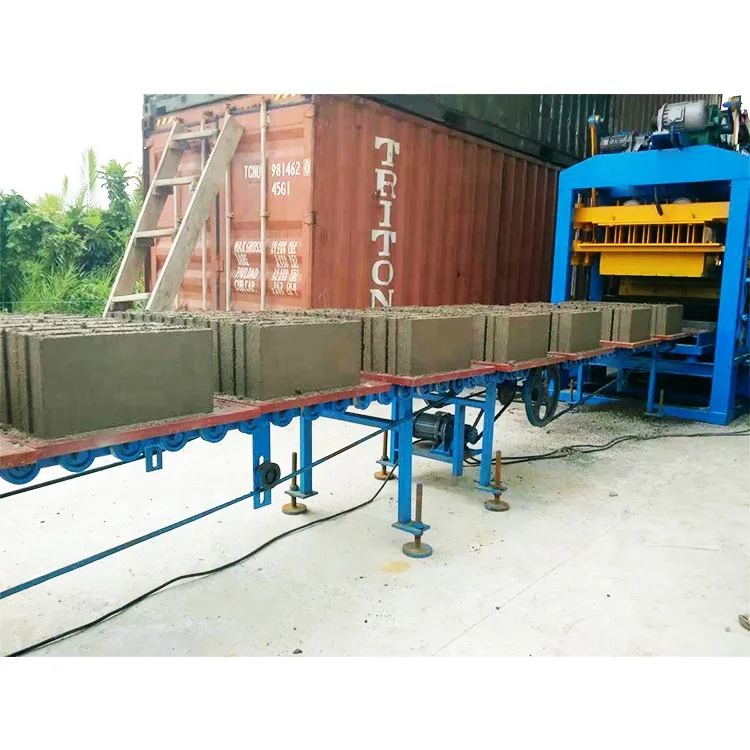
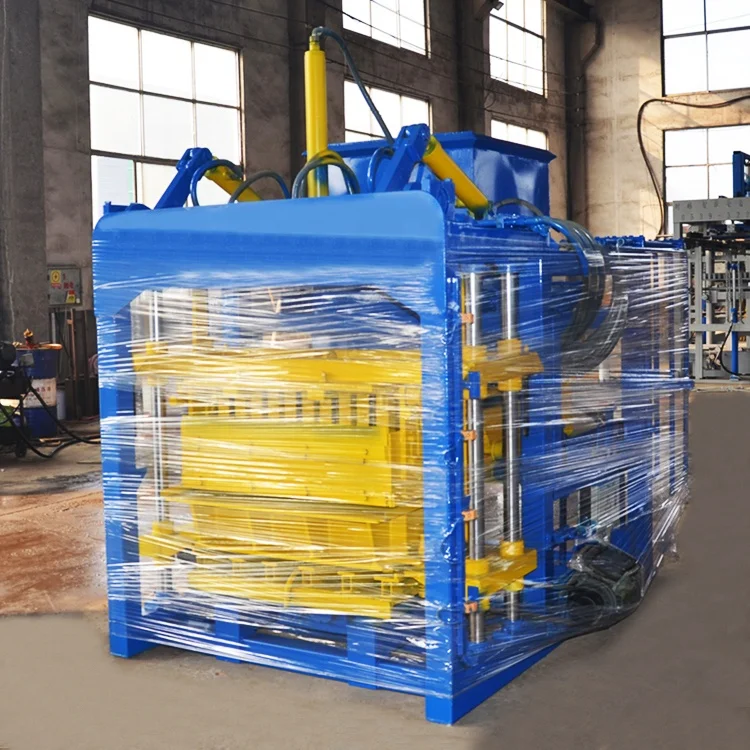
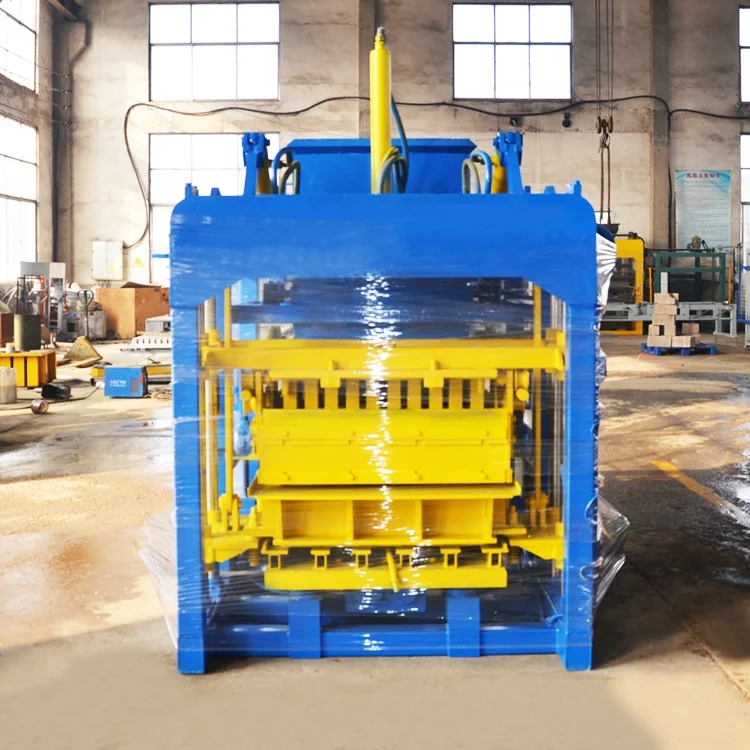
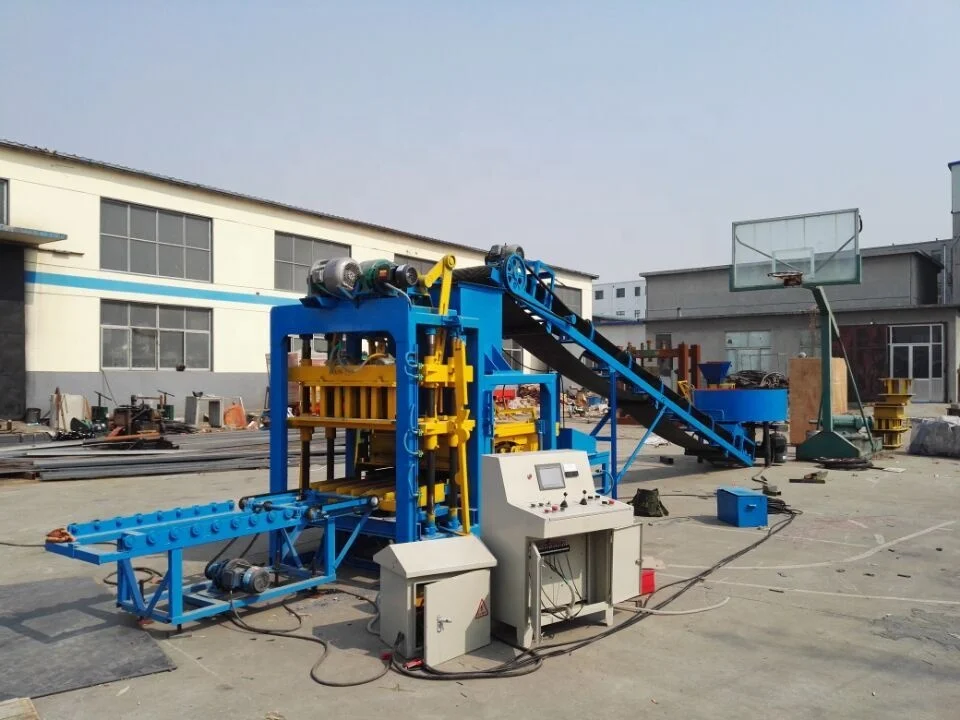
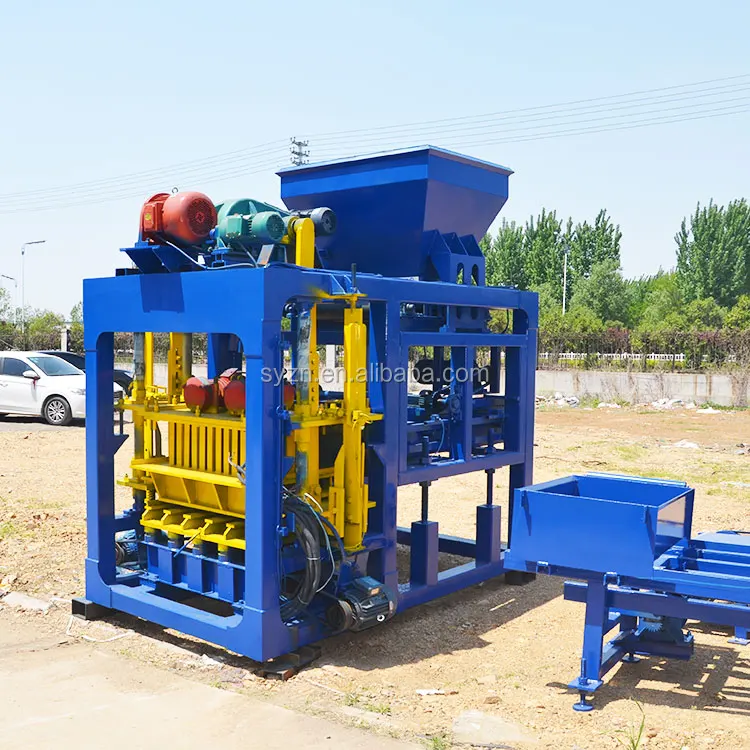
Description
Control-First Configuration — Every QTJ4-25 ships with voltage, frequency, and PLC display language locked in before production begins, eliminating the commissioning dead time I’ve watched cost buyers three full days on a single East European site.
Technical Specifications
| Parameter | Value |
|---|---|
| Model | QTJ4-25 |
| Product Type | Semi-Automatic Concrete Block Making Machine |
| Overall Dimensions (L×W×H) | 6400×1500×2700 mm |
| Net Weight | 2500 kg |
| Molding Cycle | 25 s (varies by block format) |
| Vibration Frequency Range | 2800–5100 r/min |
| Exciting Force | 60 kN |
| Rated Power | 17.9 kW |
| Mixer Model | JQ350 |
| Pallet Size | 850×550×20 mm |
| Hydraulic Station | High-pressure, equipped |
| Control System | PLC or relay logic (basis to be confirmed) |
| PLC Display Language | Configurable (basis to be confirmed) |
| Voltage & Frequency | Configurable to buyer’s local grid (basis to be confirmed) |
| Stacking Method | Manual pallet handling by trolley |
| Output (390×190×190 mm hollow block) | 4 pcs/mould, 480 pcs/h, 3800 pcs/8hr |
| Output (400×150×200 mm hollow block) | 5 pcs/mould, 600 pcs/h, 4800 pcs/8hr |
| Output (240×115×53 mm solid brick) | 18 pcs/mould, 2100 pcs/h, 17000 pcs/8hr |
Application Suitability
| Application | Material or Output |
|---|---|
| Small-to-medium block production plant | Hollow blocks (8-inch, 6-inch) from crushed stone, sand, and cement |
| On-site construction block production | Solid bricks from locally sourced aggregate and fly ash |
| First block plant for entrepreneurs | Pavers and curbstones using standard concrete mixes |
| Housing project contractor producing locally | Porous bricks and interlocking formats with mix adjustment |
What "Semi-Automatic" Actually Means for Your Control System
The automatic QTJ4-25 block machine with PLC control keeps the operator out of cycle timing decisions but leaves pallet handling in their hands — and that boundary is where most configuration mistakes happen.
I’ve seen too many buyers assume "semi-automatic" includes stacking and curing rack handling, only to find pallets piling up at the end of the line with no one to move them. The QTJ4-25’s control system manages the press cycle, vibration frequency, and hydraulic pressure automatically. What it does not do is replace the two or three workers needed to ferry pallets to the curing area. Understanding that split before the machine ships prevents the most common argument I witness during commissioning [NEED_CITE: scope definitions for semi-automatic vs. fully automatic block production lines].
The PLC interface on this PLC controlled semi-automatic block making machine is configurable, but only if someone asks the right questions before the control panel is wired. Default language settings, voltage mismatches, and unconfirmed frequency standards have stalled more installations than any mechanical fault I’ve encountered in the field.
Where the PLC Draws the Line Between Operator and Automation
The QTJ4-25’s control system governs the molding cycle, vibration frequency adjustment between 2800 and 5100 r/min, and hydraulic pressure sequencing. Once the operator loads the mix and positions the pallet, the automatic QTJ4-25 block machine with PLC control handles compaction, vibration, and mould release without manual intervention. This removes the most skill-dependent steps from production while keeping labour costs within reach for a first-time plant owner.
The Upgrade Path That Keeps This Machine Relevant Beyond Year One
What makes the QTJ4-25 worth specifying as a semi-automatic unit is the clear migration route. Buyers who start with manual pallet handling by trolley can later add automatic pallet feeding, stacking, and cubing modules without replacing the press itself. The hydraulic station and vibration system remain unchanged; only the material handling peripherals expand. I’ve recommended this staged approach to contractors who wanted consistent block quality immediately but were not ready to invest in a full automatic line on day one [NEED_CITE: modular automation upgrade paths in concrete block production].
Reading the Specs That Actually Matter on the Shop Floor
The 60 kN exciting force combined with adjustable vibration frequency means the QTJ4-25 can be tuned to different aggregate sizes and mix moisture levels — a critical capability when your local sand source changes seasonally. The 25-second molding cycle holds for standard hollow blocks, though denser formats and solid bricks push the cycle slightly longer as the hydraulic station works through higher compaction resistance. The 850×550×20 mm pallet size is fixed, so buyers must confirm their curing racks and forklifts accommodate this dimension before the machine arrives. The 17.9 kW rated power demands a dedicated circuit; sharing a line with welding equipment or other heavy motors will introduce voltage dips that the PLC will flag as faults.
When Control Configuration Goes Wrong After Arrival
A PLC panel displaying Chinese characters in a Spanish-speaking workshop is not a minor inconvenience — it halts production entirely until remote support can switch the language pack, and that assumes stable internet on-site. Voltage mismatches between a 380V/50Hz machine and a 440V/60Hz grid can burn out the hydraulic solenoid valves within the first week of operation. I’ve watched a buyer in Eastern Europe lose three full commissioning days because the HMI language defaulted to a setting the operator could not read, and the local electrician could not navigate the diagnostics menu to troubleshoot [NEED_CITE: electrical standards and control interface requirements by region]. These are not manufacturing defects. They are configuration oversights that a ten-minute confirmation call before production would have prevented.
Why Buyers Specify This Machine Through Our Configuration Process
Block machinery is our single focus, so the QTJ4-25’s hydraulic station, vibration system, pallet specification, and mould set are engineered as one matched system rather than assembled from separate suppliers. We configure the vibration frequency range and hydraulic pressure against the buyer’s actual mix design and local aggregate, not a catalogue default. Mould design covers the formats the buyer’s market actually sells, with custom drawings available for non-standard block shapes. The automation level is selectable and upgradeable — buyers start semi-automatic and add pallet feeding or stacking modules when volume justifies it. Installation includes on-site commissioning with operator training in the buyer’s language, and wear parts lists ship with the machine so the first replacement cycle is never a surprise.
Documentation & Verification
- Line layout and capacity calculation stating the exact block format assumed for each output figure
- Machine specification sheet with confirmed voltage, frequency, and control language before production
- Mould drawing and format list covering every block type in the buyer’s product range
- Hydraulic and electrical schematic matching the as-built configuration
- Factory test record demonstrating cycle time and block density against agreed specifications
- Wear parts and mould list supplied with the machine for first replacement planning
Installation, Commissioning & Support
- 6400×1500 mm footprint requires level concrete pad with clearance for pallet trolley movement around the press
- 17.9 kW rated power demands a dedicated circuit breaker sized for motor inrush current
- Ships as a complete unit in nude packing; hydraulic station and vibration motors are pre-mounted
- First-power commissioning includes PLC language confirmation and voltage verification under load
- Operator training covers cycle start, mould change procedure, and basic hydraulic troubleshooting
- Wear parts list and mould inventory provided so replacement ordering can begin before first stockout
What We Need From You Before Quoting
Send us your target block formats with dimensions, your daily output expectation per format, and the raw materials you have access to locally — including aggregate type and maximum particle size. Confirm your site voltage, frequency, and the language you need on the PLC display. If you have existing curing racks or forklifts, share their dimensions so we can verify pallet compatibility before the QTJ4-25 enters production.
Frequently Asked Questions
Q: How is the 25-second cycle time affected when switching between hollow block and solid brick formats?
A: The 25-second cycle applies to standard hollow block formats like the 390×190×190 mm size. Solid bricks require higher hydraulic compaction over a denser mix, which extends the cycle slightly. The PLC adjusts vibration duration automatically based on the loaded mould profile, but the operator should confirm cycle time on the first run of each new format before committing to a production target.
Q: What control system does the QTJ4-25 use, and can the PLC interface be set to my local language?
A: The QTJ4-25 is available with PLC or relay logic control depending on the automation level selected. When PLC is specified, the HMI display language is configurable and must be confirmed in writing before the panel is wired. Default settings vary by production batch, so this confirmation step is built into our pre-production checklist to avoid commissioning delays on your site.
Q: How do I match vibration frequency and hydraulic pressure to my local aggregate and mix design?
A: The vibration frequency range of 2800–5100 r/min allows tuning to different aggregate sizes and moisture levels. We configure the hydraulic station pressure and vibration profile based on a sample of your raw materials before the machine ships. This ensures the 60 kN exciting force is applied at the frequency that produces uniform density for your specific mix, not a generic setting.
Q: What is the upgrade path from semi-automatic to fully automatic pallet feeding and stacking?
A: The QTJ4-25’s press, hydraulic station, and control system remain unchanged when you add automation modules. Automatic pallet feeding, stacking, and cubing can be installed as peripheral upgrades without replacing the core machine. The PLC accommodates these additions through its existing I/O architecture, so the transition involves mechanical integration and software configuration rather than a full control system replacement.
Q: How does batch-to-batch consistency compare between the QTJ4-25’s hydraulic-vibration system and purely mechanical machines?
A: The combination of high-pressure hydraulic compaction and adjustable dual vibration produces uniform block density across every cycle, independent of operator technique. Purely mechanical machines rely on the operator to judge compaction timing and vibration duration, which introduces variability between shifts. The QTJ4-25’s PLC locks these parameters once they are set for a given mould and mix, removing that variable from production.