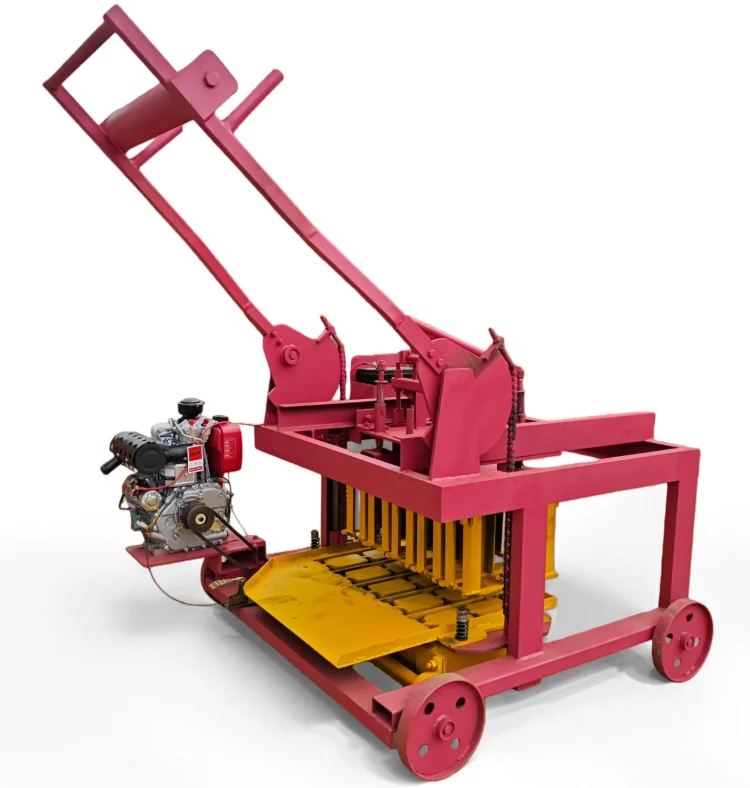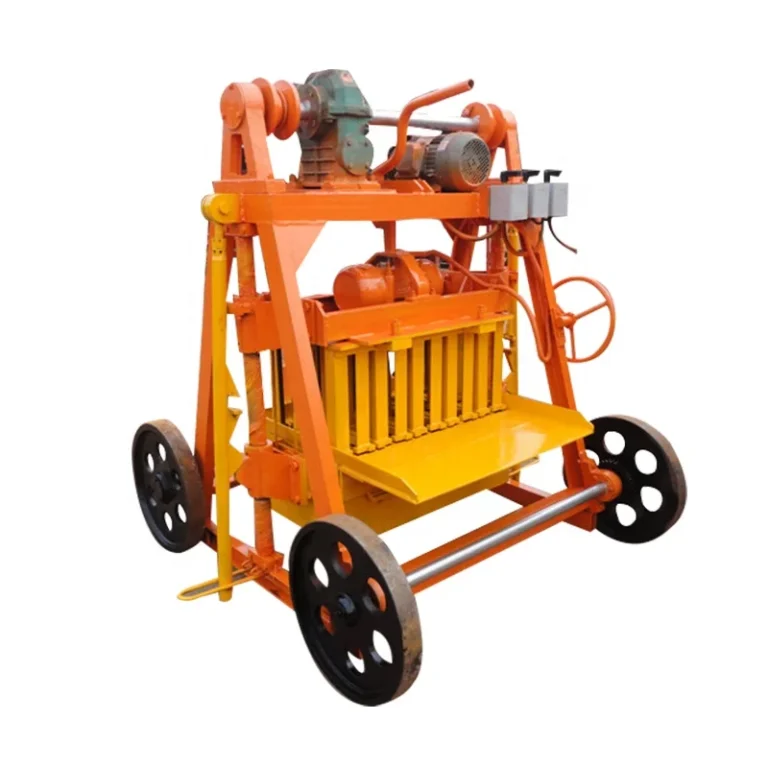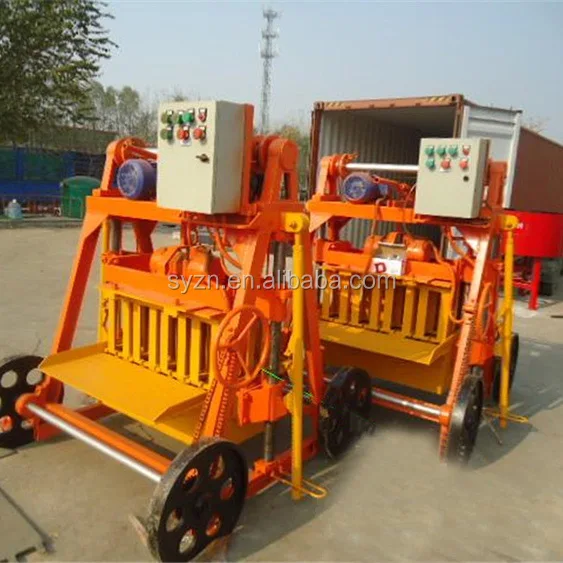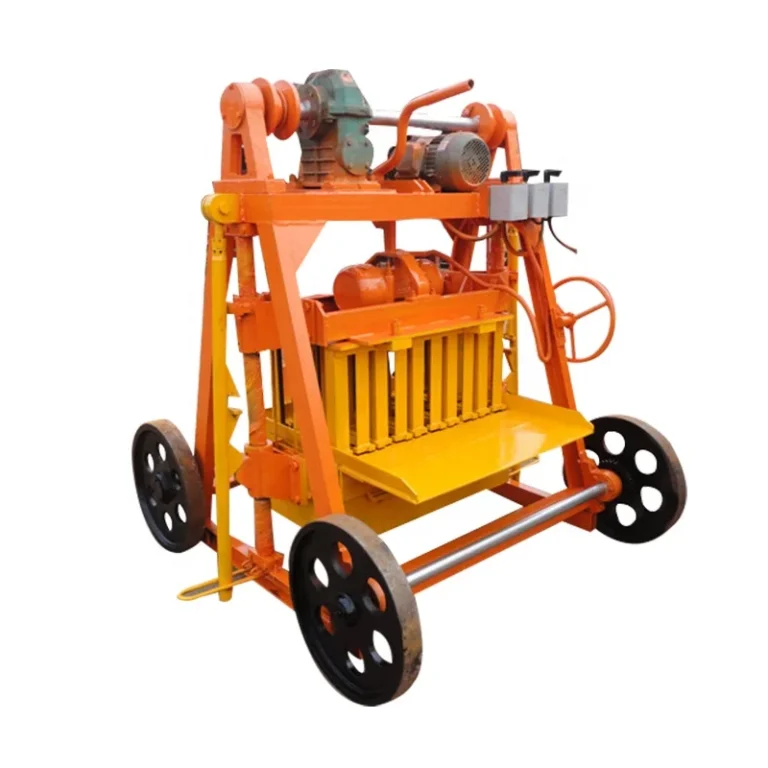

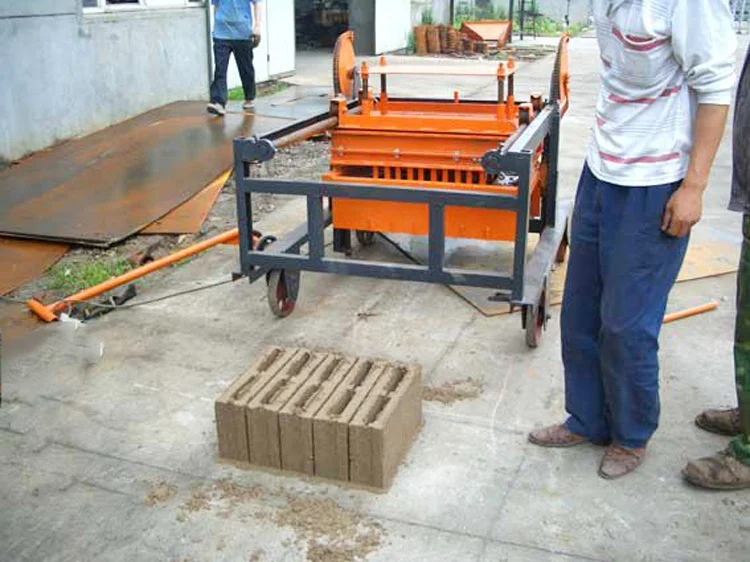
Description
Configuration Set to Match — every QMR4-45 is dispatched with cycle timing, mould cavity count and power source verified against your actual block format and site conditions, not a default catalogue setting.
Technical Specifications
| Parameter | Value |
|---|---|
| Model | QMR4-45 |
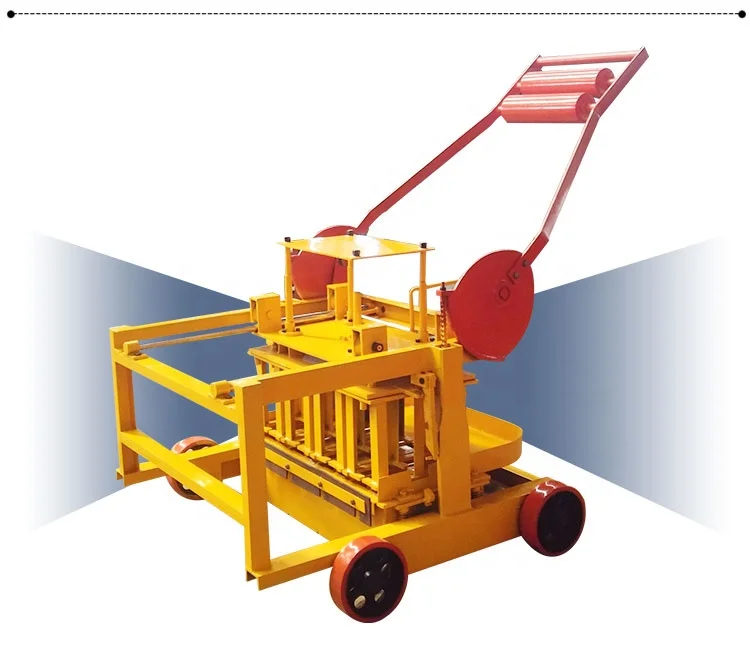
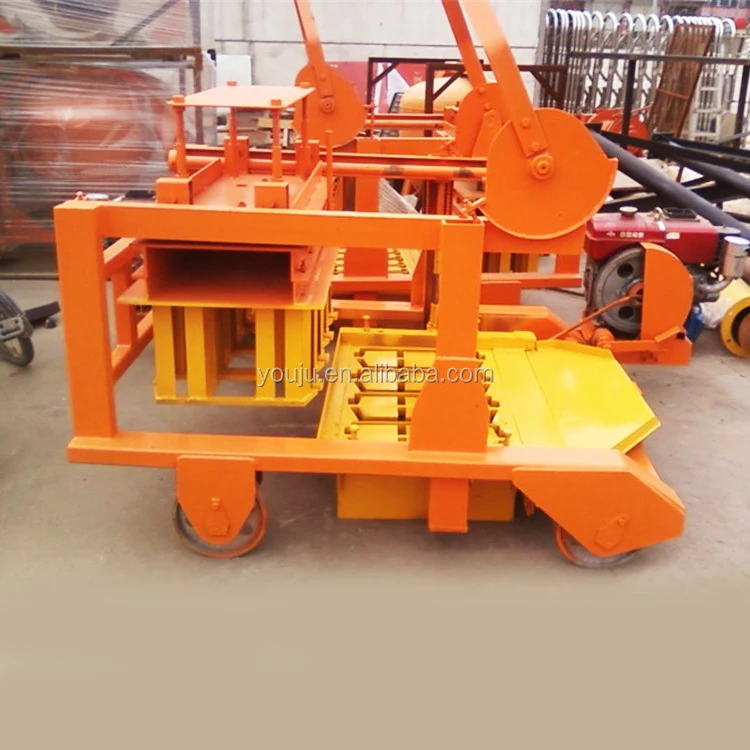
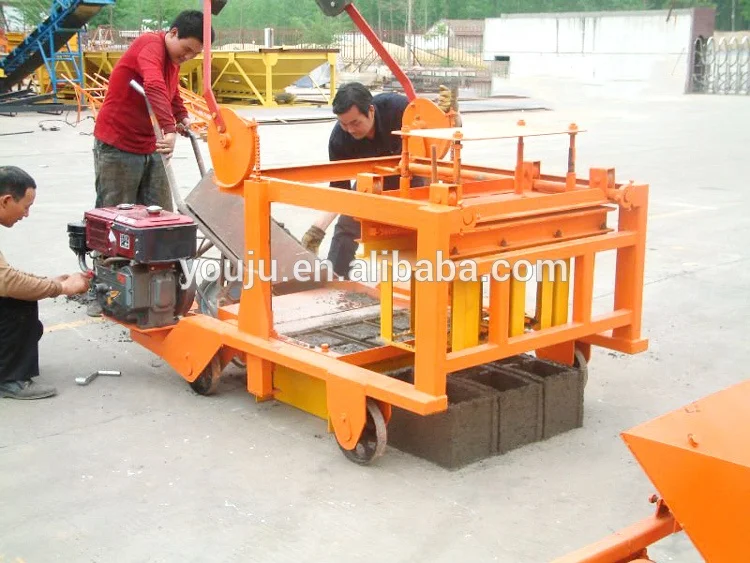
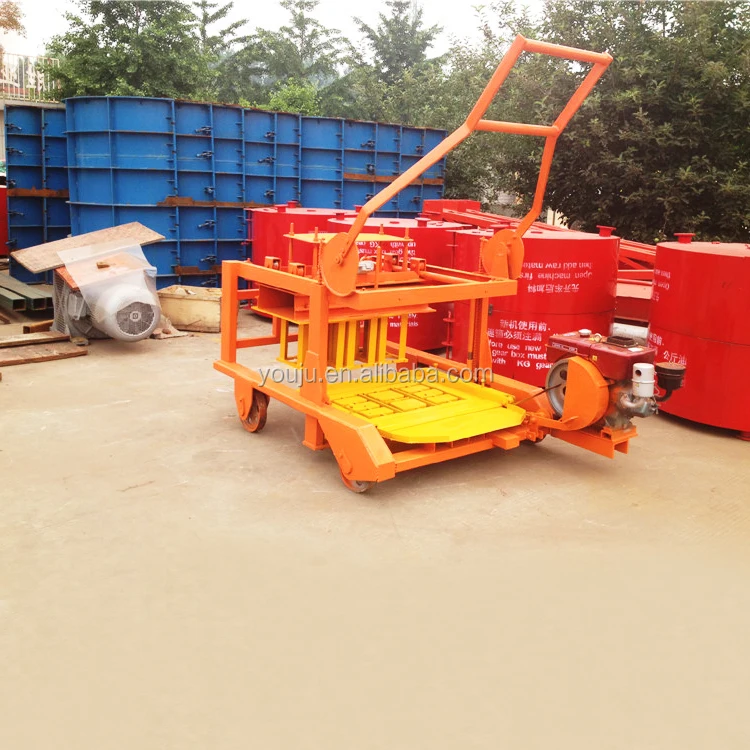
| Product Type | Mobile Egg Laying Block Making Machine |
| Overall Dimensions (L×W×H) | 2420×1320×1650 mm |
| Net Weight | 810 kg |
| Moulding Cycle | 40-45s |
| Pallet Size | No pallet required (egg-laying on flat concrete) |
| Rated Power | 6 kW |
| Power Source Option | Electric motor or 6-8 HP diesel engine |
| Voltage | 220V / 380V or configurable to client local voltage |
| Control System | Manual / basic electrical (PLC upgrade path available) |
| Automation Level | Manual operation, egg-laying type |
| Stacking Method | Manual |
| Mould Change | Supported for different block specifications |
| Output Capacity (400×200×200 mm hollow, 4 pcs/mould, 8h) | 3000 pcs/day |
| Output Capacity (400×150×200 mm hollow, 5 pcs/mould, 8h) | 3500 pcs/day |
| Output Capacity (400×120×200 mm hollow, 6 pcs/mould, 8h) | 4500 pcs/day |
| Warranty | One year for the whole machine |
| Standards | CE declaration available |
Application Suitability
| Application | Material or Output |
|---|---|
| Contractor on-site hollow block production | Concrete mix with local crushed stone, sand and cement |
| Housing project block supply | 400×200×200 mm and 400×150×200 mm hollow blocks |
| Remote or off-grid site manufacturing | Diesel-powered operation where grid electricity is unavailable |
| First block plant start-up | Low-investment manual production with PLC upgrade path |
| Paving and solid brick runs | Interlocking and standard brick formats via mould change |
What "3000 Blocks a Day" Actually Assumes
Output figures only hold when the block format, mould cavity count and eight-hour shift are stated together.
I have watched contractors arrive at a site expecting a certain daily volume, only to discover the quoted number assumed a smaller block than the one their market demands. A six-cavity mould producing 120 mm hollow blocks will show a higher count than a four-cavity mould on 200 mm blocks, even on the same automatic mobile block machine. When the format changes, the daily figure changes with it. [NEED_CITE: block format assumptions in capacity quoting]
That mismatch is the reason our sales process asks which hollow block size you actually sell before we discuss output at all.
From Manual Start to PLC-Controlled Consistency
The QMR4-45 ships as a manual egg-laying machine, but the electrical architecture allows a PLC controlled egg laying block machine upgrade when your volume justifies it. This means an entrepreneur can enter the market at a lower investment level and add automated cycle timing and batching control later without replacing the press.
Where Diesel Keeps Production Moving
On housing projects in regions with unreliable grid power, the 6-8 HP diesel engine option means the QMR4-45 continues producing hollow blocks regardless of electricity availability. I have seen sites in West Africa where a single power cut would idle an entire electric line for half a day — the diesel drive removes that dependency entirely.
Reading the Numbers That Matter
The 40-45 second moulding cycle is the heartbeat of this automatic mobile block machine. Shorter cycles are possible with some machines, but only if the vibration force and hydraulic pressure are matched to your specific mix. With the QMR4-45’s manual control, the operator sets the vibration duration based on the concrete consistency they see — a practical advantage when local aggregate varies from batch to batch. [NEED_CITE: vibration time adjustment for aggregate moisture variation]
The 810 kg net weight gives the machine enough mass to stay stable during vibration without anchoring, which is essential for a unit that moves along the curing floor after every cycle. The 6 kW rated power is modest enough that most three-phase site supplies can handle it, but voltage and frequency must be confirmed before production begins — a 380V/50Hz motor will not perform correctly on a 440V/60Hz grid.
The Cost of Skipping Configuration Details
A machine wired for the wrong voltage will trip breakers or burn windings during the first hour on site. An operator interface in a language the crew cannot read means cycle times are guessed rather than followed, and block density drifts from batch to batch. These are not theoretical risks — they appear repeatedly in commissioning reports from sites where pre-shipment confirmation was skipped. [NEED_CITE: commissioning delays from unconfirmed voltage and control language]
When mould change time is not discussed before purchase, buyers discover that switching from hollow block to paving format takes most of a shift, negating the flexibility they expected from a mobile unit.
Why Buyers Place Repeat Orders Here
Block machinery is our single focus, so the QMR4-45 is specified as one matched system — machine, mould, and power source — rather than assembled from separate suppliers. Configuration is set against your actual mix design and local aggregate, not a catalogue default. Mould design covers the formats your market sells, including custom drawings to your specifications. The automation level is selectable, allowing a semi-automatic start with a clear upgrade path. Installation support and operator training are included so the first production run meets strength requirements from day one.
Documentation & Verification
- Factory test record on your specified hollow block format before dispatch
- Machine specification sheet with confirmed voltage and frequency
- Mould drawing and format list matching your market requirements
- Hydraulic and electrical schematic for local maintenance reference
- Operation and maintenance manual in your chosen control language
- Wear parts and mould list with recommended replacement intervals
Installation, Commissioning & Support
- Flat concrete floor of adequate length required for egg-laying travel path
- 220V or 380V supply with dedicated circuit matching confirmed frequency
- Machine arrives assembled; diesel engine option requires fuel line check on site
- First-run commissioning includes vibration time adjustment to your local aggregate
- Operator training covers mould change procedure and block handling technique
- Wear parts list provided with local sourcing guidance for high-wear items
Before You Request a Quote
Tell us which hollow block format sells in your market — dimensions, wall thickness and target daily volume. Share your local aggregate type and a recent sieve analysis if available, along with your site voltage and frequency. If you plan to start with diesel and switch to electric later, mention that so the mounting points are prepared at the factory.
Frequently Asked Questions
Q: How is output capacity verified per block format, and what cycle time assumptions apply?
A: Every capacity figure we quote states the hollow block dimensions, mould cavity count and shift length it assumes. The 40-45 second cycle is measured on a standard concrete mix; if your aggregate requires longer vibration, the daily count adjusts accordingly. We confirm this during the proposal stage, not after delivery.
Q: Can the QMR4-45 be upgraded from manual to PLC-controlled operation?
A: Yes. The electrical architecture supports a PLC controlled egg laying block machine upgrade that adds automated cycle timing, batching accuracy and remote diagnostics. The upgrade can be installed on site without replacing the press frame or hydraulic system, protecting your initial investment.
Q: What voltage, frequency and control display language options are confirmed before shipment?
A: We confirm your local voltage, frequency and the operator’s preferred display language before production begins. This avoids commissioning delays on arrival and ensures the control interface matches the crew that will run the machine daily.
Q: How does diesel engine operation affect block density and cycle consistency compared to electric drive?
A: The 6-8 HP diesel engine delivers sufficient vibration force for standard hollow block density. Cycle consistency depends on the operator maintaining a steady rhythm, which is where the PLC upgrade path adds value — it removes human timing variation from the equation regardless of the power source.
Q: What mould formats are available, and can custom moulds be designed to buyer drawings?
A: Standard formats include 400×200×200 mm, 400×150×200 mm and 400×120×200 mm hollow blocks, plus paving and solid brick options. Custom moulds are designed to your drawings, covering interlocking profiles and non-standard dimensions your local market requires.