Description
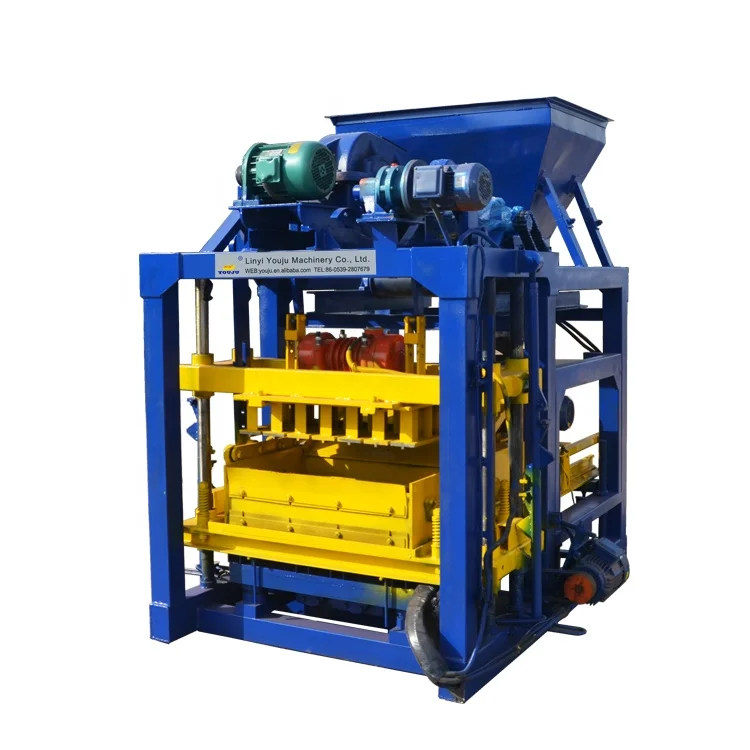
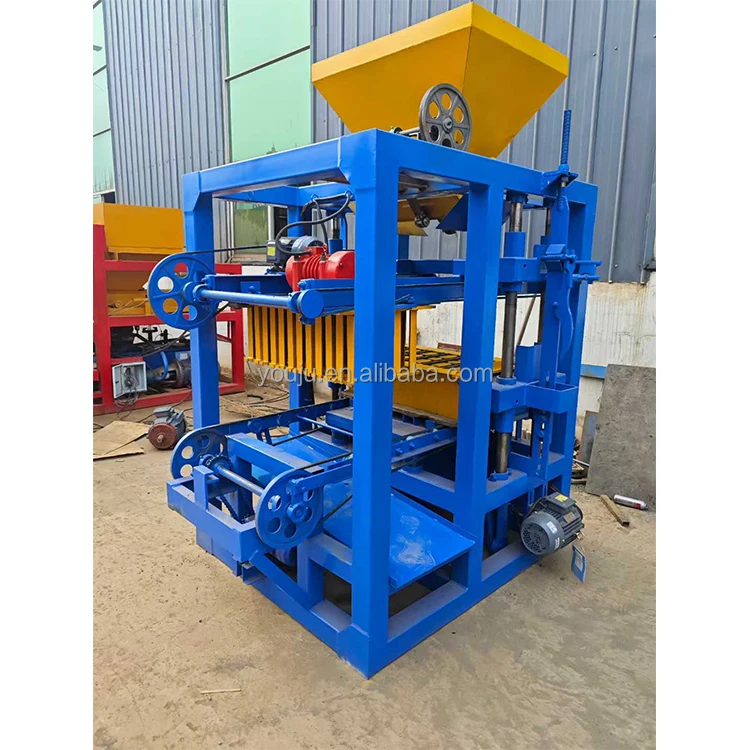
Vibration matched to format — dual-motor platform excitation paired with upper mould vibration, tuned to hollow and solid block densities rather than a single amplitude setting.
Technical Specifications
| Parameter | Value |
|---|---|
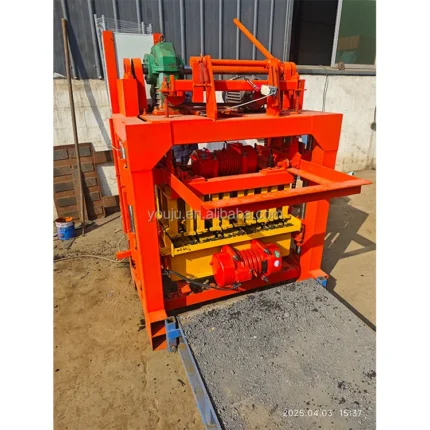
| Model | QTJ4-24 |
| Product Type | Semi-Automatic Concrete Block Making Machine |
| Overall Dimensions (L×W×H) | 3600mm × 1700mm × 2560mm (working state) |
| Net Weight | 1750 kgs |
| Molding Type | Platform Vibration |
| Pallet Size | 850mm × 450mm |
| Overall Power | 14.25 kW |
| Mould Format | 390×190×190mm (4 pcs/mould); 240×115×53mm (21 pcs/mould) |
| Vibration System | Lower platform (2 × 3 kW high speed motors, vertical excitation) + Upper (1.5 kW attached vibration device) |
| Elevating System | Cone-shape motor with JZQ250 speed reducer, V-belt drive |
| Delivery Device | Cycloidal pin wheel speed reducer, chains, V-belt |
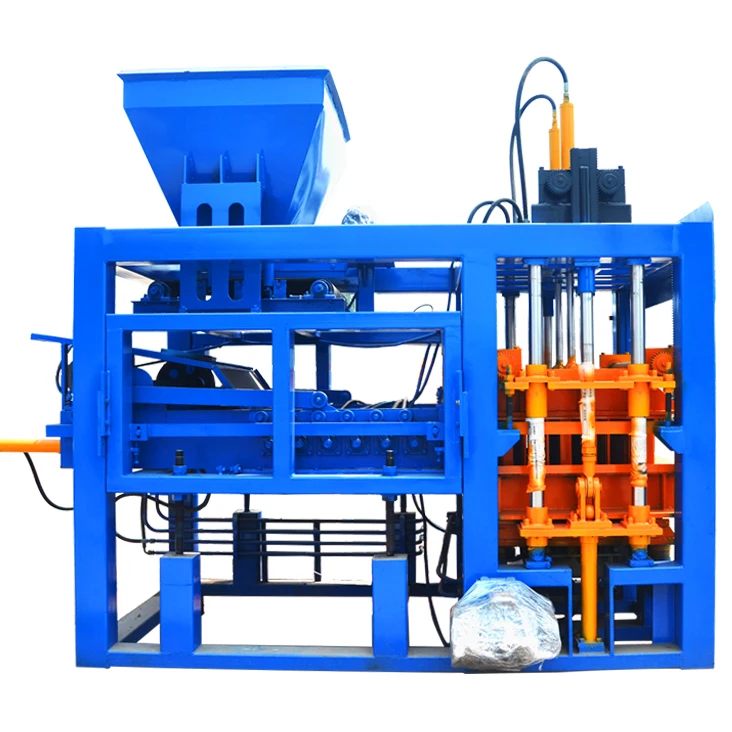
| Machine Frame | Dragon gate style, super steel, four vertical wear-resisting shafts |
| Material Storage | Top releasing hopper + lower storing hopper |
| Control System | Electronic controlling part (PLC or relay configurable) |
| Voltage & Frequency | Configurable to target market supply (basis to be confirmed) |
| Cycle Time | Dependent on block format and material (basis to be confirmed) |
| Output Capacity | Dependent on block format and material (basis to be confirmed) |
| Automation Level | Semi-automatic (mechanical + electronic combined operation) |
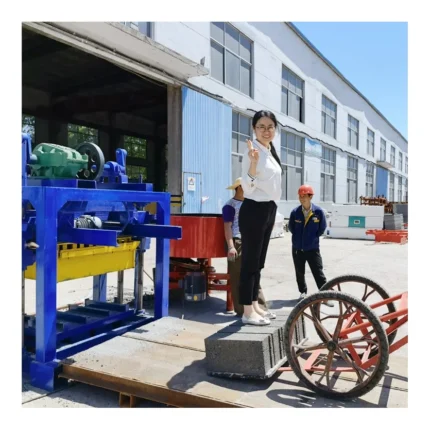
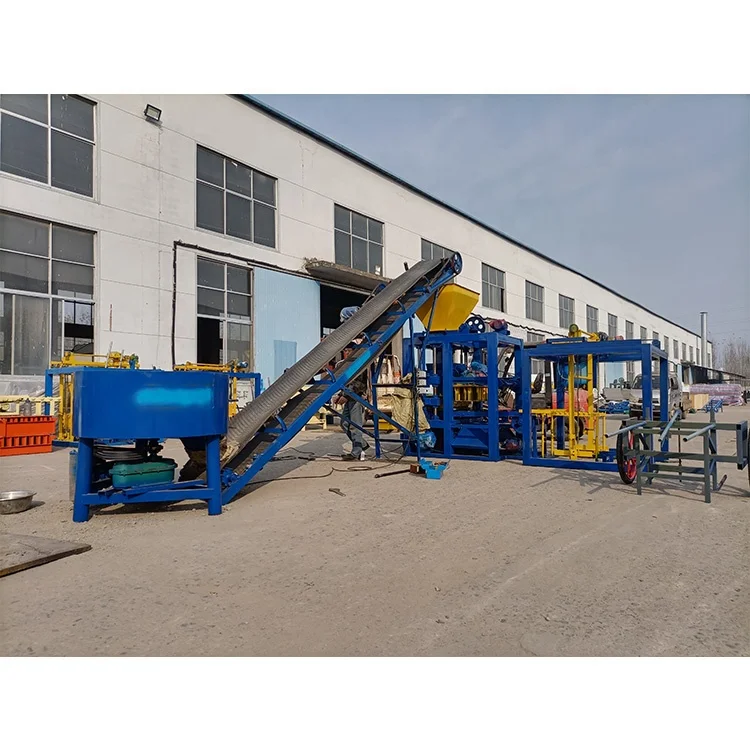
| Supporting Equipment (Basic) | JQ350 pan mixer, 6m belt conveyor, trolley |
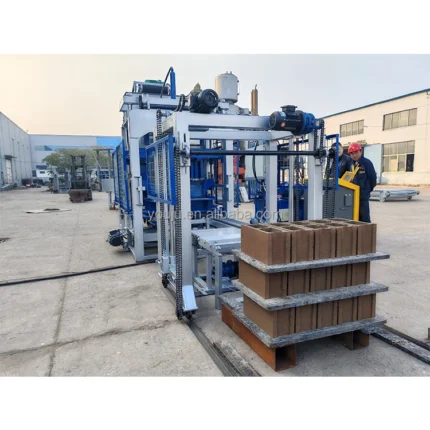
| Supporting Equipment (Optional) | Auto stacker (3–6 layers depending on block height) |
Application Suitability
| Application | Material or Output |
|---|---|
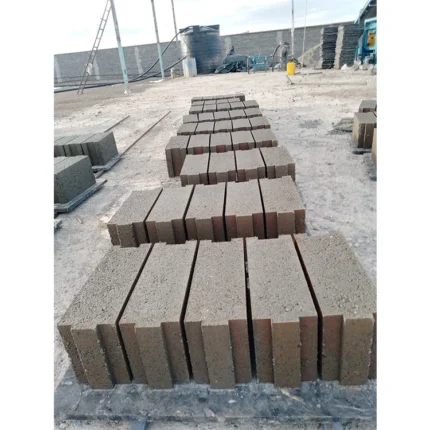
| Hollow block production for small to medium block plants | Crushed stone, sand, cement, fly ash blends |
| Solid brick manufacturing | Local aggregate mixes, river sand, stone dust |
| On-site block production for construction contractors | Standard cement and aggregate ratios |
| First block plant setup with limited investment | Hollow 390×190×190mm and solid 240×115×53mm formats |
| Format expansion for existing concrete product manufacturers | Standard hollow and solid brick dimensions |
Why the PLC Language Question Should Come Before the Order
Confirming the control panel language and voltage at order stage prevents multi-day commissioning delays on site.
I have watched a block machine sit idle for days after arrival because the operator could not read the interface. The QTJ4-24 control system is configurable, but that configuration must be locked in during the sales process — not discovered when the container is unpacked. Voltage mismatch between the plant supply and the machine motor rating is equally costly, forcing transformer purchases or motor rewinds before the first block is pressed [NEED_CITE: voltage and frequency standards by export market]. These are not engineering problems; they are communication failures that surface only when the machine is thousands of kilometres from the factory.
How Semi-Automatic Control Shapes Daily Operation
The QTJ4-24 places the operator at the centre of each press cycle through electronic control of vibration timing, material feed, and mould elevation. Unlike fully manual lever-operated machines, the electronic system standardises the compaction sequence, reducing variation between shifts. The semi-automatic architecture means the press does not depend on a complex PLC to run, keeping maintenance straightforward in environments where technical support is not immediately available. Buyers who later want to reduce curing-yard labour can add the optional auto stacker without replacing the press itself.
Where the Upgrade Path Actually Reduces Workforce
Adding the auto stacker to the automatic QTJ4-24 block machine PLC controlled line removes the heaviest manual task — lifting wet blocks from the pallet and stacking them on the curing rack. Depending on block height, the stacker handles three to six layers per lift. This shifts the operator’s role from physical stacking to monitoring pallet flow and mix consistency. The upgrade can be made after the plant is running, so a first-time entrepreneur does not have to fund full automation on day one [NEED_CITE: labour allocation in semi-automatic block plants].
Matching Vibration Force to the Mix Design
The dual-vibration arrangement — two 3 kW motors driving the lower platform and a 1.5 kW unit on the upper mould — addresses a common failure in single-source vibration. Lower excitation settles the aggregate at the pallet surface, while upper vibration compacts the core and top face. For hollow blocks at 390×190×190mm, this means wall density is maintained without over-compacting the base. The JQ350 pan mixer and 6m belt conveyor are sized to keep material flowing to the hopper at the press cycle rate, so the vibration system is never starved between strokes. The dragon gate frame with four wear-resisting vertical shafts keeps the mould aligned over repeated cycles, preventing the uneven block heights that result from frame deflection.
The Cost of Leaving Automation Decisions to Chance
When a quotation covers only the press and mixer, the buyer discovers after arrival that pallets, stacking and curing handling are unbudgeted. Blocks then pile up on the factory floor, handled manually until racks can be sourced locally — a situation that delays revenue and damages fresh product. Equally, when pallet size is chosen without checking the curing area dimensions or the forklift already on site, the buyer ends up modifying the yard to fit the pallet instead of the other way round [NEED_CITE: pallet and curing area planning for block production]. These downstream costs regularly exceed the price difference of specifying the correct automation level upfront.
Why Sourcing This Line Through a Single-Product Focus Matters
Block machinery is the only product category here, so the press, mould, pallet and handling equipment are specified as a matched set rather than assembled from separate catalogues. The QTJ4-24 is configured against the buyer’s actual aggregate and target format, not a default setting. Mould design covers the formats the buyer’s market sells, with custom drawings available for non-standard dimensions. The automation level is selectable at order and expandable later, matching the buyer’s workforce and budget trajectory. Installation support includes operator training and a wear parts list so the first mould replacement does not become an emergency.
Documentation & Verification
- Machine specification sheet confirming vibration motor ratings and pallet size
- Mould drawing and format list for hollow 390×190×190mm and solid 240×115×53mm
- Voltage and control language confirmation record before production begins
- Factory test record on your specified block format and mix design
- Operation and maintenance manual in your operator’s language
- Wear parts and mould list with recommended replacement intervals
Installation, Commissioning & Support
- Foundation pad sized to 3600×1700mm working footprint with vibration isolation allowance
- Dedicated circuit rated for 14.25 kW total draw at confirmed local voltage and frequency
- Machine arrives stationary; frame, mixer and conveyor assembled on site
- First-cycle parameter setting for vibration duration and material feed timing
- Operator training on electronic control sequence and mould change procedure
- Wear parts list covering vertical shafts, V-belts and mould liner plates
Requesting a Configuration Proposal
To receive a line proposal that reflects your actual production conditions, share the block format you sell most, your daily output target in that format, and the aggregate materials available locally. Confirm your site voltage, frequency and preferred control panel language. If you already have pallets, forklifts or curing racks, provide their dimensions so the line is built around them.
Frequently Asked Questions
Q: How do I verify real daily output when capacity is quoted per cycle?
A: Ask for the capacity calculation stated per block format — hollow 390×190×190mm versus solid 240×115×53mm — along with the mix design and cycle time assumed. A single cycles-per-hour figure without format context will not predict your actual daily tonnage. Request that the quotation documents the assumed block weight and pallets per shift.
Q: Can the control system be upgraded to automatic stacking later?
A: Yes. The semi-automatic electronic control architecture supports adding the optional auto stacker after initial installation. The stacker handles three to six layers depending on block height, removing manual lifting from the curing yard. Discuss the upgrade timeline with the supplier so electrical provisions are included in the initial wiring.
Q: What voltage, frequency and display language options are available?
A: Voltage and frequency are configurable to your target market supply. Control panel language is confirmed at order stage to match your operator’s working language. These three parameters — voltage, frequency, language — must be locked in before production begins to avoid commissioning delays.
Q: How does the auto stacker change labour requirements on the curing yard?
A: The auto stacker removes the heaviest manual task of lifting wet blocks from pallets onto curing racks. Your operator shifts from physical stacking to monitoring pallet flow and block quality. Depending on your shift pattern, this typically reassigns one or two workers from the yard to other line duties.
Q: What is the mould change procedure between hollow and solid formats?
A: Mould change involves releasing the upper vibration unit, unbolting the current mould from the platform, and positioning the new mould on the four vertical guide shafts. The dragon gate frame keeps alignment during the swap. Confirm expected changeover duration with your supplier for your specific format pair before the line is commissioned.