


Description
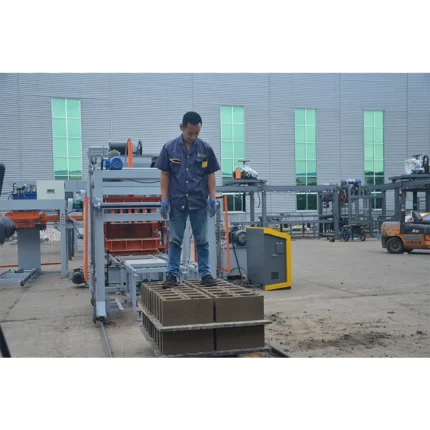
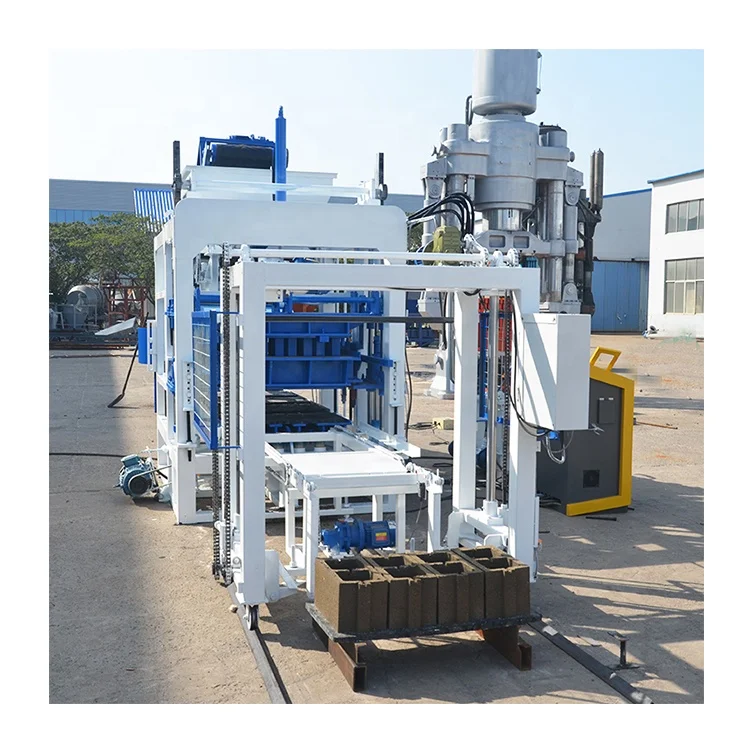
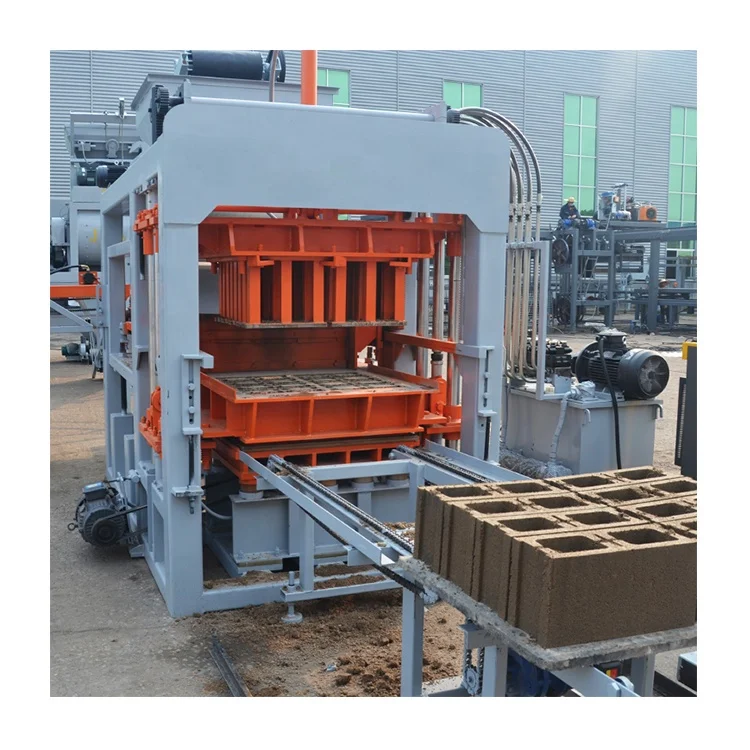
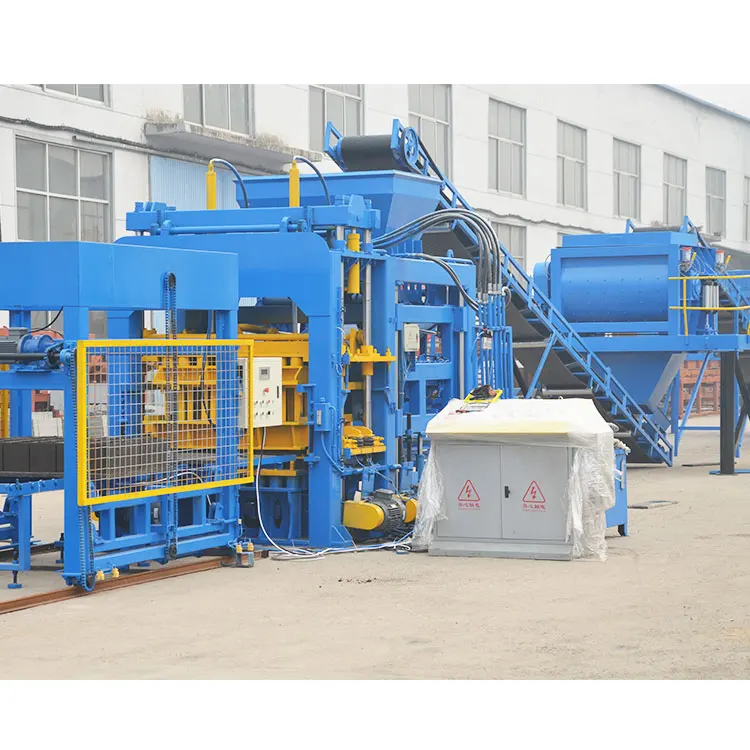
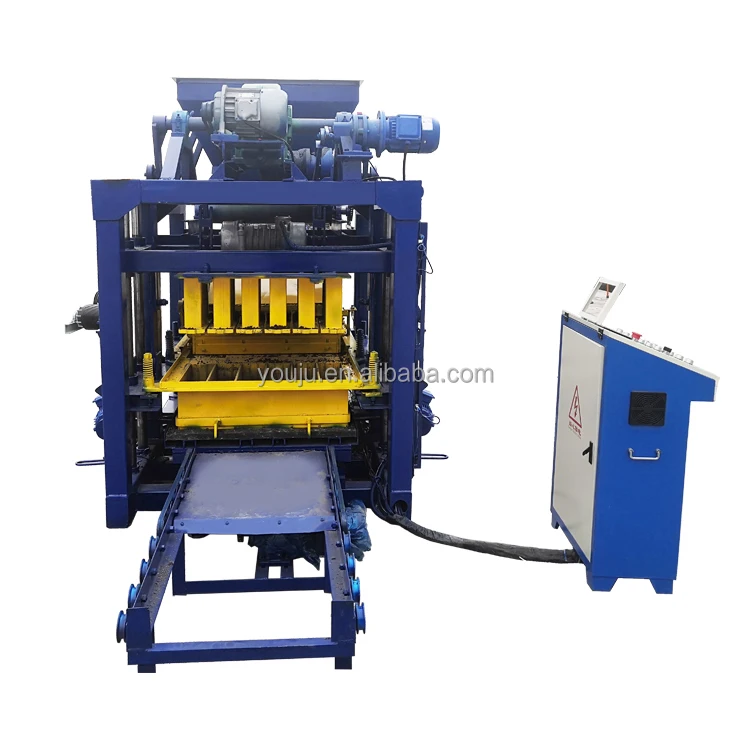
System-Matched Vibration — The QTJ4-25 automatic block making machine PLC controlled configuration tunes its 60 kN platform vibration to your local aggregate density rather than relying on catalogue defaults, ensuring each block reaches the compressive strength your market demands.
Technical Specifications
| Parameter | Value |
|---|---|
| Model | QTJ4-25 |
| Product Type | Automatic Concrete Block Making Machine |
| Overall Dimensions (L×W×H) | 3000×1800×2680 mm |
| Total Mass | 3.5 T |
| Total Installed Power | 16.58 kW |
| Main Vibration Form | Platform Vibration |
| Vibration Force | 60 kN |
| Vibration Frequency | 2800–4500 r/min |
| Molding Cycle | 25 s |
| Pallet Size | 850×480 mm |
| Demolding Method | Mechanical |
| Guide Column Design | Four columns, overlong guide with chrome-plated surface |
| Steel Material | National standard manganese steel |
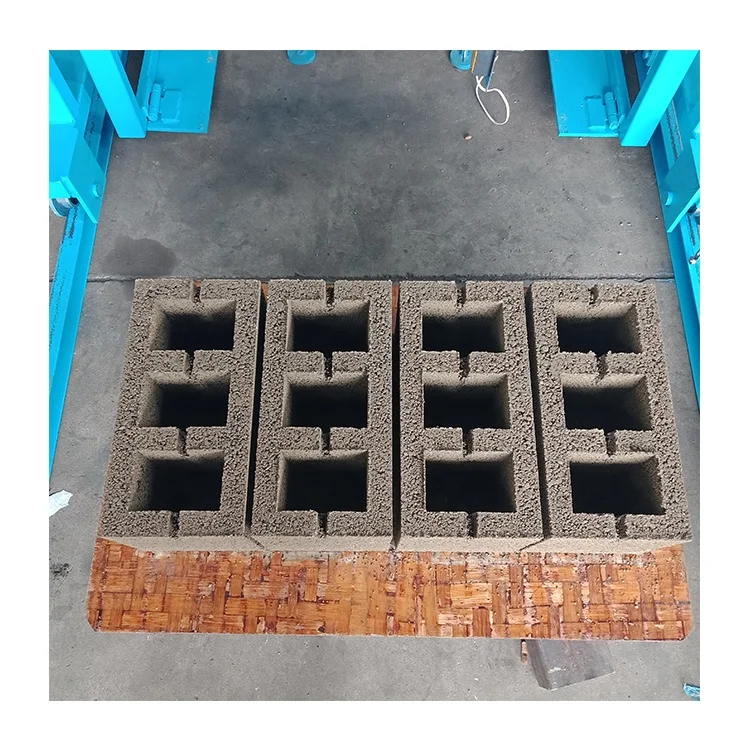
| Output: 400×200×200 mm Hollow Block | 4 pcs/mould, 580 pcs/hour, 4640 pcs/day (8 hours) |
| Output: 240×115×90 mm Multicellular Brick | 9 pcs/mould, 1400 pcs/hour, 11200 pcs/day (8 hours) |
| Output: 240×115×53 mm Solid Brick | 21 pcs/mould, 3300 pcs/hour, 26400 pcs/day (8 hours) |
| Applied Products | Hollow/solid blocks, pavers, interlocking blocks, curbstone, colored pavers |
| Raw Materials | Crushed stone, sand, cement, fly ash, gravel, slag, dust |
| Factory Area Required | 300 m² |
| Voltage & Frequency | Configurable to buyer’s site standard (basis to be confirmed) |
| Control System | PLC or relay logic available (basis to be confirmed) |
| Automation Level | Semi-automatic with PLC upgrade path |
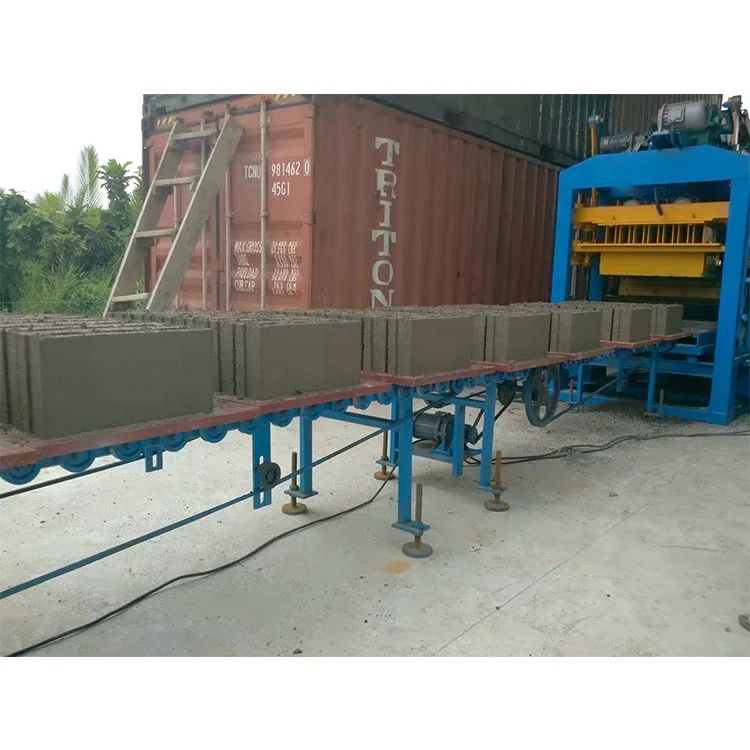
| Stacking Method | Manual (automatic stacking available as line addition) |
| Warranty | 1 year for whole machine, excluding spare parts |
Application Suitability
| Application Scenario | Typical Material Profile |
|---|---|
| Small to medium hollow block plant | Crushed stone and river sand with cement binder |
| Solid brick production for masonry contractors | Fly ash blended with local gravel and cement |
| Paver and interlocking block manufacturing | Fine sand, stone dust, and pigment for colored pavers |
| On-site block production for housing projects | Locally sourced aggregate with slag or quarry dust |
| Kerbstone and curb production for municipal work | Coarse gravel mix with high cement content |
Why "Cycles Per Hour" Misleads Buyers Evaluating an Automatic Block Making Machine PLC Controlled Setup
Every output figure here is tied to a specific block format, not a single generic cycle claim.
I once spent two extra weeks in Colombia commissioning a machine of this class because the buyer had ordered based on a headline capacity number that assumed solid bricks, while his market only bought hollow blocks. The actual daily throughput for hollow blocks was less than half the quoted figure. That gap between catalogue promise and production reality is the most common reason block plant owners feel misled after installation. The QTJ4-25 runs a 25-second molding cycle, but what that cycle produces depends entirely on the mould loaded — 4 hollow blocks per cycle versus 21 solid bricks per cycle are fundamentally different businesses. [NEED_CITE: common causes of block plant output shortfalls in export markets]
Control Logic That Grows With Your Plant
The QTJ4-25 ships as a semi-automatic press with mechanical demolding, giving new plant operators a straightforward start. When daily output targets increase or labour costs shift, the same machine frame accepts a PLC-controlled batching and pallet feeding upgrade without replacing the main press. This modular approach means you invest in automation only when your production volume justifies the additional stations. The automatic block making machine PLC controlled upgrade path covers batching accuracy, pallet feeding timing, and stacking synchronization — each stage added independently as the plant matures.
Pallet Handling Defines the Real Bottleneck
A press that completes a cycle every 25 seconds is only as fast as the pallet system feeding it. On the base QTJ4-25 configuration, pallets move manually between the press output and the curing area, which works for lower-volume formats but becomes a constraint on high-output runs like solid brick production. The 850×480 mm pallet size is the fixed parameter that determines your curing rack dimensions, forklift fork width, and stacking pattern. Confirming pallet material — timber, composite, or steel — against your local curing environment prevents warping or breakage that disrupts the cycle rhythm. [NEED_CITE: pallet material selection and curing environment compatibility]
How Vibration Force and Frequency Shape Block Density
The 60 kN vibration force and the 2800–4500 r/min adjustable frequency work together with hydraulic pressure to compact the mix into a dense, consistent block. Lower frequencies suit coarse aggregate like crushed stone, allowing larger particles to settle before the mix locks. Higher frequencies are necessary for fine materials like fly ash or stone dust, where rapid vibration is needed to eliminate air pockets. The four-column overlong guide design with chrome-plated manganese steel columns keeps the mould aligned through thousands of vibration cycles, preventing the uneven compaction that causes weak corners. If your local sand has high clay content, as I encountered on a commissioning job in South America, the vibration parameters must be retuned on-site — a factory default setting will produce blocks that crumble before reaching curing. The automatic block making machine PLC controlled configuration stores multiple vibration profiles so operators switch settings when the raw material batch changes.
The Hidden Cost of Unconfirmed Electrical Standards
Arriving at a job site to find the local grid runs 60 Hz when the machine was wired for 50 Hz turns a commissioning visit into an extended troubleshooting exercise. Voltage and frequency must be confirmed against the buyer’s actual supply before the control panel is assembled, not after the container is loaded. The same applies to the PLC display language — an operator who cannot read the error codes on the HMI screen will revert to manual workarounds that bypass the safety interlocks. Every automatic block making machine PLC controlled panel we ship carries a voltage and language confirmation sheet signed by the buyer before production begins. [NEED_CITE: electrical standard mismatches in exported industrial machinery]
Why Procurement Focuses on the System, Not Just the Press
The QTJ4-25 is specified as part of a matched system where the mould, pallet, vibration settings, and handling equipment are selected together against the buyer’s actual block format and mix design. Capacity calculations state the output per block format rather than a single generic number, so buyers know exactly what to expect for the products they sell. Mould design covers the formats the buyer’s market demands, including custom drawings when standard moulds do not match local block dimensions. The automation level starts at semi-automatic and scales to fully automatic stacking and cubing, so capital investment aligns with production growth. Factory testing runs the buyer’s specified mix through the actual production cycle, generating a test record that confirms block strength before the machine ships.
Documentation & Verification
- Line layout showing capacity calculation per block format with pallet flow path
- Machine specification sheet confirming voltage, frequency, and PLC display language
- Mould drawing and format list matching buyer’s local block dimensions
- Factory test record using buyer’s aggregate sample and mix proportions
- Hydraulic and electrical schematic with labeled component references
- Operation and maintenance manual in buyer’s preferred language
Installation, Commissioning & Support
- 300 m² factory area with level concrete slab to support the 3.5 T machine mass
- Dedicated power circuit matching confirmed voltage and frequency at 16.58 kW total draw
- Mechanical demolding system calibrated on-site during first production run
- PLC commissioning includes loading vibration profiles matched to buyer’s aggregate sample
- Operator training covers mould change procedure and pallet handling workflow
- Wear parts list identifies chrome-plated guide columns and vibration motor service intervals
Preparing a Technical Inquiry
To move from general interest to a firm configuration, share the block formats your market sells along with the daily volume target for each format. Provide a sample or lab analysis of your local aggregate — sand type, clay content, and available admixtures — so vibration parameters can be preset before dispatch. Confirm your site voltage, frequency, and the preferred PLC display language to prevent any electrical mismatch during commissioning.
Frequently Asked Questions
Q: How is the daily output calculated for each block format?
A: Each output figure is based on the 25-second molding cycle multiplied across an 8-hour shift, accounting for the number of cavities per mould. The 4640 hollow blocks per day assumes the 400×200×200 mm format with 4 cavities per cycle. Output changes when you switch to a different block format because cavity count and handling time vary.
Q: What automation level does the QTJ4-25 ship with, and how is it upgraded?
A: The base configuration runs semi-automatic with mechanical demolding and manual pallet handling. The upgrade path adds PLC-controlled batching, automatic pallet feeding, and stacking stations independently. Each addition integrates with the existing press frame, so you expand automation as production volume grows rather than replacing the entire line.
Q: How are vibration settings matched to local raw materials?
A: The platform vibration system adjusts frequency between 2800 and 4500 r/min to suit different aggregate profiles. Coarse crushed stone requires lower frequency for proper compaction, while fine fly ash or stone dust needs higher frequency. Settings are confirmed during factory testing with the buyer’s actual material sample before the machine ships.
Q: What electrical specifications are confirmed before production begins?
A: Voltage, frequency, and PLC display language are confirmed in writing before the control panel is assembled. This prevents commissioning delays caused by grid mismatches at the buyer’s site. The confirmation sheet covers both the power supply specifications and the operator interface language preference.
Q: How long does a mould change take on this machine?
A: Mould change time depends on the specific mould size and the operator’s familiarity with the procedure. The four-column guide design keeps alignment consistent during changeovers. Detailed changeover procedures are covered during on-site operator training so the team can switch formats within a practical timeframe for their production schedule.