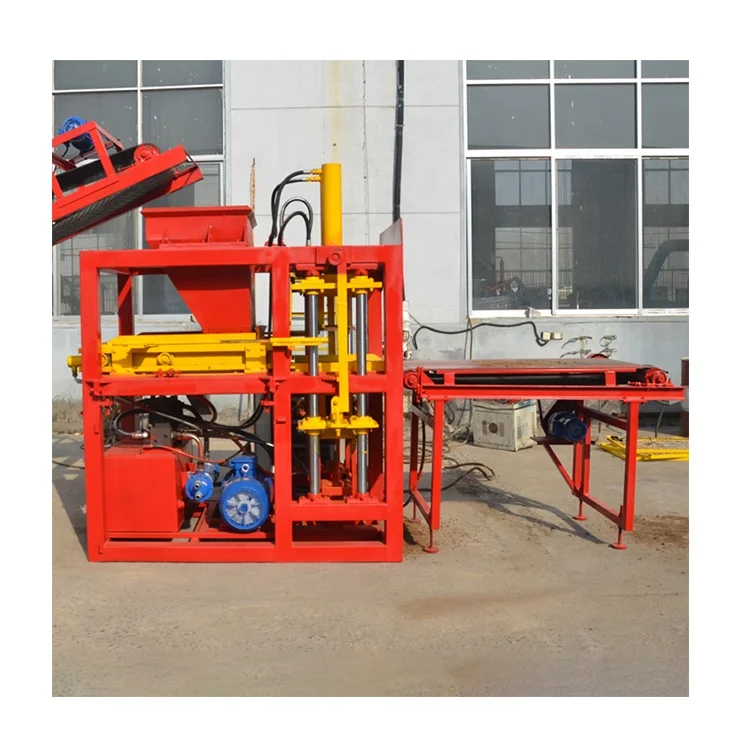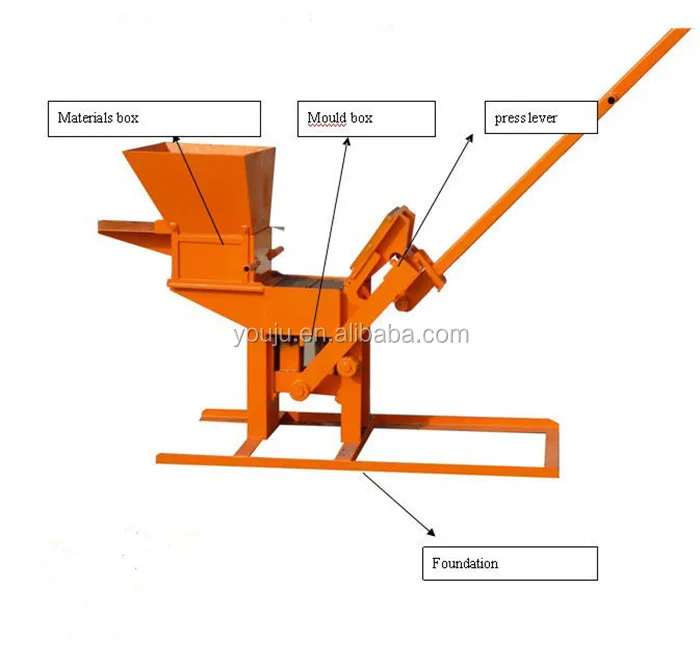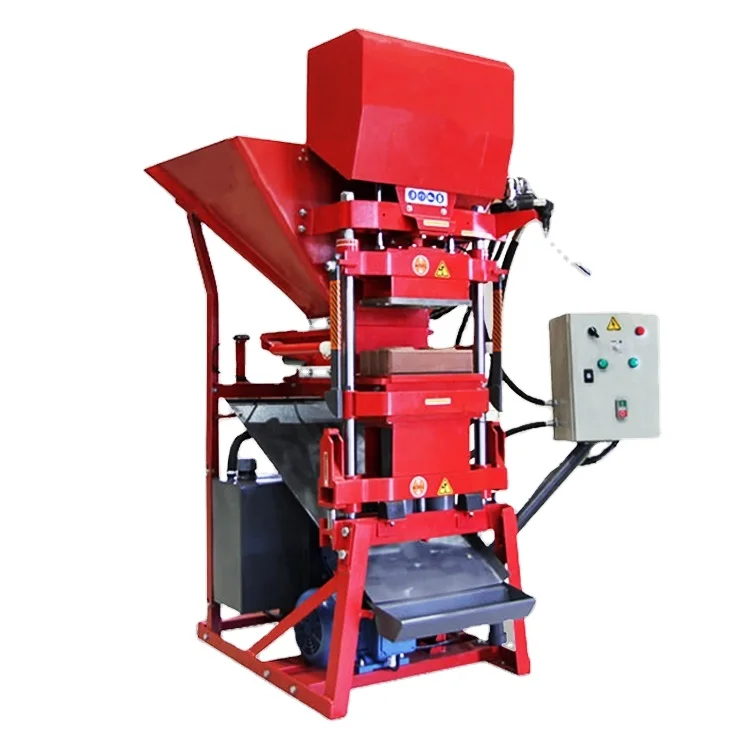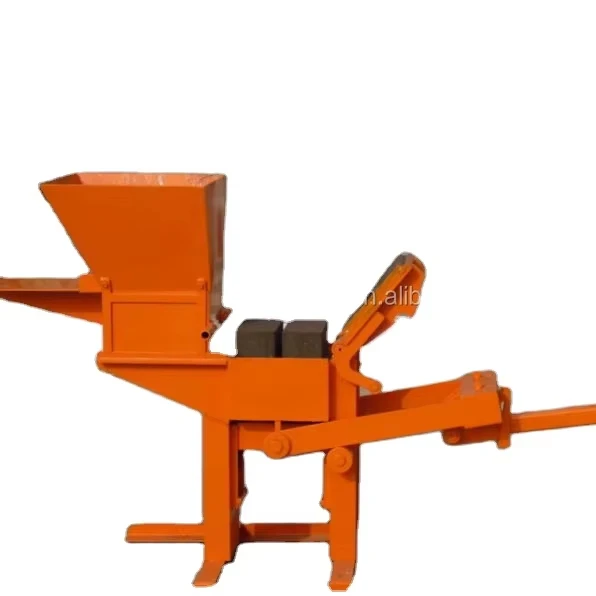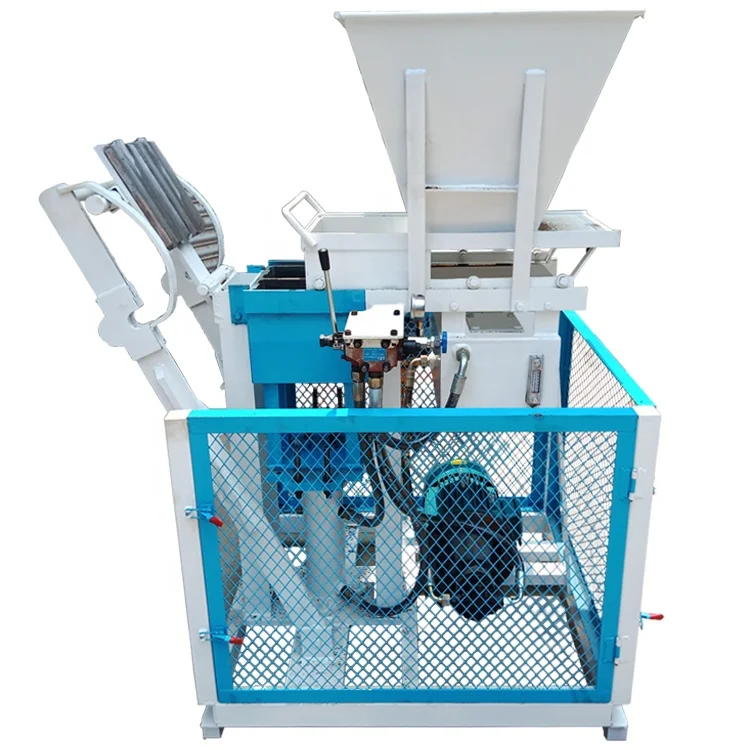
Description
Matched System Design — the ECO BRB is configured as a complete unit of press, mould and control logic rather than a standalone catalogue machine, so every control parameter reflects your actual clay mix and target interlocking format.
Technical Specifications
| Parameter | Value |
|---|---|
| Model | ECO BRB |
| Product Type | Clay Interlocking Block Making Machine |
| Overall Dimensions (L×W×H) | 1490 × 980 × 1970 mm |
| Pressure Type | Hydraulic |
| Pallet Requirement | No pallet needed (egg-laying design) |
| Molding Cycle | 15–20 s |
| Total Power | 4.5 kW |
| Net Weight | 850 kg |
| Daily Capacity | about 3800 pcs/shift (basis not stated in source — confirm block format / material / thickness) |
| Raw Material | Cement or clay |
| Control System | Configurable: manual operation or PLC-controlled batching and stacking |
| Voltage & Frequency | Configurable to buyer’s local standard (to be confirmed before production) |
| Mould Format Options | Interlocking brick, paving brick, solid brick |
| Automation Level | Manual / semi-automatic, upgradable to PLC-controlled line |
| Stacking Method | Manual (no-pallet, egg-laying type) |
| Warranty | 1 year (excluding spare parts) |
Application Suitability
| Application | Material or Output |
|---|---|
| On-site interlocking brick production for housing projects | Local clay blended with cement, no pallet handling required |
| Small-plant paver and solid brick manufacturing | Crushed stone, sand and cement mixes for paving formats |
| Entrepreneur-led first brick plant with future scaling | Clay or cement interlocking bricks, upgradable to PLC batching |
| Contractor producing bricks at remote construction sites | Low-power hydraulic pressing on locally sourced clay |
Why "Cycle Time" Means Nothing Without Your Mix Design
The molding cycle is only valid when hydraulic pressure and vibration are tuned to your specific clay plasticity and cement ratio.
An automatic clay interlocking block machine running a 15–20 second cycle on standard test soil can produce flawless bricks in the factory — and then crack three out of every ten when it meets the high-plasticity red clay at your actual site. I have watched an entire commissioning week disappear in East Africa because the control parameters were set for a generic mix, not the laterite the contractor was actually digging [NEED_CITE: soil plasticity index and brick cracking correlation]. The ECO BRB avoids this by locking in your local material profile before the PLC parameters are finalized, not after the machine arrives and the first batch splits open.
Control Logic That Follows the Material, Not the Catalogue
The PLC-controlled interlocking brick machine option moves beyond simple on-off sequencing. When batching is tied to the control system, the dosing accuracy for clay and cement adjusts to the moisture content of the raw material feed, which fluctuates between morning and afternoon in open-air stockpiles. This is where an automatic clay interlocking block machine either earns its name or becomes an expensive manual press with a screen attached.
From Manual Egg-Laying to Stacked and Cubed Output
The ECO BRB starts as a no-pallet, egg-laying press — bricks are formed directly on the ground and left to cure in place. That removes the entire pallet investment and curing-rack handling system at entry level, which matters when capital is tight and the curing yard is uneven earth. The upgrade path introduces automatic pallet feeding, stacking and cubing without replacing the press itself, so a buyer can begin with manual handling and add automation stations as daily volume justifies the labour cost [NEED_CITE: automation upgrade path in block production lines].
Reading the Specs That Actually Shape Your Output
The 4.5 kW total power footprint is deliberately modest — it means the ECO BRB can run on sites where electrical infrastructure is limited to a small diesel generator set, common in rural housing projects. The hydraulic pressure system is the primary forming force here; unlike pure vibration machines, the hydraulic ram compresses the clay-cement mix into the mould cavity under sustained pressure, which produces denser interlocking profiles with sharper tongue-and-groove edges. The 850 kg net weight keeps the machine within the range of a standard site forklift or even a block-and-tackle lift, so relocation between project phases does not require a crane. Mould format covers interlocking brick, paving brick and solid brick — but the cycle time and achievable density differ across formats, so capacity planning must state which mould is assumed [NEED_CITE: hydraulic pressure and vibration force matching for block density].
What Happens When Control Parameters Are an Afterthought
When voltage, frequency and PLC display language are not confirmed before production, the machine arrives and sits unpowered while transformers are sourced and the operator squints at a screen in a language they cannot read. When the mould profile does not match the interlocking geometry that local builders actually use, the buyer pays for format flexibility that never gets used. And when hydraulic pressure is left at a factory default instead of being matched to the buyer’s clay plasticity, the bricks pass a visual inspection but fail a drop test on site [NEED_CITE: block compressive strength testing standards for interlocking formats].
Why the System Matters More Than the Press
Shiyue Intelligent Machinery treats the ECO BRB as a matched system — press, mould, control logic and future automation stations are specified together against your actual mix design and target brick format, not pulled from separate catalogue pages. The mould design extends to custom interlocking profiles drawn to your specifications, so the geometry matches what your market sells. Automation level is selectable at order and upgradable later, meaning a semi-automatic start does not lock you into manual handling permanently. Installation support includes on-site commissioning with operator training, and the control language is confirmed in writing before the PLC is programmed. Every machine ships with a factory test record run on a material profile agreed with the buyer, not a generic demonstration.
Documentation & Verification
- Line layout showing ECO BRB placement, curing area and future automation station positions
- Capacity calculation stating the exact interlocking brick format and clay-cement ratio assumed
- Hydraulic and electrical schematic with PLC parameter list and I/O mapping
- Mould drawing and format list matched to your market, with custom profile options noted
- Voltage, frequency and control screen language confirmation signed before production
- Factory test record on agreed material profile with cycle time and brick density logged
Installation, Commissioning & Support
- Foundation: level concrete pad sized to 1490 × 980 mm footprint with anchor bolt provisions
- Power: dedicated circuit matching confirmed voltage and frequency, rated above 4.5 kW continuous draw
- Assembly: machine ships as a single unit; hydraulic lines and control cabling connected on site
- First run: hydraulic pressure and molding cycle tuned to your local clay sample before full production
- Training: operator instruction covering PLC navigation, mould change procedure and daily maintenance checkpoints
- Spares: hydraulic seals and mould wear parts list supplied with recommended replacement intervals
What to Include in Your Inquiry
To configure the ECO BRB correctly, share the interlocking brick format your market demands, the source and plasticity of your local clay, and the cement ratio you plan to run. Specify your site voltage and frequency, the preferred PLC display language, and whether you intend to start with manual egg-laying operation or include batching and stacking automation from day one. If you have an existing curing area or plan to add automatic stacking later, note the available floor space so the line layout accounts for future stations.
Frequently Asked Questions
Q: How is the daily output of the ECO BRB verified, and which interlocking brick format is it based on?
A: The quoted figure of about 3800 pieces per shift is published without a stated block format, material mix or thickness assumption. Before quotation, we run a capacity calculation that names the exact interlocking profile, clay-cement ratio and molding cycle used, so the output figure reflects your actual product rather than a catalogue best-case scenario.
Q: What automation level comes standard, and how do I add PLC-controlled batching later?
A: The ECO BRB ships as a manual or semi-automatic egg-laying press by default, forming bricks directly on the ground without pallets. The upgrade to PLC-controlled batching and stacking uses the same press with added feeding, dosing and handling stations, so you can scale automation as your daily volume grows without replacing the core machine.
Q: How are voltage, frequency and PLC screen language confirmed for my country?
A: These three parameters are confirmed in writing and signed off before production begins — not assumed from a default list. The PLC is programmed in the agreed language, and the electrical system is built to your local voltage and frequency standard so the machine powers up on arrival without additional transformers or rewiring.
Q: How is hydraulic pressure tuned to my local clay to guarantee brick strength?
A: Before the machine is finalized, we review your local clay sample data — plasticity, moisture range and particle size — alongside your target cement ratio. Hydraulic pressure and molding cycle are then set to match that profile, and a factory test record on the agreed mix is included in the documentation so you can verify density and strength before shipment.
Q: Which mould formats are included, and can I order custom interlocking profiles?
A: Standard mould options cover interlocking brick, paving brick and solid brick. Custom interlocking profiles can be designed from your drawings, so the tongue-and-groove geometry matches the laying method your local builders use. Each mould ships with a format drawing and change procedure so switching between profiles stays within a practical timeframe on site.