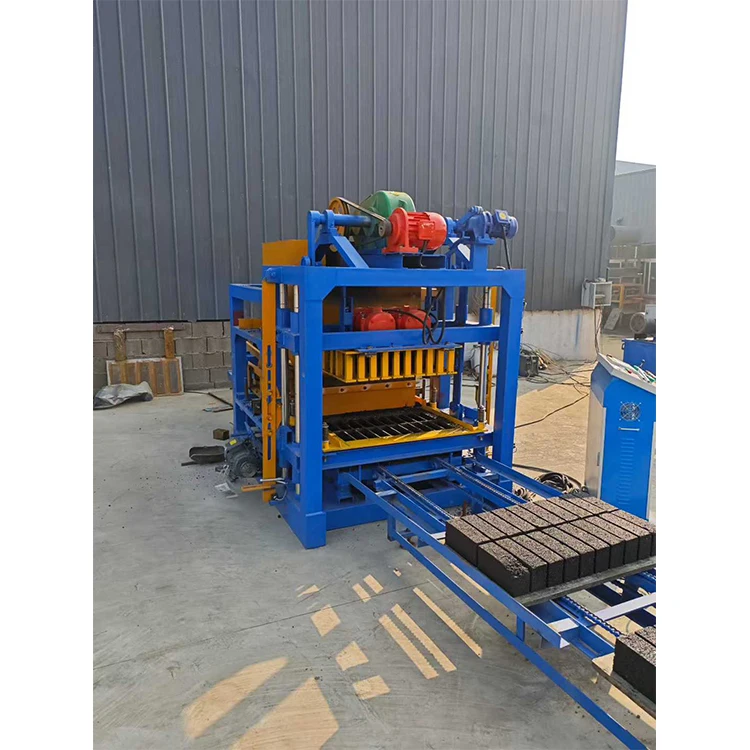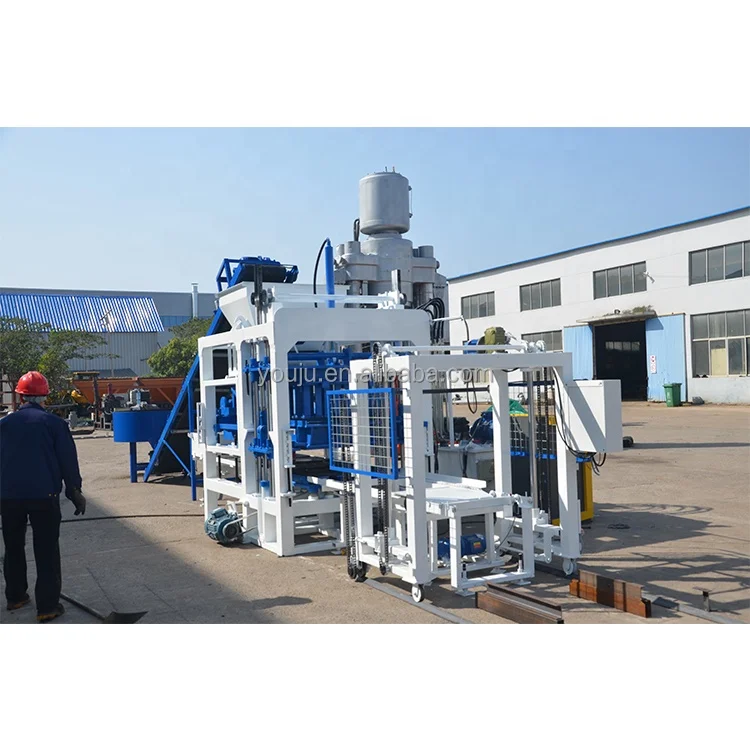
Description
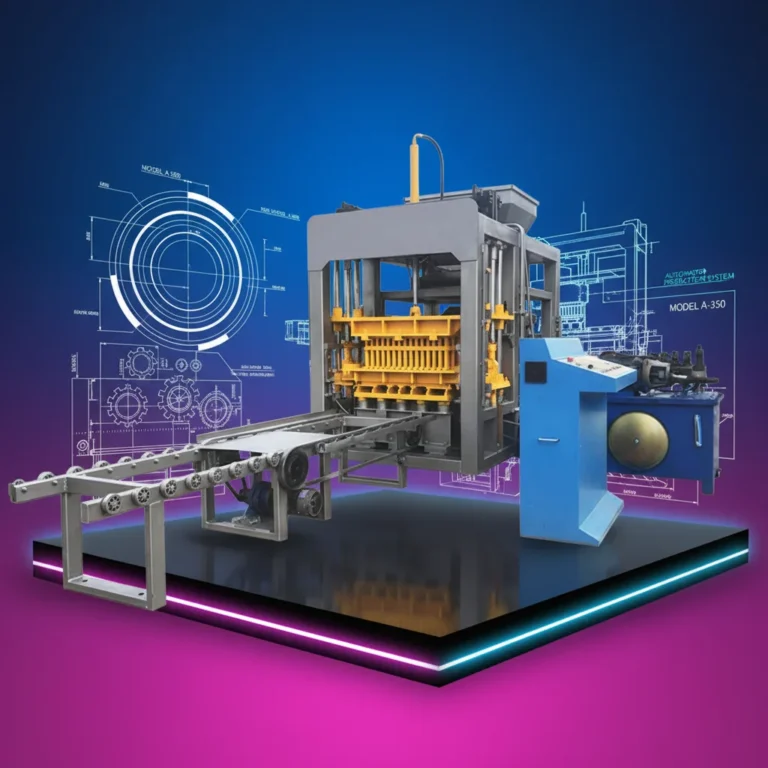
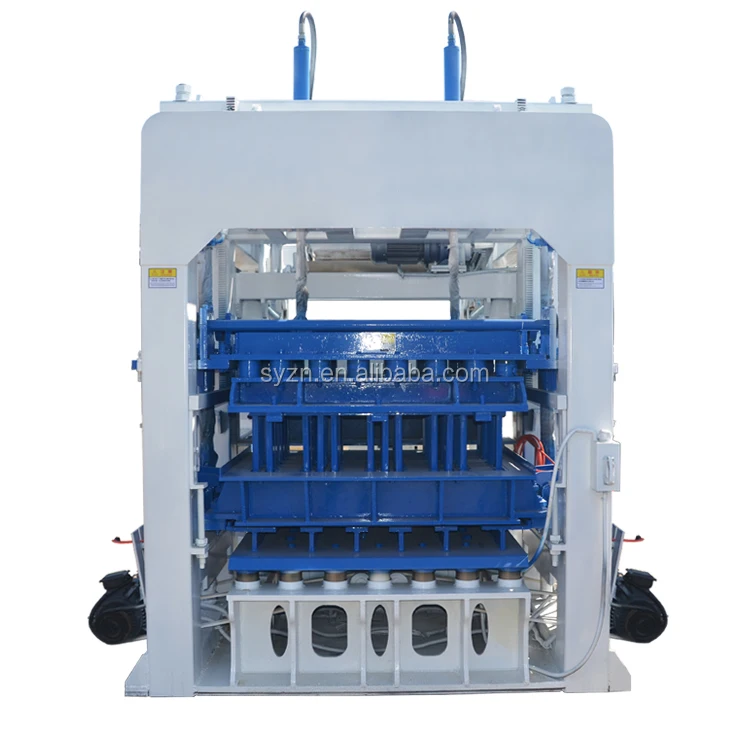
Consistent Batch Control — The QT4-18 automatic concrete block machine PLC controlled system with frequency converter locks vibration and pressure parameters per cycle, removing shift-to-shift variation common in manually operated lines.
Technical Specifications
| Parameter | Value |
|---|---|
| Model | QT4-18 |
| Product Type | Automatic Concrete Hollow Block Making Machine |
| Overall Dimensions (L×W×H) | 2500×1750×2200mm |
| Rated Pressure | 16MPa |
| Vibration Form | Platform Vibration |
| Pallet Size | 950×550mm |
| Molding Cycle | 18-25s (basis not stated in source — confirm block format / material / thickness) |
| Overall Power | 27.5kW |
| Control System | PLC with frequency converter |
| Automation Level | Automatic (one-person operation via PLC) |
| Electrical Components | Schneider brand |
| Pallet Loader Actuation | Hydro-cylinder |
| Mold Lifting Mechanism | Double-sided sync gears |
| Material Feeding | Hopper, feeding box, feeding platform, conveyor system |
| Distribution Belt Hopper | Included |
| Standards | CE (applicable; confirm per order) |
Application Suitability
| Application | Material or Output |
|---|---|
| Hollow block production for masonry walls | Cement, crushed stone, sand, and lightweight aggregates |
| Solid block manufacturing for load-bearing structures | Standard concrete mixes with local coarse aggregate |
| Paving and interlocking format runs (mould change required) | Finer aggregate blends with adjusted moisture content |
| On-site production for housing or development projects | Regionally sourced sand and gravel within cement ratio limits |
Why "Cycle Time" Means Nothing Without the Block Format
The QT4-18 automatic concrete block machine PLC controlled cycle must be validated against the exact block format you intend to produce daily.
I have watched buyers celebrate a quoted "18-second cycle" only to discover on commissioning day that the figure applied to a thin paving stone, not the 200mm hollow block their market actually buys. The reality was closer to 25 seconds per cycle, and with mould vibration tuned for a denser mix, daily output dropped noticeably below the original projection. Capacity calculations that omit the block format, mix moisture, and target strength leave the buyer carrying all the risk. [NEED_CITE: block format effect on cycle time and daily output]
What PLC Control Actually Removes from the Operator
On a semi-automatic line, the operator judges when to feed, when to vibrate, and when to eject — and that judgement drifts as the shift wears on. The QT4-18’s PLC with frequency converter takes over timing and motor speed, so every pallet receives the same vibration profile regardless of operator fatigue. One person monitors the console while the hydro-cylinder pallet loader handles feed and ejection automatically.
Where Batch Consistency Breaks Without Frequency Conversion
Vibration motors running at fixed speed cannot adapt when the mix moisture shifts between morning and afternoon batches. The frequency converter on the QT4-18 adjusts motor speed in response to PLC-programmed parameters, keeping compaction force steady across the entire production run. In my experience across sites in West Africa and South Asia, this is the single biggest factor separating consistent block strength from the complaints that bring buyers back to the supplier. [NEED_CITE: vibration consistency and compressive strength correlation]
Reading the Specs That Determine Your Real Output
The 16MPa rated pressure and platform vibration must be evaluated together: pressure compacts the mix while vibration settles aggregate into voids, and neither alone produces a dense block. The 950×550mm pallet size dictates how many blocks form per cycle and must align with your curing rack dimensions and forklift capacity — a mismatch means pallets pile on the floor instead of racking. The 27.5kW overall power draw requires a dedicated circuit with correct voltage and frequency; arriving at a site with a 50Hz supply for a 60Hz motor means the press underperforms from day one. The double-sided sync gear mould lifting mechanism keeps the mould box level during demoulding, reducing edge chipping that would otherwise increase reject rates.
The Hidden Cost of Skipping Configuration Checks
Arriving on site to find the PLC display in a language the operator cannot read means the first production day is spent navigating menus by trial and error. I once spent two full days remotely reconfiguring a panel because the display language and voltage were never confirmed before the machine left the factory. When pallet size is selected without checking the buyer’s existing curing area, blocks end up stacked by hand — the very labour the automation was meant to eliminate. [NEED_CITE: commissioning delays from unconfirmed PLC language and voltage]
Why Sourcing This Machine Through a Line-Focused Supplier Matters
Block machinery is our single focus, so the QT4-18 is specified as a matched system — press, mould, pallet, and handling — rather than assembled from unrelated quotations. We set the configuration against your actual mix design and local aggregate, not a catalogue default. Mould design covers the formats your market sells, with custom drawings available for non-standard sizes. Automation level is selectable, so you can start with PLC-controlled single-operator mode and add automatic stacking or cubing as volume grows. Installation support includes operator training at your site, and mould plus hydraulic wear parts are listed and available from first replacement onward.
Documentation & Verification
- Line layout and capacity calculation stating the exact block format assumed for the QT4-18
- Machine specification sheet with confirmed voltage, frequency, and PLC display language
- Mould drawing and format list covering hollow, solid, and custom profiles
- Hydraulic and electrical schematic for on-site troubleshooting
- Factory test record on your target block format before dispatch
- CE declaration and packing photographs for customs and insurance
Installation, Commissioning & Support
- Foundation pad sized to the 2500×1750mm footprint with anchor bolt template provided
- Dedicated 27.5kW circuit with voltage and frequency confirmed before the QT4-18 ships
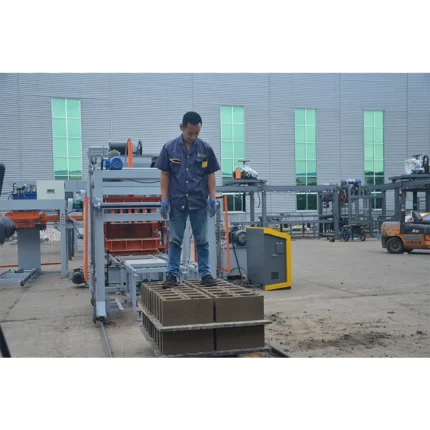
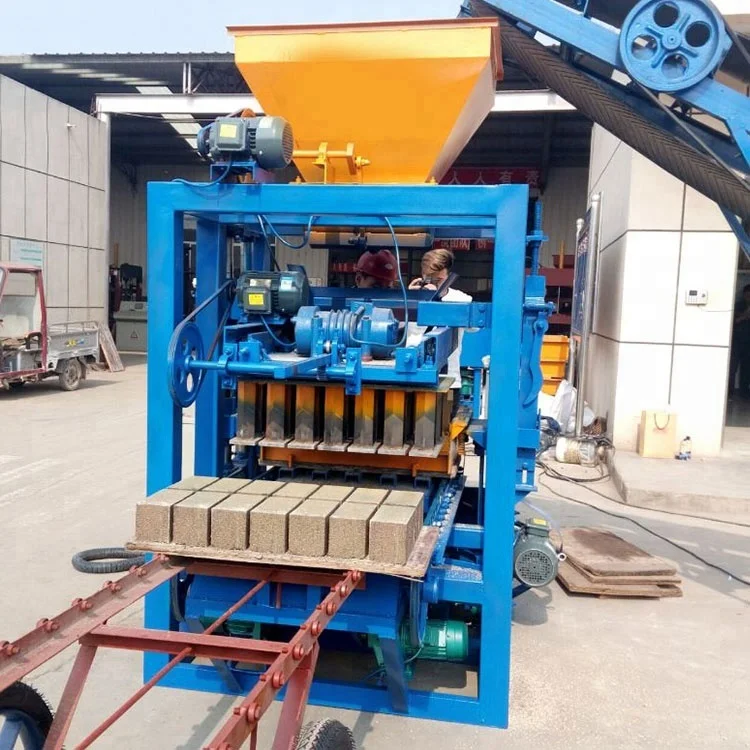
- Machine arrives composed of mixer, pallet conveyor, press, hydraulic station, and PLC console for site assembly
- First-run parameter tuning: vibration duration, pressure hold, and feeding speed set to your mix
- Operator training on PLC menu navigation, mould change procedure, and daily lubrication points
- Wear parts and mould list supplied with recommended reorder intervals
What We Need from You to Quote Accurately
Send the exact block format and dimensions your market demands, the target daily output, and the local aggregate and cement types available. Confirm the site voltage, frequency, and preferred PLC display language so the QT4-18 automatic concrete block machine PLC controlled panel is configured before production begins. If you already operate curing racks or forklifts, share their specifications so the 950×550mm pallet size is validated against your existing setup.
Frequently Asked Questions
Q: How is the QT4-18’s output capacity calculated and for which block format?
A: Output capacity depends on the block format, mix design, and target compaction level. The 18-25 second molding cycle is a range that shifts depending on whether you are pressing a thin paver or a deep hollow block. We provide a capacity calculation tied to your specific block dimensions and daily operating hours, not a single catalogue number.
Q: Can the PLC display language and voltage be configured before shipment?
A: Yes. We confirm both the PLC display language and the electrical supply — voltage and frequency — before the QT4-18 enters production. This avoids the commissioning delays I have seen on site when panels arrive in a language the local team cannot read or motors wired for the wrong frequency standard.
Q: What is the mould change procedure and how long does a format switch take?
A: The double-sided sync gear system keeps the mould box aligned during lifting. The operator loosens the clamps, lifts the current mould with the hoist, positions the new one, and re-locks. Exact changeover time depends on operator familiarity and whether the new mould is pre-staged beside the press.
Q: What tasks does the PLC remove compared to semi-automatic operation?
A: The PLC automates pallet feeding via the hydro-cylinder loader, controls vibration duration and frequency converter speed, and manages the molding cycle timing. The operator monitors the console rather than manually triggering each step, which reduces labour and improves batch-to-batch consistency across long shifts.
Q: What upgrade path exists from this model to fully automatic stacking and cubing?
A: The QT4-18 supports integration with an automatic stacker for layer-by-layer block removal and a block gripper for dry product handling. Buyers often start with PLC-controlled pressing and manual stacking, then add the stacking and cubing modules as daily volume justifies the investment.