
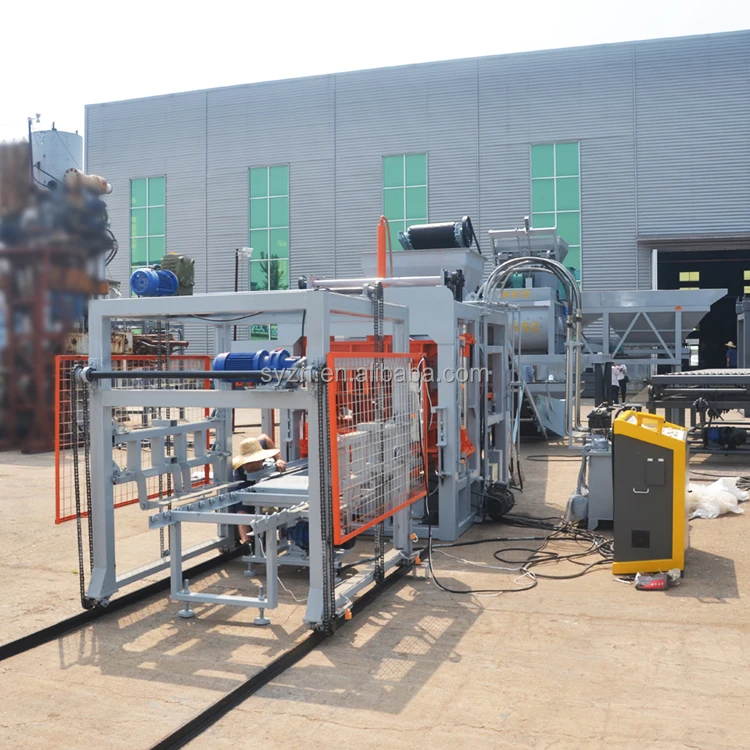


Description
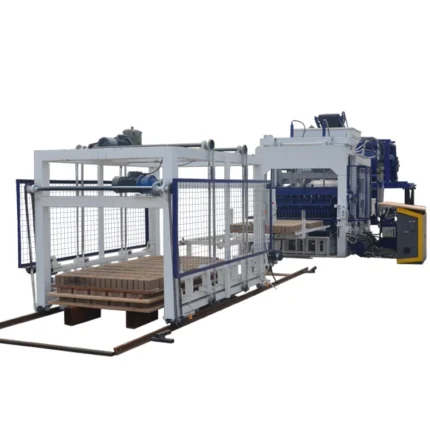
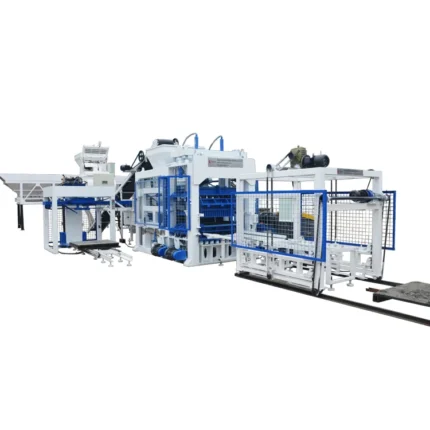
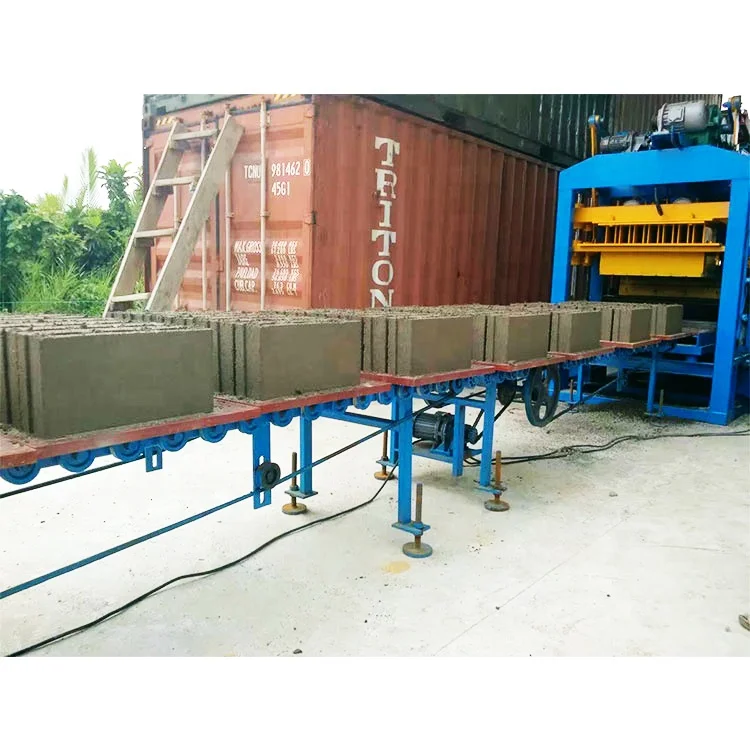
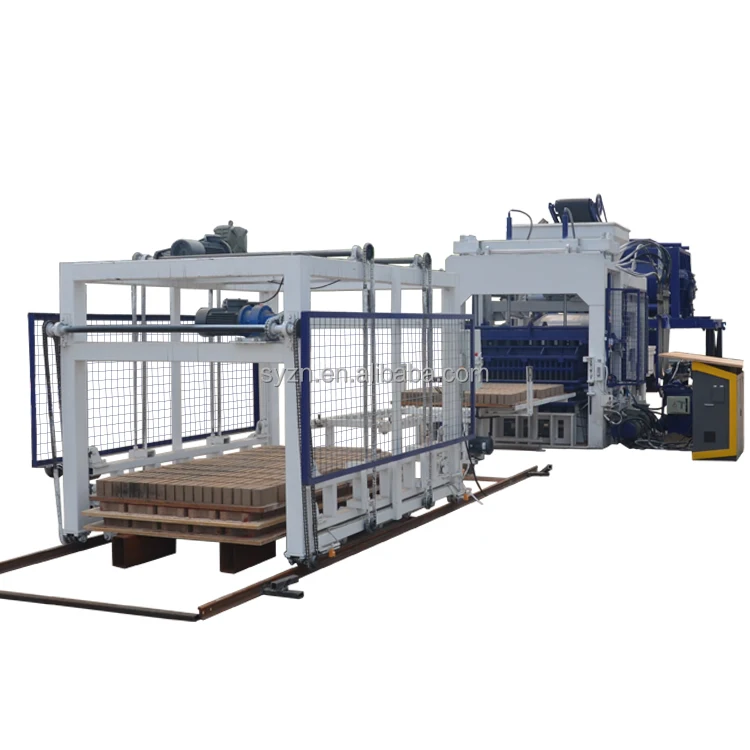
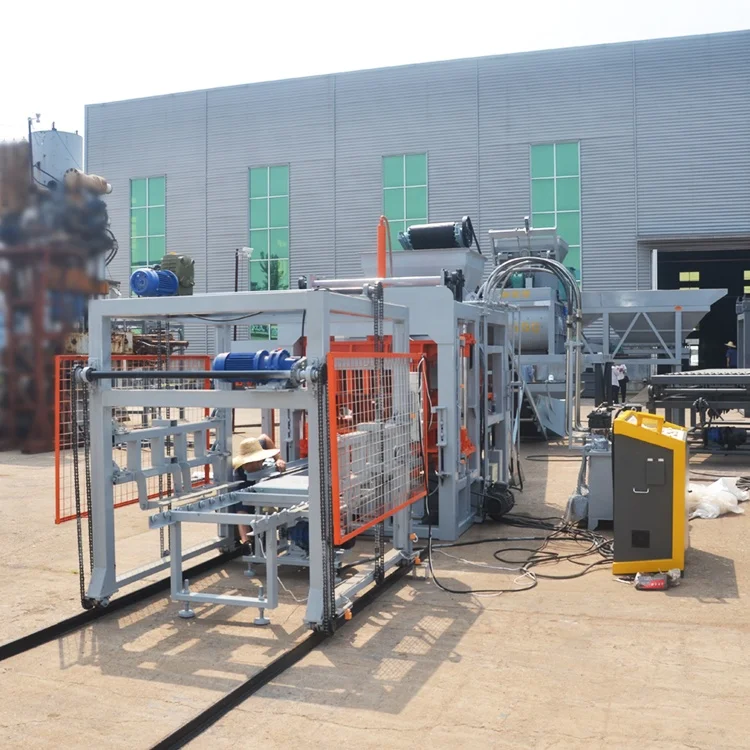
Automation-First Configuration — Every control point on the QT6-15 is specified against your actual curing layout and existing forklift reach, so the line runs as one system from press to stack.
Technical Specifications
| Parameter | Value |
|---|---|
| Model | QT6-15 |
| Product Type | Hollow Block Making Machine |
| Overall Dimension | 8200 × 1700 × 2950 mm |
| Total Mass | 7 T |
| Overall Power | 37 kW |
| Vibration Form | Platform Vibration |
| Vibration Frequency | 0–60 Hz (adjustable) |
| Vibration Force | 45 kN |
| Moulding Mode | Automatic loading, vibration moulding |
| Demolding Method | Hydraulic |
| Molding Cycle | 15–20 s (hollow block); 20–25 s (paving formats) |
| Pallet Size | 880 × 850 mm |
| Control System | PLC (Programmable Controller) with touch screen |
| Hydraulic System | Independent integrated hydraulic station |
| Block Compressive Strength | > 15 MPa |
| Factory Area (recommended) | 1200 m² |
| Output — 400×200×200 mm hollow block | 1080–1440 pcs/h, 8640–11520 pcs/8 hr (6 pcs/mould, 15–20 s cycle) |
| Output — 400×150×200 mm hollow block | 1440–1920 pcs/h, 11520–15360 pcs/8 hr (8 pcs/mould, 15–20 s cycle) |
| Output — 240×115×53 mm solid brick | 5760–7680 pcs/h, 46080–61440 pcs/8 hr (32 pcs/mould, 15–20 s cycle) |
| Output — 200×100×60 mm rectangular paver | 2160–2880 pcs/h, 17280–23040 pcs/8 hr (21 pcs/mould, 20–25 s cycle) |
| Output — 225×112.5×60 mm zigzag paver | 2160–2880 pcs/h, 17280–23040 pcs/8 hr (15 pcs/mould, 20–25 s cycle) |
| Warranty | 1 year for the whole machine (excluding spare parts) |
Application Suitability
| Application | Material or Output |
|---|---|
| Load-bearing hollow block plants | Crushed stone, cement, and graded sand producing 400×200×200 mm structural blocks |
| Multi-cellular brick production | Lightweight aggregate mixes for cavity wall formats requiring > 15 MPa strength |
| Paving brick manufacturing | Dense aggregate blends for 60 mm interlocking, rectangular, and zigzag pavers |
| Standard solid brick runs | Fly ash or slag blended with cement for 240×115×53 mm masonry units |
| Waste material utilization | Reduced-cement recipes incorporating industrial ash, slag, or recycled concrete aggregate |
Why the Voltage Question Should Come Before the Price on an automatic QT6-15 block making machine
Confirming voltage, frequency, and PLC language before production starts prevents a machine that cannot be commissioned on arrival.
I watched a buyer in West Africa receive a block line wired for 380 V / 50 Hz while the local grid supplies 415 V / 60 Hz. The motor contactors tripped on the first test run, and the PLC touch screen displayed error codes in a language the local electricians could not read. Two weeks passed before replacement transformers and a re-flashed HMI arrived [NEED_CITE: voltage and frequency standards by export market]. That delay had nothing to do with the press itself — it was a paperwork gap that a three-line email before shipment would have avoided.
What the PLC Actually Removes from the Operator
Every block format — hollow, solid, paver — demands a different vibration frequency, pressure hold time, and feed cycle. On a manual or relay-controlled press, the operator dials these in by feel, and the third shift produces blocks that look nothing like the first shift. The PLC on the automatic QT6-15 block making machine stores a recipe for each mould, recalling the exact vibration profile and hydraulic sequence when the tooling is swapped, so the ten-thousandth block of the day matches the first.
Remote Diagnostics and Batch Traceability
Beyond recipe storage, the touch screen logs cycle counts, fault events, and hydraulic pressure traces for every shift. When a strength test comes back low, you can pull the production log for that pallet run and see whether a pressure dip or a short cycle caused the deviation. This traceability is what turns a block press into a process-controlled production station [NEED_CITE: CE machinery directive requirements for industrial equipment].
Reading the Specs That Actually Shape Your Daily Output
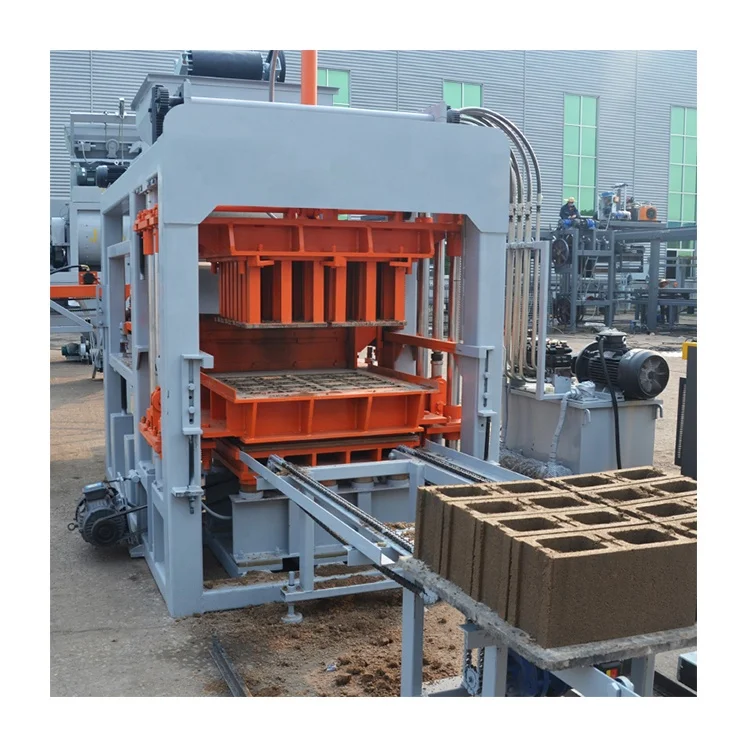
The 45 kN vibration force paired with an independent hydraulic station means the press can hold pressure while the platform vibrates at up to 60 Hz — a combination that determines whether your blocks leave the mould at 15 MPa or crack at the edges. The 880 × 850 mm pallet size must match the curing racks and forklift tine spacing you already have; a mismatch means hand-stacking every pallet before the concrete sets. Cycle times of 15–20 seconds for hollow blocks and 20–25 seconds for denser paving formats are the basis for every capacity figure in the table above — if your mix is slower to release, the PLC will extend the cycle automatically rather than strip a green block.
The Hidden Cost of Skipping the Automation Audit
A plant owner in Central America ordered a press with automatic pallet feeding but left stacking manual, assuming two workers could keep up. By mid-shift the stacking crew was three pallets behind, the press was pausing to wait, and actual output settled well below the quoted rate [NEED_CITE: common causes of block plant throughput shortfalls]. The PLC cannot compensate for a bottleneck it was never told about.
Why the Line Configuration Matters More Than the Press Alone
Block machinery is our single focus, so the QT6-15 is specified as part of a matched system — press, mould, pallet, and handling — not assembled from separate purchase orders. Configuration is set against your mix design and local aggregate, not a catalogue default. Mould design covers every format your market actually sells, and the automation level is selectable so you can start with PLC-controlled pressing and add automatic stacking later. Installation support includes operator training on recipe entry and fault diagnosis. Documentation arrives in your language, not as an afterthought.
Documentation & Verification
- Factory test record showing actual cycle times for your target block formats before dispatch
- PLC parameter sheet listing stored recipes and display language confirmed to your site
- Hydraulic and electrical schematic in English or your specified language
- Pallet specification matched to your existing curing rack dimensions
- Machine packing photographs and container loading plan for customs clearance
Installation, Commissioning & Support
- 1200 m² factory area requirement confirmed against your site plan before shipment
- 37 kW total power demand verified against local transformer capacity and dedicated circuit sizing
- PLC touch screen language and voltage setting validated during factory acceptance test
- Independent hydraulic station checked for pressure hold and response time across all block recipes
- Operator training covers recipe recall, mould change procedure, and daily vibration platform inspection
- Wear parts and mould list provided with reorder codes for first replacement cycle
What We Need Before Quoting
Share your target block formats, the local aggregate sieve analysis, and the voltage and frequency at your site. Tell us the pallet size your curing racks accept and the automation stations you already have in place. With that information we can size the QT6-15 configuration and confirm a realistic cycle time for each format you plan to run.
Frequently Asked Questions
Q: How does the PLC ensure consistent block strength across different formats?
A: Each mould has a stored recipe that sets vibration frequency, pressure hold, and feed timing. When the operator selects the format on the touch screen, the PLC recalls those parameters, so every cycle matches the test-run standard regardless of shift changes.
Q: Is pallet feeding and stacking automatic or manual on this configuration?
A: The standard configuration includes automatic pallet feeding into the press. Stacking and cubing are selectable — confirm your current handling setup so we quote only the automation you need.
Q: How many block recipes can the PLC store, and how fast is a format change?
A: The touch screen holds multiple recipes covering every mould you order. A physical mould swap takes one shift segment; the PLC recipe change is instant, so production resumes at full cycle speed immediately after tooling is locked in.
Q: What voltage and PLC language options are available?
A: Voltage and frequency are configurable to match your site supply. The PLC display language is set before shipment — confirm your requirement at inquiry stage so the HMI is flashed and tested at the factory.
Q: How does the machine integrate with existing curing and stacking equipment?
A: Pallet size, conveyor height, and stacking interface are confirmed against your current layout. The PLC I/O map is adapted so the press communicates with your curing rack handler without a separate control cabinet.