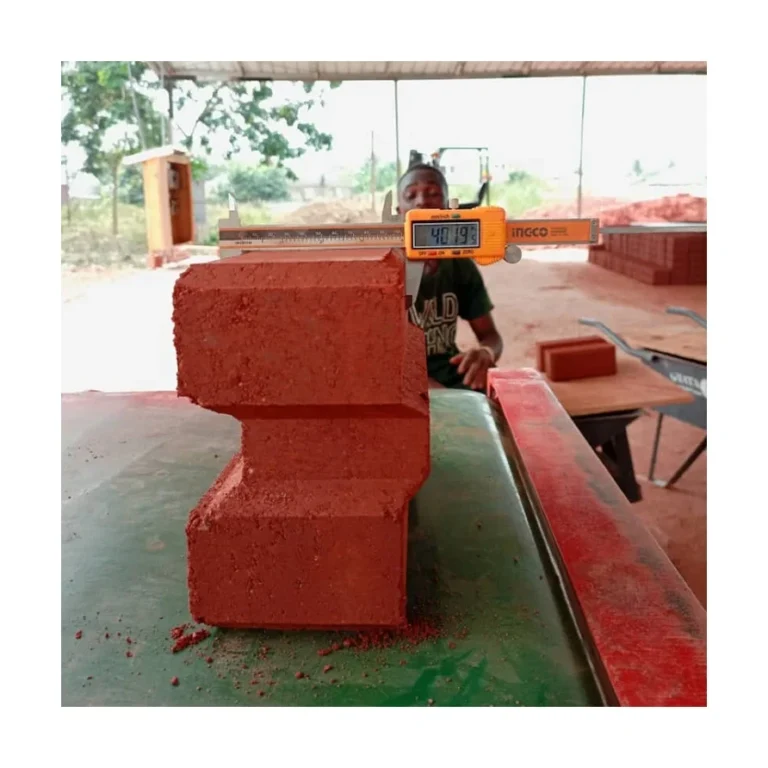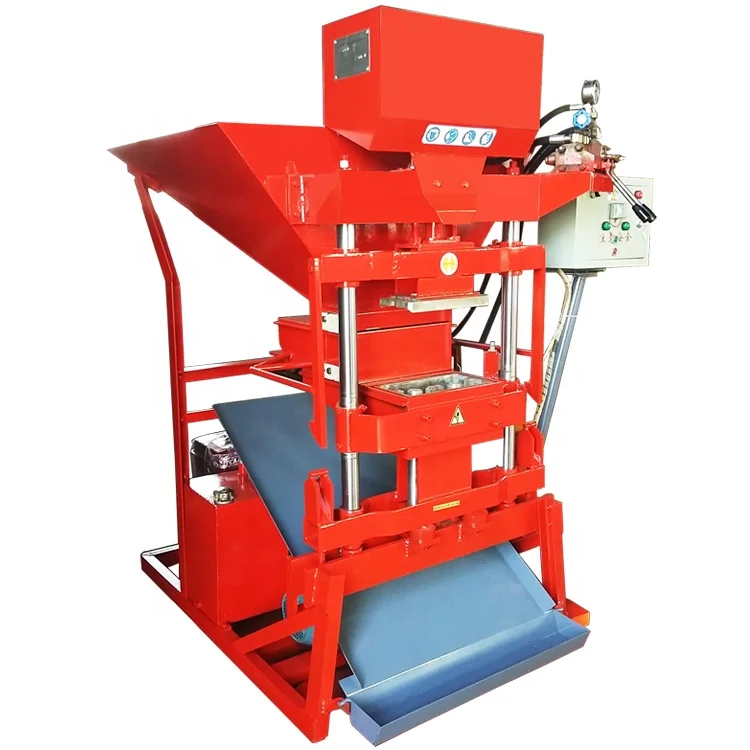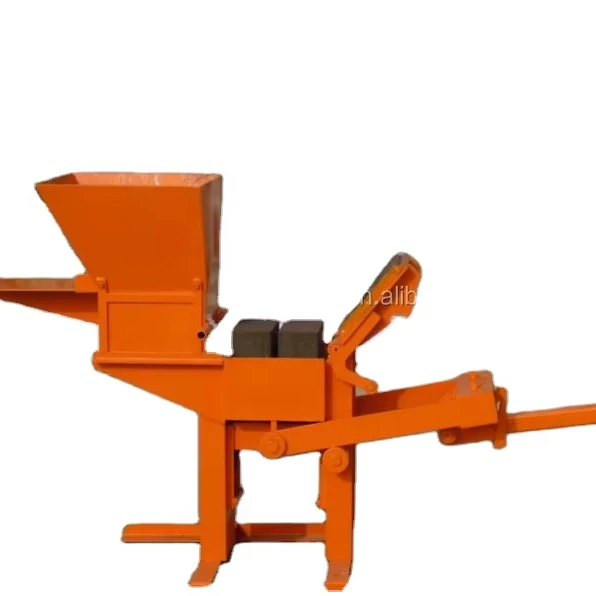
Description
Baseline Honesty — every LY2-40 leaving our shop ships with a confirmed control language and voltage match for the upgrade path you will actually take.
Technical Specifications
| Parameter | Value |
|---|---|
| Model | LY2-40 |
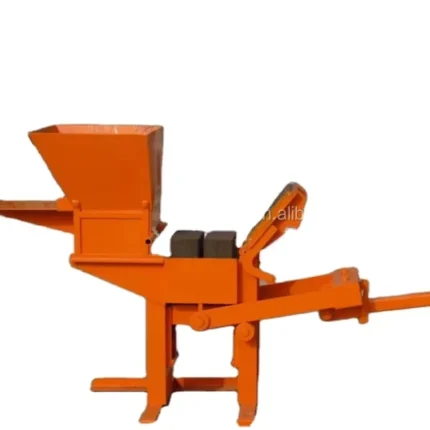
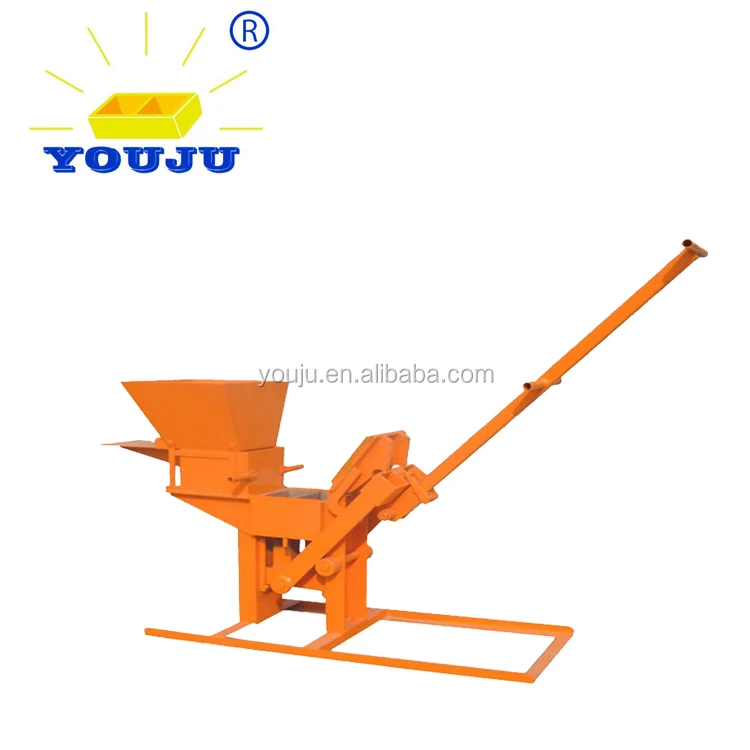
| Product Type | Manual Clay Interlocking Brick Making Machine |
| Operation Type | Completely Manual (No Power Required) |
| Lifting System | Manual Lever Press |
| Mobility | Steel Wheels (Mobile Device) |
| Overall Dimensions (L×W×H) | 1600 x 700 x 1200 mm |
| Total Mass | 200-240 kgs |
| Molding Cycle | 30-40s (basis not stated in source — confirm block format / material / thickness) |
| Output Capacity | 400-1000 pcs/day (basis to be confirmed by block format and operator pace) |
| Basic Equipment Included | JFA-1 Mixer or JQ350 Mixer |
| Mould Compatibility | Changeable for Various Blocks |
| Automation Level | Manual (upgrade path available) |
| Warranty | 1 Year |
Application Suitability
| Application | Material or Output |
|---|---|
| Remote construction sites without grid power | Soil-cement blends for interlocking wall bricks |
| Small-scale community block yards | Local clay mixed with stabilizer for load-bearing formats |
| On-site contractor production | Mobile interlocking brick runs moved between building plots |
| Entry-level entrepreneurship | Manual soil-cement brick molding scaling toward semi-auto |
When the Control Panel Speaks a Language Your Crew Cannot Read
Confirming PLC display language before shipment is not paperwork — it is the difference between a running line and a silent machine.
I have stood in a workshop where a brand-new press sat idle because the touch screen defaulted to a language the operators could not parse. Parameters were guessed, cycle times drifted, and the interlocking teeth on the bricks stopped engaging. The owner had paid for an automatic clay interlocking brick machine but was running it by feel [NEED_CITE: on-site commissioning delays caused by unconfirmed HMI language]. That gap between what was ordered and what arrived is what this page is built to close.
Where Manual Operation Becomes the Ceiling
The LY2-40 runs entirely by hand, which is exactly what a no-power site needs. But the moment your daily volume outgrows two operators on a lever, the inconsistency of human rhythm shows up in the brick dimensions. A PLC controlled block machine upgrade path starts by replacing the guesswork: automated batching holds the soil-cement ratio steady, and a controlled press cycle removes the variance that manual leverage introduces. You keep the simplicity of the LY2-40 footprint while removing the operator from the cycle equation.
Reading the Upgrade Sequence Before You Buy
Automation is not a single switch. It layers in stages — first the mixer, then pallet feeding, then stacking. If you plan to move from this manual press to a semi-automatic line, the mould compatibility built into the LY2-40 gives you a foundation: the same block formats carry forward, and the mould change logic transfers to an automated system later [NEED_CITE: block machine mould standardization across manual and automatic tiers]. Skipping this sequence planning is how buyers end up with a PLC panel controlling a press that still waits on hand-fed pallets.
What the Numbers on the Spec Sheet Actually Mean
The 30-40 second molding cycle is a starting reference, not a guarantee — it shifts with your clay moisture content, stabilizer ratio, and the interlocking profile depth you choose. The 1600 x 700 x 1200 mm frame footprint tells you the machine fits through a standard doorway and rolls on its steel wheels between curing zones. Total mass at 200-240 kgs means two people can reposition it without a forklift, which matters when your site layout changes mid-project. The included JFA-1 or JQ350 mixer sets your batch consistency floor; upgrading to a PLC-controlled batching station later tightens that floor further.
The Cost of Skipping the Voltage Conversation
A manual press needs no power, but the moment you add an automated mixer or a pallet feeder to the line, voltage and frequency become load-bearing decisions. I have seen upgrade projects stall for weeks because the new PLC panel arrived configured for a grid the site did not have [NEED_CITE: industrial voltage and frequency standards across export markets]. The automatic clay interlocking brick machine you are building toward must match the local electrical reality, and that conversation belongs in the first inquiry, not the last.
Why Sourcing the Upgrade Path Here Changes the Outcome
Block machinery is our single focus, which means the LY2-40 is not a standalone product — it is the entry point of a matched system. We set your configuration against your actual mix design and local aggregate, not a catalogue default. Mould design covers the interlocking formats your market sells, and custom drawings are standard when off-the-shelf profiles do not fit. Automation level is selectable in stages, so you start manual and add PLC-controlled batching, pallet handling, and stacking without replacing the press. Installation support includes operator training that covers both the manual baseline and the automated additions you will layer on.
Documentation & Verification
- Line layout showing LY2-40 placement with upgrade station positions marked
- Capacity calculation stating the interlocking brick format and cycle assumption used
- Mould drawing and format list covering every profile the machine accepts
- Voltage and control language confirmation signed before automated components ship
- Operation manual covering manual baseline and each automation add-on tier
Installation, Commissioning & Support
- Site leveling within 1600 x 700 mm footprint for stable lever operation
- Dedicated circuit planning for JFA-1 or JQ350 mixer power requirements
- Machine arrives fully assembled on steel wheels — no foundation bolts needed
- First-run cycle timing set against your local clay moisture and stabilizer ratio
- Operator training covers manual press rhythm and future PLC interface handoff
- Wear parts list with mould inventory matched to your block format selection
What We Need from Your Next Inquiry
Tell us which interlocking brick profile your market actually buys, the daily volume you are targeting now, and the volume you plan to reach. Share your local voltage and frequency, your preferred control panel language, and whether grid power is available on-site today or planned for later. If you already own a mixer or curing racks, let us know — the upgrade path wraps around what you have.
Frequently Asked Questions
Q: What automation components can be added to the LY2-40 and in what order?
A: The typical sequence starts with an automated mixer for batch consistency, then adds a pallet feeding system to remove manual placement, and finally a stacking station. Each layer integrates with the existing mould setup, so your block formats carry forward without re-tooling.
Q: Which PLC control languages are available for the upgrade path?
A: Display language is confirmed during the inquiry stage and set before the panel ships. Common options include English, Spanish, French, Arabic, and Russian, but the critical step is matching your operators’ working language so the screen is usable from day one.
Q: What electrical preparation is needed when adding automation to a manual LY2-40?
A: The base machine requires no power, but automated add-ons need a stable supply matching local voltage and frequency. We confirm these values before production so the PLC panel, mixer motor, and any feeding systems arrive configured for your site grid.
Q: How does automated batching improve interlocking brick consistency over manual mixing?
A: Manual blending with a JFA-1 or JQ350 mixer depends on operator judgment for water and stabilizer ratios. A PLC-controlled batching station holds these ratios constant across every batch, which directly affects brick density, interlocking tooth engagement, and curing uniformity.
Q: At what point should a plant move from the LY2-40 to a fully automatic press?
A: The shift makes sense when daily volume targets exceed what manual cycling can sustain and labour costs begin to outweigh the upgrade investment. The PLC controlled block machine upgrade path lets you add automation around the LY2-40 before committing to a full press replacement.