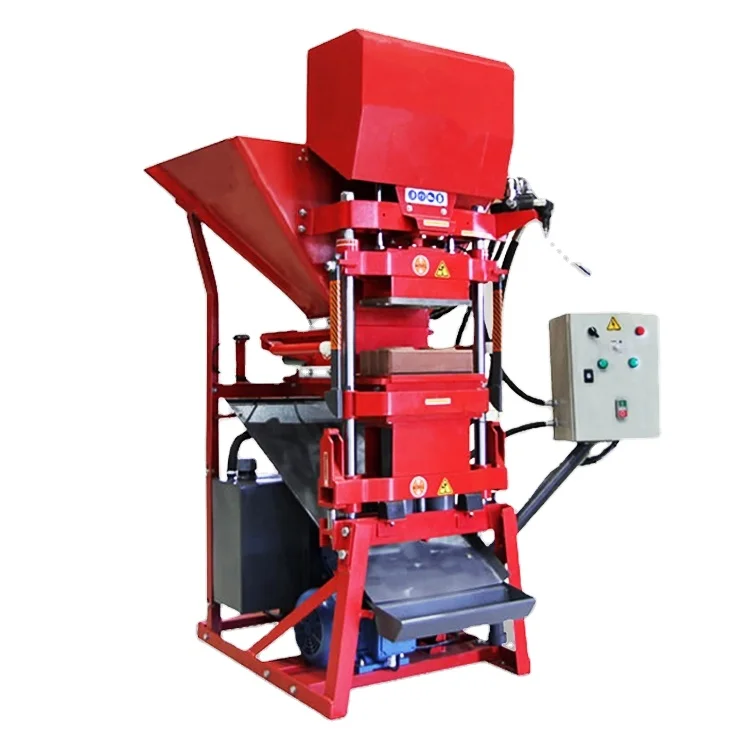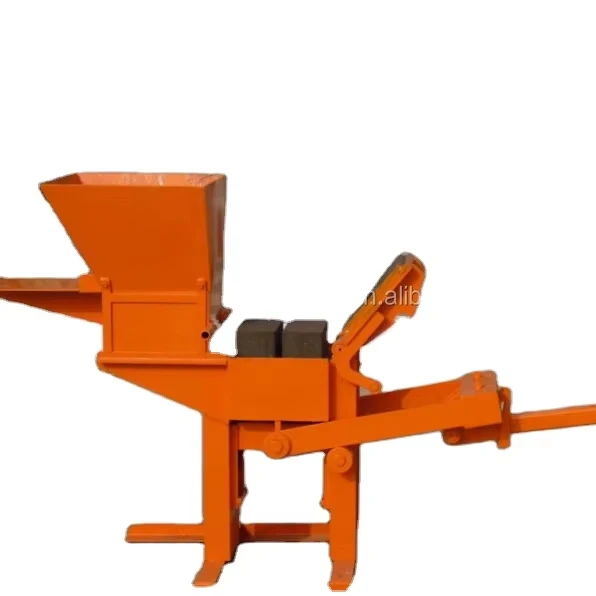
Description
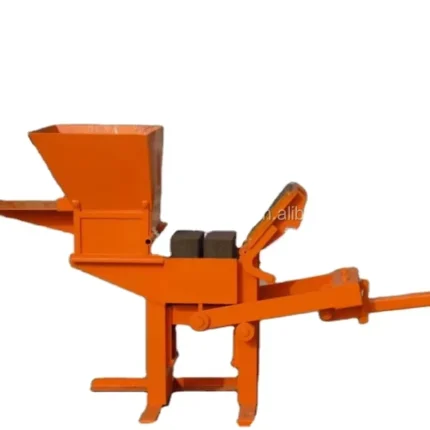
Scalable Automation Entry Point — the LY2-40 manual clay interlocking brick press is engineered as the foundational tier in a control upgrade path, removing electrical commissioning variables while preserving the option to integrate PLC batching and stacking later.
Technical Specifications
| Parameter | Value |
|---|---|
| Model | LY2-40 |
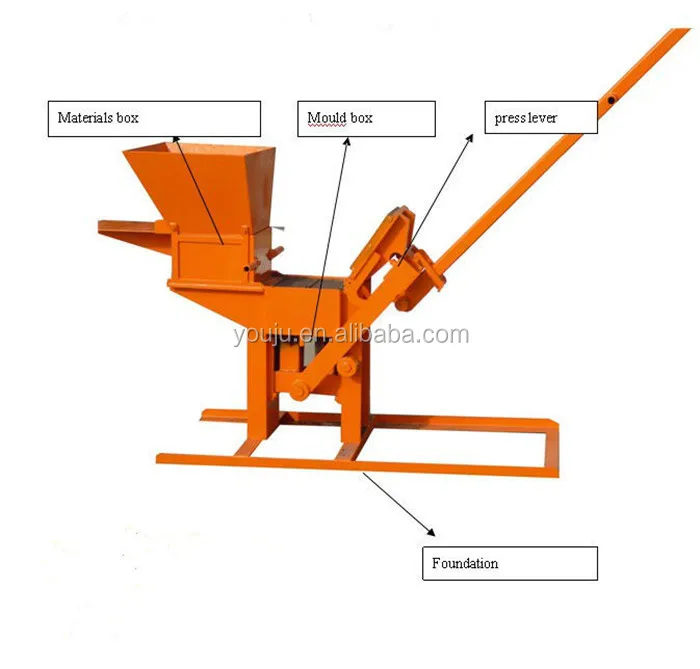
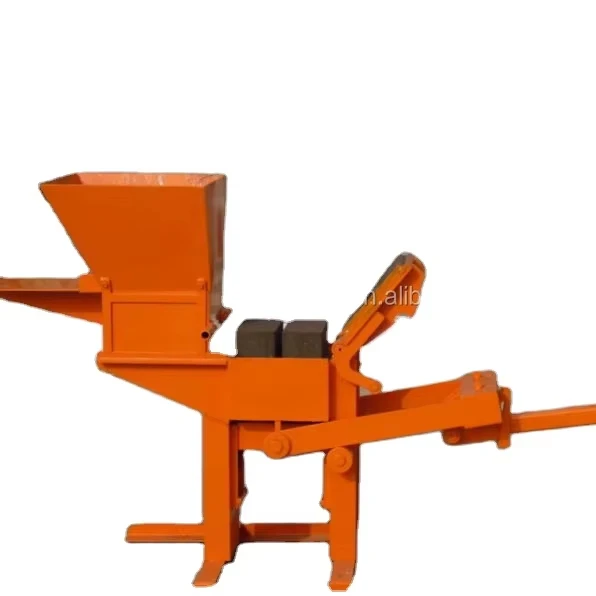
| Product Type | Manual Clay Interlocking Brick Making Machine |
| Overall Dimensions (L×W×H) | 1600 × 700 × 1200 mm |
| Net Weight | 200-240 kgs |
| Total Power | No Power, Completely Manual |
| Molding Cycle | 30-40s |
| Output Capacity | 400-1000 pcs/day (basis not stated in source — confirm block format / material / thickness) |
| Automation Level | Completely Manual (no power required) |
| Lifting System | Manual |
| Mobility | Steel wheels for mobile operation |
| Mould Format | Changeable for various interlocking brick formats |
| Recommended Mixer | JFA-1 Mixer or JQ350 Mixer |
| Warranty | 1 Year |
Application Suitability
| Application | Material or Output |
|---|---|
| Off-grid interlocking brick production | Local soil and cement mixtures without grid dependency |
| Small-scale compressed earth brick (CEB) projects | Soil-cement homogenized manually or with JFA-1 mixer |
| On-site housing project block making | Local laterite or clay with cement stabilization |
| Pilot production before automation scale-up | Test batches to validate mix design for future PLC line |
Why the Electrical Question Disappears at the Manual Tier
When voltage, frequency, and PLC display language remain unconfirmed at shipment, commissioning stalls the moment the machine reaches the site. The LY2-40 eliminates electrical commissioning risk entirely by requiring zero power. [NEED_CITE: common causes of delayed commissioning in exported block machinery]
I have stood in workshops where a semi-automatic press sat idle for weeks because the local grid delivered a frequency the control panel could not read. Buyers working toward a project deadline lose momentum while waiting for replacement contactors or language firmware. A manual clay interlocking brick machine sidesteps that failure mode altogether — production begins the day the crate is opened, provided the soil-cement mix has been validated beforehand.
Removing the Commissioning Bottleneck Before Scale-Up
The LY2-40 operates as a standalone manual press, which means the buyer can begin producing interlocking bricks while the automation upgrade path is still being specified. Batching conveyors, automatic pallet feeders, and PLC-controlled stacking systems can be designed around the throughput baseline this machine establishes on the buyer’s actual soil. This sequencing prevents the common mistake of ordering a full automatic line before understanding what the local aggregate demands in terms of compression and cycle time.
Establishing a Realistic Throughput Baseline
Every automation tier above manual must justify its capital cost against a known baseline. The 30-40s molding cycle of the LY2-40 gives the buyer a measurable starting point — an automatic clay interlocking brick machine or PLC-controlled upgrade must demonstrably shorten that cycle or reduce labor per brick to earn its place on the line. [NEED_CITE: labor cost structures in small-scale CEB production across Sub-Saharan Africa]
Reading the Specs That Actually Matter for Soil-Cement Pressing
The 1600 × 700 × 1200 mm footprint keeps the LY2-40 mobile enough to relocate across a project site on its steel wheels, but it also constrains the maximum mould envelope. Buyers need to confirm which interlocking profiles fit within that envelope before ordering. The net weight of 200-240 kgs provides the static mass needed for manual compaction, yet the actual block density depends on the operator’s lever force and the soil-cement moisture content. Pairing this press with a JFA-1 or JQ350 mixer ensures the feed material reaches a consistent humidity before it enters the mould cavity — a variable that directly governs whether the green brick holds its interlocking profile through sun curing. Changeable moulds allow format switching, though the manual change procedure adds downtime that a future automatic mould change system would eliminate. [NEED_CITE: soil-cement moisture requirements for compressed interlocking brick strength]
The Cost of Skipping the Mix Validation Step
A manual press exposes mix problems immediately because there is no PLC adjusting pressure or vibration to compensate. If the local clay shrinks excessively during drying, every brick will show it — there is no control loop hiding the defect. Buyers who ship a machine without sending a soil sample first often discover the problem only after the first week of production, when cracking appears across an entire batch. [NEED_CITE: effects of clay plasticity index on compressed earth brick durability]
Why Sourcing This Tier Here Changes the Upgrade Conversation
Block machinery as a single focus means the LY2-40 is not treated as a disposable entry model but as the first station in a line that will eventually include automatic pallet feeding and PLC batching. Configuration is set against the buyer’s actual mix design and target interlocking format, not a catalogue default. Mould design covers the profiles the buyer’s market sells, with custom drawings available for non-standard interlocking geometries. The automation level is selectable upward, so the transition to semi-automatic operation uses the same pallet size and curing rack logic established during the manual phase. Installation support extends to operator training on mix consistency, so the skills transfer when the line scales.
Documentation & Verification
- Capacity calculation stating the specific interlocking brick format and soil-cement ratio assumed
- Mould drawing and format list confirming which interlocking profiles are included in the shipment
- Voltage and control language confirmation sheet for the future PLC-controlled upgrade tier
- Factory test record using the buyer’s shipped soil sample before dispatch
- Wear parts and mould availability list with lead times for first replacement
Installation, Commissioning & Support
- Level ground preparation across the 1600 × 700 mm footprint with no foundation bolts required
- Zero electrical connection needed — commissioning begins immediately upon unpacking
- Steel wheel mobility allows repositioning across the site without a forklift
- Manual lever operation training covering consistent compaction stroke technique
- JFA-1 or JQ350 mixer pairing guidance for soil-cement batch consistency
- Mould change procedure walkthrough to minimize format-switching downtime
What We Need to Size Your Upgrade Path
Send us your target interlocking brick profile, the local soil type, and the daily volume you expect to reach within the next production cycle. We also need to know whether your site has grid access for a future mixer and conveyor, and what pallet dimensions your curing area already uses. With that information, we can map the LY2-40 as your baseline and calculate which automation tier closes the gap to your target output.
Frequently Asked Questions
Q: How do I verify the daily output range against my specific interlocking brick format?
A: The stated range assumes conditions not specified in the source data. We run your soil sample through the LY2-40 at our workshop, measure the actual cycle time with your chosen interlocking profile, and provide a capacity calculation tied to that exact format and mix before you commit to the order.
Q: What does the upgrade path from this manual press look like?
A: The next tier adds a powered mixer and semi-automatic pallet feeding while keeping the manual press as a backup station. Beyond that, a PLC-controlled line introduces automatic batching, stacking, and cubing. We specify the upgrade voltage, frequency, and control language before the manual press ships so the transition is seamless.
Q: Which automation tier matches my target output and labor budget?
A: That depends on your daily volume target and local wage structure. Semi-automatic operation reduces the labor per brick by mechanizing pallet movement. Full PLC control with stacking removes most manual handling. We calculate the throughput gap between the LY2-40 baseline and each tier using your actual brick format.
Q: How does manual mould change time compare to automatic systems?
A: Manual changeover on the LY2-40 requires the operator to unbolt and reseat the mould, which takes noticeably longer than an automatic clamping system on higher-tier machines. If your production plan involves multiple interlocking profiles per shift, we factor that downtime into the capacity calculation and discuss whether an upgrade tier is justified.