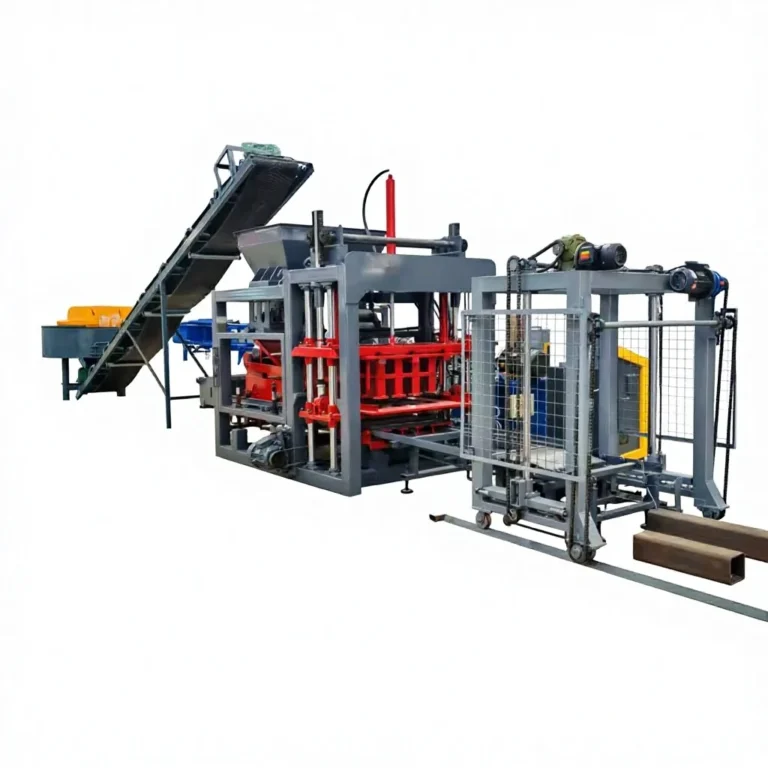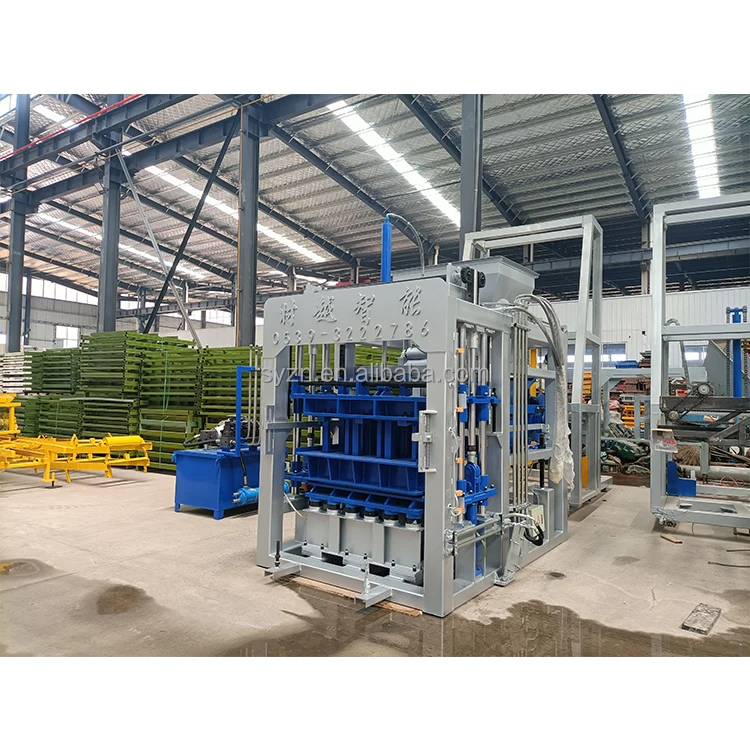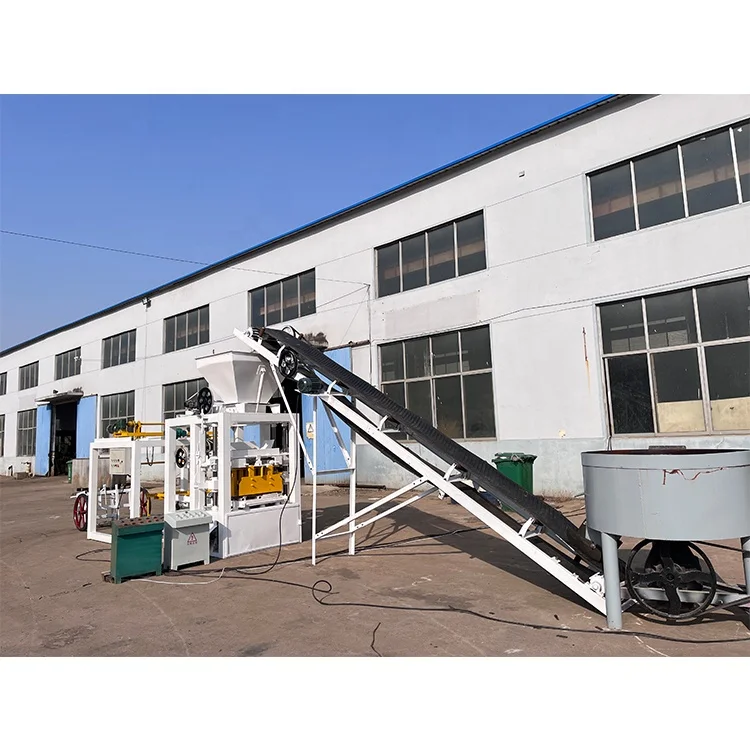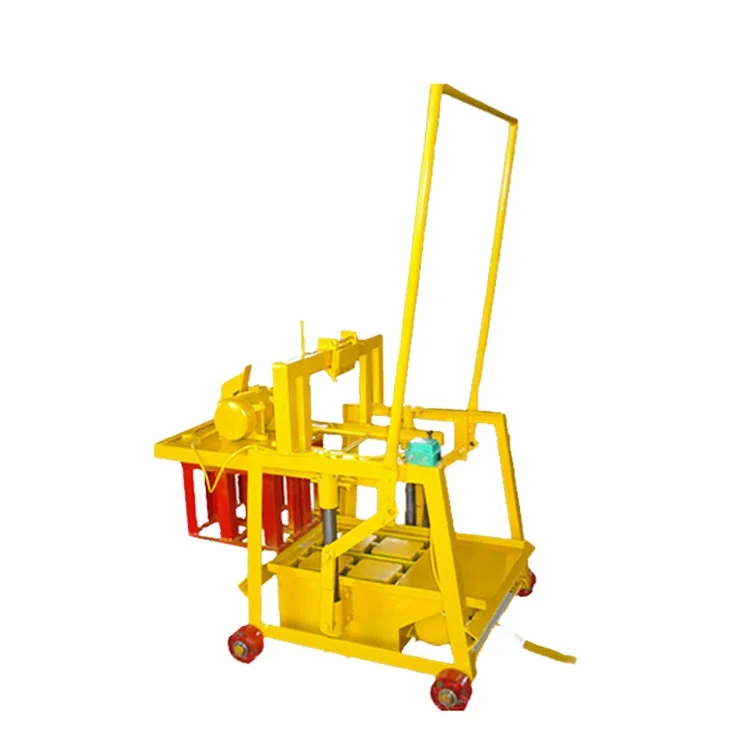
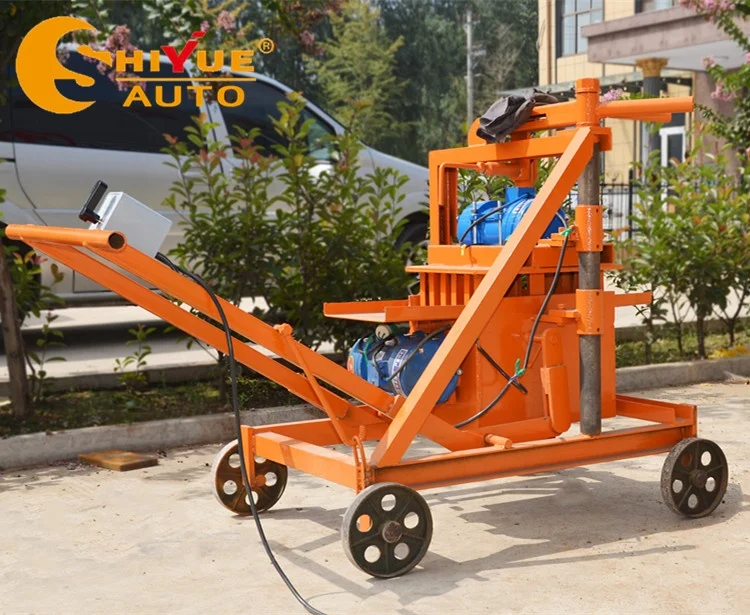
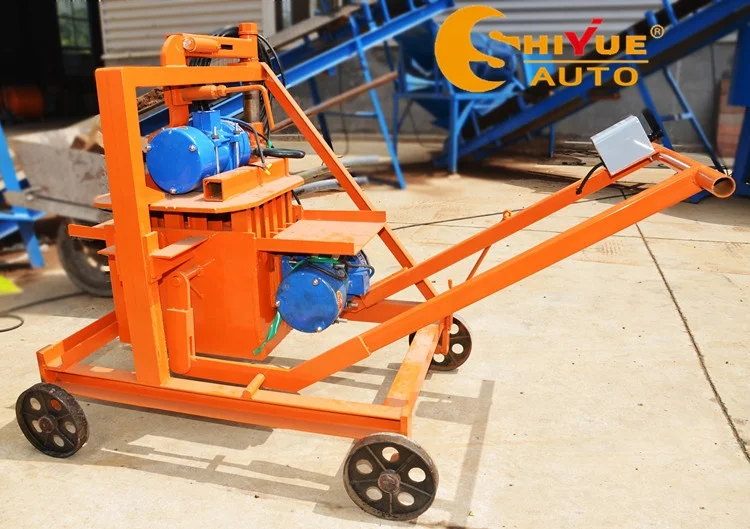

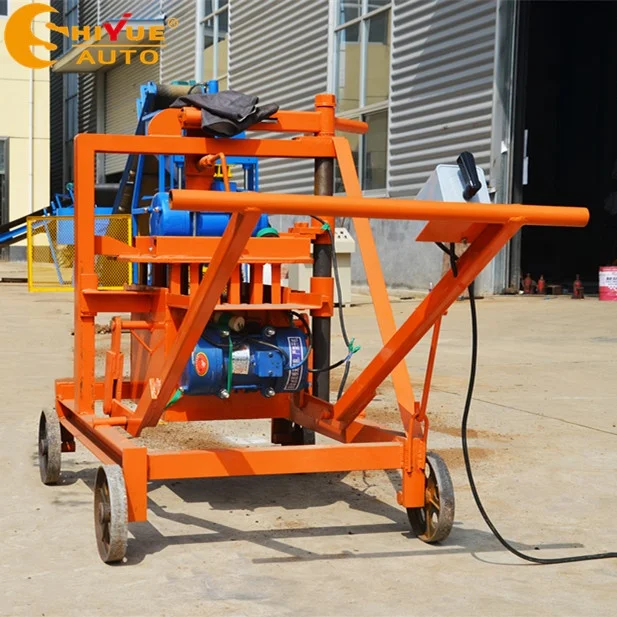

Description
Control Language Matched to Your Operator — Every QMJ2-45 leaves our workshop with its control interface and documentation translated into the language your team actually speaks, so commissioning starts on day one instead of waiting for an interpreter.
Technical Specifications
| Parameter | Value |
|---|---|
| Model | QMJ2-45 |
| Product Type | Mobile Egg-laying Block Making Machine |
| Rated Power | 1.5 kW |
| Molding Cycle | 45 s |
| Theoretical Productivity | 160 pcs/hour; 1280 pcs/8-hour shift (based on 300×150×100 mm solid block, 2 pcs/mould) |
| Vibration System | Bed mould vertical vibration + upper mould compression vibration |
| Machine Weight | 150 kg |
| Overall Dimensions (L×W×H) | 920 × 800 × 1258 mm |
| Voltage | Configured to buyer’s local voltage and frequency before dispatch |
| Automation Level | Semi-automatic |
| Control Interface | PLC with operator language confirmed pre-production |
Application Suitability
| Application | Material or Output |
|---|---|
| On-site solid block production at building projects | Concrete, sand, and cement mixes laid directly on a flat floor |
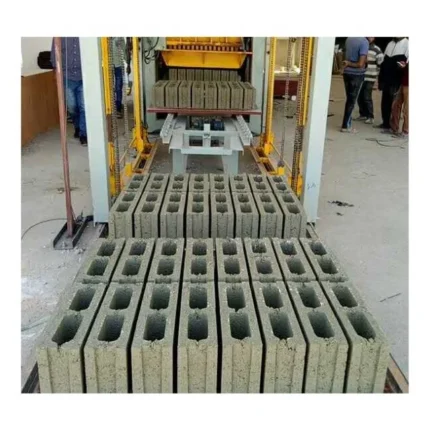
| Small-scale block plant for local hardware distribution | 300×150×100 mm solid blocks from locally sourced aggregate |
| First plant for entrepreneurs entering block manufacturing | Low-capital semi-automatic operation without fixed infrastructure |
| Remote housing project block supply | Mobile egg-laying production where no established block plant exists |
What "1280 Blocks per Day" Actually Means on Your Site
The output figure only holds when you run the exact block format, mix design, and cycle time the calculation was built on.
Many buyers receive a capacity number and assume it applies to every block size they plan to produce. In practice, switching from a 300×150×100 mm solid block to a wider paving format changes the mould cavity count and the vibration time needed for proper compaction. A machine quoted at a given daily output for one format may deliver a noticeably different volume once the mould is swapped [NEED_CITE: block format impact on daily output calculations]. The QMJ2-45 documentation states its capacity per specific block dimension so you can compare realistic output across the formats your market actually demands, rather than planning your business around a number that assumed a different product.
PLC Logic That Keeps Every Cycle Identical
The semi-automatic control on this automatic mobile block making machine runs a fixed 45-second moulding cycle managed by the PLC, so the vibration duration and compression sequence stay the same whether your operator is on their first shift or their hundredth. Manual machines depend on the operator judging when the block is ready, which introduces variation in density from one batch to the next. With the PLC holding the cycle constant, block strength stays within a tighter band across the full production day.
Voltage and Language Confirmed Before the Crate Is Sealed
Arriving at a job site to find the control panel displays a language your crew cannot read is a commissioning delay no project schedule can absorb [NEED_CITE: on-site commissioning delays from unconfirmed control language]. We confirm your local voltage, frequency, and the operator interface language during the proposal stage and document the agreement before production starts. The PLC controlled egg-laying block machine is then factory-tested on the exact electrical supply it will see in your country, eliminating the transformer rental and rewiring that often stalls first-day production.
How Vibration and Pressure Build Block Density
The QMJ2-45 uses a dual vibration arrangement: vertical vibration under the bed mould compacts the concrete from below while the upper mould applies compression vibration simultaneously. This two-directional force drives air out of the mix and packs aggregate particles tightly, producing a block with uniform density throughout its cross-section. For a 150 mm-thick solid block, consistent compaction from top to bottom is what prevents weak layers that would otherwise show up as breakage during handling and curing.
The Cost of Skipping Control Configuration
A machine ordered without confirming PLC language and voltage often sits idle for days while the buyer sources a step-down transformer or waits for a technician who can navigate an unfamiliar interface [NEED_CITE: transformer sourcing delays at project sites]. That idle time burns labour costs and pushes project milestones. Semi-automatic machines are especially vulnerable because the operator interacts with the control panel on every single cycle — any confusion in the display or button labels compounds across hundreds of daily cycles into mis-pressed sequences and inconsistent blocks.
Why This Machine Is Specified as a System, Not a Catalogue Line
The QMJ2-45 is configured against your actual mix design and local aggregate, not shipped as a default build. The mould supplied matches the block format your market sells, and the pallet specification accounts for the curing space and forklift you already operate. Our single-focus approach means vibration force, hydraulic pressure, and cycle timing are balanced as one matched set rather than assembled from disconnected component choices. You receive documented capacity per block format, not a single headline number.
Documentation & Verification
- Capacity calculation sheet stating the 300×150×100 mm block format assumption
- PLC control language and voltage confirmation record signed before production
- Mould drawing with cavity count and format dimensions for your approval
- Factory test record run on your confirmed voltage and frequency
- Operation manual translated into your operator’s language
- Wear parts list with mould wear dimensions and replacement intervals
Installation, Commissioning & Support
- Flat concrete floor required; the 920 × 800 mm footprint needs no fixed foundation bolts
- Dedicated 1.5 kW circuit at your confirmed voltage with correct plug and breaker rating
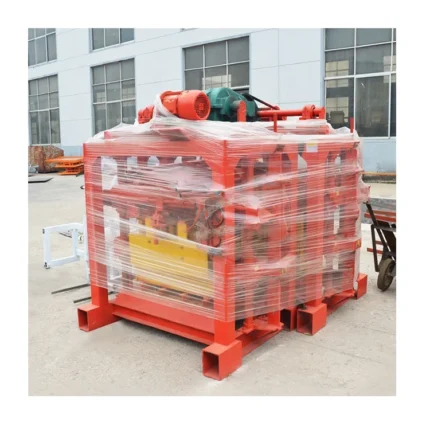
- Machine arrives fully assembled; unroll the power cable and begin the first test cycle
- On-site commissioning includes PLC parameter verification against your local mix design
- Operator training covers mould change procedure, vibration timing, and daily greasing points
- Wear parts shipment arranged with lead time confirmed against your production schedule
What We Need to Quote Accurately
Send us the block format you sell most, the aggregate and cement available in your area, and your site’s voltage and frequency. If you are replacing an existing machine, tell us the pallet size and curing rack dimensions you already use so the QMJ2-45 integrates without changes to your floor layout. We will return a capacity calculation tied to your specific format, not a generic brochure figure.
Frequently Asked Questions
Q: How is the 1280 pcs/day capacity calculated, and does it hold for other block formats?
A: That figure is based on producing a 300×150×100 mm solid block with 2 cavities per mould at a 45-second cycle across an 8-hour shift. If you switch to a different format, the cavity count and compaction time change, so daily output will differ. We provide a separate capacity calculation for every block format you plan to run before you place the order.
Q: How do I confirm the correct voltage and frequency for my site before the machine ships?
A: During the proposal stage we request your local supply voltage, frequency, and phase. This information is documented in the confirmation record and the machine is factory-tested on that exact electrical specification. A copy of the test record travels with the shipment so your electrician can verify the match on arrival.
Q: What automation level does the QMJ2-45 offer, and is there an upgrade path?
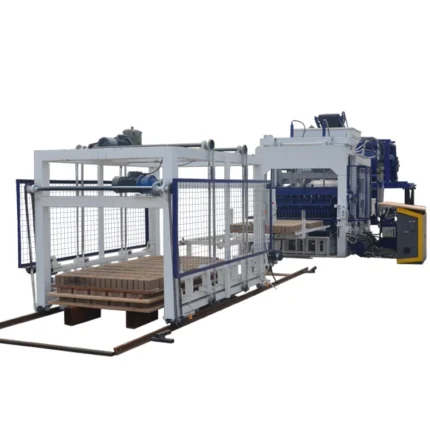
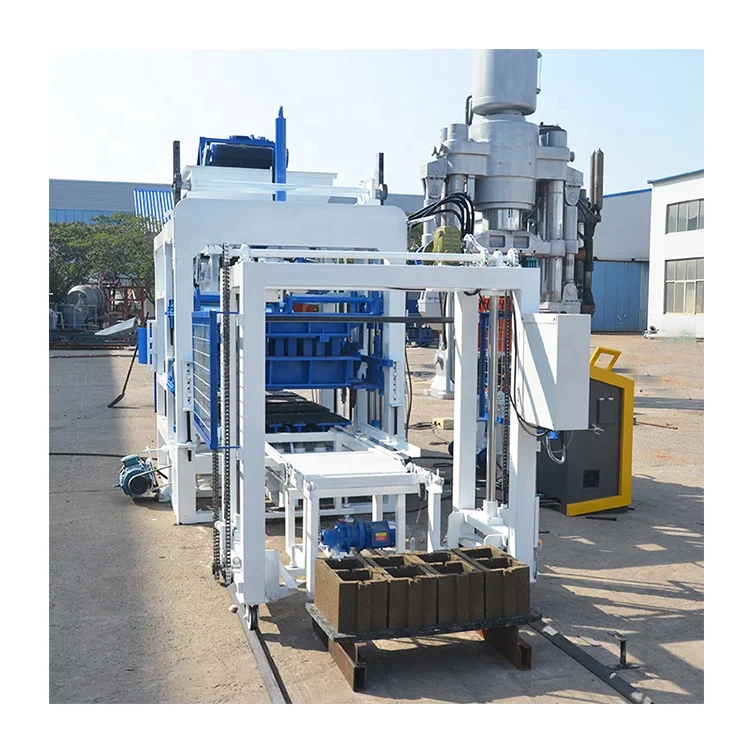
A: The QMJ2-45 operates as a semi-automatic egg-laying machine with PLC-managed cycle timing. Pallet handling and stacking remain manual at this tier. If your volume grows, you can move to a higher automation tier with automatic pallet feeding and stacking while keeping the same block format and mould configuration across the transition.
Q: Can the machine be adjusted to work with my local aggregate and mix design?
A: Yes. Vibration duration and compression force are tuned during commissioning to match the aggregate grading and cement ratio available in your area. We ask for a sample mix description at the proposal stage so the factory test replicates your conditions, and the on-site technician makes final adjustments once you run local material.