Description
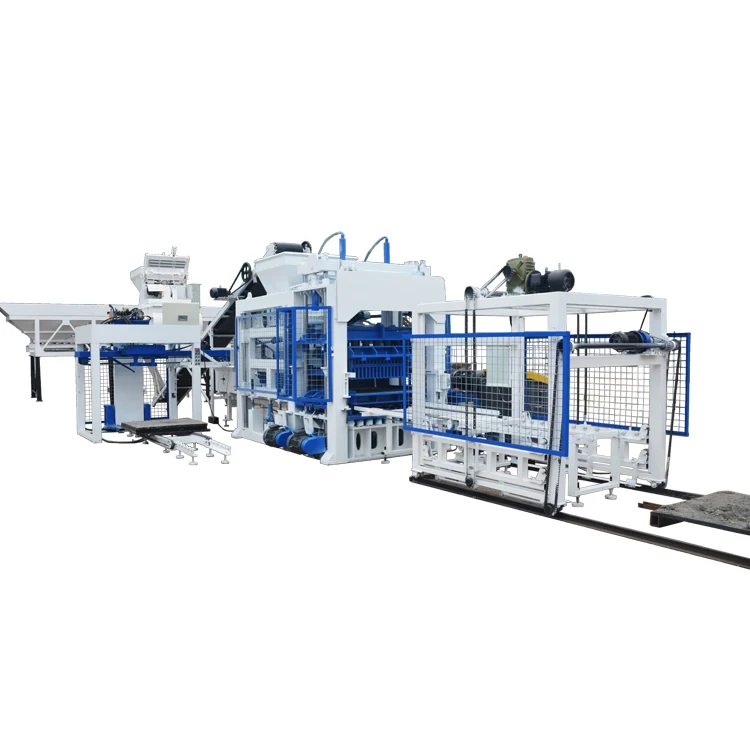
Matched Control Logic — batching accuracy and cycle synchronization are tuned to the block press rhythm so the mixer is never overfilled and the press never starves.
Technical Specifications
| Parameter | Value |
|---|---|
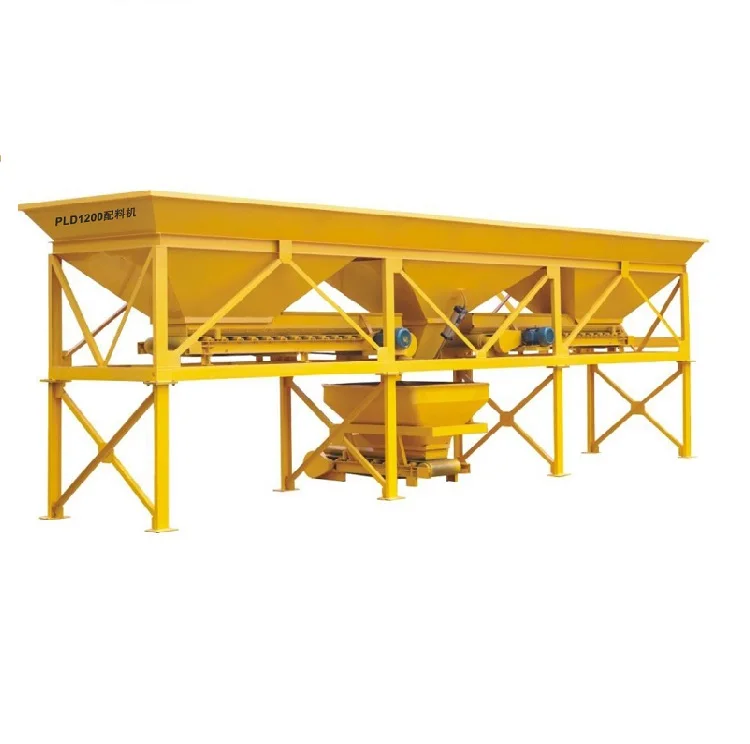
| Model | PLD1200 |
| Product Type | Concrete Batching Machine |
| Weigh-Batching Hopper Capacity | 1200 L |
| Theoretical Productivity | 56 m³/h (basis not stated in source) |
| Ingredient Precision | ±2% |
| Belt Speed | 1.25 m/s |
| Total Power | 16 kW (4 × 4 kW) |
| Control System | PLC-controlled weighing controller (language configurable) |
| Voltage & Frequency | Configurable to site supply (confirm before dispatch) |
| Assembly State | Modular frame, bolted for container loading |
Application Suitability
| Application | Material or Output |
|---|---|
| Automatic block plant raw material proportioning | Cement, sand, crushed stone, fly ash fed into mixer at controlled ratios |
| Semi-automatic block line upgrade | Replaces manual shovel batching with weighed doses per mix design |
| Multi-format block production | Holds mix consistency across hollow, solid, paving and kerbstone runs |
| On-site contractor block yard | Compact footprint suits temporary production near housing developments |
Why the Control Language Question Beats the Price Question
Confirming the PLC display language before production starts prevents a full day of commissioning paralysis on site.
I once watched a German installer stare at a batching controller locked in Chinese. The machine was mechanically sound, the wiring was correct, and the aggregate bins were loaded — but nobody could read the menus to calibrate the scales. An entire commissioning day evaporated while we pushed a language pack over a remote connection [NEED_CITE: common PLC interface language options for export machinery]. That delay is entirely avoidable when the control language is specified on the purchase order, not discovered at startup. The same logic applies to voltage and frequency: a 380 V / 50 Hz machine dropped onto a 440 V / 60 Hz site will either trip breakers or burn out the feed motors within the first hour.
How Batching Precision Holds Block Strength Steady
Block strength drifts when the cement-to-aggregate ratio wanders from batch to batch. The PLD1200 holds each ingredient within ±2% of the target weight, which means a mix designed for 7 MPa hollow blocks actually delivers 7 MPa at the curing rack — not 5 MPa on a Tuesday and 9 MPa on a Thursday. The automatic concrete batching machine removes the operator from the proportioning decision entirely, so shift changes, fatigue and guesswork stop influencing the product.
Synchronizing the Batching Cycle with the Press Rhythm
A batching station that outpaces the mixer floods the charge hopper; one that lags leaves the block press idling between cycles. The 56 m³/h theoretical productivity figure must be read against the actual batch size and mix cycle time of the connected mixer and press [NEED_CITE: concrete batching cycle time alignment with block press output]. On a line producing 400 × 200 × 200 mm hollow blocks, the PLC-controlled batching system is tuned so that each weighed dose drops into the mixer exactly when the previous batch has discharged, keeping the press fed without material pile-up.
Reading the Numbers That Actually Matter
The 1200 L weigh-batching hopper sets the maximum single-dose volume. If your mixer accepts a 1500 L charge, the hopper will need to cycle twice per mix, which is acceptable as long as the total batch-and-discharge window fits inside the mixer’s kneading time. The 1.25 m/s belt speed governs how quickly aggregate travels from the storage bins to the hopper — fast enough to keep up with continuous production, yet slow enough to avoid spillage at the transfer point. The 16 kW total power, split across four 4 kW drive motors, gives each bin its own independent feed motor so that one jammed gate does not stall the entire line.
The Cost of Skipping the Line-Layout Conversation
Buyers who order a batching machine as a standalone item often discover that its discharge height does not match the mixer charge opening, or that the belt conveyor runs straight into a column where the curing racks were supposed to sit. Re-routing a conveyor on site means cutting steel, re-welding supports and re-tensioning the belt — work that should have been resolved on a layout drawing weeks before shipment [NEED_CITE: plant layout coordination between batching, mixing and pressing stations]. Equally costly is the plant that specifies a batching controller without confirming whether it communicates with the block press PLC or runs as an isolated island, forcing the operator to manually trigger each dose.
Why Sourcing the Batching Station from the Same Supplier as the Press Matters
When the batching machine, mixer and block press come from one source, the cycle times are calculated together rather than quoted in isolation. Shiyue configures the PLD1200 against the buyer’s actual mix design, local aggregate density and target block format — not a default catalogue setting. Voltage, frequency and control language are confirmed on the order sheet so that the panel is wired and labelled correctly before it leaves the factory. Mould and wear parts are listed alongside the batching station, so the first belt scraper or load-cell replacement is already on the shipping manifest. The automation level can be set to match the rest of the line, meaning a semi-automatic plant can add automatic batching now and integrate stacking later without ripping out the controller.
Documentation & Verification
- Line layout drawing showing PLD1200 discharge height matched to your mixer charge opening
- Factory test record confirming ±2% weighing accuracy under your specified aggregate densities
- PLC program backup with control display language set to your operator’s preference
- Voltage and frequency confirmation sheet signed before panel wiring begins
- Electrical schematic with sensor wiring, motor overload settings and emergency stop circuit
Installation, Commissioning & Support
- Modular bolted frame allows container loading and rapid on-site reassembly without cutting
- Four independent 4 kW feed motors require dedicated circuit breakers rated to local code
- Load-cell calibration performed on site with certified test weights matching your aggregate range
- Belt tension and tracker adjustment set during first run to match 1.25 m/s operating speed
- PLC language pack and recipe memory loaded before commissioning day to eliminate menu confusion
- Spare belt scrapers and one replacement load cell included in the dispatch crate
What to Include with Your Inquiry
Send the target block format, the daily output you need, and the local aggregate types you plan to use so that the hopper compartments and weighing ranges are sized correctly. Specify the site voltage, frequency and the control display language your operators read. If the PLD1200 will connect to an existing mixer or press, share the equipment model and charge height so the discharge geometry can be matched before production drawings start.
Frequently Asked Questions
Q: Is the theoretical productivity of 56 m³/h based on a specific block format or mix?
A: The 56 m³/h figure is a general rating for the PLD1200 and does not assume a particular block format. Real output depends on your batch size, mix design and the number of aggregate bins configured. We calculate the effective hourly throughput against your specific block format and mixer charge cycle before quoting.
Q: Does the batching controller communicate with the block press PLC?
A: The PLC-controlled batching system can exchange start and done signals with the press PLC so that dosing is triggered automatically each cycle. If your existing press uses a different protocol, we configure a relay or Modbus bridge to keep the two controllers synchronized without replacing either panel.
Q: How many aggregate bins can the PLD1200 be configured with?
A: The frame supports two, three or four storage bins depending on your mix design. Cement is typically weighed in a separate hopper to maintain the ±2% precision target. We confirm the bin count and compartment volumes once your ingredient list and batch weights are finalized.
Q: What happens if the site voltage differs from the machine rating?
A: Voltage and frequency are confirmed on the purchase order before the electrical panel is wired. If your site supply is outside the standard range, we fit the correct motor windings and transformer taps at the factory so that the feed motors and control circuit operate within their rated envelope on arrival.