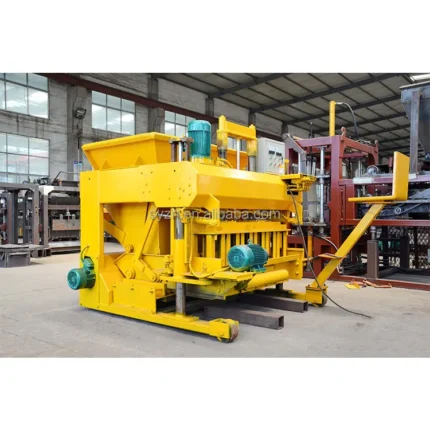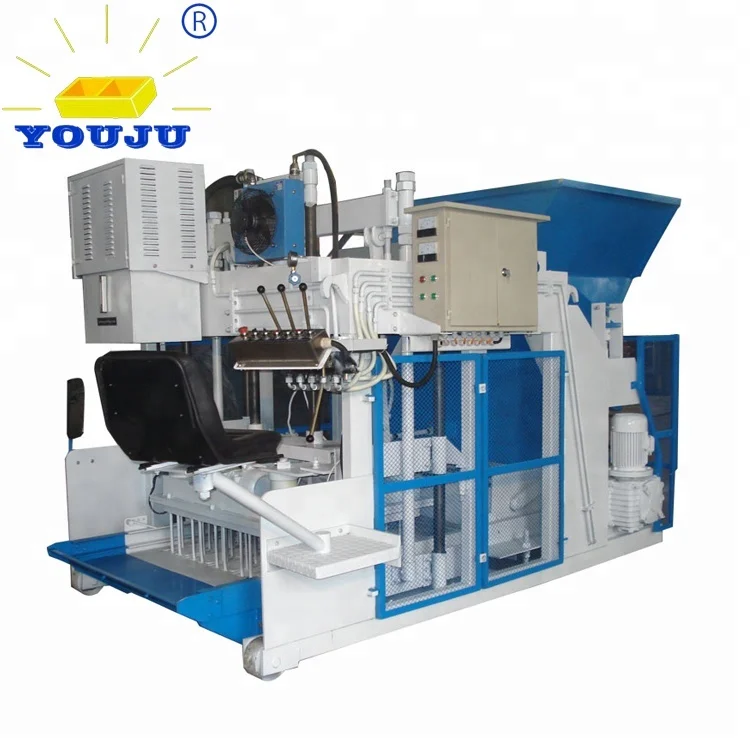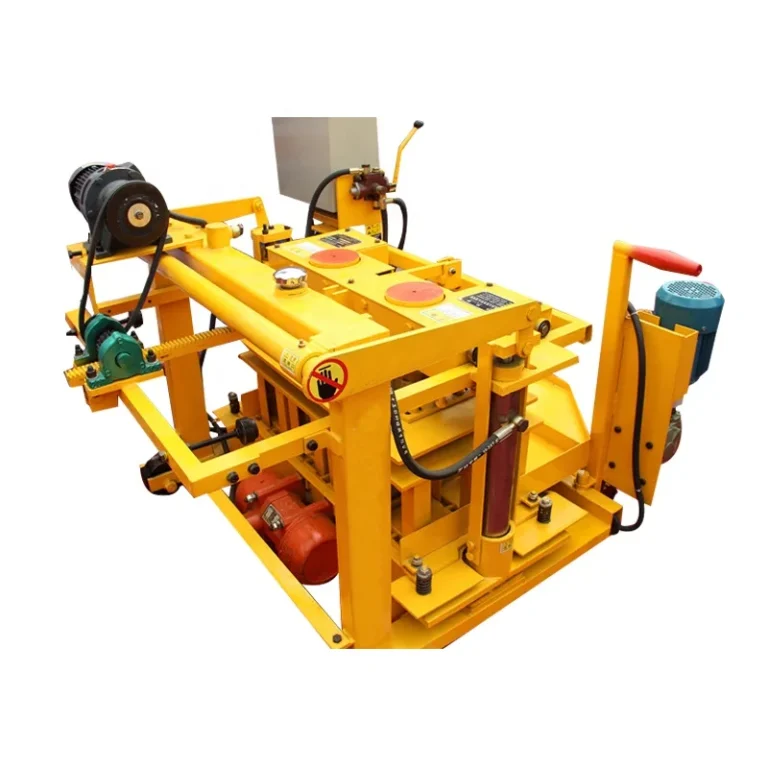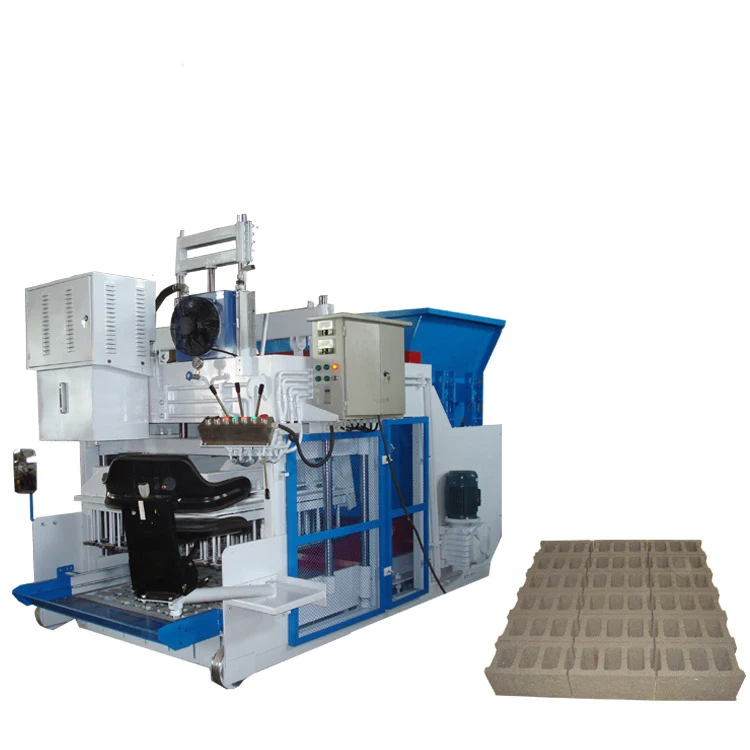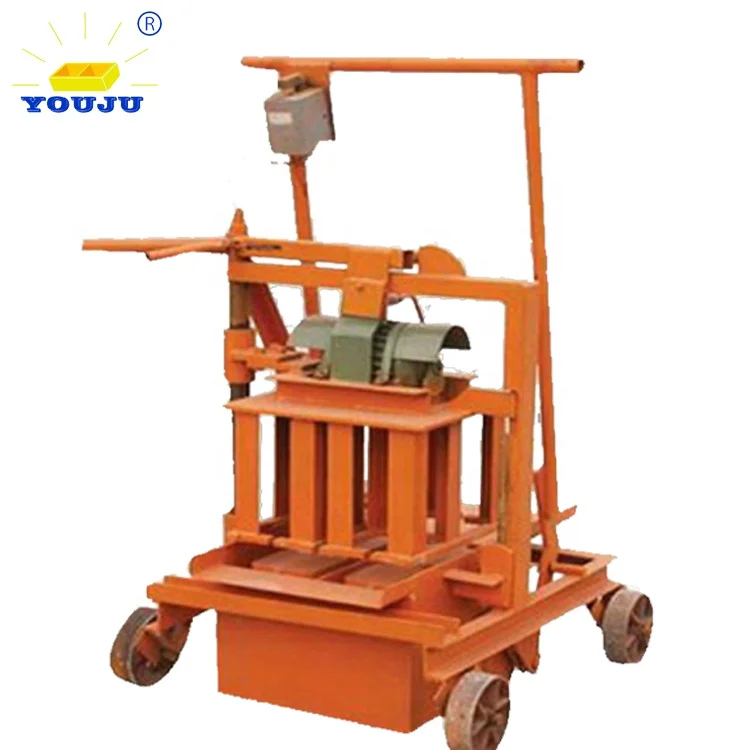


Description
Configuration matched to site conditions — the QMJ2-45 is specified against your local aggregate, target block format, and available labour, not a generic catalogue line.
Technical Specifications
| Parameter | Value |
|---|---|
| Model | QMJ2-45 |
| Product Type | Mobile Cement Block Making Machine |
| Automation Level | Manual / hand-pushed mobile |
| Mould Format | Hollow brick (multiple sizes via mould change) |
| Cycle Time per Format | 25–30 seconds |
| Output Capacity (400×200×200mm hollow brick, 2 pcs/mould) | 160 pcs/h |
| Output Capacity (400×150×200mm hollow brick, 3 pcs/mould) | 240 pcs/h |
| Output Capacity (400×100×200mm hollow brick, 4 pcs/mould) | 320 pcs/h |
| Daily Output, 8 hr (400×200×200mm hollow brick) | 1,280 pcs |
| Daily Output, 8 hr (400×100×200mm hollow brick) | 2,560 pcs |
| Pallet Requirement | None (pallet-free, egg-laying type) |
| Labour Requirement | 1 to 3 workers |
| Mould Change | Manual, supports different hollow brick formats |
| Mobility | Hand-pushed, free-moving on site |
| Standards | ISO 9001:2000, CE |
Application Suitability
| Application | Material or Output |
|---|---|
| Small-scale on-site hollow block production | Crushed stone, sand, cement, water — no fixed plant required |
| Construction contractors at project locations | Hollow bricks in multiple formats produced directly where the wall goes up |
| Entrepreneurs launching a first block plant | Low-investment mobile unit with upgrade path to batching and stacking |
| Limited-space workshops | Pallet-free egg-laying operation eliminates curing rack footprint |
What "Output Capacity" Actually Means on a Hand-Pushed Machine
Every cycle time and daily output figure must name the block format it assumes, or it is a guess.
When a mobile block machine is quoted at a single hourly number, that number almost always assumes the smallest, lightest block in the mould range. The QMJ2-45 runs at 160 pieces per hour on 400×200×200mm hollow bricks — the heaviest and slowest format in its catalogue — and reaches 320 pieces per hour only when producing the thinner 400×100×200mm variant. A buyer who plans a production schedule around the higher figure while actually selling the larger block will fall short before the first week ends [NEED_CITE: capacity calculation standards for block making machinery]. That mismatch is the reason this page lists output per format rather than a single headline number.
Where the QMJ2-45 Sits on the Automation Spectrum
The baseline configuration is entirely manual: one or two workers feed the mix, push the machine forward after each cycle, and stack the fresh blocks by hand. This keeps the initial investment low and removes every electrical dependency beyond the vibration motor. For a contractor producing blocks on a remote site where grid power is unreliable, that simplicity is a feature rather than a limitation. A PLC controlled mobile block machine configuration becomes relevant only when the buyer wants to remove labour from the cycle — and the QMJ2-45 frame accepts those upgrades when the time comes.
What an Automation Upgrade Actually Removes
Adding semi-automatic pallet feeding and an automatic stacker to a mobile line does not change the press cycle itself; it changes what happens between cycles. The operator no longer bends to place a pallet or carries a stack of wet blocks to the curing area. On an eight-hour shift producing 2,560 pieces of 400×100×200mm hollow bricks, that difference is several hundred bending and carrying motions transferred from a person to a mechanism [NEED_CITE: ergonomic load limits for manual block handling]. An automatic mobile block making machine upgrade is therefore a labour-reduction decision first and a consistency decision second.
Reading the Specs That Actually Matter
Cycle time of 25–30 seconds is governed by the vibration motor settling the mix into the mould cavity; the range reflects the difference between a wetter mix that flows quickly and a drier mix that needs a longer shake. The egg-laying design means no pallets are consumed, which removes an ongoing material cost and eliminates the curing rack logistics that a stationary line demands. Mould change is manual and covers three standard hollow brick dimensions — 400×200×200mm, 400×150×200mm, and 400×100×200mm — with each change taking a single shift segment rather than minutes, a point worth confirming against your daily format schedule. Labour at one to three workers is realistic for the manual baseline; adding batching or stacking stations shifts one of those workers to supervision rather than manual handling.
The Hidden Cost of Skipping the Voltage Conversation
A machine that arrives with a vibration motor wound for a voltage and frequency that does not match the site supply will either underperform or burn out within days. Mobile machines are often shipped to regions where 220V/60Hz, 380V/50Hz, and 415V/50Hz grids coexist, and the motor specification is not always confirmed before the crate closes [NEED_CITE: voltage and frequency standards by export market]. The consequence is a commissioning delay that can stretch weeks while a replacement motor is sourced — a delay that falls squarely in the middle of a project deadline.
Why Buyers Specify This Line Here
Block machinery is the sole product focus, so the QMJ2-45 arrives as a matched system of machine, mould, and wear parts rather than components pulled from separate suppliers. Configuration is set against the buyer’s local aggregate and target block format, not a default catalogue setting. Mould design covers the hollow brick sizes the buyer’s market actually sells, with custom drawings available for non-standard formats. The automation level is selectable, allowing a buyer to start with the manual baseline and add stacking or batching later without replacing the press. Installation support includes operator training at the site, and the wear parts bag is verified inside the crate before dispatch.
Documentation & Verification
- Capacity calculation document stating the block format assumed for each output figure
- Machine specification sheet with confirmed vibration motor rating
- Mould drawing and format list covering all available hollow brick dimensions
- Voltage and frequency confirmation record signed before production begins
- Factory test record on the buyer’s target block format before dispatch
- Operation and maintenance manual with wear parts replacement intervals
Installation, Commissioning & Support
- Flat, compacted ground surface required; no fixed foundation or anchor bolts for the hand-pushed QMJ2-45
- Single-phase or three-phase vibration motor supply confirmed to match site voltage before the machine leaves the factory
- Moulds shipped mounted; first format test run conducted with the buyer’s mix during on-site commissioning
- Operator training covers cycle rhythm, mix moisture judgement, and manual mould change procedure
- Wear parts bag including vibration springs and mould liners verified inside the crate before dispatch
- Daily maintenance checklist limited to grease points and mould face inspection at shift end
What to Include in Your First Enquiry
To size the QMJ2-45 and confirm the right automation level, share the block format your market buys most, the daily volume you need to hit, and the raw materials you can source locally. Include the voltage and frequency at your site so the vibration motor can be wound correctly before production starts, and note whether you plan to run the machine in manual mode from day one or add batching and stacking within the first year.
Frequently Asked Questions
Q: How is the output capacity verified, and which block format does each figure assume?
A: Every capacity figure on this page names the block dimension, the number of cavities per mould, and the cycle time range it assumes. The QMJ2-45 is tested at the factory producing your target format before dispatch, and the test record is included in the shipping documentation so you can verify daily output against the stated premise.
Q: What automation upgrades are available from this manual base model?
A: The manual baseline can accept semi-automatic pallet feeding, an automatic stacker, and a batching station as separate additions. Each upgrade reduces one manual task from the operator’s cycle. The frame and mould mounting points are designed to receive these stations without structural modification to the press itself.
Q: How is voltage, frequency, and control language confirmed for the destination market?
A: Before production begins, the buyer confirms site voltage, frequency, and preferred PLC display language in writing. The vibration motor is wound to that specification, and the confirmation record is included in the documentation package so there is no mismatch when the machine arrives on site.
Q: What is the mould change procedure, and can faster systems be added?
A: Mould change on the QMJ2-45 is manual and involves unbolting the current mould, lifting it clear, and seating the replacement. A quick-release mould mounting system can be specified to reduce changeover time for buyers who switch formats multiple times per shift.
Q: How does this mobile machine integrate with upstream mixers and downstream curing if the plant scales up?
A: The QMJ2-45 accepts feed from a pan mixer or drum mixer positioned at one end of the production area. Fresh blocks are laid directly on the ground in the egg-laying configuration, and a curing rack system can be added later if the buyer moves to pallet-based stationary production.