

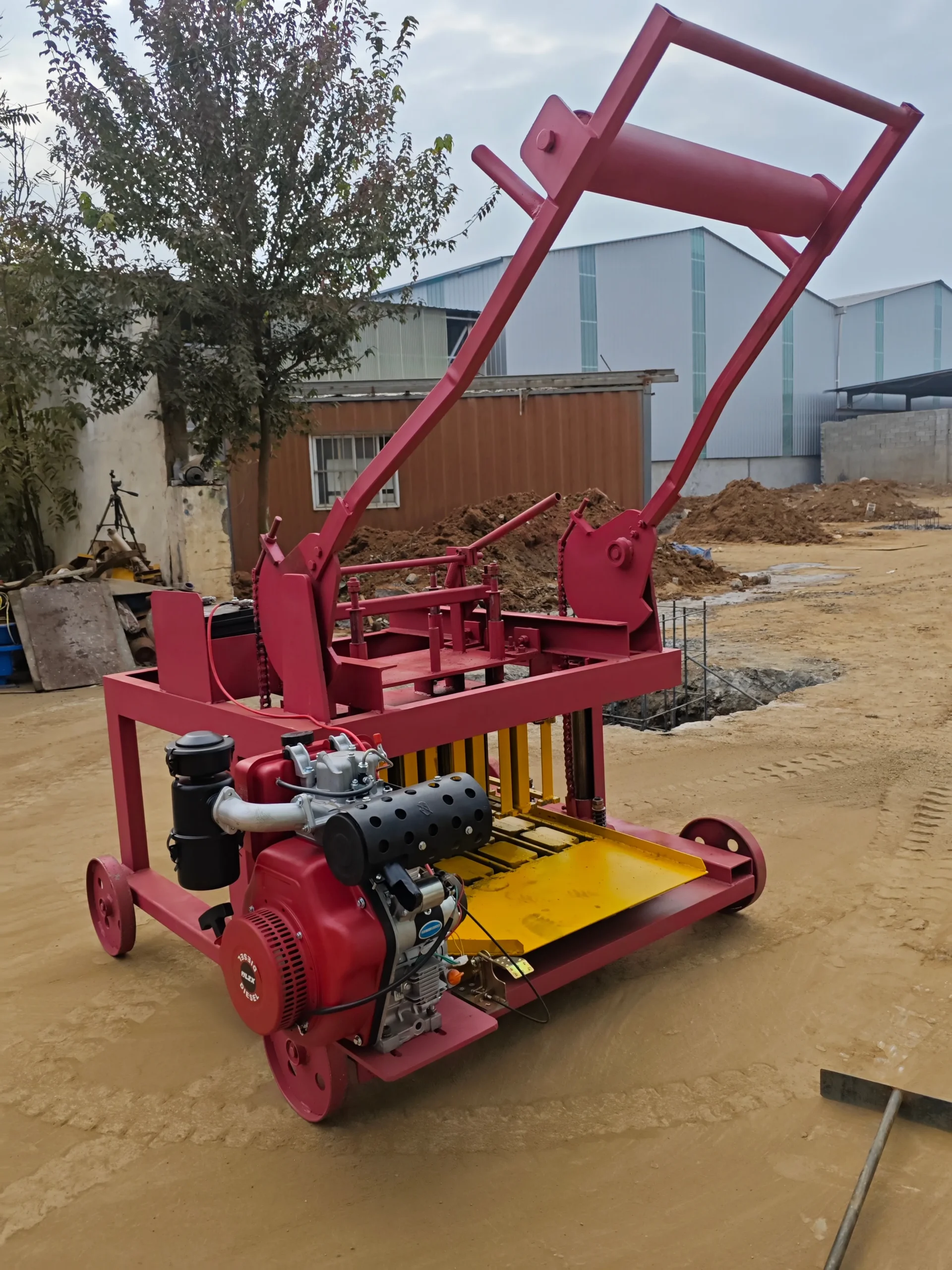
Description
System-Matched Configuration — Every QMR4-45 unit leaves the factory with hydraulic pressure, vibration force, and mould geometry aligned to the buyer’s stated mix design and target hollow block format, eliminating the guesswork that plagues catalogue-ordered machines.
Technical Specifications
| Parameter | Value |
|---|---|
| Model | QMR4-45 |
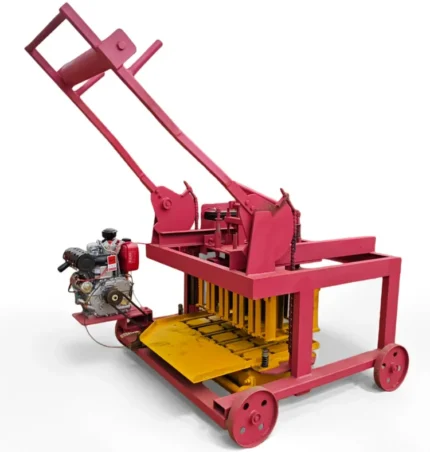
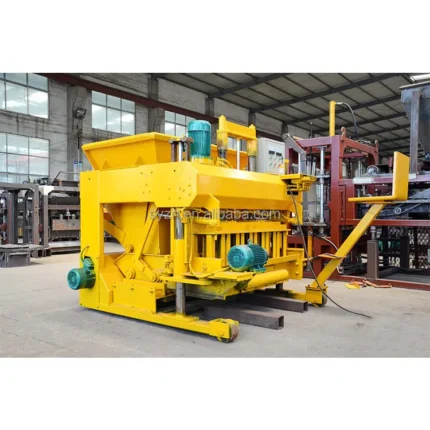
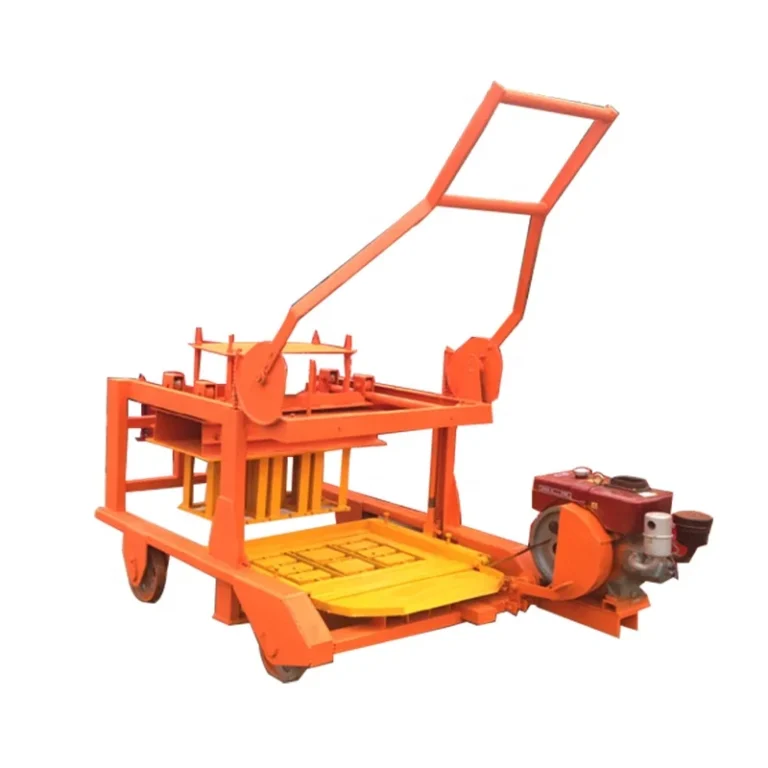
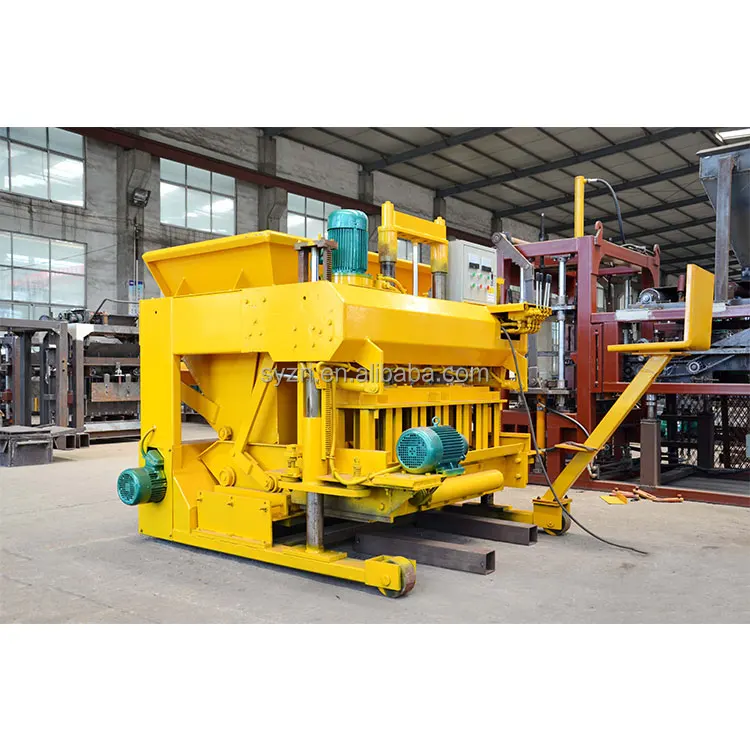
| Product Type | Mobile Egg-Laying Concrete Block Machine |
| Overall Dimensions (L×W×H) | 2420×1320×1650 mm |
| Net Weight | 810 kg |
| Moulding Cycle | 40–45 s |
| Pallet Size | No pallet required (egg-laying type) |
| Rated Power | 6 kW |
| Diesel Engine Option | 6 kW or 6–8 HP |
| Voltage & Frequency | 220 V / 380 V or customized to local supply |
| Control System | Manual / hydraulic with diesel engine drive (PLC not stated in source) |
| Output Capacity | 3000 pcs/day (basis: 400×200×200 mm hollow block, 4 pcs/mould, 8-hour shift) |
| Output Capacity (alt. format 1) | 3500 pcs/day for 400×150×200 mm hollow block, 8-hour shift |
| Output Capacity (alt. format 2) | 4500 pcs/day for 400×120×200 mm hollow block, 8-hour shift |
| Mould Format | Hollow block in multiple widths (mould change required — time not stated in source) |
| Automation Level | Manual operation with hydraulic assist |
| Assembly State | Skid-mounted, mobile on site |
| Warranty | One year for the whole machine |
| Certification | CE |
Application Suitability
| Application | Material or Output |
|---|---|
| On-site hollow block production for housing projects | Crushed stone, sand, cement, water — no fixed plant or pallet circuit required |
| Remote infrastructure block making | Diesel engine drive for sites with unreliable or absent grid electricity |
| Small-scale block plant capacity addition | Low-capital mobile unit supplementing an existing fixed line during peak demand |
| Entrepreneur-led first block operation | Manual-to-hydraulic operation with future PLC automation and stacking upgrade path |
| Contractor self-supply for masonry walls | 400×200×200 mm, 400×150×200 mm, and 400×120×200 mm hollow block formats on a single machine |
Why the Voltage and Control Language Question Must Come First
A mobile block machine that cannot plug in is an 810 kg paperweight sitting on your pour slab.
I learned this the hard way at a Berlin trade fair when a QMR4-45 mobile concrete block machine was shipped to a West African site without confirming the local 220 V / 50 Hz single-phase supply against the standard 380 V / 50 Hz three-phase motor. The contractor waited three weeks for a step-up transformer while the crew stood idle [NEED_CITE: voltage and frequency standards by export market]. That delay cost more than the transformer ever would. Now every quotation I handle locks in voltage, frequency, phase, and PLC display language in writing before the machine enters production, because an automatic mobile block machine is only automatic if it can actually power on the day it arrives.
Control Architecture and the Automation Upgrade Path
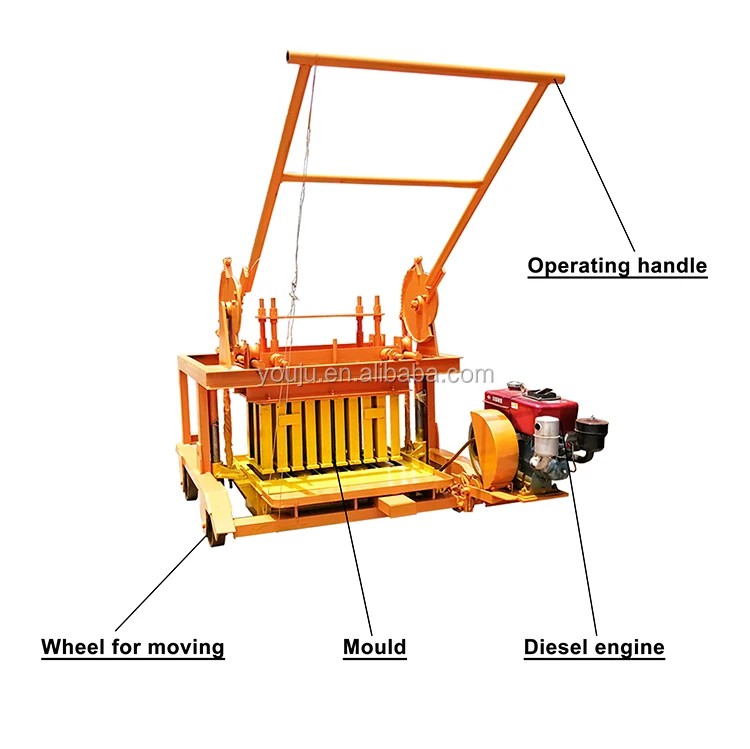
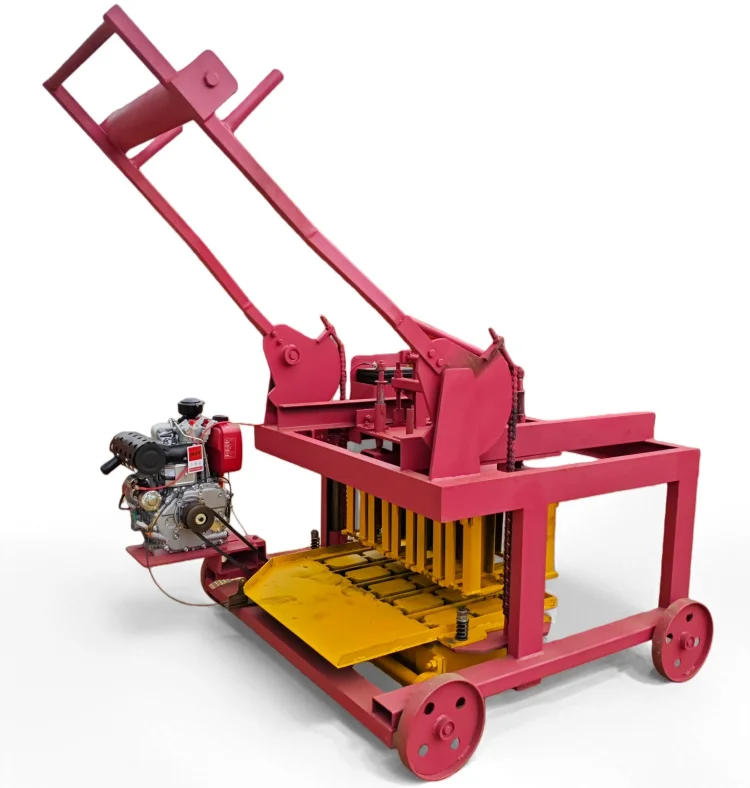
The QMR4-45 ships as a manual-hydraulic unit with diesel engine drive, keeping the initial capital outlay low for contractors who need hollow blocks on site today. The control panel houses the hydraulic valve bank and engine throttle, operated by a single person walking the machine forward after each cycle. For buyers planning to scale, the hydraulic circuit and sensor mounting points are arranged so that a PLC-controlled egg laying block machine conversion can be completed later without replacing the main frame or hydraulic cylinder set.
Matching the Egg-Laying Cycle to Your Crew and Curing Area
Because the QMR4-45 lays blocks directly onto the ground, the curing area becomes part of the production layout. A 40–45 s moulding cycle means the operator walks the machine roughly 40 times in an hour, and each row of freshly formed blocks needs enough clearance for water curing without foot traffic damage [NEED_CITE: concrete curing practices for egg-laying block production]. Buyers who map their curing slab before ordering avoid the bottleneck of blocks stacked too close together, which reduces breakage and keeps the daily output aligned with the capacity calculation.
Reading the Spec Sheet Against Your Target Block Format
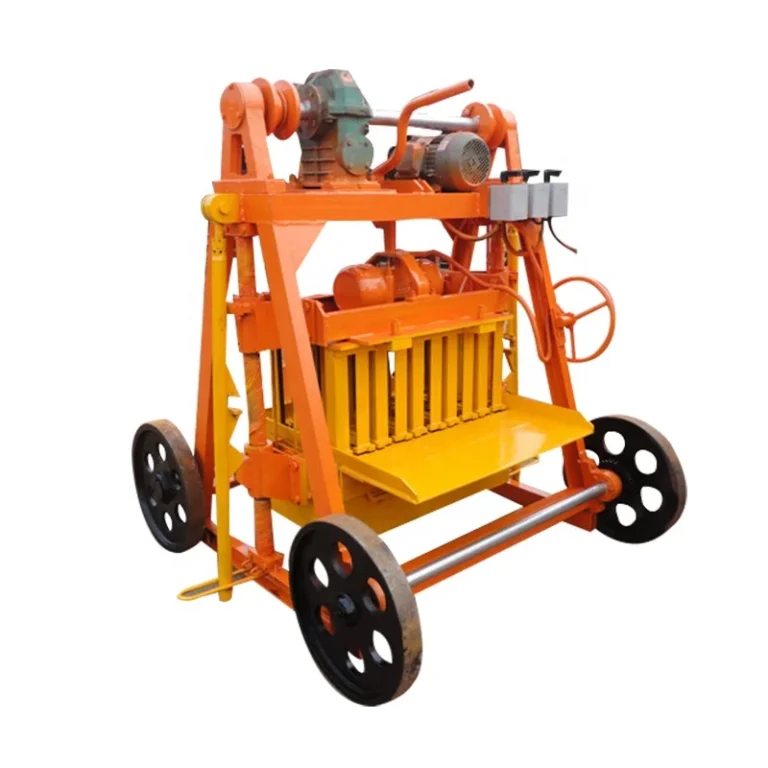
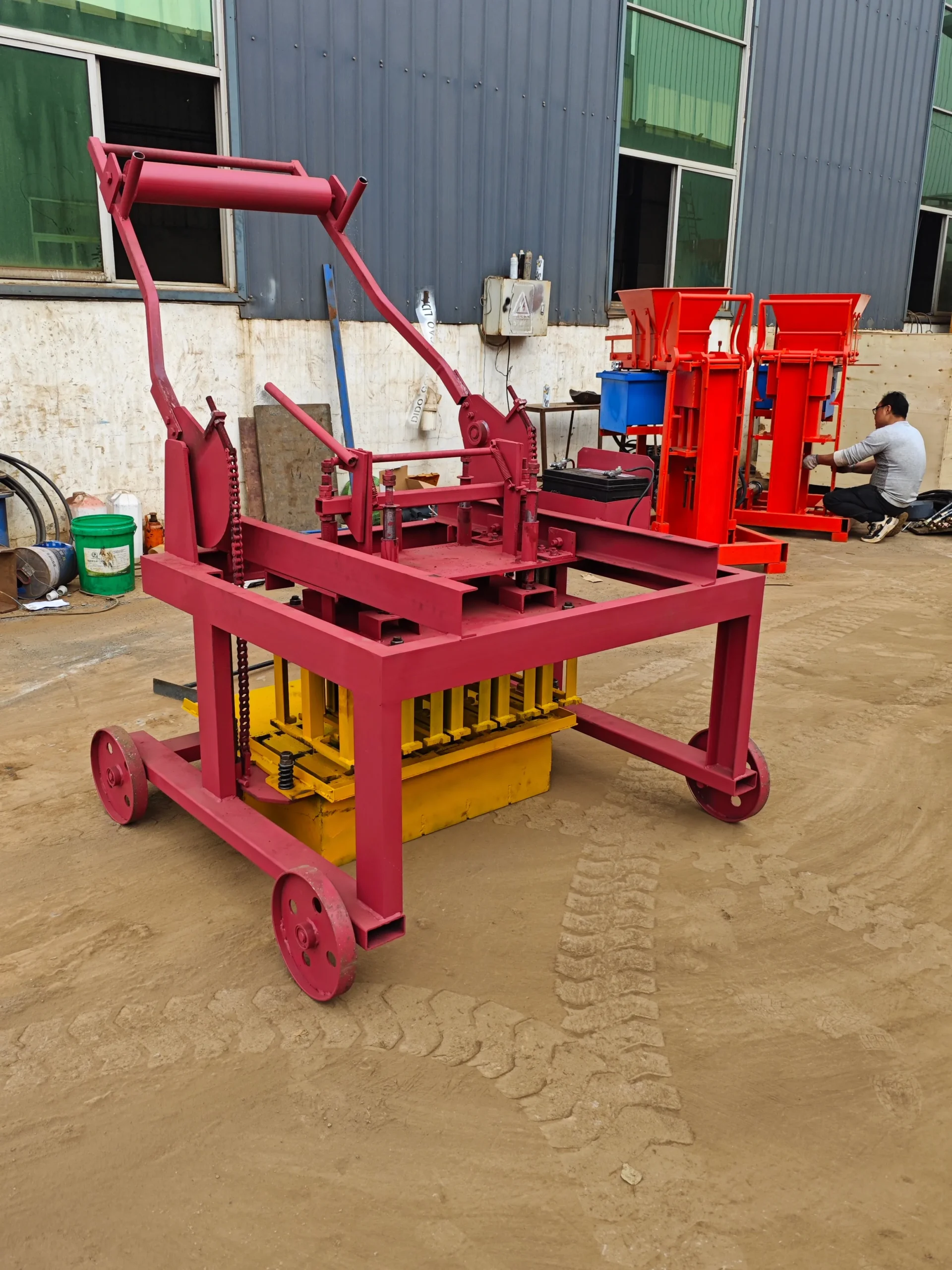
The rated power of 6 kW drives both the vibration motor and the hydraulic pump, so the two forces share a fixed power budget. When you switch from a 400×200×200 mm hollow block to a 400×120×200 mm format, the mould cavity volume drops and the vibration energy per block rises, which is why the daily output climbs from 3000 to 4500 pieces on an 8-hour shift. The hydraulic pressure setting must be adjusted for each format to maintain consistent wall density, and this adjustment is done at the manual valve — a five-minute task once the operator knows the reference marks. The skid-mounted frame at 2420×1320×1650 mm keeps the machine within a standard flat-rack container envelope, and the 810 kg net weight allows site relocation with a telehandler rather than a dedicated crane.
The Cost of Skipping the Pallet and Curing Layout Check
Buyers who treat an egg-laying machine as a drop-anywhere solution often discover that uneven ground produces blocks with inconsistent height, and hand-stacking freshly laid blocks to save space leads to corner damage during the first 24 hours of curing [NEED_CITE: common causes of block breakage in egg-laying production]. Without a level concrete slab and a curing-water supply routed across the production area, the real daily throughput falls well below the stated capacity, and the labour saved by avoiding pallets is cancelled out by rework and waste sorting.
Why Sourcing This Machine Through a Single-Focus Supplier Matters
Block machinery is our only product line, so the QMR4-45 is specified as a matched system — hydraulic pressure, vibration amplitude, mould geometry, and power source chosen together rather than assembled from unrelated catalogues. Configuration starts from your actual mix design and local aggregate, not a generic default, which means the vibration force and hydraulic pressure are set to produce the block strength your market requires. Mould design covers the hollow block formats your customers buy, including custom drawings when standard widths do not match local building codes. The automation level is selectable: you can begin with manual-hydraulic operation and add PLC control, automatic pallet feeding, or stacking equipment later as your output grows. Installation support includes on-site commissioning and operator training so the crew understands mould-change procedure, hydraulic pressure adjustment, and daily maintenance before the first production shift ends.
Documentation & Verification
- Line layout showing egg-laying production path, curing area, and water supply routing
- Capacity calculation stating the exact hollow block format and 8-hour shift assumption
- Mould drawing and format list for every hollow block width included in the quotation
- Voltage, frequency, phase, and control display language confirmed in writing before production
- Factory test record run on the buyer’s specified block format before dispatch
- Wear parts and hydraulic seal list shipped with the machine for first replacement
Installation, Commissioning & Support
- Level concrete slab of at least 100 mm thickness required to maintain block height consistency across the egg-laying path
- Dedicated 6 kW circuit at confirmed voltage and frequency with earth leakage protection for electric drive units
- Skid-mounted frame arrives fully assembled; diesel engine fluid fill and hydraulic line bleed completed on site
- First-shift commissioning covers mould-change procedure, hydraulic pressure reference marks, and vibration timing
- Operator training includes daily grease points, hydraulic oil level check, and mould bolt torque verification
- Wear parts kit with hydraulic seals and vibration motor brushes shipped inside the machine crate
What to Include in Your Inquiry
Send your target hollow block format, daily output requirement, and local aggregate type so the capacity calculation matches your actual production conditions. Confirm your site voltage, frequency, and phase, along with the preferred control display language, to avoid commissioning delays after arrival. If you plan to add PLC automation or stacking later, mention the upgrade timeline so the hydraulic circuit and sensor provisions are built in from the start.
Frequently Asked Questions
Q: How is the daily output of 3000–4500 pcs verified, and which block format does each figure assume?
A: Each output figure is tied to a specific hollow block size and an 8-hour shift. The 3000 pcs/day figure applies to 400×200×200 mm blocks at 4 pcs per mould, 3500 pcs/day to 400×150×200 mm, and 4500 pcs/day to 400×120×200 mm. The capacity calculation sheet provided with the quotation states these assumptions so you can verify throughput against your project schedule.
Q: What automation level is supplied as standard, and what is the upgrade path to PLC-controlled operation?
A: The QMR4-45 ships as a manual-hydraulic machine with diesel engine or electric motor drive. The hydraulic circuit and frame include mounting provisions for PLC sensors and solenoid valves, allowing conversion to a PLC controlled egg laying block machine later without structural modification. Stacking and pallet feeding equipment can also be added as separate modules when production volume justifies the investment.
Q: How are voltage, frequency, and control display language confirmed to match the buyer’s site before shipment?
A: These parameters are locked in writing during the quotation stage, before the machine enters production. The buyer provides local supply specifications and preferred language, and the factory test record confirms the motor, control panel, and display are configured accordingly. This prevents the on-site delays that occur when electrical compatibility is assumed rather than verified.
Q: Which mould formats are included, and how long does a mould change take on site?
A: The standard quotation covers hollow block moulds in the widths stated in the capacity table. Custom moulds can be added to the order based on buyer drawings. Mould change involves unbolting the mould box from the vibration table and lowering the new mould into position; the exact time depends on operator familiarity and is covered during on-site training at commissioning.
Q: What installation, commissioning, and operator training support is provided, and which wear parts ship with the machine?
A: On-site commissioning includes machine positioning, hydraulic system bleed, first-run block production, and operator training on mould change, pressure adjustment, and daily maintenance. A wear parts kit containing hydraulic seals and vibration motor brushes ships inside the machine crate so the first replacement parts are available without waiting for an international shipment.