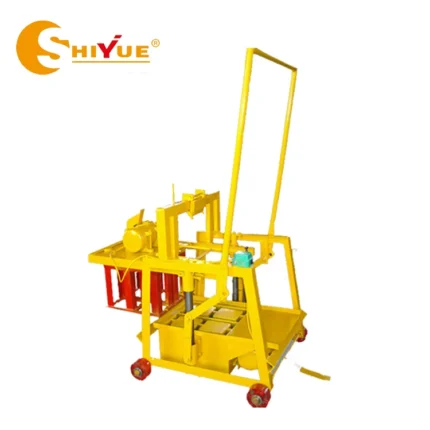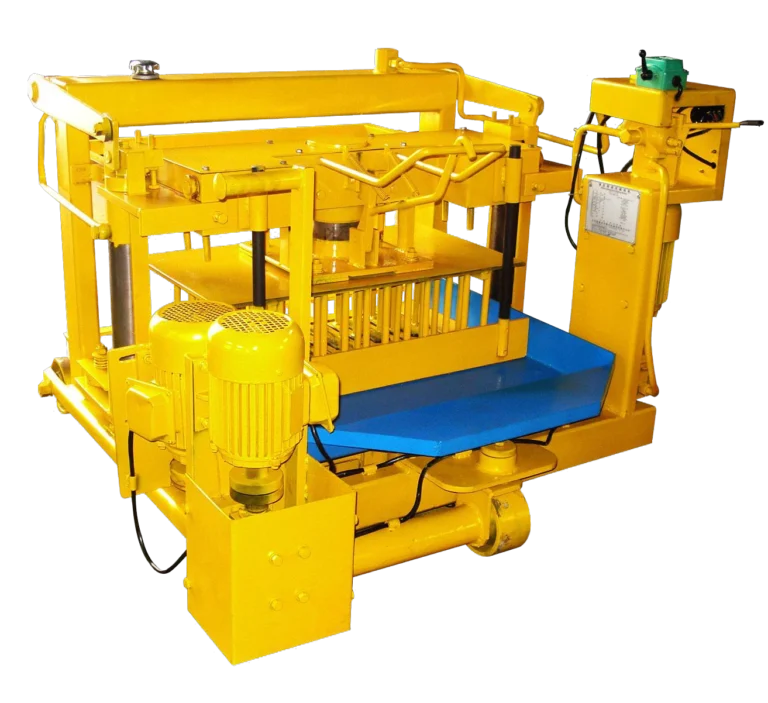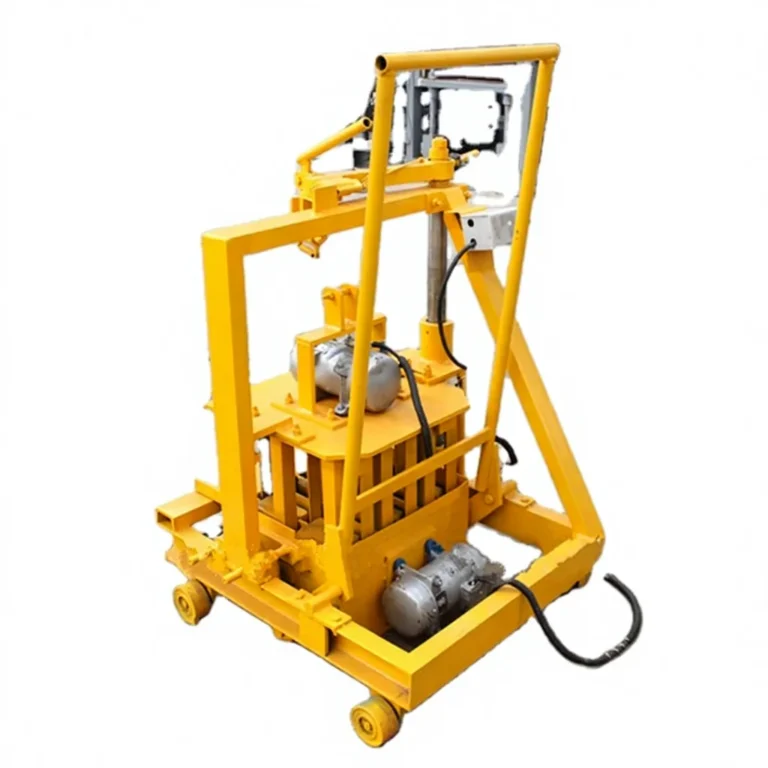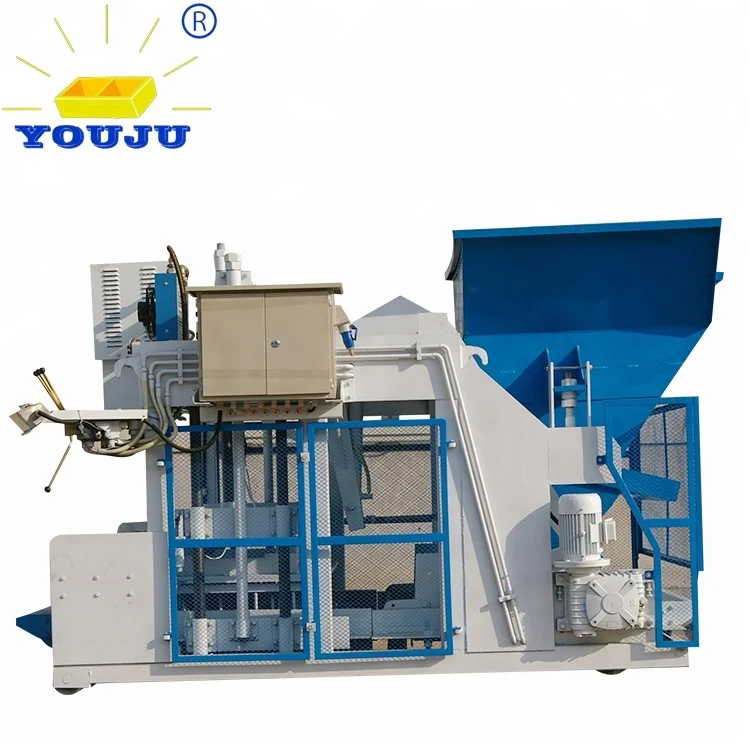
Description
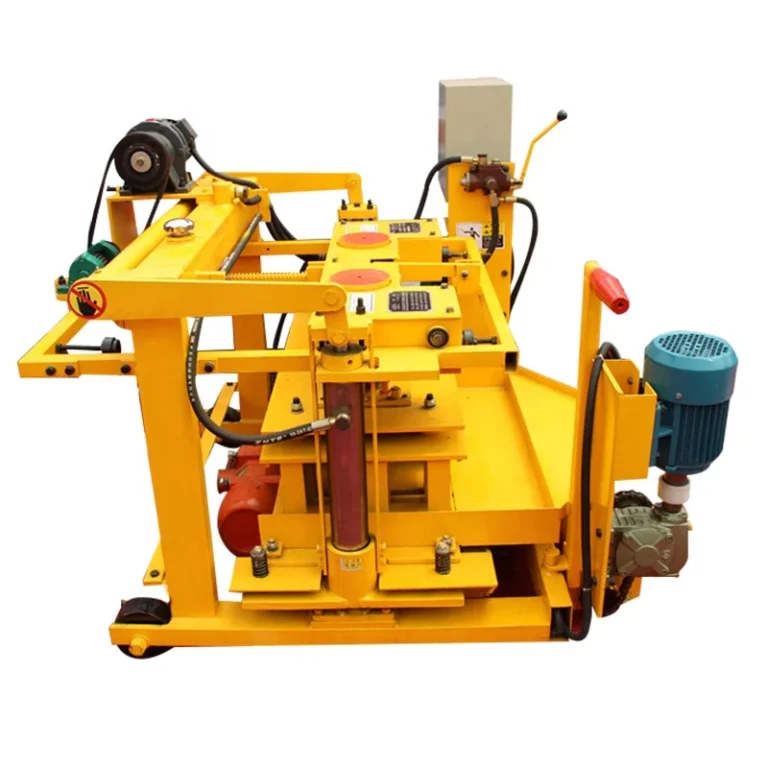
System-Matched Configuration — the QMY4-30 mobile egg-laying block machine ships with hydraulic pressure, vibration force, and mould cavity count verified against your actual mix design rather than a generic catalogue default.
Technical Specifications
| Parameter | Value |
|---|---|
| Product Type | Mobile Hydraulic Block Making Machine |
| Model | QMY4-30 |
| Operation Method | Mobile (egg-laying), pallet-free |
| Hydraulic Method | Mould vibration |
| Demold Method | Hydraulic |
| Molding Cycle | 25–30 s (basis not stated in source — confirm block format / material / thickness) |
| Total Power | 5.95 kW |
| Mould Format Options | 400×200×200 mm / 400×150×200 mm / 400×100×200 mm |
| Output Capacity | 480 pcs/h for 400×200×200 mm; 600 pcs/h for 400×150×200 mm; 840 pcs/h for 400×100×200 mm (based on 25–30 s cycle, 4/5/7 pcs per mould respectively) |
| Daily Output (8 h) | 3,840 / 4,800 / 6,720 pcs depending on block format listed above |
| Automation Level | Semi-automatic |
| Suitable Terrain | Mountainous, hilly, industrial mining, desert, coastal areas |
| Standards | ISO 9001:2000, CE |
Application Suitability
| Application | Material or Output |
|---|---|
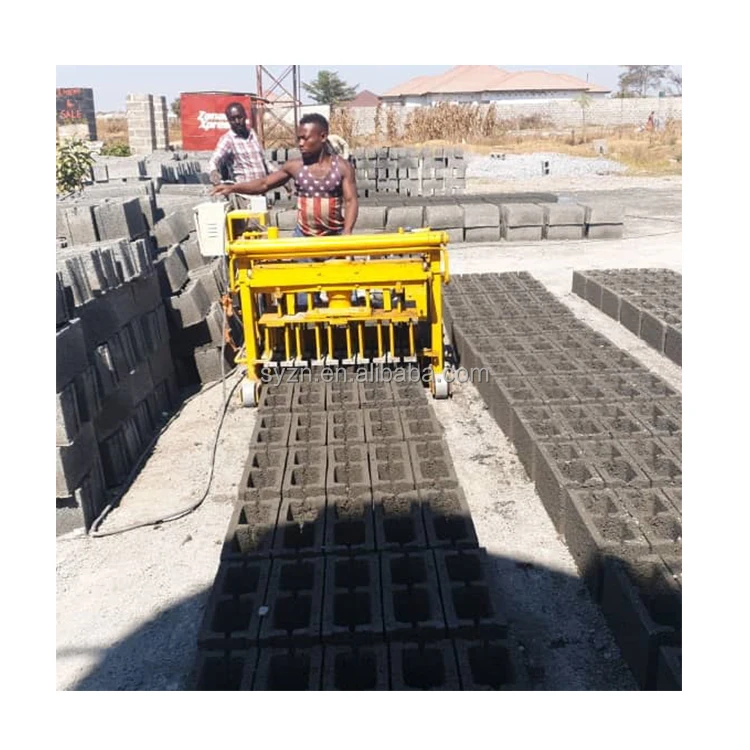
| On-site hollow block production for housing projects | Crushed stone, river sand, and cement mixes laid directly on prepared ground |
| Remote construction sites with no fixed plant infrastructure | Local aggregate and cement with minimal water supply requirements |
| Small-scale block producers entering the market | Standard concrete mixes for 400×200×200 mm, 400×150×200 mm, and 400×100×200 mm hollow blocks |
| Contractor self-supply for masonry walls | Site-sourced sand and gravel blended with Portland cement |
Why "Pieces per Hour" Means Nothing Without the Block Format Attached
Capacity figures are only honest when the mould cavity count and block dimensions sit right next to them.
I once saw a buyer in Peru receive a mobile block machine quoted at a single hourly number. When the moulds arrived for his local 150 mm wall block, the cycle stretched and his daily tally fell well below what he had budgeted labour for. The machine was fine; the quotation was not. The QMY4-30 automatic mobile block machine lists output per format — 480 pieces per hour for 400×200×200 mm blocks, 600 for the 150 mm version, and 840 for the 100 mm partition block — each tied to a specific mould cavity count and cycle window [NEED_CITE: block format assumptions in capacity quotations]. Without that pairing, a number is just marketing.
How Pallet-Free Egg-Laying Changes the Site Logistics
With the QMY4-30 PLC controlled mobile egg-laying block machine, blocks are formed directly on a level ground surface and left to cure in place. This removes the entire pallet loop — no pallet purchasing, no pallet return conveyors, no curing rack infrastructure. For a contractor working a remote hillside or a desert housing development, that means fewer items to ship in and fewer moving parts to maintain. The machine moves forward on its own wheels after each cycle, leaving a row of freshly pressed blocks behind.
What the 5.95 kW Power Draw Means for Generator-Run Sites
A total connected load under 6 kW lets this machine run from a modest diesel generator, which is often the only power source on greenfield construction sites. The PLC controlled mobile egg-laying block machine does not demand a dedicated transformer or a three-phase grid connection that may be months away from a new development [NEED_CITE: typical generator sizing for mobile block machines on remote sites]. Contractors in mountainous or coastal terrain can begin producing blocks the week the machine arrives instead of waiting for grid infrastructure.
Reading the Specs That Actually Shape Block Quality
The QMY4-30 uses hydraulic demoulding combined with mould vibration to compact the concrete mix. Vibration frequency and hydraulic pressure must be matched to the buyer’s specific aggregate gradation and cement content; a mix that works with river sand may fail with volcanic scoria or crushed limestone. The 25–30 second moulding cycle is a starting point — actual cycle time shifts with block thickness, mix moisture, and ambient temperature. Mould change across the three standard formats requires manual intervention, so buyers planning multiple block types in a single shift should account for that downtime. Low total power draw of 5.95 kW also means the vibration motor and hydraulic pump are sized for intermittent rather than continuous high-volume duty, which suits project-based production over industrial-scale output.
The Cost of Skipping Mix Verification Before Shipment
A machine configured for a standard river-sand mix will underperform if the buyer’s local aggregate is lightweight volcanic rock or high-clay desert sand. Block strength drops, dimensions wander, and an entire production run can end up as rubble. I saw this happen on a Mexican job site where two containers of blocks were scrapped because the vibration parameters were set for a Chinese sand profile [NEED_CITE: aggregate variability and block compressive strength correlation]. Running a trial batch with the buyer’s actual material before the machine leaves the factory eliminates that risk entirely.
Why Sourcing This Machine Through a Single-System Supplier Matters
Block machinery is our only product category, so the QMY4-30 is specified as a matched system — machine, mould, and ground-surface preparation guidance arrive together rather than as separate purchases from different vendors. Configuration is set against your local aggregate and target block format, not a catalogue default. Mould drawings are provided before production so the block dimensions match what your market actually buys. Automation level is selectable, meaning a buyer can begin with semi-automatic operation and add control upgrades as production volume grows. Installation support and operator training are included so first-time producers are not left guessing at start-up procedures.
Documentation & Verification
- Line layout and capacity calculation stating the block format assumed for each output figure
- Mould drawing and format list confirming dimensions match your local market requirements
- Voltage, frequency, and control language confirmation recorded before production begins
- Factory test record run on your specified mix design where sample material is available
- Operation and maintenance manual plus wear parts and mould replacement list
Installation, Commissioning & Support
- Level ground surface with compacted soil or concrete strip required for egg-laying operation
- Power supply matching confirmed voltage and frequency with a dedicated circuit breaker for the 5.95 kW load
- Machine arrives assembled; wheels and hydraulic lines checked before first on-site cycle
- Mould change procedure and cycle parameter setting covered during operator training session
- Wear parts list with hydraulic seals and mould liner dimensions provided for local sourcing
What to Include with Your Inquiry
Send the block dimensions your local market sells most, along with the daily output you need to keep your masonry crews supplied. Include a description of your available aggregate — source, gradation, and whether it is crushed stone, river sand, or a local alternative — so the moulding parameters can be set before dispatch. Confirm your site voltage, frequency, and preferred control language to avoid commissioning delays once the automatic mobile block machine arrives on your job site.
Frequently Asked Questions
Q: How is output capacity verified, and what block format is assumed for each figure?
A: Every capacity figure for the QMY4-30 is stated alongside the mould format and cavity count. The 480-piece hourly rate applies to 400×200×200 mm hollow blocks at four cavities per mould; the 600 and 840 figures correspond to the 150 mm and 100 mm formats respectively. No single blanket number is used without its block-format assumption attached.
Q: What voltage and frequency options are available for the target market?
A: Voltage and frequency are confirmed against the buyer’s site electrical supply before production begins. The QMY4-30 total power draw of 5.95 kW can be configured for common industrial voltages. Control panel language is also locked in at this stage so operators can read the interface on day one.
Q: What automation level does the QMY4-30 offer, and is a PLC control upgrade available?
A: The machine ships as a semi-automatic mobile unit with manual mould change and operator-controlled cycle initiation. Buyers who want repeatable cycle parameters and batch-to-batch consistency can request a PLC-controlled configuration, which stores moulding recipes and reduces reliance on operator judgement during long production shifts.
Q: What site conditions are required for mobile egg-laying operation?
A: The ground surface must be reasonably level and compacted — fresh loose soil will cause blocks to settle unevenly before initial set. The QMY4-30 is rated for mountainous, hilly, desert, and coastal terrain, but the working strip still needs basic preparation. Adequate clearance around the machine path allows the operator to move forward after each cycle without obstruction.