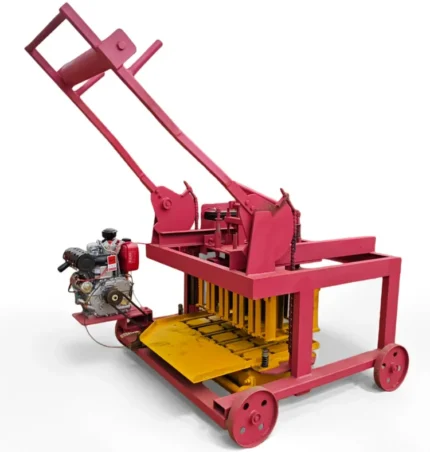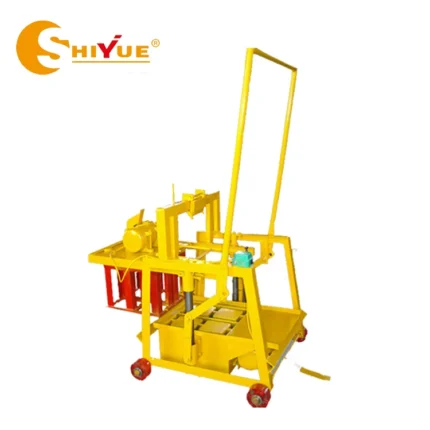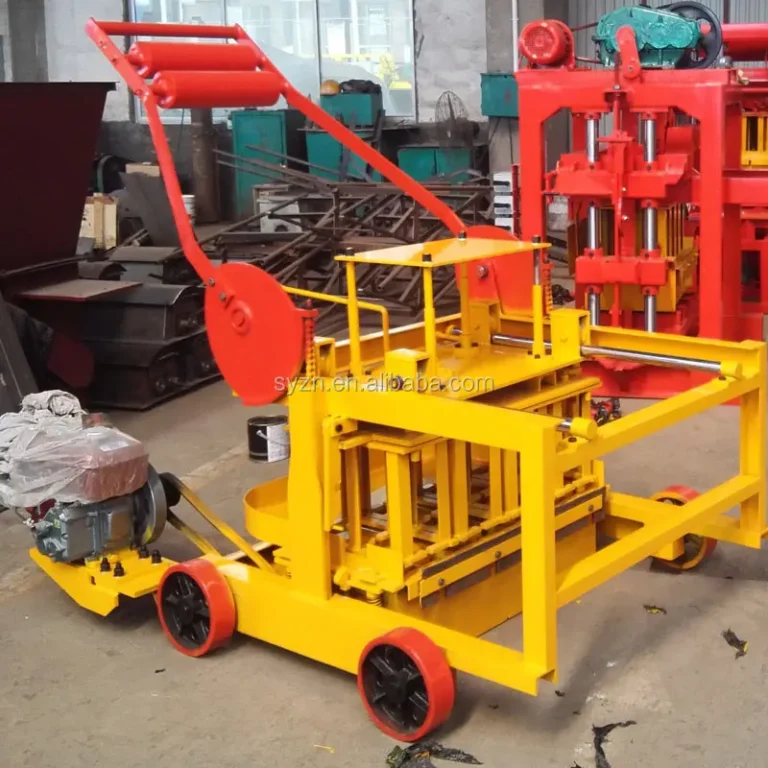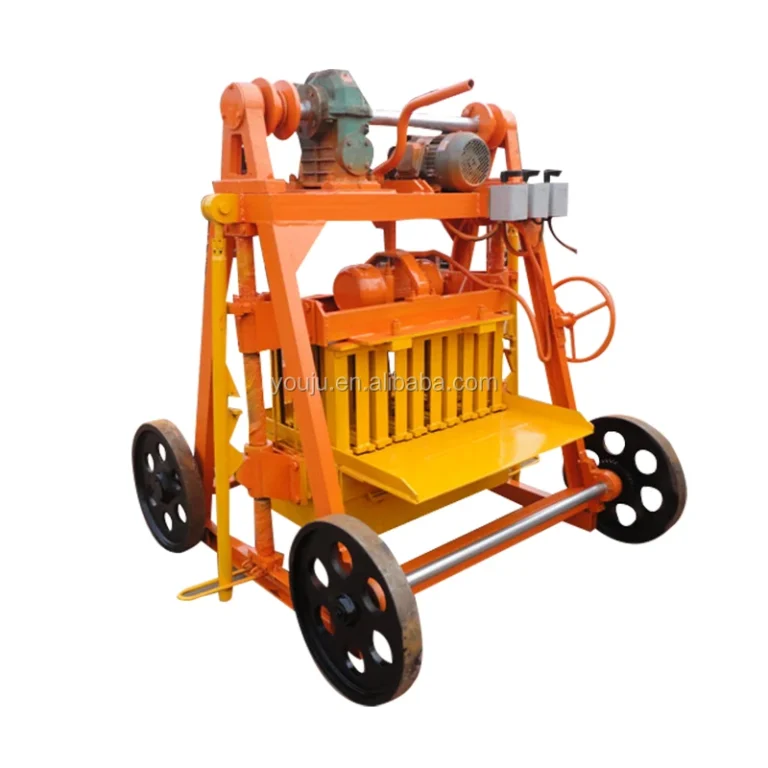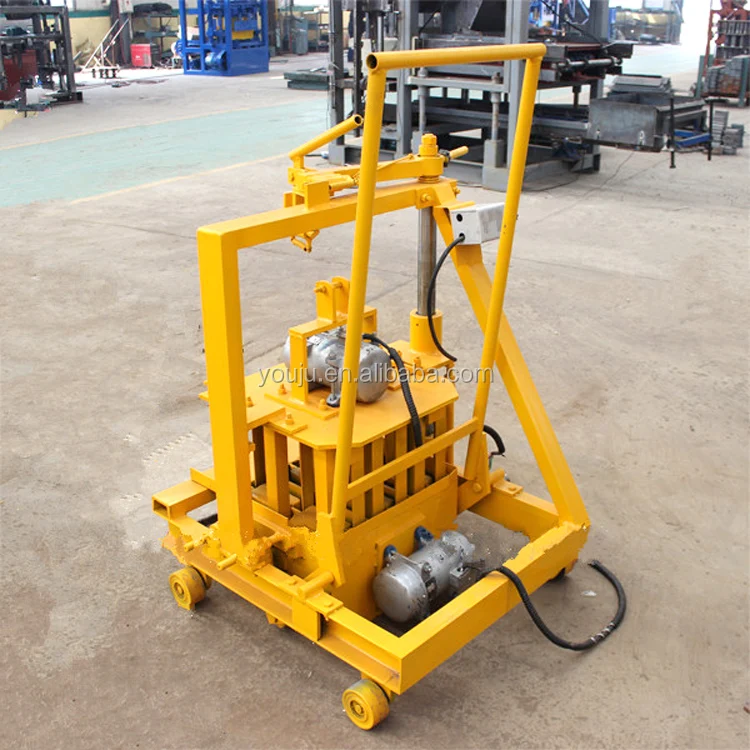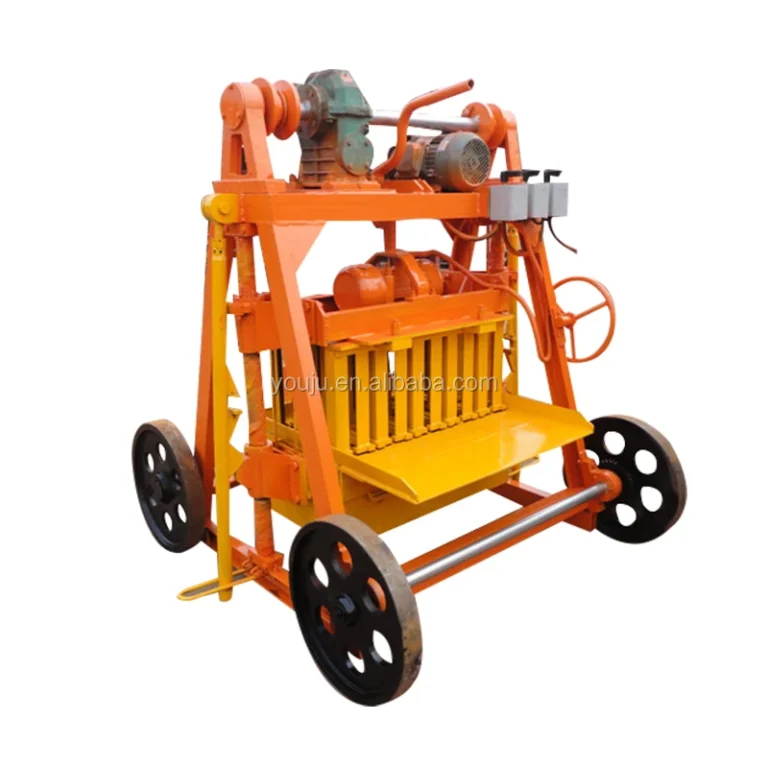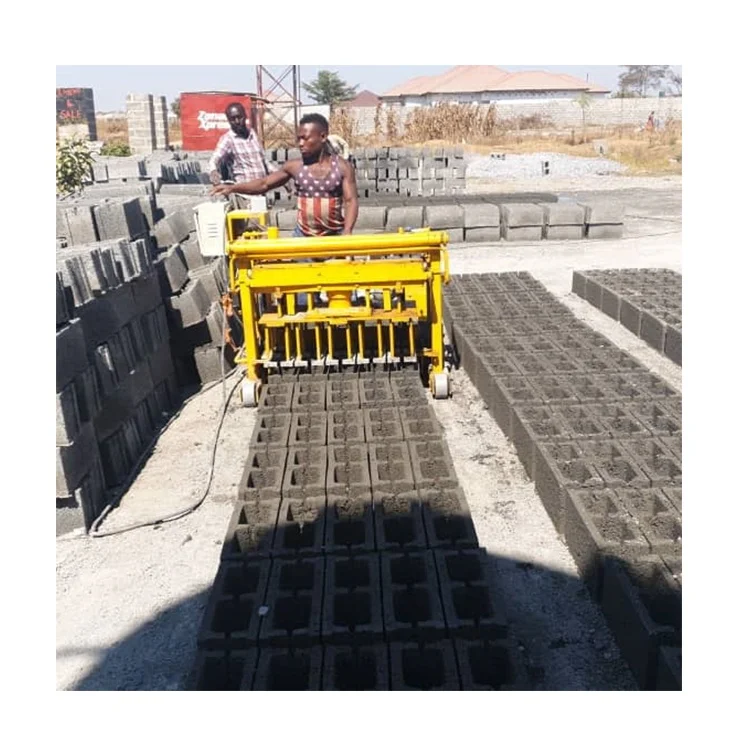
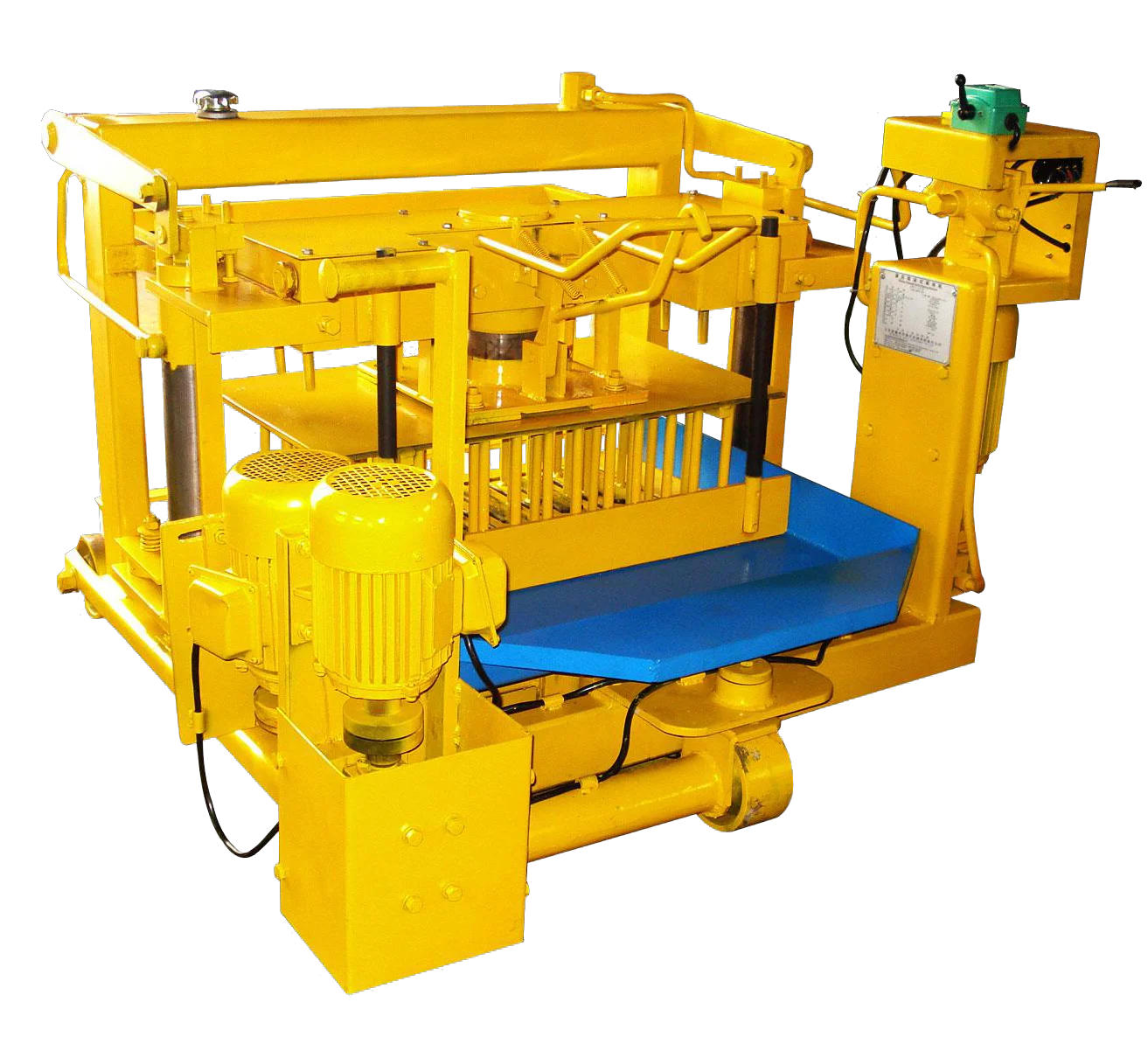
Description
Hydraulic-First Configuration — Every QMY4-30 mobile block machine ships with pressure matched to your local aggregate and mix, not a factory default that assumes ideal sand.
Technical Specifications
| Parameter | Value |
|---|---|
| Model | QMY4-30 |
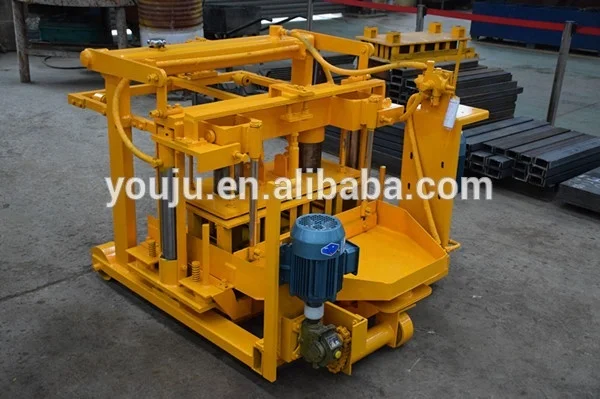
| Product Type | Mobile Concrete Block Making Machine |
| Rated Power | 5 kW |
| Molding Cycle | 30 seconds per mold |
| Overall Dimensions | 1200 × 1200 × 1100 mm |
| Net Weight | 950 kg |
| Hydraulic Pressure | Included (MPa rating confirmed per order) |
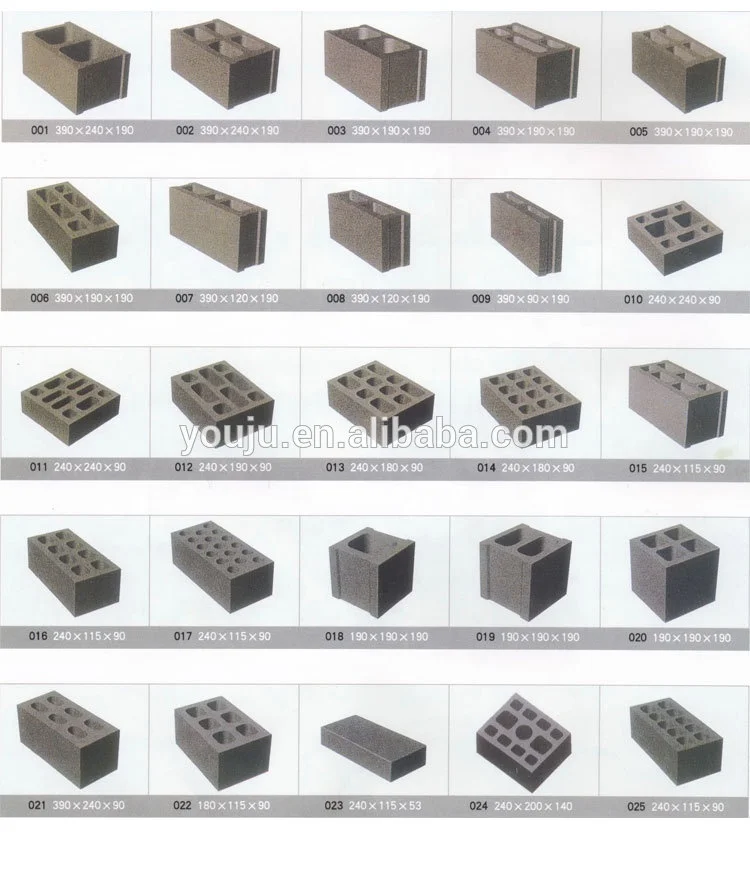
| Mould Format | Changeable for hollow block and solid brick |
| Output Capacity | 480 pcs/hour based on 400×200×200 mm hollow block, 4 pcs/mold |
| Output Capacity | 600 pcs/hour based on 400×150×200 mm hollow block, 5 pcs/mold |
| Output Capacity | 840 pcs/hour based on 400×100×200 mm hollow block, 7 pcs/mold |
| Daily Output | 3,840 pcs/8 hours based on 400×200×200 mm hollow block |
| Daily Output | 4,800 pcs/8 hours based on 400×150×200 mm hollow block |
| Daily Output | 6,720 pcs/8 hours based on 400×100×200 mm hollow block |
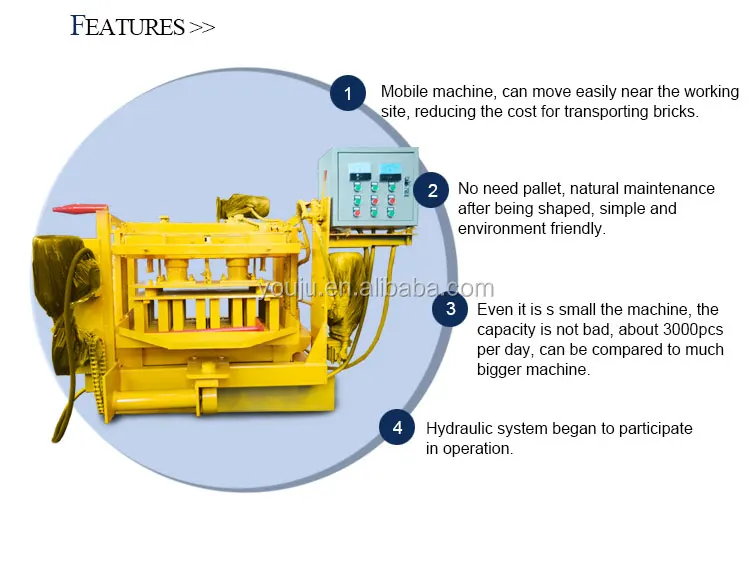
| Machine Type | Mobile, egg-laying configuration |
| Automation Level | Manual/semi-automatic operation |
| Control System | PLC or relay logic, selectable per order |
| Warranty | One year guarantee |
Application Suitability
| Application | Material or Output |
|---|---|
| On-site hollow block production | Cement, sand, crushed stone, and slag mixes laid directly on concrete floors |
| Solid brick manufacturing for small contractors | Interchangeable mould for solid format using the same hydraulic cycle |
| Startup block yards with no fixed plant | Egg-laying operation on prepared ground, no pallet return system required |
| Rural housing projects | Low capital entry with 30-second cycle across common block formats |
Why "Output per Hour" Alone Will Mislead Your Purchase Decision
Stated capacity figures are only valid for a specific block format and a matched mix design.
When a quotation shows 840 pieces per hour without naming the format, buyers routinely set up their yard expecting that number across every product they sell. I have watched operators in West Africa run an automatic mobile block machine PLC controlled setup only to find their 400×200 hollow blocks yield less than half that figure because the quoted cycle assumed a smaller cavity format. The vibration force and hydraulic pressure must also match the aggregate you actually buy locally [NEED_CITE: block density and compressive strength standards by regional building code]. If your crushed stone carries higher fines content than the factory test mix, the compaction energy may not reach the required density, and you will see breakage rates climb during curing.
How PLC Control Changes Operator Dependence on Manual Timing
The QMY4-30 can be supplied with PLC control or conventional relay logic, and the choice shapes daily production more than buyers expect. With relay logic, the operator judges when to advance the mold and release the block by watching a timer or simply counting seconds. This works on quiet yards with experienced crews. Once you introduce an automatic mobile block machine PLC controlled system, the cycle timing is locked into the program, so every mold receives the same vibration duration and hydraulic hold regardless of operator fatigue or shift changes. The PLC display language is confirmed before shipment so that fault codes and parameter screens read in the language your operators actually speak.
The Upgrade Path from Egg-Laying to Semi-Automatic Handling
A mobile egg-laying machine lays blocks directly on the ground, which removes pallet cost but leaves stacking and curing as manual tasks. For yards that start with the QMY4-30 in basic configuration, the automation level can be expanded later to include semi-automatic pallet feeding if you decide to move toward fixed-station production. I have seen contractors begin with pure egg-laying for a single housing project, then add a pallet return loop once they secured a second contract and needed the batch-to-batch consistency that only mechanized pallet handling provides [NEED_CITE: typical labor reduction when moving from manual to semi-automatic block handling]. The key is ordering the base frame with the correct mounting points during the initial build, because retrofitting is more disruptive than planning ahead.
Reading the Specifications Against Your Actual Block Format
The 30-second molding cycle applies across the three listed hollow block formats, but the piece count per mold changes from four to seven as the block width drops from 200 mm to 100 mm. This means daily output shifts from 3,840 pieces to 6,720 pieces over an eight-hour run. The rated power of 5 kW covers the vibration motor and hydraulic pump together; if you add a separate mixer or conveyor upstream, that load sits on a different circuit. The overall dimensions of 1200 × 1200 × 1100 mm and 950 kg net weight mean the machine can be transported on a flatbed truck between job sites, but the operating area around it must be level and free of soft ground to prevent the egg-laying wheels from sinking during the vibration phase. Hydraulic pressure is included in the base configuration, though the exact MPa rating is confirmed against your target block strength requirement during the quotation stage.
The Hidden Cost of Skipping Voltage Confirmation Before Shipment
Voltage and frequency mismatches sit at the top of commissioning delay reports for exported machinery. A yard in a 60 Hz market that receives a 50 Hz motor will run the vibration system at a higher RPM than designed, accelerating bearing wear and changing the compaction energy delivered to each block. When the automatic mobile block machine PLC controlled cabinet arrives with display text in a language the operator cannot read, fault diagnosis becomes guesswork, and simple sensor failures turn into full production stops. Confirming the target market voltage, frequency, and PLC language before the machine leaves the factory avoids these delays [NEED_CITE: voltage and frequency standards by export market]. The QMY4-30 control system is configurable, but the selection must be locked during the order stage, not after the container is sealed.
What We Build Into Every QMY4-30 Before It Leaves Linyi
Block machinery is the single focus of our production line, so the QMY4-30 is specified as a matched system of machine, mold, and hydraulic circuit rather than assembled from unrelated suppliers. The configuration is set against your actual mix design and local aggregate, not a generic catalog default. Mould design covers the hollow block formats your market sells, and custom drawings are accepted when your project requires a non-standard cavity or interlocking profile. The automation level is selectable so you can start with manual pallet handling and move toward semi-automatic operation as your yard grows. Installation and commissioning support includes operator training on the specific PLC interface and hydraulic adjustments your crew will use daily.
Documentation & Verification
- Line layout and capacity calculation stating the block format assumed for the QMY4-30 output figures
- Machine specification sheet with confirmed voltage, frequency, and PLC display language
- Mould drawing and format list covering every cavity size included in your order
- Factory test record run on your target block format before dispatch
- Hydraulic and electrical schematic for on-site maintenance reference
- Operation and maintenance manual with wear parts and mould replacement schedule
Installation, Commissioning & Support
- Operating surface must be level concrete or compacted ground to support the 950 kg machine during vibration
- Dedicated 5 kW circuit with correct voltage and frequency confirmed before the QMY4-30 is energized
- Egg-laying wheels inspected and adjusted on site to match ground conditions at your yard
- PLC parameters and hydraulic pressure set to your mix design during commissioning
- Operator training on mould change procedure and daily lubrication points
- Wear parts list supplied so replacement seals and vibration springs are on hand before the first service interval
Before You Request a Quotation
To size the QMY4-30 correctly, share the block formats your market actually sells, the daily output you need for each format, and the raw materials available locally including aggregate type and cement grade. Confirm your site voltage and frequency, the language your operators need on the PLC display, and whether your yard is currently paved or compacted earth. If you have existing mixers or pallet systems upstream, list those so the machine configuration accounts for the full line rather than operating in isolation.
Frequently Asked Questions
Q: How does automation level affect labor and consistency on a mobile machine?
A: The QMY4-30 can run in manual egg-laying mode with one operator handling the mold advance and block inspection, or with PLC-controlled cycle timing that locks vibration and hydraulic hold to the same values every cycle. PLC control removes timing variation between operators and shifts, which improves block density consistency. Labor savings depend on whether you also add pallet handling later.
Q: What PLC control options and display languages are available?
A: The control system is confirmed during the quotation stage. You specify the target voltage, frequency, and the language for the PLC display text. Fault codes and parameter screens are set to match your operators’ language before the machine leaves the factory, which prevents commissioning delays caused by unreadable error messages on site.
Q: Can the machine upgrade from manual pallet handling to semi-automatic later?
A: Yes, provided the base frame is ordered with the correct mounting points for future pallet feeding equipment. Starting in egg-laying mode requires no pallets, but moving to semi-automatic operation later means adding a pallet return loop. Planning the upgrade path at the initial order stage avoids structural modifications that disrupt production.
Q: How does mould change time impact daily output when switching formats?
A: Every format change stops production while the operator unbolts the current mold, aligns the new one, and adjusts the hydraulic limit switches. If you plan to run multiple formats in one shift, the lost minutes per change reduce the effective daily output below the stated per-format figures. Confirming your primary format lets us set the machine for fastest changeover on that size.
Q: What voltage and frequency details must be confirmed before shipment?
A: You need to provide the exact voltage and frequency at your site, including whether the supply is single-phase or three-phase for auxiliary equipment. The QMY4-30 main motor and PLC cabinet are configured to match. Running a 50 Hz motor on a 60 Hz supply alters vibration frequency and accelerates bearing wear, so confirmation before the container is loaded prevents costly rewinding on arrival.