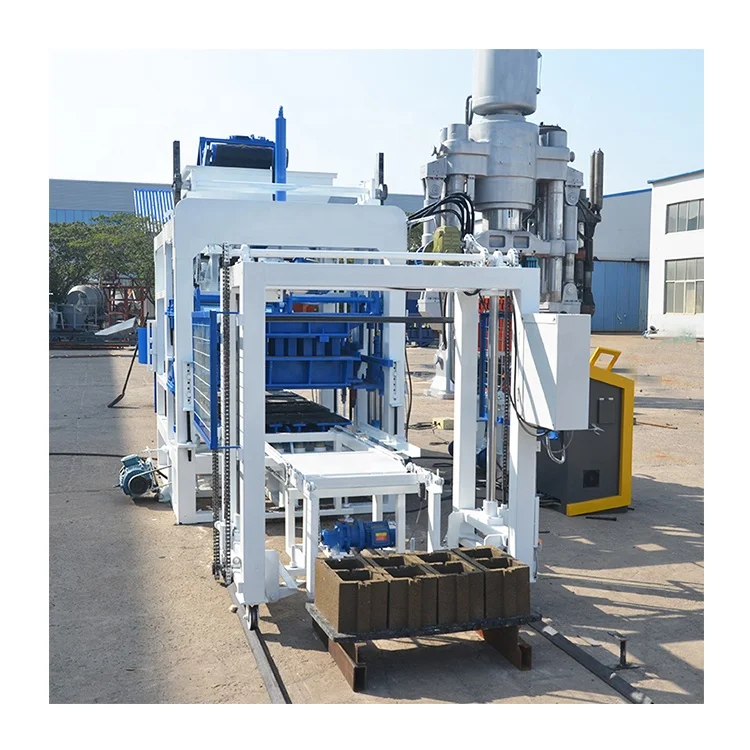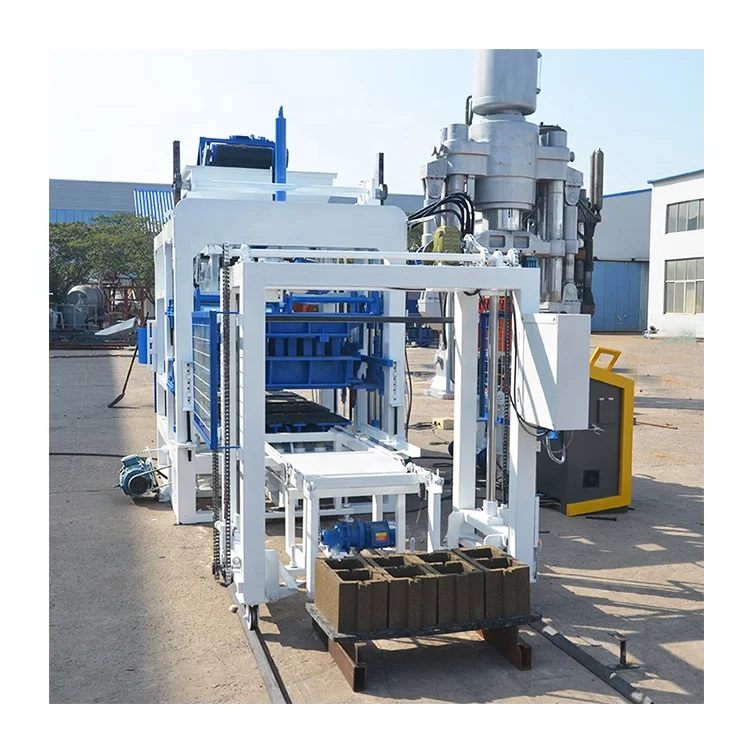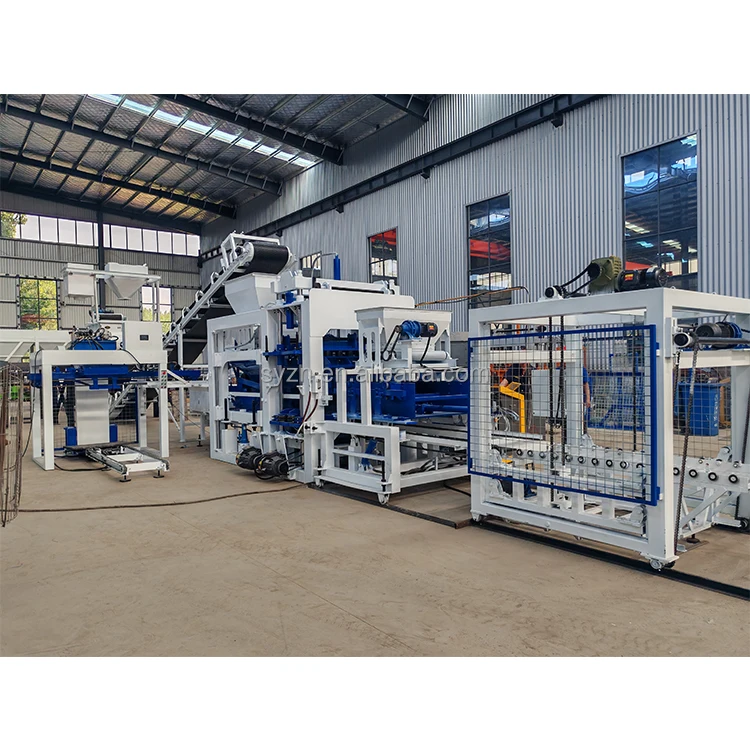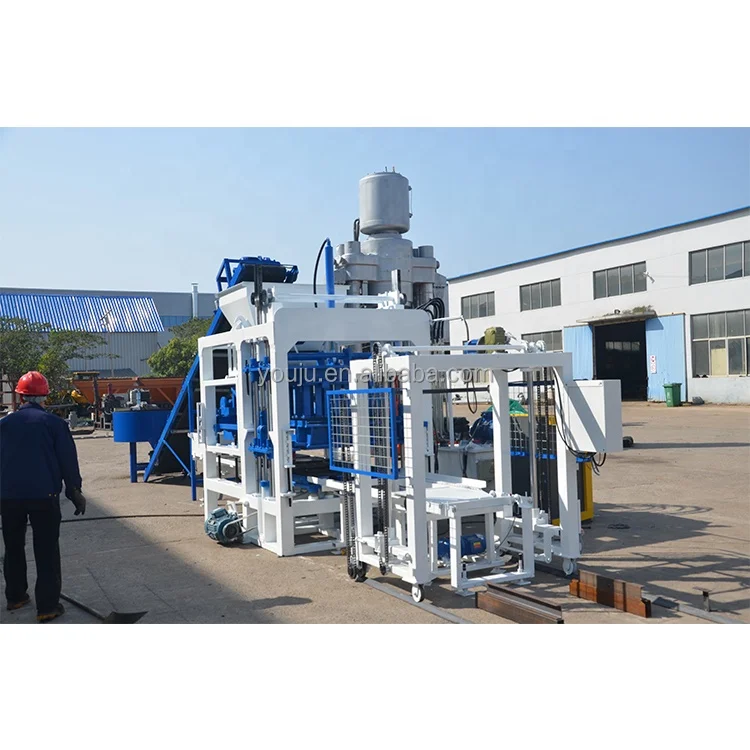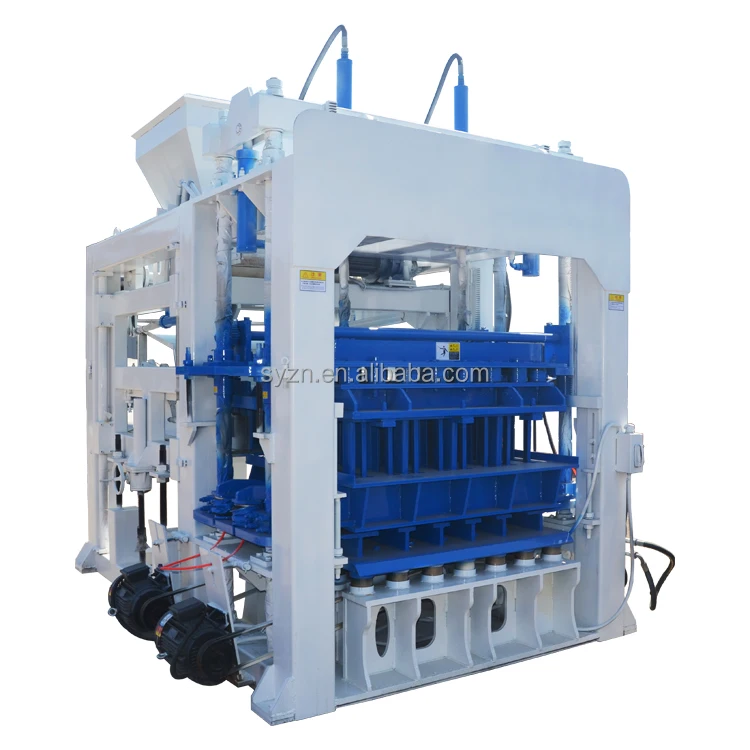
Description
Matched System Configuration — every QT12-15 is specified against your actual mix design, local aggregate and target block format before production begins, so vibration, hydraulic pressure and feeding parameters arrive calibrated rather than generic.
Technical Specifications
| Parameter | Value |
|---|---|
| Model | QT12-15 |
| Product Type | Automatic Concrete Block Making Machine |
| Control System | PLC aptitude control with human-machine interface dialogue system |
| Vibration System | Vertically synchronous vibration, frequency conversion and braking, double vibration sources |
| Hydraulic System | Computer control flow pressure, special hydraulic loading unit |
| Feeding System | Semi-closed screen reticular rotational forced feeding |
| Moulding Cycle (Hollow & Solid) | 15–20 s |
| Moulding Cycle (Paving) | 20–25 s |
| Output — 400×200×200 mm Hollow Block | 17,280–23,040 pcs / 8 hr (12 pcs per mould) |
| Output — 400×150×200 mm Hollow Block | 20,160–26,880 pcs / 8 hr (14 pcs per mould) |
| Output — 240×115×53 mm Solid Brick | 74,880–99,840 pcs / 8 hr (52 pcs per mould) |
| Output — 200×100×60 mm Rectangular Paver | 40,320–50,400 pcs / 8 hr (35 pcs per mould) |
| Output — 225×112.5×60 mm Zigzag Paver | 31,104–38,880 pcs / 8 hr (27 pcs per mould) |
| Automation Level | Fully automatic with hydraulic loading unit |
| Structure | Super-strong steel frame with imported original parts |
| Assembly State | Stationary |
| Overall Dimensions | Basis to be confirmed |
| Net Weight | Basis to be confirmed |
| Rated Power | Basis to be confirmed |
| Voltage & Frequency | Basis to be confirmed |
| Pallet Size | Basis to be confirmed |
| Hydraulic Pressure | Basis to be confirmed |
| Vibration Force | Basis to be confirmed |
| Mould Change Time | Basis to be confirmed |
Application Suitability
| Application | Material or Output |
|---|---|
| Large-scale hollow block production | Crushed stone, sand, cement, fly ash aggregates |
| Solid brick manufacturing for masonry | River sand, stone dust, cement blends |
| Rectangular paving block for roads and yards | Granite chip, basalt aggregate, pigment-loaded face mix |
| Zigzag interlocking paver for driveways | Graded aggregate with polymer-modified cement binder |
| High-volume stationary plant operation | Continuous 8-hour shift with automatic pallet cycling |
What "17,000 Blocks a Day" Actually Means on the QT12-15
Every capacity figure here is tied to a specific block size, mould cavity count and cycle range — no headline number without a footnote.
I once signed off a QT12-15 order where the buyer expected the top-line hollow block output, but their market primarily sold 150 mm wide blocks with a different cavity geometry. The actual daily throughput shifted because cycle time and mould cavity count changed. That mismatch is avoidable when the PLC controlled QT12-15 automatic block machine is configured around the format you actually ship, not the one that produces the largest spreadsheet number [NEED_CITE: block format assumptions in capacity quotations].
When vibration frequency and hydraulic pressure are set against a catalogue default rather than your local aggregate, the press may hit its cycle time but produce blocks that fail a drop test. The operator then slows the cycle to compensate, and the quoted capacity disappears in practice.
How the Control Layer Removes Operator Guesswork
The PLC aptitude control with human-machine interface dialogue system lets the operator select a recipe by block format, and the system manages signal analysis and optimises the operation sequence automatically. This means the PLC controlled QT12-15 automatic block machine runs the same sequence whether it is hour one or hour seven of the shift, removing the variability that comes from manual throttle adjustments.
The HMI dialogue system also stores multiple recipes, so switching from hollow block to paver production does not require the operator to relearn parameter relationships from memory.
Why Forced Feeding Matters for Block Density Consistency
The semi-closed screen reticular rotational feeding unit delivers material into the mould box at an even speed and distribution. On machines with gravity-fed hoppers, the aggregate tends to segregate — coarse particles roll to the edges while fines settle in the centre — producing pallets where block strength varies position to position [NEED_CITE: aggregate segregation in gravity-fed block machine hoppers].
With forced feeding, every cavity receives a comparable charge, which is particularly important when producing rectangular and zigzag pavers where surface finish and dimensional tolerance are inspected visually on site.
Reading the Specs That Actually Govern Output
Vibration frequency and hydraulic pressure together determine the compaction density inside the mould box. The QT12-15 uses vertically synchronous vibration with frequency conversion and braking, meaning the system can adjust vibration intensity to match the mould box geometry and the aggregate gradation rather than running at a single fixed frequency. Higher frequency suits fine-grained paver mixes; lower frequency with greater amplitude penetrates coarser hollow block blends.
The computer-controlled hydraulic flow pressure works in tandem, applying top pressure during vibration to close voids that vibration alone cannot eliminate. If either parameter is mis-matched to your mix, blocks leave the press with inconsistent density. The feeding system’s forced delivery further supports this by ensuring each mould charge is uniform, so the vibration and pressure act on a predictable material column every cycle.
The Hidden Cost of Skipping the Automation Audit
Buying a fully automatic press without confirming downstream pallet handling, stacking and curing rack capacity creates a bottleneck the machine itself cannot solve. The press cycles every 15–20 seconds, but if pallets are being moved manually to a curing area that is already full, the operator holds the next cycle and the automatic line runs at semi-automatic throughput [NEED_CITE: downstream bottlenecks reducing automatic block line output].
Voltage and PLC display language are another frequent source of delay. If the control panel arrives with menu labels the local operator cannot read, commissioning stalls while translation and reprogramming take place on site.
Why This Configuration Approach Works
Block machinery as a single focus means the QT12-15 press, mould, pallet and handling equipment are specified as one matched system rather than assembled from separate suppliers. Configuration is set against your actual mix design and local aggregate, not a catalogue default that assumes materials you cannot source.
Mould design covers the formats your market sells, including custom drawings when standard cavities do not match local building codes. Automation level is selectable, so a plant running semi-automatic today can specify the QT12-15 with a future upgrade path in mind. Installation support includes operator training on the specific HMI dialogue system your team will use daily.
Documentation & Verification
- Line layout and capacity calculation stating the block format and mould cavity count assumed
- Machine specification sheet with hydraulic and electrical schematic matched to your voltage and frequency
- Mould drawing and format list confirming cavity count for each block size you produce
- Factory test record run on a mix comparable to your local aggregate before dispatch
- Voltage, frequency and PLC display language confirmation signed off before production
- Operation and maintenance manual with wear parts and mould replacement intervals listed
Installation, Commissioning & Support
- Foundation plan sized to the QT12-15 steel frame footprint and vibration isolation requirements
- Dedicated electrical circuit matching confirmed voltage and frequency before the press arrives on site
- PLC control panel powered up and language verified during commissioning before production starts
- Operator training on HMI recipe selection, mould change procedure and emergency stop routines
- Wear parts list and hydraulic seal kit specified for the first scheduled maintenance interval
- Daily inspection checklist covering vibration motor bearings, hydraulic hoses and feeding screen condition
What We Need Before Quoting Your Line
Send us the block formats your market currently sells along with target daily output per format, and we will return a capacity calculation that names the cycle time and mould cavity count behind each number. We also need your local aggregate type and a sample mix design so vibration and hydraulic parameters can be set before the press ships. Finally, confirm your site voltage, frequency and preferred PLC display language so the QT12-15 control system arrives ready for day-one commissioning.
Frequently Asked Questions
Q: How is the QT12-15 output capacity calculated, and which block format is each number based on?
A: Each capacity figure is tied to a named block dimension, mould cavity count and cycle time range. For example, 17,280–23,040 pieces per 8-hour shift applies to a 400×200×200 mm hollow block with 12 cavities per mould and a 15–20 second cycle. Different formats produce different totals because cavity count and cycle time change.
Q: What PLC language options and HMI dialogue settings are available for my local operators?
A: The human-machine interface dialogue system supports multiple language packs, confirmed before production so the panel arrives with your chosen language active. This prevents commissioning delays caused by operators navigating menus they cannot read, and ensures recipe selection and fault diagnostics are accessible from day one.
Q: How do I match vibration frequency and hydraulic pressure to my local aggregate and mix design?
A: Share a sample of your local aggregate and your intended cement-to-aggregate ratio. We use that data to set the frequency conversion range and hydraulic flow pressure on the QT12-15 before dispatch, so compaction density matches your material rather than a generic default that may produce weak or over-pressed blocks.
Q: Which pallet size, stacking and curing rack configuration must I pair with this press?
A: Pallet dimensions must match the mould output area and your existing curing rack spacing and forklift capacity. We specify pallet size, stacking system and curing rack handling as part of the line layout so that cycle times are not lost between the press and the curing yard downstream.
Q: What is the upgrade path from my current semi-automatic line to the QT12-15 automatic system?
A: The PLC controlled QT12-15 automatic block machine can be specified with modular automation stages. If your current line uses manual pallet handling, we can configure automatic pallet feeding and stacking as an initial package, with automatic cubing and curing rack handling added later without replacing the press itself.