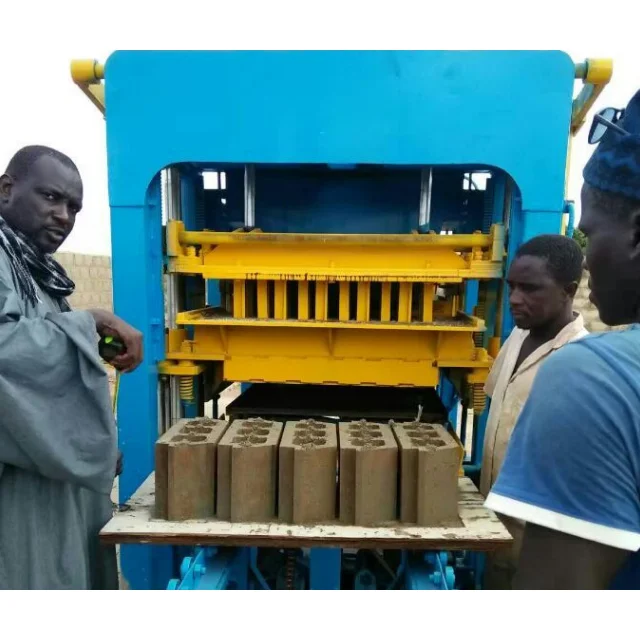

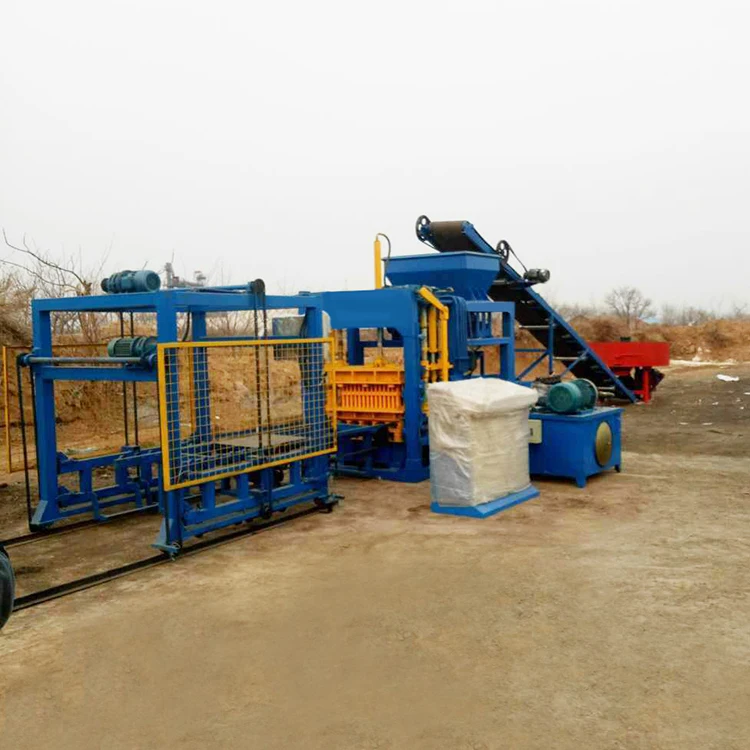
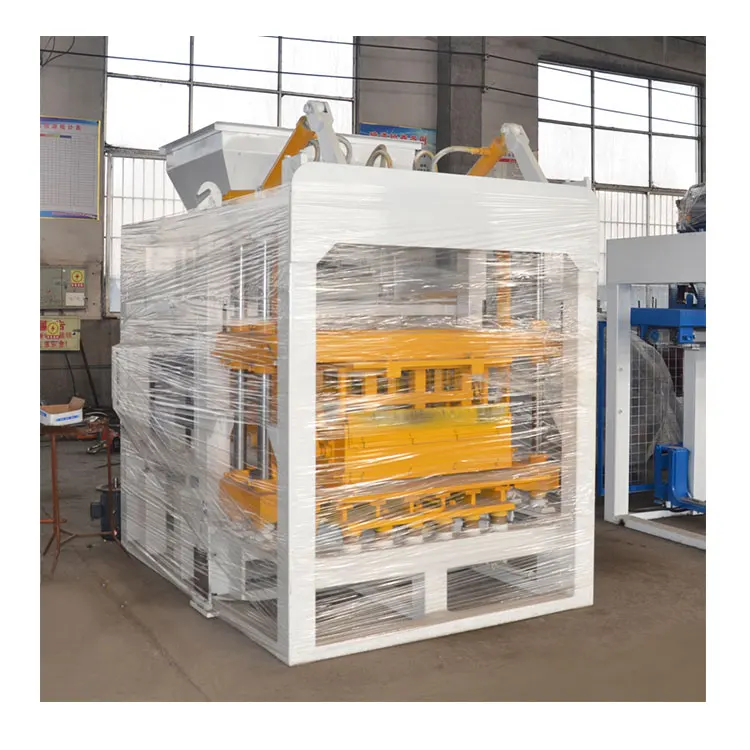

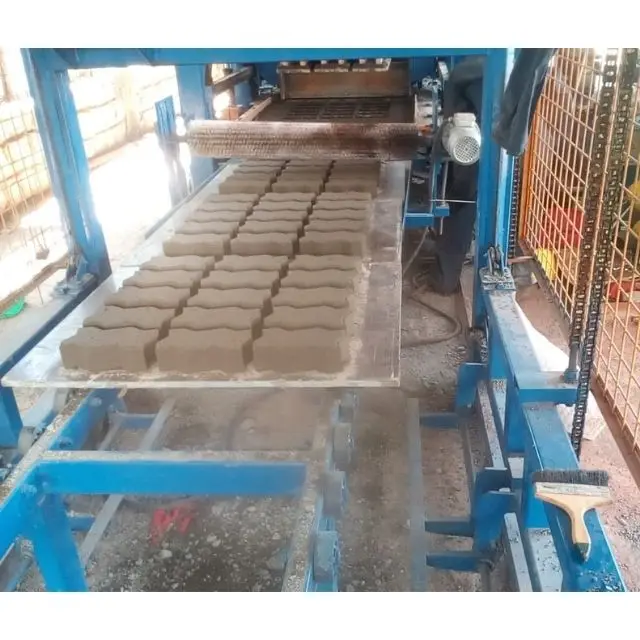
Description
Integrated PLC sequencing — The QT4-15 synchronises pallet feeding, vibration and material dosing under one control logic so the press cycle is never interrupted by manual intervention.
Technical Specifications
| Parameter | Value |
|---|---|
| Model | QT4-15 |
| Product Type | Automatic Concrete Block Making Machine |
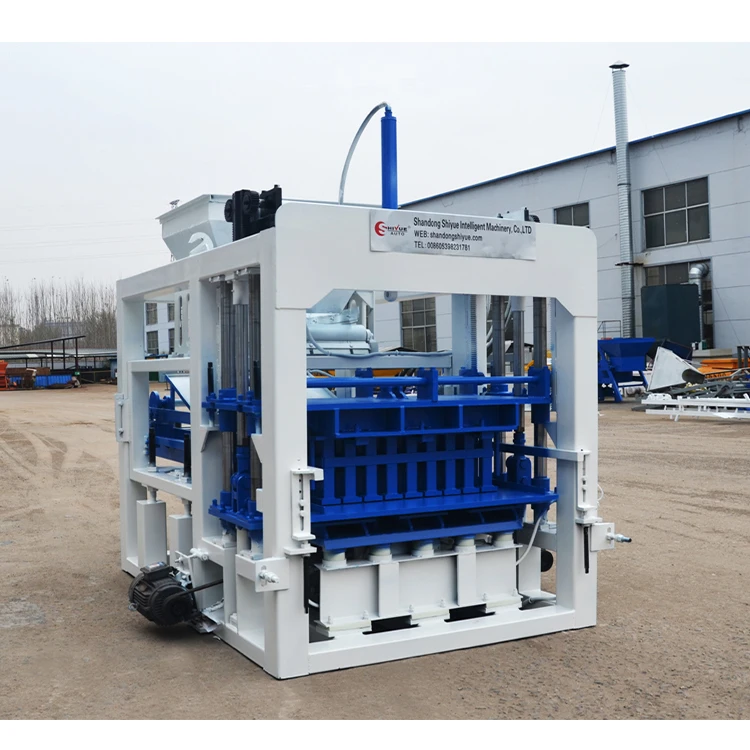
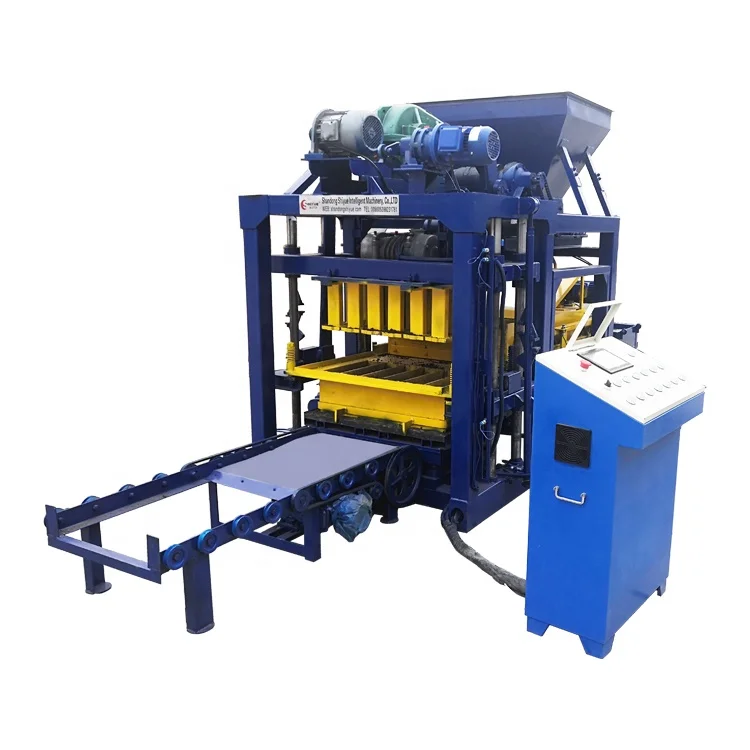
| Overall Dimensions (L×W×H) | 7100 x 1600 x 2610 mm |
| Rated Pressure | 16 MPa |
| Vibration Form | Platform Vibration |
| Pallet Size | 1020 x 570 mm |
| Molding Cycle | 15-25 s (basis not stated in source — confirm block format and material) |
| Overall Power | 27.5 kW |
| Control System | PLC (electronic console) |
| Automation Level | Automatic (pallet feeder, material feeder, molding, block conveyor integrated) |
| Hydraulic Station | Included |
| Mould Change Method | Manual bolt release (M24 bolts) |
| Mould Format Options | Hollow block, interlocking brick, paving block |
Application Suitability
| Application | Material or Output |
|---|---|
| Hollow block production for load-bearing walls | Crushed stone, sand, cement and water mix |
| Interlocking brick manufacturing for walkways and slopes | Fine aggregate blended with cement and pigment |
| Paving block production for driveways and municipal projects | Coarse aggregate, sand and cement under high vibration |
| On-site block production for housing projects | Locally sourced aggregate matched to regional standards |
| First block plant setup by entrepreneurs | Standard concrete mix with selectable pallet material |
Why the Control Language Must Be Confirmed Before the Voltage
A PLC screen in the wrong language turns an automatic block making machine PLC controlled into an expensive manual press.
I have watched a QT-class machine arrive at a German block plant with the entire electronic console displaying Chinese characters. The buyer’s maintenance engineer could not read a single parameter. Commissioning stalled for two full days while we scrambled to source a firmware update remotely. That delay cost the buyer an entire production week and eroded the trust that months of negotiation had built [NEED_CITE: PLC interface language standards for exported industrial machinery]. The lesson is simple: voltage is easy to check, but control language is often overlooked until the crate is open on the factory floor.
How the PLC Governs Every Station in the Line
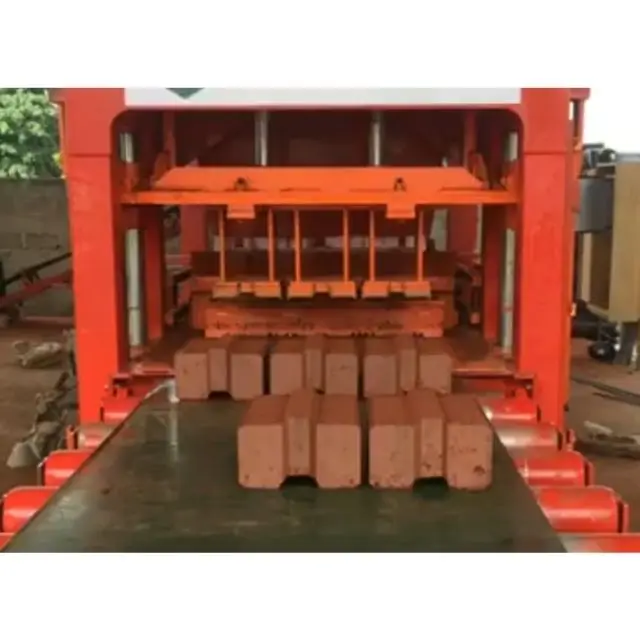
The electronic console on the QT4-15 does not merely start and stop the press. It sequences the hydraulic pallet feeder, times the material hopper gate opening, triggers platform vibration at the correct amplitude for the loaded mould, and releases the demoulded block onto the conveyor — all within a single 15-to-25-second cycle. Each station reports its status back to the PLC so that a jammed pallet or an empty hopper halts the sequence before damage occurs. This closed-loop logic is what separates the QT4-15 from semi-automatic machines where operators must watch each step and press buttons manually.
What Consistent Sequencing Means for Block Density
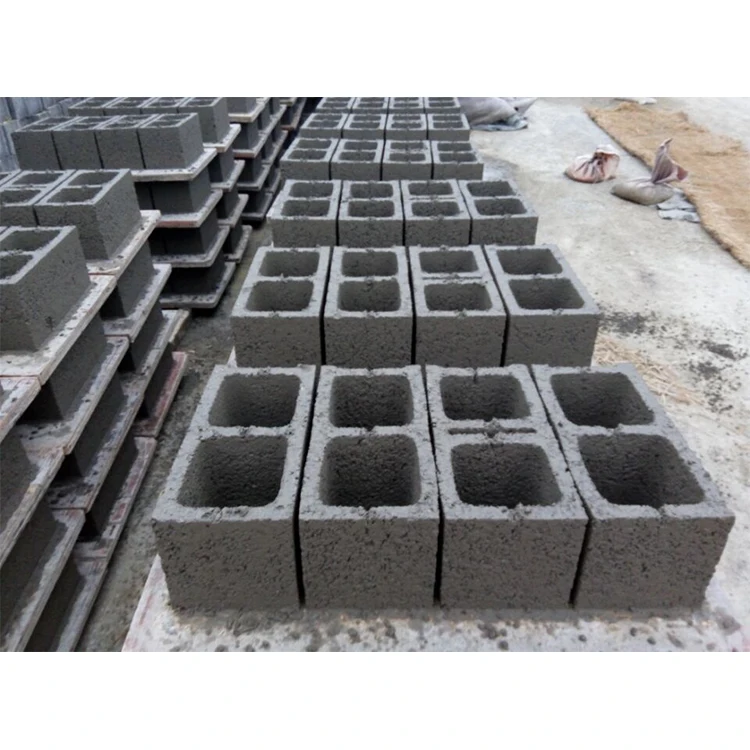
Batch-to-batch density variation is the silent killer in block production. When vibration duration fluctuates by even a couple of seconds between cycles, hollow blocks emerge with uneven wall strength. The PLC on this automatic block making machine PLC controlled locks vibration time, pressure hold duration and pallet travel speed into fixed parameters [NEED_CITE: effect of vibration consistency on concrete block compressive strength]. Once the operator confirms the recipe for a specific format — say a 400×200×200 mm hollow block — every subsequent cycle replicates those exact conditions. The result is a pallet of blocks that tests within a narrow strength band, which matters when a buyer’s customer demands third-party lab certification.
Reading the Specification Sheet Against Your Actual Mix
Rated pressure of 16 MPa and platform vibration are the two forces that compact concrete into a dense block. Neither number means much in isolation. The pressure must be matched to the stiffness of the mix: a lean mix with low cement content needs higher hydraulic force to achieve target strength, while a rich mix with fine sand may require less pressure but longer vibration to release trapped air. The 1020×570 mm pallet size dictates how many blocks fit per cycle, and that count — not the cycle time alone — determines realistic daily output. Buyers should request a capacity calculation that states the exact block format and mix design assumed, rather than accepting a single cycles-per-hour figure. The 27.5 kW total power draw indicates the machine needs a dedicated circuit with adequate breaker capacity, and voltage and frequency must be confirmed against local supply before the motor windings are built [NEED_CITE: industrial voltage and frequency standards by country].
The Hidden Cost of Skipping Control Configuration
When automation parameters are left at factory defaults, the machine runs — but it runs for a product the buyer never ordered. Pallet feed speed may be set for a lighter pallet material than what the buyer actually uses, causing misalignment on the vibrating platform. The material feeder gate timing may assume a drier mix than what local aggregate produces, leading to overfilling and spillage. Mould change procedures stored in the PLC may reference bolt patterns for a mould the buyer does not own. Each of these mismatches forces the operator to override the automatic sequence, effectively downgrading the machine to semi-automatic operation and defeating the reason the buyer paid for full automation in the first place [NEED_CITE: automation mismatch consequences in concrete block production].
Why Buyers Source This Machine Through Our Automation-Focused Channel
Block machinery is our single focus, which means the PLC program, hydraulic circuit and pallet handling system are specified as one matched package rather than assembled from unrelated suppliers. Every automatic block making machine PLC controlled unit ships with the display language, voltage and frequency confirmed in writing before production begins. We supply the hydraulic and electrical schematic so the buyer’s local maintenance team can diagnose faults without waiting for overseas support. Mould drawings and format lists are provided upfront, and custom mould designs are built to the buyer’s market dimensions. The automation level is selectable — a buyer can start with automatic pallet feeding and block conveying, then add automatic stacking and cubing stations later without replacing the press.
Documentation & Verification
- PLC parameter sheet listing every timer, counter and pressure setpoint by block format
- Hydraulic and electrical schematic with component part numbers for local sourcing
- Factory test record showing cycle sequence on buyer’s confirmed pallet size
- Voltage, frequency and control display language confirmation signed before production
- Mould drawing and format list including custom dimensions where applicable
- Operation and maintenance manual written in the buyer’s confirmed language
Installation, Commissioning & Support
- Foundation plan dimensioned for the 7100×1600 mm footprint and 16 MPa dynamic load
- Dedicated power circuit sized for 27.5 kW total draw at confirmed voltage and frequency
- PLC language and parameter set loaded and verified during factory test before crating
- On-site commissioning includes full cycle run with buyer’s actual mix and pallet stock
- Operator training covers PLC menu navigation, fault codes and mould change procedure
- Wear parts list with hydraulic seal and vibration motor part numbers for local reorder
What to Include in Your Inquiry
To configure the QT4-15 correctly, share the block formats your market demands, the local aggregate and cement type available, your target daily output per format, the pallet material and size you plan to use, your site voltage and frequency, and the preferred PLC display language. If you already operate a mixer or batching plant upstream, provide its capacity so the material feeder can be matched.
Frequently Asked Questions
Q: How is the QT4-15 cycle time measured, and which block format does it assume?
A: The 15-25 second range is measured from pallet entry to block release on the conveyor. The exact cycle within that range depends on block format, wall thickness and mix stiffness. We provide a capacity calculation that states the assumed format and mix, so daily output projections are based on your actual product rather than a generic figure.
Q: Can the PLC display language and voltage be matched to my country before shipment?
A: Yes. Both are confirmed in writing during the order stage, before production starts. The electronic console firmware is loaded with your chosen language, and motor windings are built for your site voltage and frequency. This eliminates the most common cause of commissioning delays on exported block machines.
Q: How long does a mould change actually take on this machine?
A: The upper and lower moulds are secured with M24 bolts and removed via the block conveyor. Actual change time depends on operator familiarity and whether a hoist is available on site. We provide a step-by-step procedure in the manual and recommend keeping a dedicated tool set at the press to avoid searching for wrenches mid-shift.
Q: Is automatic stacking and curing rack handling included in the standard line?
A: The standard QT4-15 package includes automatic pallet feeding, material dosing, press cycling and block conveying to the receiver. Stacking and curing rack handling are separate stations that can be added at the initial order or retrofitted later, allowing buyers to match investment to current production volume.
Q: What is the upgrade path if I start semi-automatic and want more automation later?
A: The press frame and PLC architecture are designed to accept additional stations. A buyer starting with manual pallet handling can later add the hydraulic pallet feeder, and then automatic stacking, without replacing the main press or rewriting the base PLC program.