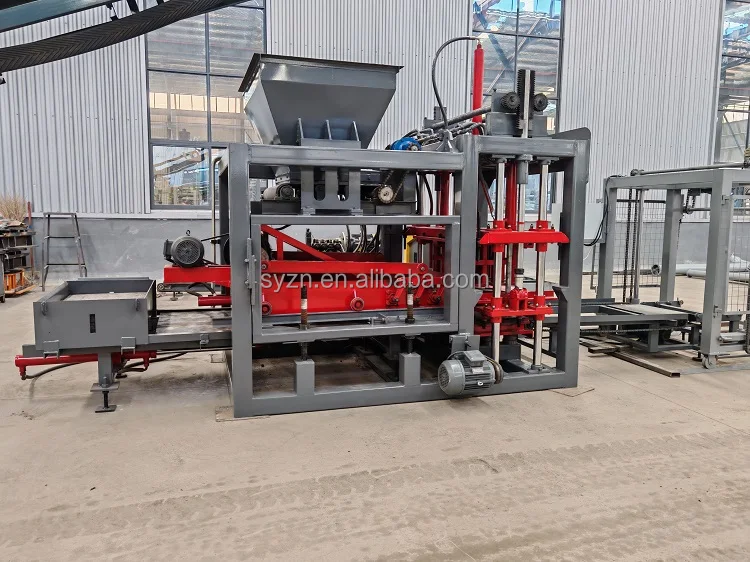
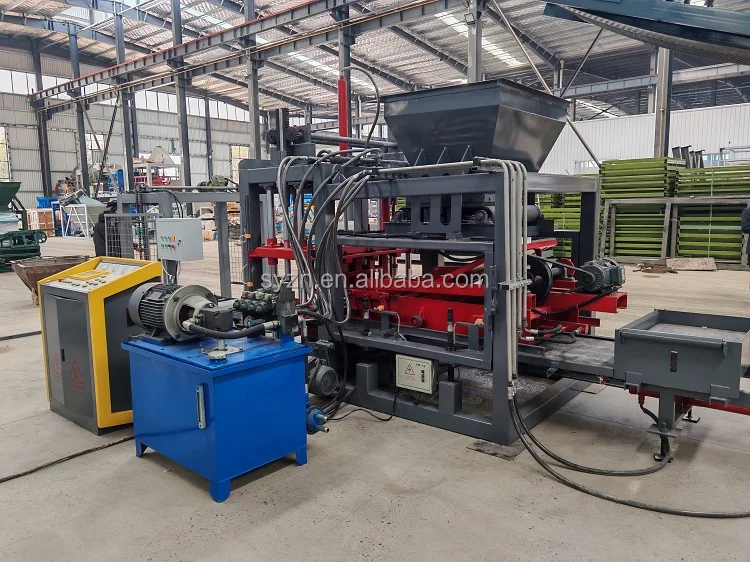
Description
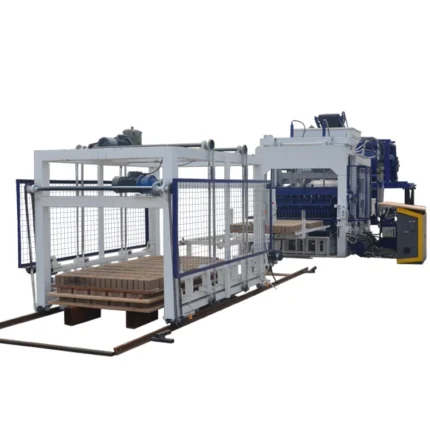
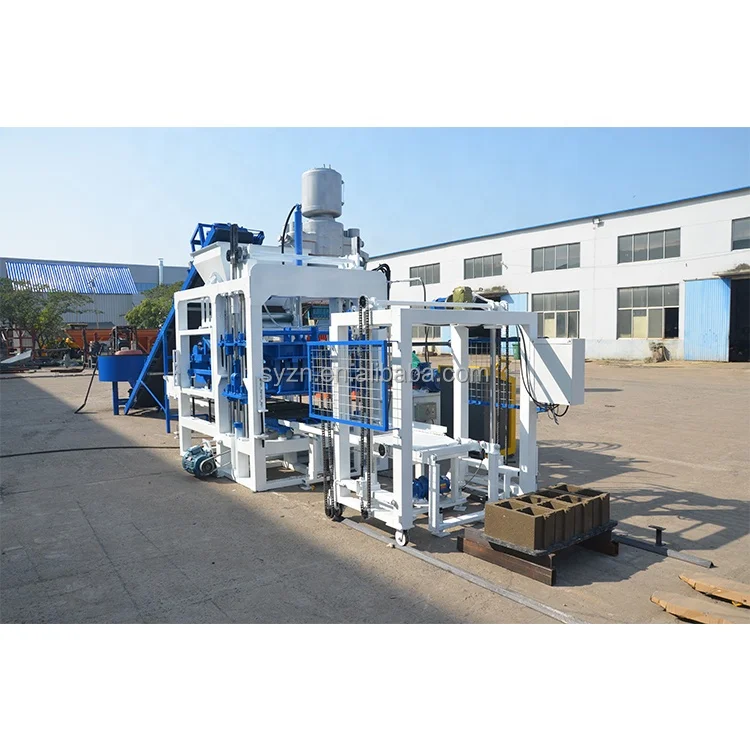
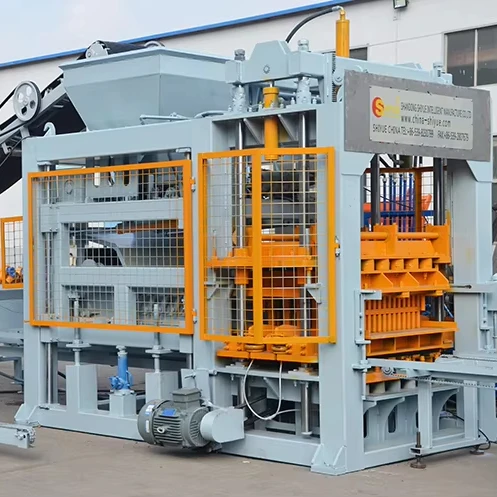
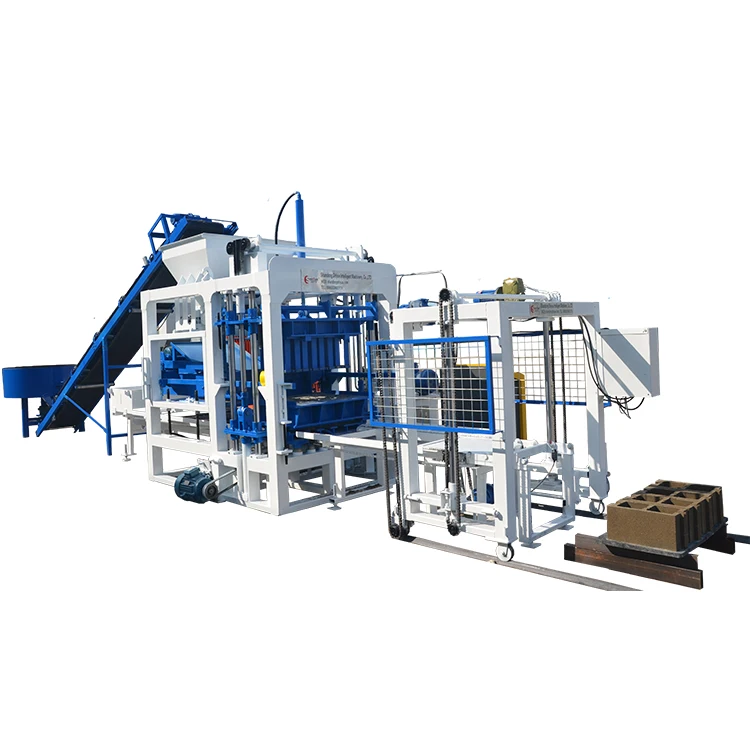
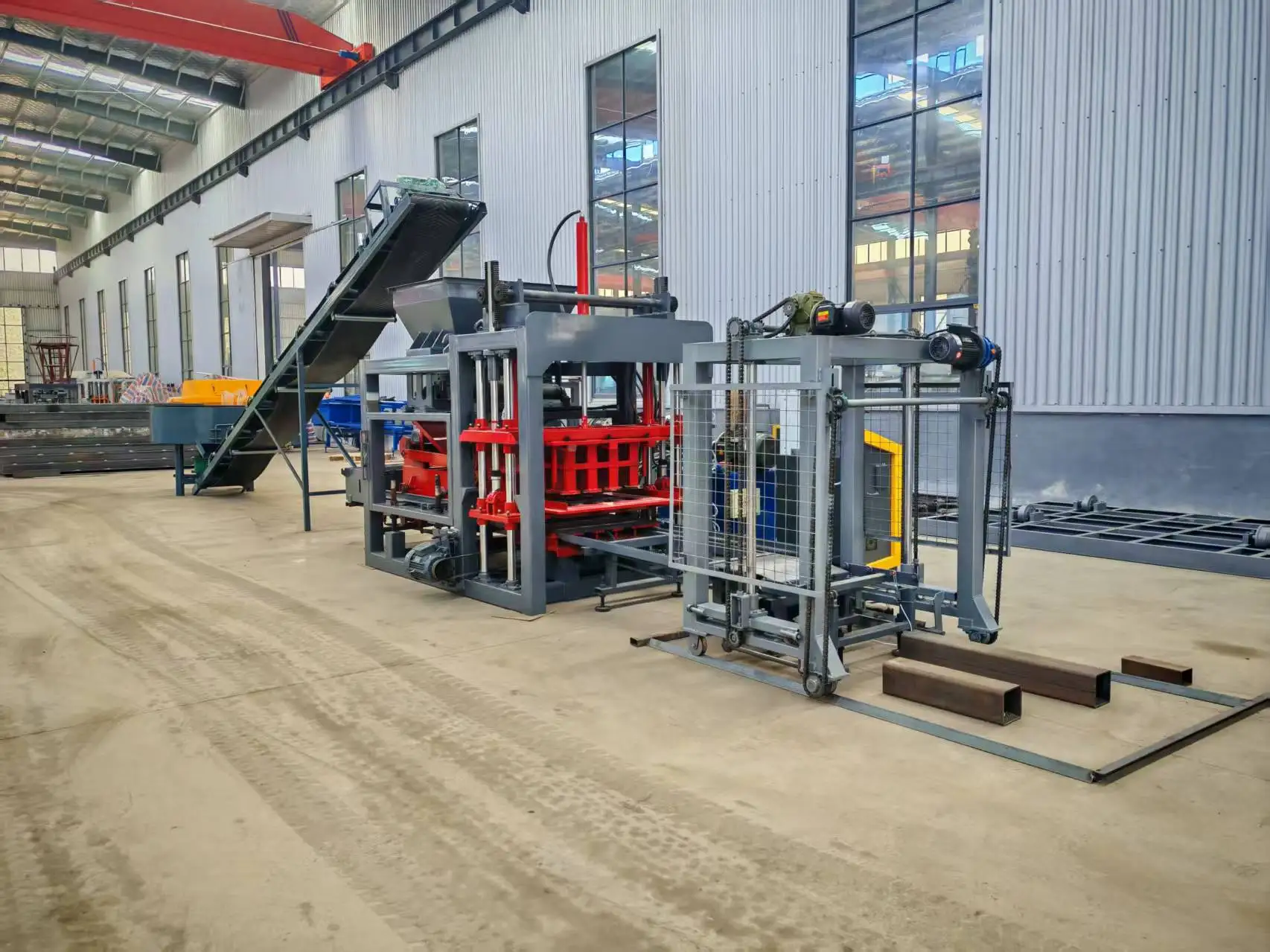
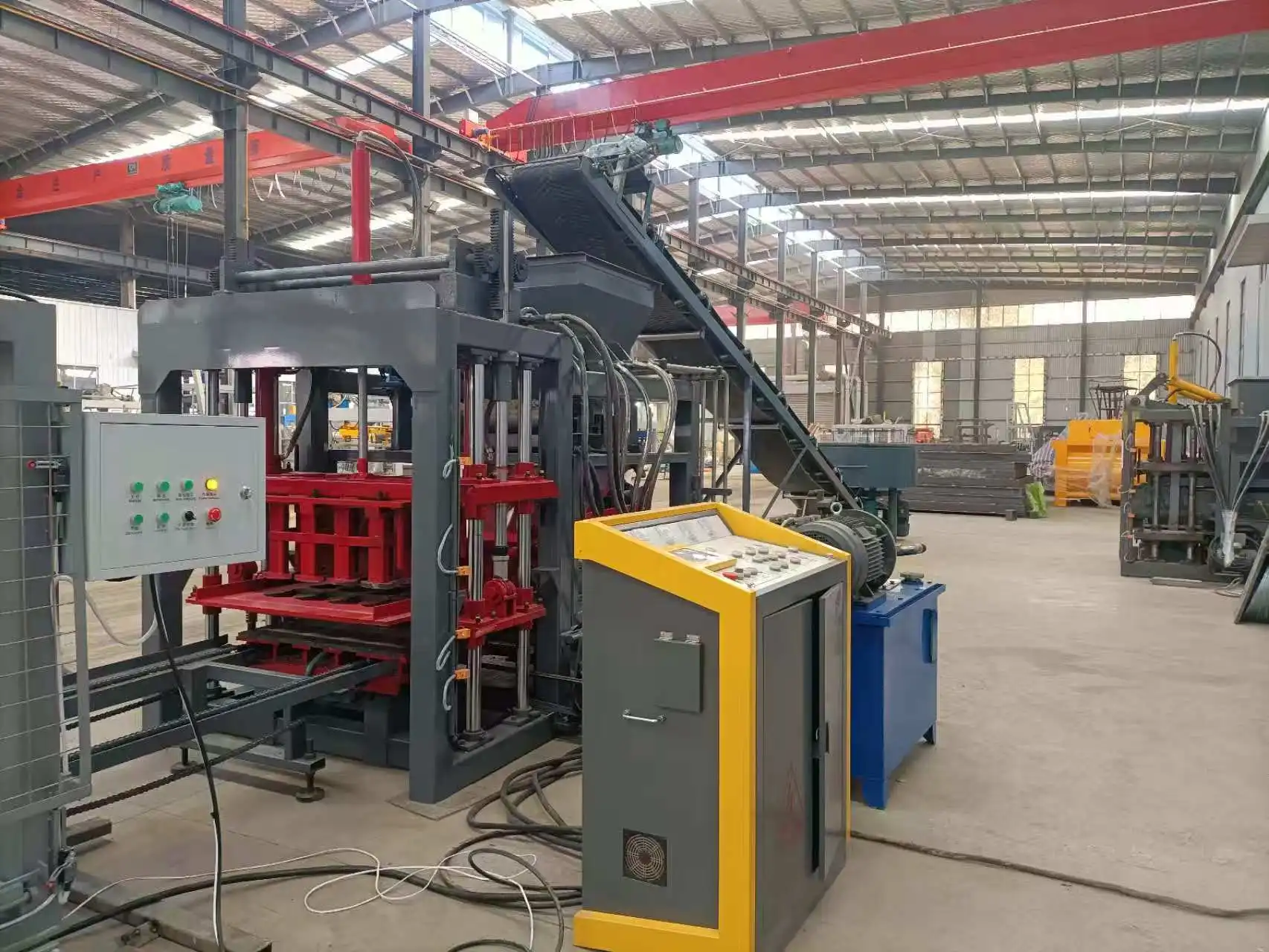
Automation Architecture — The QT4-15 fully automatic block press is specified as a matched system where PLC logic, hydraulic demoulding and pallet handling are confirmed against your actual block format before production begins.
Technical Specifications
| Parameter | Value |
|---|---|
| Model | QT4-15 |
| Product Type | Fully Automatic Concrete Block Making Machine |
| Overall Dimensions (L×W×H) | 4100×1600×2600 mm |
| Total Mass | 4 T |
| Rated Pressure | 16–21 MPa |
| Main Vibration Form | Platform Vibration |
| Vibration Frequency | 4200 r/min |
| Vibration Force | 55 kN |
| Pallet Size | 880×550 mm |
| Molding Cycle | 25–30 s (basis not stated in source — confirm block format) |
| Overall Power | 18.45 kW |
| Demolding Method | Hydraulic |
| Recommended Factory Area | 300 m² |
| Control System | PLC |
| Voltage & Frequency | Configurable (confirm with supplier before shipment) |
| Loading | 1×40HQ container (basic equipment) |
| Warranty | 1 year (excluding spare parts) |
Application Suitability
| Application | Material or Output |
|---|---|
| Hollow block production | Crushed stone, sand, cement, fly ash, gravel, slag |
| Solid block manufacturing | Local aggregate mixed with cement and dust |
| Paver and interlocking brick production | Colored concrete mixes with fine aggregate |
| Kerbstone and curb production | High-density concrete with coarse gravel |
| Porous and permeable brick formatting | Open-graded aggregate with controlled cement ratio |
What "Fully Automatic" Actually Means on the QT4-15 Line
The label only holds when every station from pallet feeding to stacking is mapped in the PLC programme and quoted as one system.
Many buyers discover after arrival that the automatic block making machine PLC controlled designation covered the press alone, while pallets were still fed by hand and wet blocks were stacked manually at the line exit. I have walked onto sites in Latin America where the press cycled perfectly but two operators stood idle waiting for someone to carry pallets back from the curing area. The real bottleneck was never the press — it was the stations that were left out of the original scope [NEED_CITE: common scope gaps in block line quotations].
PLC Logic That Removes the Operator from the Cycle
The QT4-15 runs its moulding cycle through a programmable logic controller that sequences feed, vibration, compression and demoulding without manual trigger. Once the target block format and mix are entered, the automatic block making machine PLC controlled system repeats the 25–30 second sequence with the same dwell times every cycle, removing the variance that comes from operators adjusting timing by feel. Batch-to-batch density stays consistent because the PLC holds the vibration duration and pressure application against the set values regardless of shift changes.
Hydraulic Demoulding That Protects Block Edges
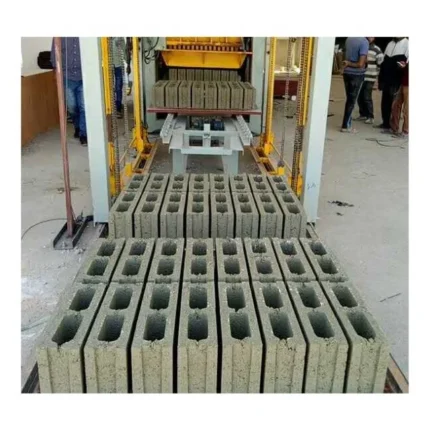
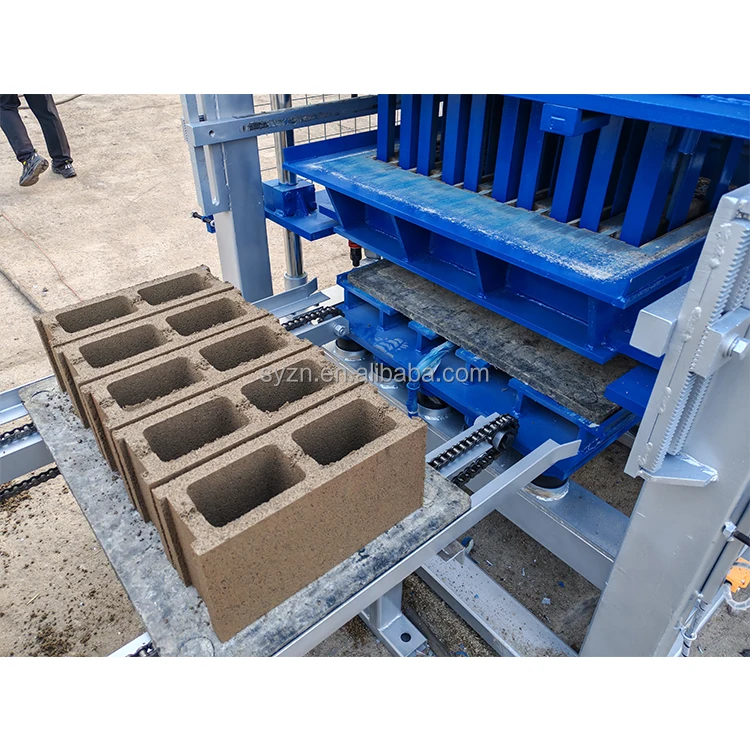
At 16–21 MPa rated pressure, the hydraulic system lifts the mould box away from the compacted block at a controlled rate. Green blocks at this stage are vulnerable to edge spalling, and a mechanical stripper can tear corners on thin-web hollow blocks. The hydraulic circuit on the QT4-15 applies even lift force across the mould, so interlocking paver profiles and narrow kerbstone shapes release without surface damage. This matters most when the buyer’s market pays a premium for clean-faced pavers and rejects blocks with chipped arrises [NEED_CITE: hydraulic demoulding advantages in block surface quality].
Reading the Specs That Actually Shape Daily Output
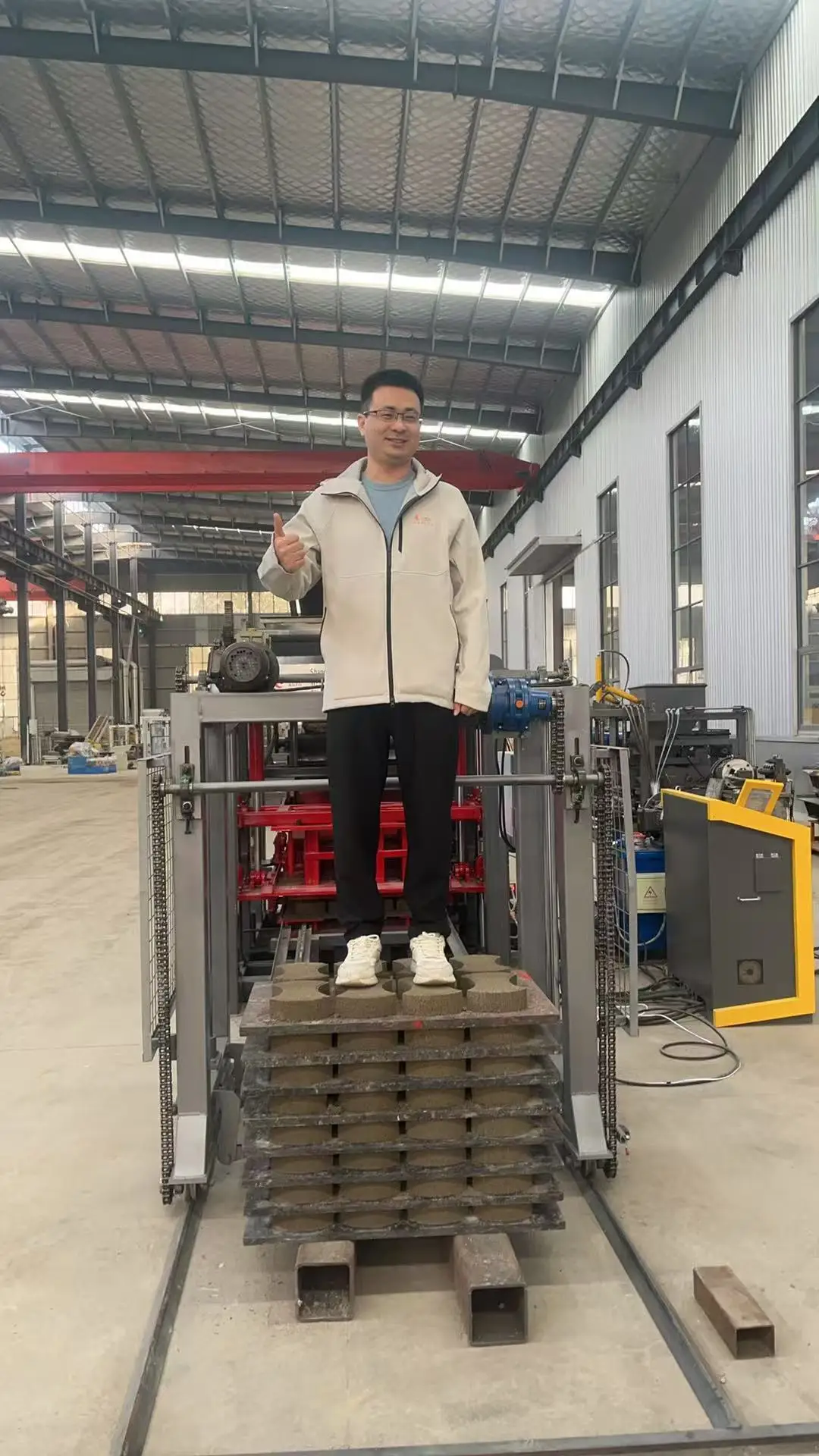
Vibration force and hydraulic pressure must be evaluated together. The 55 kN vibration force at 4200 r/min compacts the mix inside the mould, while the 16–21 MPa pressure locks that compaction in place before demoulding. If the buyer’s local aggregate is round river gravel, the vibration energy dissipates differently than with angular crushed stone, and the PLC programme may need adjusted vibration duration to reach the same density. The 880×550 mm pallet size defines how many blocks fit per cycle — for a standard 400×200×200 mm hollow block the pallet holds four units, but smaller paver formats multiply that count. Overall power draw of 18.45 kW means the electrical supply must sustain continuous motor starts without voltage sag, which is why confirming frequency and phase with the local grid before production prevents commissioning delays.
When Automation Stops at the Press Gate
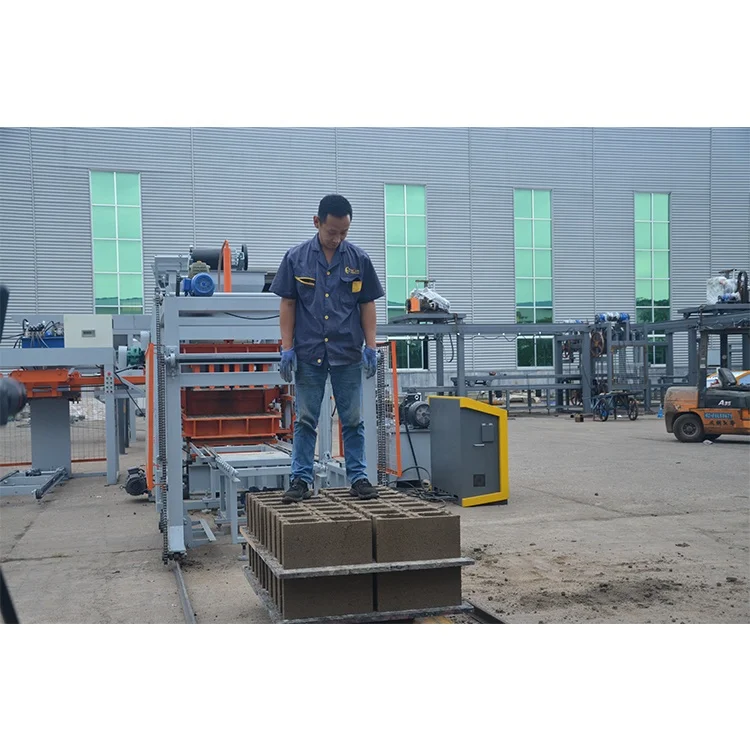
A buyer who pays for a fully automatic line but receives only the press, mixer and conveyor still needs workers to move pallets, stack wet blocks and transfer cured product. The labour saving the automation promised never materialises because the handling stations outside the press were never configured or quoted. On the QT4-15, the PLC programme can be extended to cover automatic pallet feeding, stacking and cubing, but those stations must be specified during the proposal stage — they cannot be bolted on after arrival without mechanical and electrical modifications. Buyers upgrading from semi-automatic operation should confirm which downstream stations are included in the quotation and which remain manual before signing [NEED_CITE: automation scope boundaries in block plant quotations].
Why This Supplier for Automation and Control
Block machinery is the single focus here, so the QT4-15 press, mould, pallet and handling equipment are specified as one matched system rather than sourced from separate vendors. The automation level is selectable — a buyer can begin with semi-automatic pallet handling and add stacking and cubing later without replacing the press. Configuration is set against the buyer’s actual mix design and local aggregate, not pulled from a catalogue default. Mould design covers the block formats the buyer’s market actually sells, and the PLC programme is written to include those formats from day one. Installation support includes operator training on the control interface so the team can run, adjust and troubleshoot the PLC without waiting for remote assistance.
Documentation & Verification
- Line layout showing every automation station and its PLC address on the QT4-15
- Capacity calculation stating the exact block format assumed for the 25–30 s cycle
- PLC programme format list confirming which moulds are pre-loaded before shipment
- Hydraulic and electrical schematic enabling on-site troubleshooting by local electricians
- Factory test record run on the buyer’s specified block format and pallet size
Installation, Commissioning & Support
- Foundation plan sized to the 4100×1600 mm footprint and 4 T operating mass
- Dedicated circuit rated for 18.45 kW continuous draw with voltage and frequency confirmed before dispatch
- Machine dismantled into 1×40HQ container loads with reassembly sequence documented
- PLC language set to the buyer’s operator language before the QT4-15 leaves the factory
- Hydraulic valve seals and vibration motor bearings included in the first spare parts shipment
What to Prepare Before Requesting a Quote
Share the exact block formats your market sells, the local aggregate type available at your site, and the daily output you need per format. Confirm your supply voltage, frequency and the language your operators read on a control screen. If you are replacing a semi-automatic press, list the pallet handling and stacking equipment you already have so the QT4-15 automation scope covers only the gaps.
Frequently Asked Questions
Q: How is the PLC control language and voltage confirmed before the QT4-15 ships?
A: Voltage, frequency and phase are confirmed during the proposal stage against the buyer’s local grid specification. The PLC display language is selected from available options and loaded before factory testing, so the operator interface reads correctly on arrival and commissioning is not delayed by language or electrical mismatches.
Q: Which automation stations are included and which remain manual?
A: The quotation specifies whether pallet feeding, automatic stacking and cubing are included or left to manual labour. Every station covered by the PLC is listed in the line layout document so the buyer sees exactly where the automation ends and manual work begins before the order is placed.
Q: How is the moulding cycle verified per block format?
A: The 25–30 second cycle is verified during factory testing on the specific block format the buyer orders. A test record documents actual cycle time, block dimensions and weight per format, so the capacity calculation reflects the product the buyer will actually produce rather than a generic catalogue figure.
Q: What is the upgrade path from semi-automatic to fully automatic?
A: The QT4-15 press remains the same; upgrade components such as automatic pallet feeders, stackers and cubing stations are added to the line. The PLC programme is extended to control the new stations, and electrical connections are pre-wired on the press so downstream automation can be integrated without rewiring the main control panel.