Description
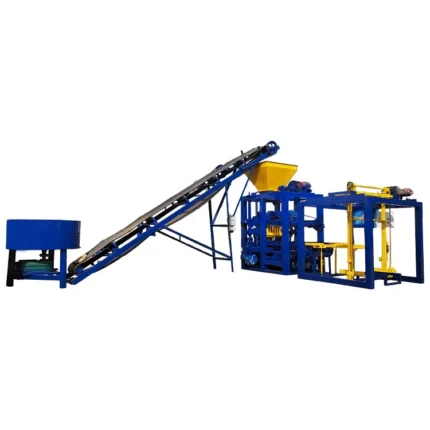
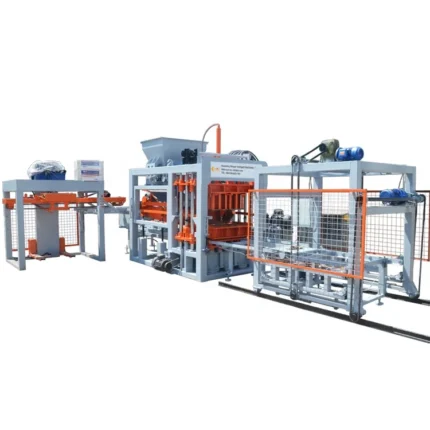
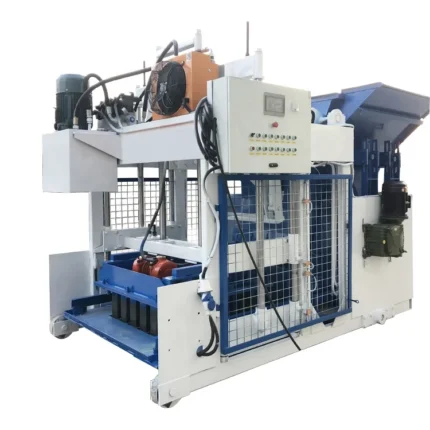
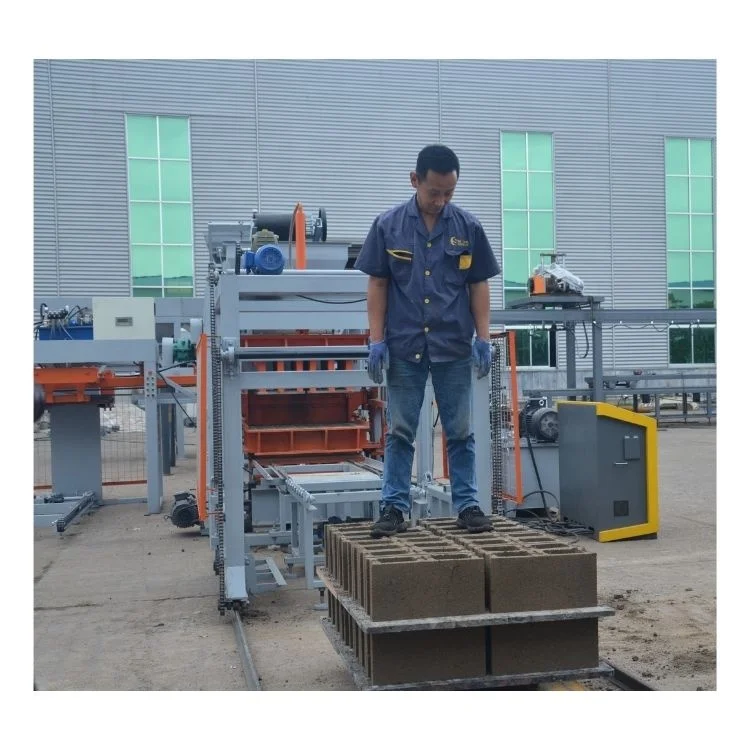
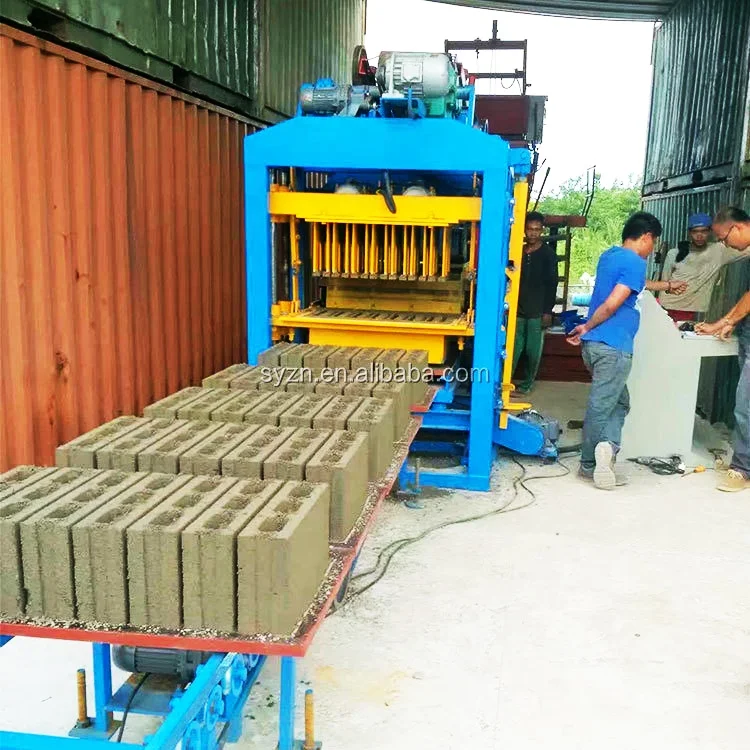
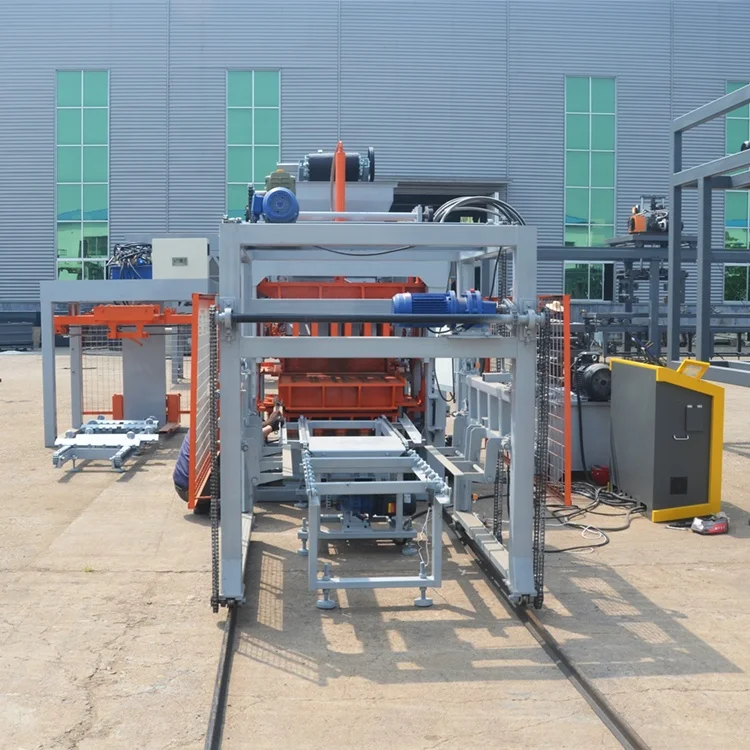
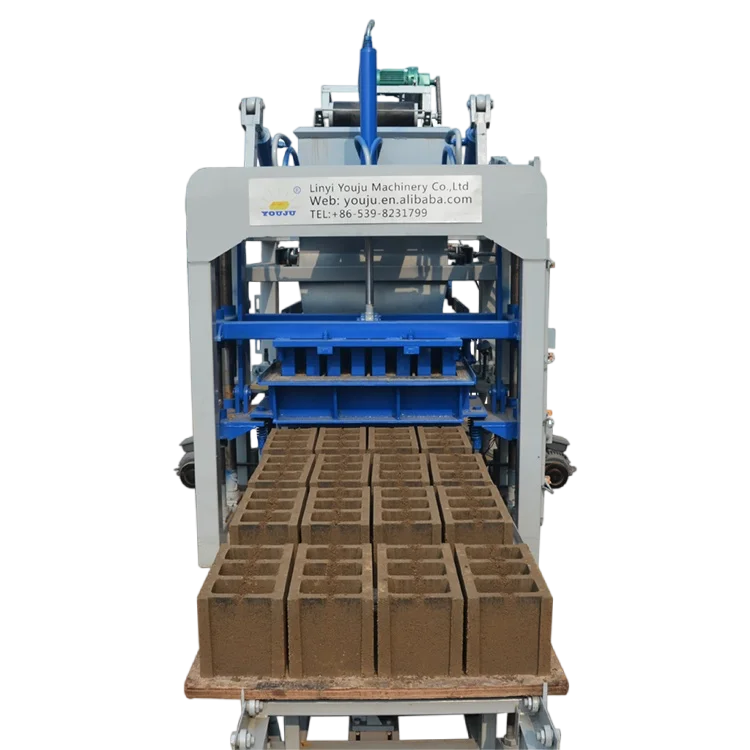
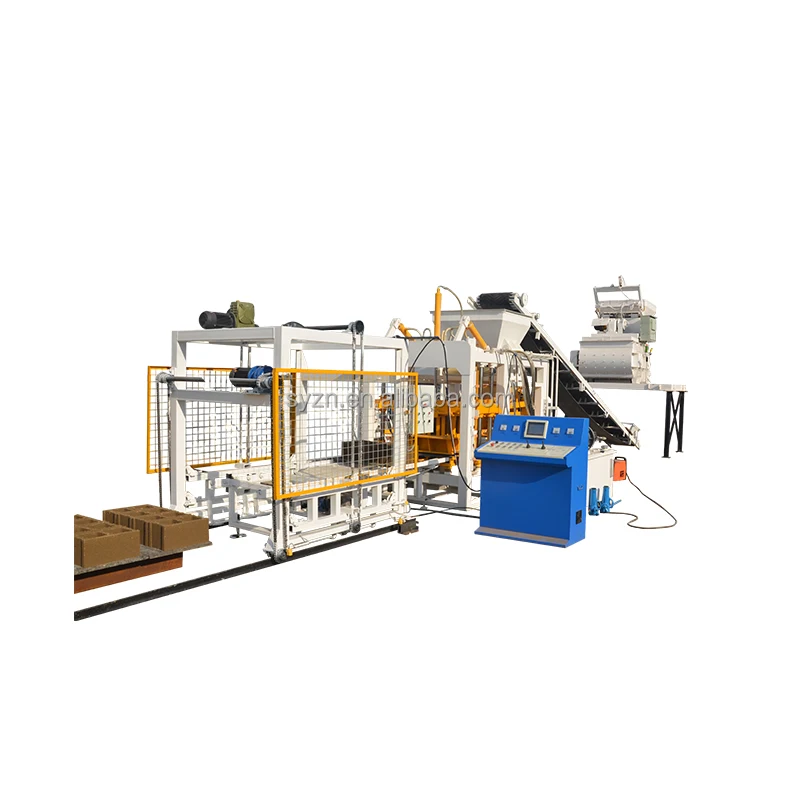
Automation removes manual pallet handling — the QT4-15A coordinates the press, hydraulic station, pallet feeder, and brick conveyor through a single PLC-controlled system so the operator manages the line rather than feeding it.
Technical Specifications
| Parameter | Value |
|---|---|
| Model | QT4-15A |
| Product Type | Fully Automatic Hydraulic Block Making Machine |
| Overall Dimensions (L×W×H) | 7100×1600×2610 mm |
| Molding Cycle | 15–25 s |
| Vibration Frequency | 4600 r/min |
| Exciting Power (Vibration Force) | 40–50 kN |
| Total Power | 18.45 kW |
| Mixer Model | JQ350 |
| Pallet Size | 850×550×25 mm |
| Total Weight | 3 T |
| Hydraulic Pressure | Basis to be confirmed |
| Control System | PLC control system |
| Automation Level | Fully automatic (hydraulic station, pallet feeder, brick conveyor, block sweeper) |
| Applied Products | Paver, solid block, hollow block, curbstone |
| Raw Materials | Crushed stones, sand, cement, dust, fly ash |
| Output Capacity (400×200×200 mm hollow block) | 408 pcs/h, 3264 pcs/8hr |
| Output Capacity (400×150×200 mm hollow block) | 510 pcs/h, 4080 pcs/8hr |
| Output Capacity (240×115×53 mm solid brick) | 2100 pcs/h, 17000 pcs/8hr |
| Voltage & Frequency | Configurable (basis to be confirmed before order) |
| PLC Display Language | Configurable (basis to be confirmed before order) |
| Standards | CE |
Application Suitability
| Application | Material or Output |
|---|---|
| Hollow block production for structural walls | Crushed stone, sand, cement, fly ash (400×200×200 mm or 400×150×200 mm format) |
| Solid brick manufacturing for load-bearing and infill | Sand, cement, stone dust (240×115×53 mm format) |
| Concrete paver production for walkways and driveways | Crushed stones, sand, cement with pigmented face mix |
| Curbstone manufacturing for road and pavement edges | Coarse aggregate, sand, cement blend |
What "3264 Hollow Blocks per Shift" Actually Means on the QT4-15A
The automatic QT4-15 hydraulic block making machine PLC controlled reaches its stated output only when the block format, cycle time, and pallet handling are specified as one matched system.
I once watched a block plant owner stare at a machine that was technically "running" while his crew stood idle waiting for pallets to cycle back. The press was never the bottleneck — the gaps between stations were. Quoted capacity numbers that do not name the block format they assume set a buyer up for exactly that kind of disappointment. On this machine, 3264 hollow blocks per 8-hour shift is tied to the 400×200×200 mm mould at a 15–25 second cycle; switch to the 400×150×200 mm format and the figure shifts to 4080 per shift, and solid bricks at 240×115×53 mm move to 17000 per shift. The pallet feeder, brick conveyor, and block sweeper run in the same PLC loop, so the press does not wait on manual intervention between cycles [NEED_CITE: block plant line balancing and station cycle matching].
How PLC Coordination Removes the Operator from the Cycle
The PLC control system on the QT4-15A ties hydraulic pressure, vibration timing, pallet indexing, and conveyor movement into one sequence. The operator sets the recipe and monitors the line — they do not manually place pallets or time the vibration phase by ear. Batch-to-batch block strength stays within a tighter band because the vibration force (40–50 kN at 4600 r/min) and hydraulic pressure are applied for a consistent duration every cycle. This is what separates a PLC-controlled line from a manually operated press with an automatic badge on the brochure.
Where Automatic Pallet Feeding Changes Daily Output
On a semi-automatic line, pallet placement and wet-block removal depend on crew speed, which drops as the shift wears on. The pallet feeder and brick conveyor on the automatic QT4-15 hydraulic block making machine PLC controlled keep the interval between press cycles stable regardless of shift hour or crew change. The block sweeper clears residual material from the pallet surface before it re-enters the feeder, reducing surface defects on the next block. This is the difference between a machine that produces steadily for eight hours and one that produces in bursts separated by manual catching-up [NEED_CITE: labour fatigue and output variance in manual versus automatic block lines].
Vibration Force and Hydraulic Pressure — What the Numbers Mean for Block Density
The 40–50 kN vibration force at 4600 r/min works together with hydraulic pressure to compact the concrete mix into the mould cavity. Vibration liquefies the mix momentarily so particles settle tightly; hydraulic pressure then holds that compacted state until the block holds its shape on demoulding. If either value is mismatched to the buyer’s aggregate — for instance, a coarse crushed-stone mix that needs more force to consolidate — the resulting block will show inconsistent density across its cross-section. The 18.45 kW total power budget covers the hydraulic station, vibration motors, and conveyor drives simultaneously, which matters when sizing the dedicated circuit at the plant. The 850×550×25 mm pallet dimension should be checked against the buyer’s existing curing racks and forklift tine width before the order is finalised, because changing pallet size after installation means reconfiguring the entire curing and handling area.
When the Wrong Configuration Costs More Than the Machine
I have seen a block line sit idle for two full days because the PLC display shipped in a language the local operator could not read, and nobody had confirmed it before production. Voltage and frequency mismatches produce a similar result — the machine arrives, the electrician opens the panel, and commissioning stops until a transformer or new motor is sourced locally. On a 3 T, 18.45 kW line like this one, those delays are not minor adjustments; they push the entire plant opening past the construction deadline the blocks were meant to serve [NEED_CITE: commissioning delays caused by unconfirmed electrical and control language specifications].
Why Sourcing This Line from Shiyue
- Block machinery is the single focus of the workshop, so the press, mould, pallet, and handling equipment are specified as one coordinated system rather than assembled from separate suppliers.
- Configuration starts from the buyer’s actual mix design and local aggregate, not a catalogue default — the vibration force and hydraulic pressure are set to match what the plant will actually feed.
- Mould design covers the formats the buyer’s market sells, and custom mould drawings can be produced to buyer specifications for formats not in the standard range.
- Automation level is selectable: a buyer can commission the line semi-automatic first and add pallet feeder or conveyor modules as production volume justifies the investment.
- PLC display language and voltage are confirmed line-by-line before production, preventing the kind of on-site commissioning failure that I have personally had to resolve on a past installation.
- Installation and commissioning support includes operator training on the specific block formats the buyer plans to run.
Documentation & Verification
- Line layout with capacity calculation tied to each specific block format and mould
- Machine specification sheet listing hydraulic pressure, vibration force, and pallet size
- Mould drawing and format list with changeover procedure for each block type
- Voltage and PLC display language confirmation record signed before production
- Factory test record on the buyer’s target block format before dispatch
- Wear parts and mould list for first replacement cycle planning
Installation, Commissioning & Support
- Foundation pad sized to the 7100×1600 mm footprint and 3 T operating weight
- Dedicated electrical circuit rated for 18.45 kW at the confirmed voltage and frequency
- Machine arrives partially dismantled for container loading; reassembly on-site with factory guidance
- PLC control parameters set to the buyer’s confirmed block format and mix during commissioning
- Operator training covers mould change, daily start-up, and block sweeper maintenance
- Wear parts list provided so the first replacement order can be placed before stock runs low
What to Include in Your Enquiry
To size the automatic QT4-15 hydraulic block making machine PLC controlled to your plant, specify the block formats you plan to produce, the daily output target per format, and the raw materials available locally. Include your site voltage, frequency, and preferred PLC display language so electrical and control configuration is locked before production begins. If you have existing curing racks or forklifts, share their dimensions so the 850×550×25 mm pallet specification can be verified against your current handling setup.
Frequently Asked Questions
Q: How is the output capacity figure verified for each block format?
A: Every capacity number is tied to a specific mould and block dimension — for example, 408 pieces per hour assumes the 400×200×200 mm hollow block at a 15–25 second cycle. Switching to a different format changes both the pieces per cycle and the total shift output, so your daily planning starts from the format you will actually run.
Q: What PLC language and voltage are confirmed before shipment?
A: The buyer confirms the PLC display language and the site voltage and frequency before production starts. This confirmation is documented and signed off so the machine arrives ready for immediate commissioning without on-site language or electrical conversion delays.
Q: How does the automatic pallet feeder and conveyor reduce operator workload?
A: The pallet feeder indexes pallets into the press, the brick conveyor carries wet blocks to the curing area, and the block sweeper cleans pallets for reuse — all within the PLC cycle. The operator monitors the line rather than manually handling pallets, which keeps cycle intervals consistent across the entire shift.
Q: What information is needed to plan the first mould replacement?
A: The wear parts and mould list provided with the machine identifies replaceable components and their specifications. Buyers should review this list during commissioning and place an initial spare order so that replacement parts are on hand before the first wear cycle completes.
Q: How does the buyer’s local aggregate affect machine configuration?
A: The vibration force and hydraulic pressure are matched to the buyer’s specific mix design and aggregate type. A coarse crushed-stone blend requires different compaction settings than a fine sand mix, and this adjustment is part of the configuration process before the machine is built.