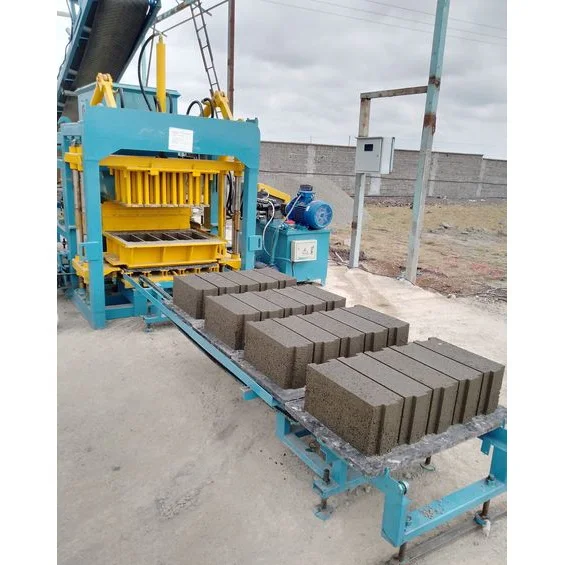
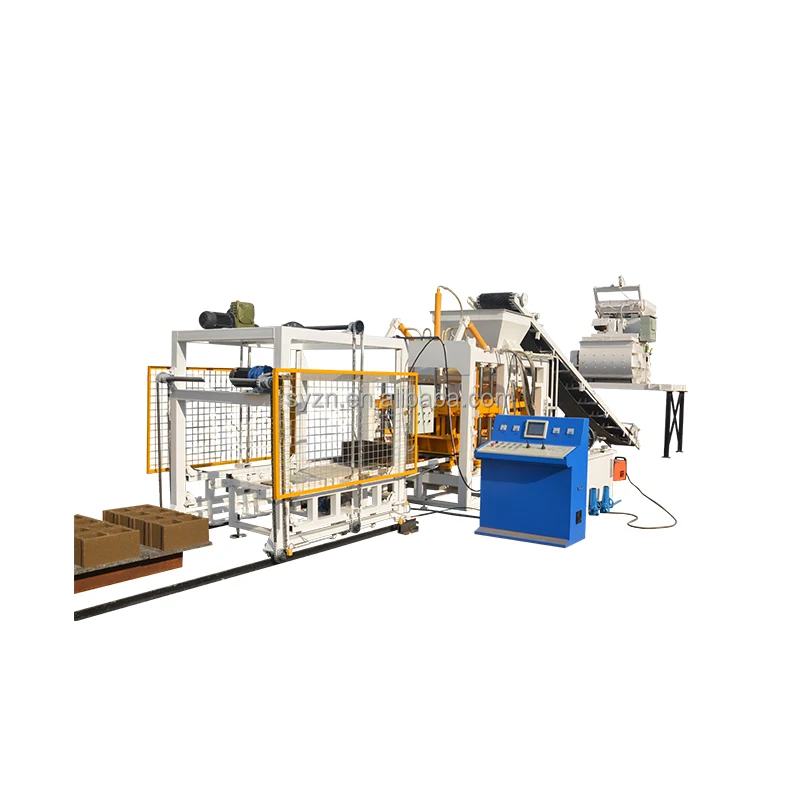


Description
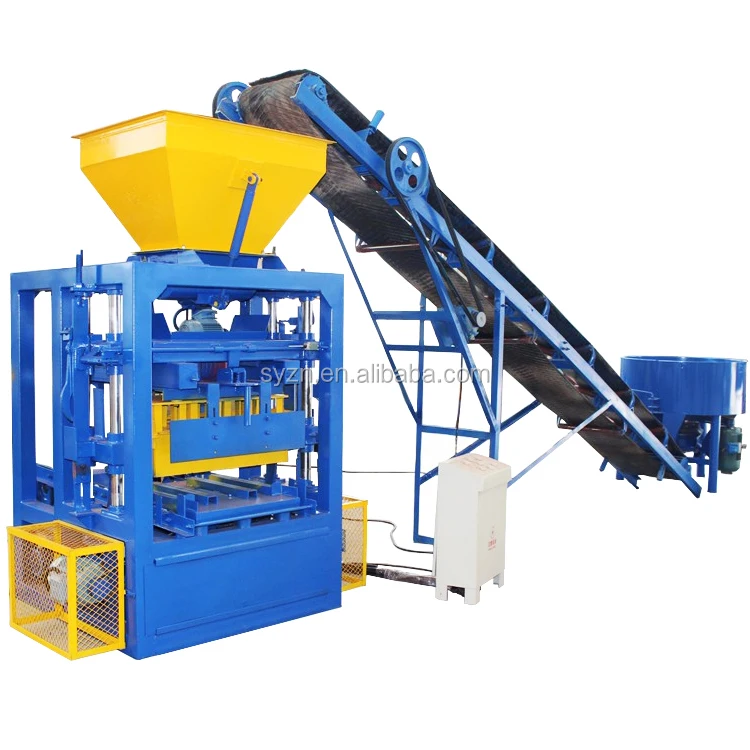
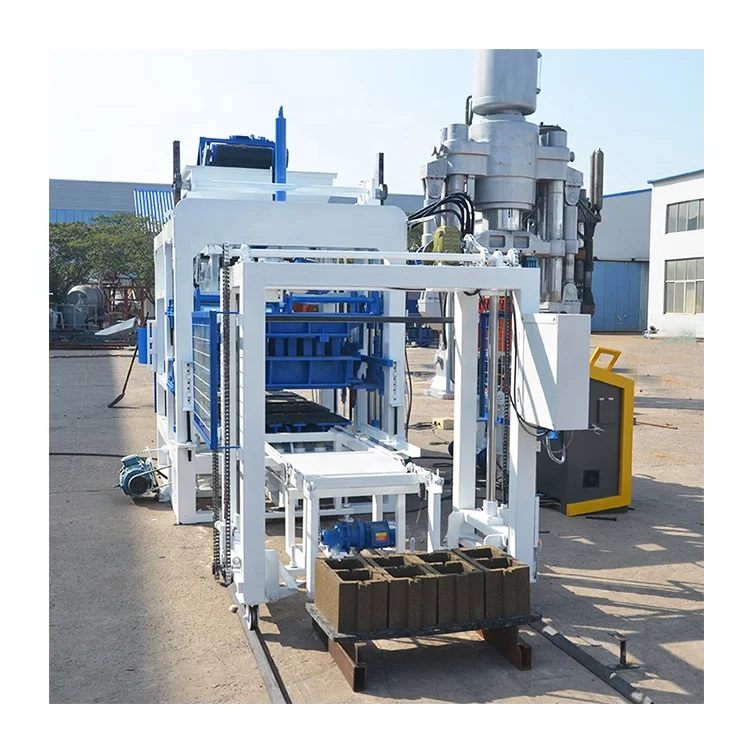
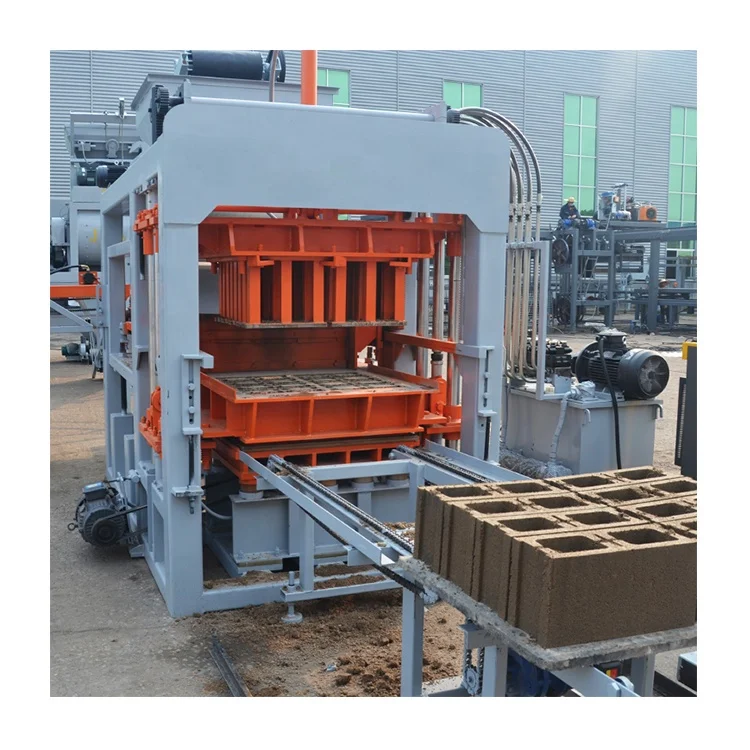
Precision Control Tuned to Your Output Targets — every automation parameter, from PLC cycle timing to stacking logic, is validated against your block format before the machine leaves the factory.
Technical Specifications
| Parameter | Value |
|---|---|
| Model | QT4-15 |
| Product Type | Hydraulic Block Making Machine |
| Control System | PLC computer controlled, fully automatic |
| Vibration Mode | Multiaxis synchronizer vibration, vertically downward |
| Hydraulic System | High thermal efficiency, low heat productivity |
| Mixer System | Multiaxis forced mixer for varied raw material adaptability |
| Guide Bearing | Long-period over-length guide bearing |
| Rack Construction | High strength steel with special welding technique |
| Automation Level | Fully automatic |
| Cycle Time | 15–20 s (basis not stated in source — confirm block format) |
| Output Capacity (400×200×200 mm hollow block) | 4 pcs/mould, 900–1200 pcs/h, 7200–9600 pcs/8 h |
| Output Capacity (400×150×200 mm hollow block) | 5 pcs/mould, 1080–1440 pcs/h, 8640–11520 pcs/8 h |
| Output Capacity (400×100×200 mm hollow block) | 8 pcs/mould, 1440–1920 pcs/h, 11520–15360 pcs/8 h |
| Output Capacity (200×100×60 mm paver) | 16 pcs/mould, 2880–3840 pcs/h, 23040–30720 pcs/8 h |
| Output Capacity (240×115×53 mm solid brick) | 28 pcs/mould, 5930–6720 pcs/h, 47400–53700 pcs/8 h |
| Mould Format Compatibility | Hollow block, porous block, paver, standard solid brick |
| Warranty | 1 year (whole machine, excluding spare parts) |
| Certification | CE (where applicable) |
Application Suitability
| Application | Material or Output |
|---|---|
| Hollow block production for building walls | Crushed stone, sand, cement and fly ash blends |
| Porous and multi-cellular brick production | Lightweight aggregate and cement mixes |
| Paving block manufacturing for roads and walkways | High-density aggregate with fine sand and cement |
| Standard solid brick production | River sand, quarry dust and cement blends |
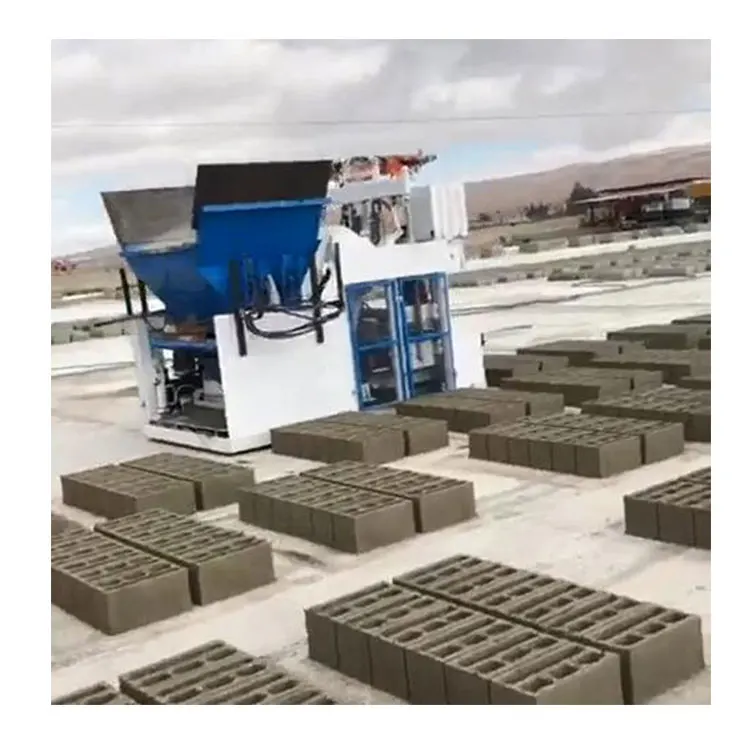
| On-site block production for housing projects | Locally sourced aggregate matched to structural requirements |
Why the PLC Language Question Should Be Asked Before the Quote Is Signed
An automatic block machine PLC controlled in the wrong language stalls on day one, not on day one hundred.
I shipped a QT4-15 to a plant in West Africa years ago with the default Chinese interface still loaded on the screen. The operators could not read a single menu. Remote video calls stretched across two full working days while we translated fault codes over a shaky connection. Since then, I confirm the PLC display language and the voltage specification together in writing before production starts. A fully automatic cycle only removes labour when the operator can actually read what the screen is telling them [NEED_CITE: voltage and frequency standards by export market].
What the Control Panel Actually Removes from the Operator
The PLC in this automatic block machine PLC controlled system manages the entire press cycle: pallet indexing, feed drawer travel, vibration duration, hydraulic ram pressure and demoulding sequence. Each action is timed against the others so the press never waits for the pallet feeder or the mixer. When the target block format changes, the operator selects the stored recipe rather than adjusting timers manually, which keeps densification and dimensional tolerance consistent from the first block of the shift to the last.
How Batch-to-Batch Consistency Is Held Across Formats
With every format the QT4-15 produces — from 400×200×200 mm hollow blocks to 200×100×60 mm pavers — the PLC recalls the vibration time and hydraulic pressure curve that were set during commissioning. Multiaxis synchronizer vibration delivers force vertically downward, and the PLC holds that duration within a tight window so compaction depth does not drift as the shift wears on. The result is blocks that meet the same strength requirement whether they are pressed at 6 a.m. or at the end of the eighth hour [NEED_CITE: block compressive strength testing standards for masonry units].
Reading the Numbers Behind the Cycle Time
The listed cycle time of 15–20 seconds is a range, not a single figure, because it shifts with block format and mould cavity count. A 400×200×200 mm hollow block mould carries four cavities and yields 900–1200 pieces per hour, while the 240×115×53 mm solid brick mould carries twenty-eight cavities and yields 5930–6720 pieces per hour. The hydraulic system maintains high thermal efficiency and low heat productivity so that oil temperature rise does not force the PLC to extend dwell time mid-shift. The long-period over-length guide bearing keeps upper mould and mould box alignment accurate across those thousands of cycles, limiting uneven wear that would otherwise degrade block geometry.
The Hidden Cost When Automation Stops at the Press
A fully automatic press loses its advantage the moment pallet handling and stacking are left to manual labour. Operators pulling wet blocks off the line by hand introduce delays that the PLC cannot compensate for, and the cycle time advantage disappears into a bottleneck downstream. Pallet size must also match the curing racks and forklift already in the plant; a mismatch means buying new handling equipment or living with a workflow the machine was never designed for [NEED_CITE: pallet dimension standards for concrete block curing systems].
Why Buyers Source This Configuration Here
Block machinery is the single focus at Shandong Shiyue Intelligent Machinery, so the QT4-15 press, mould, pallet and handling equipment are specified as one matched system rather than assembled from separate suppliers. Automation level is selectable, allowing a buyer to begin with semi-automatic operation and add automatic stacking or cubing later on the same platform. Every configuration is set against the buyer’s actual mix design and local aggregate instead of a catalogue default. Voltage, frequency and PLC display language are confirmed in writing before the machine enters production. Mould design covers the formats the buyer’s market actually sells, including custom drawings when standard formats do not match local demand.
Documentation & Verification
- Factory test record run on your specific block format before dispatch
- PLC display language and voltage confirmation sheet signed off before production
- Mould drawing and format list matched to your market requirements
- Hydraulic and electrical schematic for on-site maintenance reference
- Operation and maintenance manual in your confirmed language
- Packing photographs and customs documentation support
Installation, Commissioning & Support
- Foundation plan provided with QT4-15 overall dimensions and load points
- Power supply spec confirmed for local voltage and frequency before wiring begins
- PLC parameters set and cycle timing validated against your block format on site
- Operator training covers recipe selection, fault reading and mould change procedure
- Wear parts list and mould inventory included for first replacement planning
- Remote diagnostic support available through the PLC communication port
Before You Send an Inquiry
To size the QT4-15 correctly, share the block formats your market demands, the daily output you need per format, and the local aggregate and cement you plan to use. Specify the voltage, frequency and PLC display language at your site so the control panel arrives ready to run. Let us know your existing curing area dimensions and forklift capacity so pallet size can be matched from the start.
Frequently Asked Questions
Q: How is realistic daily output verified for each block format?
A: Capacity is calculated per block format using the cavity count and cycle time for that specific mould, not a single generic cycles-per-hour figure. We provide a written capacity table showing hourly and eight-hour output for every format you plan to produce, so expectations match the machine’s actual behaviour on your shop floor.
Q: How are voltage, frequency and PLC display language confirmed before shipment?
A: These three parameters are locked in writing during the quotation stage, before production begins. The PLC screen is loaded with your confirmed language, and the electrical cabinet is wired to your local voltage and frequency. A confirmation sheet is signed off by both sides so no adjustment is needed at commissioning.
Q: What automation level does the QT4-15 provide and what is the upgrade path?
A: The QT4-15 ships as a fully automatic platform where the PLC manages the complete press cycle. Buyers who prefer to start with semi-automatic pallet handling can do so and add automatic stacking, cubing or remote diagnostics later without replacing the press or the control cabinet.
Q: How does the PLC maintain consistency across different block formats?
A: Each block format has its own stored recipe containing vibration duration, hydraulic pressure curve and feed timing. When the operator selects a format, the PLC recalls those exact parameters, keeping compaction and dimensional tolerance uniform regardless of which mould is mounted or which shift is running.
Q: How is the machine configured to match local aggregate and mix design?
A: The multiaxis forced mixer adapts to raw materials of different nature. During the proposal stage we review your local aggregate gradation and cement type, then set the mixer speed, water ratio and vibration profile accordingly, so the machine is tuned to your actual supply rather than a catalogue default.