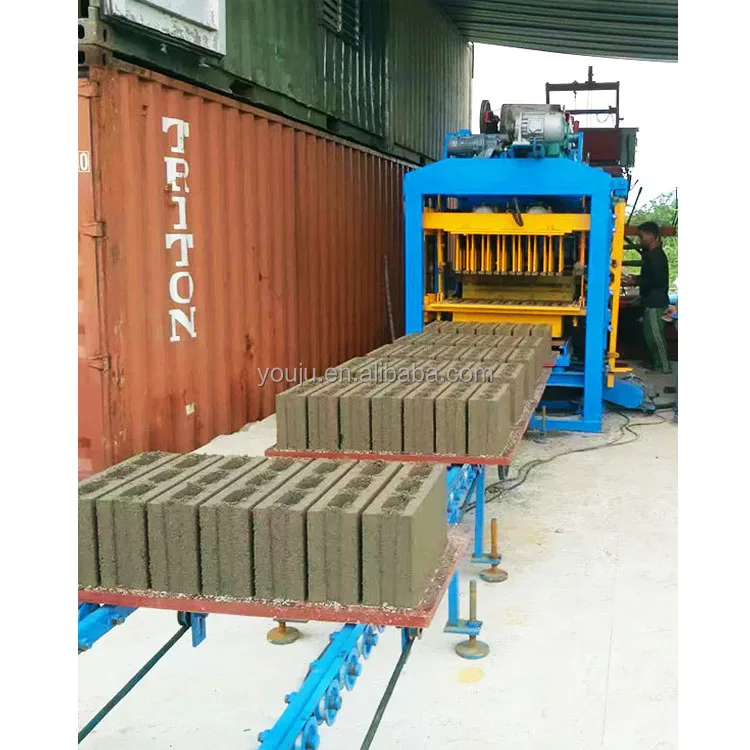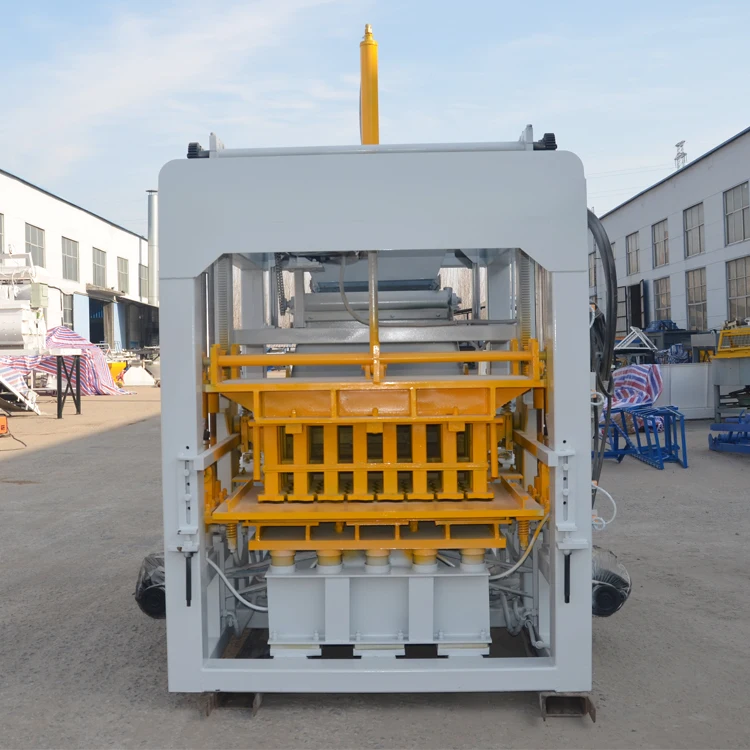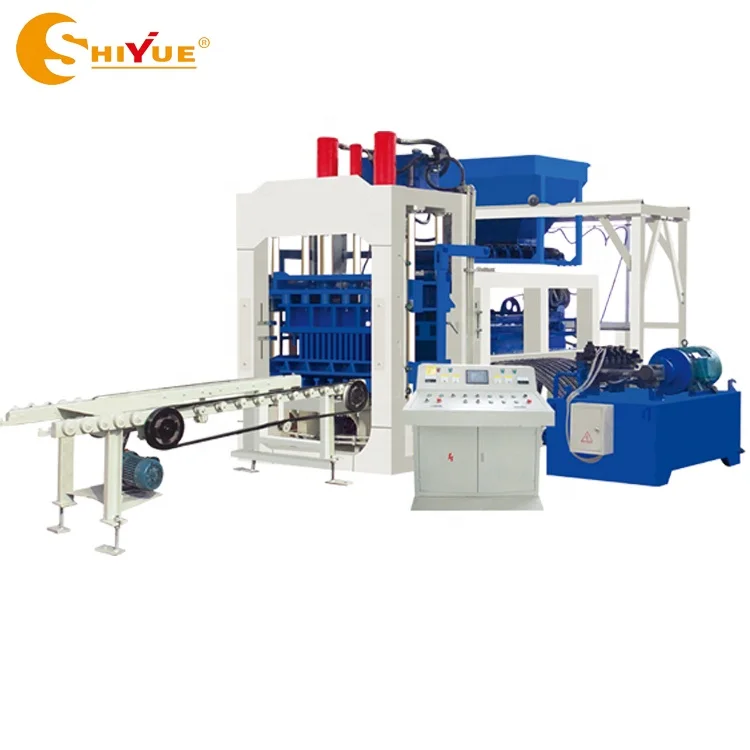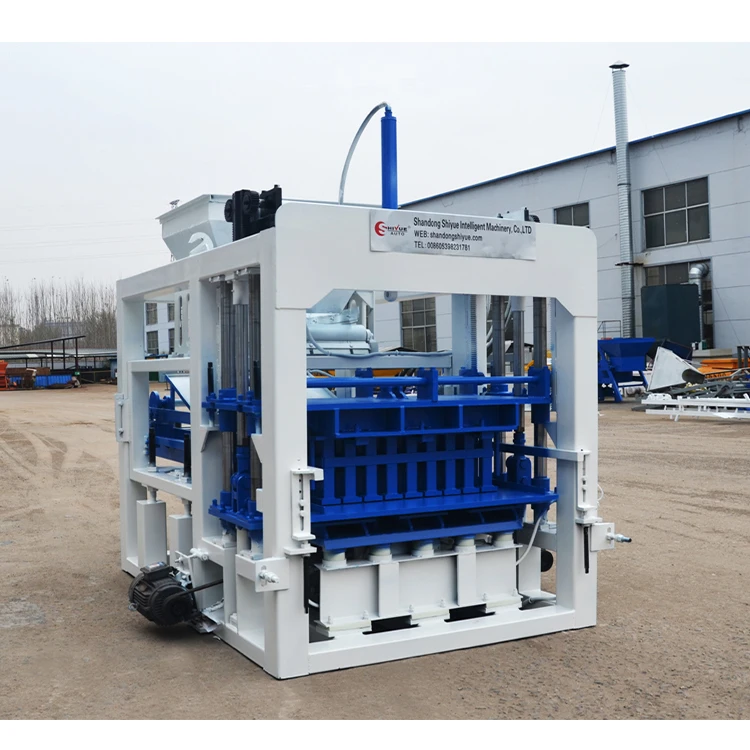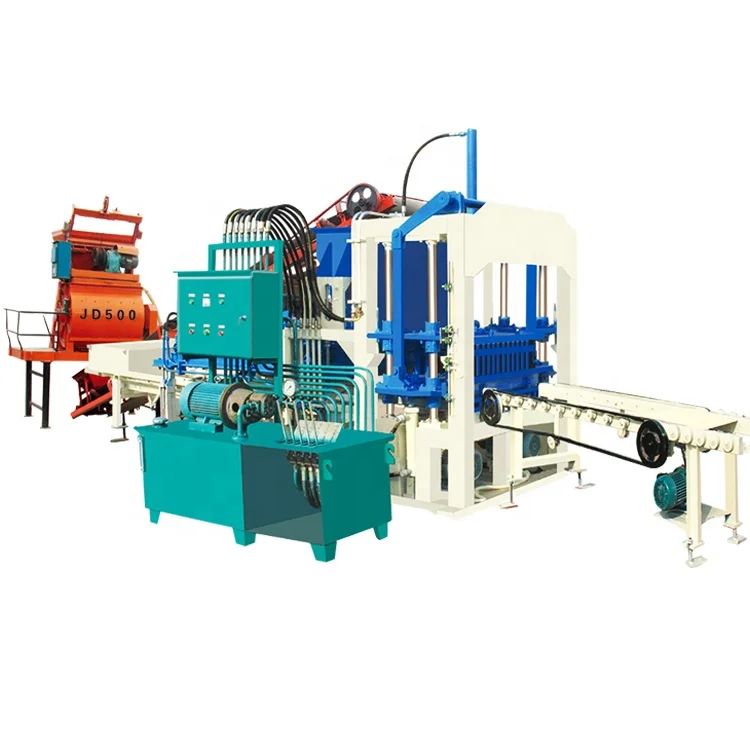
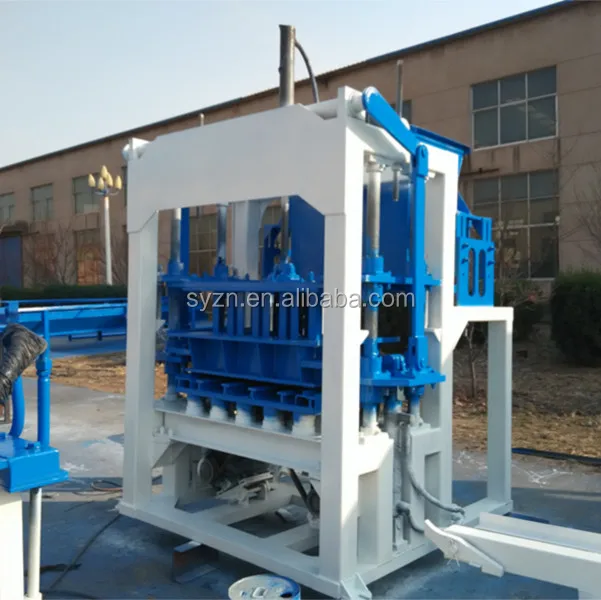


Description
Integrated automation architecture — The QT4-20 ships with PLC control, hydraulic demolding, and platform vibration specified as one coordinated system rather than assembled from disconnected components, so cycle parameters stay locked from first block to last.
Technical Specifications
| Parameter | Value |
|---|---|
| Model | QT4-20 |
| Product Type | Automatic Concrete Block Making Machine |
| Overall Dimensions (L×W×H) | 7100 × 1600 × 2610 mm |
| Rated Pressure | 21 MPa |
| Main Vibration Form | Platform Vibration |
| Vibration Frequency | 2800–4500 r/min |
| Vibration Force | 60 kN |
| Pallet Size | 1020 × 570 mm |
| Molding Cycle | 15–25 s (basis not stated in source — confirm block format / material / thickness) |
| Total Power | 27.5 kW |
| Total Mass | 5.8 T |
| Demolding Method | Hydraulic |
| General Water Consumption | 8 T/day |
| Factory Area Required | 500 m² |
| Control System | PLC with person-machine conversation interface |
| Automation Level | Automatic production line |
| Applied Products | Concrete blocks, hollow blocks, solid blocks, pavers, interlocking blocks, curbstone, colored pavers |
| Raw Materials | Crushed stone, sand, cement, dust, fly ash, gravel, slag |
| Standards | CE (verify against manufacturer catalog for this model) |
Application Suitability
| Application | Material or Output |
|---|---|
| Hollow block production for building walls | Crushed stone, sand, cement, fly ash |
| Solid block manufacturing for load-bearing structures | Gravel, sand, cement mix |
| Paver and colored paver production for walkways | Fine aggregate, cement, pigment |
| Interlocking block and curbstone forming | Slag, dust, crushed stone, cement |
| On-site block production for housing projects | Locally sourced aggregate and cement |
Why the PLC Language Question Should Come Before the Quotation
A control panel that speaks the wrong language turns an automatic line back into a manual one.
I once watched a crew in Peru stand around an automatic block machine PLC controlled unit for three weeks because the voltage had not been confirmed before shipment. The local 440V/60Hz supply fried the control board on first power-up. Since then, I lock voltage, frequency, and PLC display language in writing before any automatic block machine PLC controlled system enters production [NEED_CITE: voltage and frequency standards by export market]. The cost of a replacement board is minor compared to the cost of idle labor and a stalled project timeline. When the operator cannot read the interface, every molding parameter becomes a guess — and guesswork defeats the entire purpose of automation.
How PLC Control Removes Operator Variability
On a manually timed press, block density shifts every time a different operator runs the shift or attention drifts. The QT4-20’s PLC with person-machine conversation interface stores molding parameters — vibration duration, hydraulic pressure dwell, feed timing — and executes them identically across every cycle. The automatic block machine PLC controlled logic means the first block at 6 AM matches the last block at 5 PM, regardless of who is standing at the panel.
What Automation Actually Takes Off the Operator’s Plate
The automatic production line configuration handles material feeding, vibration timing, hydraulic demolding, and pallet indexing without manual intervention at each station. This does not eliminate operators — it repositions them from cycle-by-cycle button pressing to monitoring and quality checks. For plants upgrading from semi-automatic setups, the shift is noticeable: fewer hands on the line, fewer blocks rejected for dimensional drift, and mould change procedures guided through the interface rather than memorized [NEED_CITE: CE machinery directive requirements for industrial equipment].
Reading the Numbers That Matter
The 21 MPa rated pressure and 60 kN vibration force work together — pressure compacts the mix while platform vibration at 2800–4500 r/min settles aggregate into the mould cavity. If vibration force is too low for your local aggregate gradation, blocks emerge with weak cores. If hydraulic pressure is too high for a lightweight mix, you get edge spalling. The 1020 × 570 mm pallet size dictates how many blocks per cycle and must align with your curing rack dimensions and forklift capacity. The 27.5 kW total power draw tells your electrician whether a dedicated circuit is needed and whether your existing transformer can absorb the startup load. Molding cycle is listed at 15–25 s, but that range depends entirely on block format, wall thickness, and mix design — always confirm against your specific product.
The Hidden Cost of Skipping Configuration Verification
When vibration force and hydraulic pressure arrive set to a catalogue default rather than your actual mix design, the consequences show up in the curing yard. Blocks crack during handling, compressive strength tests come back below spec, and you end up reworking the mix to suit the machine instead of the other way around. I have seen plants burn through weeks of raw material chasing a strength target that a simple pressure adjustment would have solved on day one [NEED_CITE: concrete block compressive strength standards by market]. A pallet size chosen without checking your existing curing area means buying new racks or hand-stacking — exactly the labor the automation was supposed to eliminate.
Why This Machine from This Supplier
Block machinery is the single focus here, which means the QT4-20’s press, moulds, pallets, and handling equipment are specified as one matched system rather than sourced from separate vendors and bolted together. Configuration is set against your local aggregate and target block format, not pulled from a catalogue default — the 60 kN vibration force and 21 MPa pressure are adjustable to your mix. Mould design covers the formats your market actually buys, with custom drawings available when standard options do not fit. The automation level is selectable: start with the core automatic block machine PLC controlled system and add stacking or cubing stations later as volume grows. Installation includes operator training so your crew understands PLC parameter adjustments and mould change procedures from the first week.
Documentation & Verification
- Line layout and capacity calculation stating which block format the cycle time assumes
- Machine specification sheet with PLC parameter ranges and hydraulic circuit details
- Mould drawing and format list covering hollow, solid, paver, and interlocking options
- Hydraulic and electrical schematic showing voltage, frequency, and control wiring
- Factory test record run on your specified block format before dispatch
- Operation and maintenance manual in your confirmed PLC display language
Installation, Commissioning & Support
- Foundation must support 5.8 T total mass across the 7100 × 1600 mm footprint with level tolerance for pallet indexing
- Dedicated circuit required for 27.5 kW total power; confirm voltage and frequency before production begins
- Machine ships dismantled for container loading; reassembly and alignment verified on-site during commissioning
- First-run parameter setting covers vibration frequency, hydraulic dwell, and feed timing for your specific mix
- Operator training addresses PLC interface navigation, mould change procedure, and fault code interpretation
- Wear parts list and hydraulic seal kit identified at order stage for first replacement cycle
Before You Request a Quote
Tell us which block formats you plan to produce — hollow, solid, paver, interlocking — and the target daily output per format so we can build a capacity calculation that actually reflects your product mix. Share your local aggregate type and gradation, available voltage and frequency, and preferred PLC display language so the automatic block machine PLC controlled system arrives ready to run. If you have existing curing racks or forklifts, send the dimensions so pallet size and handling stations align with what is already on your floor.
Frequently Asked Questions
Q: How do I confirm the actual daily output for my block format?
A: The 15–25 s molding cycle varies by block format, wall thickness, and mix design. Request a capacity calculation sheet that states output per specific format — for example, hollow block versus paver — based on your target dimensions. Daily output also depends on pallet handling speed and curing area capacity, not just press cycle time.
Q: What PLC languages and voltage options are available?
A: The PLC display language is configurable and must be confirmed before production to avoid commissioning delays. Voltage and frequency are set to match your local supply — typical options include 220V, 380V, and 440V at 50Hz or 60Hz. Lock these in writing at order stage.
Q: How are vibration force and hydraulic pressure matched to my aggregate?
A: The 60 kN vibration force and 21 MPa rated pressure are starting points. Configuration is adjusted based on your local aggregate gradation, cement ratio, and target block strength. Providing a sample of your raw materials or a lab test report allows the settings to be calibrated before shipment.
Q: Can the line be upgraded from semi-automatic to full automatic later?
A: Yes. The automation level is selectable at order and can be expanded. You can start with the core press and PLC-controlled cycle, then add automatic pallet feeding, stacking, and cubing stations as production volume grows, without replacing the main machine.
Q: What mould change time should I expect when switching formats?
A: Mould change time depends on the format and operator familiarity. The PLC system stores parameters for each mould, so once the physical swap is complete, the machine recalls vibration duration, pressure dwell, and feed timing automatically — eliminating manual recalibration between formats.