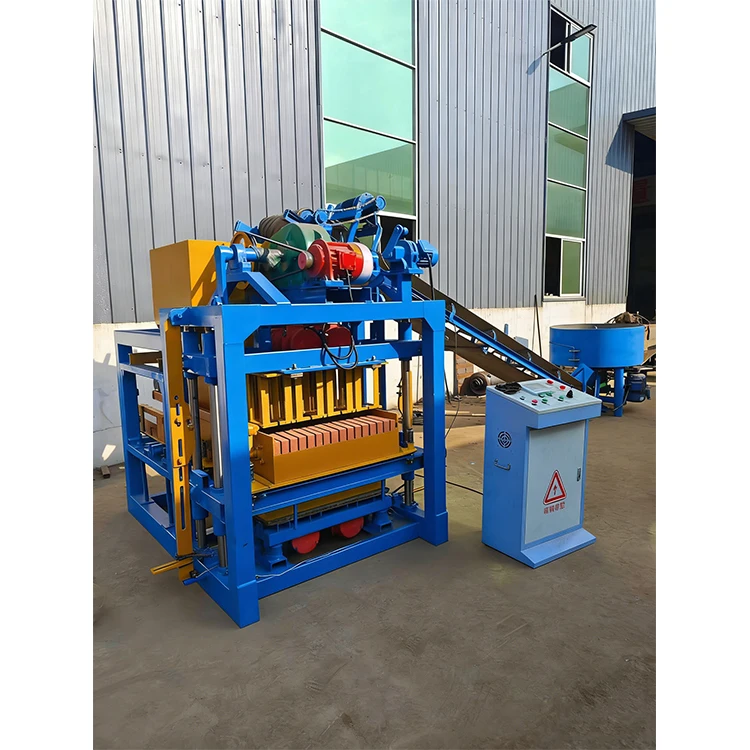
Description
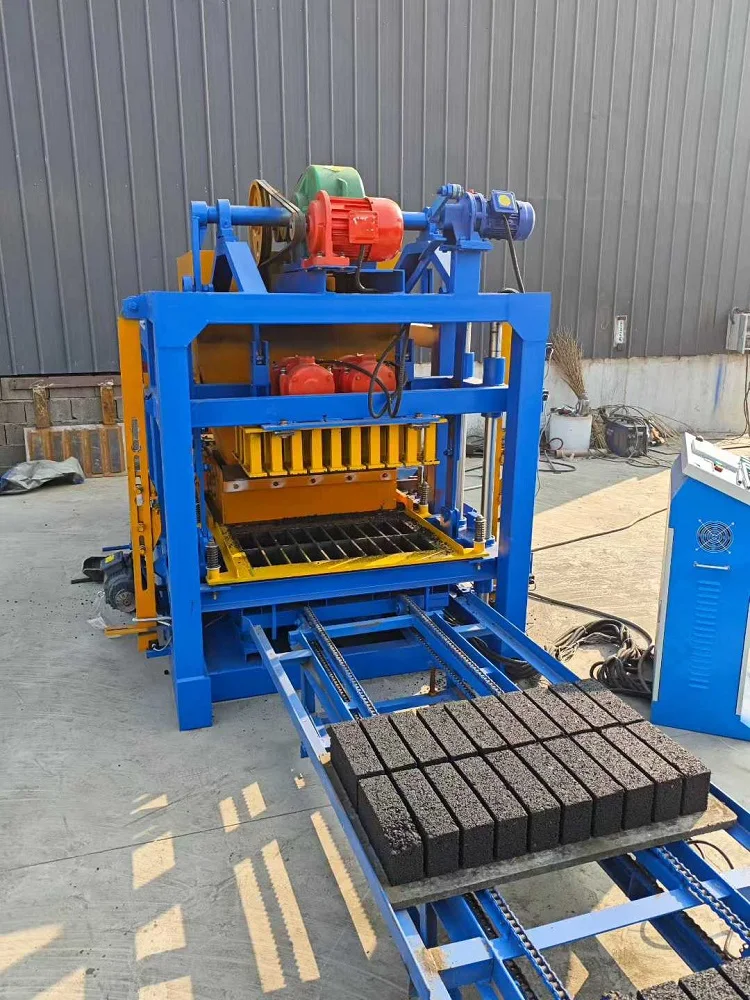
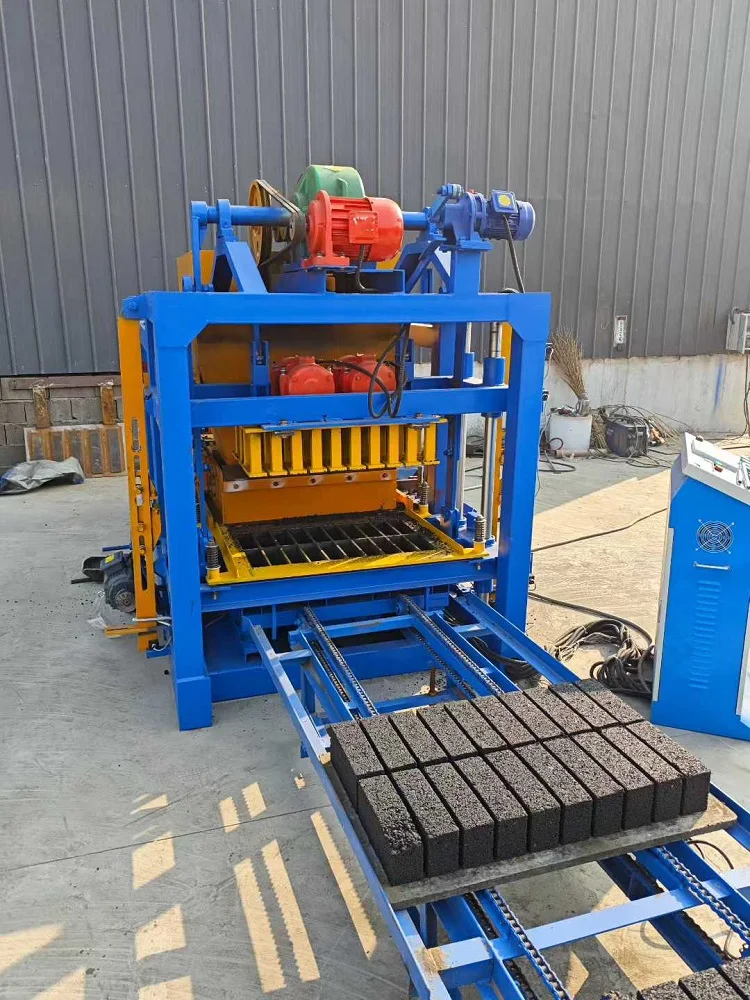
Matched System Logic — we treat PLC interface language, voltage format, and automation sequence as one configuration set, so the QT4-25 arrives with the operator interface already readable and the pallet-to-stacker cycle verified before shipping.
Technical Specifications
| Parameter | Value |
|---|---|
| Model | QT4-25 |
| Product Type | Automatic Concrete Block Making Machine |
| Control System | PLC controlled, fully automatic |
| Machine Power | 16.58 kW |
| Molding Cycle | 25 seconds |
| Output Capacity | 4600 pcs / 8 hours (basis not stated in source) |
| Vibration System | Vibration motor with large vibration box |
| Overall Dimensions (L×W×H) | 6400 × 1500 × 2700 mm |
| Net Weight | 5000 kg |
| Pallet Size | 850 × 480 mm |
| Voltage & Frequency | Configurable to buyer’s local supply |
| Motor Brand | Siemens |
| Frame Construction | Thickened steel |
| Automation Level | Automatic pallet feeding, material feeding and scraping, block stacking |
| Raw Materials | Concrete, sand, cement, fly ash, crushed stone, lime, water |
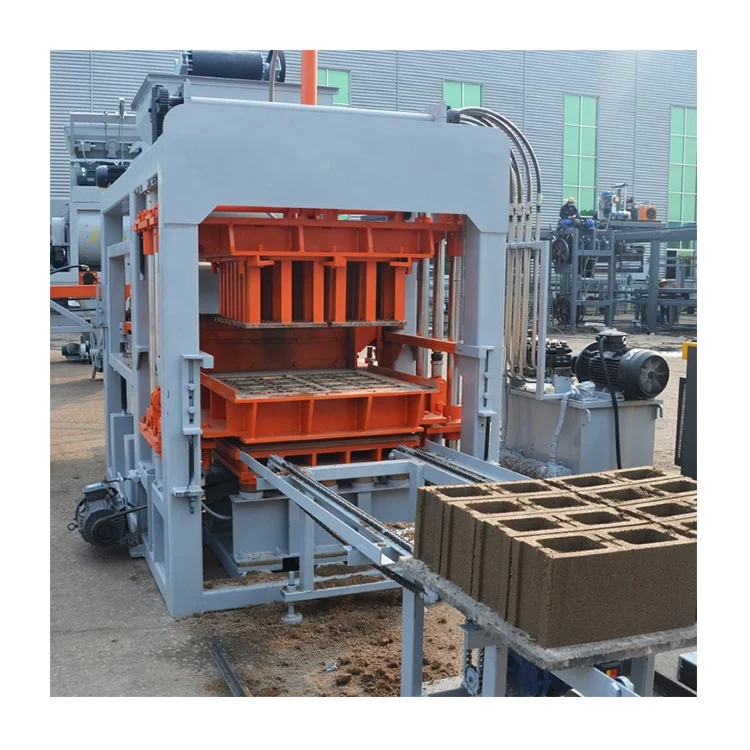
| Block Formats | Hollow blocks, solid blocks, paver stones |
| Hydraulic Pressure | Not applicable |
| Warranty | One year, free parts during warranty period |
Application Suitability
| Application | Material or Output |
|---|---|
| Hollow block production | Crushed stone, sand, cement, water |
| Solid block manufacturing | Fly ash, cement, sand, lime |
| Paver stone production | Concrete mix with fine aggregate |
| Medium-scale block factory | Mass production of multiple formats |
What the PLC Language Question Costs When Ignored
The automatic block making machine PLC controlled interface must speak the operator’s language before the crate is sealed — not after arrival.
I remember shipping a unit to West Africa where the control panel arrived displaying only Chinese characters. The first day of commissioning, nobody on the floor could read the fault codes. The plant manager was on video tapping the screen in frustration while we scrambled to push a remote firmware update over unstable mobile data. That delay cost them nearly a full week of production [NEED_CITE: PLC interface language confirmation practices in export machinery].
When buyers focus only on cycle speed and press tonnage, they leave the human-machine interface as an afterthought. Voltage mismatches compound the problem: a 50 Hz machine running on 60 Hz mains will shift every motor speed, altering vibration frequency and material feed timing. These are not commissioning hiccups — they are configuration failures that should have been caught before the machine left the factory floor.
Automation Sequence That Removes the Operator from Repetitive Tasks
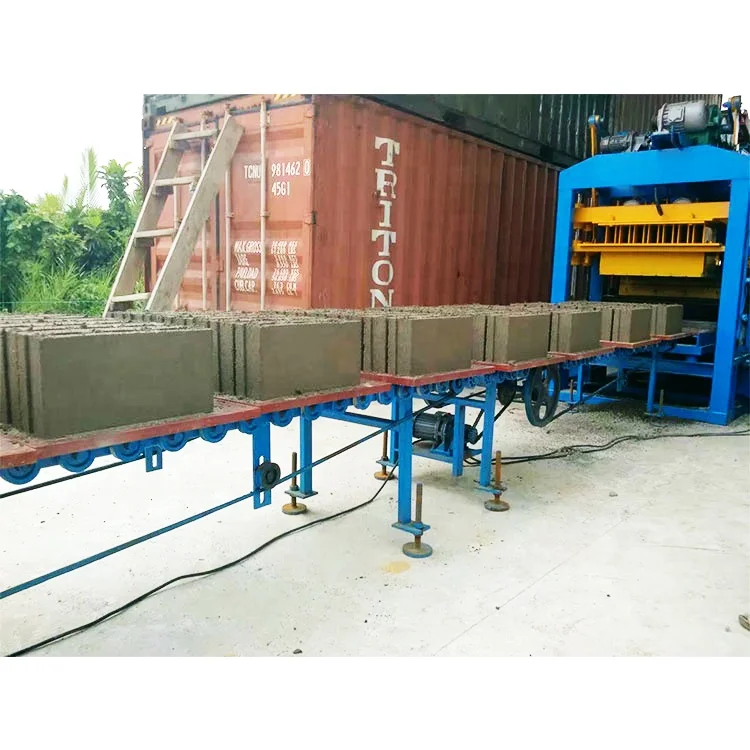
The QT4-25 integrates pallet feeding, material distribution with scraping, and block stacking into one PLC-governed cycle. This means the operator monitors rather than manually intervenes at each station. For a medium-sized block factory moving from semi-automatic operation, the shift is significant: one person oversees the line instead of three or four handling pallets and stacking output by hand.
The automatic block making machine PLC controlled logic coordinates each station timing so the press never idles waiting for a pallet or a scraped mould cavity. Consistent cycle-to-cycle output depends on this synchronization — a manual pallet feeder who pauses for two seconds per cycle introduces compounding variance across an eight-hour shift.
Where Batch Consistency Comes From in Practice
Vibration force and cycle timing must remain stable from the first block to the thousandth. The dedicated large vibration box on this machine delivers compaction energy through a vibration motor rather than hydraulic pressure, which simplifies maintenance for plants without hydraulic service infrastructure on site [NEED_CITE: vibration compaction principles in concrete block production].
Thickened steel frame construction absorbs vibration energy that would otherwise dissipate through frame flex. A frame that deflects under load transfers less energy into the mould cavity, producing blocks with variable density across the pallet. Steel mass and rigidity are not cosmetic — they are structural inputs to block strength.
Reading the Specs That Actually Matter
The 25-second molding cycle governs how many pallets pass through the press per hour, but the realistic daily output depends entirely on which block format sits in the mould. A hollow block occupies more pallet area than a solid paver, so fewer units per cycle. Any capacity figure must be read against the specific format it assumes — the 4600-piece figure in our specs carries no stated format basis, so we calculate it per your target block before quoting.
The 850 × 480 mm pallet size determines curing rack spacing, forklift tine width, and kiln car dimensions. If your existing curing yard is laid out for a different pallet footprint, every pallet becomes a misfit. We confirm this dimension against your floor plan before production begins.
The 16.58 kW total machine power dictates your dedicated circuit sizing and transformer requirements. A shared circuit with other plant equipment risks voltage drop during the vibration motor startup surge, which shortens contactor life and can trip the PLC into a fault state.
The Hidden Cost of Skipping Configuration Verification
Buyers who confirm only the press and leave pallet handling, stacking, and curing as manual add-ons discover that their quoted output assumes hands that were never budgeted. Blocks stack unevenly, breakage climbs during transport to the curing yard, and the cycle speed advantage of the automatic block making machine PLC controlled system is lost to downstream bottlenecks [NEED_CITE: material handling losses in block production].
Voltage and frequency left unconfirmed until shipment arrives mean the electrician on site must source transformers or variable-frequency drives locally — components that add cost, introduce failure points, and delay the first production run. Language mismatch on the HMI display forces the buyer to either hire a translator for commissioning or operate the machine by memorizing icon positions, neither of which is sustainable.
Why Buyers Source This Configuration Here
Block machinery is our single focus, which means the QT4-25 machine, mould, pallet, and handling equipment are specified as one matched system rather than assembled from separate suppliers with interface gaps.
Configuration is set against your actual mix design, local aggregate, and target block format — not a catalogue default that may not match materials available in your region.
Mould design and supply cover the formats your market actually sells, including custom drawings when standard formats do not match local demand.
Automation level is selectable within the line, so a buyer can start with the semi-automatic stations and upgrade pallet feeding or stacking later without replacing the press.
Installation and commissioning support includes operator training so your team runs the machine confidently before our technician leaves the site.
Documentation & Verification
- Line layout with capacity calculation stating the specific block format assumed
- Machine specification sheet with confirmed voltage, frequency, and PLC language
- Mould drawing and format list matching your target block dimensions
- Factory test record on your specified pallet size before dispatch
- Hydraulic and electrical schematic for local maintenance reference
- Wear parts and mould list with part numbers for reorder
Installation, Commissioning & Support
- Dedicated circuit required for 16.58 kW total load with surge allowance for vibration motor startup
- Foundation pad leveled to 6400 × 1500 mm footprint with anchor bolt provision
- Machine shipped as a single assembly; pallet stacker may detach for container loading
- PLC parameters preset to your confirmed voltage and language before dispatch
- Operator training covers mould change procedure, fault code reading, and daily maintenance
- Wear parts list supplied at shipment so first replacements arrive with the machine
Before You Request a Quote
Tell us the block format you sell most — hollow, solid, or paver — along with the dimensions, so we calculate realistic cycle output for that specific mould. Confirm your site voltage and frequency, and let us know which language your operators read on a screen. If you already have curing racks and forklifts, share the pallet dimensions they accept so we match the 850 × 480 mm standard or adjust accordingly.
Frequently Asked Questions
Q: How is the 4600 pieces per 8 hours calculated, and which block format does it assume?
A: That figure appears in our source documentation without a stated block format. We calculate actual output per your target block — hollow, solid, or paver — using the 25-second cycle and pallet area coverage. Request a format-specific capacity sheet before ordering so expectations match production reality.
Q: Can the PLC display language and voltage be confirmed before the machine ships?
A: Yes. We confirm PLC interface language and voltage-frequency configuration during the quotation stage, not after production. This is mandatory on every export unit we build, because debugging an unreadable control panel on site wastes commissioning days.
Q: What automation steps are included in the quotation?
A: The QT4-25 quotation covers automatic pallet feeding, automatic material feeding and scraping, and automatic block stacking as standard. Pallet return conveyors and curing rack handling are line-level additions we scope separately based on your plant layout.
Q: What is the upgrade path if I later want hydraulic pressure or higher automation?
A: The QT4-25 uses vibration motor compaction without hydraulic pressure. Upgrading to a hydraulic press machine requires a different press model, but pallet handling and stacking stations can be upgraded in place. We plan automation tiers so future upgrades integrate with your existing line.
Q: How long does a mould change take, and are tools included?
A: Mould change time depends on the specific format transition and bolt configuration. We supply mould change tools with the machine and train your operators during commissioning. Request the documented change procedure for your two most common formats before shipment.