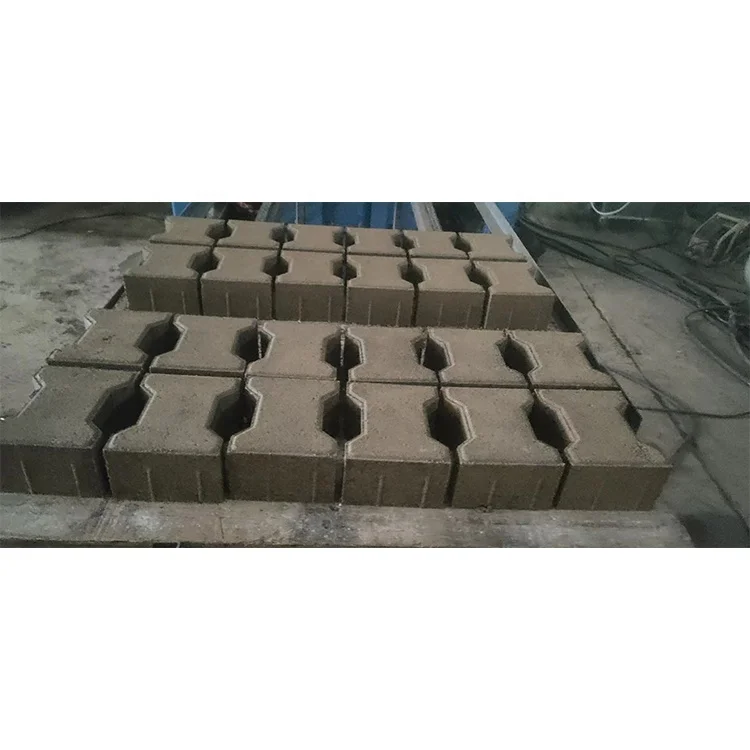


Description
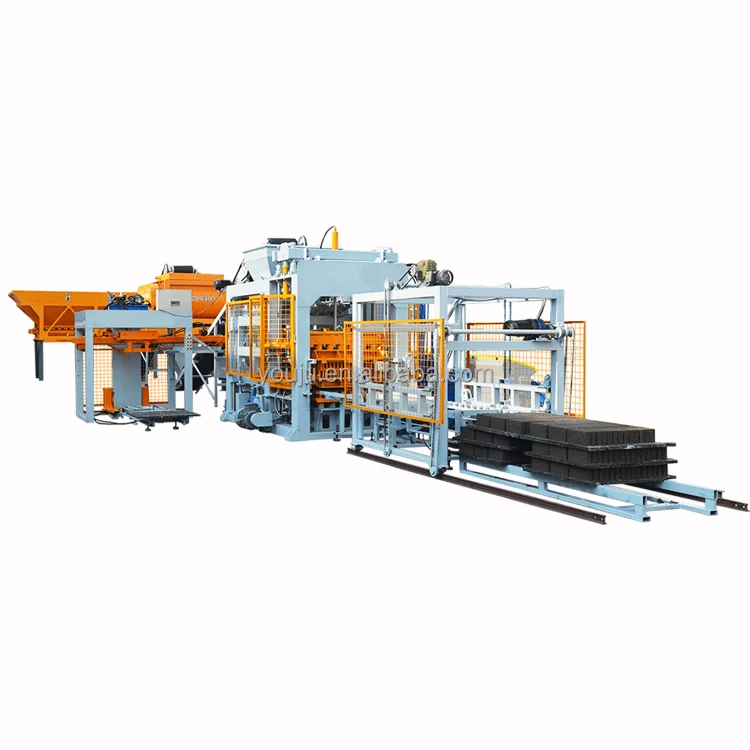
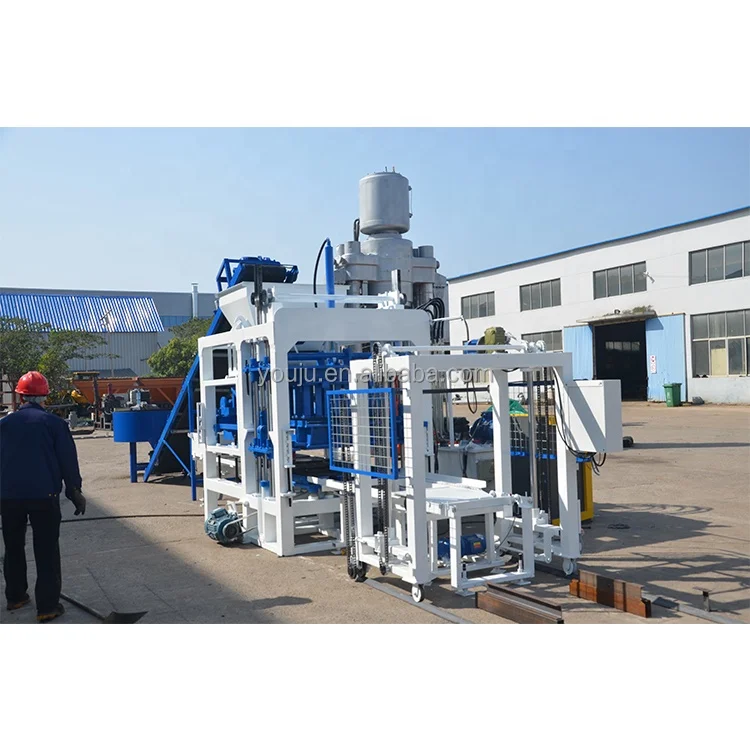
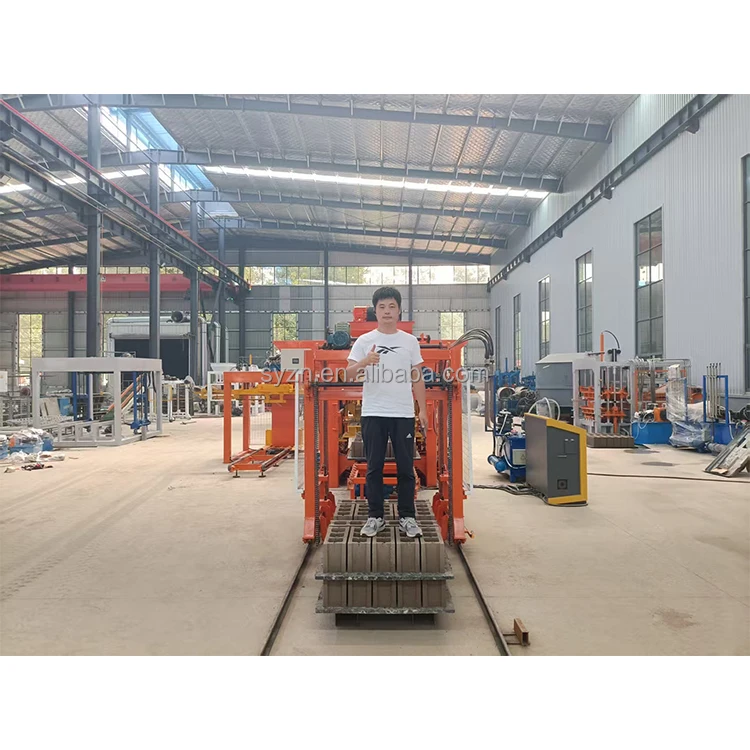
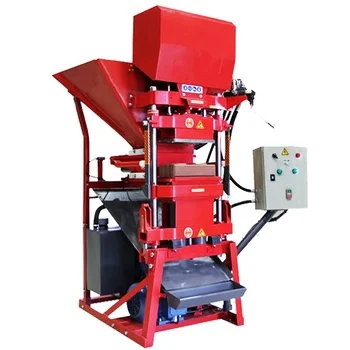
Single-Focus Engineering — Every control loop, hydraulic valve, and PLC routine on the QT5-15 was developed for block pressing rather than adapted from a generic press platform, so cycle logic matches the actual mold sequence.
Technical Specifications
| Parameter | Value |
|---|---|
| Model | QT5-15 |
| Product Type | Hydraulic Automatic Concrete Block Making Machine |
| Overall Dimensions (L×W×H) | 7400 × 1950 × 2800 mm |
| Total Mass | 6 T |
| Rated Hydraulic Pressure | 21 MPa |
| Vibration Form | Platform Vibration |
| Vibration Frequency | 2800–4500 r/min |
| Vibration Force | 40 kN |
| Pallet Size | 1100 × 550 mm |
| Molding Cycle | 15–20 s |
| Demolding Method | Hydraulic |
| Control System | PLC intelligent control with man-machine interface, complete logic control, malfunction diagnosis, and remote control function |
| Machine Frame Material | Manganese steel (China national standard) |
| Automation Level | Automatic (PLC controlled with remote diagnostics) |
| Output — Hollow Block 400×200×200 mm | 7200–9600 pcs/day at 5 pcs/mold, 15–20 s cycle |
| Output — Porous Brick 240×115×90 mm | 23040–28800 pcs/day at 16 pcs/mold, 16–20 s cycle |
| Output — Standard Brick 240×115×53 mm | 61440–70892 pcs/day at 32 pcs/mold, 13–15 s cycle |
| Voltage & Frequency | Configurable to buyer’s local grid (to be confirmed before production) |
| Rated Power | To be verified against manufacturer catalog |
| Mould Change Time | To be confirmed with supplier |
| Factory Area Required | 600 m² |
Application Suitability
| Application | Material or Output |
|---|---|
| Hollow block production for building walls | Crushed stone, sand, cement, fly ash, and gravel on 1100×550 mm pallets |
| Solid and porous brick manufacturing | Cement-bound aggregate blends targeting residential and commercial masonry |
| Interlocking paver and colored paver runs | Pigmented face-mix concrete for walkways, plazas, and driveways |
| Kerbstone and curb production | High-density concrete mixes pressed at 21 MPa for road and highway edging |
| On-site block production for housing projects | Locally sourced slag, dust, and sand reducing transport cost to the build site |
What "Automatic" Really Means When the PLC Speaks the Wrong Language
An automatic block making machine PLC controlled is only automatic if the operator can actually read the screen.
I once watched a QT5-15 line sit idle for three days in South America because the PLC display shipped in English while the floor crew spoke only Spanish. The distributor had focused every negotiation hour on price and cycle speed, never once asking what language the touch panel would show. By the time a translator flew in, the project deadline had already slipped. That incident reshaped how I approach every shipment: language confirmation goes on the checklist before the crate is sealed [NEED_CITE: language and localization standards for industrial HMI panels]. When buyers evaluate an automatic block making machine PLC controlled, the control interface is the part the operator touches fifty times an hour — if the words on it mean nothing to them, the automation advantage collapses.
Closing the Loop Between Sensor, Logic, and Hydraulic Valve
The PLC on the QT5-15 runs complete logic control across the entire molding sequence: feed hopper gate, vibration start and stop, hydraulic press stroke, and demolding lift. Each step is timed against sensor feedback rather than a fixed delay, so if the mix is stiffer than usual the controller extends vibration by a fraction of a second instead of producing a short-filled block. This closed-loop approach is what separates an automatic block making machine PLC controlled from a relay-timed press that simply repeats the same timer regardless of material behavior.
Remote Diagnostics That Start Before the Technician Boards a Plane
The remote control function allows the supplier’s service team to log in over a plant network connection, read fault codes, and adjust parameters without waiting for a flight. For a block plant running two shifts, a fault caught and resolved in the first hour prevents a full day of lost output. The system records malfunction events in a log the operator can review, turning each stoppage into a data point for preventive maintenance scheduling [NEED_CITE: remote monitoring requirements for industrial PLC systems].
Reading the Specs That Shape Daily Output
Rated pressure at 21 MPa works together with the 40 kN platform vibration to compact the concrete mix from both above and below; higher pressure alone without sufficient vibration leaves voids in hollow block walls, while vibration without adequate hydraulic squeeze produces blocks that crumble at the edges. The 1100 × 550 mm pallet size must match the curing racks and forklift tines already in the plant — ordering a pallet dimension that the existing rack cannot accept means rebuilding the curing area before the first block is pressed. Vibration frequency spanning 2800–4500 r/min lets the operator tune the setting to the aggregate grain size; coarser crushed stone generally responds better to the lower end of the range, while fine sand and fly ash blends benefit from higher frequency for tighter surface finish. Molding cycle times are listed per format — 13–15 s for standard brick, 15–20 s for hollow block, 16–20 s for porous brick — because a single blanket cycle figure hides the fact that larger formats always take longer.
The Commissioning Delay Nobody Budgeted For
When voltage, frequency, and PLC display language are left to "standard configuration," the machine arrives with a motor wound for a grid it will never see and a screen the operator cannot read. Rewinding or replacing the main motor adds weeks of downtime, and sourcing a new HMI panel overseas is rarely a same-day errand. These are not warranty issues — they are specification gaps that the purchase contract simply did not close [NEED_CITE: voltage and frequency standards by export market]. Plants that discover the mismatch on day one of commissioning end up paying for the correction twice: once in parts and once in missed delivery deadlines to their own customers.
Why Buyers Route Automation Projects Through This Line
Block machinery is the single product focus here, so the press, mold, pallet, and handling equipment are specified as one matched system rather than assembled from unrelated suppliers. Configuration is set against the buyer’s actual mix design and local aggregate, not copied from a catalog default that assumes materials unavailable at the job site. Mold design covers the formats the buyer’s market actually sells, including custom drawings when a project calls for a non-standard interlocking profile. Automation level is selectable, letting a plant start with PLC-controlled pressing and add automatic stacking or cubing later as volume grows. Installation support includes operator training on the specific PLC interface, so the crew that uncrates the machine is the same crew that runs it through its first production week.
Documentation & Verification
- Line layout showing pallet flow from press through curing rack with capacity noted per block format
- PLC program backup and parameter sheet matching the language confirmed in the purchase contract
- Hydraulic and electrical schematic with valve and sensor tags matching the physical machine
- Factory test record running the buyer’s specified mold and mix proportion before crate sealing
- Mould drawing and format list so the buyer knows exactly which block profiles ship with the press
- Voltage and frequency confirmation form signed before motor winding begins
Installation, Commissioning & Support
- Foundation plan scaled to the 7400 × 1950 mm footprint and 6 T operating mass, including anchor bolt pattern
- Dedicated power circuit sized for the confirmed kW rating at the buyer’s local voltage and frequency
- PLC language and remote diagnostics connectivity verified during the first power-on before material is loaded
- Mold mounting and vibration frequency tuning completed on-site for each block format the buyer will produce
- Operator training covering fault log review, cycle parameter adjustment, and daily hydraulic fluid level checks
- Wear parts list identifying mold liners, vibration springs, and hydraulic seals with part numbers for reorder
Preparing the Inquiry So the First Machine Fits
Share the block formats that move fastest in your market along with the daily volume you need per format, so the cycle time and mold count can be calculated back from real sales data rather than a catalog peak. Confirm the voltage and frequency of the plant supply, the preferred PLC display language, and whether the existing curing area and forklift match the 1100 × 550 mm pallet. If the plant is still being built, provide the workshop length, width, and clear height so the line layout can account for pallet return conveyors and curing rack placement before concrete is poured.
Frequently Asked Questions
Q: How is daily output calculated per block format, and what cycle time does each figure assume?
A: Each output figure on the QT5-15 is tied to a specific mold and cycle window. Hollow blocks at 400×200×200 mm run five per mold at 15–20 s, porous bricks at 240×115×90 mm run sixteen per mold at 16–20 s, and standard bricks at 240×115×53 mm run thirty-two per mold at 13–15 s. No single blanket capacity number is quoted without its format and cycle assumption.
Q: What PLC display language options are available, and can the interface be set before shipment?
A: The HMI supports multiple languages and the required language is confirmed during the contract stage, not after crating. The factory loads the chosen language pack, runs a test screen during the pre-shipment inspection, and includes a signed language confirmation form in the documentation package so there is no surprise on commissioning day.
Q: How does the remote fault diagnosis system work, and what connectivity does it require on-site?
A: The PLC logs fault events and exposes them through a network port that the supplier’s service team can reach via a secure connection. The plant needs a stable internet link at the control cabinet. Once connected, engineers read error codes, adjust timing parameters, and guide the local technician through corrective steps without waiting for an international flight.
Q: How are voltage and frequency configured to match the buyer’s local grid?
A: The buyer provides the local supply voltage and frequency before production starts. The motor, transformer, and PLC power supply are then specified to match. A confirmation form is signed by both sides so the electrical cabinet that ships is the one that plugs in on arrival without rewinding or adapter transformers.