

Description
Intelligent PLC control integration — The QT5-15 stores per-format production programs within its PLC, allowing operators to recall parameters rather than re-dial pressures and cycle times after every mould change.
Technical Specifications
| Parameter | Value |
|---|---|
| Model | QT5-15 |
| Product Type | Hydraulic Concrete Block Making Machine |
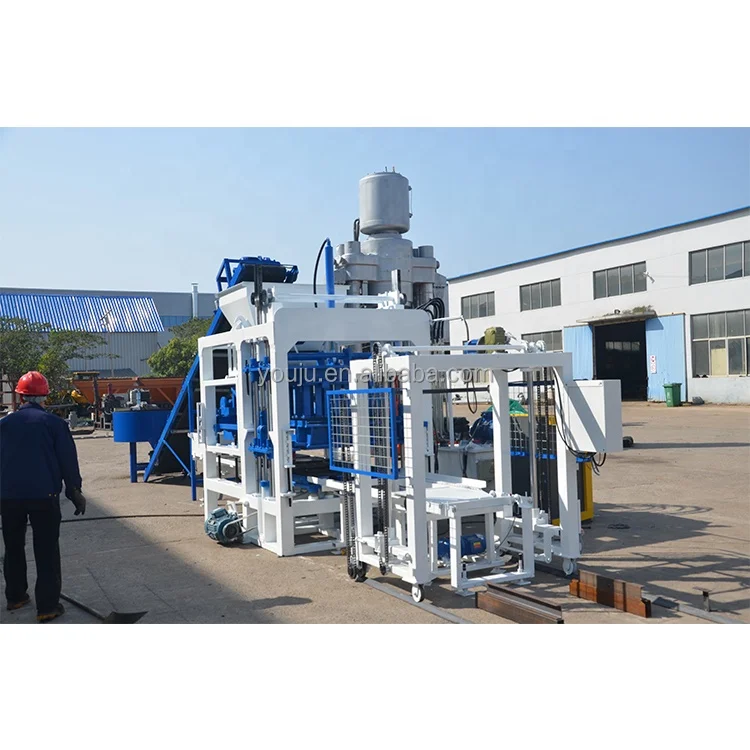
| Overall Dimensions (L×W×H) | 7400×1950×2800 mm |
| Rated Pressure | 21 MPa |
| Main Vibration Form | Platform Vibration |
| Vibration Frequency | 2800–4500 r/min |
| Vibration Force | 40 kN |
| Pallet Size | 1100×550 mm |
| Molding Cycle | 15–20 s (basis: hollow block format) |
| Total Mass | 6 T |
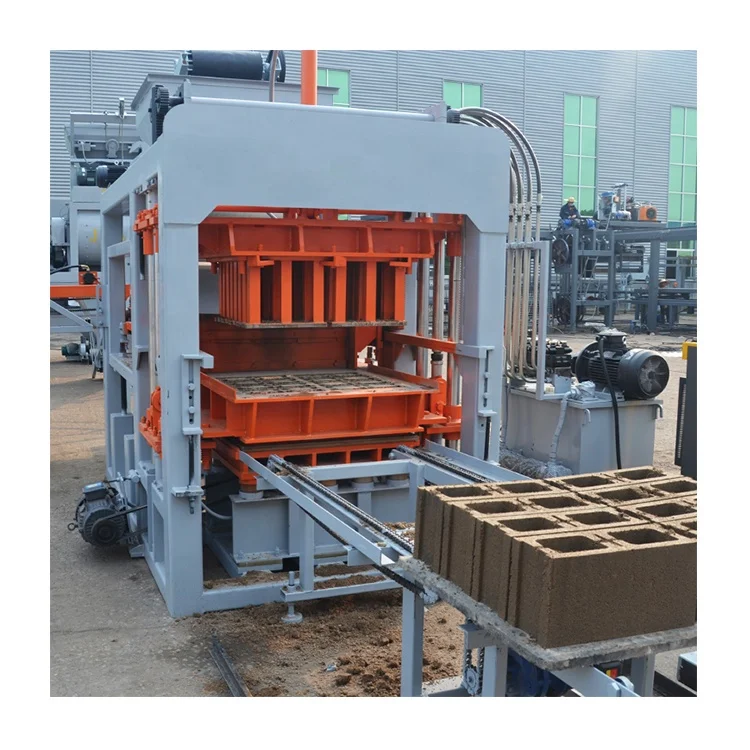
| Demolding Method | Hydraulic |
| Control System | PLC intelligent control with HMI, logic control, malfunction diagnosis, and remote control function |
| Automation Level | Semi-automatic (manual pallet handling implied) |
Application Suitability
| Application | Material or Output |
|---|---|
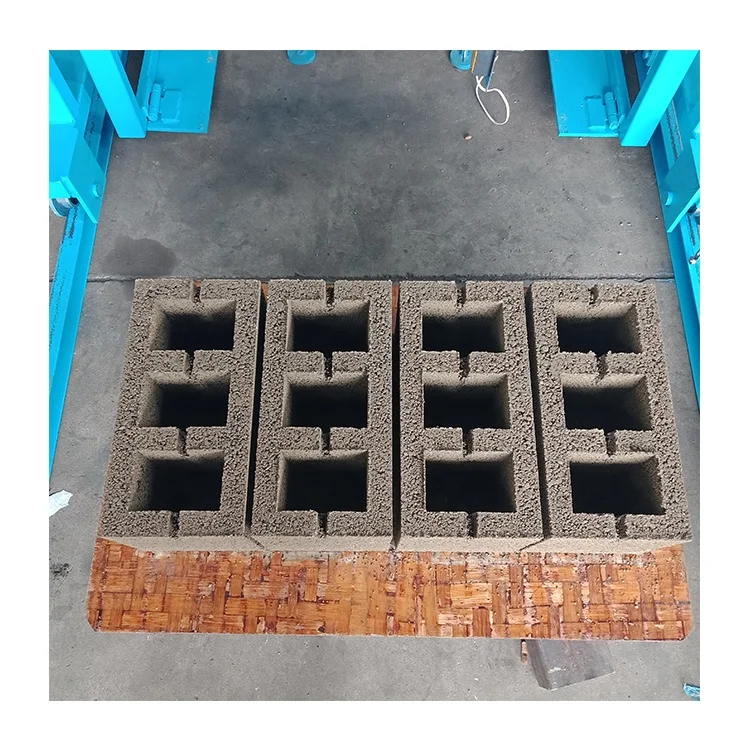
| Hollow block production | Crushed stone, sand, cement, fly ash (400×200×200 mm format) |
| Porous brick manufacturing | Gravel, slag, cement blends (240×115×90 mm format) |
| Standard solid brick output | Sand, cement, dust aggregates (240×115×53 mm format) |
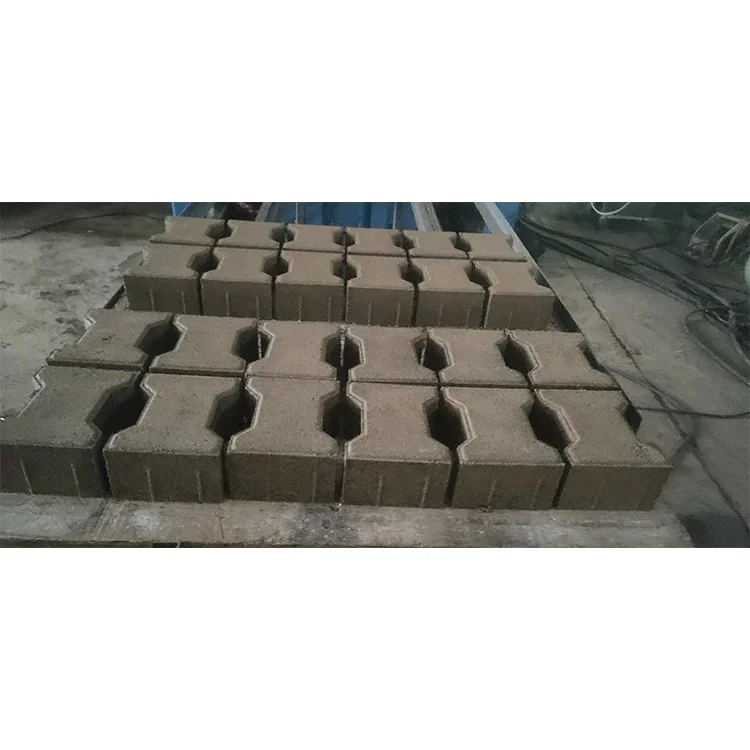
| Paver and interlocking brick | Colored concrete mixes for curbstone and paving formats |
Why PLC Stored Programs Matter More Than Quoted Cycle Times
The automatic QT5-15 block making machine PLC controlled system retains production logic for each block format, meaning the press does not drift when you switch from hollow blocks to pavers mid-shift.
Many buyers discover that a quoted 15-second cycle only applies to one specific format under ideal conditions. When the aggregate changes or the mould swaps, operators without stored parameters spend the rest of the day chasing consistent density. This machine removes that variable by locking vibration duration, hydraulic pressure, and feed timing into recallable programs [NEED_CITE: PLC parameter storage in hydraulic block presses].
Stored Parameters Eliminate Shift-to-Shift Drift
The PLC interface on the automatic QT5-15 block making machine PLC controlled configuration allows supervisors to save the exact vibration frequency, pressure hold time, and feed volume for every mould in the workshop. When the morning crew arrives, they select the format from the HMI rather than relying on handwritten notes or memory. This consistency directly addresses the density variation that plagues relay-controlled semi-automatic lines.
Remote Fault Diagnosis Cuts Downtime on Remote Sites
The malfunction diagnosis system monitors hydraulic pressure, vibration motor current, and limit switch states in real time. If a sensor fails or a valve sticks, the HMI displays the fault code and suggested check sequence. For operations far from the nearest technician, the remote control function allows off-site troubleshooting over a network connection, turning a multi-day wait into a guided phone call [NEED_CITE: remote diagnostics in industrial PLC systems].
How 21 MPa and 40 kN Shape the Block
Hydraulic pressure and vibration force must work together — pressure compacts the mix while vibration settles fine particles into voids. The QT5-15 delivers 21 MPa rated pressure alongside 40 kN vibration force at up to 4500 r/min. On porous brick formats, this combination produces close-grained faces without over-compacting the core. On hollow blocks, it ensures web walls reach strength without excess cement. Pallet size at 1100×550 mm dictates how many cavities fit per cycle, which in turn determines whether your curing area and forklift can keep pace with the press.
The Cost of Skipping Voltage and Language Confirmation
Buyers who confirm electrical specs after the machine ships face weeks of delay at commissioning. The control panel wiring, motor winding configuration, and HMI language pack must match the destination market before production begins. A 380V/50Hz panel arriving at a 440V/60Hz site requires transformer additions or motor replacement, and an HMI locked in an unreadable language forces the operator to guess at fault codes [NEED_CITE: voltage and frequency standards by export market].
Why Sourcing From a Single-Focus Manufacturer Reduces Integration Risk
Block machinery as a single focus means the press, mould, pallet, and handling equipment are specified as one matched system. The QT5-15 configuration is set against your actual mix design and local aggregate, not a catalogue default. Mould design covers the formats your market actually sells, with custom drawings available. The automation level is selectable, so you can begin with semi-automatic pallet handling and add automatic stacking later. Factory testing runs your specific material before dispatch, and documentation includes hydraulic and electrical schematics for independent local servicing.
Documentation & Verification
- Line layout showing QT5-15 footprint within a 600 m² recommended factory area
- Capacity calculation sheet stating block format assumed for each output figure
- Hydraulic and electrical schematics for local PLC and valve servicing
- Factory test record on buyer’s supplied aggregate before dispatch
- Voltage, frequency, and HMI language confirmation signed before production
Installation, Commissioning & Support
- 600 m² minimum factory area required for QT5-15 with curing rack clearance
- Dedicated circuit matching confirmed voltage and frequency before machine energization
- PLC language pack loaded per operator requirement prior to HMI first boot
- Vibration frequency calibrated to buyer’s mix during on-site commissioning
- Mould change procedure trained with stored program recall on the HMI
- Hydraulic wear parts list provided with first replacement intervals noted
What to Include in Your Inquiry
Provide your target block formats with dimensions, the daily output you need per format, and a sample or analysis of your local aggregate. Confirm your site voltage, frequency, and the language your operators read on a screen. Let us know whether you plan to handle pallets manually or want to discuss automatic feeding and stacking as an upgrade path.
Frequently Asked Questions
Q: How is daily output verified per block format, and what cycle time does each format assume?
A: Output is calculated per format using the mould cavity count and the cycle time for that specific shape. Hollow blocks at 400×200×200 mm run 5 pieces per mould at 15–20 seconds. Porous bricks at 240×115×90 mm run 16 pieces at 16–20 seconds. Standard bricks at 240×115×53 mm run 32 pieces at 13–15 seconds. A capacity sheet states each assumption.
Q: What PLC brand does the control system use, and can the HMI display be set to the operator’s language?
A: The PLC and HMI are selected based on availability and service network in the destination market. Language packs are loaded before dispatch — confirm your operator’s language during the quotation stage so the display reads correctly at first power-on.
Q: How does the remote diagnostics function work — does it require an internet connection at the plant?
A: The malfunction diagnosis system runs locally on the PLC and displays fault codes on the HMI. Remote access requires a network connection at the plant, allowing off-site technicians to view live parameters and guide local staff through corrective steps without a site visit.
Q: What is the upgrade path from this semi-automatic configuration to fully automatic pallet handling?
A: The QT5-15 PLC architecture supports adding automatic pallet feeding, stacking, and cubing modules. The control logic expands to coordinate these stations with the press cycle. Discuss the upgrade scope during inquiry so wiring and PLC I/O are reserved at build.