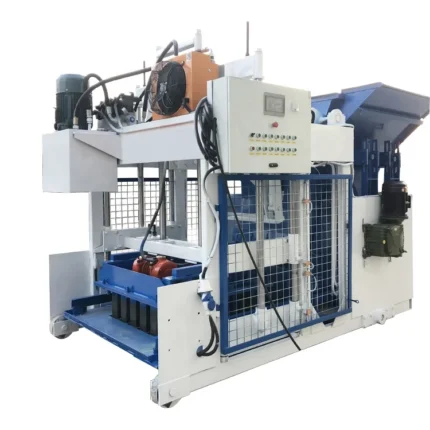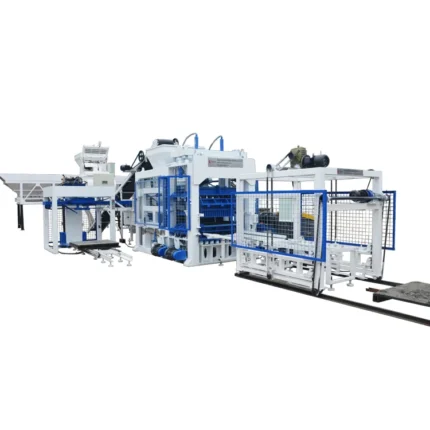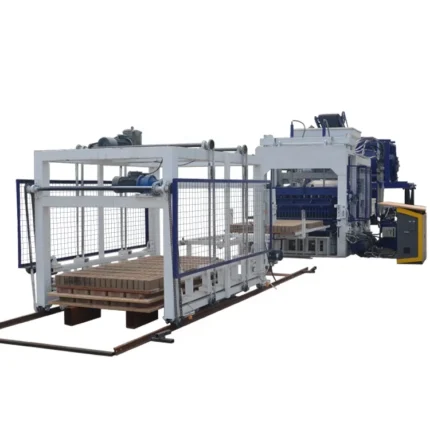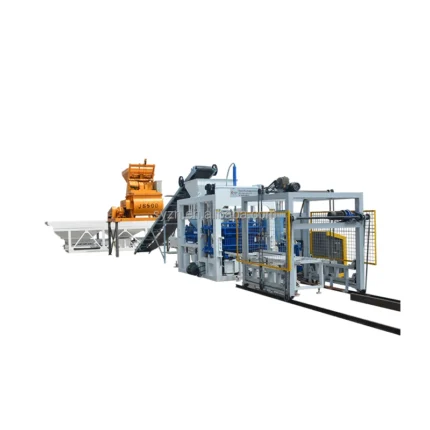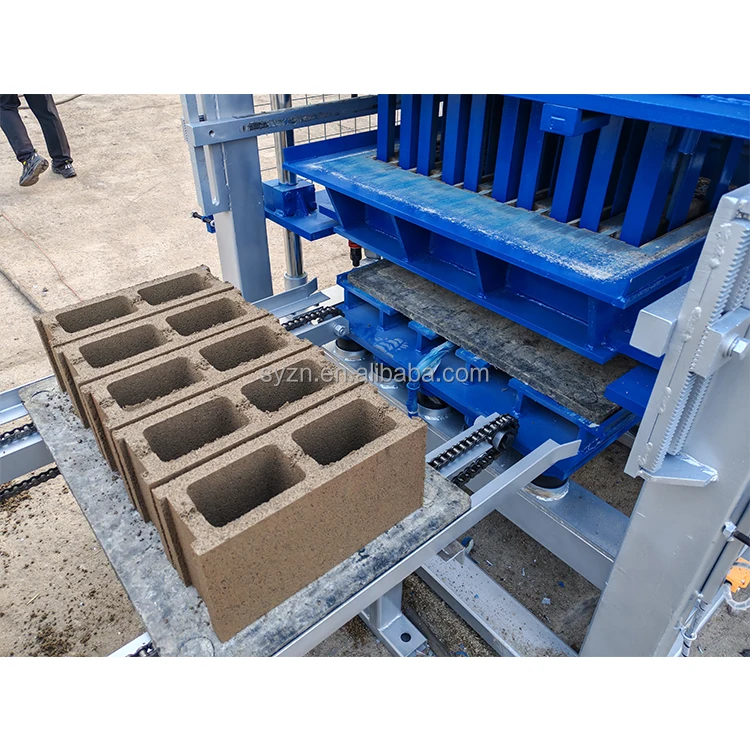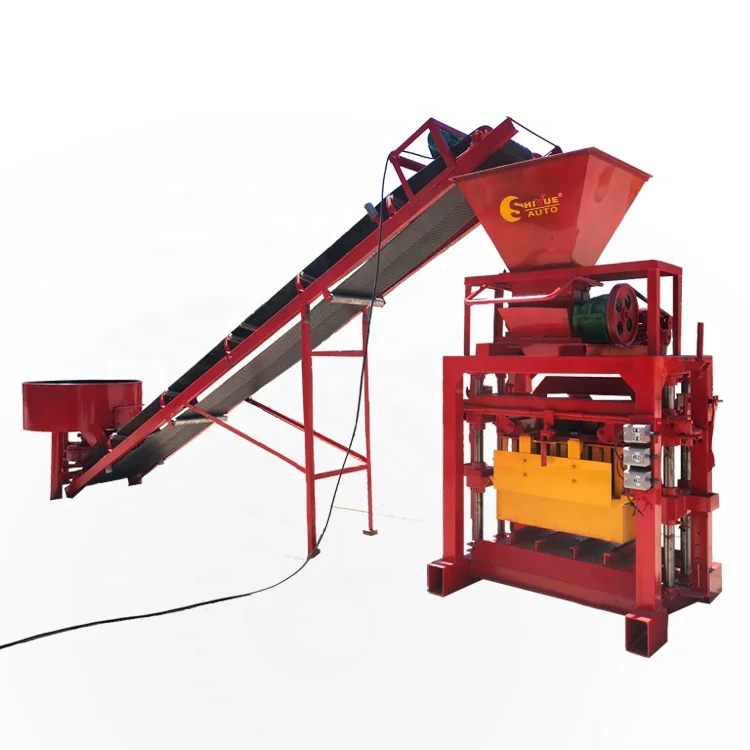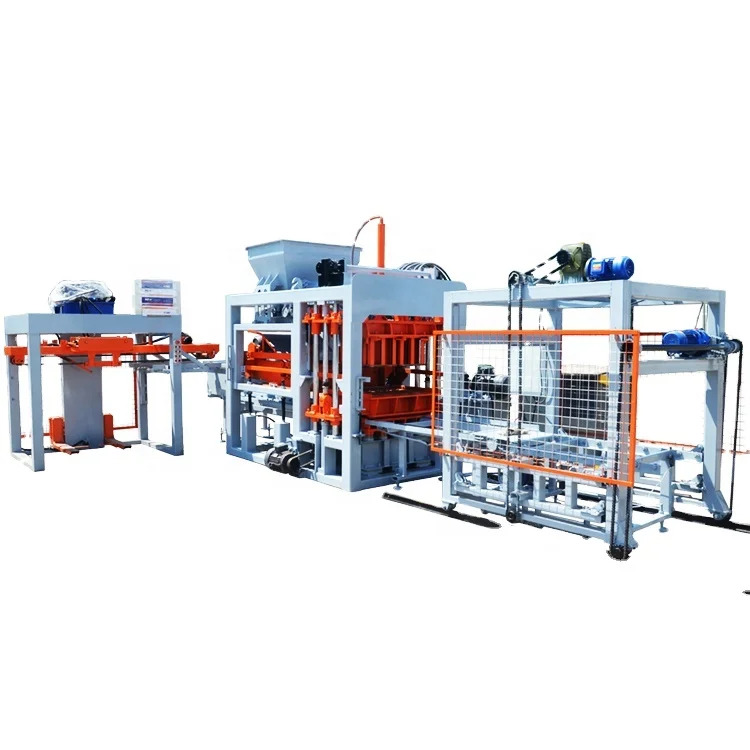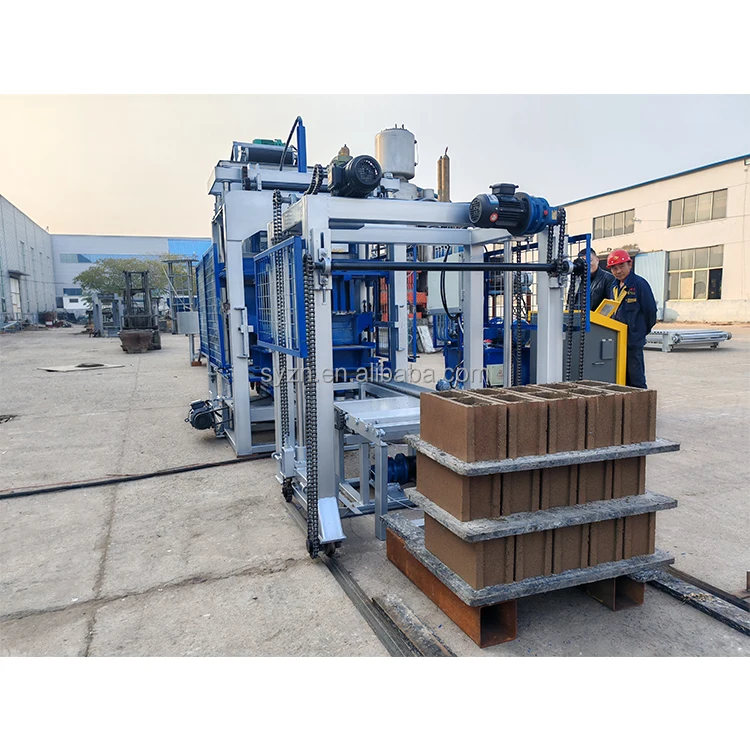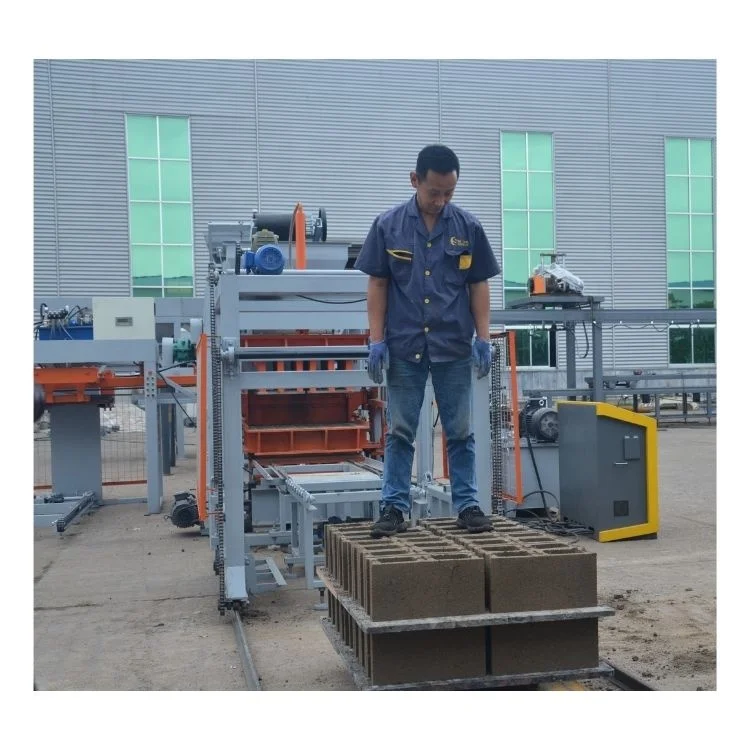


Description
Intelligent Control Matched to Your Line — The QT6-15 is specified as a complete automated press where PLC logic manages vibration, pressure and cycle sequencing, removing operator guesswork from batch-to-batch consistency.
Technical Specifications
| Parameter | Value |
|---|---|
| Model | QT6-15 |
| Product Type | Automatic Concrete Block Making Machine |
| Overall Dimensions (L×W×H) | 7350×1780×2950 mm |
| Overall Power | 30.5 kW |
| Rated Pressure | 16 MPa |
| Main Vibration | Platform vibration |
| Vibration Frequency | 4600 r/min |
| Pallet Size | 880×700 mm |
| Molding Cycle | 15–20 s |
| Output Capacity (Hollow Block 400×200×200 mm) | 1080 pcs/h, 8640 pcs/day (based on 6 pcs/mould, 16–20 s cycle) |
| Output Capacity (Porous Brick 240×115×90 mm) | 2800 pcs/h, 22400 pcs/day (based on 14 pcs/mould, 15–18 s cycle) |
| Output Capacity (Standard Brick 240×115×53 mm) | 6800 pcs/h, 54400 pcs/day (based on 30 pcs/mould, 14–17 s cycle) |
| Control System | Automatic PLC control (brand, language and I/O to be confirmed) |
| Voltage & Frequency | To be confirmed before commissioning |
| Raw Materials | Crushed stone, sand, cement, fly ash, cinder, slag, gangue, gravel, perlite, industrial wastes |
| Standards | CE, SGS, ISO 9001 |
Application Suitability
| Application | Material or Output |
|---|---|
| Hollow block production for masonry walls | Crushed stone, sand, cement and fly ash blends |
| Paving stone manufacturing with face mix | Aggregate base layer with coloured face layer |
| Interlocking block production for driveways | Cement-stabilised sand and fine gravel |
| Kerbstone and edger production | Dense concrete mixes with coarse aggregate |
| Porous brick firing or non-firing lines | Lightweight aggregate, perlite and cinder blends |
| Landscaping and garden product runs | Decorative aggregates with pigment additives |
What "Automatic" Really Means When the Panel Lights Up in a Foreign Language
Confirm PLC display language and voltage before the machine leaves the factory, not after it arrives on your floor.
I have spent weeks on project sites in Latin America watching a brand-new automatic QT6-15 block making machine sit idle because the control panel was locked in a language the local operators could not read, and the site electrician discovered the frequency rating did not match the local grid. The press itself was fine. The oversight cost the buyer a full commissioning cycle while replacement components were air-freighted in. [NEED_CITE: voltage and frequency standards by export market]
When a PLC controlled concrete block machine crosses borders, the intelligence it promises only works if the human-machine interface speaks the operator’s language and the electrical cabinet matches the site supply. These are not optional extras — they are prerequisites for the automation to function at all.
How PLC Logic Replaces Operator Judgement
On manual or semi-automatic presses, the operator decides when to vibrate, how long to hold pressure, and when to release the mould. Batch consistency depends entirely on that person’s attention span. The automatic QT6-15 block making machine removes those decisions from the operator and encodes them into the PLC sequence, so the vibration duration, hydraulic pressure ramp and demoulding speed remain identical whether it is the first cycle of the morning shift or the last cycle before the weekend.
This matters most when you run multiple formats on the same press. A hollow block cycle requires a different vibration profile than a solid paving stone. With the recipe stored in the PLC, switching formats means selecting a programme rather than retraining the operator on feel.
Where Automation Stops and the Buyer’s Scope Begins
The PLC controls the press, but a block line has stations upstream and downstream that must keep pace. [NEED_CITE: CE machinery directive requirements for industrial equipment] Raw material batching, pallet feeding, wet product stacking and curing rack handling each have their own cycle times. If the automatic pallet feeder cannot deliver a fresh pallet within the press cycle, the PLC will hold the press and your stated output drops regardless of what the spec sheet says.
Before ordering, confirm in writing which stations are included in the supply scope. Pallet feeding, stacking and cubing may be standard or optional depending on the configuration, and discovering this after shipment creates the kind of bottleneck no amount of PLC intelligence can solve.
Reading the Specs That Actually Determine Block Quality
The rated pressure of 16 MPa and the platform vibration frequency of 4600 r/min work together to compact the mix. Pressure alone produces a dense but brittle block; vibration alone leaves voids. The combination forces aggregate particles into a tight matrix while the hydraulic head maintains compaction through the entire mould fill. If your local aggregate is round river gravel rather than angular crushed stone, the vibration profile may need adjustment to achieve the same interlock — a setting the PLC can store once dialled in during commissioning.
The 880×700 mm pallet size determines how many blocks fit per cycle and must match your existing curing racks and forklift tines. A pallet that does not fit your rack system means you are rebuilding the curing area to suit the machine rather than the other way around. The moulding cycle of 15–20 seconds governs throughput, but actual daily output depends on which format you run most often.
The Cost of Skipping the Configuration Conversation
Buyers who select a press from a catalogue page without confirming the automation scope frequently discover that the quoted output assumed a fully automatic line, while their order covered the press alone. Hand-stacking wet blocks off a PLC controlled concrete block machine designed for automatic pallet flow introduces handling damage, slows the line to match human speed, and negates the consistency the automation was meant to deliver. [NEED_CITE: typical automation scope variations in block machine exports]
Similarly, ordering without confirming the mould change system means you may spend the better part of a shift swapping tooling — a delay that turns multi-format flexibility into a once-a-week event.
Why Specifying Through This Channel Matters
The QT6-15 is treated as one matched system rather than a press sold separately from its moulds, pallets and handling equipment. Configuration starts from your actual mix design and target block format, not a catalogue default that assumes generic aggregate. Mould design covers the formats your market actually buys, including custom drawings when standard options do not fit. The automation level is selectable, allowing you to begin with a press-only setup and add pallet feeding or stacking later. Installation support includes operator training on the PLC interface in the language your team speaks.
Documentation & Verification
- Line layout showing pallet flow and station spacing for the QT6-15 footprint
- Capacity calculation sheet stating output per block format with cycle assumptions
- PLC I/O list and control language confirmation signed before production
- Voltage and frequency declaration matching your site electrical specification
- Hydraulic and electrical schematic for local maintenance team reference
- Factory test record on your specified mould and mix before dispatch
Installation, Commissioning & Support
- 30.5 kW total power requires a dedicated circuit with correct breaker rating at your site voltage
- 7350 mm machine length demands a level foundation with anchor bolt provisions
- PLC panel configured to your chosen display language before the control cabinet is sealed
- First-run commissioning includes cycle timing verification against your target mould format
- Operator training covers PLC recipe selection, mould change procedure and fault code reading
- Wear parts and mould maintenance list provided with recommended replacement intervals
What to Include in Your Enquiry
Send your target block formats with dimensions, your daily output requirement per format, and your local voltage and frequency. Confirm the PLC display language your operators need. Describe your existing curing rack dimensions and forklift specifications so the pallet size can be verified against them. If you have an established mix design, share the aggregate grading and cement ratio so the vibration and pressure settings can be matched before the machine ships.
Frequently Asked Questions
Q: How do I verify the stated output capacity against my own block format?
A: The published figures assume specific block dimensions and piece counts per mould — for example, 1080 hollow blocks per hour based on six pieces per mould at a 16–20 second cycle. If your format differs, request a capacity calculation sheet that states the cycle time and pieces per mould for your exact product, rather than accepting a generic hourly figure.
Q: What electrical details must be confirmed before production starts?
A: Voltage, frequency and phase configuration must match your site supply exactly. The PLC display language must be specified so operators can read fault codes and recipe menus. These items are confirmed in writing before the control cabinet is assembled, because correcting them after shipment involves component replacement and commissioning delays.
Q: Is automatic pallet feeding and stacking included in the base configuration?
A: The automation scope is selectable. The press itself is PLC-controlled, but pallet feeding, wet product stacking and cubing may be included or optional depending on the configuration you order. Confirm the line layout and station list in writing so downstream handling matches the press cycle time.
Q: How does mould change time affect my daily production schedule?
A: Format switching pauses production while the old mould is removed and the new one is seated, aligned and locked. If the change system is not specified to your shift pattern, you may find operators avoiding format changes entirely, running a single product and losing the flexibility you invested in. Request the mould change procedure and expected duration for your tooling set.