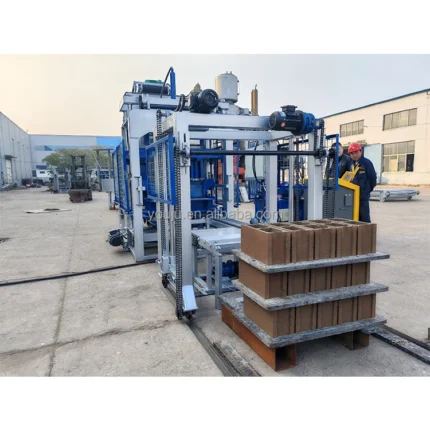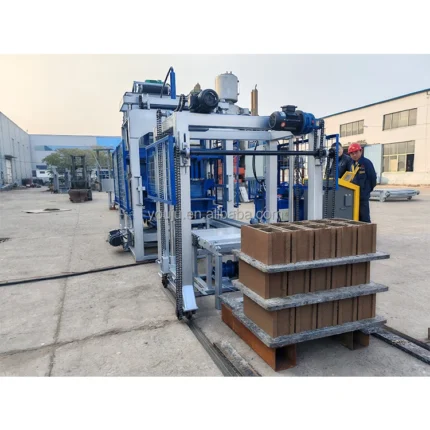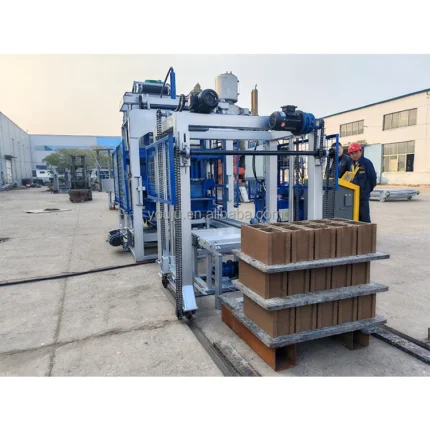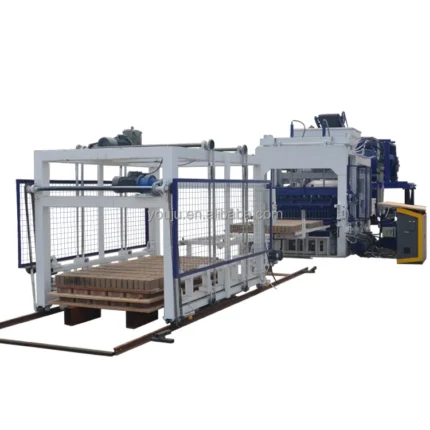
Description
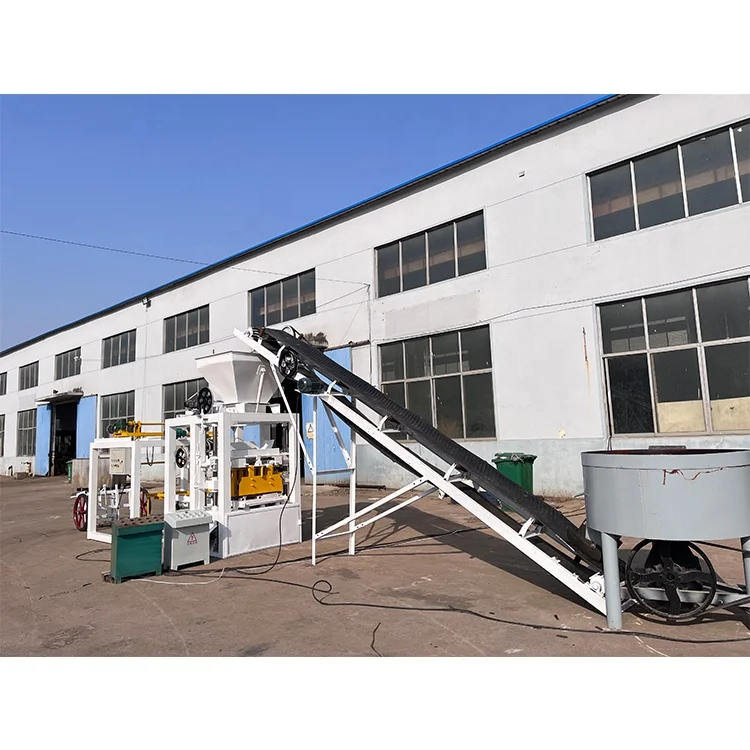
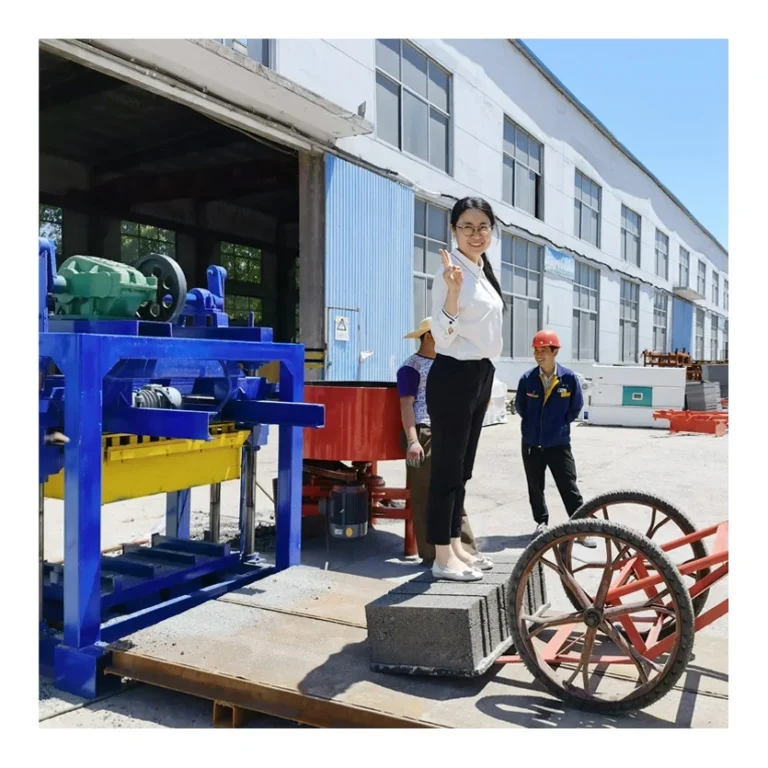
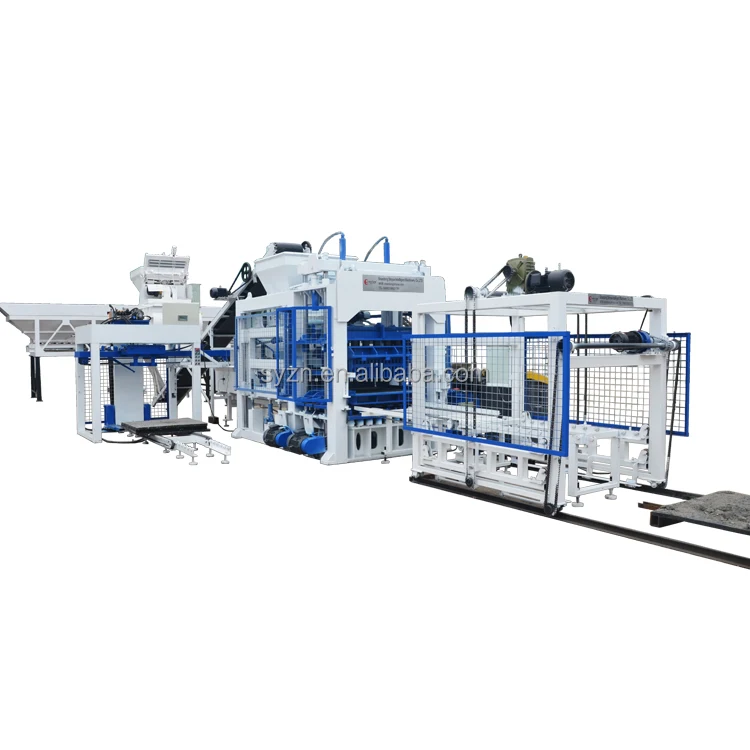
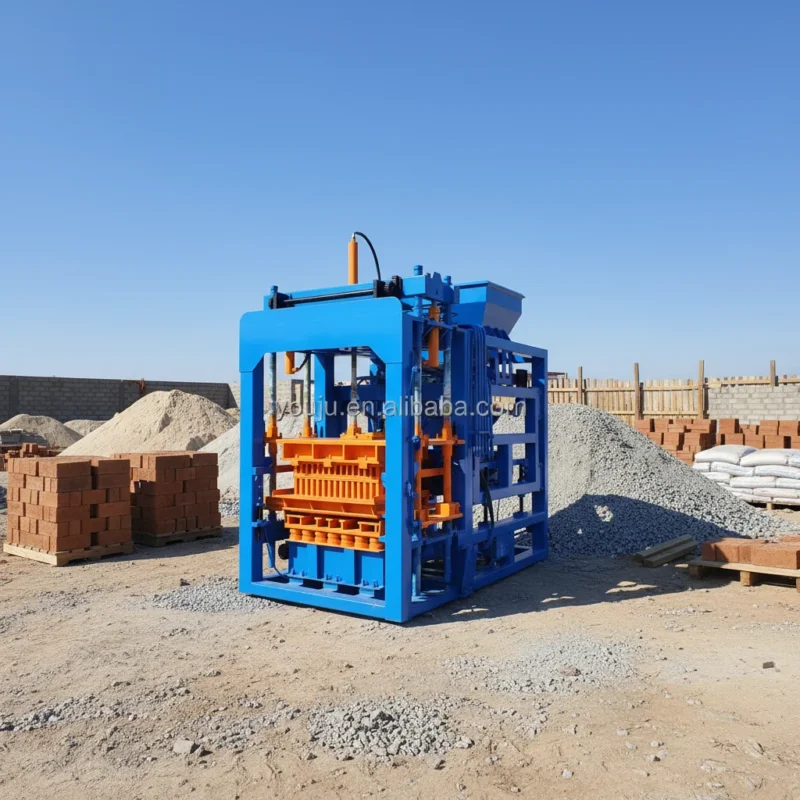
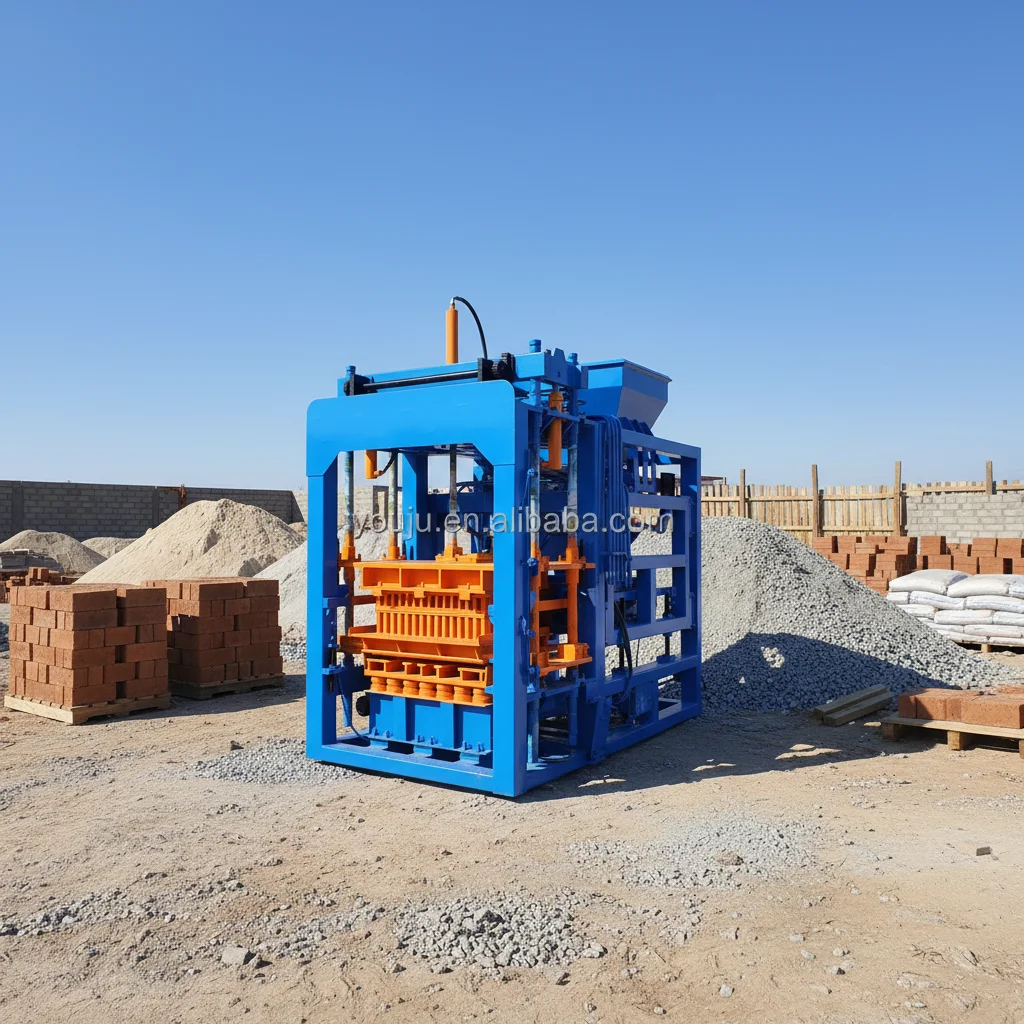
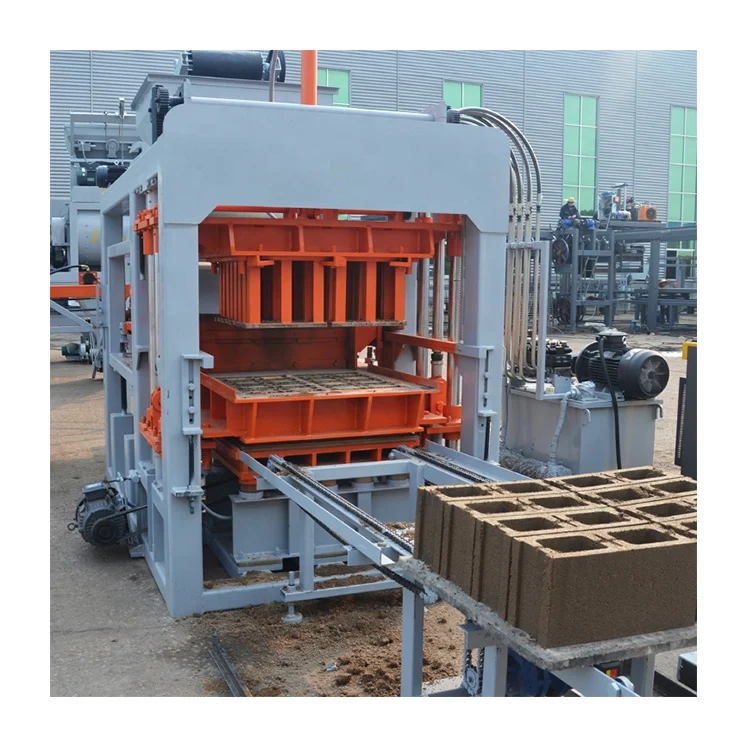
Configuration set against the buyer’s actual mix design, local aggregate and target block format — the QT6-15 automatic QT6-15 block machine PLC controlled line is specified after reviewing the buyer’s raw materials, curing area, and existing pallet handling equipment, not quoted from a catalogue default.
Technical Specifications
| Parameter | Value |
|---|---|
| Model | QT6-15 |
| Product Type | Automatic Hydraulic Concrete Block Making Machine |
| Overall Dimensions (L×W×H) | 7100 × 1500 × 3000 mm |
| Rated Pressure | 21 MPa |
| Main Vibration Form | Platform vibration |
| Vibration Frequency | 4500–5100 r/min |
| Pallet Size | 880 × 850 mm |
| Molding Cycle | 15–25 s (basis not stated in source — confirm block format / material / thickness) |
| Overall Power | 31.25 kW |
| Weight of Machine | 8700 kg |
| Control System | PLC intelligence control with human-machine dialogue |
| Drive Type | Hydraulic |
| Automation Level | Fully automatic |
| Raw Material Ratio (reference) | Cement 8–10%, Sand 30–40%, Stone 50–60% (approx. 1:4:5) |
| Raw Material Consumption | 150–190 T per day (basis to be confirmed) |
| Water Consumption | 3–5% of raw material weight |
| Block Strength (reference) | Hollow blocks 8–10 MPa; Solid bricks 10–20 MPa (basis not stated in source — confirm mix design / curing conditions) |
| Voltage & Frequency | Configurable to site requirements (to be confirmed before production) |
| PLC Display Language | Configurable to operator language (to be confirmed before production) |
Application Suitability
| Application | Material or Output |
|---|---|
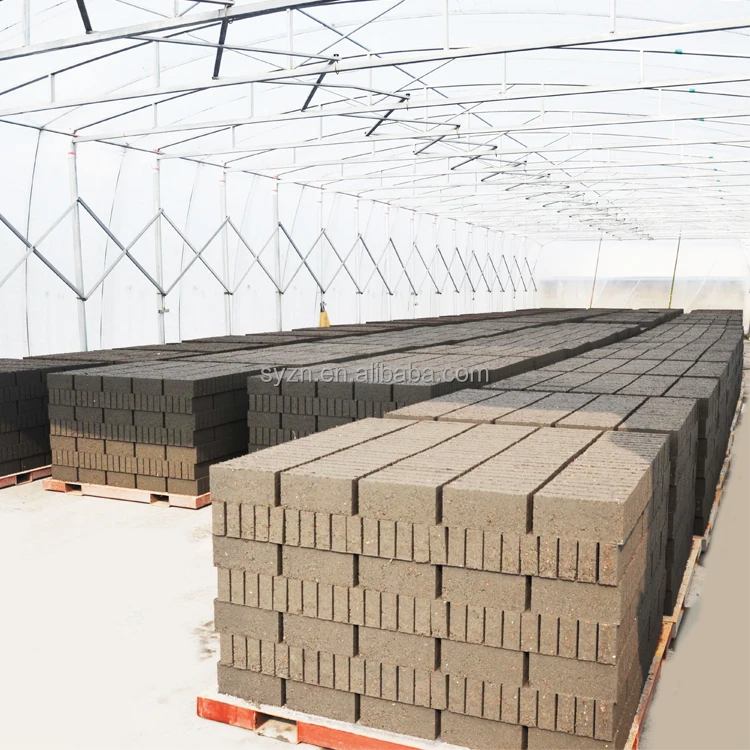
| Hollow concrete block production for commercial and residential masonry | Crushed stone, sand, and cement at 8–10% cement ratio |
| Solid brick manufacturing for load-bearing walls | Fine aggregate and cement blends targeting 10–20 MPa compressive strength |
| On-site block production for housing and development projects | Locally sourced sand and stone with variable grading |
| Format expansion for existing concrete product plants | Multiple mould formats on a single PLC-managed press |
| First block plant for entrepreneurs entering the masonry market | Semi-automatic start with automation upgrade path |
Why "Fully Automatic" Means Nothing Without Pallet and Stacking Integration
A fast press cycle still bottles up at the end of the line if pallets are moved by hand.
I have stood in block yards across West Africa watching a machine rated for a 15-second cycle sit idle for 40 seconds because two workers were dragging pallets off the delivery rack with gloves that were already worn through. The automatic QT6-15 block machine PLC controlled system only delivers its cycle time when pallet feeding, block stacking, and curing rack handling are matched to the press rhythm [NEED_CITE: line synchronization requirements for concrete block plants]. Buyers who treat the press as a standalone purchase and source pallets and handling separately often discover after commissioning that the bottleneck simply moved downstream.
Removing the Operator from the Cycle Equation
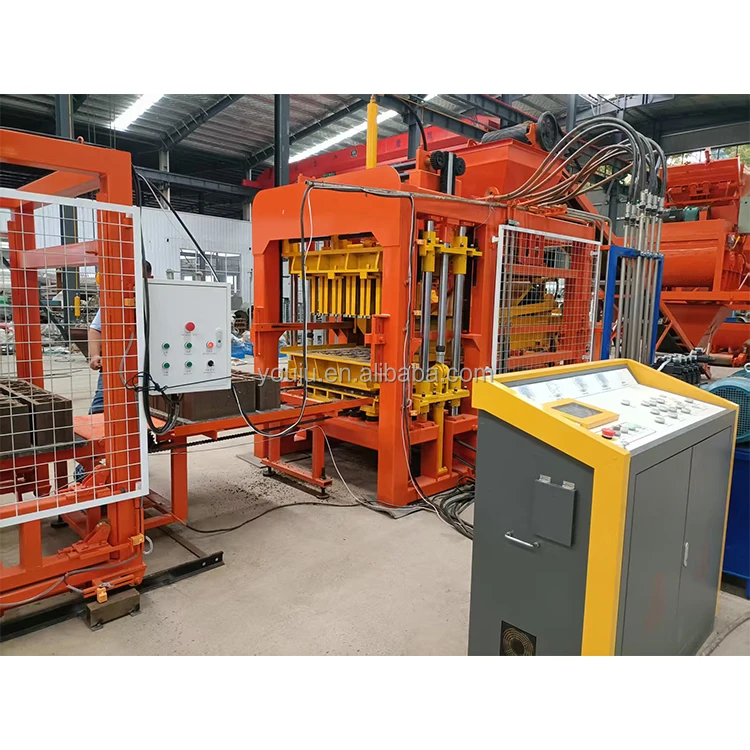
The PLC intelligence control on this automatic QT6-15 block machine PLC controlled unit enables human-machine dialogue where cycle parameters — vibration duration, hydraulic dwell, feed timing — are stored per mould format. When the operator selects a hollow block programme versus a solid brick programme, the system recalls the matched parameters without manual dial adjustment. This eliminates the batch-to-batch density variation that typically appears when shift changes bring a different operator to the control panel.
Where Labour Actually Disappears in the Line
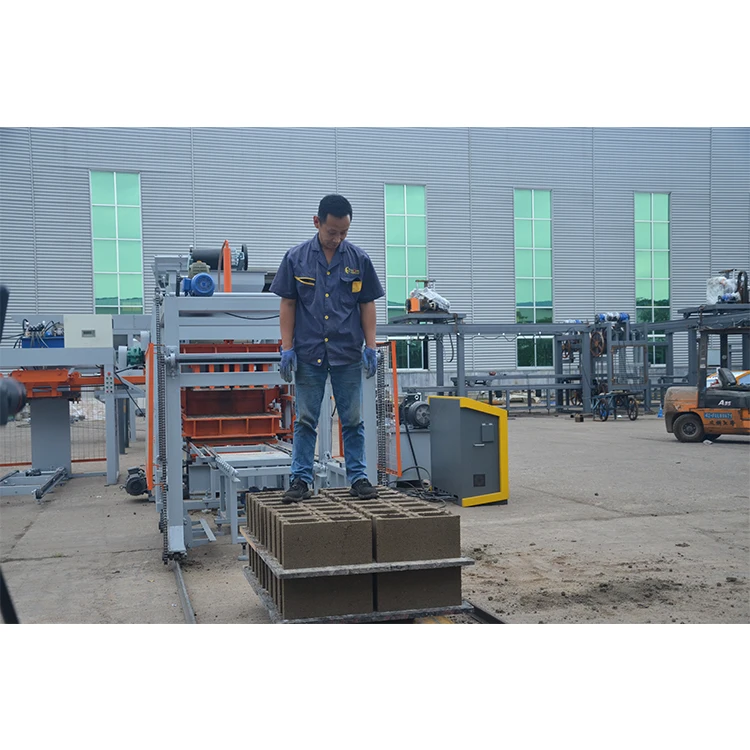
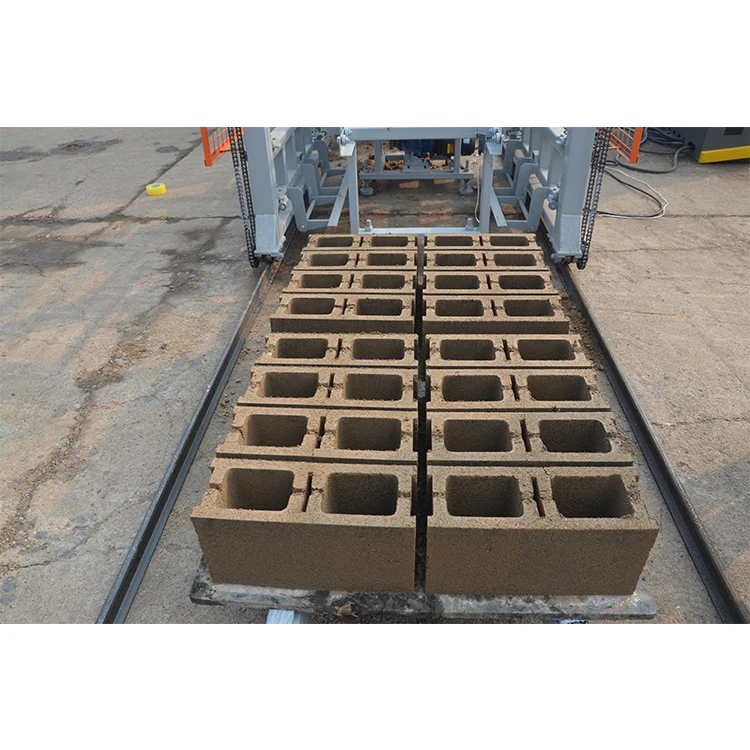
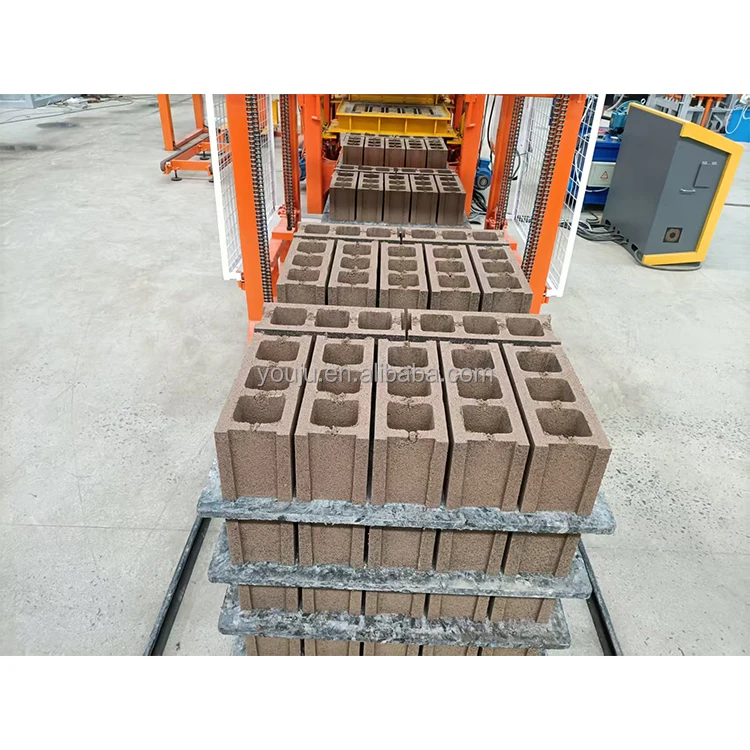
Automation on the press alone leaves manual pallet handling, block stacking, and cubing as the real labour cost. The QT6-15 line integrates automatic pallet feeding from a magazine, wet-side stacking off the delivery rack, and cubing for curing rack loading — so the operator monitors rather than lifts. The reduction is not just headcount; it is the removal of the fatigue-driven inconsistency that shows up as cracked blocks on the third shift [NEED_CITE: labour and breakage correlation in manual block handling].
Reading the Specifications That Actually Shape Output
The 21 MPa rated hydraulic pressure and 4500–5100 r/min platform vibration frequency work together to compact the mix — pressure holds the mould walls rigid while vibration liquefies the concrete into corners and edges. If your local aggregate is rounded river gravel rather than crushed stone, vibration frequency matters more than peak pressure because the particles need more energy to interlock. The 880 × 850 mm pallet size determines how many blocks per cycle and how your forklift will slot them onto curing racks; specifying a pallet that does not match your existing rack spacing means rebuilding the curing yard. The 15–25 second molding cycle range is format-dependent — a thin paving block demoulds faster than a 200 mm hollow block, so capacity calculations must state which format they assume.
The Hidden Cost of Skipping the Voltage Conversation
I have seen container-opened machines sit for weeks because the local grid runs at 415V/50Hz while the motor was wound for 380V/60Hz, and the PLC display arrived in a language the plant manager could not read. The cost is not just the rewinding or the replacement HMI — it is the idle crew, the delayed project handover, and the buyer’s reputation with their own client [NEED_CITE: voltage and frequency standards by export market]. Confirming voltage, frequency, and PLC display language before production starts is not paperwork; it is the difference between commissioning in days and commissioning in weeks.
Why Buyers Source This Line Here
Block machinery is the single focus, so the QT6-15 press, mould, pallet, and handling equipment are specified as one matched system rather than assembled from separate suppliers who blame each other when cycle times do not align. Configuration is set against the buyer’s actual mix design and local aggregate — I have walked buyers through adjusting vibration frequency after seeing their sand sample had higher clay content than the default recipe assumed. Mould design covers the formats the buyer’s market actually sells, including custom drawings when a housing project specifies a non-standard hollow block dimension. Automation level is selectable, so an entrepreneur can start with semi-automatic pallet handling and add stacking and cubing stations as volume grows. Installation includes on-site commissioning and operator training so the PLC programmes are verified with the buyer’s actual material, not a factory test mix.
Documentation & Verification
- Line layout and capacity calculation stating the specific block format assumed for the QT6-15 cycle time
- Mould drawing and format list matching the buyer’s market requirements
- Hydraulic and electrical schematic for the 31.25 kW system with site-specific voltage confirmed
- Factory test record run on the buyer’s raw material ratio before dispatch
- Pallet specification confirming 880 × 850 mm dimensions and material grade
- Operation and maintenance manual with PLC display language set to operator preference
Installation, Commissioning & Support
- Foundation plan based on the 7100 × 1500 mm footprint and 8700 kg machine weight with vibration isolation
- Dedicated power circuit sized for 31.25 kW total draw at confirmed site voltage and frequency
- Machine dismantled for container loading with reassembly sequence documented for site crew
- First production run supervised to verify PLC cycle parameters against actual mix and block format
- Operator training on human-machine dialogue interface covering programme selection and fault codes
- Wear parts and mould replacement list provided with hydraulic seal part numbers for local sourcing
What to Send with Your Inquiry
Provide the block formats your market sells and the daily volume you need per format, not just a total number. Share a sample or description of your local sand and stone — the clay content and grading directly shape the vibration and pressure settings we configure. Confirm your site voltage, frequency, and the language your operators read, so the automatic QT6-15 block machine PLC controlled system arrives ready for commissioning rather than waiting on electrical rework.
Frequently Asked Questions
Q: How is daily output calculated and which block format is the capacity figure based on?
A: Output depends on the molding cycle, which ranges from 15 to 25 seconds depending on block format, material, and thickness. We provide a capacity calculation that states the specific block format assumed — for example, a 400×200×200 mm hollow block versus a solid brick — so buyers can compare figures honestly rather than working from an unspecified cycles-per-hour number.
Q: What automation level options are available — can I start semi-automatic and upgrade later?
A: The QT6-15 line is configurable from semi-automatic pallet handling through fully automatic stacking and cubing. Buyers setting up a first plant often start with manual pallet transfer and add automatic pallet feeding, wet-side stacking, and cubing stations as production volume justifies the investment, using the same PLC platform throughout.
Q: How does the PLC control system handle mould change sequences and batch-to-batch consistency?
A: The PLC intelligence control stores cycle parameters — vibration duration, hydraulic dwell, feed timing — per mould format. When switching from hollow block to solid brick production, the operator selects the saved programme rather than adjusting parameters manually, reducing format changeover time and preventing density variation between shifts.
Q: What voltage, frequency, and PLC language configurations are confirmed before shipment?
A: Voltage, frequency, and PLC display language are confirmed with the buyer before production begins. This ensures the 31.25 kW motor winding, control panel components, and human-machine dialogue interface match the buyer’s site grid and operator language, avoiding commissioning delays upon arrival.
Q: How do pallet feeding, automatic stacking, and cubing integrate with the QT6-15 press cycle time?
A: Pallet feeding from the magazine, block stacking off the delivery rack, and cubing for curing rack loading are timed to the press cycle so the QT6-15 is not left waiting between moulds. Each station’s speed is matched to the 15–25 second molding cycle range, preventing the bottleneck from shifting downstream when the press itself is fully automatic.