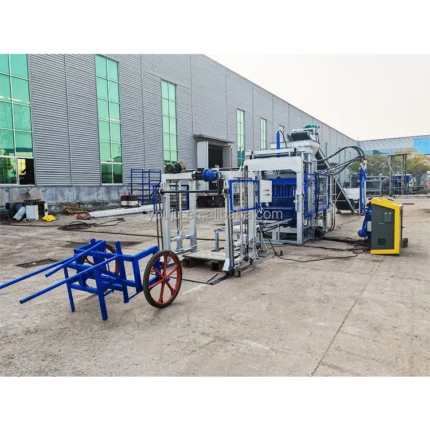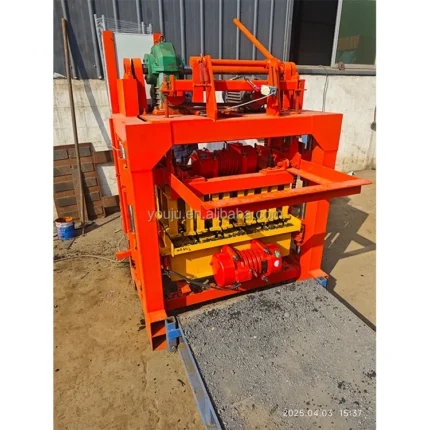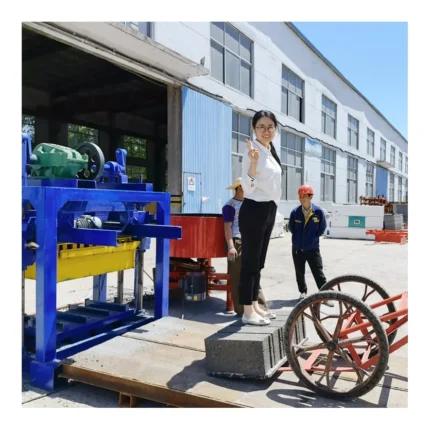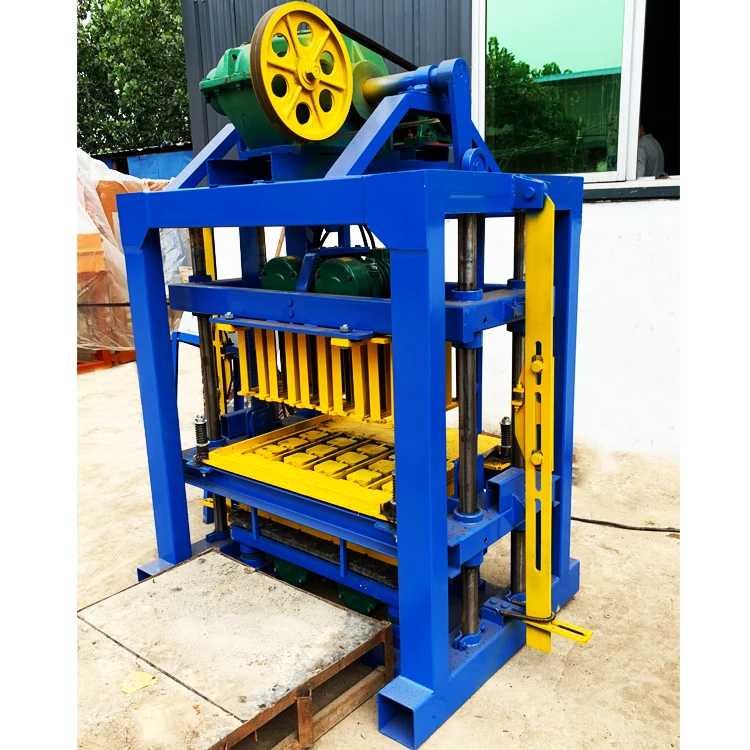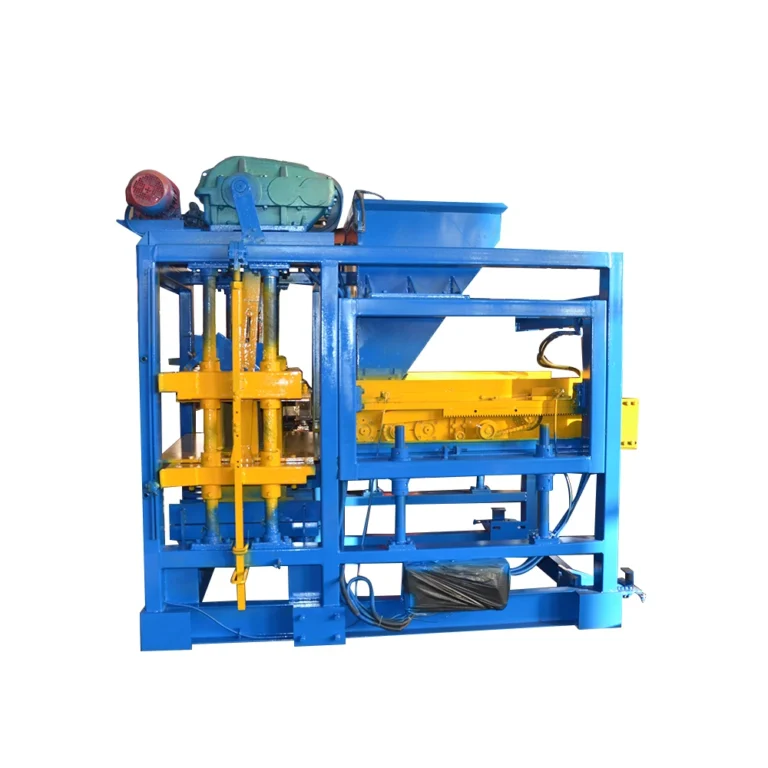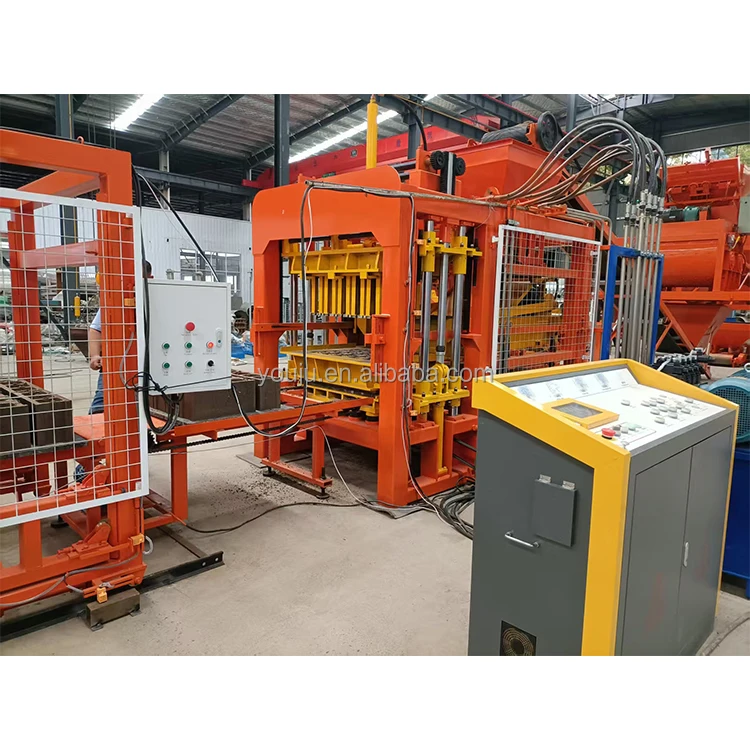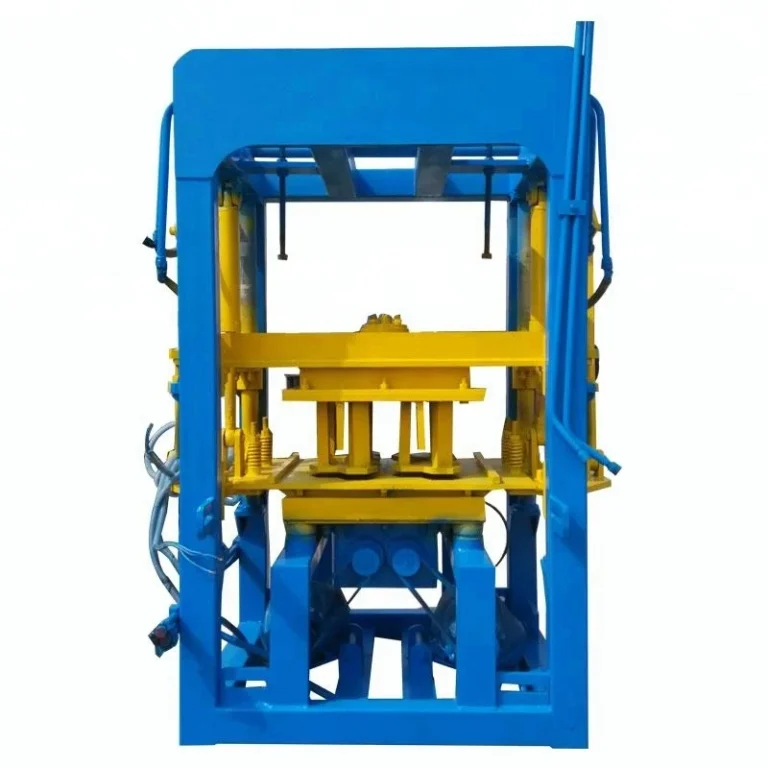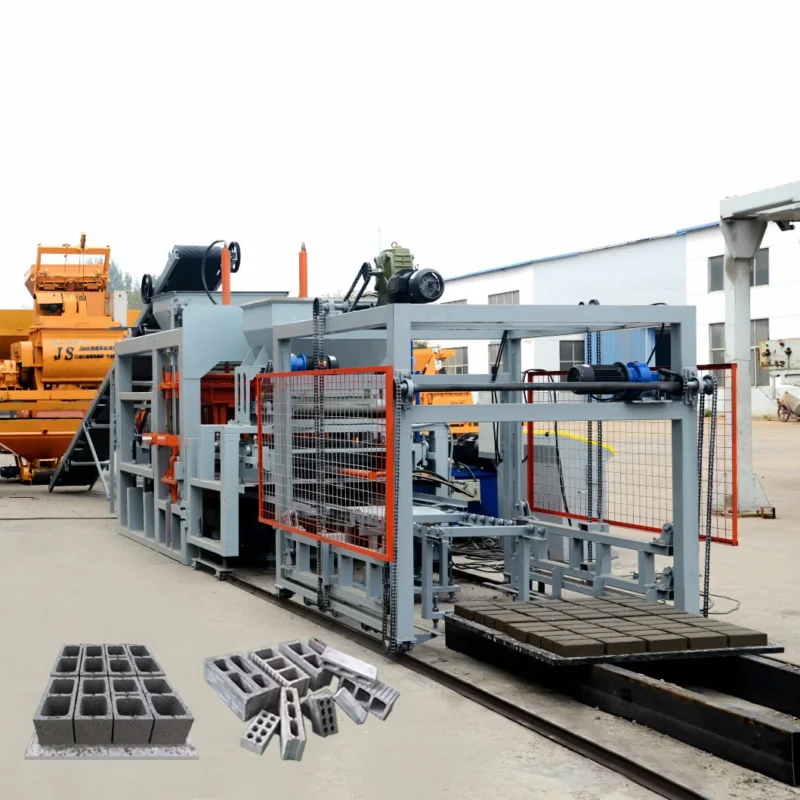


Description
Configuration Lock-In — The QT8-15 is specified against your local aggregate, mix design, and target block format before the PLC program is finalized, ensuring the 21 MPa hydraulic pressure and 45 kN vibration force produce consistent density without on-site guesswork.
Technical Specifications
| Parameter | Value |
|---|---|
| Model | QT8-15 |
| Product Type | Fully Automatic Hydraulic Block Making Machine |
| Overall Dimensions (L×W×H) | 8300×1860×3000 mm |
| Rated Pressure | 21 MPa |
| Main Vibration Form | Platform vibration |
| Vibration Frequency | 2800–4500 r/min |
| Vibration Force | 45 kN |
| Pallet Size | 950×900 mm |
| Molding Cycle | 15–25 s (basis not stated in source — confirm block format / material / thickness) |
| Overall Power | 55.5 kW |
| Total Mass | 9 T |
| Demolding Method | Hydraulic |
| Recommended Factory Area | 500 m² |
| Control System | Computer controlled, fully automatic (PLC brand and language to be confirmed) |
| Voltage & Frequency | Configurable — confirm local supply before order |
| Automation Level | Fully automatic |
| Raw Material Compatibility | Crushed stone, sand, cement, fly ash, gravel, slag, dust |
| Certification | CE, ISO 9001 |
Application Suitability
| Application | Material or Output |
|---|---|
| Hollow block production for structural walls | Crushed stone, sand, cement, and fly ash blends |
| Solid block manufacturing for load-bearing construction | Gravel and cement mixes with controlled moisture |
| Interlocking brick production for paving and landscaping | Fine aggregate with pigment additives for colored pavers |
| Curbstone and kerb production for road infrastructure | High-strength concrete with coarse aggregate |
| Paving stone output for commercial and municipal projects | Slag or crushed stone blends with cement binder |
Why "15–25 Seconds per Cycle" Means Nothing Without Your Block Format
The molding cycle is only meaningful when quoted against the exact block format, wall thickness, and mix you intend to run.
I once watched a plant owner in East Africa stare at a pallet of crumbling hollow blocks after the supplier promised a cycle time based on a thin paving stone. The vibration frequency was right for the lighter format, but the taller hollow block needed a longer dwell under pressure to consolidate the core. The automatic QT8-15 block making machine PLC controlled system stores per-format recipes so the press adjusts vibration duration, pressure hold, and feed depth when the mould changes — but only if those recipes were built from your actual material during factory testing [NEED_CITE: importance of format-specific cycle calibration in hydraulic block presses].
How the PLC Removes Operator Dependency from Every Press Stroke
In a manual or semi-automatic line, the operator decides when to feed, when to vibrate, and when to release — three moments where human timing introduces batch-to-batch variation. The computer-controlled cycle on the QT8-15 sequences raw material feeding, vibration onset, hydraulic compression, and demolding through a programmable logic controller, so the 15–25 s window holds within the tolerance your recipe demands. The automatic QT8-15 block making machine PLC controlled interface lets you lock those parameters per mould, meaning shift changes and operator rotation no longer shift your block density.
Tuning Vibration and Pressure to Local Aggregate Before the Machine Ships
Not all crushed stone behaves the same under vibration. Angular volcanic aggregate requires a different frequency curve than rounded river gravel to achieve full compaction. I spent four days on a site recalibrating a press that arrived with settings optimized for standard sand — the blocks looked fine but failed compression tests. With the QT8-15, we now request a sample of your local raw material, run test cycles at our factory, and burn the validated vibration profile into the PLC before the machine leaves [NEED_CITE: effect of aggregate shape on vibration frequency selection in block making].
Reading the Specs That Actually Determine Block Quality
The 21 MPa rated pressure works together with the 45 kN vibration force — pressure alone would compact the surface but leave voids inside a tall hollow block, while vibration alone would not produce the edge definition a paver mould demands. The multiaxis synchronizer vibration at 2800–4500 r/min directs force vertically downward, which matters because lateral vibration components waste energy and shift material unevenly across the 950×900 mm pallet. The long-period over-length guide bearing keeps the upper mould aligned with the mould box throughout the hydraulic demolding stroke, so dimensional tolerance holds even after thousands of cycles. Overall power draw of 55.5 kW covers the press, feeder, and hydraulic pump; confirm that your site electrical supply can sustain this continuous load alongside auxiliary equipment.
The Cost of Skipping the Automation Conversation Early
When a buyer assumes "fully automatic" includes pallet feeding, stacking, and cubing, but the quotation only covers the press, the result is workers manually pulling pallets off the line and stacking wet blocks by hand — negating the labour reduction the investment was supposed to deliver. The QT8-15 press itself handles the forming cycle automatically, but the upstream pallet feeder and downstream stacker are line items that must be confirmed separately. I have seen plants where the press ran flawlessly while the bottleneck simply moved to the curing yard [NEED_CITE: typical labour distribution across a stationary block production line].
Why Sourcing the Press and the Line Together Matters
Block machinery is our single focus, which means the QT8-15 press, its moulds, pallets, and handling equipment are specified as one matched system rather than assembled from separate vendors. The configuration is set against your actual mix design and target block format, not a catalogue default. Mould design covers the formats your market sells, including custom drawings when standard options do not match. The automation level is selectable so you can begin with the core press and add stacking or cubing modules later without replacing the PLC. Factory testing uses your material sample, and the test record ships with the machine so you can verify settings on arrival.
Documentation & Verification
- Line layout showing QT8-15 placement within your 500 m² factory area
- Capacity calculation stated per block format with cycle time assumptions
- Hydraulic and electrical schematics matched to your confirmed voltage
- Factory test record using your local aggregate sample before dispatch
- Mould drawing and format list covering hollow, solid, paver, and interlocking options
- CE declaration and ISO 9001 compliance documentation for customs clearance
Installation, Commissioning & Support
- Foundation must support 9 T static mass plus dynamic vibration loads across the 8300 mm length
- 55.5 kW total power requires a dedicated circuit; confirm voltage and frequency before wiring
- Machine ships in dismantled state; reassembly requires overhead crane access at your site
- First-run commissioning includes PLC parameter validation against your mix and block format
- Operator training covers recipe storage, mould change procedure, and fault diagnostics on the control panel
- Wear parts list and hydraulic seal kit provided for the first maintenance cycle
What We Need From You to Build an Accurate Proposal
Send us the block formats your market currently demands, including dimensions and target compressive strength. Share a sample or analysis of your local aggregate and the cement type available in your region. Confirm your site voltage, frequency, and preferred control panel language. If you already operate pallet handling or curing rack systems, tell us the pallet size and forklift capacity so the QT8-15 line integrates without modification.
Frequently Asked Questions
Q: How is the molding cycle verified for my specific block format, and what daily output should I plan for?
A: The 15–25 s range varies by block height, wall thickness, and material density. We run test cycles with your aggregate sample at our factory, record the actual cycle per mould, and calculate daily output based on your operating hours. The PLC stores each verified recipe so the machine reproduces it on your floor without re-tuning.
Q: What PLC system is installed, and can the interface language match my operators?
A: The PLC brand and display language are confirmed during the quotation stage to match your site requirements. Voltage and frequency are also locked in before production so the control cabinet arrives ready for your electrical supply. We provide the ladder logic printout with your documentation set for local maintenance.
Q: How do I ensure consistent block strength when my local aggregate differs from standard sand?
A: Vibration frequency and hydraulic pressure must be matched to your aggregate shape and mix design. We request a raw material sample, run forming trials at our factory, and adjust the PLC vibration curve until test blocks meet your target compressive strength. The validated settings are saved before shipment.
Q: Are pallet feeding, stacking, and cubing included with the QT8-15, or are they separate additions?
A: The QT8-15 press automates the forming cycle, but pallet handling and output stacking are line-level decisions. We configure these stations based on your production volume and available curing area. If you plan to scale later, the PLC architecture supports adding automatic stacking and cubing modules without replacing the main controller.
Q: Can I start with semi-automatic operation and move to full automation later?
A: Yes. The QT8-15 control system supports a staged automation path. You can begin with manual pallet handling and add automatic pallet feeding, stacking, or cubing as your production volume grows. The PLC hardware installed at the start accommodates these upgrades without a full cabinet replacement.