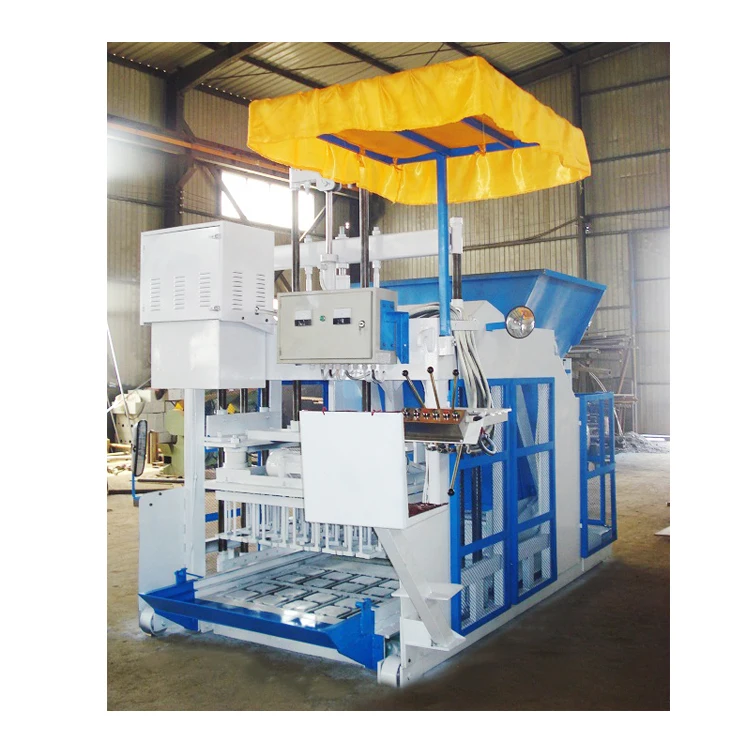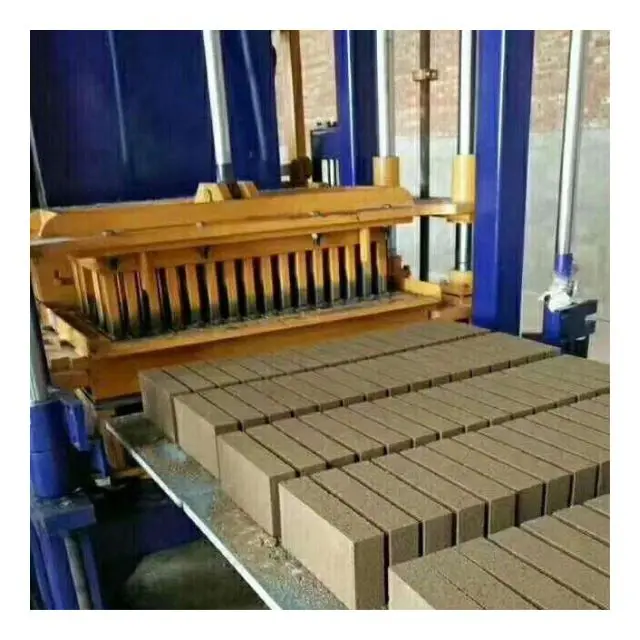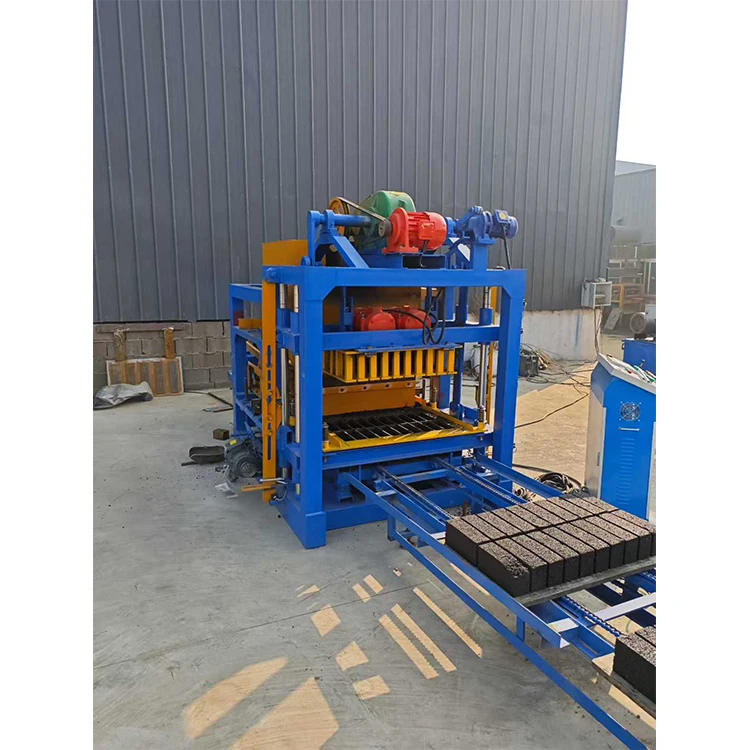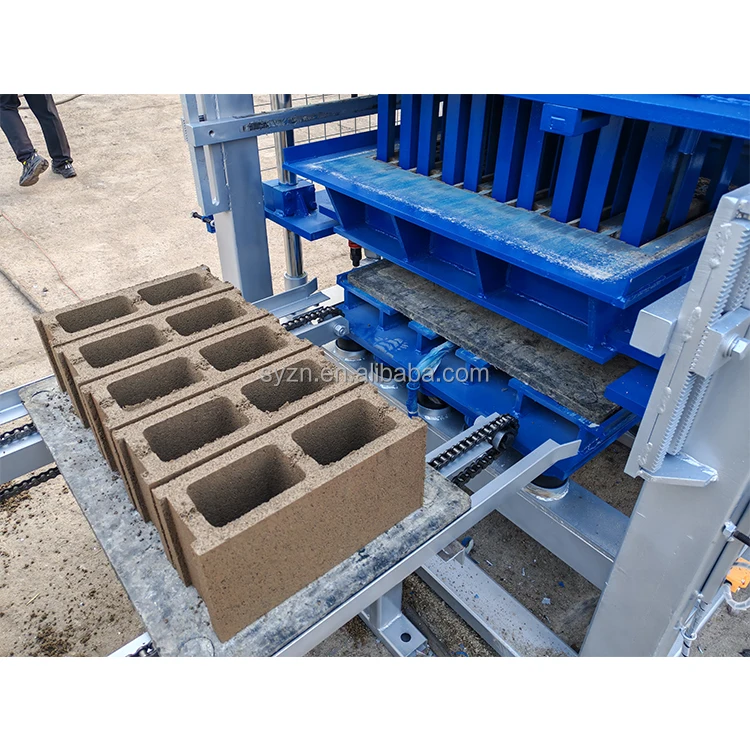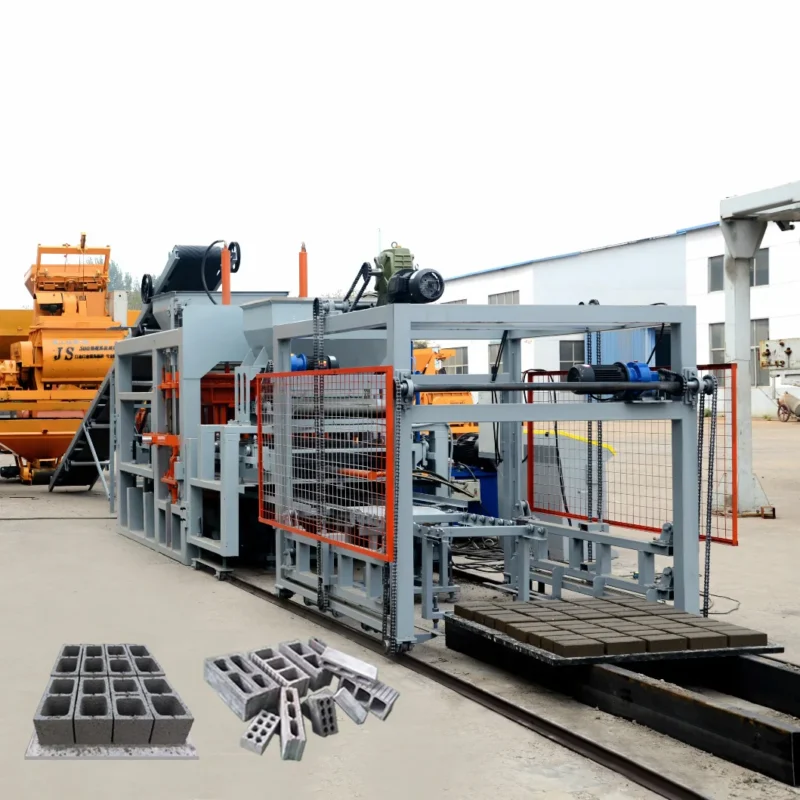
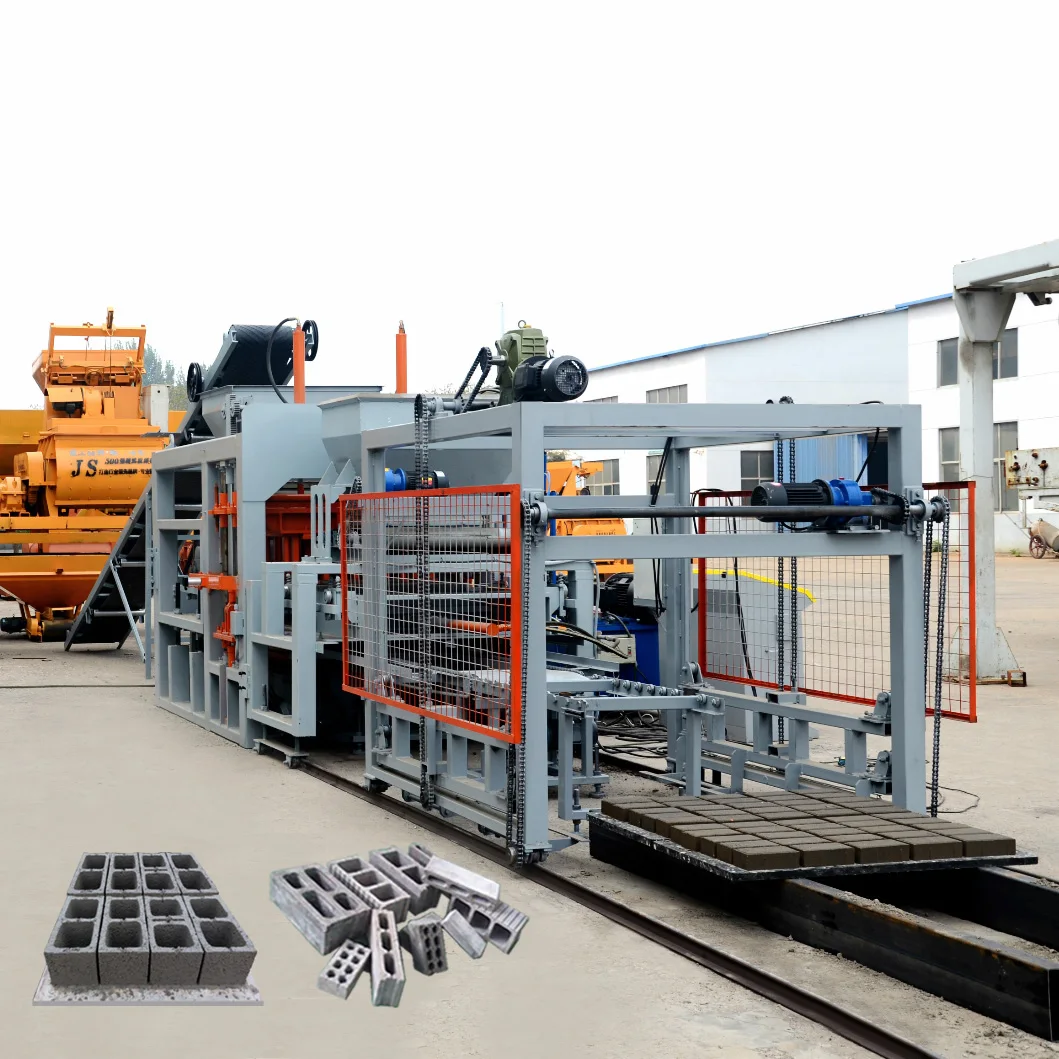
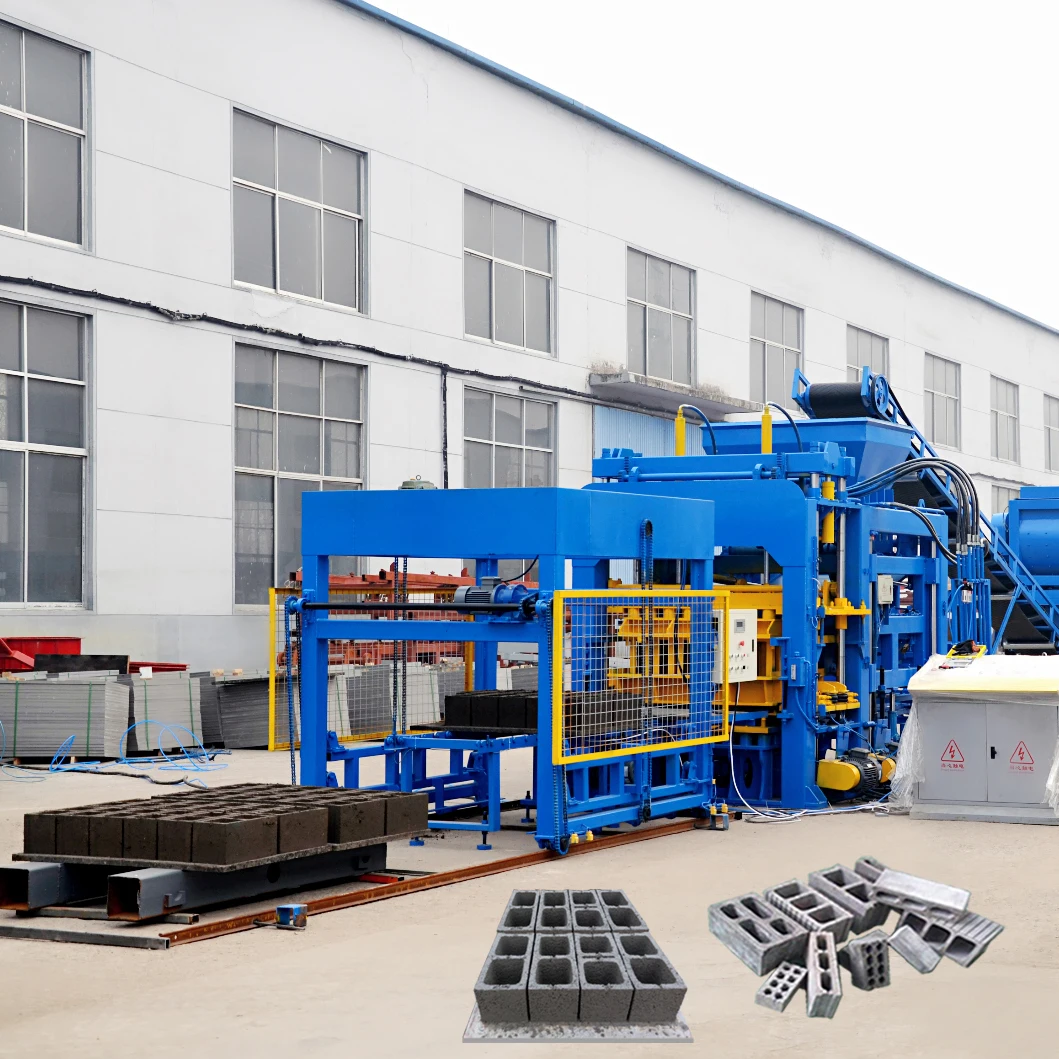
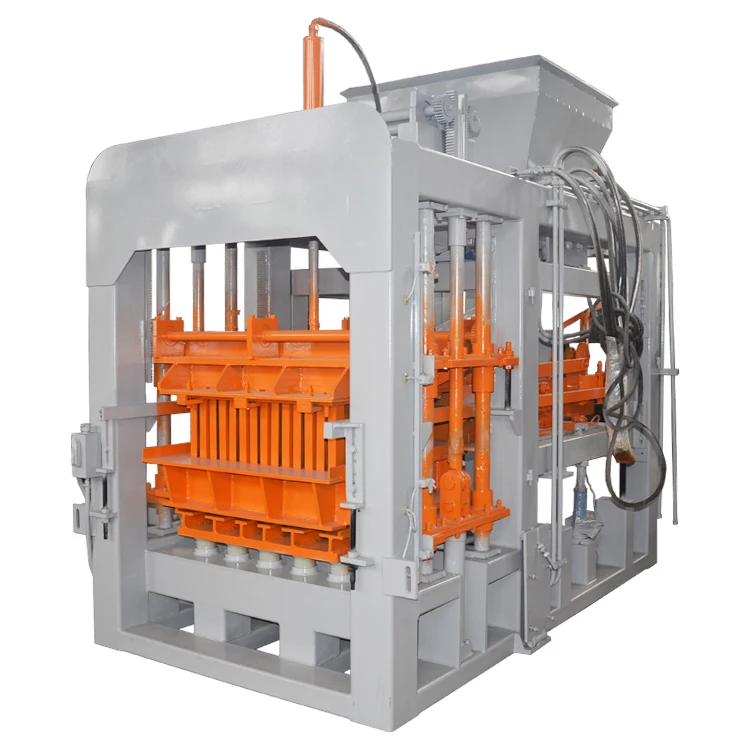
Description
Integrated Line Automation — the QT8-15 pairs PLC logic with pallet feeding, stacking, and cubing controls so the press cycle never waits on upstream or downstream stations.
Technical Specifications
| Parameter | Value |
|---|---|
| Model | QT8-15 |
| Product Type | Automatic Concrete Block Making Machine |
| Overall Dimensions | 8300 x 1860 x 3000 mm |
| Rated Pressure | 21 MPa |
| Vibration Form | Platform Vibration |
| Pallet Size | 950 x 900 mm |
| Moulding Cycle | 15–25 s (basis not stated in source — confirm block format and mix) |
| Overall Power | 37 kW |
| Vibration Frequency | 2800–4500 RPM |
| Control System | PLC with touch screen human-machine interface |
| Automation Level | High; manual and automatic mode selectable |
| Block Comprehensive Strength | 15 MPa (source value — verify against test data) |
| Main Components | Pallet feeder, host machine, block conveyor, hydraulic station, PLC controller |
| Hydraulic System | Independent integrated hydraulic station |
| Voltage & Frequency | Configurable per destination (to be confirmed before production) |
Application Suitability
| Application | Material or Output |
|---|---|
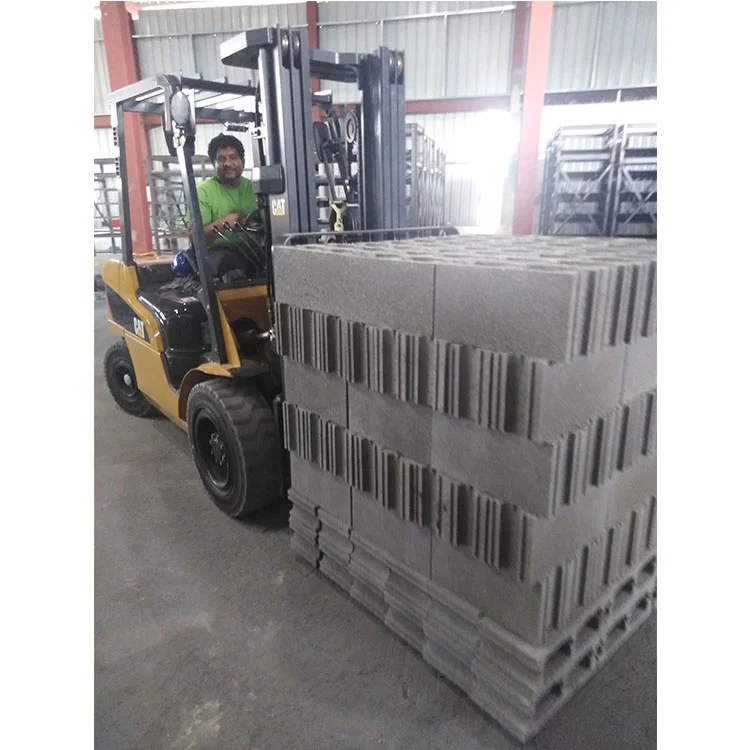
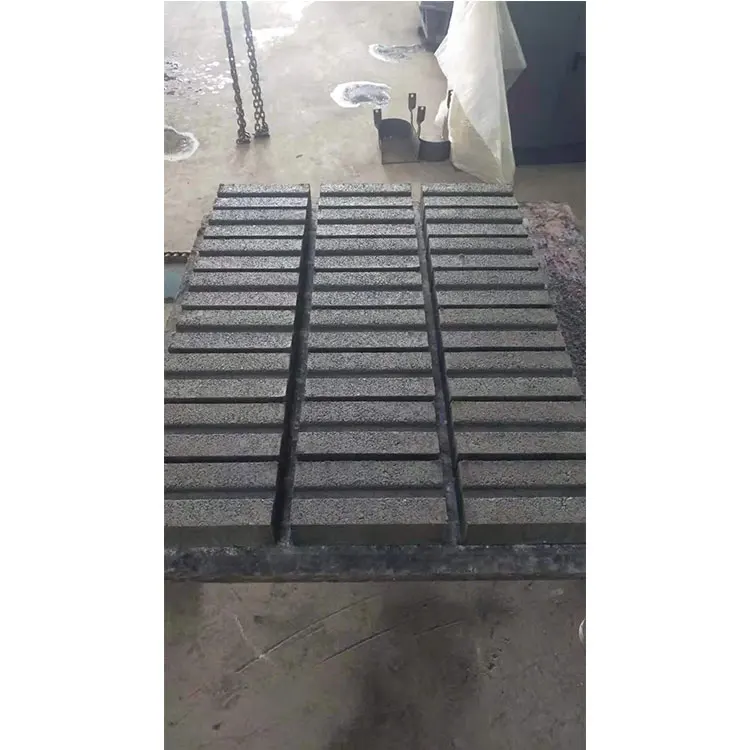
| Hollow block production for commercial and residential walls | Crushed stone, cement, sand aggregate mixes |
| Solid block manufacturing for load-bearing structures | Dense concrete blends with local coarse aggregate |
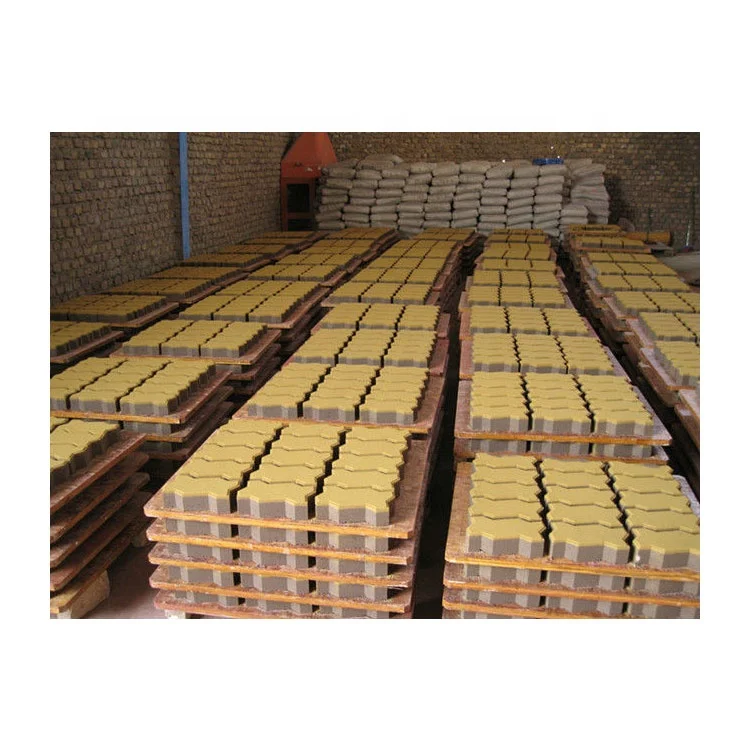
| Paving block and kerbstone runs for municipal projects | Fine aggregate with pigment additives |
| Interlocking and porous brick formats | Permeable concrete mixes with graded gravel |
| On-site production by development contractors | Site-available raw materials verified against mix design |
Why the Control Language Must Be Set Before the Crate Is Nailed
The automatic concrete block making machine PLC controlled interface is only useful if your operators can read it on day one.
I flew to a South American site to commission a QT8-15 and found the touch screen locked to Chinese characters. The local crew had already lost an entire shift trying to interpret alarm codes. I rewrote the PLC program that night and loaded a Spanish HMI pack so production could start the next morning. That trip made it clear: voltage mismatches and display languages are not afterthoughts — they are the difference between commissioning on schedule and paying for emergency flights [NEED_CITE: PLC interface language requirements for export machinery]. When buyers focus exclusively on cycle times and skip the control panel conversation, the machine arrives as an expensive puzzle rather than a production asset.
How PLC Logic Ties Every Station Together
The QT8-15 PLC does more than sequence the press ram. It coordinates the pallet feeder timing, monitors hydraulic pressure against stored recipes, and signals the block conveyor when a cured row is ready for the stacker. Each station reports status back to the central controller, so if the pallet magazine runs low the press pauses automatically instead of cycling empty. This station-to-station handshake is what separates a true automatic concrete block making machine PLC controlled system from a press with a timer bolted on.
Batch Consistency Across Format Changes
Stored recipes mean the operator selects a block format from the touch screen and the PLC loads the corresponding vibration duration, hydraulic pressure profile, and feed timing. Switching from a 400 mm hollow block to a 60 mm paving block no longer requires manual dial adjustments or trial runs. The human-machine interface lets supervisors tweak parameters and save them as new recipes, preserving consistency across shifts and operator changes [NEED_CITE: PLC recipe management in concrete block production].
Platform Vibration Meets Independent Hydraulics
The platform vibration system operates between 2800 and 4500 RPM, adjustable through the PLC to match the aggregate gradation in the current mix. Combined with 21 MPa rated hydraulic pressure, this dual-force approach compresses the concrete matrix from above while shaking fines into voids below — producing uniform density throughout the block cross-section. The independent integrated hydraulic station sits apart from the main frame, isolating valves and seals from the constant vibration and concrete dust that destroy conventionally mounted systems. A 950 x 900 mm pallet accommodates larger mould footprints, which means more blocks per cycle without increasing the machine footprint. Operators choosing between manual and automatic mode on the same QT8-15 can start with hand-fed pallets and transition to full pallet-feeder operation once downstream curing racks are in place.
When Automation Gaps Surface After Arrival
A press that cycles automatically but still relies on manual pallet return forces the operator into a rhythm that the PLC cannot monitor or protect. Pallets dropped by hand arrive at inconsistent positions, triggering misalignment faults that the touch screen logs as press errors. The resulting downtime is then blamed on the machine rather than the missing feeder link [NEED_CITE: pallet handling integration in automated block lines]. Similarly, if the stacking station is not included in the PLC network, cured blocks pile up faster than they can be moved, creating a bottleneck that negates the press cycle speed entirely.
Why Buyers Source This Configuration from Shiyue
Block machinery is the single focus here, so the QT8-15 is specified as a matched system — press, moulds, pallets, and handling equipment calibrated to one production line. Machine configuration is set against the buyer’s actual mix design and local aggregate, not a catalogue default, which prevents costly material substitutions after arrival. Automation level is selectable, allowing a semi-automatic start with a defined upgrade path as output targets grow. Installation support includes operator training on the specific PLC recipes loaded for the buyer’s block formats, and mould drawings are provided so the buyer verifies production capability before the machine ships.
Documentation & Verification
- Factory test record showing cycle times on the buyer’s specified block format before dispatch
- Hydraulic and electrical schematic matching the QT8-15 as-built configuration for local maintenance teams
- Voltage, frequency, and PLC display language confirmed in writing prior to production
- Mould drawing and format list so the buyer knows exactly which blocks the line will produce
- Operation and maintenance manual covering daily, weekly, and monthly service intervals
Installation, Commissioning & Support
- Foundation plan sized for the 8300 x 1860 mm footprint with anchor bolt template provided
- Dedicated 37 kW circuit with confirmed voltage and frequency matching the destination grid
- Machine shipped in dismantled modules for container loading; reassembly supervised on site
- First-run commissioning includes PLC recipe tuning to local aggregate and target block strength
- Operator training covers touch screen navigation, alarm response, and mould change procedure
- Wear parts list and hydraulic seal kit recommended for the first year of production
What to Include with Your Inquiry
Share the block formats your market actually sells, along with the daily volume you need per format. Provide your local raw material sources and any existing curing racks or forklifts so pallet sizing can be matched. Specify the destination voltage, frequency, and the language your operators need on the touch screen display.
Frequently Asked Questions
Q: How is the actual daily output verified for each block format on the QT8-15?
A: Output is calculated per specific block format, not quoted as a single cycles-per-hour figure. The buyer provides target formats and dimensions; the capacity sheet then states cycle time and theoretical daily volume for each one. Factory testing before shipment confirms these figures against the buyer’s chosen mould and mix parameters.
Q: What does the PLC control cover beyond the press cycle itself?
A: The PLC manages pallet feeding, press sequencing, vibration timing, and block conveyor coordination. When stacking and cubing equipment is included in the line, those stations also integrate into the same control network, giving the operator one touch screen interface for the entire production flow.
Q: Can the touch screen language and electrical system match our local standards?
A: Voltage, frequency, and PLC display language are confirmed in writing before production begins. The control system is then loaded with the appropriate language pack and wired to the destination grid specification so the machine runs correctly from the first day of commissioning.
Q: What is the path from semi-automatic to fully automatic pallet handling?
A: The QT8-15 supports manual pallet handling at start-up and can be upgraded to automatic pallet feeding and stacking as demand grows. The PLC architecture already includes I/O points for these stations, so the upgrade is primarily a hardware addition rather than a full control system replacement.
Q: How does a mould change work, and how long does a format switch take?
A: The mould is unclamped from the vibration table and replaced with the next format. The PLC recipe is then selected from the touch screen, loading the correct vibration and pressure parameters. Buyers should confirm expected changeover duration during the configuration stage so it aligns with planned production schedules.