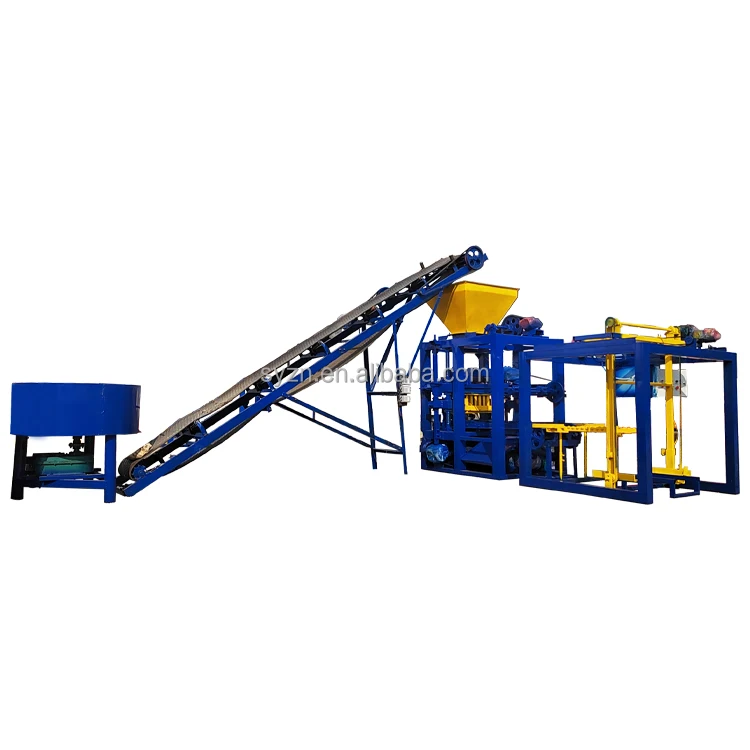
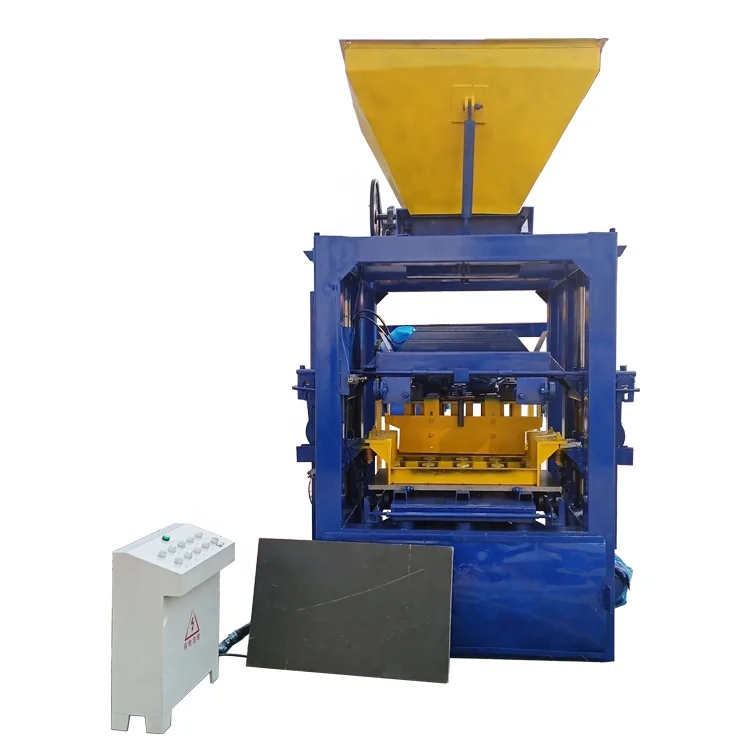
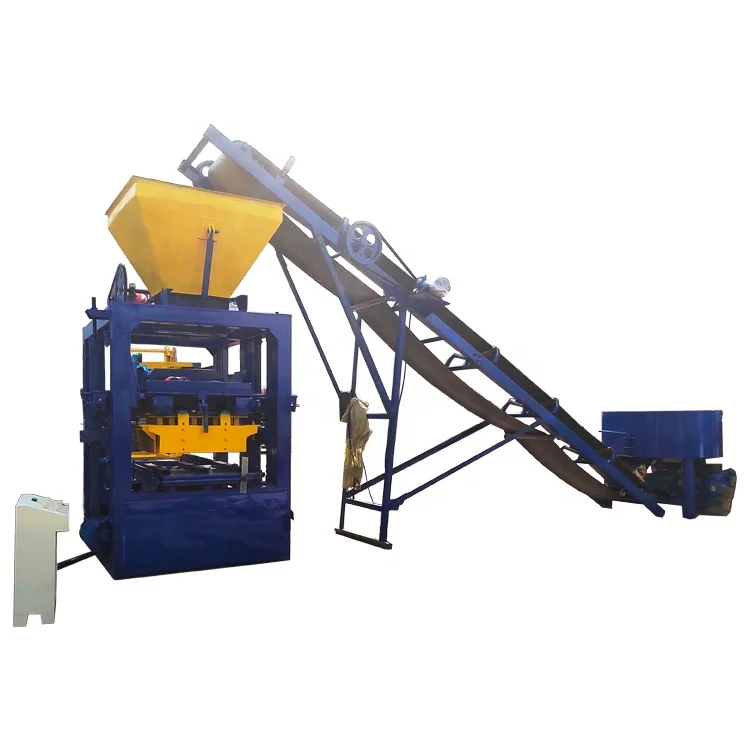
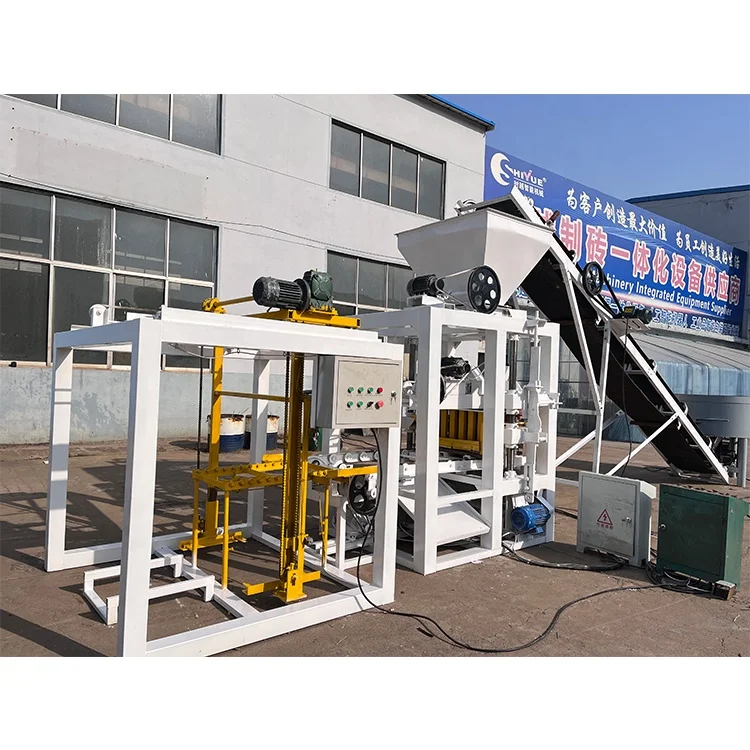
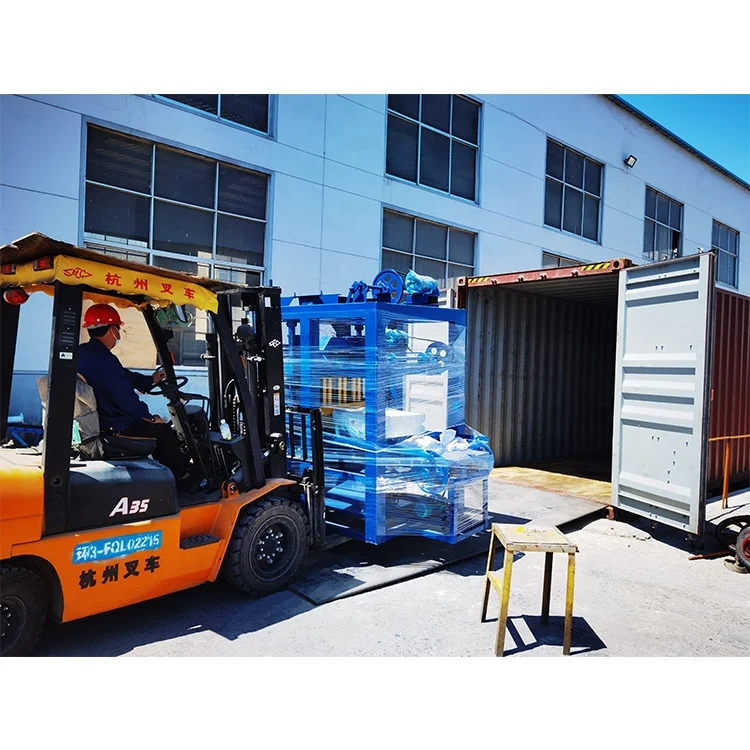
Description
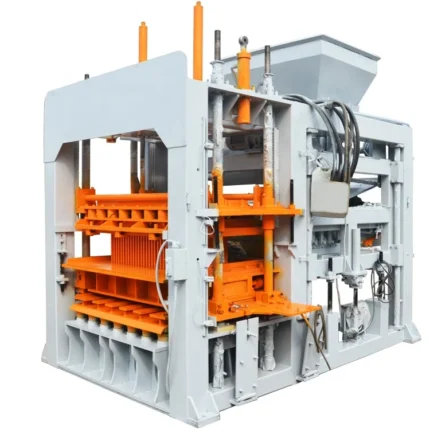
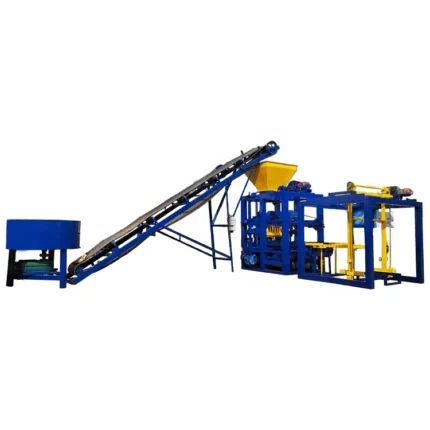
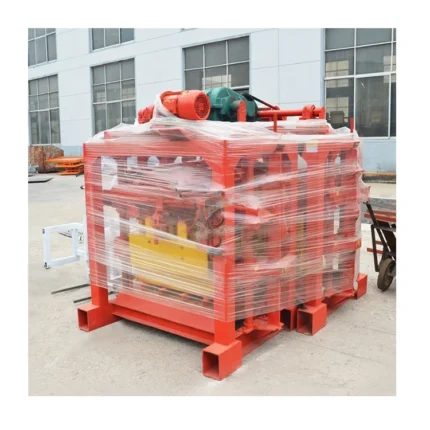
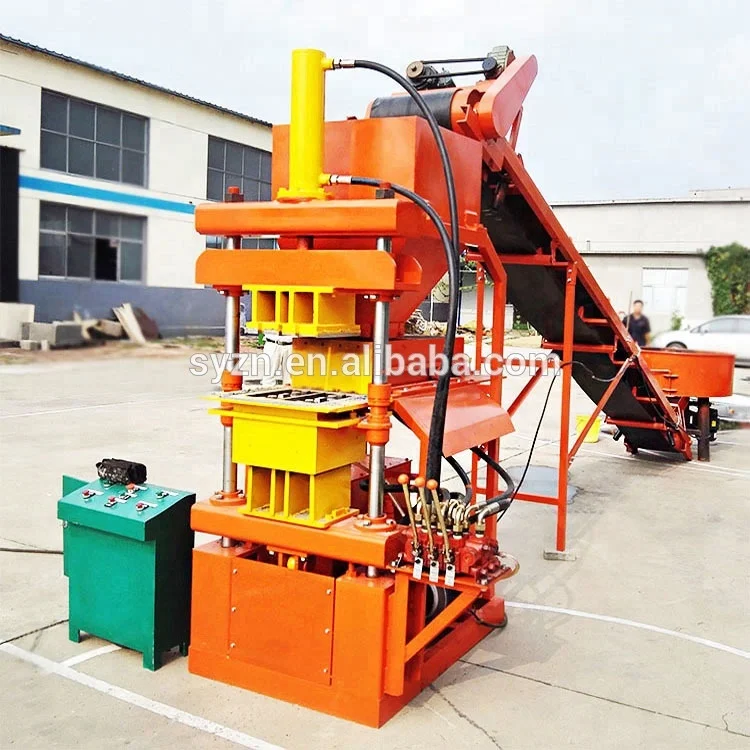
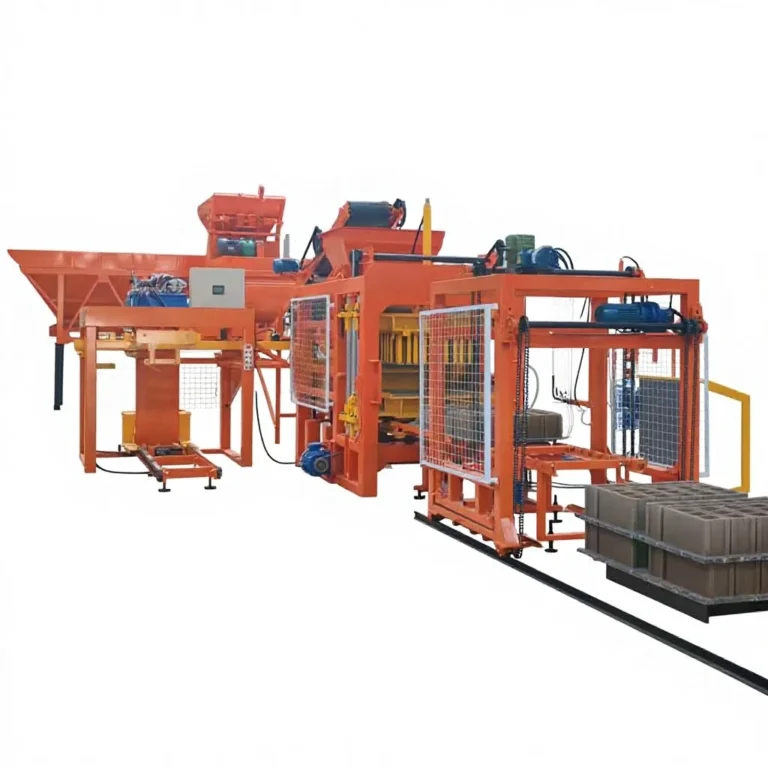
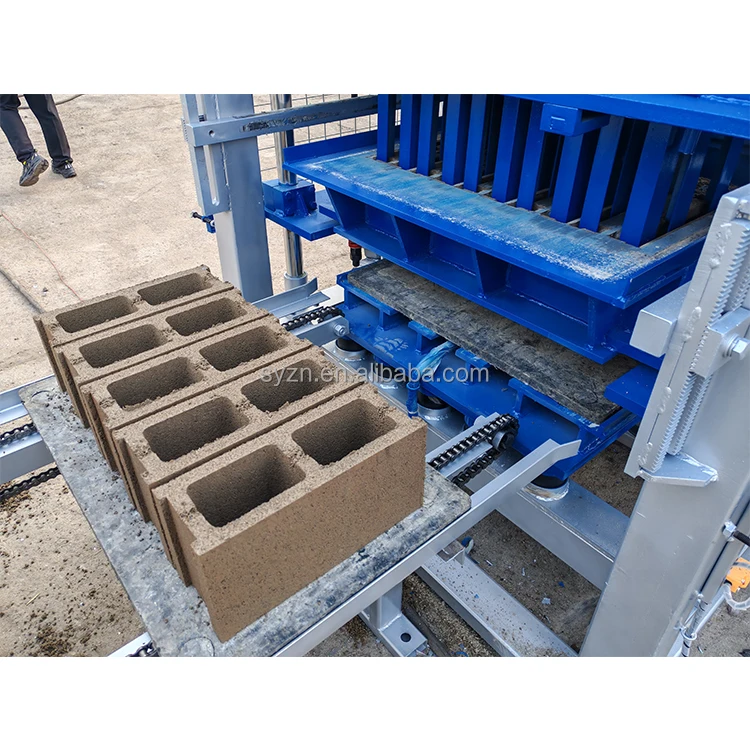
Matched Vibration Control — the QTJ4-24 semi-automatic block machine synchronizes upper and lower vibration with mould lifting through electrical interlocking, giving new plant owners a reliable baseline before scaling to full PLC automation.
Technical Specifications
| Parameter | Value |
|---|---|
| Model | QTJ4-24 |
| Product Type | Semi-Automatic Concrete Block Making Machine |
| Automation Level | Semi-automatic (mechanical and manual combination) |
| Main Machine Power | 11.95 kW |
| Overall Dimensions (L×W×H) | 3600 mm × 1700 mm × 2560 mm |
| Total Mass | 3.5 T |
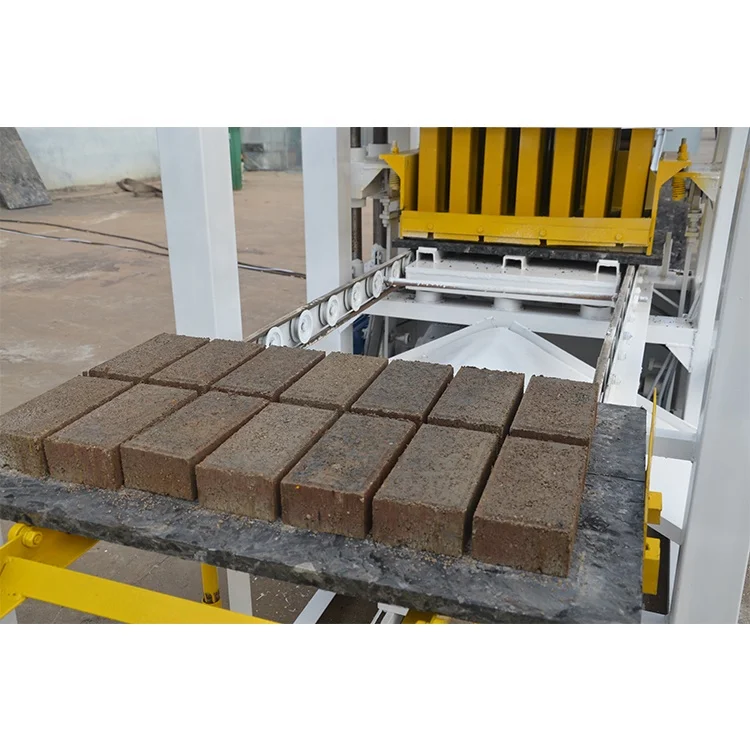
| Pallet Size | 900 mm × 450 mm |
| Molding Cycle | 24–26 s |
| Mould Formats & Pieces per Mould | 400×200×200 mm (4 pcs) / 390×240×190 mm (3 pcs) / 390×120×190 mm (6 pcs) / 240×115×53 mm (21 pcs) |
| Vibration System | Table vibration feeding, fluctuation vibration molding |
| Feeding Method | Manual feeding, two feed ways available |
| Control System | Electrical control cabinet with mechanical interworking |
| Voltage & Frequency | Basis not stated in source — confirm with manufacturer |
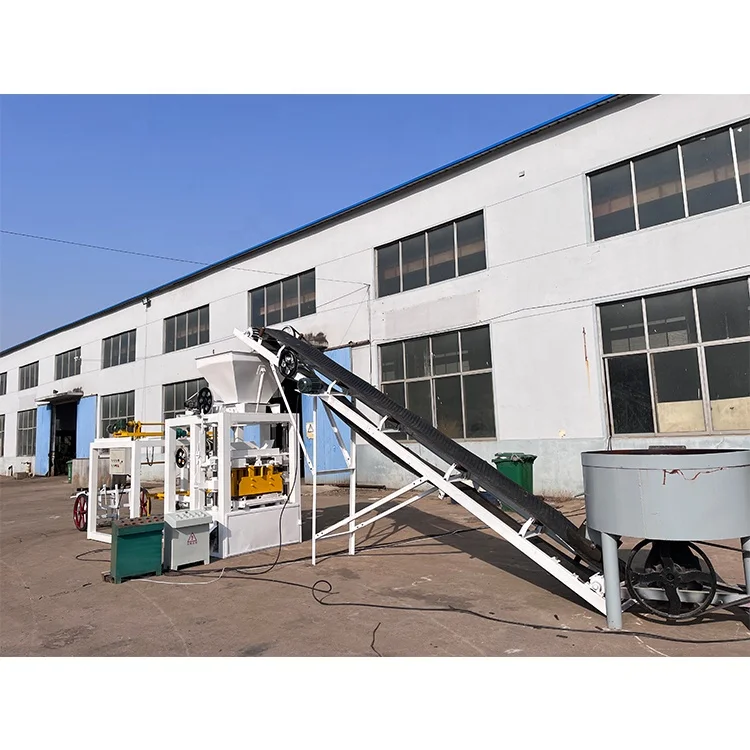
| Recommended Line Configuration | J350 Mixer and 6 m belt conveyor |
| Wire Specification | General power 3×16 mm² / Main machine 3×6 mm² / Mixer 3×4 mm² / Conveyor 3×2.5 mm² |
| Assembly State | Stationary, installed on precast concrete ground |
| Warranty | 1 year for whole machine (excluding spare parts) |
Application Suitability
| Application | Material or Output |
|---|---|
| Hollow block production for residential walls | Crushed stone, sand, cement, and fly ash blends |
| Solid block manufacturing for load-bearing structures | Coarse aggregate with standard Portland cement |
| Standard brick forming for masonry infill | Fine sand and cement mortar mixes |
| On-site block production for housing projects | Locally sourced aggregate and cement |
Why the Control Language Must Be Settled Before the automatic QTJ4-24 block machine Ships
A semi-automatic press that speaks the wrong language on its control panel stalls commissioning the moment it arrives.
I once watched a QTJ4-24 sit idle for two full days on an African job site because the electrical cabinet labels and indicator lights were in English, and the local operators could not read them. The machine itself ran fine — the vibration cycle, the interlocking logic, the mould lift sequence all worked exactly as designed. But without a shared language between the panel and the operator, every adjustment became a guessing game. That delay cost the contractor more in idle labour than the language option would have added to the build [NEED_CITE: control panel localization standards for exported industrial machinery].
This is the hidden gap in many semi-automatic block machine quotations. The press is specified down to the kilowatt and the pallet size, yet the control display language, the voltage, and the frequency are left as open items. When those details surface after arrival, the PLC controlled block machine upgrade path you planned gets postponed before production even starts.
How the Electrical Interlocking Protects the Mould and the Operator
The QTJ4-24 uses an electrical control cabinet that sequences the upper vibrator, lower vibrator, mould lift, and block ejection in a fixed mechanical interlocking order. This means the operator cannot trigger the mould lift while vibration is still active, and the feeder cannot advance until the press head has fully retracted. For a first-time plant owner moving up from a purely manual press, this removes the most common source of mould damage — out-of-sequence operation — without requiring a full PLC system.
Where the automatic QTJ4-24 block Machine Fits on the Automation Ladder
Semi-automatic is the deliberate middle step between hand-fed egg-laying machines and a fully PLC controlled block machine upgrade with automatic pallet feeding and stacking. The QTJ4-24 handles the pressing cycle with consistent vibration timing, while pallet handling, feeding, and stacking remain manual. This keeps the initial investment contained and gives the buyer a known starting position. As daily volume grows and pallet count increases, the same line can accept an automatic pallet feeder and stacker, and the electrical cabinet can be replaced with a PLC unit — without swapping the press itself [NEED_CITE: typical automation upgrade stages for concrete block plants].
Reading the Specs That Actually Shape Daily Output
The 900 mm × 450 mm pallet size determines how many blocks are pressed per cycle, but it also dictates the curing rack dimensions and the forklift tine width you will need on site. If your existing curing area was built around a different pallet standard, the mismatch shows up not in the press cycle but in the logistics between press and rack. The vibration system uses table vibration during feeding and fluctuation vibration during molding — a two-stage approach that compacts the mix in the mould cavity more evenly than single-mode vibration, which matters when your local aggregate has a high proportion of fine material. The 24–26 s molding cycle is measured across the listed formats; a 400×200×200 mm hollow block at 4 pieces per mould and a 240×115×53 mm standard brick at 21 pieces per mould share the same cycle window, so the daily piece count shifts dramatically depending on which format you run. Wire sizing runs from 3×16 mm² for the general power feed down to 3×2.5 mm² for the belt conveyor, and undersizing any of these circuits leads to voltage drop that shortens motor life.
What Happens When Pallet Handling Is Left Out of the Quote
The quotation for a semi-automatic press often stops at the machine itself. Pallets, curing racks, and stacking labour are assumed to already exist on site. When they do not, blocks come off the 900 mm × 450 mm pallet stack and sit on the floor, waiting for someone to carry them to a curing area that has not been planned. The press keeps cycling, but finished output does not move. I have seen block plants where the press ran at its rated cycle and the curing bottleneck cut effective daily output in half — not because of the machine, but because the line was never specified as a system [NEED_CITE: curing logistics impact on block plant throughput].
Why Buyers Source This Machine Through Shiyue
The QTJ4-24 is specified as one matched unit — press, mould, pallet, and control cabinet — rather than assembled from separate vendors who each optimize their own component without seeing the line as a whole. Mould formats are chosen against the block sizes your market actually buys, not pulled from a default catalogue. The vibration force is set against your local aggregate and mix design, which is the single biggest factor in block strength consistency. Voltage, frequency, and control language are confirmed before production starts, not discovered at the port of destination. And the upgrade path to automatic pallet feeding and PLC control is designed into the machine frame from the beginning, so scaling up later does not mean replacing the press.
Documentation & Verification
- Machine specification sheet listing all four mould formats and their cycle assumptions
- Electrical schematic with confirmed voltage, frequency, and wire cross-sections
- Factory test record showing block output on your chosen format before dispatch
- Mould drawing and format list matched to your local block dimensions
- Operation and maintenance manual in your confirmed control language
Installation, Commissioning & Support
- Precast concrete ground required; machine dimensions 3600 mm × 1700 mm demand a level pad with anchor points
- Dedicated circuit for the 11.95 kW main machine using the specified 3×6 mm² cable
- Stationary assembly arrives bolted; vibration table alignment verified during commissioning
- First-run mould setup and vibration timing calibrated on your actual mix design
- Operator training covers the electrical interlocking sequence and mould change procedure
- Wear parts list provided with recommended replacement intervals for vibrator components
Preparing Your Inquiry
Tell us which block format you intend to run most days, your target daily output, and the local aggregate you plan to use. Confirm your site voltage and frequency, and specify the language your operators need on the control panel. If you already have a mixer and conveyor, share their specs so the automatic QTJ4-24 block machine recommendation accounts for upstream capacity.
Frequently Asked Questions
Q: How do I verify the real daily output of the QTJ4-24 per block format?
A: The 24–26 s cycle applies across listed formats, but daily output depends on shift length, pallet count, and curing logistics. Request a capacity calculation that states the assumed format, shift hours, and pallet rotation so you can compare it against your actual production plan rather than a generic pieces-per-hour figure.
Q: What voltage and control language options are available before shipment?
A: Voltage, frequency, and control panel language must be confirmed before production. The standard quotation leaves these open, and arriving with the wrong configuration delays commissioning. Specify your site supply and operator language at the inquiry stage so the electrical cabinet is built to match.
Q: Can the QTJ4-24 be upgraded to automatic pallet feeding and PLC control later?
A: The machine frame and press are designed to accept automatic pallet feeders, stackers, and a PLC cabinet as production volume grows. The upgrade replaces the electrical interlocking cabinet and adds handling stations without requiring a new press, keeping the transition within the same line footprint.
Q: How is vibration matched to my local mix design for consistent block strength?
A: The two-stage vibration — table vibration during feeding and fluctuation vibration during molding — is adjusted against your aggregate gradation and cement ratio. If the local mix has high fines, vibration amplitude and duration are set to prevent segregation while maintaining compaction density across every cycle.
Q: What does the electrical interlocking system prevent compared to a manual press?
A: The interlocking logic sequences vibration, mould lift, and feeder movement so that out-of-order operation is mechanically impossible. This eliminates the most frequent cause of mould damage on manual presses — lifting the mould while vibration is still active — and reduces operator error without needing full PLC programming.