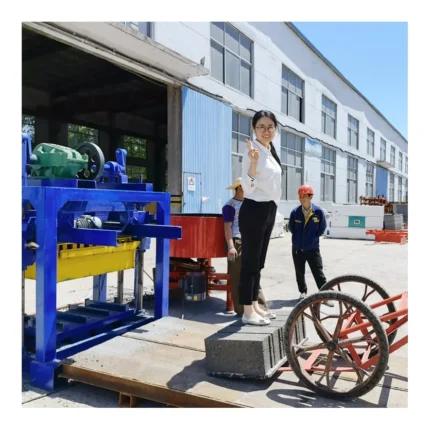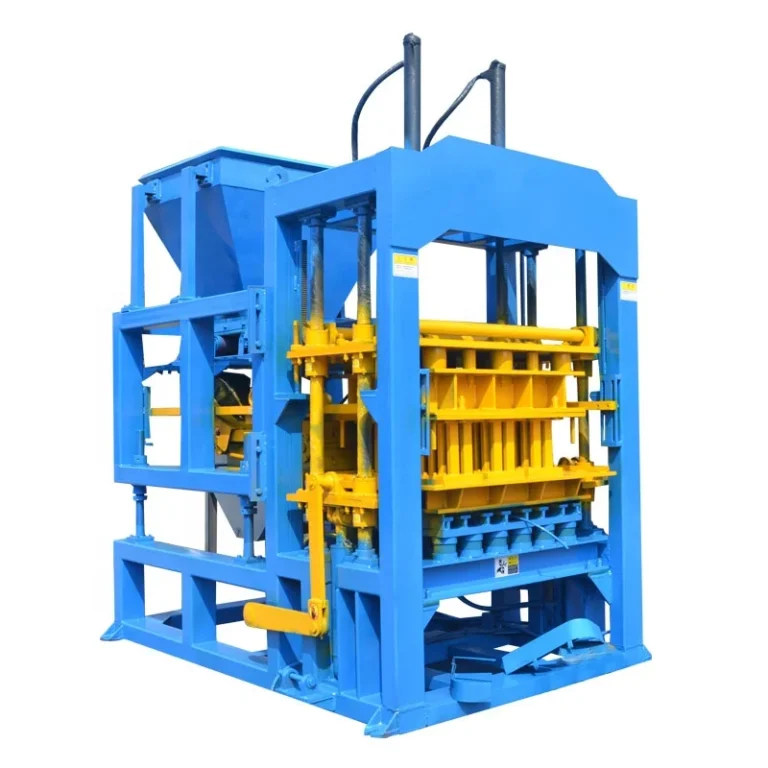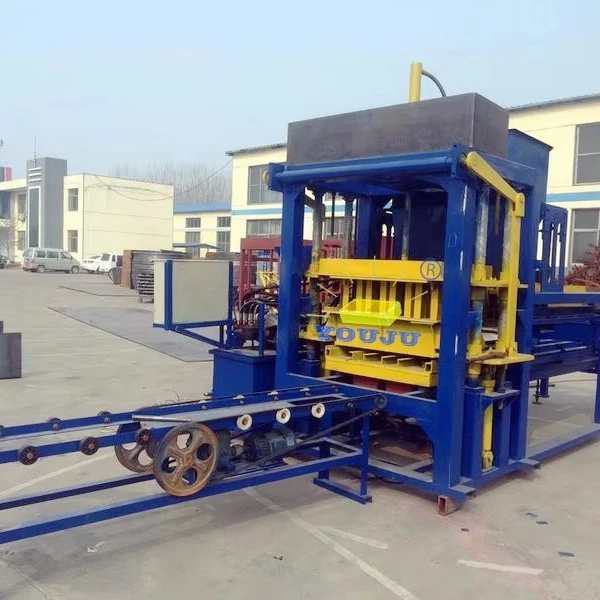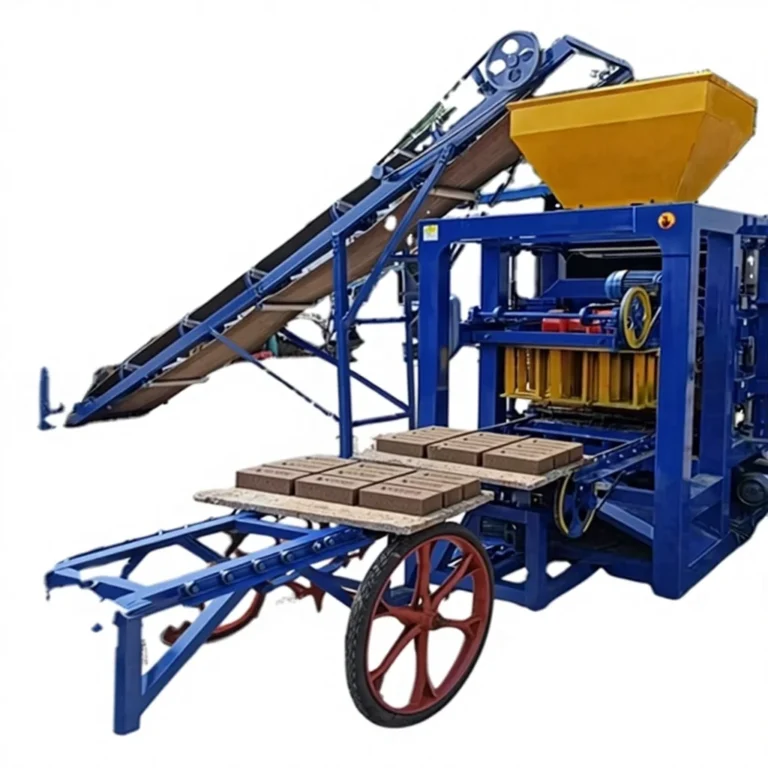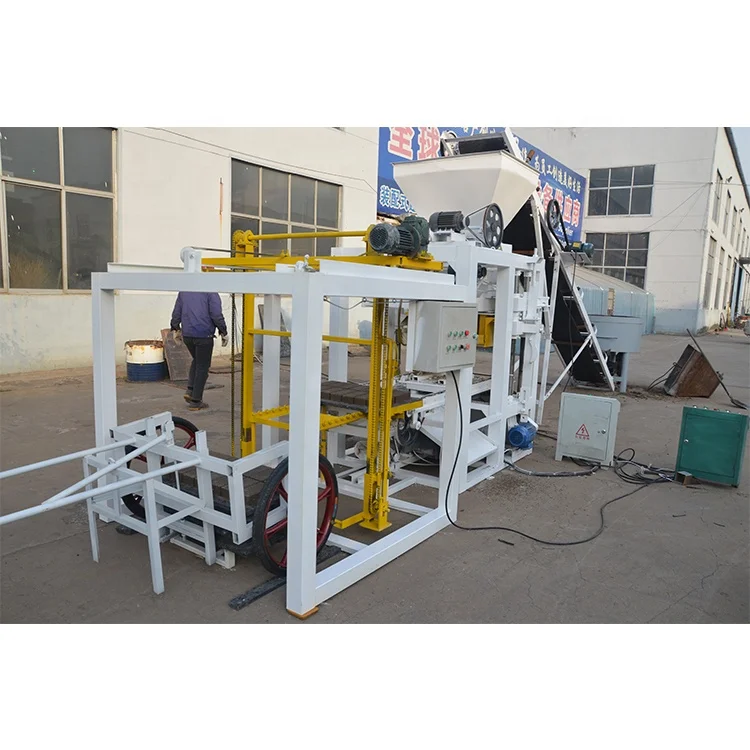
Description
Configuration set against actual production variables — we match the QTJ4-24’s vibration force and cycle timing to your specific block format and local aggregate before the machine leaves the factory.
Technical Specifications
| Parameter | Value |
|---|---|
| Model | QTJ4-24 |
| Product Type | Semi-Automatic Concrete Block Making Machine |
| Molding Type | Platform Vibration |
| Pallet Size | 850mm × 450mm |
| Overall Power | 14.25 kW |
| Overall Dimension (Working State) | 3600mm × 1700mm × 2560mm |
| Total Mass | 1750 kg |
| Mould Format | 390mm × 190mm × 190mm (4 pcs/mould); 240mm × 115mm × 53mm (21 pcs/mould) |
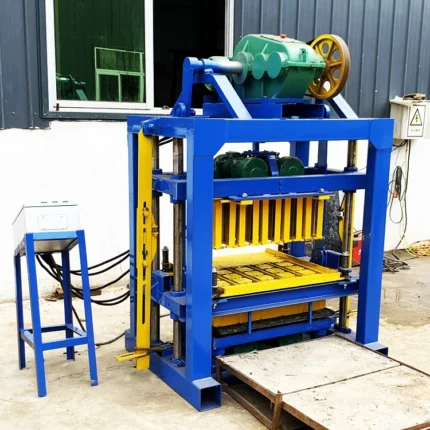
| Vibration System | Lower platform vibration (2 × 3 kW motors) + Upper platform vibration (1.5 kW attached vibrator) |
| Elevating System | Cone-shape motor with JZQ250 speed reducer, V-belt drive |
| Delivery Device | Cycloidal pin wheel speed reducer, chain and V-belt drive |
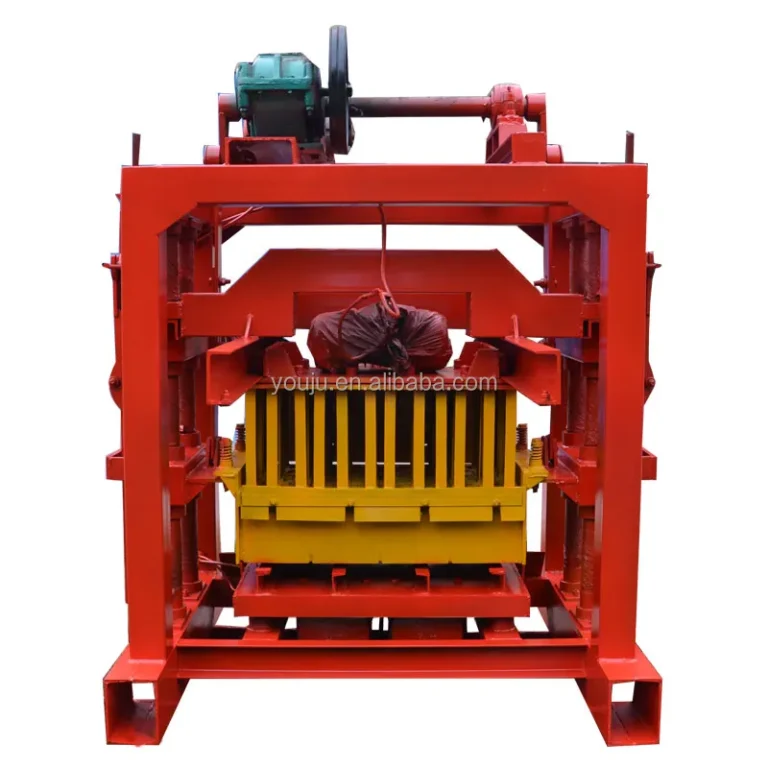
| Machine Frame | Dragon gate style, super steel construction, four wear-resisting vertical shafts |
| Control System | Electronic controlling part (PLC / MCC not specified in source) |
| Automation Level | Semi-automatic |
| Support Equipment Included | JQ350 pan mixer, 6m belt conveyor |
| Optional Equipment | Auto stacker (3–6 layers depending on block height) |
| Assembly State | Stationary |
| Voltage & Frequency | Basis to be confirmed before commissioning |
| Cycle Time per Format | Basis to be confirmed |
| Output Capacity | Basis to be confirmed |
Application Suitability
| Application | Material or Output |
|---|---|
| Hollow block production | Crushed stone, sand, cement, water for 390×190×190mm formats |
| Solid brick production | Fine aggregate and cement blends for 240×115×53mm formats |
| Paving block and kerbstone production | High-density mixes with mould-dependent shaping |
| On-site contractor block making | Locally sourced aggregate for project-specific volumes |
| Entrepreneur first plant setup | Standard concrete mixes across multiple block formats |
What "Cycles per Hour" Leaves Out About Semi-Auto Control
The cycle number only matters once you know which block format and material density it assumes.
I once watched a buyer accept a capacity figure tied to a lightweight hollow block, only to find their local river sand required longer vibration cycles to achieve target strength, cutting realistic output substantially below the quoted rate. The electronic control on the QTJ4-24 standardises each press cycle, but the cycle duration itself must be set against your actual mix design. This is where PLC controlled semi-automatic block machine configuration diverges from catalogue assumptions [NEED_CITE: block strength testing standards for concrete masonry units].
How Electronic Cycle Management Removes Operator Guesswork
On manual presses, the operator decides when to stop vibrating and when to lift the mould. That judgement varies with fatigue, shift changes, and experience level. The QTJ4-24’s electronic controlling part locks vibration duration and mould descent into a repeatable sequence, so block-to-block density stays within a narrow band regardless of who runs the press. This consistency is the primary reason buyers move to a PLC controlled semi-automatic block machine rather than staying fully manual.
The Upgrade Path from Manual Stacking to Controlled Output Flow
The most labour-intensive step on a small block plant is often not the pressing itself but the pallet-by-pallet carry from press to curing yard. The optional auto stacker handles between three and six layers depending on block height, removing that bottleneck without requiring a full automatic line investment. For buyers who started on a bare press, adding the stacker later is a practical step up [NEED_CITE: curing yard logistics for small block production facilities].
Reading the Vibration and Frame Specs Against Your Target Block
The dual vibration setup — two 3 kW motors on the lower platform plus a 1.5 kW attached vibrator on the upper platform — addresses a common density problem: uneven compaction across the pallet area. Lower vibration consolidates the base while upper vibration settles the face, producing blocks with more uniform strength top to bottom. The dragon gate frame with four wear-resisting vertical shafts resists the lateral deflection that degrades block dimensions over thousands of cycles. On the 850mm × 450mm pallet, this matters because even small frame flex translates to millimetre-level variation at the block edges, affecting mortar joint consistency on site.
When Voltage and Language Assumptions Stall Commissioning
I have stood in workshops where a newly arrived machine sat idle because the control panel display was in a language the operators could not read and the supply voltage did not match the motor rating. The electronic controlling part on this press must be confirmed for your local grid frequency and preferred display language before the machine enters production. Skipping this step turns a planned commissioning into a multi-week delay while replacement contactors or transformers are sourced locally [NEED_CITE: voltage and frequency standards by export market].
Why Sourcing from a Single-Focus Block Machinery Supplier Matters
Block machinery is our only product line, which means the QTJ4-24 press, its moulds, pallets, and the JQ350 pan mixer are specified as one matched system rather than assembled from unrelated catalogues. We set the vibration timing against the buyer’s actual mix design and target block format, not a default table. Mould design covers the formats the buyer’s market sells, and the automation level can start at semi-automatic with the auto stacker added when volumes justify it. Installation support includes operator training on cycle adjustment and mould change procedures.
Documentation & Verification
- Capacity calculation sheet stating the block format and mix design assumed for the QTJ4-24
- Mould drawing and format list confirming which block sizes the quoted pallet accommodates
- Voltage, frequency, and control display language confirmation signed before shipment
- Factory test record on the buyer’s specified block format before dispatch
- Operation and maintenance manual with wear parts and mould replacement schedule
Installation, Commissioning & Support
- Foundation pad sized to the 3600mm × 1700mm footprint with anchor bolt template for the dragon gate frame
- Dedicated circuit matching confirmed voltage and frequency for the 14.25 kW total connected load
- Stationary assembly with vertical shaft alignment check and vibration motor phase verification on site
- Cycle timing and vibration duration set against the buyer’s mix sample during first production run
- Operator training on mould change procedure for the 850mm × 450mm pallet format
- Wear parts list covering vertical shaft guides and vibration motor bearings with reorder intervals
What to Prepare Before Requesting a Quotation
Tell us the block formats your market sells and the daily volume you need per format. Share a sample of your local sand or aggregate so we can match vibration timing to its characteristics. Confirm your workshop supply voltage, frequency, and the control panel language your operators require.
Frequently Asked Questions
Q: How is realistic daily output calculated, and which block format does the capacity figure assume?
A: We calculate output by multiplying confirmed cycle time by the number of blocks per mould for a specific format, then applying a realistic operating hour assumption. The capacity figure you receive will state the exact block format and mix design it assumes, not a generic cycles-per-hour number.
Q: What automation level does the QTJ4-24 provide, and what is the upgrade path?
A: The press runs semi-automatic with electronic cycle management. The main upgrade is the optional auto stacker, which handles three to six layers and replaces manual pallet carrying. This keeps the investment controlled while removing the most labour-intensive step on the curing yard side.
Q: Is voltage, frequency, and control panel language confirmed before shipment?
A: Yes. We issue a voltage, frequency, and display language confirmation sheet that must be signed before production. This prevents the common problem of a machine arriving with incompatible motor ratings or an unreadable control interface.
Q: What does the optional auto stacker actually replace in terms of labour?
A: It replaces the manual pallet-by-pallet carry from press to curing area. Depending on block height, it stacks three to six layers automatically, meaning one or two curing yard workers can be reassigned to other tasks on the line.
Q: How long does a mould change take, and what formats fit the 850×450mm pallet?
A: The pallet accommodates 390×190×190mm hollow blocks at four per cycle and 240×115×53mm solid bricks at twenty-one per cycle, among other formats. Mould change time depends on the specific mould design and must be confirmed with the format list provided in your documentation package.