

Description
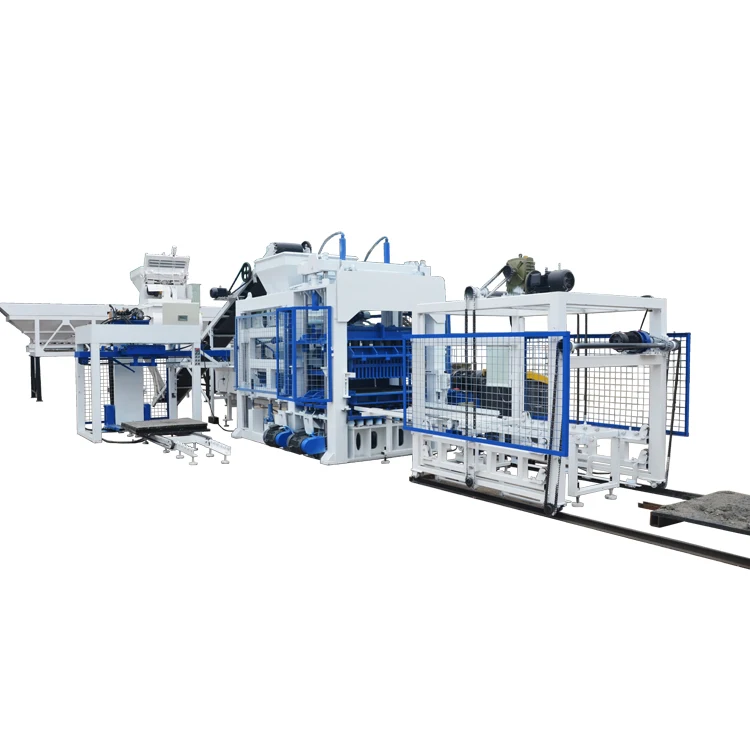
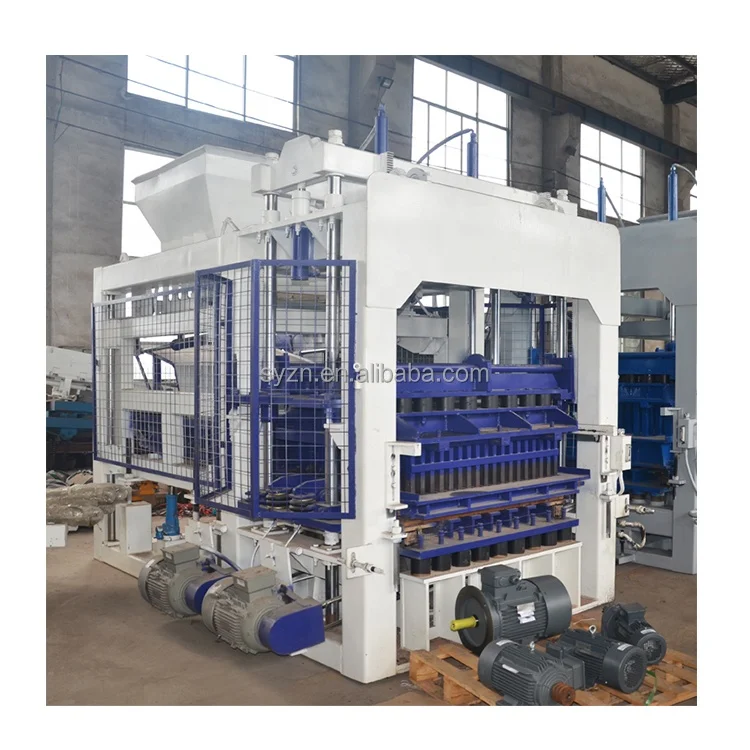
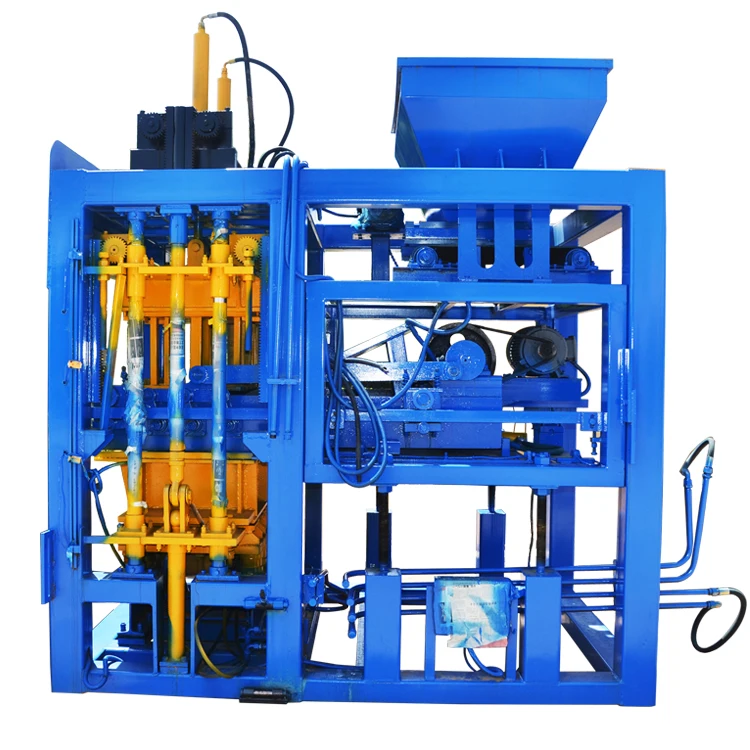
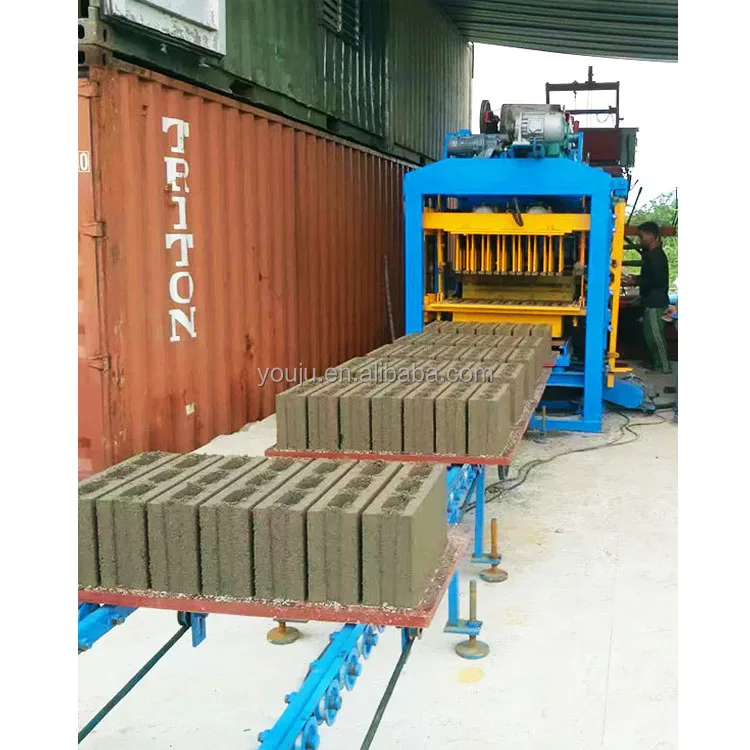
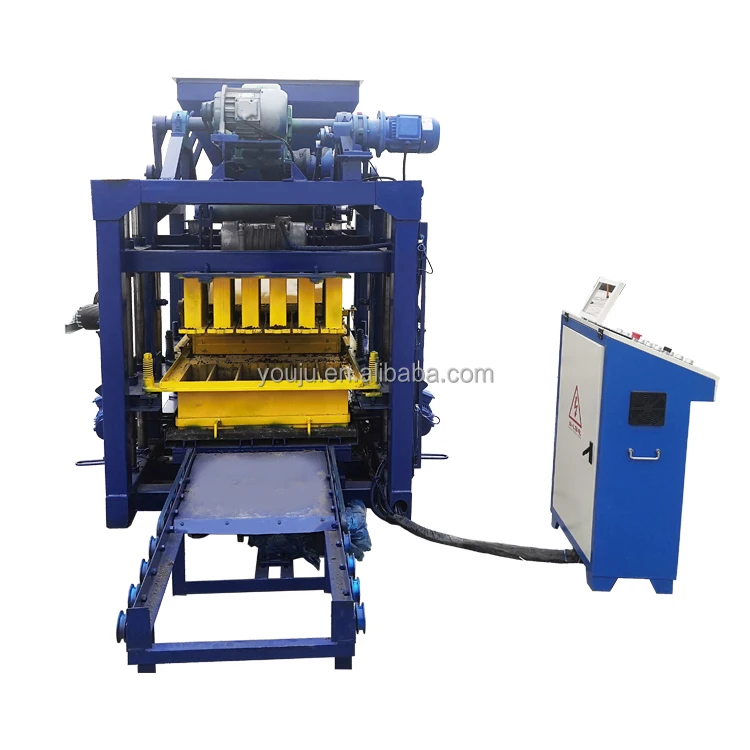
Vibration-First Configuration — The QTJ4-25 automatic block making machine PLC controlled pairs platform vibration with adjustable frequency so your local aggregate dictates the setup, not a catalogue default.
Technical Specifications
| Parameter | Value |
|---|---|
| Model | QTJ4-25 |
| Product Type | Automatic Block Making Machine |
| Overall Dimensions (L×W×H) | 3000×1800×2680 mm |
| Total Mass | 3.5 T |
| Vibration Force | 60 kN |
| Main Vibration Form | Platform Vibration |
| Vibration Frequency | 2800–4500 r/min |
| Pallet Size | 850×480 mm |
| Molding Cycle | 25 s |
| Total Power | 16.58 kW |
| Demolding Method | Mechanical |
| Control System | PLC (language configurable) |
| Recommended Factory Area | 300 m² |
| Output — Hollow Block 400×200×200 mm | 4 pcs/mould, 4640 pcs/day (8 h basis) |
| Output — Porous Brick 240×115×90 mm | 9 pcs/mould, 11200 pcs/day (8 h basis) |
| Output — Solid Brick 240×115×53 mm | 21 pcs/mould, 26400 pcs/day (8 h basis) |
Application Suitability
| Application | Material or Output |
|---|---|
| Hollow block production for load-bearing walls | Crushed stone, sand, cement mixes |
| Solid brick runs for masonry infill | Fly ash, gravel, cement blends |
| Paver and interlocking brick for landscaping | Colored aggregates with cement binder |
| Porous brick for permeable paving | Graded slag, dust, and cement |
| Curbstone forming for road projects | Coarse aggregate with high cement ratio |
What the PLC Screen Cannot Tell You Until It Is Too Late
An automatic block machine PLC controlled unit only removes guesswork when the display language, voltage rating, and control logic match the operators and the grid on your site.
I spent years fielding emergency calls from plants where the press sat idle for a week because the HMI defaulted to a language the crew could not read, or the contactor tripped on a frequency mismatch nobody confirmed before shipment. A PLC is not a plug-and-play component. It must be configured against the actual operator skill level and local electrical infrastructure before the machine leaves the factory floor. [NEED_CITE: voltage and frequency standards by export market]
How PLC Control Removes Batch-to-Batch Variability
The QTJ4-25 automatic block machine PLC controlled system governs the vibration cycle duration, molding pressure timing, and demolding sequence in repeatable intervals. When a semi-skilled operator runs the press manually, cycle times drift as fatigue sets in, and block density varies across a single shift. PLC logic locks each cycle to the programmed parameters so the last block of the day matches the first.
From Semi-Automatic to Full Automation Without Replacing the Press
Starting with mechanical demolding and manual pallet handling keeps initial investment contained. The control architecture on this machine allows you to add automatic pallet feeding, stacking, and cubing modules later. Each module integrates into the existing PLC program rather than requiring a separate controller, so the upgrade path stays within one operator interface.
Why Pallet Size and Vibration Frequency Must Agree
The 850×480 mm pallet dimension determines how many blocks press per cycle and how the curing area accommodates output. Platform vibration at 60 kN across the 2800–4500 r/min range compacts material uniformly only when the frequency matches the aggregate particle size in your mix. Too low a frequency leaves voids in blocks made with fine fly ash. Too high a frequency fractures blocks formed with coarse crushed stone. This is why the vibration setting is never a fixed number — it is tuned to the specific raw material profile at commissioning. [NEED_CITE: vibration frequency tuning for concrete aggregate types]
The Hidden Cost of Skipping Pre-Shipment Electrical Verification
I have watched a brand-new block line sit under tarp for two weeks because the incoming supply was 60 Hz while the motor windings were spec’d for 50 Hz. Rewinding motors on site is expensive, and sourcing a matching set of contactors locally can take longer than shipping replacements. Confirming voltage, frequency, and the electrical schematic before production prevents a commissioning delay that no amount of site improvisation can shorten.
Why Procurement Here Differs from Assembling from Separate Suppliers
Block machinery as a single focus means the press, moulds, pallets, and handling equipment are specified as one matched system. The configuration is set against your actual mix design and target block format, not a catalogue default. Mould design covers the formats your market sells, with custom drawings available. The automation level starts where you are today and extends to full stacking and cubing when volume justifies it. Installation support includes operator training on the PLC interface and maintenance routines for the mechanical demolding guides.
Documentation & Verification
- Line layout and capacity calculation stating the block format assumed
- PLC display language and voltage confirmation sheet signed before production
- Mould drawing and format list covering every block type in your range
- Hydraulic and electrical schematic matching as-built configuration
- Factory test record on your specified raw material mix
- Wear parts and mould interchangeability list
Installation, Commissioning & Support
- 300 m² minimum factory area with level concrete slab for the 3000×1800 mm footprint
- Dedicated electrical circuit sized for 16.58 kW total draw at confirmed voltage and frequency
- Mechanical demolding guides inspected and lubricated during on-site assembly
- PLC parameter tuning against your local aggregate during first production run
- Operator training on the control interface in the confirmed display language
- Chrome-plated guide columns checked for alignment after initial molding cycles
What to Prepare Before Requesting a Quotation
Share your target block formats, the daily volume you plan to run for each, and the raw materials available locally. Confirm your site voltage, frequency, and the language your operators need on the PLC display. If you already have pallets, forklifts, or a curing area, provide those dimensions so the pallet handling specification matches what is on the ground.
Frequently Asked Questions
Q: How is the PLC control language and interface configured for my operators?
A: Before production begins, we confirm the display language and interface layout with your team. The HMI labels, alarm messages, and cycle parameter screens are set to match your operators’ working language so commissioning does not stall over translation issues.
Q: What is the automation upgrade path from semi-automatic to full automatic?
A: The QTJ4-25 starts with mechanical demolding and manual pallet handling. You can add automatic pallet feeding, stacking, and cubing modules later, each integrating into the existing PLC program without replacing the controller or retraining operators on a new interface.
Q: How does vibration frequency need to match my local aggregate?
A: The 2800–4500 r/min range on this machine is tuned during commissioning to your specific crushed stone, sand, or fly ash particle size. Correct frequency ensures uniform compaction and consistent block strength across every production cycle.
Q: What electrical details must be confirmed before the machine ships?
A: Voltage, frequency, and the full electrical schematic are verified against your site supply before production starts. This prevents motor rewinding or contactor replacement delays that occur when electrical specifications are assumed rather than confirmed. [NEED_CITE: electrical compliance requirements for imported machinery]