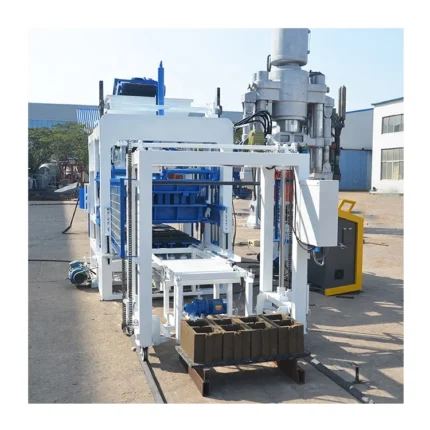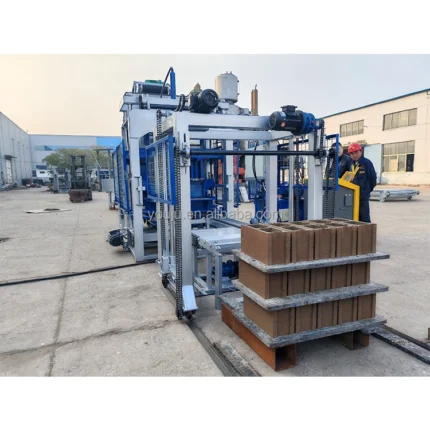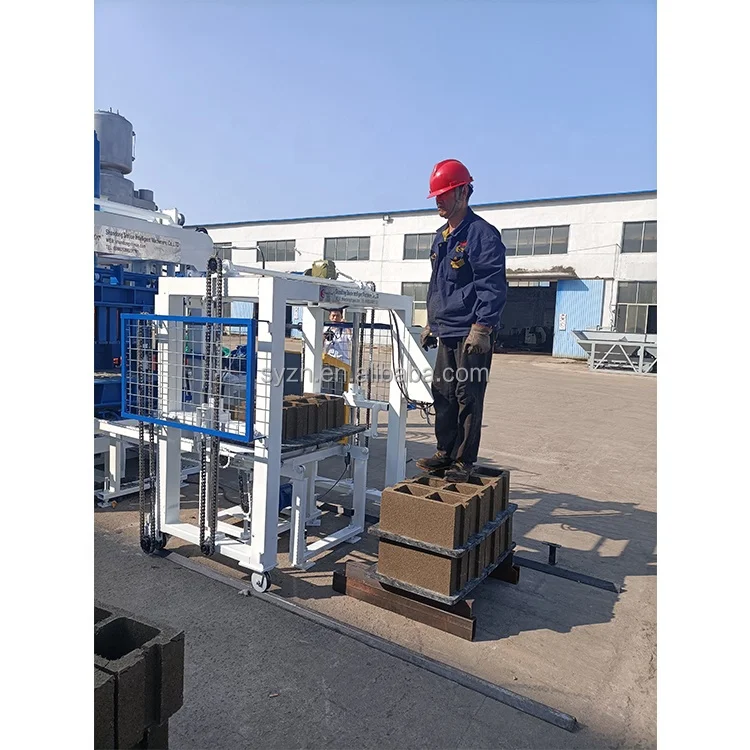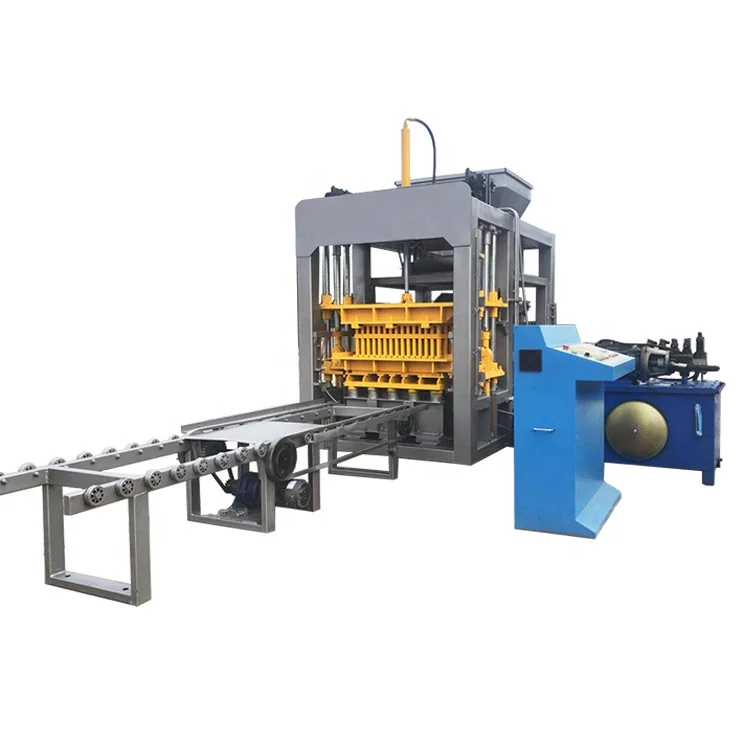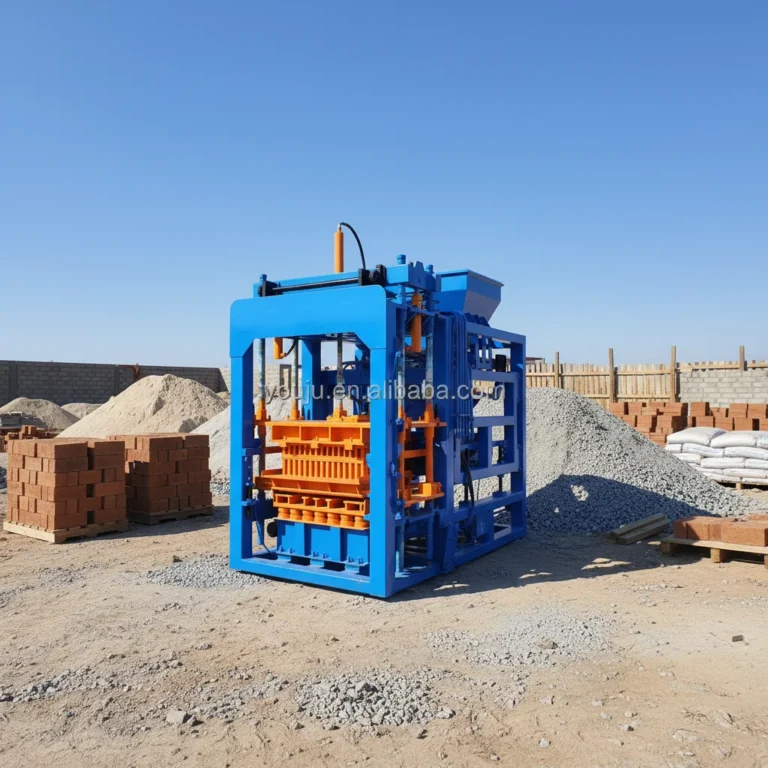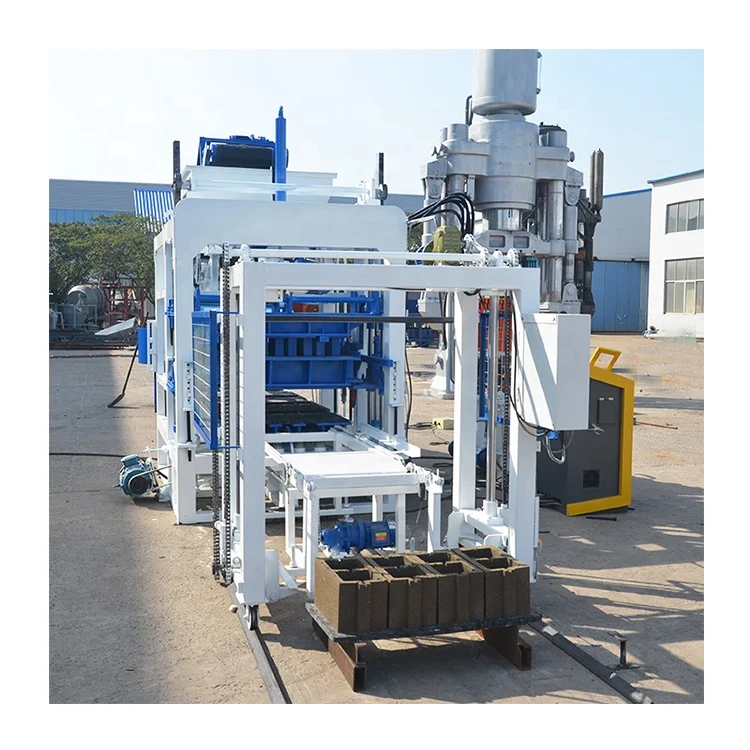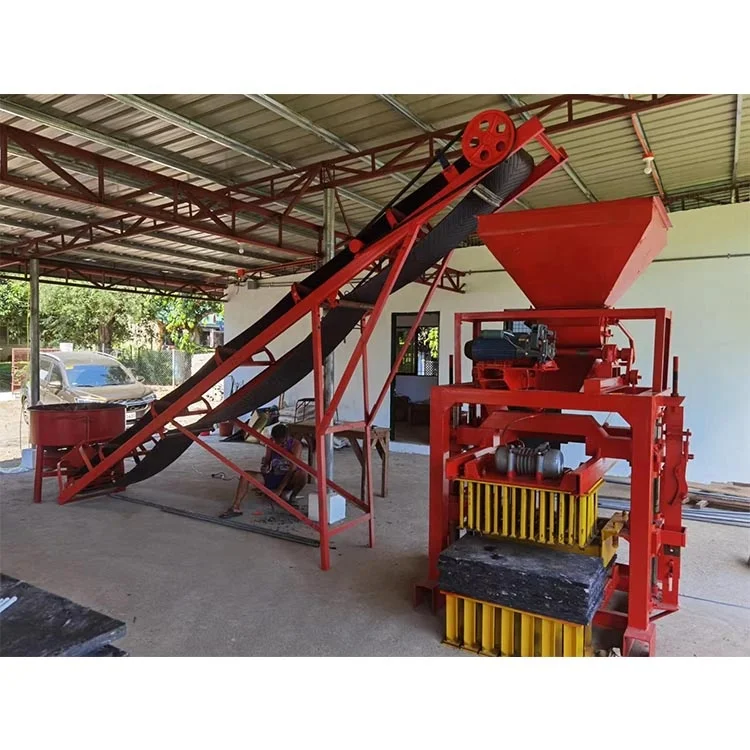
Description
Configuration Match — we verify the vibration frequency and pallet size against your specific block format and aggregate before building, not after.
Technical Specifications
| Parameter | Value |
|---|---|
| Model | QTJ4-35 |
| Product Type | Semi-Automatic Concrete Block Making Machine |
| Overall Dimensions (L×W×H) | 2050×1660×1900 mm |
| Rated Exiting Force | 35 kN |
| Main Vibration Form | Platform Vibration |
| Vibration Frequency | 2800 r/min |
| Pallet Size | 850×450 mm |
| Molding Cycle | 35 s (basis to be confirmed per block format) |
| Overall Power | 9.7 kW |
| Total Mass | 1500 kg |
| Demolding Method | Vibration |
| Factory Area | 260 m² |
| Applied Products | Concrete blocks, hollow/solid blocks, pavers, interlocking blocks, curbstone, colored pavers |
| Raw Material | Crushed stone, sand, cement, dust, fly ash, gravel, slag |
| Voltage & Frequency | Configurable (confirm with site requirements) |
| Control System | Available with PLC or relay-based panel |
| Automation Level | Semi-automatic with manual pallet handling |
| Mould Format | Multiple (hollow, solid, paver, interlocking, curbstone) |
| Stacking Method | Manual |
| Warranty | 1 year (whole machine, excluding spare parts) |
| Assembly State | Shipped as complete unit |
| Loading | 1×40HQ container (basic equipment) |
Application Suitability
| Application | Material or Output |
|---|---|
| Small-scale block plants | Hollow and solid blocks from crushed stone, sand, and cement |
| On-site contractor production | Pavers and interlocking blocks using locally available aggregate |
| Entrepreneur first plant setup | Standard concrete blocks with semi-automatic operation |
| Housing project block supply | Load-bearing blocks from fly ash and gravel mix designs |
| Curbstone and colored paver runs | Specialized formats with appropriate mould installation |
What "35-Second Cycle" Actually Means for Your Output
The cycle figure only matters when tied to the exact block format, wall thickness, and mix design you will run.
I have seen buyers receive machines quoting fast cycles, only to discover that figure assumed a thin paver while they needed thick hollow blocks. The vibration frequency and compaction time must match your actual product, not a catalogue default. When the aggregate in your region differs from standard river sand, the vibration parameters need adjustment or the blocks come out weak [NEED_CITE: block density testing standards for concrete masonry units].
Control System Selection and What It Removes from the Operator
The automatic QTJ4-35 block machine can be configured with either PLC control or a relay-based panel depending on your technical support infrastructure. PLC systems remove timing decisions from the operator, holding the vibration cycle consistent across shifts. The display language must be confirmed before production so your team can read fault codes without translation delays [NEED_CITE: PLC programming language options for export machinery].
Where the Automation Upgrade Path Leads
Starting with semi-automatic operation means your crew handles pallets manually, feeding them into the press and removing finished blocks by hand. As volume grows, the first automation addition is typically automatic pallet feeding, which removes one worker from the cycle. The next step is stacking and cubing, which eliminates the heaviest lifting. The QTJ4-35 control architecture can accept these additions if specified during the initial build.
Vibration Force, Pallet Size, and Power Draw Explained
The 2800 r/min platform vibration compacts the concrete mix from below, which suits formats where surface finish matters less than structural density. The 850×450 mm pallet size determines how many blocks you produce per cycle and must align with your curing rack dimensions and forklift capacity. The 9.7 kW overall power draw means sites running from generators need adequate capacity for startup surge, and voltage fluctuations common in some regions require confirmation before the electrical panel is built. The 35 kN exiting force works with the vibration to release blocks from the mould without cracking.
The Hidden Cost of Unconfirmed Voltage and Frequency
When voltage and frequency are not locked in writing before production, the machine arrives with the wrong motor winding or the PLC cannot communicate properly. Commissioning delays stretch into weeks while replacement parts ship. I have watched entire project timelines slip because a 50 Hz machine was sent to a 60 Hz site, and the vibration frequency no longer matched what the block strength required.
Why Source This Machine Through Our Process
Block machinery is our single focus, so the QTJ4-35 arrives as a matched system rather than a press assembled from separate suppliers. We set the configuration against your actual mix design and local aggregate, not a default catalogue setting. Mould design covers the formats your market actually sells, including custom drawings when needed. The automation level is selectable so you can start semi-automatic and upgrade later without replacing the entire machine. Installation support includes operator training so your crew knows the mould change procedure and daily maintenance from day one [NEED_CITE: machinery commissioning best practices for block plants].
Documentation & Verification
- Line layout and capacity calculation stating the block format assumed for the 35-second cycle
- Machine specification sheet confirming vibration frequency and pallet size
- Mould drawing and format list for each block type included in your order
- Voltage, frequency, and PLC display language confirmation in writing
- Factory test record showing actual cycle time and block density for your specified format
- Wear parts and mould list supplied with the machine
Installation, Commissioning & Support
- The 260 m² factory area requirement includes space for pallet circulation and curing racks around the 2050×1660 mm machine footprint
- The 9.7 kW power draw requires a dedicated circuit with voltage and frequency matching your site supply
- The machine ships as a complete unit in a 40HQ container, minimizing on-site assembly time
- First startup includes vibration parameter adjustment matched to your local aggregate and block format
- Operator training covers mould change procedure, daily lubrication points, and pallet handling workflow
- Wear parts list ensures your first replacement order arrives before production halts
What to Include in Your Inquiry
To configure the QTJ4-35 for your operation, specify the block format and daily volume you need to achieve. Tell us your local raw material sources and whether you have generator or grid power with confirmed voltage and frequency. Let us know your current pallet size and curing area layout so the 850×450 mm pallet can be validated against your existing equipment.
Frequently Asked Questions
Q: What does the 35-second cycle actually assume about block format and mix?
A: The 35-second molding cycle is a base figure that must be validated against your specific block format, wall thickness, and aggregate type. Thick hollow blocks require longer vibration than thin pavers. We confirm the actual cycle time during factory testing using your mix design before the machine ships.
Q: Is the QTJ4-35 supplied with PLC control or relay-based operation?
A: The control system is configurable based on your preference and local technical support availability. PLC control provides consistent timing and fault diagnostics with a display language matched to your operator team. Relay-based panels offer simpler maintenance in regions with limited automation support infrastructure.
Q: How do I upgrade from semi-automatic to automatic pallet feeding and stacking later?
A: The QTJ4-35 control architecture can accept automatic pallet feeding and stacking additions if planned during the initial build. We specify the electrical panel capacity and mechanical mounting points upfront so future automation integrates without replacing the core machine.
Q: What voltage and frequency must I confirm before production begins?
A: Your site voltage and frequency must be confirmed in writing before the motor and electrical panel are built. Sending the wrong winding configuration causes commissioning delays and potential motor damage. We also confirm the PLC display language so your operators can read the interface upon arrival.